Your expert guide to spending the day in Ronda

Ronda is a small town with a huge reputation. This is one of those places you don’t want to miss when you’re in Andalucía as it has everything you need for a day adventuring: amazing views, great food and plenty to do. Ronda is a pueblo blanco (white town), one of Spain’s oldest towns and despite its size, it’s one of Andalucía’s big name destinations. Of course, the biggest draw of Ronda is its bridge over the Tajo Gorge, don’t miss it!
This guide to how to spend 1 day in Ronda will help you figure out where to find the best views of the amazing Puente Nuevo, the bridge over the Tajo Gorge, what else there is to do in town and it will also share useful facts to make your day in Ronda as smooth and great as possible.
There are affiliate links in this article. If you click and make a purchase I could make a small sum at zero cost to you. Thank you!
Why do people visit Ronda?
Primarily to see El Tajo Gorge and the three bridges: Despite its location inland, away from the popular tourist cities of Málaga, and Sevilla, tourists love the historic town of Ronda.
Ronda is a mountain-top city that traverses a magnificent gorge, the 160m deep El Tajo. The two halves of the city are linked by bridges and it is these bridges that people come to see. At one point, the bridges separated the ‘new town’ from the ‘old town’ but, in true European style the new town is really not new. In fact it dates from the 15th century more or less and the old town dates from when this region of Spain was under Moorish rule.
There is also, of course, an actual modern area of town but most visitors don’t spend much time there.
🏨 MexicoCassie top recommended hotel in Ronda – El Hotel Palacio Hemingway (in case you decide that Ronda is so delightful you want to stay more than a day).
👧🏽 If you have kids, use the MexicoCassie guide to exploring Ronda with kids to ensure your day goes as smoothly as possible.
How to get to Ronda
🧭 You’ll find Ronda in the Serranía de Ronda (Ronda Mountain Range) in Málaga Province, southern Spain. Despite being a mountain town, the roads in and out are good, like most roads in southern Spain.
🚗 Ronda is around 1hr30 from Málaga, 2hrs from Granada & 1hr45 from Sevilla
→ Check rental car prices and availability
→ Read the MexicoCassie guide to driving around southern Spain
🅿️ If you’re going to drive into Ronda I highly recommend figuring out where you plan to park first because, like most Spanish towns, the roads can be extremely narrow and winding as you get deep into the old town. Don’t worry though as there are good public carparks in Ronda. I recommend pre-booking your parking as you’ll get a discount for doing so.
👣 There are numerous tour operators offering tours to Ronda from the main tourist hotspots – I always like to use GetYourGuide and Viator to book my own family’s trips.
It is possible to visit Ronda on public transport but it’s not as easy as rental car or guided tours as there are no direct trains from the bigger cities.
📲 If you’re considering an eSIM, read the full MexicoCassie eSIM review and use this 10% discount code to buy yours.
👣 MexicoCassie Ronda guided tour recommendations
If you’re getting yourself to Ronda, then I can recommend starting your day with a quick walking tour, either with an audio guide to help you along the way, or with an actual human guide.
From Seville – I recommend this full day tour to Ronda & Setenil de las Bodegas – it gives plenty of time to explore Ronda as well as time to stroll around the incredible cave village of Setenil de las Bodegas.
From Málaga – This full day tour to Ronda & Setenil de las Bodegas (yes, again!) offers plenty of time to explore both towns with the option of a 2 hour guided walk around Ronda.
From Marbella – I recommend the Ronda & wine tasting tour – this tour visits 2 excellent vineyards for wine and lunch and allows a good amount of time for exploring Ronda.
⭐️ The Ronda via ferrata in Ronda is an incredible way to really experience the Tajo Gorge if you’re braver than me.
Brief history of Ronda
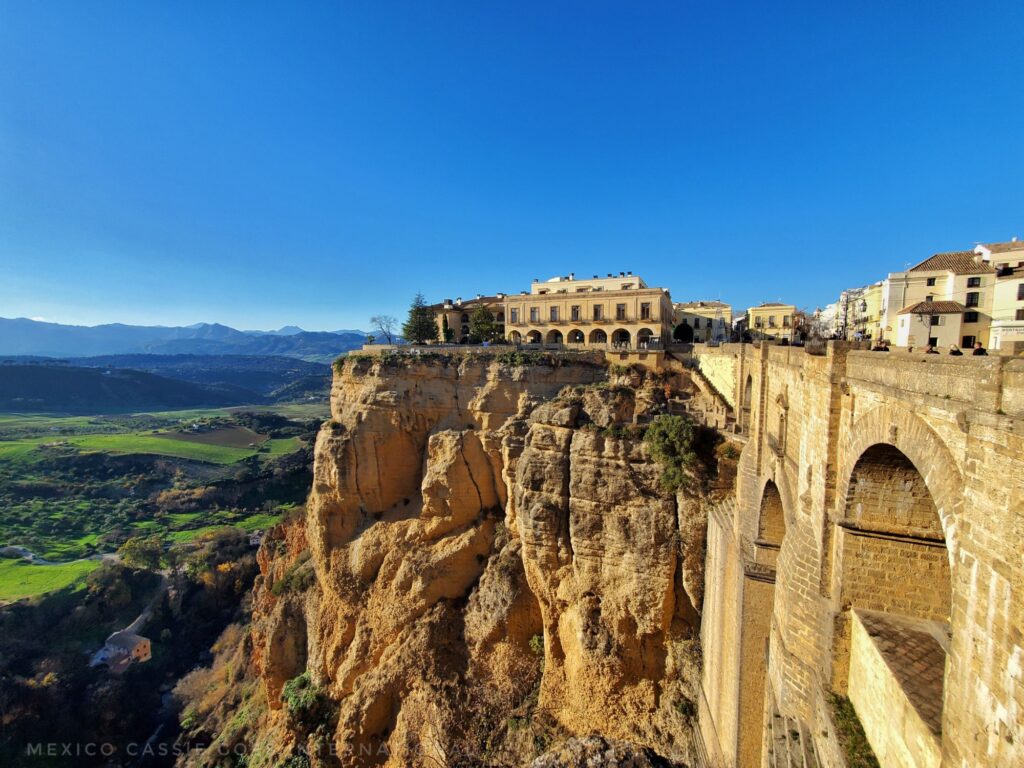
Ronda is one of the oldest towns in Spain along with nearby Córdoba and the magnificent Antequera (one of my personal favourite small towns in Spain). Remains have been found that date back to the Neolithic period but it’s believed that humans were living in the area even earlier than this.
Ronda rose to importance during the Middle Ages after the fall of the Roman Empire when it was the capital of Takurunna, one of the provinces of Al-Andalus. It was an important border area and was conquered by the Catholic Castilians from the Moors in 1485. It was at this point that the blending of the two cultures in Ronda, began and the incredible city beloved by visitors began to take shape.
What to do with 1 day in Ronda
Ronda is a deliciously small place so you can definitely see the main sites in one day (although, as ever, I’m a proponent of slow-travel so if you can take longer for Ronda, I highly recommend it).
Puente Nuevo
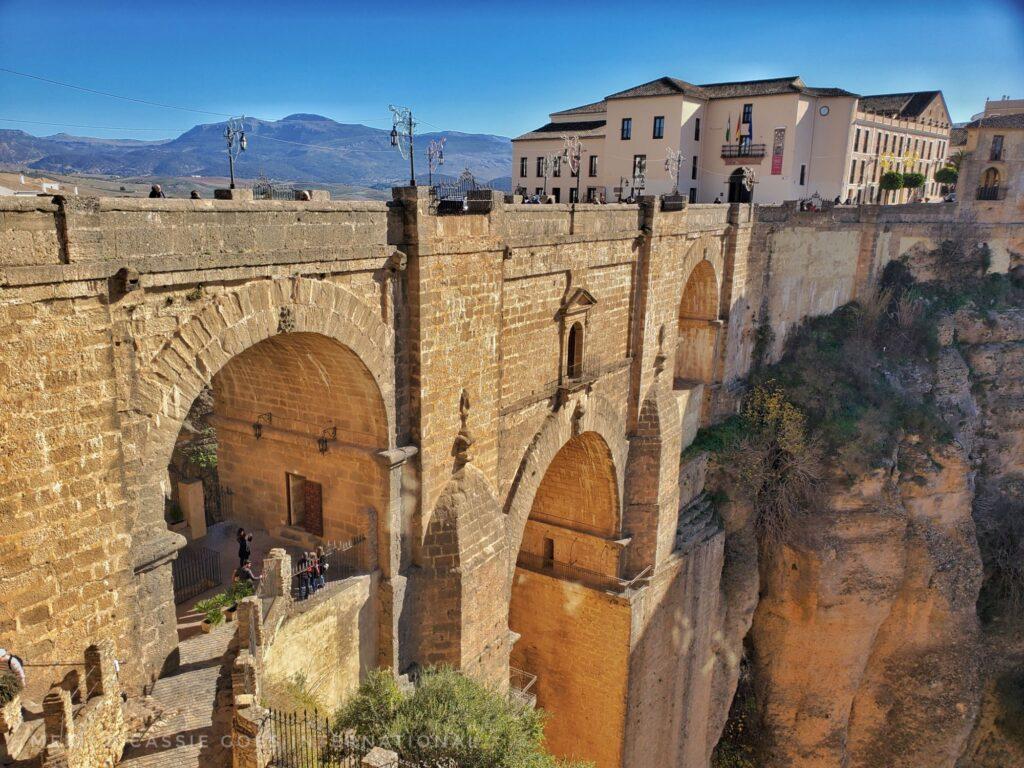
This is the most famous bridge in Ronda. It’s big, it’s impressive and you’ll come home with dozens of photos of it from various angles.
This ‘new’ bridge was built in the 18th century to span the deep gorge and the Guadalevín River. It is not only a tourist attraction (and believe me, it is), it’s also a working bridge so ensure you’re on the pavement/sidewalk at all times. Do not wander into the road without looking as there’s a constant stream of cars and other vehicles.
Be sure to check out the incredible views on both sides of the road. Once you’ve walked over the bridge in both directions, I recommend considering a viewpoint or two.
If you want to learn more about this bridge, visit the Centro de Interpretación del Nuevo, housed inside the bridge itself.
Viewpoints / miradors in Ronda
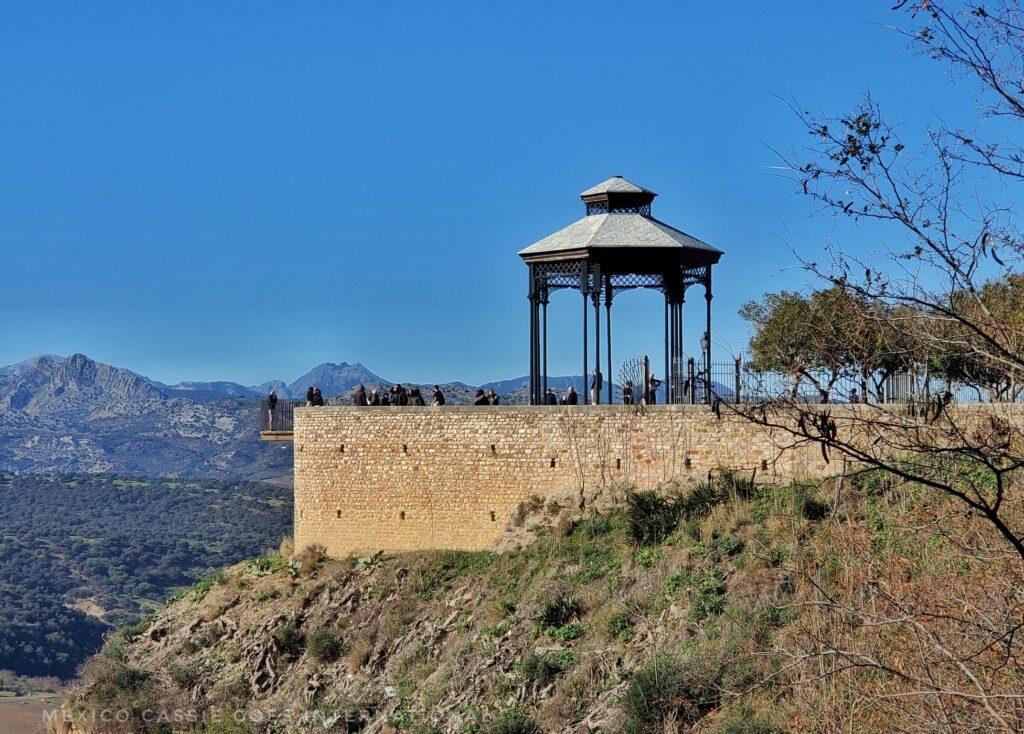
Miradors in town
Mirador de Ronda – by the bull ring
Mirador de Aldehuela – just off the Puente Nuevo
Mirador María Auxiliadora – in the plaza with the same name
Balcon del Coño on the Alameda del Tajo
Miradors with a drink
If you fancy your view with a coffee or a beer or a glass of wine, there are three great options I can recommend to you:
Hotel don Miguel – the views from here are great and the prices are reasonable enough, you have to go through to the patio for the views.
Parador de Ronda – part of a national chain of hotels in historic buildings, this hotel has a lovely balcony where you can have coffee, drinks and cake
Casa Museo don Bosco – it’s possible to have a coffee in the gardens here (but you have to pay to get in)
Harder to reach miradors
And, of course, should you want to see the Puente Nuevo from below, this is also possible
Mirador del Puente Nuevo de Ronda – the entrance is on Plaza de María Auxiliadora and it’s a fun walk down. You can actually keep going a long way past the official mirador here should you so wish towards Mirador del Viento & La Hoya del Tajo
⭐️ The new-ish Camino del Desfiladero del Tajo is a pleasant one km walk that starts in the Plaza de María Auxiliadora and follows suspended walkways with incredible views down to the Arab baths. It costs €12 p/p and is open to people over 8.
Puente Viejo & the Jardines de Cuenca
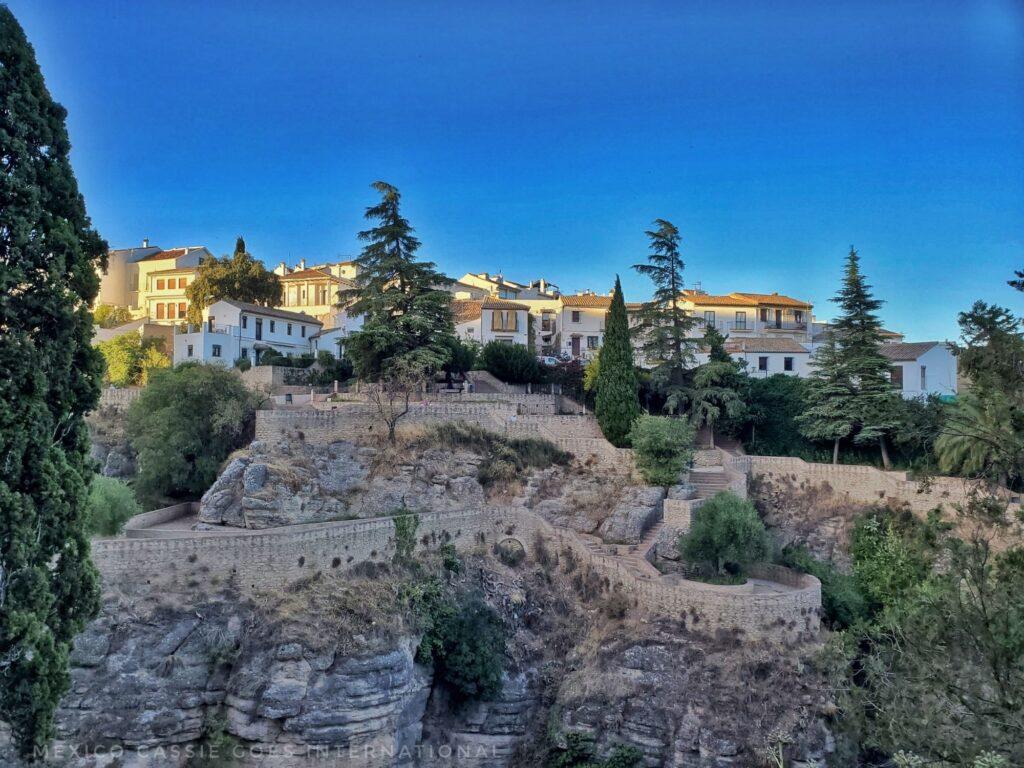
It’s a delightful walk down to the Puente Viejo (Old Bridge) through the beautiful small park, the Jardines de Cuenca (photo above). As you walk, be sure to pay attention to the incredible views of town and the bridges. The Puente Viejo was built in the 16th century to ease access into the city as horses and carts couldn’t fit over the lower Puente Arabe.
Puente Arabe / Romano
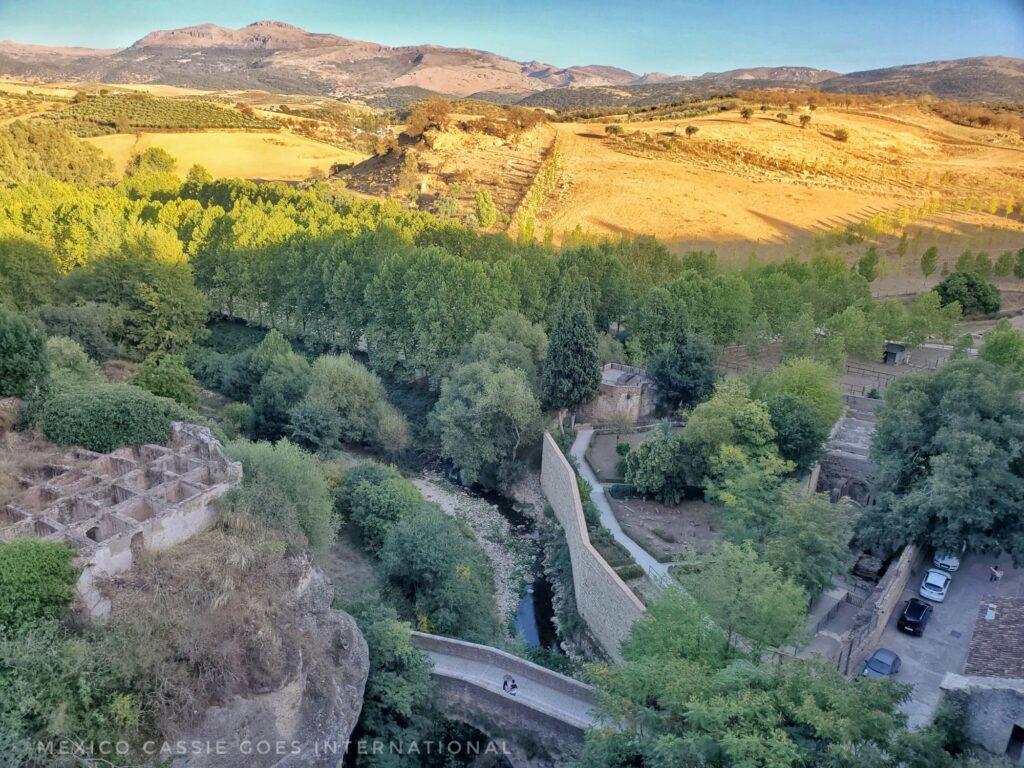
If you keep going down you’ll come to the Puente Arabe / Romano (Arab / Roman Bridge). You’ll actually see it marked as Puente San Miguel on many maps. This is the oldest of the bridges, having been built in the 13th century when Ronda was firmly a Muslim city. It stands just 12 m above the river
If you do make it all the way down to the Arab Bridge then you could now either visit the
Arab Baths (Baños Arabes)
This is not a working bath but a 13th century bathhouse with a small museum.
Now make your way up the other side, walking by the old city walls and through the Arco de Felipe V (pictured here) to visit
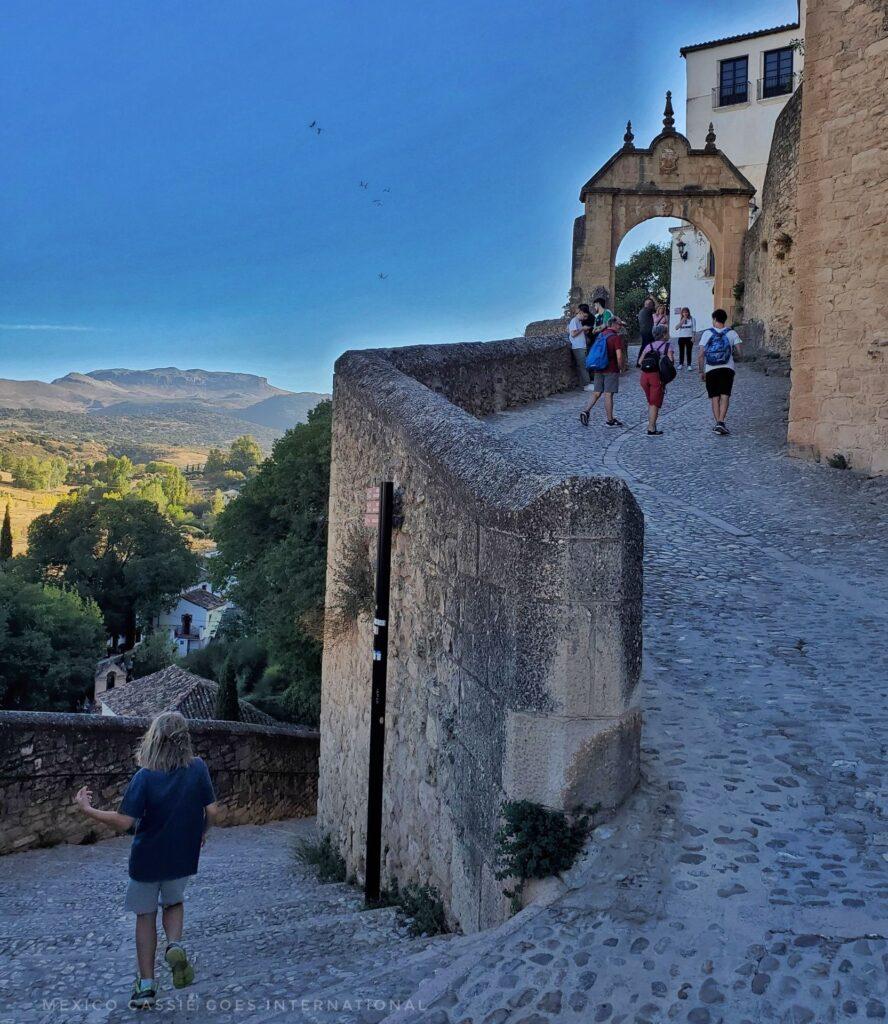
La Casa del Rey Moro
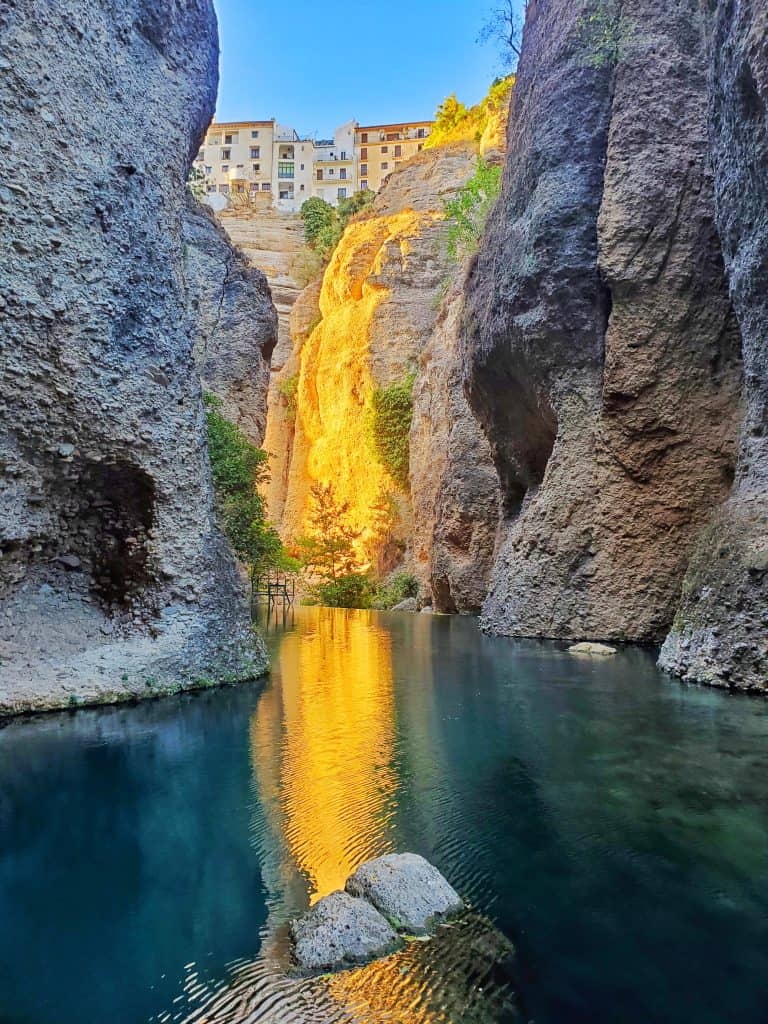
Here you can explore the gardens and then walk all the way down to the bottom of the gorge via the steps in the mine. The steps are perfectly safe to descend and at the bottom is a platform on the river on which you can sit and paddle your feet / take lots of photos. My recommendation is to go late in the day as the way the light reflects on the water and the rock is absolutely magical and make this well worth the trip down (and up again!).
→ Read more about La Casa de Rey Moro museum and mine
Plaza de Toros de Ronda and the Alameda del Tajo
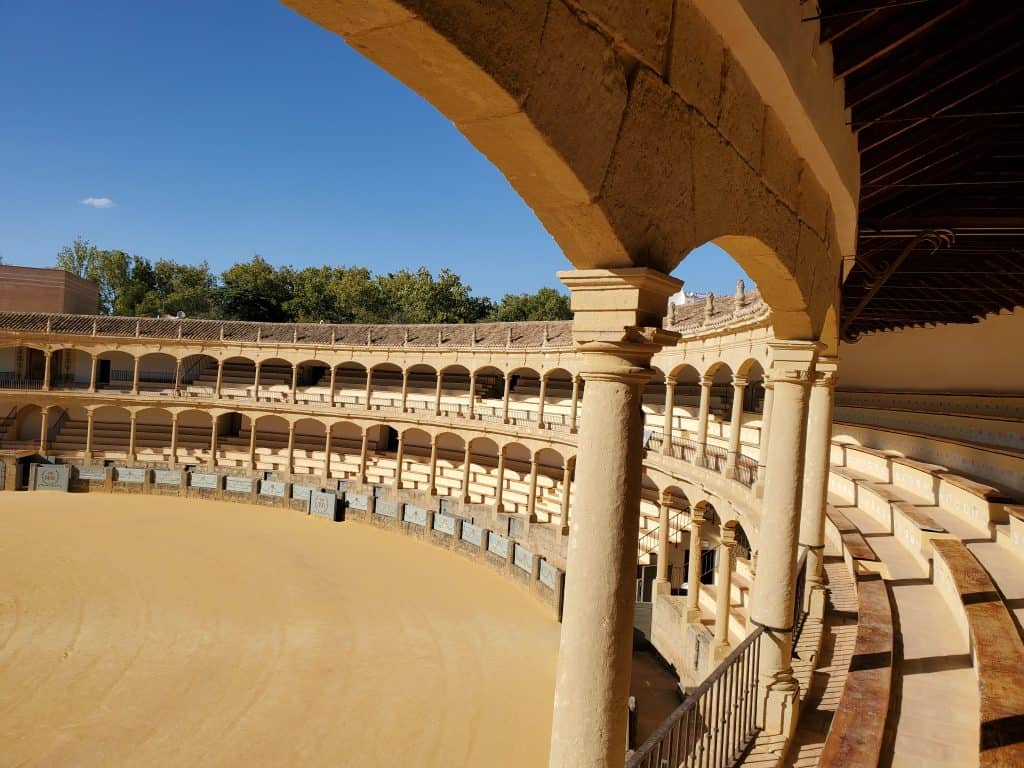
Whether you choose to visit Ronda’s ancient bull ring (it’s one of the oldest bullrings in Spain) or not, you will definitely want to head to the Plaza de Toros as you’ll find a lot going on here. The tourist tourist office is on this plaza, you’ll often find musicians and there’s a park full of beautiful trees, a small playground, and, of course, great views of the valley and the Puente Nuevo Bridge.
La Ciudad
This is the oldest part of Ronda, and here you’ll find Moorish buildings from the 9th – 15th centuries. It’s a really cool place to explore and get yourself lost. Don’t miss
La Casa del Gigante – a private home built during the Nasrid period (13-14th centuries) that is a small museum today
Museo Lara – a fascinating private collection of historic weapons, items relating to ‘witchcraft’, torture & more (this is a great place to stop with or without kids).
Palacio de Mondragón – a small & interesting museum housed in a 14th century building.
El Mercadillo
This is the ‘newer’ part of Old Ronda. The bull ring is here, the main plazas are here. And if you’re interested in shopping, you’ll find Carrera Espinel, the 1km long shopping street, here as well as other fun shopping areas.
Literature
Be sure to look out for both the statues of, and streets named after, Ernest Hemingway and Orson Welles as you explore. Both writers were inspired by Ronda.
Where to eat in Ronda
I have two highly recommended restaurants for you:
Pura Cepa Ronda – this restaurant is attached to the Hotel Palacio de Hemingway and despite the small menu, I absolutely love everything about this place. Don’t miss the croquetas de rabo de toro (oxtail). They are honestly the best croquetas I’ve ever eaten.
Gastro-Bar MK – despite the English name, the food here is incredible and the staff are really friendly.
→ Use the MexicoCassie guide to vegetarian tapas if you are interested in finding vegetarian options
→ Use the MexicoCassie guide to kid friendly food if you are travelling with kids or need food for a more sensitive palate
→ Read the MexicoCassie tips to ensuring a smooth trip to Spain
What else to do near Ronda
→ Learn about the incredible olive oil and its history on this MexicoCassie recommended olive oil tour
→ Have a via ferrata adventure in Ronda
→ Check out the nearby towns of Osuna, Olvera, Antequera, and Setenil de las Bodegas (You can read more about tall of them in the MexicoCassie guide to day trips from Sevilla)
→ In the summer months, take a dip in the nearby waters of Cueva del Gato
📚 🇪🇸 Read more of MexicoCassie’s Spain guides
→ MexicoCassie guide to whether Spain is safe for tourists
→ MexicoCassie guide to driving in Spain
→ MexicoCassie guide to driving in southern Spain
☕️ MexicoCassie guide to vegetarian tapas, to breakfast and to feeding the kids
📲 MexicoCassie guide to using an eSIM in Spain
⭐️ Tips to help when you visit Spain
Sevilla
⭐️ What is Sevilla famous for? | ⭐️ How many days do you need in Seville? | ⭐️ Everything about the Seville airport bus
⭐️ 1 day in Seville | ⭐️ 3 days in Seville | ⭐️ 5 days in Seville | ⭐️ How to visit Seville in the summer | ⭐️ How to visit the Alcazar | ⭐️ Quirky Seville | ⭐️ 5 alternatives to the Alcázar
⭐️ Best beaches from Seville | ⭐️ Day trips from Seville | ⭐️ Seville with kids | ⭐️ Seville with teenagers | ⭐️ How to see flamenco in Seville | ⭐️ Best family friendly tours in Seville | ⭐️ Exploring Sevilla Province
➕ Hire MexicoCassie as your amiguía for the day in Sevilla or Alcalá de Guadaíra
Málaga
⭐️ 3 days in Málaga | ⭐️ 1 day in Málaga | ⭐️ Day trips from Málaga | ⭐️ 1 day in Ronda | ⭐️ 1 day in Ronda with kids | ⭐️ What to do in Antequera | ⭐️ Exploring Málaga with kids
Córdoba
⭐️ What to do in Córdoba | ⭐️ Planning your Córdoba day trip from Seville | ⭐️ Day trips from Córdoba | ⭐️ Exploring Córdoba with kids | ⭐️ 1 day in Córdoba | ⭐️ Zuheros, the most beautiful village in Córdoba
Cádiz
⭐️ What to do in Cádiz province | ⭐️ How to spend 1 day in Cádiz city | ⭐️ What to do in Cádiz with kids | ⭐️ Day trips from Cádiz | ⭐️ Exploring Tarifa | ⭐️ How to get to Tangier from Tarifa | ⭐️ Exploring Gibraltar | ⭐️ What to do in Jerez de la Frontera
Huelva
⭐️ Is Huelva worth visiting? (YES) | ⭐️ What to see in the gorgeous Aracena
Granada
⭐️ Planning your Granada city break | ⭐️ Granada with kids | ⭐️ 2 days in Granada | ⭐️ How to explore Guadix and its cave houses
Almería
⭐️ Things to do in Almería City | ⭐️ What to do in Almería with kids | ⭐️ Is Almería worth visiting? | ⭐️ Figuring out the Almería beaches
Community of Valencia
⭐️ 1 day in Valencia | ⭐️ 2 days in Valencia | ⭐️ Museums in Valencia ⭐️ Day trips from Valencia | ⭐️ Valencia with kids
Community of Madrid
⭐️ Why should you visit Madrid | ⭐️ Spending 5 awesome days in Madrid | ⭐️ 3-day Madrid itinerary
Castilla y León
⭐️ Segovia, a perfect day trip from Madrid | ⭐️ How to visit Medina del Campo | ⭐️ How to visit Zamora
Euskadi (Basque Country)
⭐️ What to do in the Basque Country | ⭐️ Excellent things to do in San Sebastián | ⭐️ Is San Sebastián worth visiting? | ⭐️ How many days do you need in San Sebastián? | ⭐️ Day trips from San Sebastián | ⭐️ San Sebastián with kids | ⭐️ Is Bilbao worth visiting? | Planning and taking day trips from Bilbao | Why Vitoria-Gasteiz is worth visiting?
Picos de Europa
⭐️ Road trip itinerary for the Picos de Europa | ⭐️ Planning for a trip to the Picos de Europa | ⭐️ Las Arenas de Cabrales | ⭐️ Visiting Potes
Extremadura
⭐️ Everything you need to explore Monfragüe | ⭐️ What to do in Mérida | ⭐️ What to do in Cáceres | ⭐️ How to visit Plasencia | ⭐️ Visiting Zafra (Sevilla Chica) | ⭐️ What to do in Badajoz | ⭐️ How to visit Jerez de los Caballeros | ⭐️ Extremadura road trip
Galicia
⭐️ What to do in Ferrol | ⭐️ Everything you need to visit Santiago de Compostela | ⭐️ Great reasons to visit A Coruña | ⭐️ Northern Galicia road trip | ⭐️ Visiting Combarro
Cataluña
⭐️ Road trip around Girona Province | ⭐️ Spending 1 day in Girona | ⭐️ 1 day in Barcelona | ⭐️ How to visit Castellfollit de la Roca
La Gomera (Canary Island)
⭐️ Hiking on La Gomera | ⭐️ La Gomera with kids | ⭐️ Take a day trip to La Gomera