Your expert guide to visiting La Gomera with kids
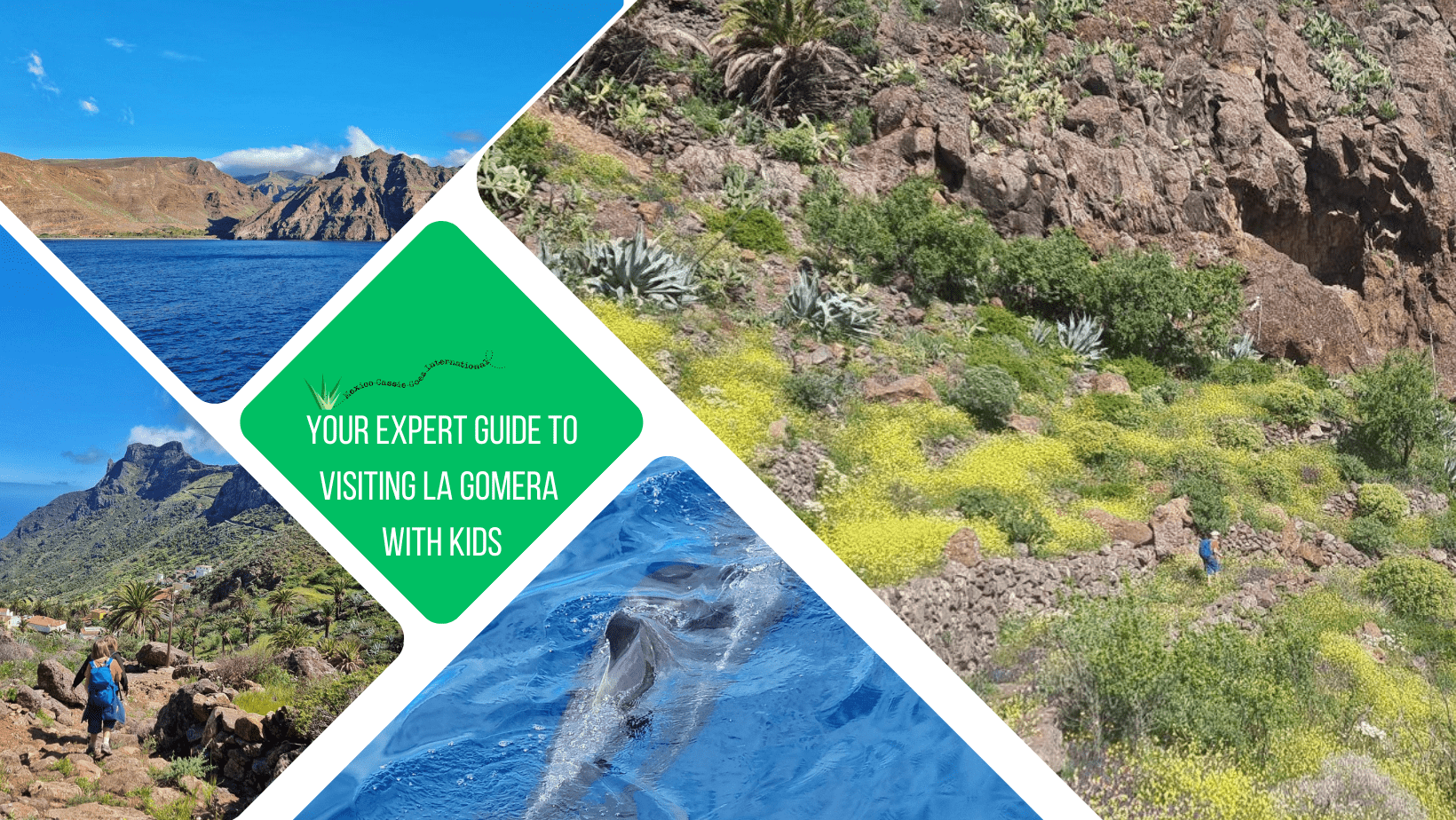
If your family is anything like mine then you may well be interested in a family holiday in La Gomera, the second smallest of the Canary Islands. It offers an incredibly different experience than visiting the better known and wildly more visited islands of Gran Canaria, Tenerife or Lanzarote.
In this article I’ll help you figure out if La Gomera is the right destination for your family, as we take a look at why it’s a great place to visit, where to stay and what to do on La Gomera with kids.
There are affiliate links in this article. If you click and make a purchase I could make a small sum at zero cost to you. Thank you!
Who should visit La Gomera
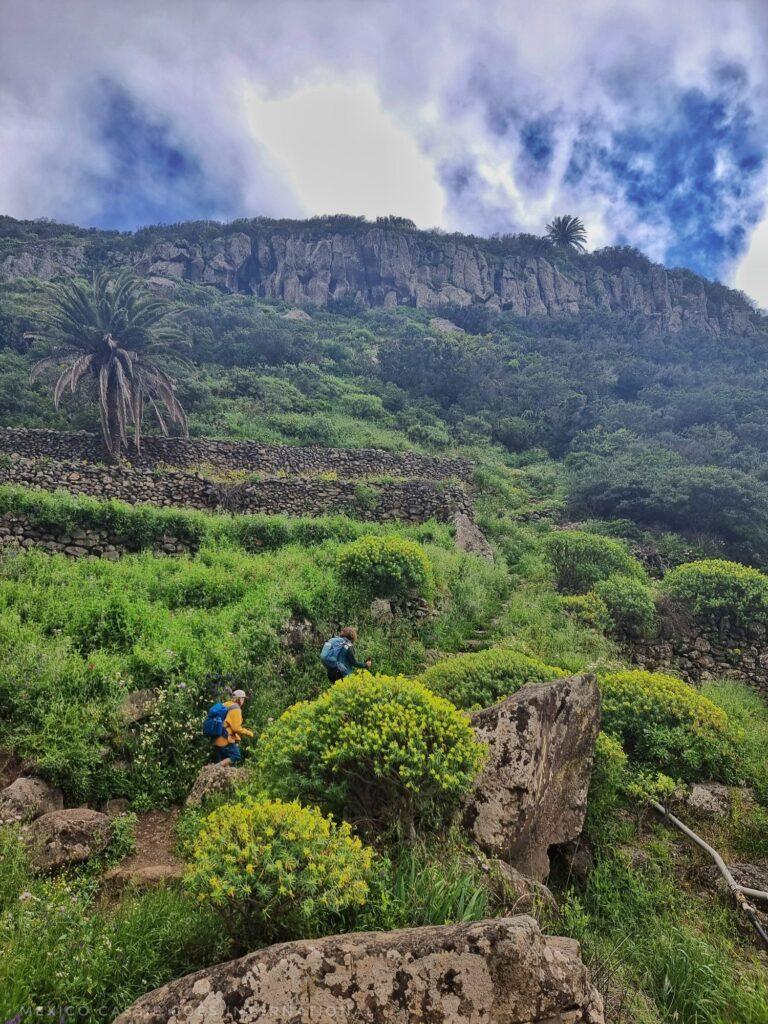
🎒🥾 Families who love adventure
🌿 Families who want to get away from crowds & avoid mass tourism
Highlights of La Gomera
La Gomera isn’t packed full of your typical tourist attractions but it is a truly perfect location for any family looking for a bit of adventure and a chance to get off the beaten track. It promises:
🌳 Access to nature
🥾 Hiking opportunities
🐋 Whales & dolphins
🏖 Beaches with calm waters
🏘 Small, safe towns & villages
🔎 Interesting culture & history
🍛 Great food
When to visit La Gomera with kids
The Canary Islands have a fairly constant year round Spring like climate, which makes it a great place to visit at any time. Average temperatures don’t move much from 22℃ all year round.
The north of La Gomera tends to be cooler and wetter than the south of the island.
🌼 Spring – perfect if you like wild flowers as they’re all in bloom at this time of year
🔆 Summer and winter months are also a delight
How to get to La Gomera
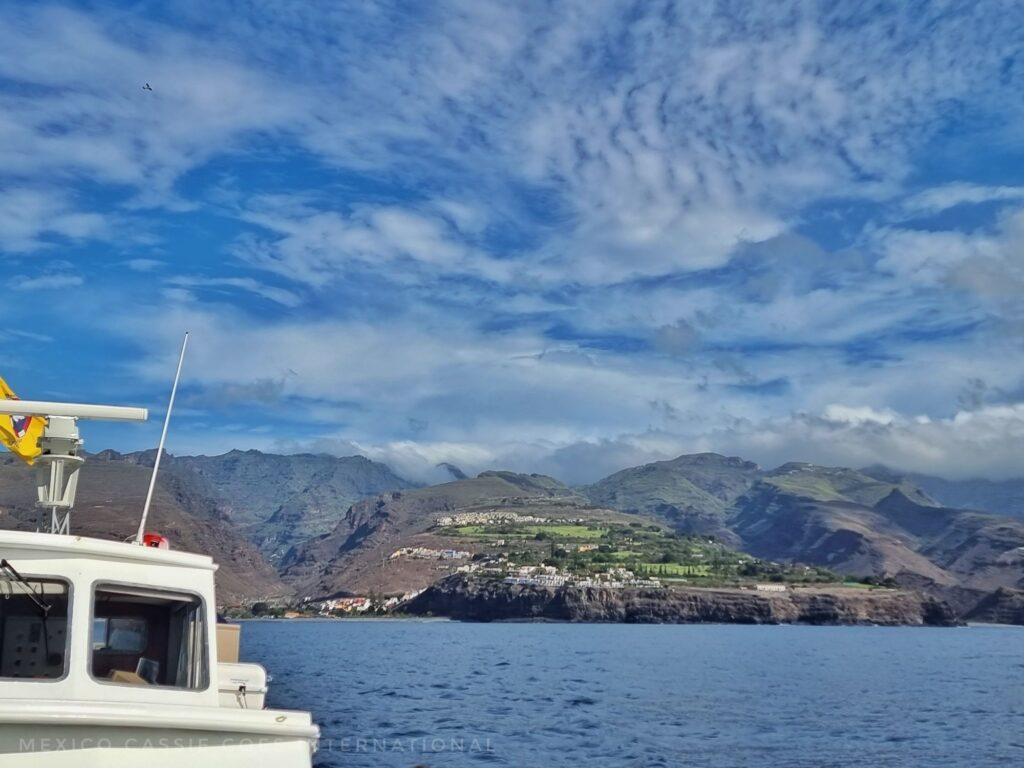
🗺 La Gomera, the second smallest of Spain’s Canary Islands, is located in the Atlantic Ocean, some 300km (180 miles) off the northwest coast of the African continent (around the border between Morocco & Western Sahara).
✈️ There are no direct flights to La Gomera except from Tenerife but most people wishing to visit La Gomera fly into Tenerife and then take the 50 minute ferry from Los Cristianos ferry port to the capital of La Gomera, San Sebastián de la Gomera.
✈️ → Check flights – Ryanair flies from most of Europe to Tenerife South airport, as do Iberia & TUI
🛳 → Check ferries – 2 companies run on this route, Fred Olsen & Armas Tras
🚗 → Check car rental options on La Gomera & on Tenerife (you can take a car on the ferry without a problem). Roads on La Gomera are generally very good. When we return (which we will), we will rent a car to give us more freedom than the island’s buses allow
Choosing accommodation on La Gomera
If you’re going to be on the island for more than a day you’ll need to decide if you want to base yourself in a town/village and then do circular day hikes, rent a car, or whether you want (as we did) to hike from location to location.
MexicoCassie recommended accommodation – La Gomera
The most important thing to know is that you need to book your hotels in advance because if you don’t, you’ll find yourself with nowhere to stay, particularly if you’re visiting over Semana Santa/Easter holidays/spring break.
🏨 Where to stay in San Sebastián: Vivienda Vacacional Villa el Mirador – perched over the town, the views over the bay and surrounding hills from this well equipped home can’t be beaten.
→ Read more or reserve your stay now
🏨 Where to stay in Valle Gran Rey: Apartamentos Baja del Secreto – here you’ll find traditional Canarian buildings with stone walls, wooden balconies & large terraces as well as access to a fabulous swimming pool with gorgeous views over the hills or beach.
→ Read more or reserve your stay now
🏨 Where to stay in Playa de Santiago: Parque Villa Mirador 4 – up on the hill just above Playa de Santiago is this incredible villa with its own pool & terrace overlooking the bay.
→ Read more or reserve your stay now
🏨 Where to stay in Chipude: Hotel & Restaurante Sonia – the rooms are good, clean and comfortable but the real reason to stay here is the food. Breakfast is included and it is both delicious & plentiful. Food just keeps arriving at your table!
→ Read more or reserve your stay now
🏨 Where to stay in Alajeró: Vistas del Sur – we had the best views of our entire trip sitting on the terrace here at sunset. This small, traditional cottage is the perfect place to stay if you enjoy peace & quiet with your perfect views.
→ Read more or reserve your stay now
🏨 Where to stay in Vallehermoso: Tamahuche Hotel Rural – breakfast is included in the price at this incredible small hotel. The beds are comfortable & the garden, terrace and views are magnificent.
→ Read more or reserve your stay now
🗺 Or, use the MexicoCassie interactive La Gomera accommodation finder if none of these options are what you’re looking for.
How long should you spend on La Gomera
1 day – you could visit for a day from Tenerife if you felt like it. The ferries are regular enough and it just takes 50 minutes to travel between the islands. You could go it alone with a rental car, simply go to San Sebastian de la Gomera, the main city, you could take a coach day trip or you could hire Ipalan to hike with you and the kids for a day before taking the last ferry back to Tenerife.
⭐️ MexicoCassie recommended day trip from Tenerife
Travel around La Gomera in a comfortable jeep for the day – you’ll visit the national park, the cloud forest, small villages, learn about the silbo Gomero and enjoy a meal of local foods.
→ Read the full MexicoCassie guide to taking a day trip to La Gomera
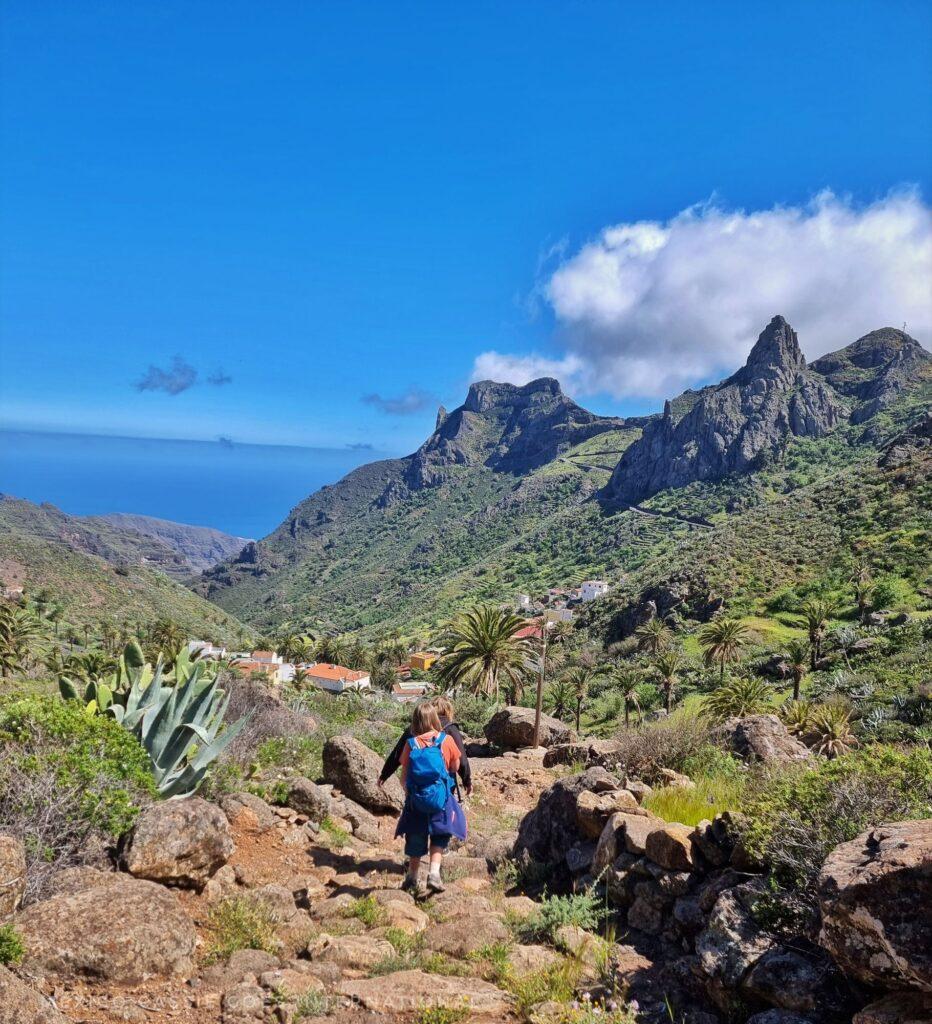
2 – 6 days – there’s plenty to do on this gorgeous small island, whether your family is into hiking, water adventures or just chilling out. We spent 5 days on La Gomera (3 of them hiking and, honestly, I wish we’d had longer to explore).
What to do on La Gomera with kids
Explore the nature
🌍 This small island (378 sq km) is a UNESCO Biosphere Reserve with
🥾 more than 600 km of hiking trails
🚲 over 80 km of bike routes
♻️ 17 protected natural areas
🐋 90 km of coasts and coves surrounded by Europe’s first Whale Heritage marine strip (declared by the World Cetacean Alliance)
🗻 The highest point on the island is Alto de Garajonay, at an altitude of 1487m
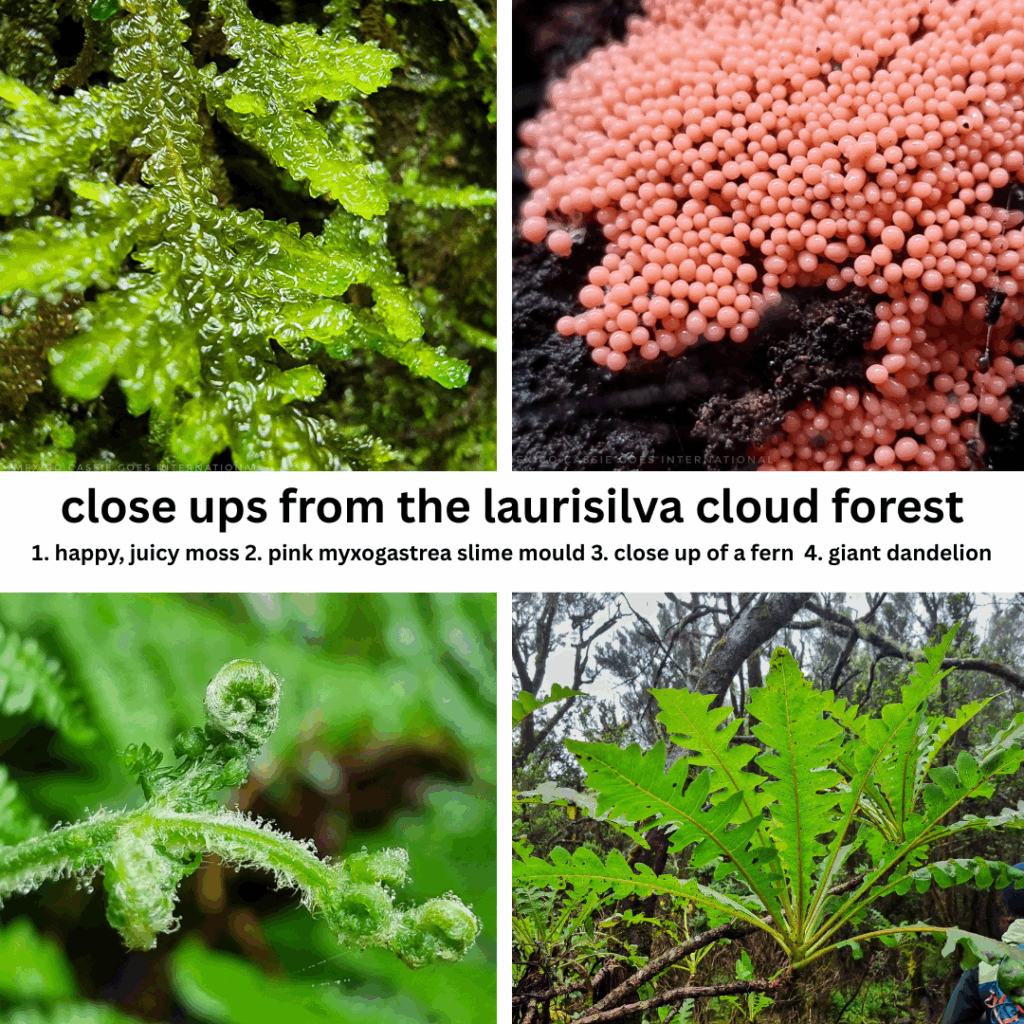
🐢 Being on La Gomera is a bit like visiting an African/European Galapagos Islands. (remember, it might technically be a part of Spain & Europe but it’s most definitely on the African continent) – because this volcanic island emerged from the sea, it’s inhabited only by wildlife that evolved on, or could fly to, the island. The flora, similarly, has evolved in its own way – think 25m tall heather trees and giant dandelion plants.
Garajonay National Park
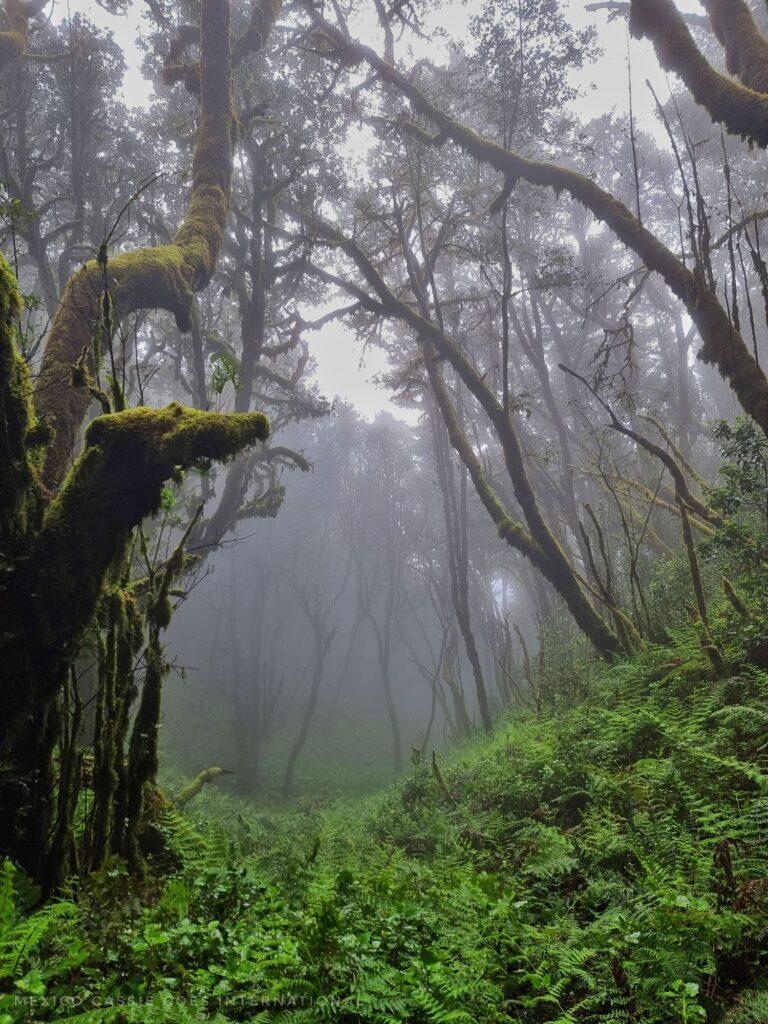
This a UNESCO World Heritage Site and home to one of the best laurisliva cloud forests in the world and it’s easily accessible with kids. There are plenty of places to walk in this ancient forest (please, please stay on the paths and don’t touch the trees), to picnic & to explore.
Don’t be confused and assume that a laurel forest is a forest of laurel trees – confusingly it means a ‘cloud forest’.
☁️🌳 This incredibly gorgeous laurisilva cloud forest covers around 70% of the national park. There are very few cloud forests left in the world and this one, at the heart of the island of La Gomera, is considered to be one of the best there is, hence its super protected status.
The upper reaches of this dense forest are almost permanently shrouded in clouds and mist, and as a result are covered in lush and diverse vegetation, much of which is endemic to the island. We particularly loved seeing 25m tall heather trees & giant dandelion plants.
If you hire a guide you will learn all sorts of cool facts about the forest and the plants & creatures that live in it.
→ Risquillos de Corgo or the Juego de Bolas Visitors’ centre are good places to begin exploring the national park.
⚠️ Pay attention
There are clearly marked paths in the forest, please stay on them. We saw people merrily wandering around off the paths, taking photos & touching the trees. I get it, I kinda wanted to hug the trees too but as ever, human skin oils can be harmful to the delicate balance in the forest.
Alto de Garajonay
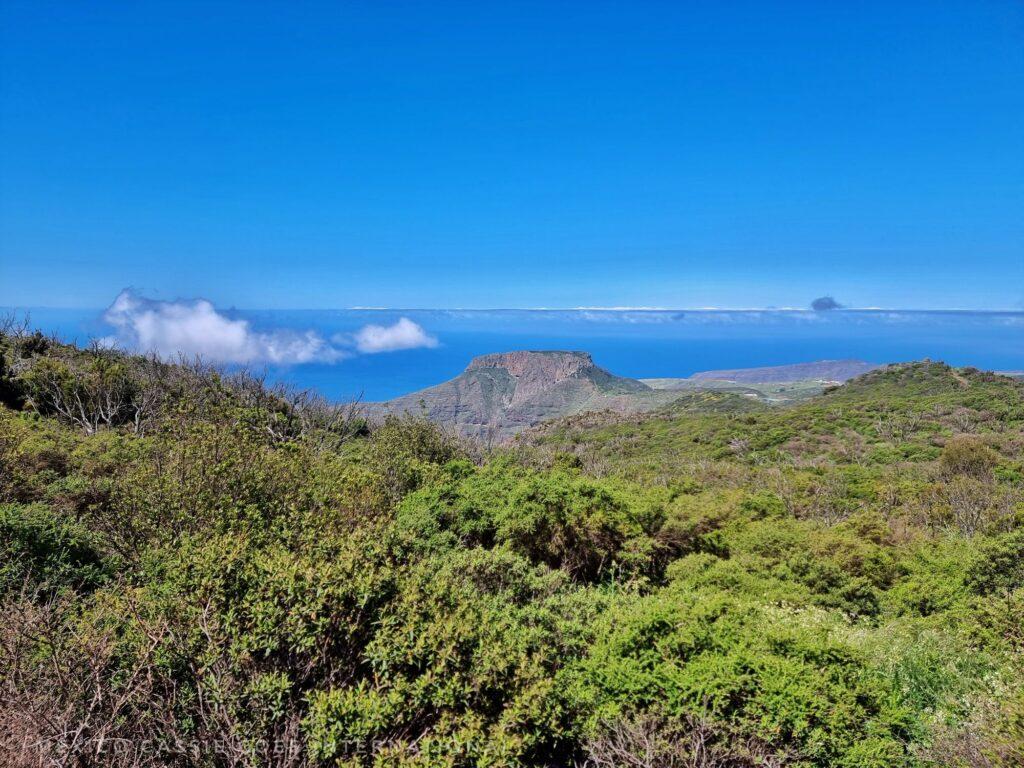
The highest peak on the island is nearly 1,500m above sea level. It’s possible to hike up from the car park that’s just 30 minutes walk away (or from elsewhere, as we did, if you’re into hiking). Views aren’t always great as it can be very cloudy but on a clear day you can see all the way to El Hierro and Tenerife (the neighbouring islands).
⚠️ Pay attention
This peak was also a pre-hispanic sacred place so please treat it with respect – it was here, at the summit that the original inhabitants worshipped their god, Orahan.
Miradors / viewpoints
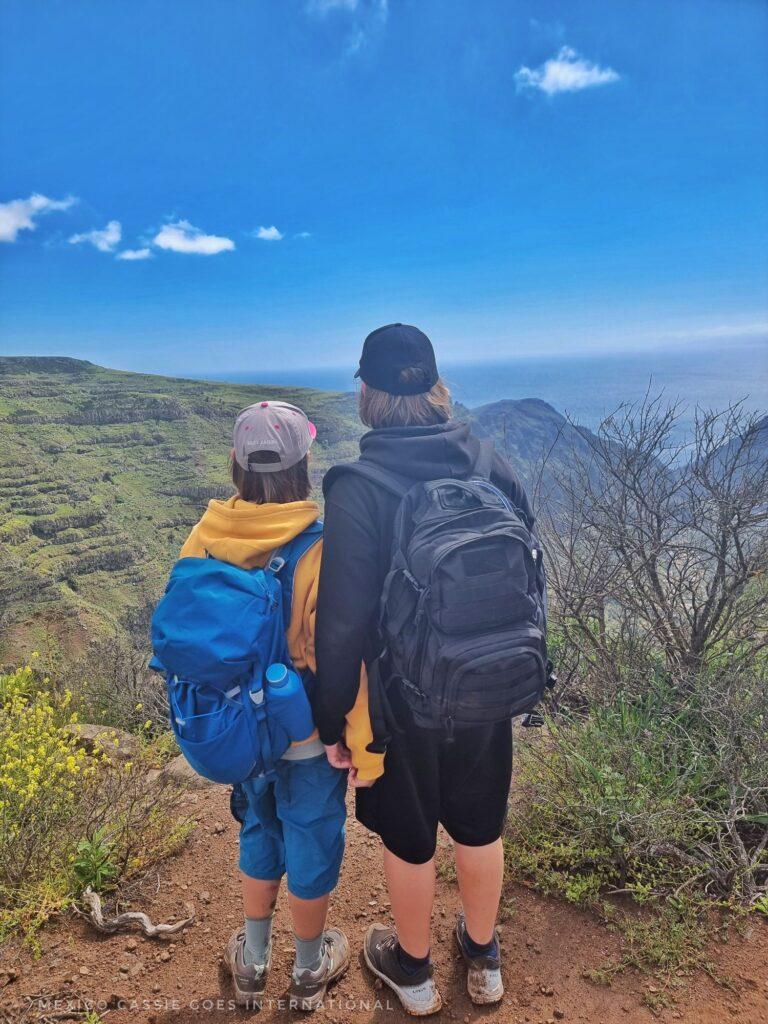
🔭 There are numerous stunning miradors to visit across the island where you’ll get excellent views out across the island. We particularly loved looking over to La Calera near Las Hayas. Also consider
The 2 best known are probably: Mirador de Abrante near Agulo – here there’s a gorgeous glass cantilever where you can enjoy views over to Tenerife, & the Mirador de Juego de Bolas – this is the national park visitors’ centre. But as you explore the island you’ll see there are plenty more, including: Mirador de Amanecer near Agulo, Mirador del Morro de Agando, Mirador de el Palmarejo, Mirador de los Roques.
Go hiking
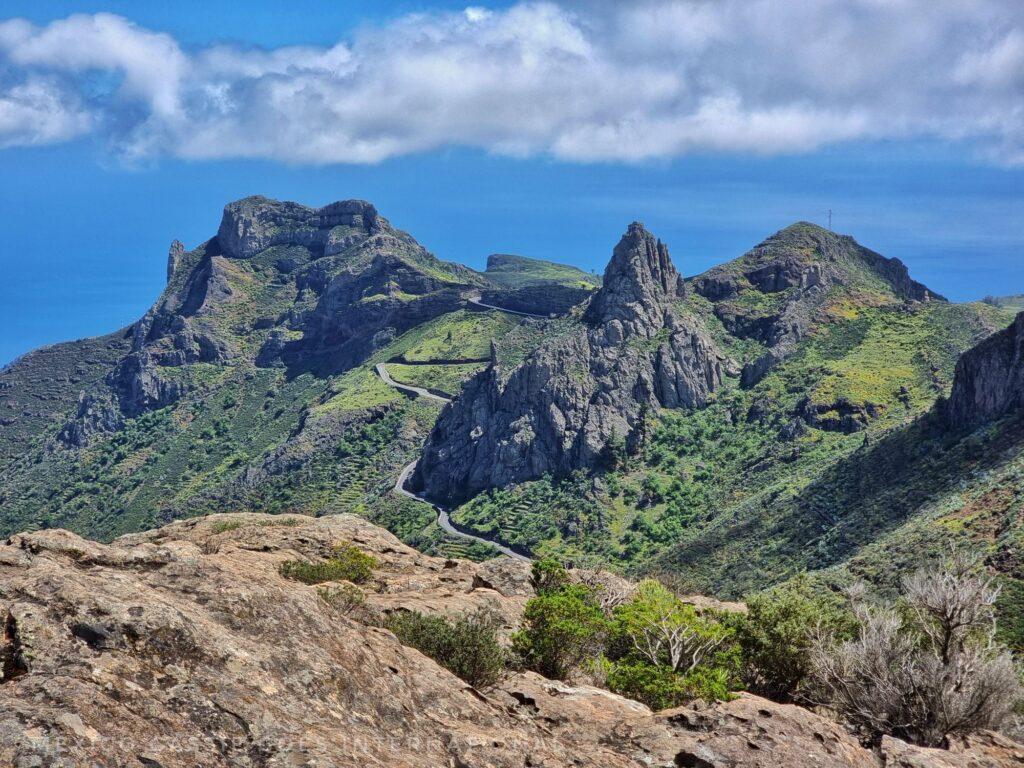
🥾 If your family is anything like mine then hiking on La Gomera is a great idea for you. The island is covered by a network of around 600 km of trails, which is kind of incredible when you think about how tiny it is. You can either hike alone, using a free app such as Komoot to help you plan a route, use a paper map (yes, they still exist), the numerous map boards you’ll find around the island or, you can hire a trekking guide.
You can hike in the forest, through the deep ravines and canyons, up in the hills, through banana plantations, and so much more.
There are plenty of routes and adventures suitable for kids. We went when my kids were 11 & 13.We spent 3 days hiking. Day 1 we hiked 12 km, Day 2, 17 km & Day 3 we walked 13km. My kids loved almost every second of it. There were a few moments of whining that someone was out of breath or short moments of worry as we hiked around a particularly narrow path on the edge of a mountain.
We had one kid tumble into a thistle patch (and then pull me in it too) but mostly as we adventured we had laughter, chatting, playing, and even some companionable moments of silence (although neither of my kids is good at being quiet). It was a really special family experience.
How did we plan our hike and why?
When deciding how to hike on La Gomera, we chose a 3-day hybrid-option offered by Ipalan because with so much to see and so many choices to make, we liked the idea of having someone help us plan our routes.
The benefits
✅ We were met off the boat and driven to our first hotel where we dumped our bags and then carried on driving to the starting point of our first day’s hike.
✅ This first day we had our guide, Audrey, with us, which was perfect as she introduced us to the island, told us all about the geology, the endemic plants, and basically settled us in to our new hiking life.
✅ Days 2 & 3 we hiked alone but with support over the phone if we needed it. Our routes were planned by Audrey to ensure we saw the very best of the island, based on our needs, desires & abilities.
🗺 We were given access to all our routes on the app Komoot, a paper map, & detailed photos of the route to carry with us.
🤕 I didn’t really expect to need the support but because this was our first multi-day hiking adventure with the kids, I thought it would be a good idea. And it turns out it was a fabulous plan because on the second day, 3/4 of us injured ourselves! Only 1 of us was hurt badly enough to bother mentioning it but when we did, Audrey & her husband got right to work bringing us ice packs, hiking poles & ankle supports.
✅ She also came up with 3 new route options for us for day 3 based on what she thought was now viable with the injured foot. This meant that instead of having a miserable taxi-day we were still able to do our third day of hiking, still get the spectacular views, just with a slightly different route.
I am so grateful to Audrey for her help and support and I know that we wouldn’t have had nearly as much fun without her.
✅ The other benefit is that our luggage was driven from hotel to hotel meaning we only had to carry water, snacks, first aid kit and rain jackets with us.
Audrey is French and has lived on La Gomera for 13 years. She loves & knows the island intimately and I couldn’t recommend a better guide. She speaks perfect French, English & Spanish.
📧 Contact Audrey from Ipalan to plan your trip
(Disclaimer: I finagled a small discount from Audrey because I’m a travel blogger who writes about adventuring around Spain but every word I write here is based on my excellent experience with her)
Mountain biking
🚲 With bigger kids, La Gomera is a great place to go biking. There are, as we saw above, 80km of bike routes around the island. Whether you bring your own bikes on the boat (we saw people doing that), or rent them on the island, for cyclists this is a great option. You can rent both e-bikes and regular bikes (including kid bikes).
→ Check Gomera Bikes or Gomera Activa for more rental information
📲 Komoot, the app I recommend for hiking, also has info for cyclists.
Shepherd’s Jump
🐐 This is a traditional Canarian way of moving across rugged and difficult terrain that has been in use since before the Spanish arrived and conquered the islands. Today it is a sport that you and the kids can try together. So if you’ve eve fancied using a 3 m long stick to move yourself around, give it a go!
Bird watching
🕊 With 300 species of bird living on the island, 17 protected natural spaces, and 5 special ZEPA areas (areas of bird protection), there is plenty of opportunity for bird watching for any budding ornithologists heading to the island.
There are 2 endemic species on the island: the laurel pigeon (one of the symbols of La Gomera) and the Bolle pigeon.
Beach & water fun on La Gomera
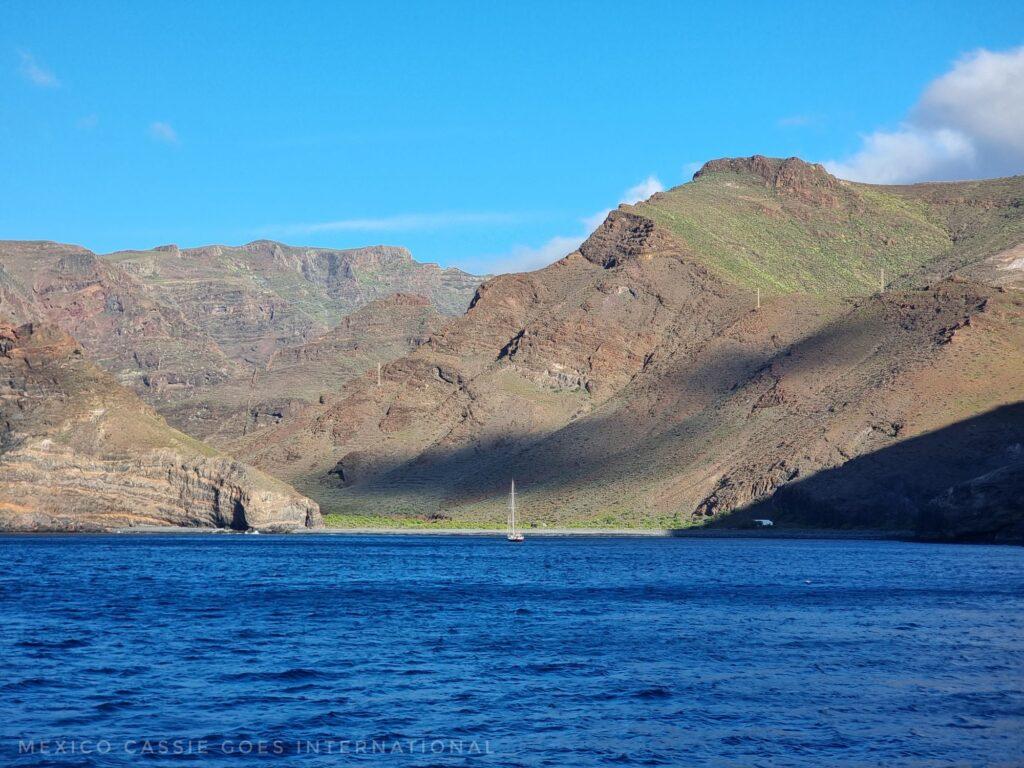
Obviously, being an island, La Gomera is surrounded by the ocean but it really isn’t a desert island style beach island. Don’t think you’ll be getting gorgeous white sandy beaches lined with palm trees, because you won’t. Instead, on La Gomera you can expect volcanic black sand or large pebbly beaches with gorgeous crystal clear waters that is an ideal place for swimming and playing with the kids.
🩴 I highly, highly recommend beach shoes or something you don’t mind getting wet if you’re planning on spending time on the beaches. We only had flip-flops and were in pain on the beaches in Playa Santiago getting in and out of the water.
The easiest to reach beaches are from the towns of San Sebastián de la Gomera, Playa Santiago & Valle Gran Rey.
San Sebastián de la Gomera
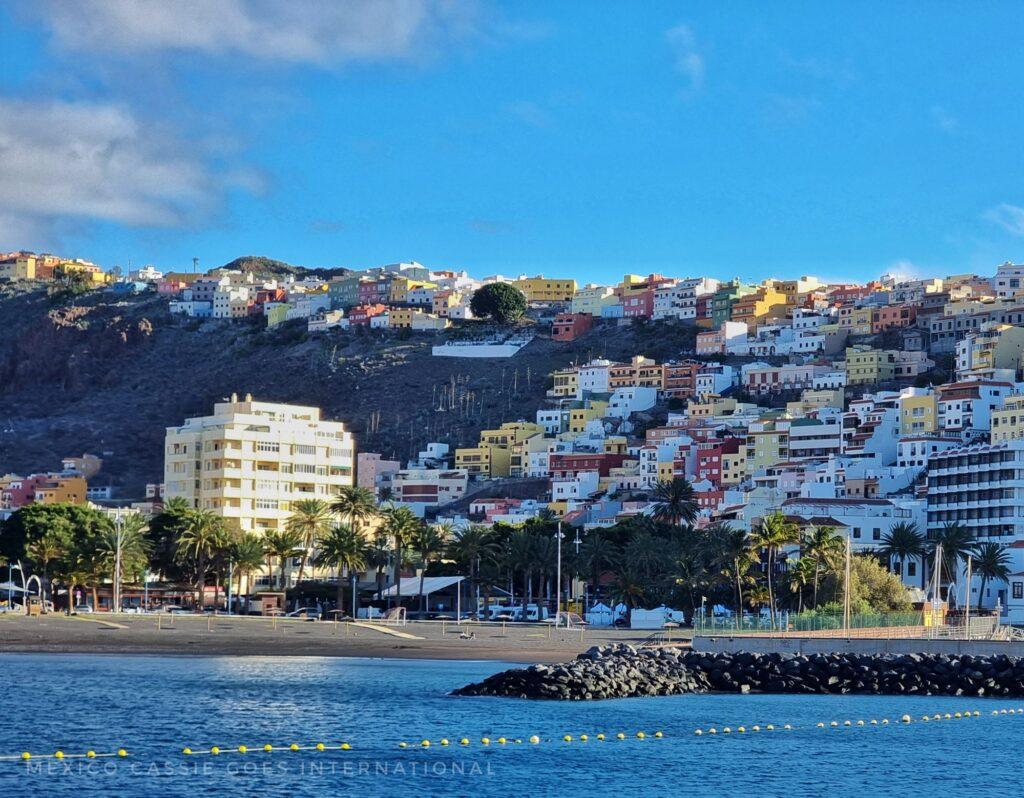
Playa de la Cueva is a sandy beach that sits right on the town within minutes of the port. This cove beach is gentle and calm and great for anyone who fancies a swim/splash around while in town.
Playa Santiago
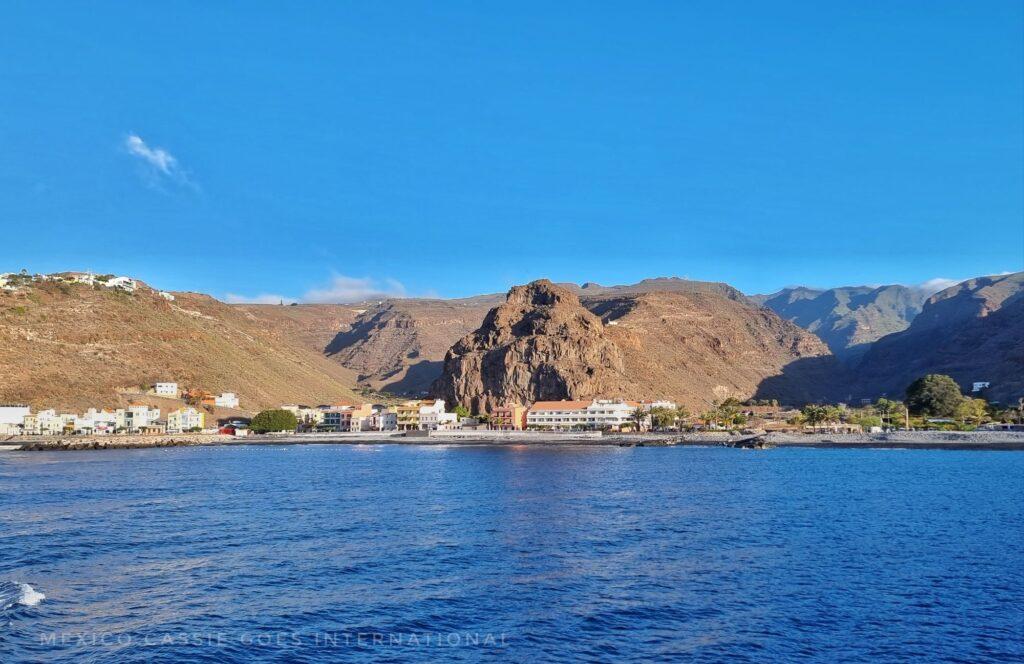
The beach here, Playa de Santiago, is mostly made up of large, smooth stones that are fine to walk on in shoes but very difficult bare foot. The water is pleasant and calm.
Valle Gran Rey
The sea in this part of the island is generally calm, and there are rarely strong currents.
Playa del Inglés, La Calera & Playa de Valle Gran Rey are the 3 main beaches here, all are black sand beaches.
Vallehermoso
This small town also has a beach, Playa de Vallehermoso but it’s rocky, not sandy and the waves are often too rough for swimming. There’s a pool at the side of the beach but confirm it’s open before you head there.
What to do close to shore
👙 Swim, picnic, play, obviously 😉
🛶 You’ll also find it possible to rent kayaks, aquatic bikes, & paddle boards if your kids are older and active
What to do on the water
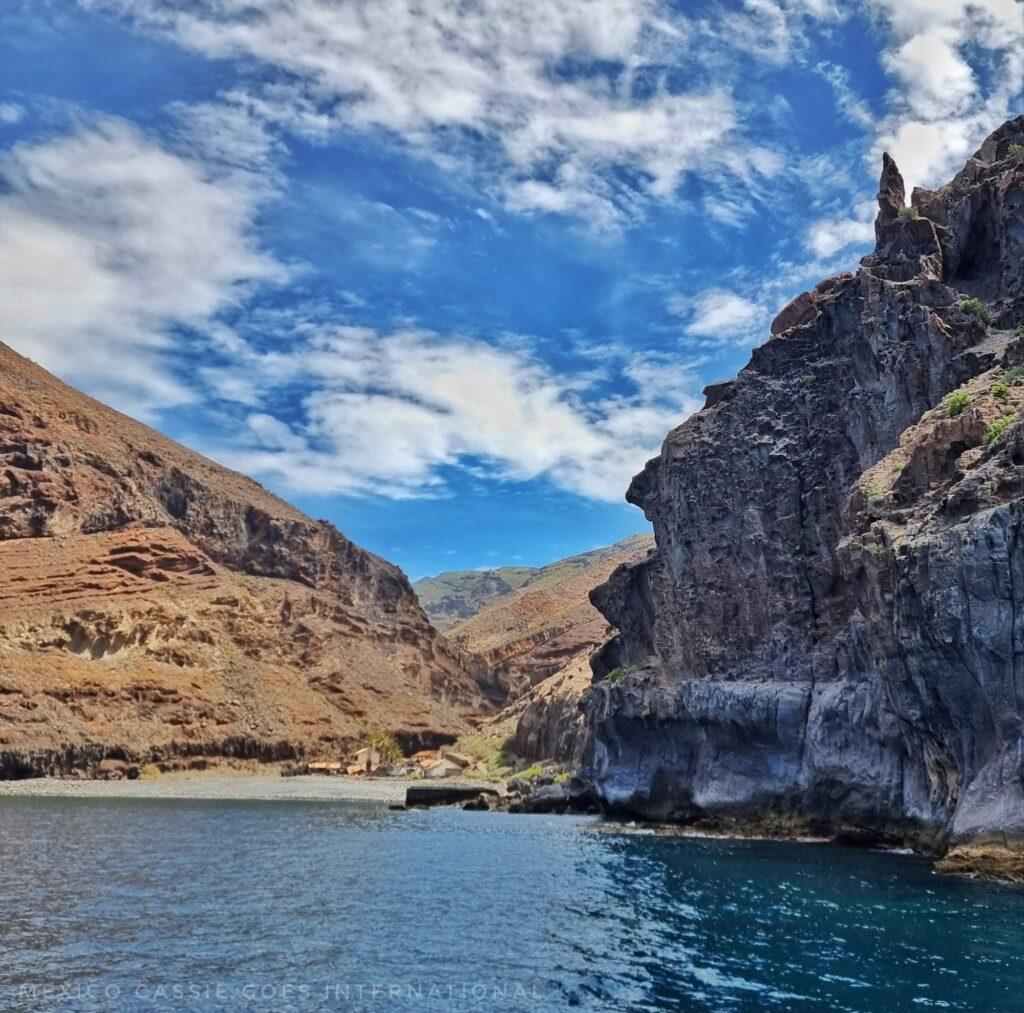
Whale & dolphin watching tour
🐋 A really great option with kids is to take a boat tour to see the dolphins & whales that live in the ocean around the island. When we did this we saw dozens of whales and just a few dolphins. We also saw a ray and a turtle, which the kids were pretty happy with.
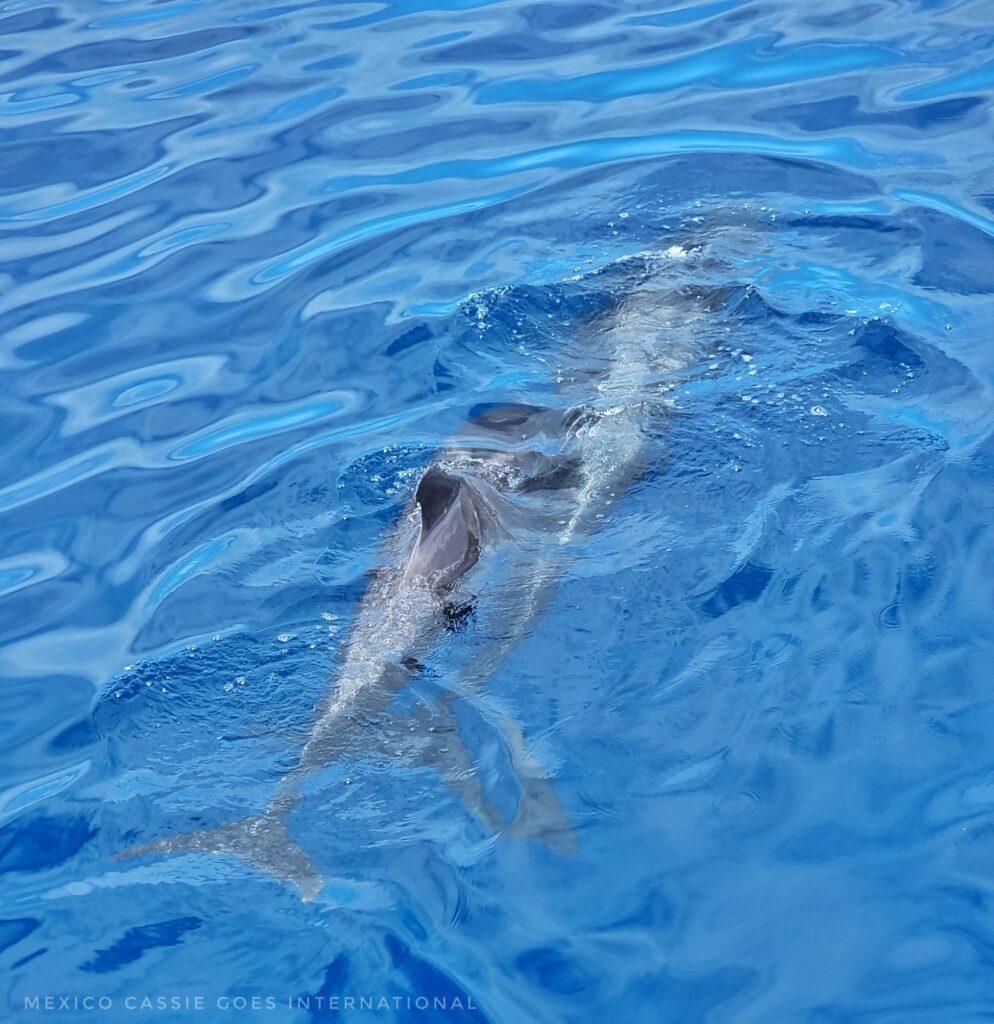
⭐️ MexicoCassie recommended whale & dolphin watching tour – 4 hr tour on a vintage boat from the south coast of La Gomera. The trip includes tapas, drinks, certified guide and an opportunity to swim in a secluded cove. This is the tour we took and loved.
🚤 You can even rent an inflatable motor boat without a licence and take the whole family out exploring!
🚤 From Vallehermoso you can also take a tour from to see Los Órganos, a really fascinating natural monument in the shape of organ tubes that was formed by volcanic rocks. Well worth a trip to see it.
🤿 Take a diving or snorkelling tour – thanks to the average annual water temperature of between 19 – 25, it’s possible to dive all year round from La Gomera. Visibility is around 30 m thanks to the incredibly clear water and here you may even be able to dive with dolphins and whales who live around the island.
🛝 Playgrounds
There are a few playgrounds in the small towns of La Gomera if you think you’ll need them for the kids. And out in the countryside you’ll find small recreational areas, sometimes with picnic benches, sometimes with restaurants. Look out for: Zona Recreativa Barranco La Madera, Zona Recreativa Pinar de Salamanca & the Laguna Grande recreational area.
History & culture
Silbo Gomero
😚 This is the local ‘whistle language’ – we actually didn’t see anything about it on the island but I asked because it’s always written about. I had seen one video prior to visiting and although no one ever actually says this, it’s not so much a ‘whistle language’ as ‘whistling Spanish’ – this doesn’t detract from its coolness but it’s more honest.
Museums in San Sebastián de la Gomera
🔎 There aren’t that many museums on the island but in San Sebastián de la Gomera you’ll find the Archaeological museum & La Casa de Colón (Christopher Columbus’ house) – honestly though, my kids were thrilled that they were both closed the day we wanted to visit. Every article I read prior to my own trip says you must visit the Torre del Conde but I’m not really sure why. It’s a big white tower with zero information about it and no way to go inside. It looks nice enough I guess.
Food in La Gomera
There are really good restaurants all over the island. We certainly didn’t have a single meal we didn’t love. Unlike the more touristy islands of Tenerife & Gran Canaria, on La Gomera you’ll find fabulous traditional Canarian food is the norm. Embrace it, it’s really delicious.
💶 We did find it to be slightly more expensive than mainland Spain but I don’t think that’s particularly surprising (and it’s worth noting that everywhere was happy to let us pay with credit cards).
Be sure to try:
Gofio – you’ll find this across all the islands in the archipelago. It is a flour made from toasted corn or wheat that can be used as a thickener or kneaded into something that resembles ugali/fufu. It’s tasty and definitely worth trying. We thought it had a smashed bean texture & flavour.
Almagrote – this is a traditional cured goat’s cheese spread (usually with spicy pepper, sometimes with cilantro – my favourite). It’s delicious, addictive & handily sold in small containers so you can take it home with you.
Potaje de berros – a delicious traditional soup/stew made with potatoes, veg, beans & watercress. Often served with gofio added.
→ And if your kids aren’t super excited by these options, use the MexicoCassie guide to feeding kids in Spain to find something they might enjoy more.
MexicoCassie guides to exploring Spain with kids