Your expert guide to what to do in gorgeous Puebla
Puebla is a great city to visit when you’re in central Mexico. It has absolutely everything you could hope to find on a city vacation: a fabulous atmosphere, fascinating history, plenty to do and see, great cuisine, and even awesome adventures and day trips.
As I share with you the best and most interesting things to do in Puebla, I hope that my love for this city shines through and is useful to you as you plan your own trip to Puebla.
My most recent trip to the state of Puebla was to attend ATMEX, a Mexico focused travel conference. I was lucky enough to spend some time in Puebla city before the conference started.
There are affiliate links in this article. If you click and make a purchase I could make a small sum at zero cost to you. Thank you!
Highlights of Puebla
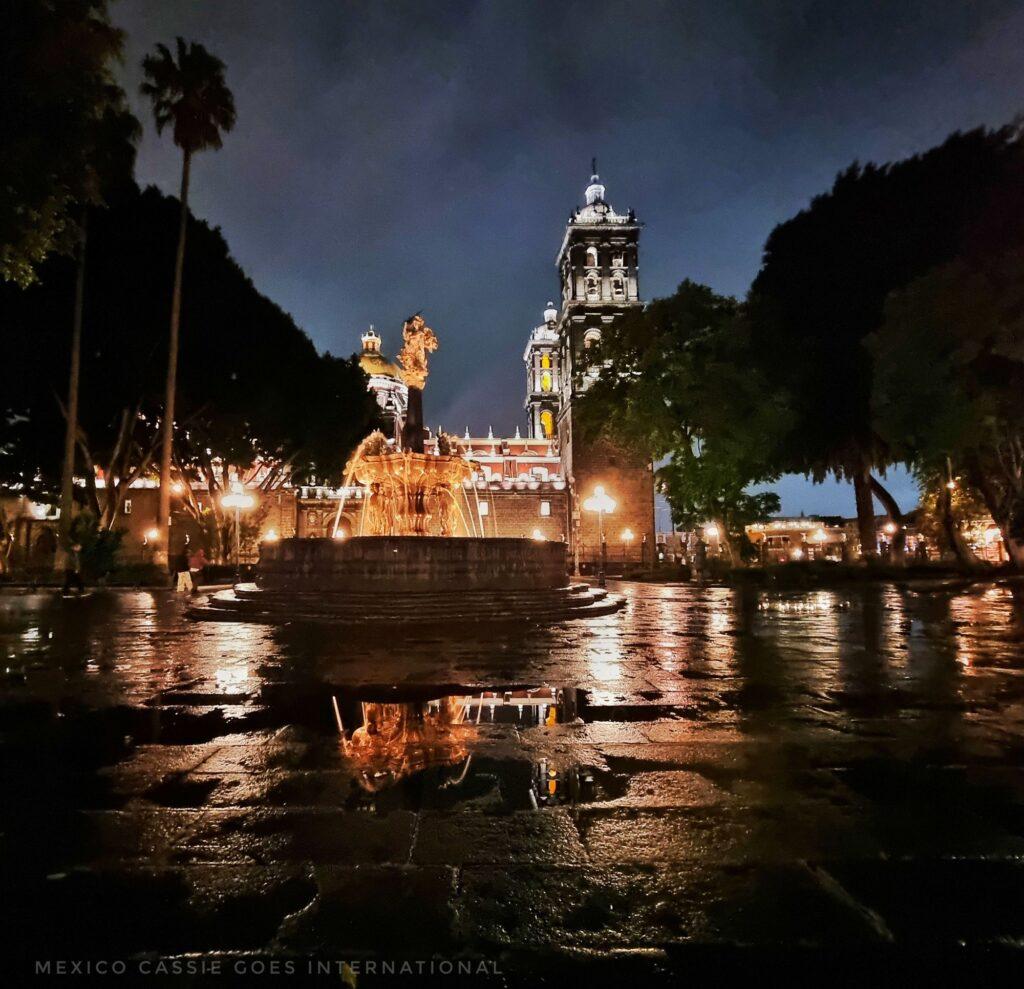
Just to whet your appetite, here’s a quick rundown on the coolest things about Puebla:
⭐️ The whole of the city’s historic centre was declared a UNESCO World Heritage site in 1987 – not surprising really, the architecture is amazing!
⭐️ Museo Amparo is one of the best museums I’ve ever been to in my entire life
📚 Biblioteca Palafoxiana, the oldest library in all of the Americas is right here in Puebla, and you can visit it!
🍽️ The local cuisine is outstandingly good
🌋 There are 3 volcanoes within easy reach of Puebla and on clear days you can see them all from the city
How to visit Puebla
If you’re not interested in the the ‘hows’ of visiting Puebla, feel free to skip ahead to the ‘what to do’s’ of Puebla. Here we’re going to take a look at how to get to Puebla, get around the region and city, where to stay, and what to eat while you’re in Puebla.
Not interested? Skip ahead by clicking here
How to get to Puebla
Nicely located just 2 hours from Mexico City, Puebla is easy to reach by road.
🚘 Renting a car and driving yourself is a great idea if you plan on taking lots of day trips from Puebla. The first time we visited, we rented a car from the CDMX airport, this meant we could get into the nearby National Park for our volcano adventures
→ Check rental prices and availability with DiscoverCars, my favourite rental broker in Mexico
🚌 Take a bus – Puebla is well connected with cities around Mexico.
→ Check bus timetables and book your journey on Busbud (an aggregate site that brings the various bus companies into one place)
👣 Tours from Mexico City are easy to find if you’re wanting to visit for a day – I use GetYourGuide & Viator to plan my own day trips
Getting around Puebla
🚌 It’s important to note that Puebla is a big, bustling city and its bus stations are not located downtown, where most visitors like to spend their precious days. If you do plan on using the buses for your day trips, it’s important to factor in the cabs you’ll need to/from the bus stations and the added travel time this requires (20-30 minutes from downtown generally).
→ CAPU (Central de Autobuses de Puebla) is the main bus station in Puebla
🚖 Uber works well in Puebla and generally, if you’re staying in the centro historico, everything is within walking distance, more or less.
Where to stay in Puebla
🏨 MexicoCassie luxury, ‘treat yourself’ recommendation: Palacio Julio Hotel – the whole hotel is gorgeous but the reason I love this hotel so much is its floor to ceiling windows (I got up to watch dawn break over La Malinche and it was magnificent). Location is great, breakfast is fabulous and the beds are incredibly comfortable.
🏨 MexicoCassie culinary recommendation: Casona María – this small, colourful, boutique hotel, in my opinion, serves the very best food in Puebla (review below). Each room is uniquely decorated and the hotel location is good.
🏨 MexicoCassie money saving recommendation: Hotel Bacantes – also extremely centrally located, this is a very well priced, traditional hotel. Rooms are simple and nothing fancy but they’re clean, safe and the staff are lovely.
🗺️ Or use the MexicoCassie interactive map finder if these options aren’t to your budget or taste
What to eat in Puebla
I have never had a bad meal or snack in Puebla. In addition to all the regularly brilliant Mexican dishes, you can also find the following local plates:
Cemitas – it’s a sandwich but it’s also so much more than a sandwich. A traditional cemita is a huge sesame seed topped bread roll that’s generally filled with a breaded meat, avocado, a cheese, onions and chile (either jalapeño or chipotle).

Where to try: you can find them all over Puebla – I particularly enjoyed the ones I ate at Cemitas y Tortas La Poblanita & in the Mercado de Sabores.
Mole Poblano – yes, you’ve probably had mole before but if you haven’t had it in Puebla it’s not a mole poblano. Mole Poblano is darker and richer and somehow just more delicious than a regular mole. You must try it.
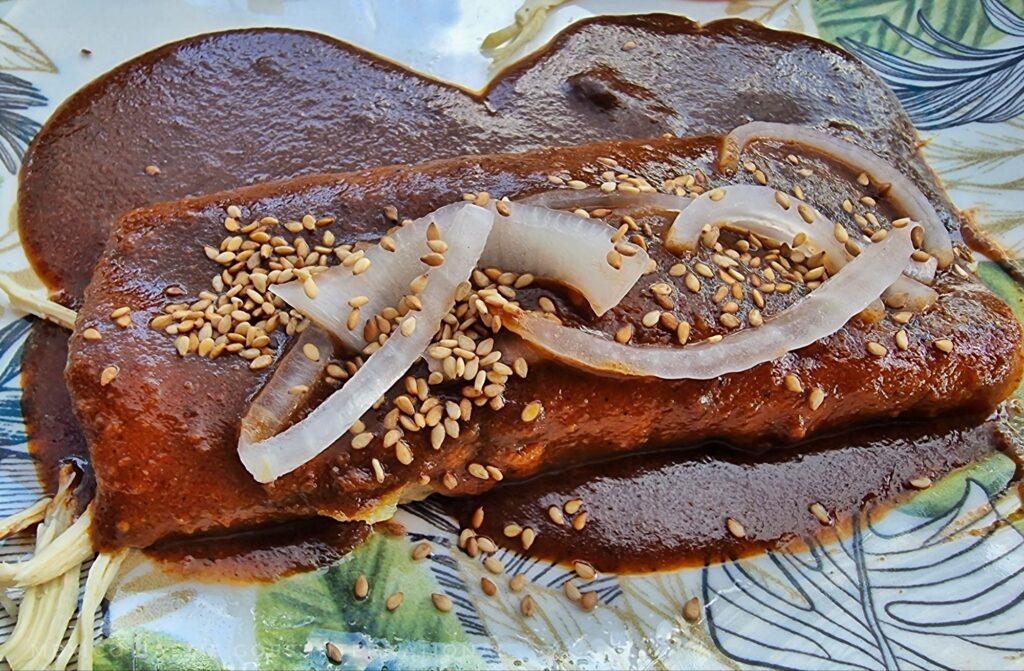
Where to try: My favourite was in El Mural de los Poblanos and I hear that Comal, on the zocalo is also excellent.
Tacos Arabes – these tacos,rather than being meat on a corn tortilla, are gently seasoned meat wrapped in thin pita style bread (or corn tortilla). It is generally thought that they arrived in Puebla along with immigrants from the Middle East after the first world war.
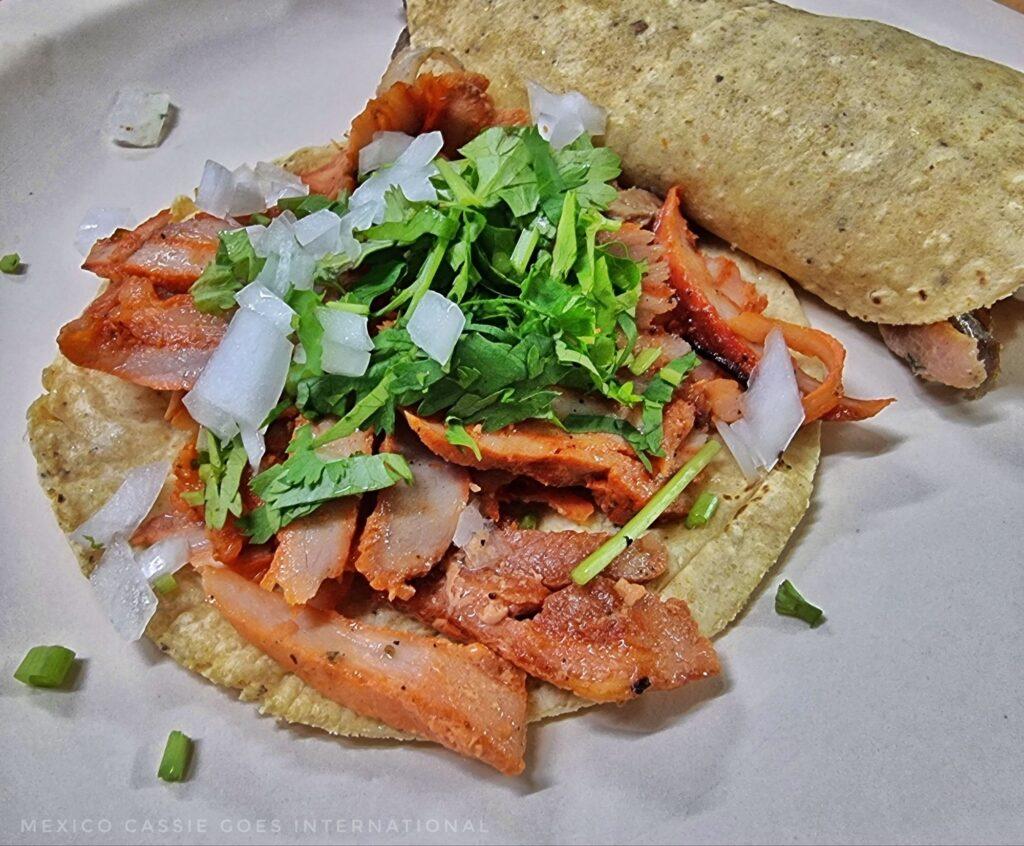
Where to try: Taqueria Oriental El Sultan is my favourite in Puebla.
Chile en nogadas – this is one of my favourite foods of all time. The dish is a poblano chile stuffed with minced meat, picadillo (fruits and spices) and served with a walnuty-cream sauce, pomegranate seeds and parsley served at room temperature.
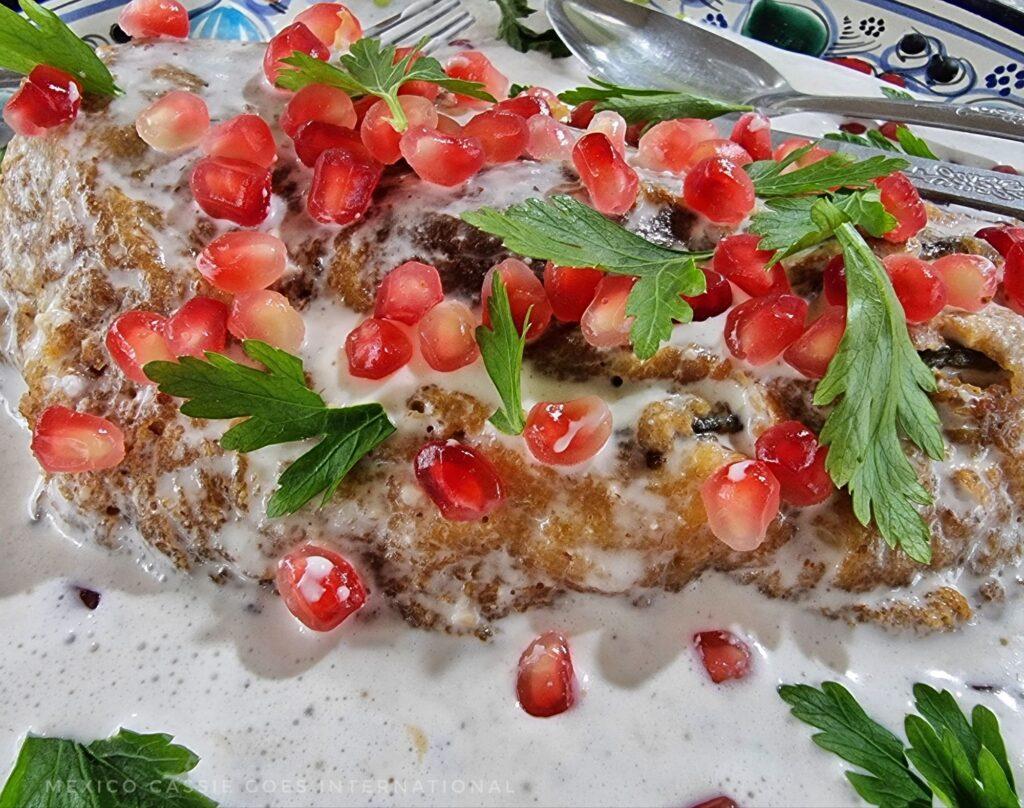
This dish originates here in this extremely fertile region of the country where all its ingredients grow. It’s eaten in September as an “Independence Day” meal because the colours are the colours of the Mexican flag.
Where to try: This depends on how fancy you are and how much money you have to spend. I very much enjoyed eating it in the Mercado de Sabores and at Restaurante Bar El Parián (a superb and friendly family run place).
💲💲If you go to a more upmarket option you may well receive a certificate of authentication with your meal – this is to prove it has been cooked with all regional ingredients). El Mural de los Poblanos is highly recommended as another great spot to try this dish but sadly for me, I ate there out of season so haven’t tried their version.
La Pasita – a local alcoholic drink made from grapes that is generally served with a square of cheese in it. It’s delicious, I promise.
Where to try: Head to the cantina of the same name, La Pasita 1, the oldest cantina in Puebla. Admittedly it’s often crowded but it’s really the coolest spot to check out. And when you’re done there, head to the nearby ‘Oaxaca de Mi Corazon’ for mezcal based drinks.
Best meal: Casona María, one of my most recommended hotels in the city is also home to one of the best restaurants in Puebla. Here, I was treated to the most wonderful seven course tasting menu. Everything was prepared with fresh, local ingredients and the chef came out to explain every plate to us. This restaurant offers a real gastronomic experience, not just a meal. Reserve via Whatsapp (0052 2212021565).
What to do in Puebla
Explore the centro historico
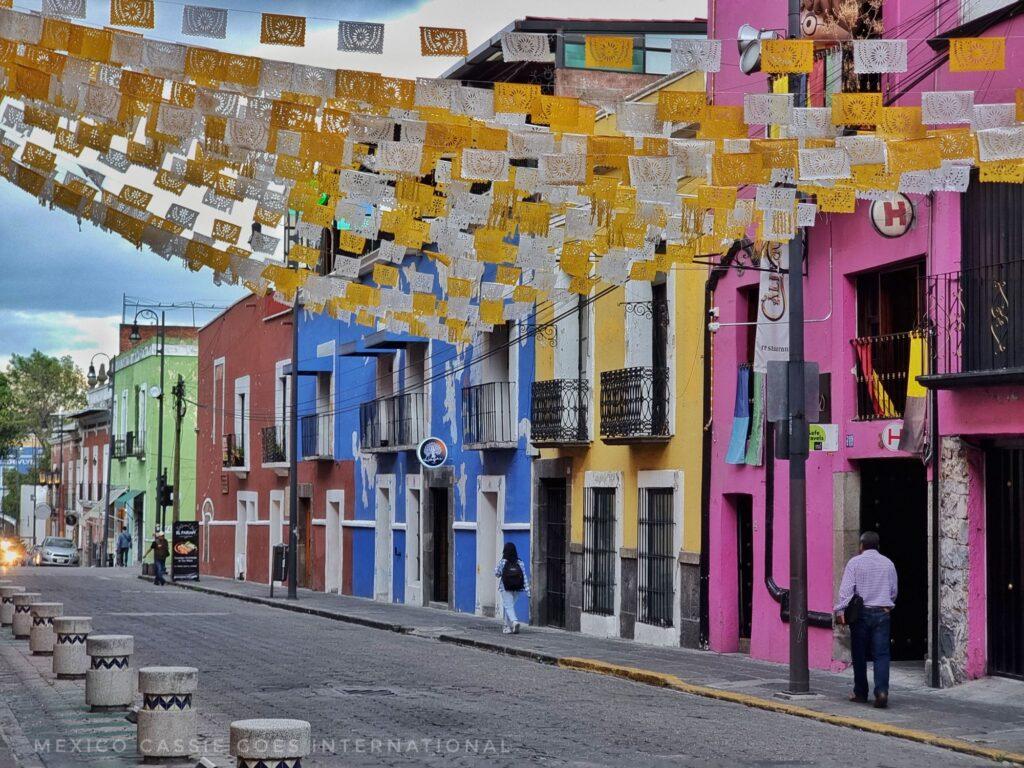
Puebla is really a magnificently beautiful city, everywhere you turn, there’s yet more magnificence upon which to feast your eyes.
👣 It’s not difficult to explore alone but if you’re a walking tour kind of person, or are excited to learn about the history of the city, I recommend booking a walking tour with Unlimited Experiences, their team are a fount of local knowledge and history.
What makes Puebla so fascinating?
For me, it’s the city’s interesting history*. Puebla, unlike so many Mexican cities, was actually built from scratch by the Spanish, as a Spanish city, on a more or less uninhabited piece of land. Prior to the Spanish arrival, this was a valley called, “Cuetlaxcoapan” (‘Where serpents change their skin‘, in English), where Indigenous people would meet to fight, negotiate, and exchange captives/sacrificial offerings.
Puebla was founded in 1531 as a Spanish only city. Because it was a planned city, it was used as a ‘practice ground for the rest of Mexico and Latin America’, anything that worked well in Puebla could be transported around the empire, or so thought those pesky Conquistadores.
The city was designed so that there is always cool air flowing along the streets.
There are 2600 monuments in the centre of Puebla, more than anywhere else in Latin America (I don’t know if this is truly a good thing or not 😉).
Cinco de Mayo – we can’t talk about Puebla and not mention this important date. Yes, it was an important battle here in Puebla, no it is not Mexican Independence Day (that’s Sept 16th) or even particularly noted anywhere else in Mexico.
*Anyone who ready my blog regularly knows that I’m outspoken in my horror of colonialism and of its remaining vestiges but it’s practically impossible to talk about Mexico without referencing colonialism, the conquistadors and the colonial buildings we see today.
Zocalo & the surrounding area
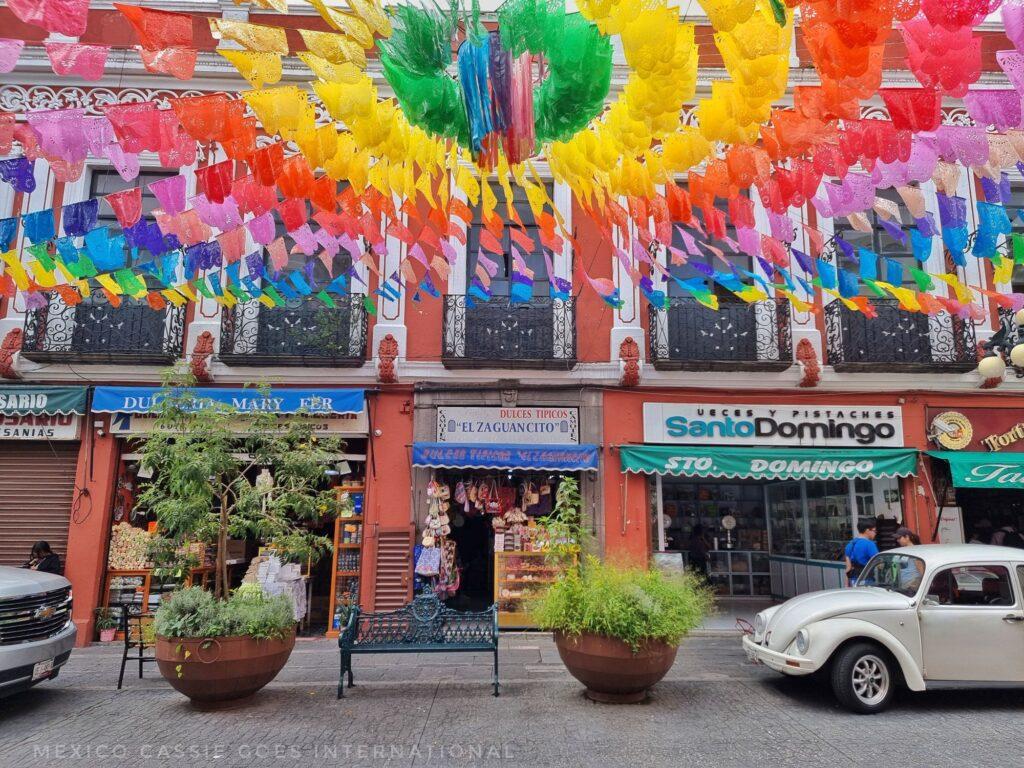
One of my favourite activities in any Mexican town or city is to spend some time sitting on the main plaza, hanging out. It’s here where you start to feel Mexico. I just love watching life happen around me on the city squares; kids play, couples canoodle and older people sit and chat while everyone else crosses and weaves around them. It’s such a perfect experience and a perfect way to relax into your new surroundings.
→ Use the MexicoCassie guide to Mexican street food to elevate your zocalo plaza sitting fun
The streets around the zocalo are also great to explore. I particularly recommend you don’t miss
Calle 5 de Mayo – modern pedestrianised street lined with shops (check out the Centro Comercial La Victoria, a small covered shopping area with beautiful architecture)
Calle de los Dulces (Calle 6 Ote.)– this is a pleasant and colourful road full of traditional sweet shops
Pasaje del Ayuntamiento – an impressive covered street between the zocalo and Ave 2 Ote
Museums to visit in Puebla
One of my favourite things about Puebla is how cultural it is. The two main museums that you can’t miss are:
Museo Amparo
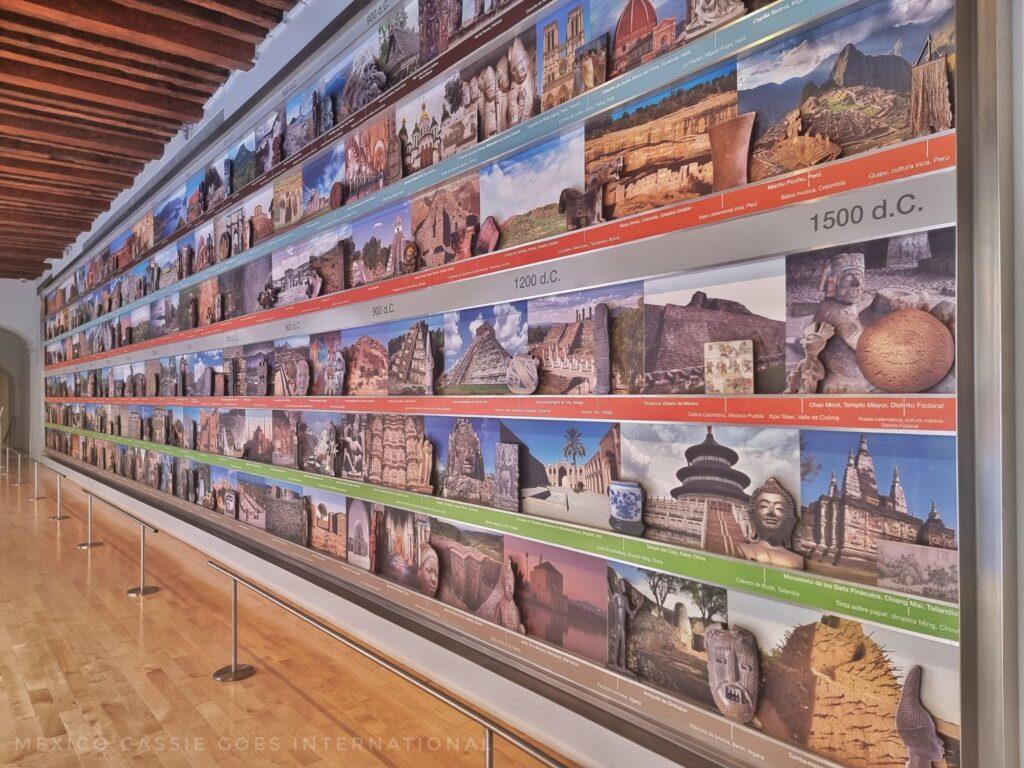
This is, without question, not only one of the best museums in Mexico but also that I’ve ever visited anywhere in the world. It’s home to one of the most thoughtful collections I have ever experienced. If you give the museum your full attention, you’ll learn, think, re-evaluate everything you thought you knew about the world and probably cry.
I’ve been twice now and each time I’ve left with new insights and understanding of our shared human history.
The collections focus on two main areas: pre-hispanic art/life, and on extremely thoughtful contemporary art.
Biblioteca Palafoxiana
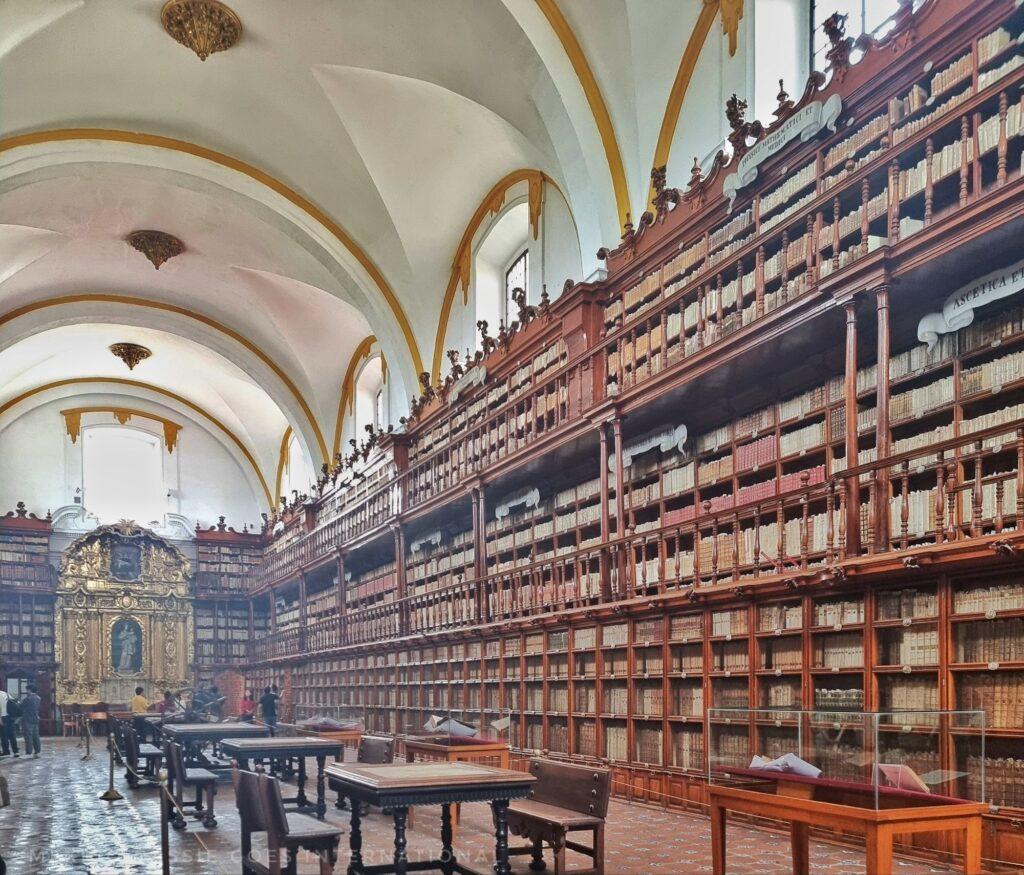
Founded in 1646, this is the oldest library in the Americas. It is home to over 45,000 books & manuscripts and it is listed on the UNESCO Memory of the World Register.
It’s a cool place to visit and walk around the library itself, but for me, I found the exhibitions in the rooms adjacent more informative and thought provoking. As well as learning about the history of the library, you will have to confront the realities of our modern society through the extremely clever pairing of ancient manuscripts and modern questions.
Last time I visited (Oct 2025), the exhibition focused on the most important/life changing books in the library throughout history. It asked visitors to confront the realities of modern society through the extremely clever pairing of old manuscripts and modern questions. I found this to be extremely well curated and thought provoking. Bravo, Biblioteca Palaxfoxiana for such a fantastic exhibition.
There are also a good number of other museums and galleries to visit while you’re in town.
Museo Regional de la Revolución Mexicana, Casa de los Hermanos Serdán
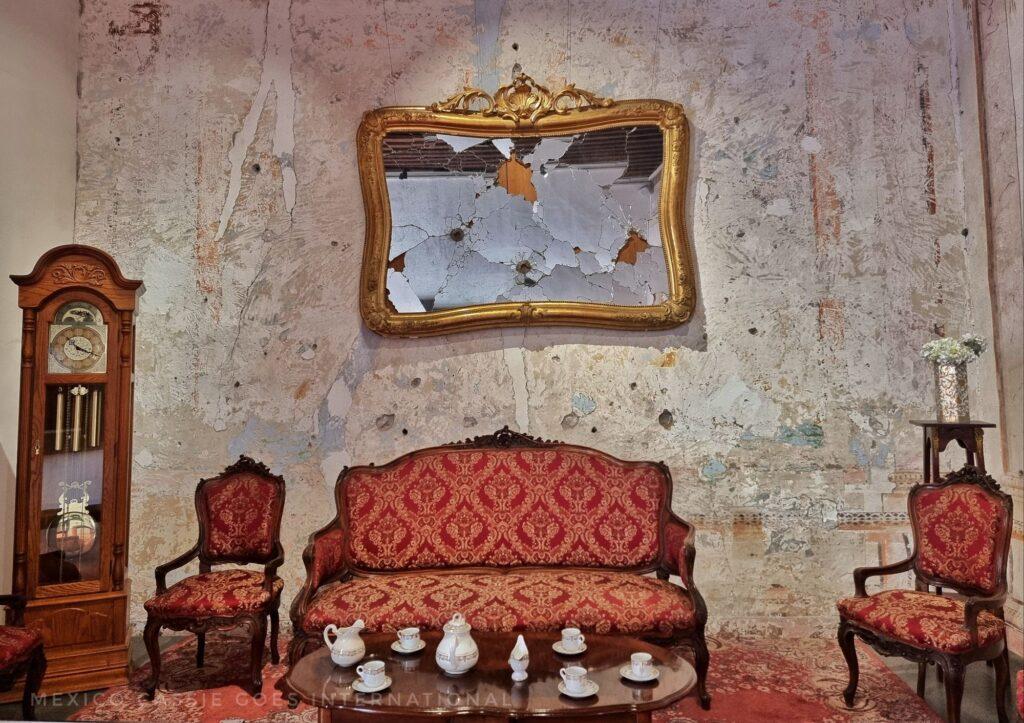
This bullet marked building is home to a very interesting exhibition about the Mexican Revolution. It takes a little while to get into the swing of understanding how the house and residents played such an important part in the revolution but if you’re willing to put the time in, then it’s really a very rewarding place to visit. Handily, everything is in English as well as Spanish.
Museo Universitario Casa de los Muñecos
Just off the zocalo is this fascinatingly eclectic museum housed in a truly gorgeous building. It reminded me of Chihuahua’s Museo de Mamut, another brilliantly weird collection no one should miss.
Museo San Pedro de Arte
For me, the most impressive thing about this museum it the building itself as it’s a 16th century hospital. The exhibitions are collections of local artists’ and they’re not bad.
Museo Viviente (Living Museum Puebla)
A great stop with the kids, here you can learn about all sorts of reptiles, amphibians, and insects.
Museums outside of the centre of Puebla that are worth a visit
Museo Regional de Puebla – in the Zona Historica de los Fuertes, this is an excellent museum for anyone interested in the history of the region.
Museo de la Evolución – also in the Zona Historica de los Fuertes, this museum is full of fossils and dinosaurs. I went without my kids and had a great time but I do know that they’d have loved it – great for everyone therefore!
Museo Interactivo de la Batalla del 5 de Mayo – another museum in the Zona Historica de los Fuertes, this one is a modern museum dedicated to the Battle of Cinco de Mayo and Mexico’s victory over the French in 1862.
Museo Internacional del Barroco – a modern and sleek building that is home to an extensive collection of baroque art. Highly recommend taking a cab to check it out.
➕ Unusually, there are no murals to see in the Palacio Municipal in Puebla.
Churches in Puebla
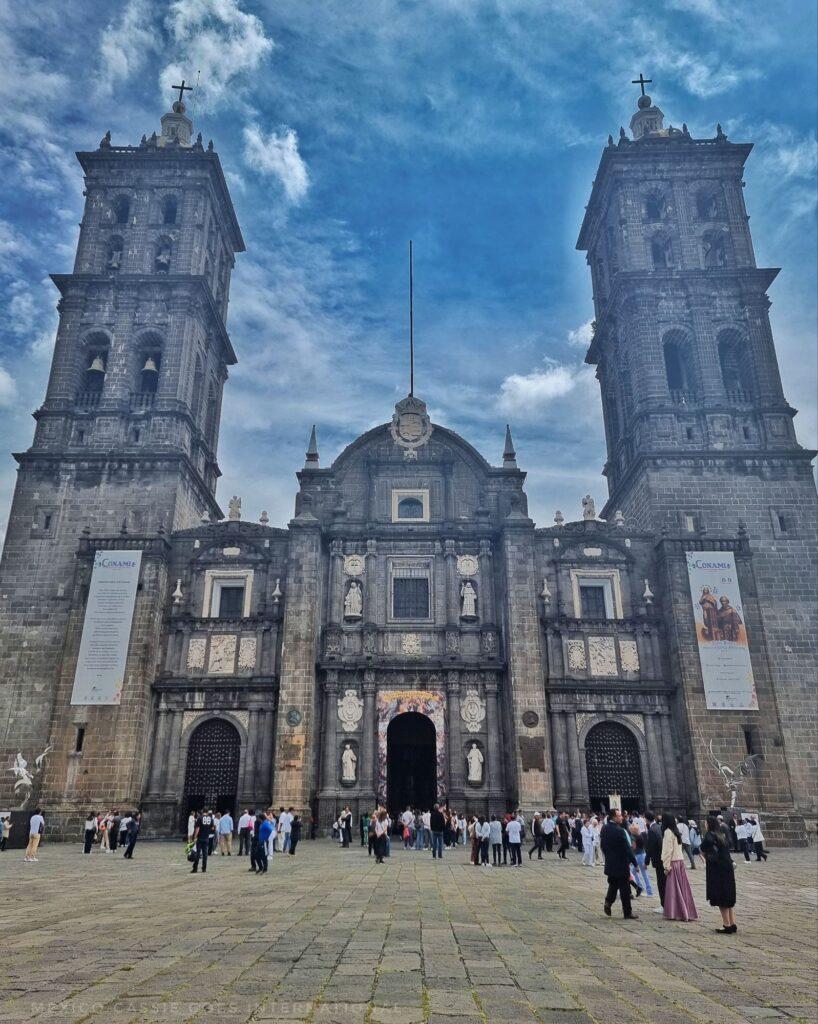
We can’t talk about Puebla and not mention the churches even though, for me, they are not really a highlight of the city. It feels as if there are an official bazillion of them but really, you should be aware of just three.
Catedral de Nuestra Señora de la Inmaculada Concepción – the massive cathedral on the zocalo is an absolute focal point of the city. The first stone was laid in 1535 and works were only finished over 100 years later, in 1649.
❗️My favourite fact about this cathedral is that it is technically the tallest church in not only in the country, but in the Americas. When it was built there was a law that no church could be taller than the cathedral in Mexico City. The architects stuck to the letter of the law but then sneakily added crosses to the top of the towers.
Templo de Santo Domingo & its Capilla del Rosario – an incredibly ornate, gold covered chapel. I found the sheer ‘goldyness’ of it distasteful but it’s considered by many to be an eighth wonder of the world, so what do I know?
Ex-convento de San Francisco de Puebla – this tall and imposing colourful church is my favourite in Puebla. The interior is fairly plain, it’s the outside people like to see.
➕ while you’re here, take a walk along Callejon de la 10 Nte, take a peek inside the Hotel Purificadora (a 19th century water purifying factory with some gorgeous touches) and then head into the barely-on-the-tourist-radar, Parque Paseo San Francisco, it’s a nice little place with some very cool sculptures and trees.
What else to see in the Centro Historico
Local markets & shopping
What to buy
In Puebla you can find all the traditional Mexican souvenirs, colourful calaveras (skulls), Frida Kahlo themed items, brightly coloured tortilleras & table cloths, key rings, and so, so much more.
The city’s specialities are:
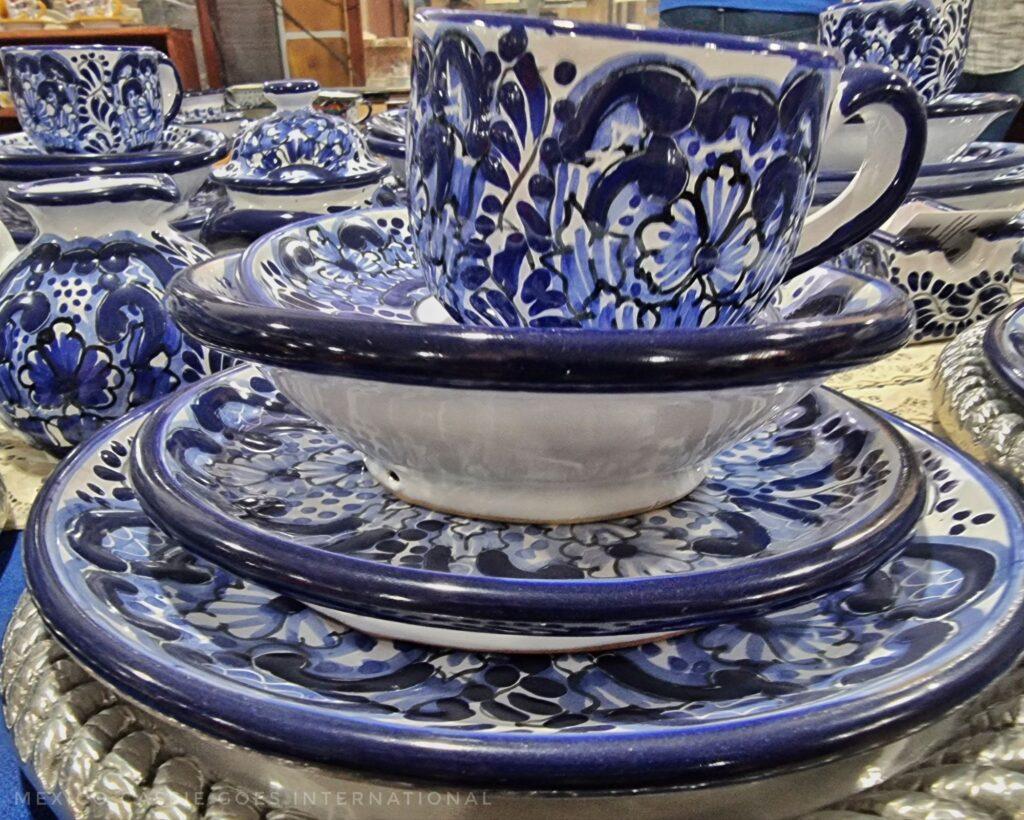
Talavera pottery – the pottery style was brought to Mexico by the Spanish but is actually recognised as a separate art form and is on the UNESCO Representative List of Intangible Cultural Heritages in its own right. While in town you can learn about how it’s made and you can pick up some gorgeous pieces.
Traditional candies – on the well known Calle de los Dulces (Calle 6 Ote) you’ll find numerous candy stores where you can pick up some traditional treats, many of which are made with nuts and fruit.
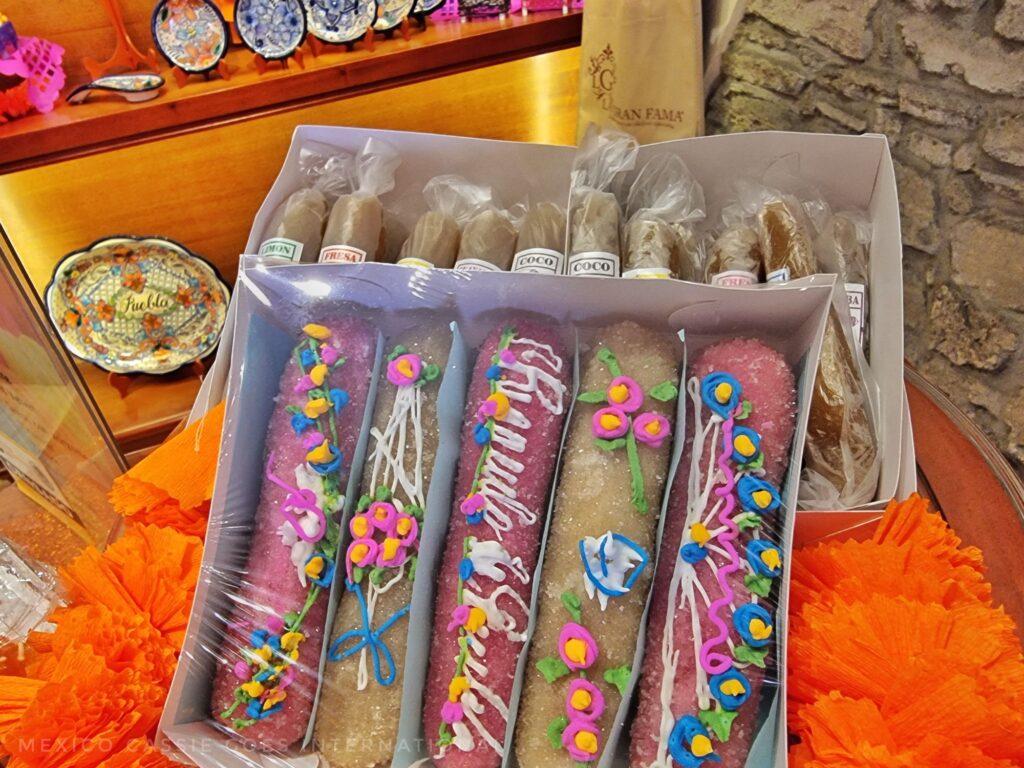
MexicoCassie’s favourite dulces tipicos de Puebla
Palenqueta – peanut brittle
Dulce de leche con nuez – a sweet condensed milk candy with a walnut on top
Tortitas de Santa Clara – the most famous and original, this is a cookie with a covering of sweet, condensed milk
Camote – a cigar shaped sweet potato based candy that comes in many flavours, I love it
→ Check out the MexicoCassie guide to candies in Mexico
Where to shop
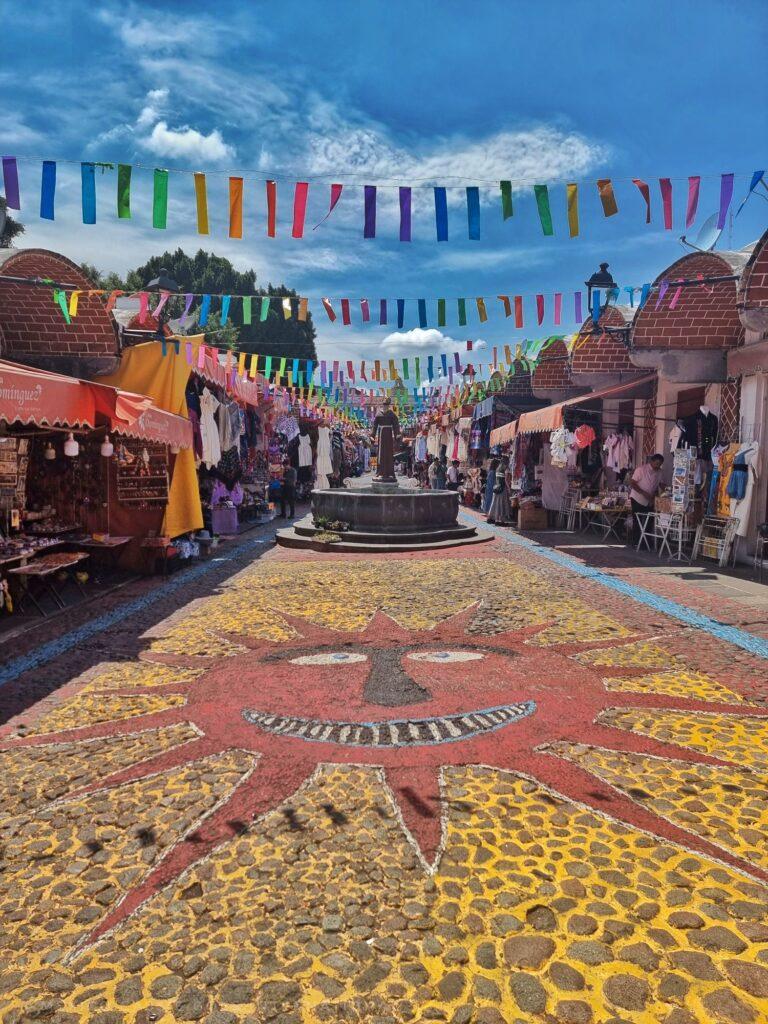
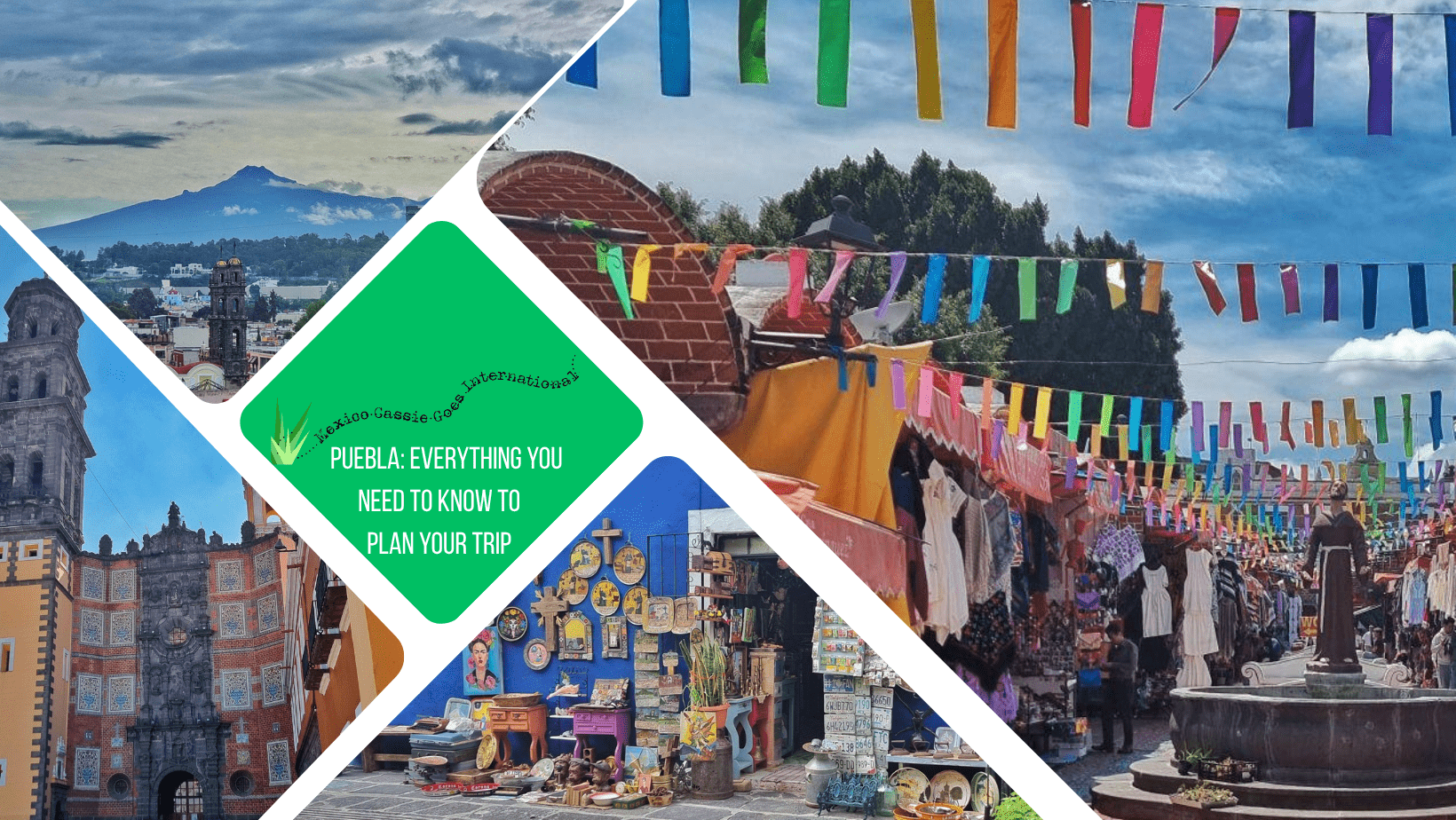
Mercado de Artesanías El Parián– this is a two street market where you’ll find typical souvenirs of decent quality (pictured above)
Barrio del artista – in this small area, you’ll find cafés, bars, artists’ studios where you can meet artists and buy their work. There’s also often live music down here
Callejon de los Sapos – this is a gorgeously colourful road where you’ll find some pretty cool artisania shops, as well as interesting antique shops. At the weekend, pretty much this whole area turns into a amazing giant flea market and artisan market. If you’re in Puebla over a weekend, don’t miss this.
🐸 Weirdly, in English it’s always referred to as Alley of the Frogs but a sapo is most definitely a toad.
Parque Analco – not in the centre of the city but it also has a good weekend market
➕ Papel Picado Artemex Puebla – this is a small shop selling only the gorgeous and brightly coloured papel picado (the paper flags and bunting you see all across Mexico). I had a great time picking up some very well priced bits and pieces in here.
Outside the Centro Historico
Puebla isn’t only its centro historico but that is where most tourists spend their time. If you have the chance, I highly recommend the following:
Explore the Zona Histórica de los Fuertes
This is a massive park a 30 minute walk (or 7 minute cab ride) from the centre of Puebla. As with the fabulous Bosque de Chapultepec in Mexico City, it’s really more than ‘just a park’. You could easily spend a whole day here (I know, I have). There are four museums (remember the list above?), a planetarium, monuments, miradors, a lake, and coffee shops.
Ride the Teleferico Puebla
Sadly it seems that this cool cable car has not been in operation since 2024. I have ridden it so if it does reopen, I do recommend doing it as it’s fun and the views are great but please check first (Google maps says it’s open but it isn’t at time of writing in Nov 2025).
Visit Puebla Ciudad Mural
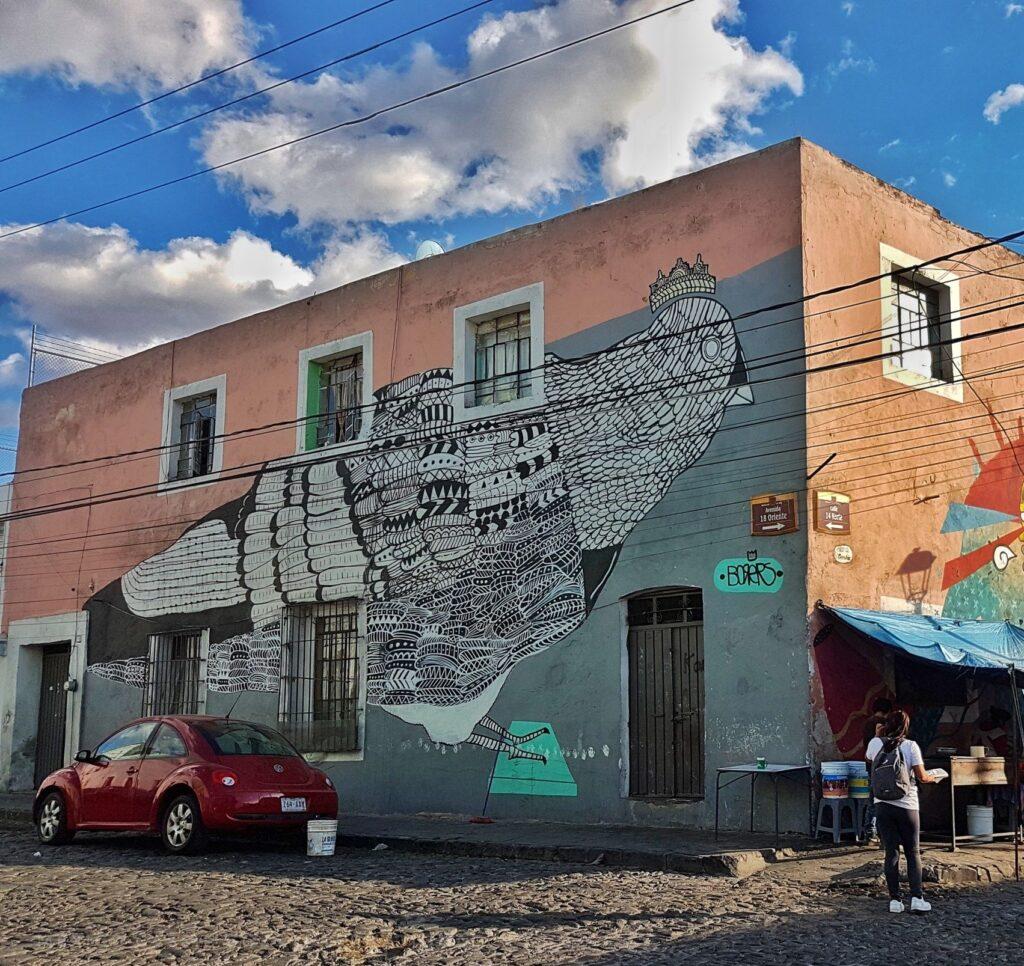
Barrio Xanenetla is one of the city’s oldest areas, founded in 1551 and inhabited by the potters and brick makers who helped build the colonial city. Today it is home to “Puebla Ciudad Mural”, where visitors can enjoy over 70 murals painted on houses and buildings to bring pride to a formerly rundown part of the city.
The project was started by Colectivo Tomate with the motto, “Quienes fuimos, quienes somos, quienes queremos ser” (Who we were, who we are and who we want to be).
Estrella de Puebla
This giant ferris wheel in front of the Angelopolís Mall is great option if you’re interested in panoramic views over the city, and the valley beyond.
Day trips
From Puebla you can have great adventures and day trips around the gorgeous state of Puebla and even further afield.
There are pros and cons to all three of the options for day trips, really, how you decide to manage your exploring is down to how/what you like to explore (and, of course, your finances!).
🚘 Renting a car will make your day tripping from Puebla nice and easy if you feel up to driving in Mexico. Personally, I’m a big fan of not being on someone else’s schedule
🚌 Buses – definitely the cheapest option, however, they don’t go to all the places I’ve mentioned below and, in Puebla, can mean also having to shell out for cabs to CAPU, the bus station that is not located in the historic centre of the city
👣 Guided tours – in somewhere like Puebla where there are so many awesome adventures to be had, guided tours can be the easiest way to manage your time, especially if you don’t have access to a car.
You also get the benefit of a local expert on hand to help you learn and explore. In Puebla, you can find plenty of great tours on GetYourGuide & Viator including my favourite tour agency, Unlimited Experiences (with whom I had the chance to explore the region when I was in Puebla recently).
Other towns to visit
Cholula
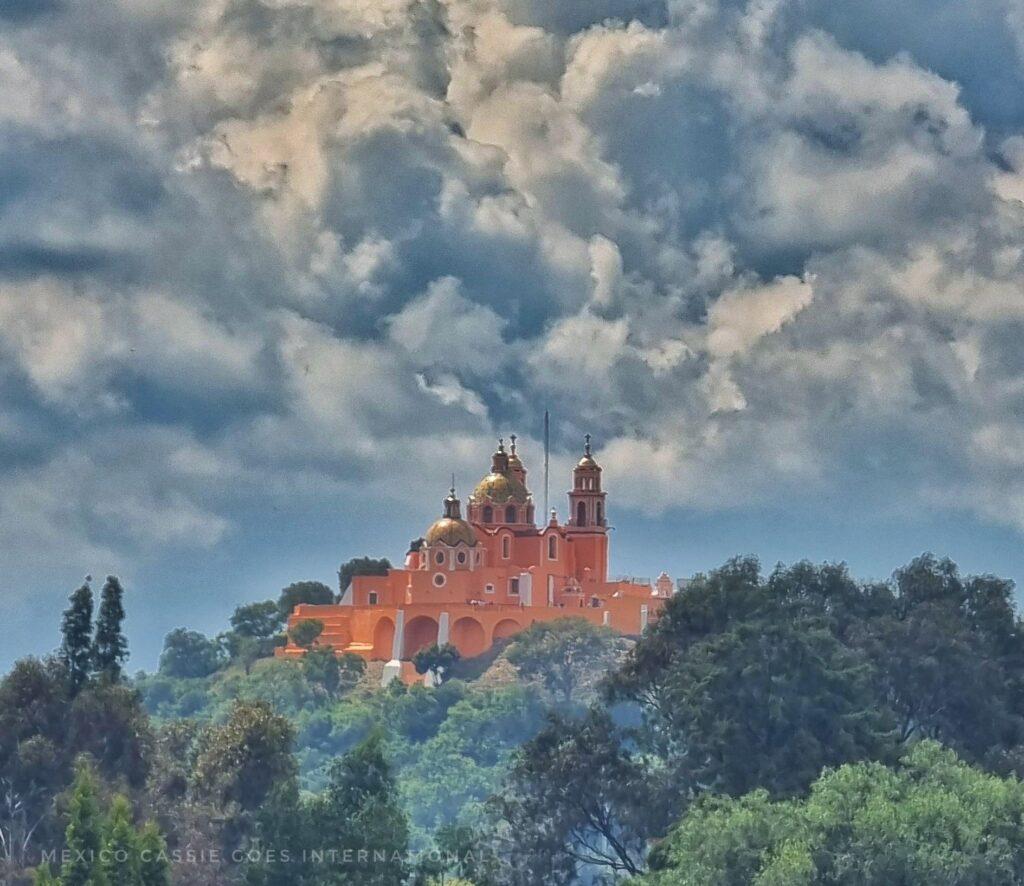
Although Cholula is so close to Puebla it’s hard to see where it ends and Puebla begins, the two towns couldn’t feel more different.
Why visit: Great views of the nearby volcanoes, the largest pyramid in the entire world, fascinating museums, a lovely plaza and colourful town centre, and, of course, many churches.
How to get to Cholula
🚌 Just a 30 minute ride away, you can pick up a colectivo bus from behind the Mercado de Sabores, drive yourself or take a tour. Sadly, the free train between the two cities is no longer in operation.
→ Read the MexicoCassie guide to exploring Cholula with kids
👣 MexicoCassie recommended tour – this 4 hour tour from Puebla covers all the main sites of Cholula with an English speaking guide.
Atlixco
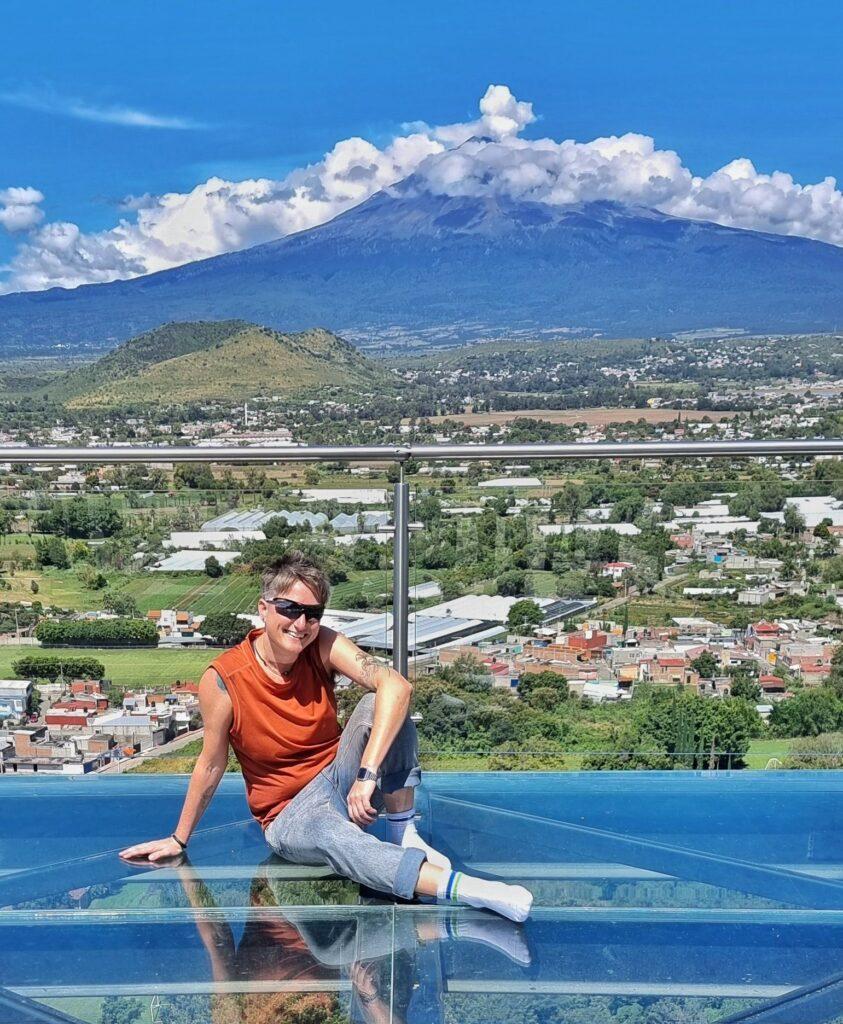
Atlixco is a pueblo mágico that is often referred to as La Ciudad de las Flores thanks to its famous floral activities.
Why visit: Climb the Cerro de San Miguel for incredible views of Popocatapetl, check out La Escalera Ancha (a mural painted on a flight of stairs) and the gorgeous street art on Calzada Septiembre 16. Enjoy strolling around the cute town. Don’t miss the Palacio Municipal where you’ll find some truly fascinating murals explaining the city’s history.
☕️ And for a break, grab a coffee in the Italian Coffee Company on the zocalo, you’ll see why I recommend this generally pretty average coffee chain when you arrive 😉.
How to get to Atlixco
Take a bus from CAPU bus station in Puebla – there are two lines running this route and both leave frequently. It’s a quick 45 minute journey between the cities.
→ Read the full MexicoCassie guide to visiting Atlixco
👣 MexicoCassie recommended tour – take a 5 hour private tour of Atlixco & Chilipo (a nearby cheese making town) with Unlimited Experiences. Taste wines & cheeses in Chilipo, visit flower markets in Atlixco and take a full guided tour around the centre of Atlixco with your excellent bilingual guide.
Tlaxcala
In the nearby tiny state of Tlaxcala is the city of the same name that is a great day trip option for art lovers. Day trips to Tlaxcala City often include a visit to the nearby Cacaxtla ruins.
Why visit: the Museo de Arte de Tlaxcala has an impressive number of early Kahlo works and the Palacio Municipal is well known for its fabulous murals.
Also near Tlaxcala are the Ex-Hacienda de Chautla, the small town of Ixtacuixtla with its extraordinarily painted church.
How to get to Tlaxcala
There are regular buses from CAPU bus station to Tlaxcala. It’s about a 1 hr trip.
👣 MexicoCassie recommended tour – you can either book a private tour with Unlimited Experiences or you can book this group tour (and probably assume that very few others will sign up as this is not a top spot for day trippers. The tour includes some time in Tlaxcala city before heading to the Cacaxtla ruins for a guided tour around the site
Zacatlán de las Manzanas
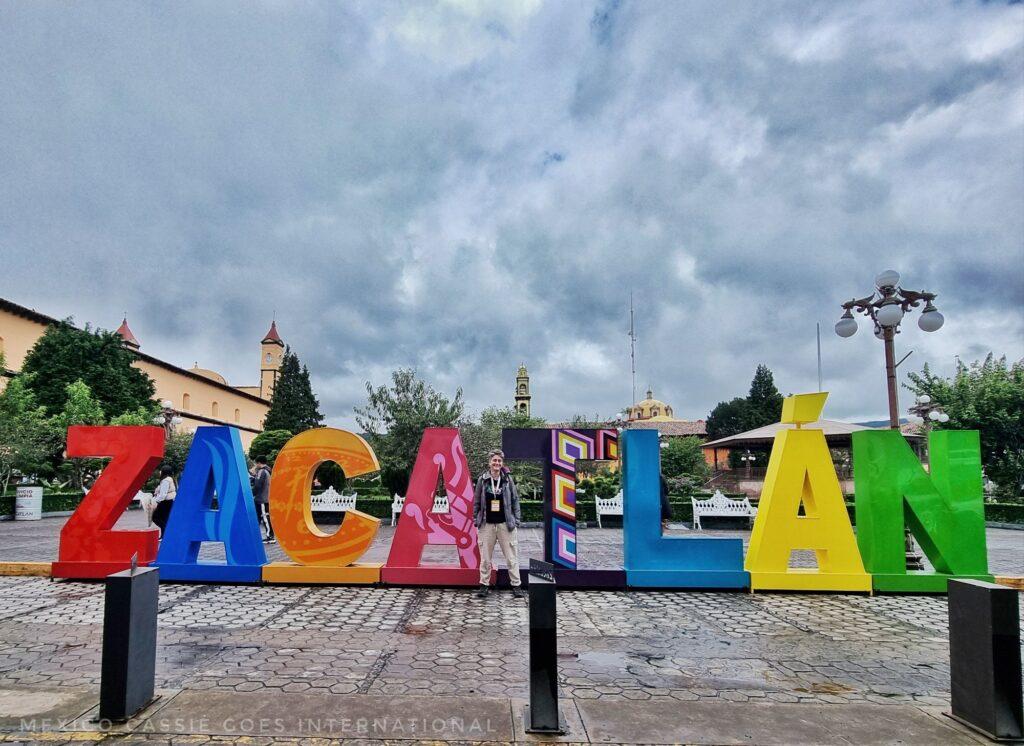
Zacatlán is a pueblo mágico in the Sierra Norte de Puebla. It is known for being surrounded by thousands of apple trees (just imagine how glorious it smells during blossom season) and for being home to the first clock factory in all of Latin America.
Why visit: the streets in the historic centre are lined with red tile roofed houses, the views over the ravines from the town’s mirador are great and a significant part of the town is covered in really cool glass murals. The nearby Valle de Piedras Encimadas is not to be missed and there are two weekly tianguis markets held in the town.
How to get to Zacatlán
→ Read the full MexcioCassie guide to visiting Zacatlán de las Manzanas
There are buses from CAPU that take around 2h30
👣 MexicoCassie recommended tour – take a full day private tour from Puebla to visit the Piedras Encimadas, Zacatlán and a traditional cider house to taste the local ciders.
Hiking spots, volcanoes & archaeological sites
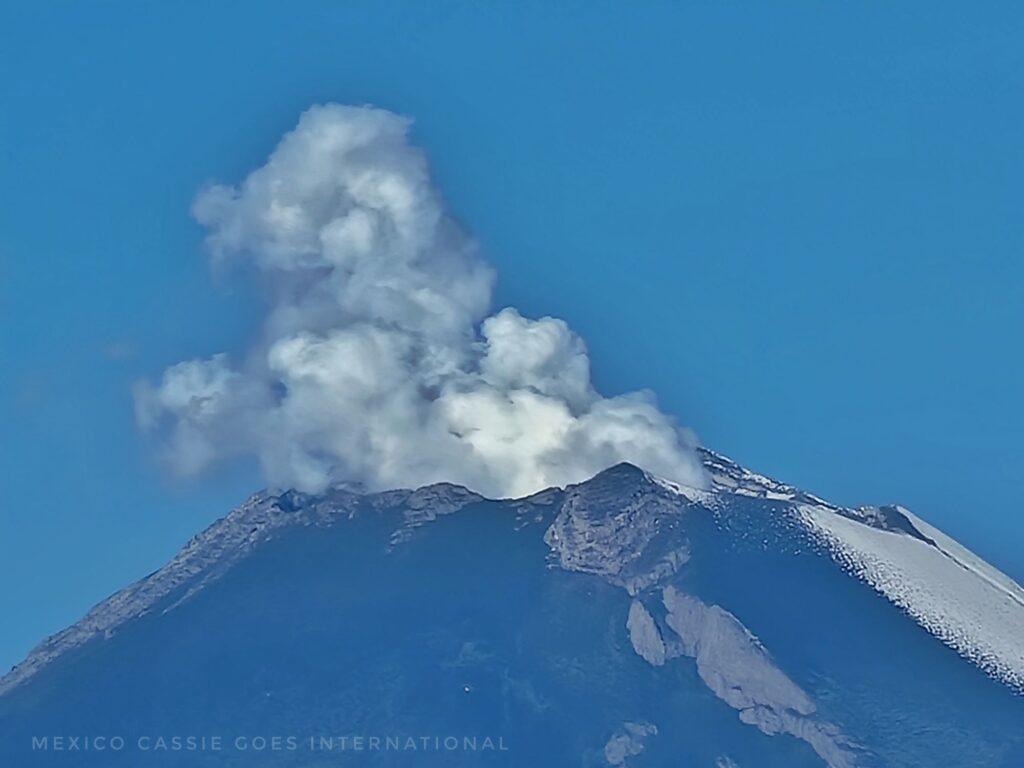
If you’re into outdoorsy activities then the options available to you from Puebla will fill you with joy.
There aren’t easy public transport options to any of these hiking spots so if you don’t plan on renting a car then you’ll need to take a tour. I recommend you speak with Unlimited Adventures (yes, again, my favourite tour company here) because they are headed by super outdoorsy-types who know their region of Mexico extremely well and love to take people exploring.
Parque Nacional Izta-Popo
Straddling the border between Estado de Puebla and Estado de México, this national park is an absolute national treasure.
⚠️ Remember, though, that hiking at altitude (around 4000m) isn’t the same as strolling around at sea level. Altitude sickness is real and can hit hard up here if you’re unlucky.
Why visit: On a clear day, the views of Popocatepetl and Iztaccihuatl are astounding. Hiking in the national park is an absolute privilege. Head to Paso de Cortes to fill in your hiking paperwork and then follow the routes provided.
Matlalcuéyatl / La Malinche
This now dormant volcano was given the nickname, La Malinche, after a local woman who acted as interpreter for Hernán Cortés during the Spanish conquest.
Why visit: not only for the great views of the other three volcanoes Popocatepetl, Iztaccihuatl, and Pico de Orizaba, along with the valleys of Puebla and Tlaxcala.
👣 MexicoCassie recommended tours – if you aren’t interested in reaching the summit but do want to experience the views, the nature and the beautiful calm air, this 6 hour hiking tour is exactly what you’re looking for
If you do want to reach the summit, then this full day tour with professional, bilingual guides will allow you to do so safely.
Laguna Atexcac & Laguna Alcichica
These are two examples of an axalapasco, a large body of water formed in a volcanic crater during the Late Pleistocene and Early Holocene eras.
Why visit: while you can’t swim in Laguna Atexcac, you can walk around the top of the crater and admire the spectacular views over the gorgeous water. In Alchichica there are axolotls!
Archaeological sites
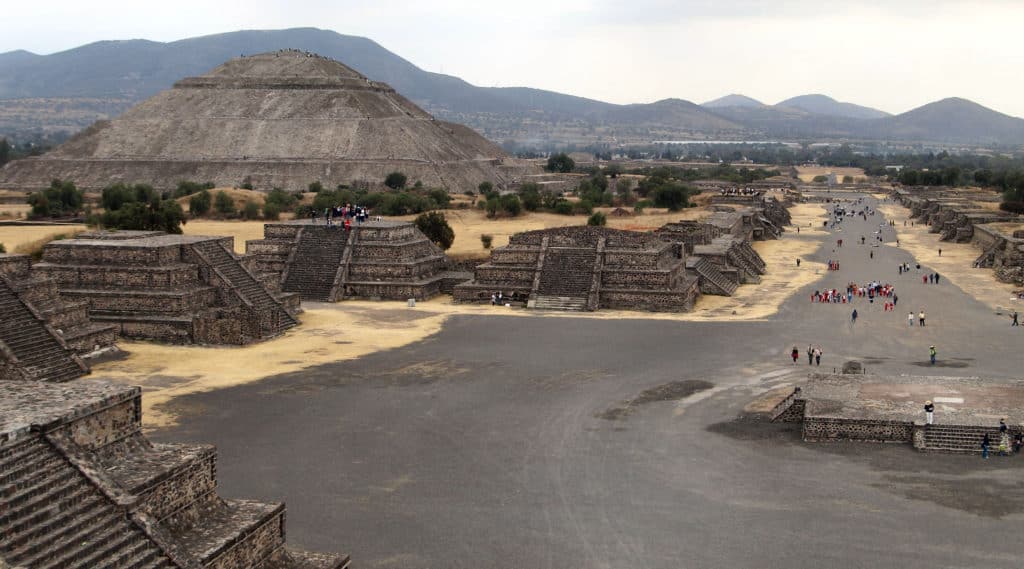
Sadly for me, I haven’t been to any of these sites except for Teotihuacan. They’re all on my adventure plan list for next time I’m in Puebla State though as I love a good romp around a Mexican ruin.
Teotihuacan
Teotihuacan is a vast archaeological complex to the north of Mexico City. It is most famously the home of the Pyramid of the Sun and Pyramid of the Moon, the Temple of Quetzalcoatl and the Museum of Teotihuacan Culture.
Why visit: It’s a beautiful place that is also one of the most important historic sites in Mexico. It predates the Aztecs and at one point was the largest city in all of the Americas.
👣 MexicoCassie recommended tour – if you aren’t going to drive yourself then you really do need to book a tour as there’s no possibility of getting there from Puebla with public transport despite it only being two hours away. This private full day tour includes transport, a guided tour of the site, mezcal & tequila tastings, and visits to local artisan workshops.
Other fabulous ruins to visit:
Cantona (100km from Puebla) – this was an important and large commercial city between 300 BCE and 600 CE. Over 300 obsidian workshops have been found here. There’s also a good museum on site.
Yohualichan (180km from Puebla) – an important Totonac settlement between 200 – 800 CE. Home to one of the largest ball courts in all of Latin America.
Teteles de Santo Nombre (90km from Puebla) – a small site that receives few visitors. In its day it was an important trade site for the region.
Tehuacán Viejo (La Mesa) (140km from Puebla) – this is an important site as it is home to the only known temple to Mictlantecuhtli, the god of the underworld. Don’t miss the wall of human skulls.
More Mexico adventures
🏔 Copper Canyon series
How to book your trip through the Copper Canyon
How to make the most of a trip to the Copper Canyon Adventure Park
Visiting Bahuichivo & Ceroachui
🚗 Mexico road trip ideas
An epic southern Mexico road trip through Campeche, Tabasco & Chiapas
Lesser known Yucatán adventures – 10 days
Yucatán road trip – 2 weeks
➕ Read the MexicoCassie guide to renting cars and driving in Yucatán
🥾 Mexico adventures – other
Everything you need to know about seeing the monarch butterflies in Mexico
How to visit the Grutas de Tolantongo in Hidalgo
San Cristóbal de las Casas as a great adventure base
Chiapa de Corzo & the incredible Sumidero Canyon
Exploring the Pueblos Mancomunados from Oaxaca
Getting deep into Queretaro’s magical Sierra Gorda region
Wine tasting in Baja California
Visiting the ghost town of Mineral de Pozos (Guanajuato)
Excellent day trips from San Miguel de Allende
What to do in and around Puebla (including visiting volcanoes)