Your expert guide to the best drinks to order in Mexico
Whether you live in Mexico or are visiting for a vacation, nothing beats the heat like a nice large cold drink! But what to order, and how to order? You really want to drink what the locals are drinking, right?
We’ve created this article to help you do just that. We will look at the non-alcoholic drink options before taking a deliciously booozy dive into the alcoholic drinks most commonly found in Mexico.
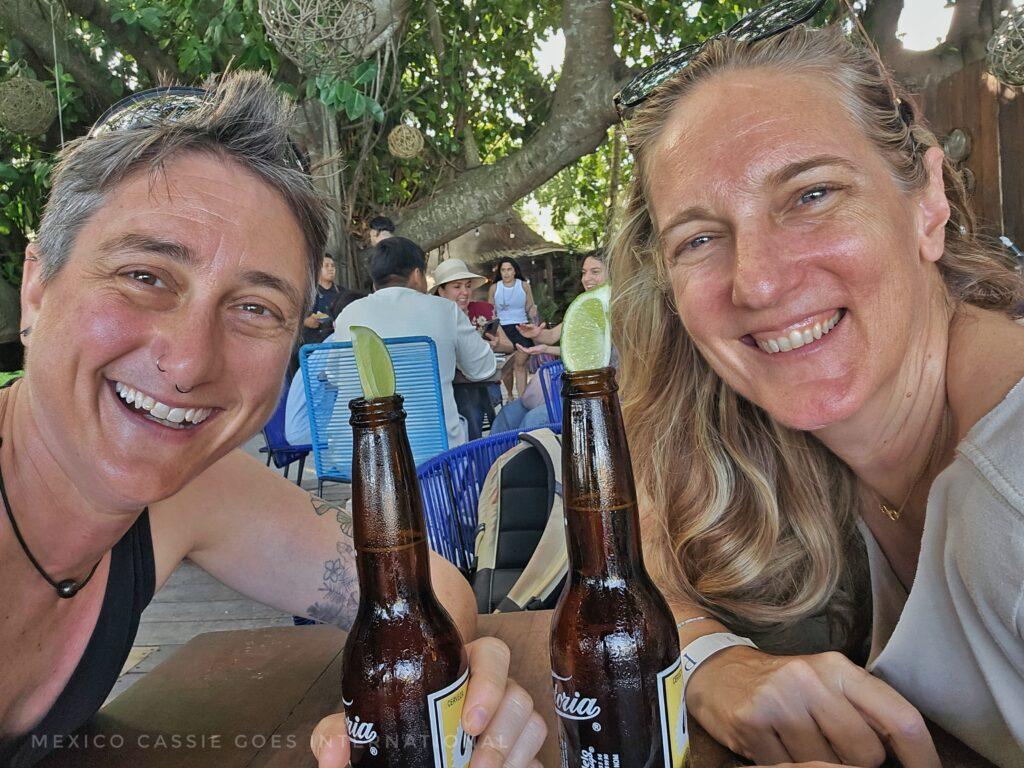
MexicoCassie and I, Cordelia, have joined forces to help you enjoy the local drinks while quenching your thirst under the beautiful hot Mexican sun (or, indeed, in the gorgeous chilly Mexican mountains). Between us, we’ve logged sooooo many hours testing local drinks, very often together – this photo, taken in Bacalar is just the most recent proof of a looooong and happy friendship and working relationship.
There are affiliate links in this article. If you click and make a purchase I could make a small sum at zero cost to you. Thank you!
🥃 It’s quite a long article, so if you’re only interested in the booze, you can skip right ahead by clicking here.
Traditional non-alcoholic Mexican drinks
Aguas frescas

🥭 🍉 This literally translates to fresh waters. These are traditional refreshing drinks that are popular all over Mexico.
An agua fresca is a water based drink with a gentle flavour. The flavour is generally fruit or flower based. There is often a sweetener added, too, especially if you’re buying your agua fresca on the street.
If you’re used to regular juice, an agua fresca may feel watered down to begin with but given how much water you need to drink to stay hydrated, agua fresca should become your best friend.
The most popular & common flavours include: jamaica (hibiscus), piña (pineapple), horchata (a rice & cinnamon drink that’s something of an acquired taste), and tamarindo (tamarind).
You’ll also see maracuyá (passion fruit), pitaya (dragon fruit), sandía (watermelon – pictured above), mango, pepino (cucumber), and herbabuena (peppermint).
In Yucatán, we should add chaya (a common leaf with medicinal properties that is said to be a Mayan superfood) and lima (a lime-like citrus) based flavours.
➕ These drinks are often prepared so you can’t always dictate the sugar ratio, I’m afraid.
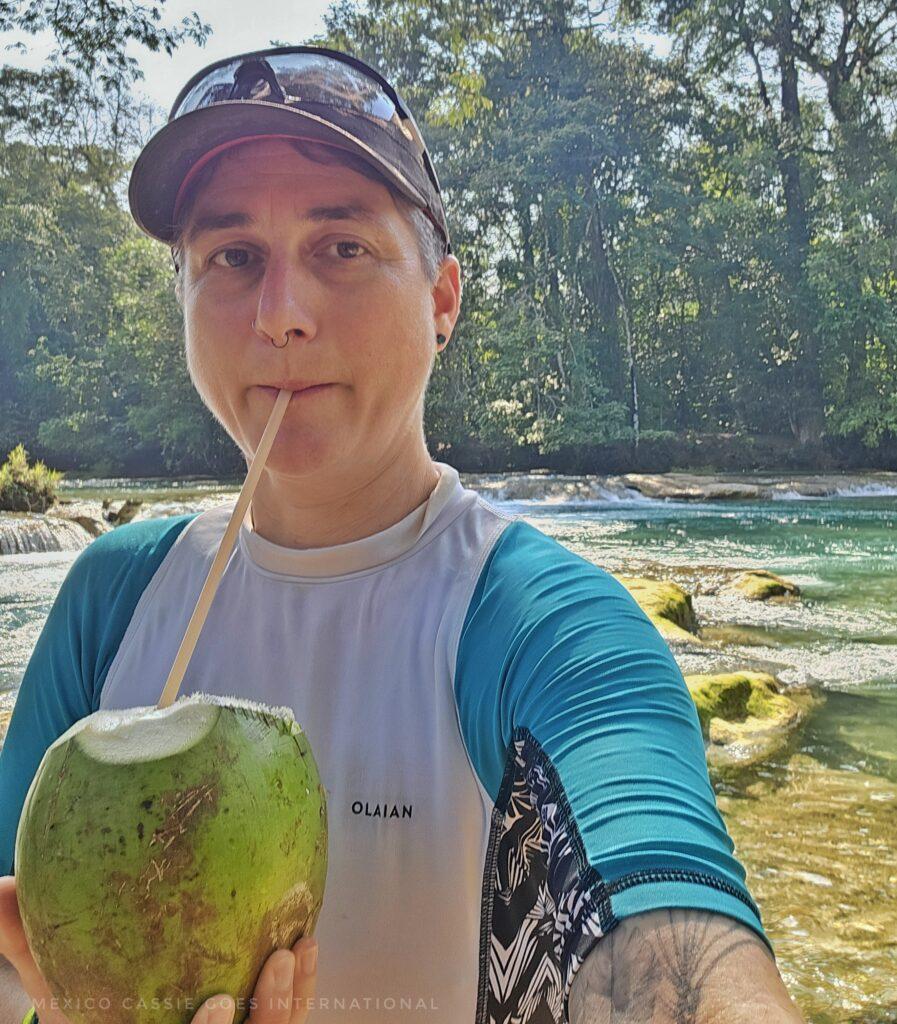
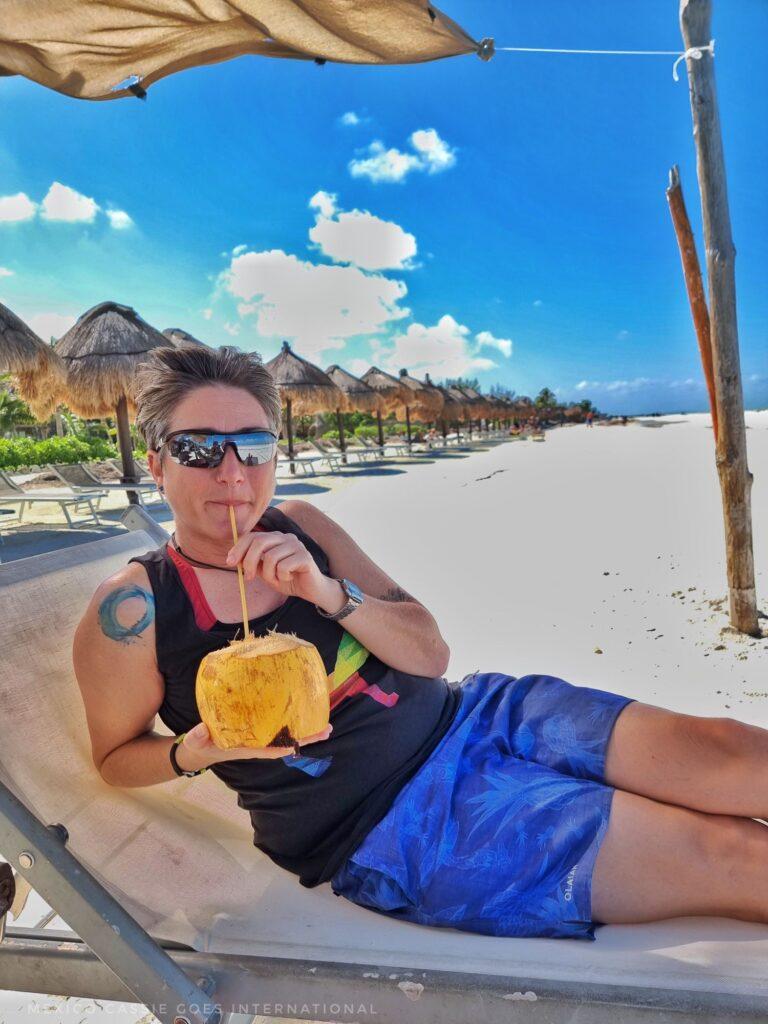
🥥 You’ll also see people selling fresh coconut water all over Mexico – this is generally drunk straight from the coconut or from a plastic bag with a straw. It’s served neat or with chile and lime. (These photos of Cass was taken in Chiapas and Holbox, in case you’re interested)
🧊 Water & ice cubes
Contrary to what you might have heard about Mexico, you can absolutely enjoy an ice-cold drink there. Water for drinks and ice will always either be filtered through an industrial filtration system or more commonly come from a garafon – a large bottle of water
You need not worry about the ice in your drinks or the glass of drinking water you’re offered in a restaurant.
➕ You can save money and not support the bottled water industry, by asking for a glass of garafon water.
→ Read the full MexicoCassie guide to water to learn more about water safety in Mexico
Naranjadas & limonadas

🍊🍋 These are very much another agua fresca but totally deserving of their own subheading because they are so popular. This is water with oranage (naranja) or lime (limón) added.
You’ll be asked if you want this with agua natural (still water) or agua mineral (sparkling water).
You will sometimes see chaya added to limonadas.
➕ These agua frescas, unlike the majority mentioned above, are pretty much always made from fresh so you can ask for your drink without sugar (sin azucar) should you so wish.
Peñafiel
Peñafiel is one of the most ubiquitous brands you’ll see in Mexico but it is owned by Keurig DrPepper, an American company. They sell both sparkling water and aguas frescas across the country in supermarkets and Oxxo stores. We are a little disappointed to find it’s not a Mexican owned company when researching for this article because their lime & salt water is one of the most refreshing drinks in Mexico.
Sodas
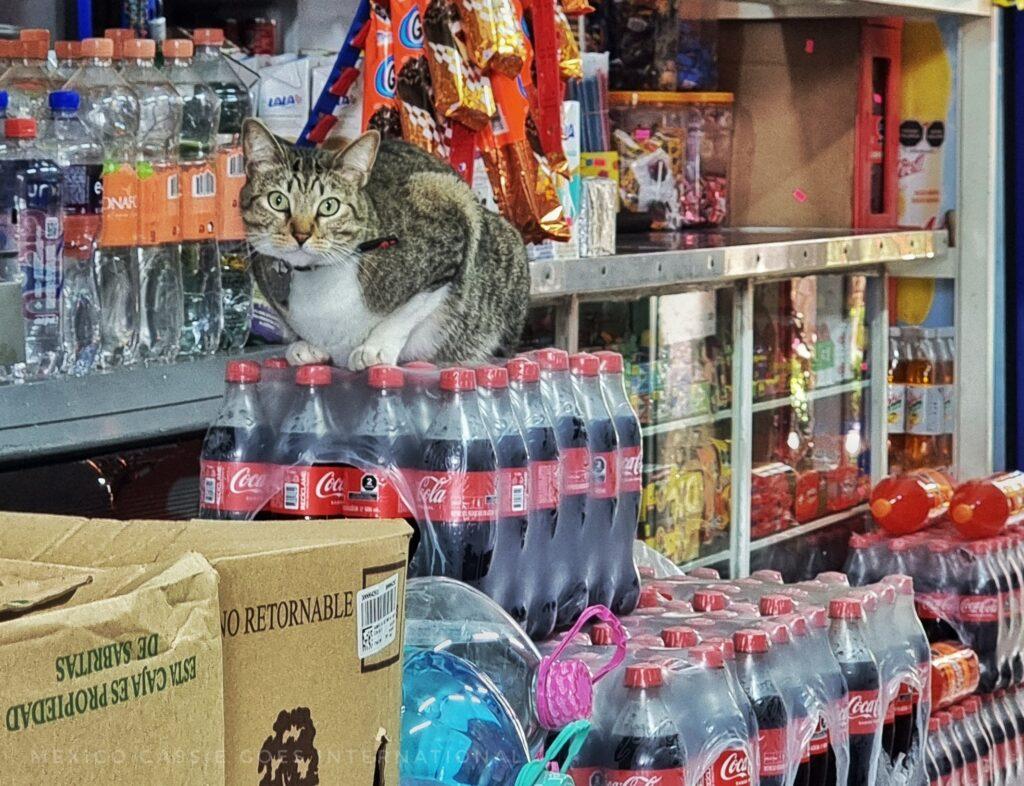
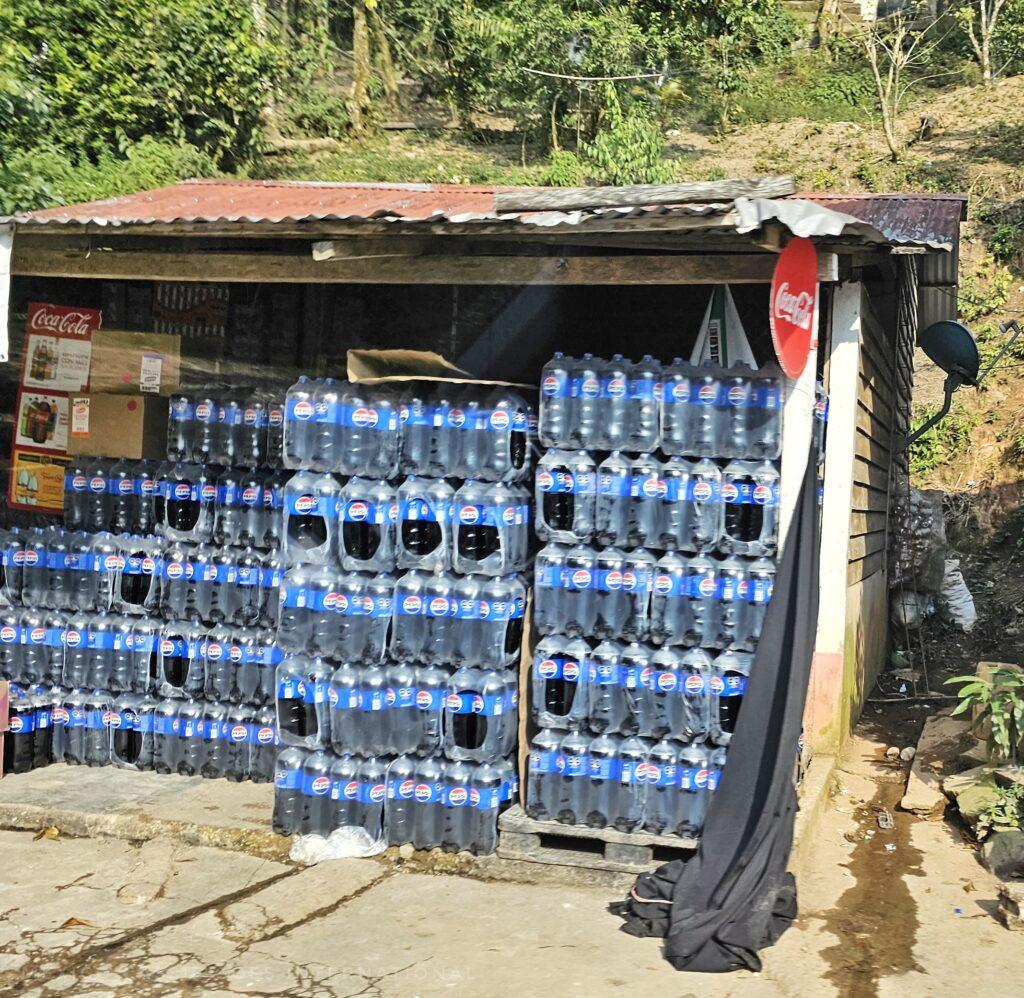
Soda is popular in Mexico, without a doubt. A trip to the supermarket will make this abundantly clear as you’ll see shelves and shelves full of coke, pepsi and more.
Fanta, Coke, Sprite, Pepsi are all available but there are also plenty of popular local fizzy drinks. Mexican coke can often be found in glass bottles and it is still made with sugar and not high fructose corn syrup. Yes it really does taste better. However, we on the MexicoCassie team, always recommend Mexican drinks as your first option in Mexico.
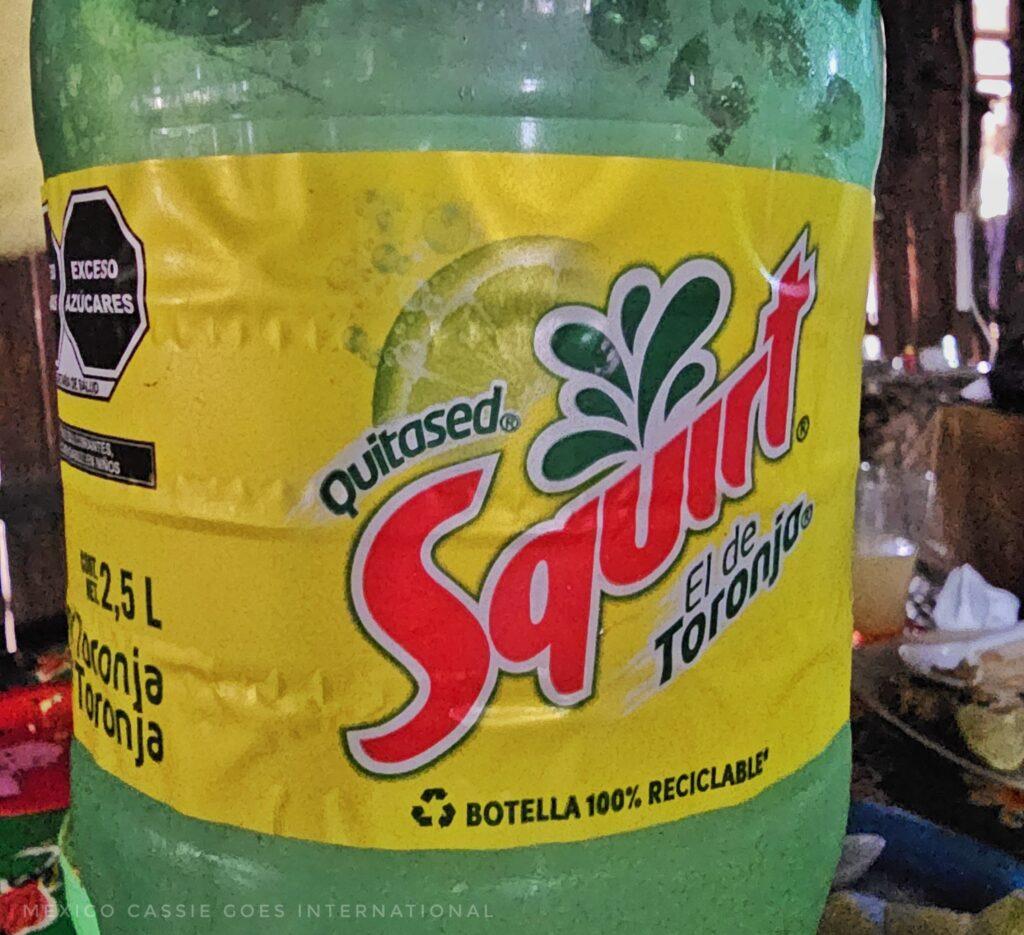
Squirt is a popular grapefruit soda (also owned by Keurig DrPepper) that is frequently used as a mixer or chase with tequila.
Manzanita and Cidra Mundet – two apple flavoured sodas. The first one is owned by Pepsico and the second by CocaCola.
Jarritos is owned by Novamex, which appears to be based in Texas these days. Jarritos drinks are fizzy. Barrilitos are kind of similar to Chaparritas but they are owned by CocaCola.
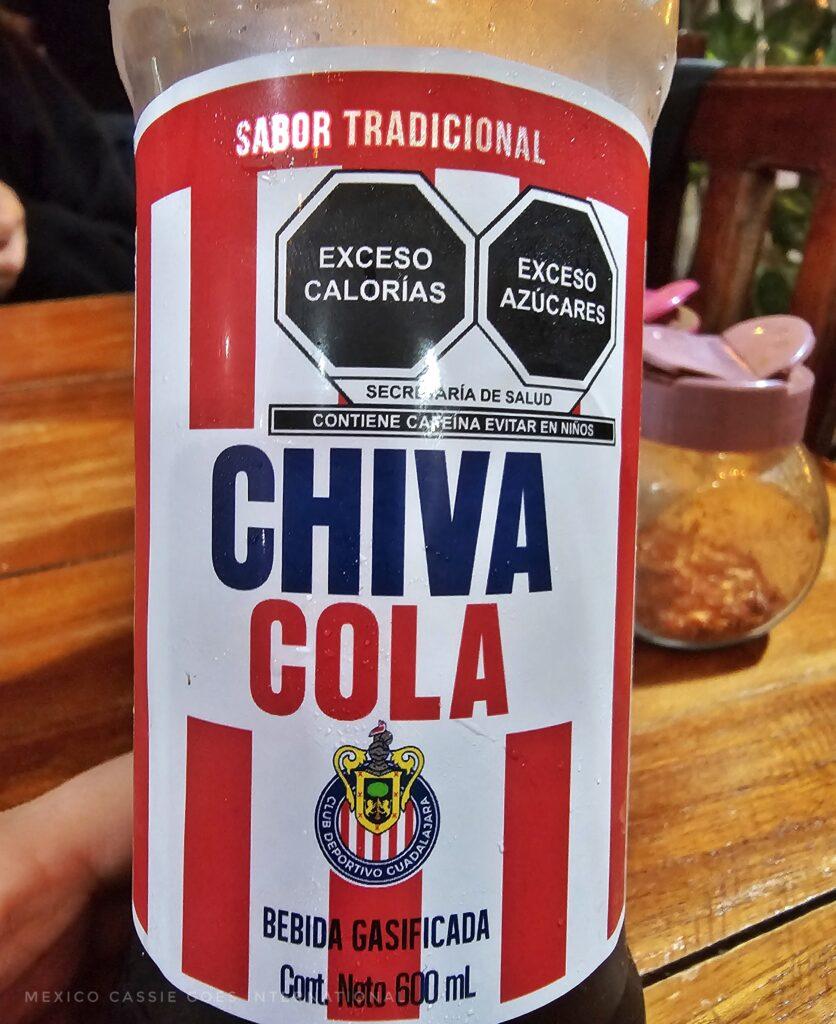
Chiva Cola – MexicoCassie was super excited to finally find a Chiva Cola in the wild after having read about it on the internet. It’s a Mexican version of coca-cola.
That label warning you of the excess sugar is probably underplaying the amount of sugar in this drink though! One sip was more than enough. If you’re not into the sugariest drinks on the planet, leave this one well alone 😉.
Mexican owned sodas
(for anyone like me who prefers to spend their money on Mexican products)
Del Fruto: Chaparritas – Del Fruto wanted to create a high quality soft, non-alcoholic drink that retained the vitamins and are made with different fruits.
Pascual: Boing, MexiCola, Chiva Cola, Pato Pascual, Lulu and even their own milk and water label.
Bottled water
🚰 The ideal, of course, is to always carry your water bottle with you but sometimes we all get caught without and have to buy water, especially in the Mexican heat. We don’t advocate for buying bottles and bottles of water since that’s just a hideous waste of plastic but we understand it happens.
According to the website finewaters.com, “There are almost 6,000 bottled water manufacturers in Mexico, with 10 large consortiums, 150 large companies, 300 medium companies, 600 small companies, and 5,000 micro-companies in the mix.”
The most common brands are: Ciel (owned by CocaCola), Cristal (owned by CocaCola), Bonafont (owned by Danone [French]), Epura (owned by Pepsi), TopoChico (owned by CocaCola) & Peñafiel (owned by Kreurig DrPepper).
→ Read the full MexicoCassie guide to drinking water in Mexico
Breakfast drinks
→ If breakfast in Mexico isn’t something you’ve experienced then read the full MexicoCassie guide to Mexican breakfasts to ensure you don’t miss out as it is possibly, the best breakfast cuisine in the world!
If you’re eating breakfast in a restaurant you’ll often be offered a fresh juice. If you’re having tacos for breakfast at a taco stand, you will see people drinking either coke or an agua fresca.
Breakfast juice options
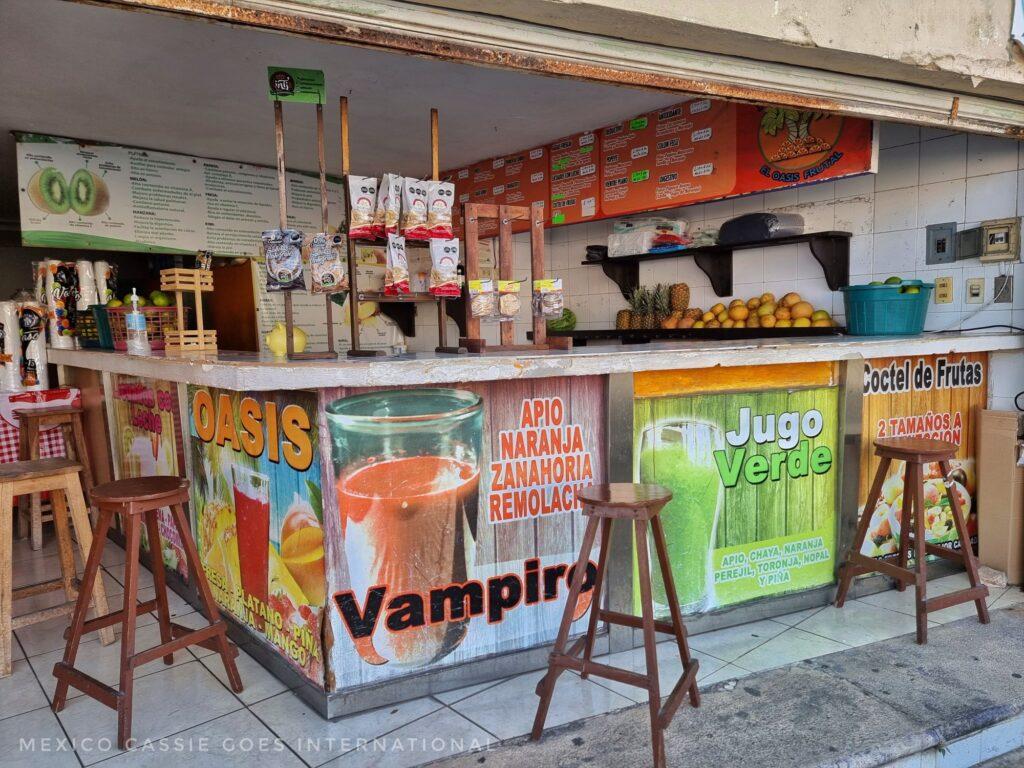
🍊 Orange juice (jugo de naranja), grapefruit (jugo de toronja) and a green juice (jugo verde) are the most common options.
The ingredients in a jugo verde can vary. For example in the Yucatán, they will typically add chaya. But in almost every jugo verde, there will be orange and or pineapple juice, cucumber, kale or spinach. Common to Mexican green juices are nopal and parsley.
❌ You might assume that ordering a fresh juice is healthy decision and that it won’t have added sugar. NEVER ASSUME. Mexico LOVES all things sweet. And thought it is rare, it does happen with juices so it’s worth checking the ingredients listed.
More MexicoCassie guides to delicious things for your mouth in Mexico
🍳 Understanding a Mexican breakfast menu and what to order
🌯 Everything you need to know about street food in Mexico
🍭 Everything you need to know about Mexican candy
🥃 Everything you need to know about drinks in Mexico (both alcoholic and non)
🚱 Can you drink the water in Mexico?
🧒🏻 Finding food for the kids in Mexico
🍫 Everything you need to know about chocolate in Mérida
🍦 Finding the best ice creams in Mérida
Hot drinks
Coffee
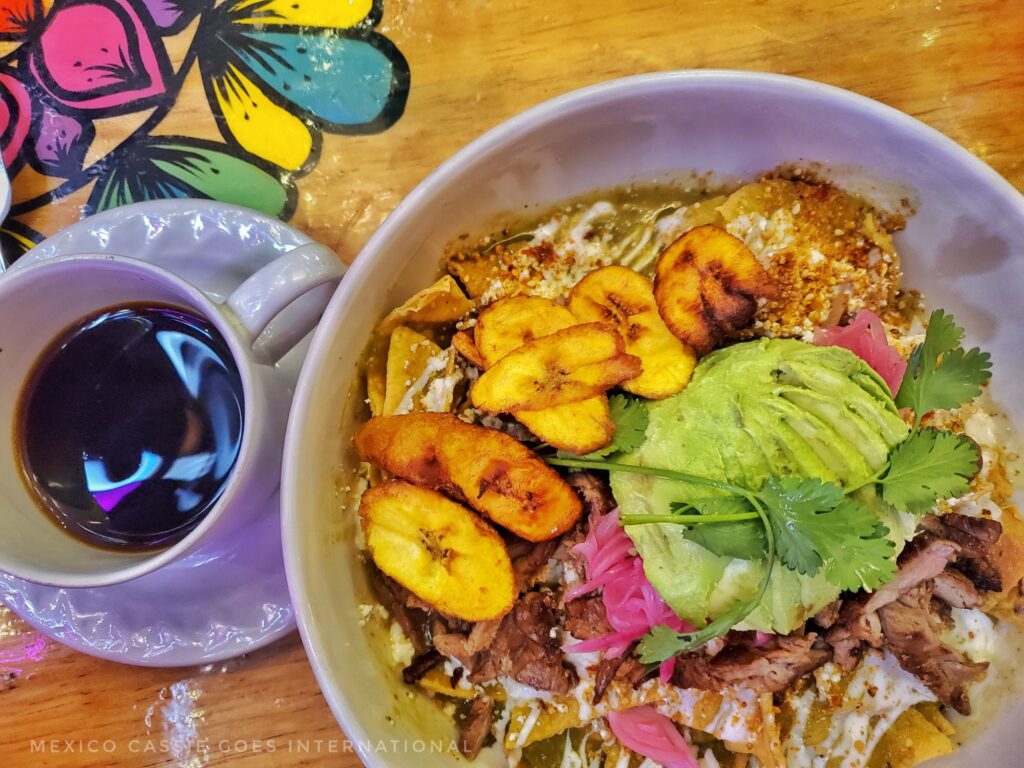
☕️ While you might expect amazing coffee everywhere you go in Mexico, sadly, this isn’t reality. If you’re in a nice restaurant enjoying a good breakfast then yes, you’ll probably have good coffee options. However, in cheaper places or if you’re visiting less touristy places then you’ll most likely be offered Nescafe.
The best coffee, in my opinion is in San Cristobal de las Casas but even in other parts of Chiapas, where coffee actually grows you might be offered Nescafe.
Cafe de Olla
Olla means pot and this coffee is traditionally made in a large clay or enamelled pot. It is a sweet spiced coffee, usually with cinnamon and piloncillo, an unrefined cane sugar.
Hot chocolate
Hot chocolate is actually a Mexican drink. It was invented here by the Maya or the Aztecs. The word chocolate is believed to come from either the Mayan word xocoatl, or from the Aztec word cacahuatl. Chocolate drinks played an important role in both civilisations and was drunk during sacred ceremonies. (There are plenty of opportunities to experience these sorts of ceremonies when you’re in Mexico – my favourite is at the Choco-Story Museum at Uxmal where visitors are invited to watch a ceremony and then to partake in some chocolate making & drinking.
🍫 You will find hot chocolate on breakfast menus but you’ll probably not know what type of hot chocolate it’s going to be unless you order it, or ask questions. It could be a regular old Nesquik style hot chocolate or it could be the most mind blowing traditional Mexican hot chocolate you’ve ever tried.
MexicoCassie’s kids always ask, “¿es chocolate Mexicano o chocolate simple?” because they don’t love the frothy, cinnamon-y Mexican style chocolate.
Less common Mexican hot drinks
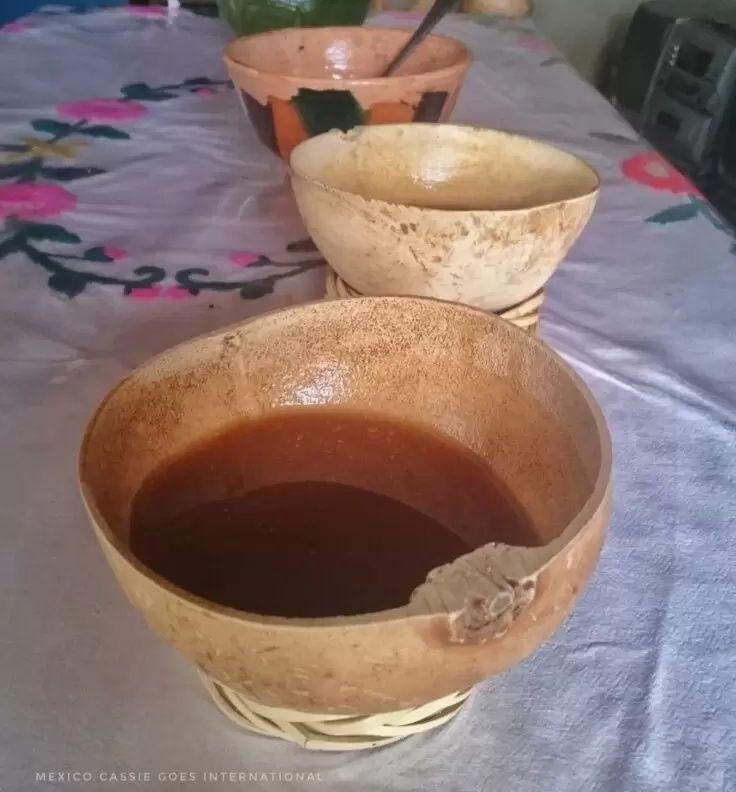
→ Atole, Champurrado, Tejate de Oaxaca, Pozol, and Cebadina
Atole and Champurrado are maize (hominy) based drinks that come in different flavours such as cinnamon, vanilla or guava. Champurrado is chocolate based. All the versions are whisked with the traditional wooden molinillo. These drinks are popular around Day of the Dead and Christmas time.
Tejate de Oaxaca was a drink originally reserved for the aristocratic Aztecs. If you find yourself in Oaxaca, don’t miss this chocolate flavored maize drink. Other ingredients include mamey (a tropical fruit with a bright orange flesh) and rosita de cacao, a white edible flour. The drink may not have the most appealing look but there is a rich history behind it worth exploring and trying at least once if you are in the area.
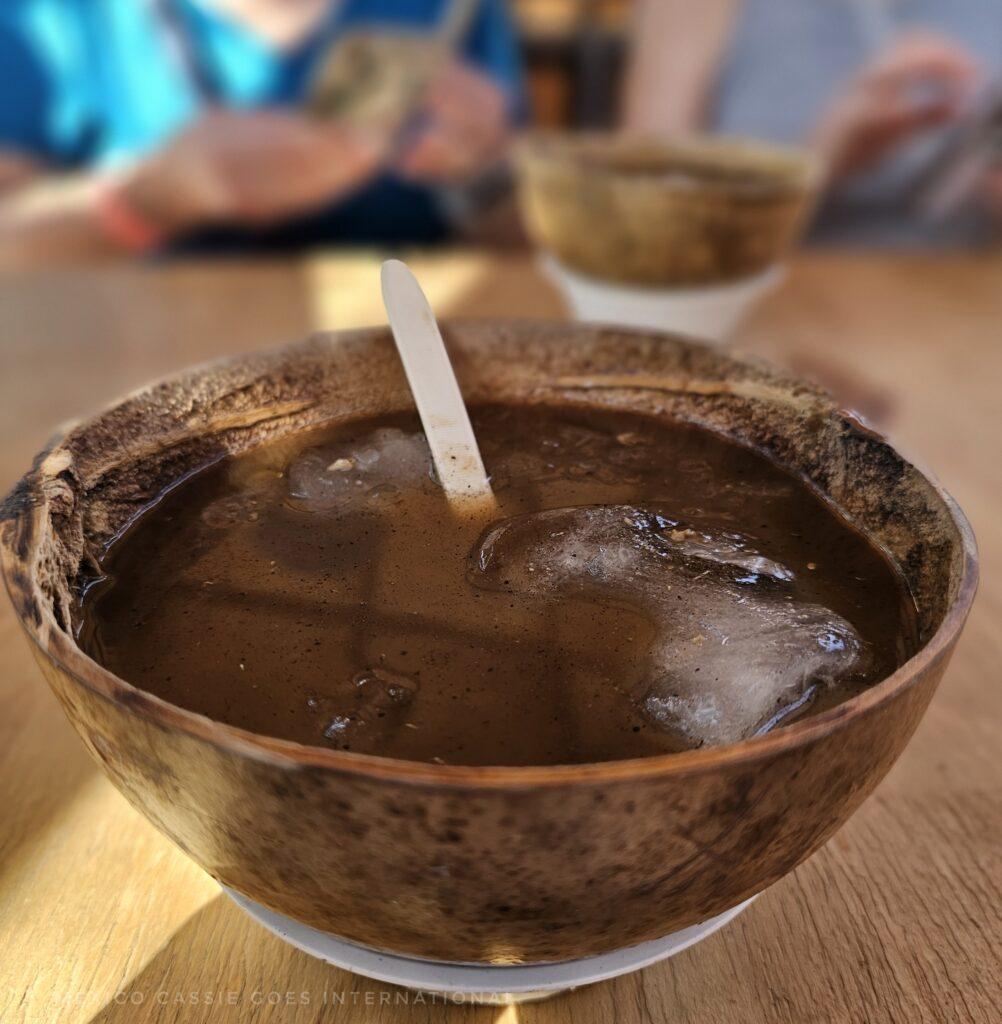
Pozol is also a maize-chocolate based drink. It is Pre-hispanic and remains popular in the south-east of the country. It’s a very nourishing drink and still extremely popular with the Maya today. You will see small stands on the edge of the road, often where the combi transport buses stop. There may also see other flavours including peanut and sweet potato.
This photo was taken the last time MexicoCassie drink pozol, in Chiapa de Corzo
➕ Lastly if you find yourself in Guanajuato, you may be offered a cebadina after your meal. This is a drink meant to aid digestion that is made from cebada (barley) and flavoured with jamaica, tamarindo and bicarb of soda. Thanks to the barley, it is rich in key minerals and vitamins.
Traditional alcoholic Mexican drinks
Beer
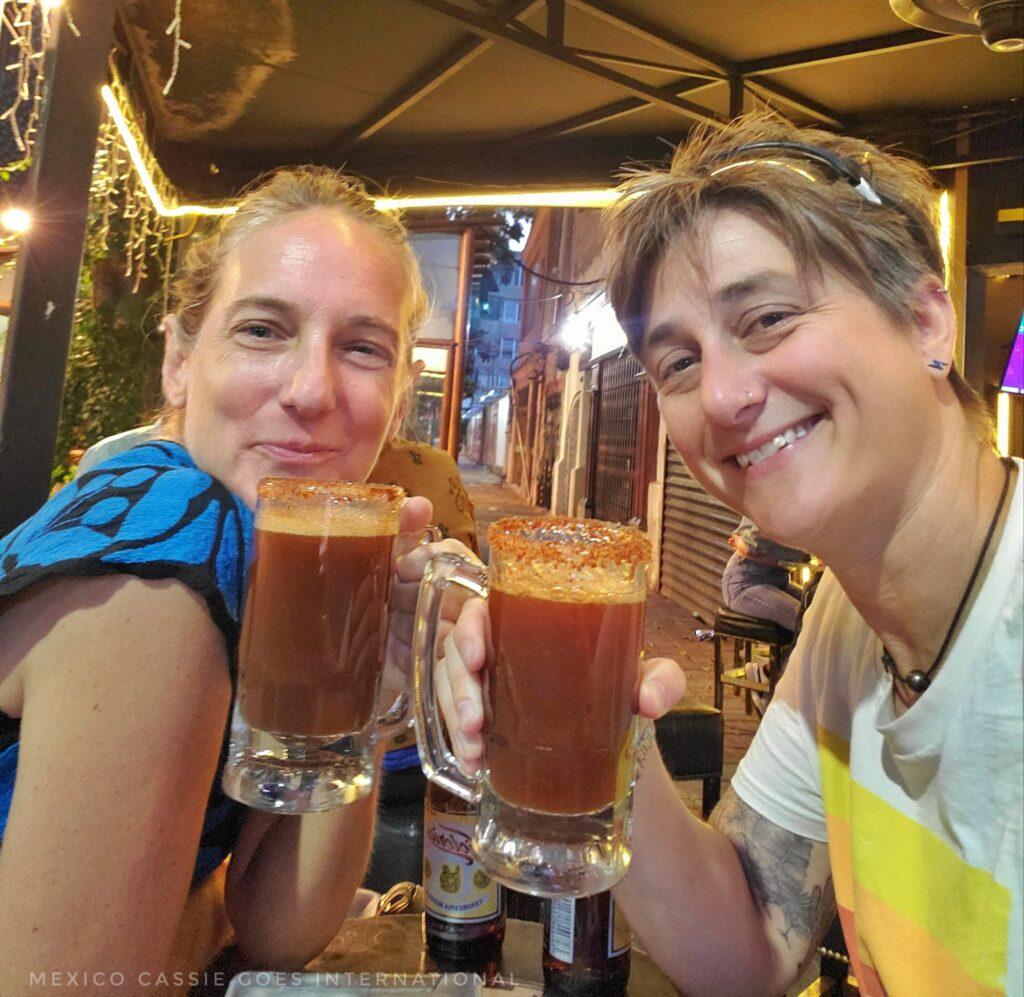
(And here we are again, still testing the drinks)
🍺 There is nothing lovelier than an ice cold beer on a hot day. Mexico has many wonderful beers both industrial and artisanal. We strongly encourage you to explore beyond Corona and Dos Equis.
There are craft breweries all over Mexico creating fabulous beers and experiences – everywhere you go it’s worth finding out about hyper-local beer options. And if you are in town during the winter holidays, definitely try the special edition Noche Buena beer (Christmas Eve beer). People wait all year for the stores to carry it.
👣 If you’re in Mexico City and feel like learning more about local craft beers, there are some interesting tours you can take that take you to craft breweries to taste the beers and learn about the processes.
Cheladas, micheladas & ojo rojos

🍅 You’ve probably seen people with ‘fancy’ beers in Mexico, right? We’re going to discuss what they are and how to ask for them so that your life can be that little bit brighter! Yes, both MexicoCassie and I are huuuuuuuuge fans of these drinks. In fact, I (Cordelia) was almost tempted to break a beer bottle over my ex-husband’s head when I realized he had been holding out on me for the first many years of our relationship 😉😂
The only problem you’re going to find with these drinks (apart from falling head over heals in love) is that the names are something of a moveable feast depending on where you are in Mexico, & where the person making the drink comes from in Mexico! We kid you not.
Generally though, the drinks are as follows:
Chelada – beer, lemon juice and a salty rim
Michelada – beer, lemon juice, Worcestershire sauce, often (but not always) tomato juice, hot sauce and a salty rim
Ojo Rojo – this is a michelada but with Clamato juice and it is perfection. It is THE perfect drink for a hangover, especially if paired with ceviche or fried fish tacos.
You will always be asked which beer you’d like as your beer-base for these drinks. And the drink may well come with a delicious tamarind stirrer too add a little more flavour to your drink.
The salt rim may be pure salt or it might be a mix of chile and salt.
Wine
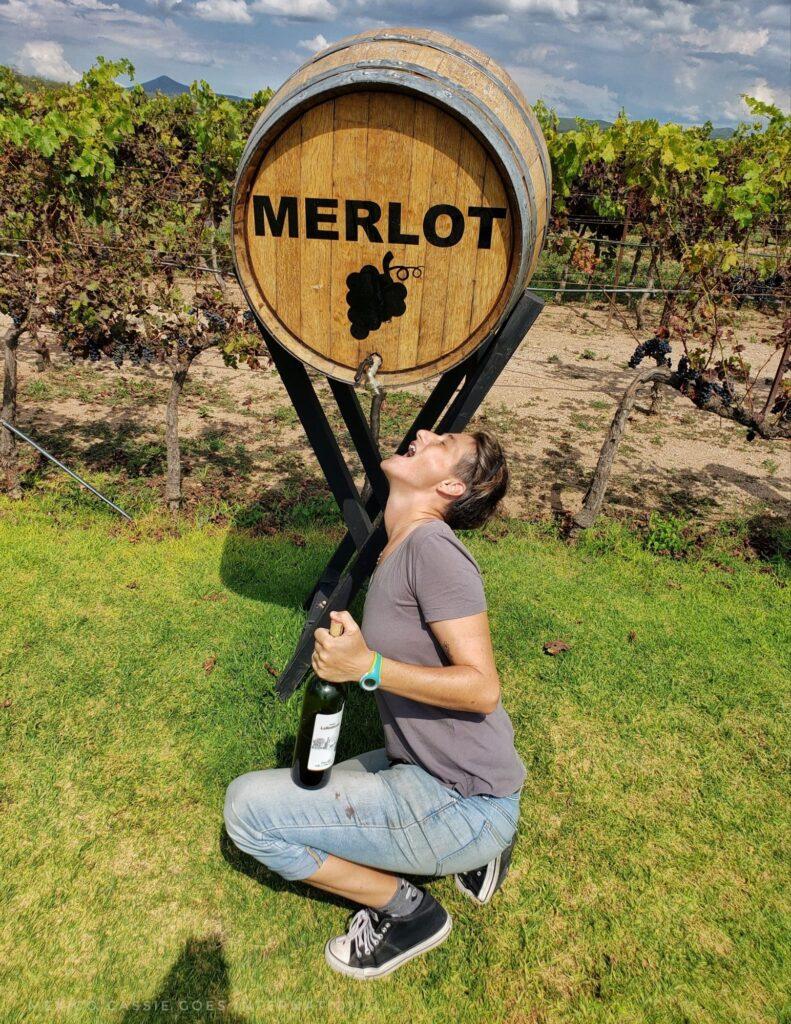
🍷 You will find a large selection of wines from all over the world in Mexico. And though many people are familiar with Latin American wines from Chile or Argentina, few know that Mexico has some incredible vineyards in the north of the country. In fact, the very first vineyards in North America were in Mexico.
There are over 150 wineries on the Baja Peninsula. Most are fairly small scale operations, bottling under 100,000 cases annually. The major wine-making regions include Valle de Guadalupe, Valle de Calafia, Valle de San Vincente, and Valle de Santo Tomás
The Valle de Parras is home to the oldest winery in North America, Casa Madero, which was founded in 1597! And in Central Mexico, the states of Zacatecas, Aguascalientes, Guanajuato and Querétaro all have their own rapidly growing wine regions.
👣 You’ll find tours of vineyards available in all the wine regions of Mexico.
Spirits & cocktails
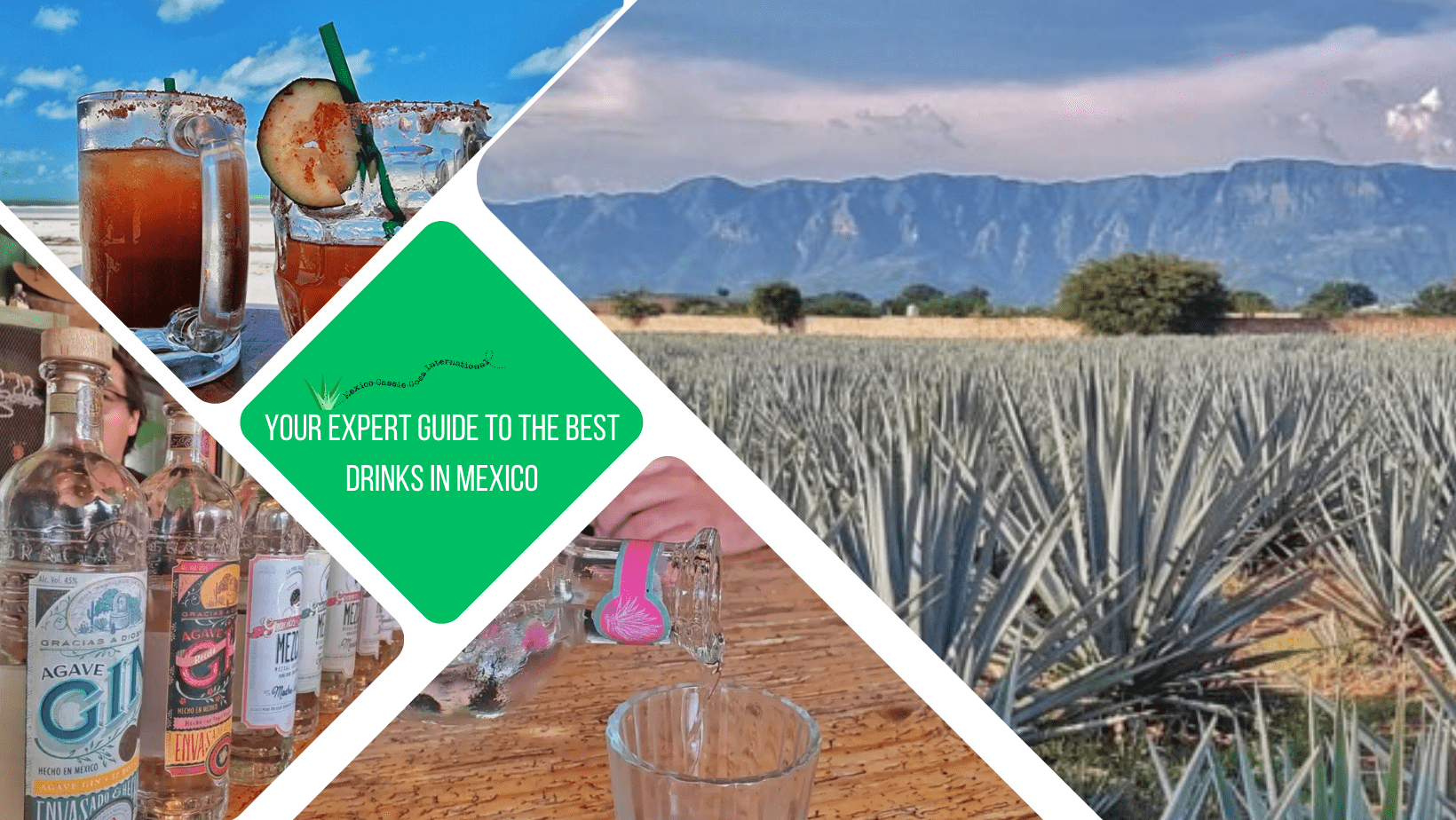
🍸 Finaaaaaaalllly, you’re here, and we’re going to talk about tequila & mezcal! We know it’s what you’ve been waiting for.
MexicoCassie is passionate about tequila & mezcal, both the drinks themselves and their importance in Mexican culture and tradition. Cassie may have been known to cry quietly when deeply moved by the love and respect the maestros and workers behind these drinks show for their craft, product and home. Please don’t tell anyone.
Tequila & mezcal
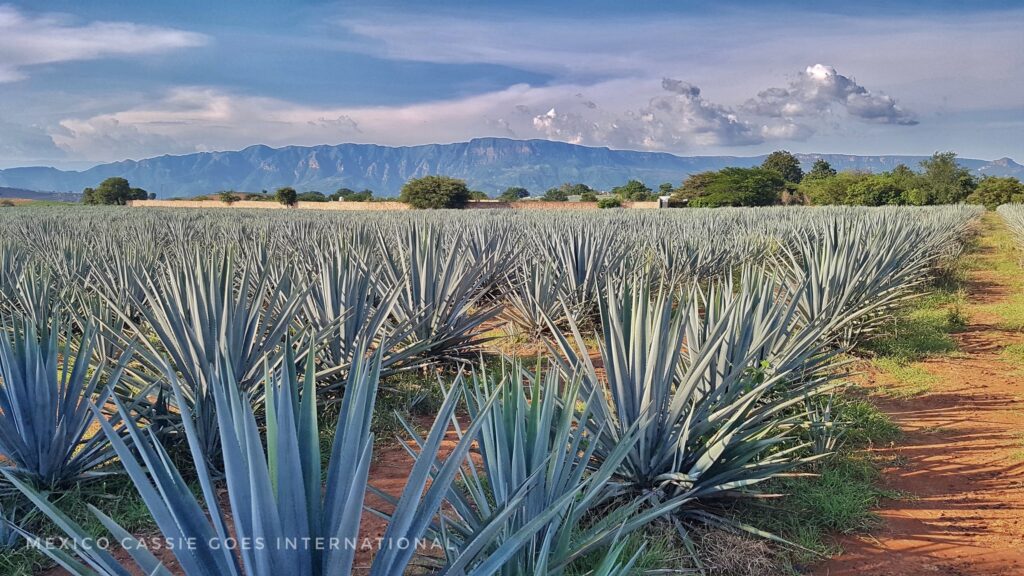
If you find yourself grimacing at the thought of tequila as memories of teenage shots spring to mind, don’t worry. We can almost guarantee that what teenaged you was drinking was emphatically not ‘real tequila’. In MexicoCassie’s case it certainly wasn’t.
Tequila or mezcal – what’s the difference?
Both are made from agave plants. All tequila is mezcal but not all mezcal is tequila.
Tequila is made uniquely from a blue agave plant called Blue Weber and can only come from 5 states. The small town of Tequila, in Jalisco, is, of course, the most famous place for tequila to come from. It is also produced in parts of Michoacan, Guanajuato, Nayarit and Tamaulipas.
Mezcal can be made from any variety of agave and though most commonly originating from Oaxaca, is produced in eight different states of Mexico.
The two drinks are also processed differently. For tequila the “piña” is steamed first whereas for mezcal they roast them in pits giving mezcal its trademark smoky flavour.
Which tequila do you pick?
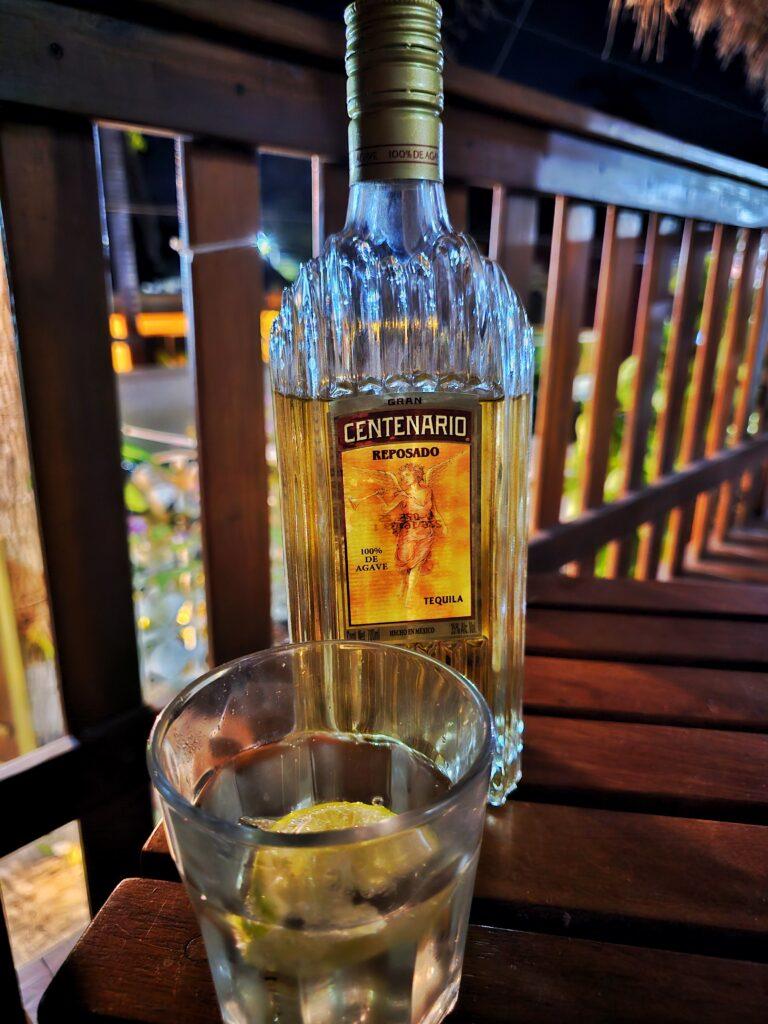
The most important thing to know is that there are two categories of tequila: “mixto” and “100% agave”. The 100% agave is undeniably the better drink as the sugars in it come only from the blue agave plant. In a “mixto” up to 49% of the sugar content can come from elsewhere: beet, cane, even the evil high fructose corn syrup. If you drink only 100% agave you’ll be unlikely to get a hangover.
Tequila comes in different classes: reposado, plata/blanco, añejo (and extra añejo), joven/oro. These classes refer to how long the drink has sat in an oak barrel. Blanco/plata is the newest, then reposado then añejo. If you’re mixing tequila with something else, a blanco is fine. If you’re looking for something to sip, I recommend a reposado or añejo.
→ If you’re fascinated by tequila, I recommend reading the MexicoCassie guide to tequila.
MexicoCassie’s favourites are: Centenario, Espolón & Fortaleza/ Los Abuelos (this one has different names depending on whether you buy it in Mexico or abroad.
You can drink tequila & mezcal neat, with ice, or with a little sparkling water & lime/orange. It should be savoured like a good whiskey, never taken as a shot.
If you go to a Mexican house party or drink on the beach with Mexican friends you may be offered tequila with squirt. Typically people will pour shots of tequila and give you a glass of squirt on the side.
MexicoCassie is a huuuuuge fan of diluting tequila with soda water and lime.
👣 There are numerous tequila tours available to visitors to Guadalajara & Tequila. Some have a more ‘party’ atmosphere while others are more directed to people who really want to get to know this ancient and delicious drink.
Which mezcal do you pick?
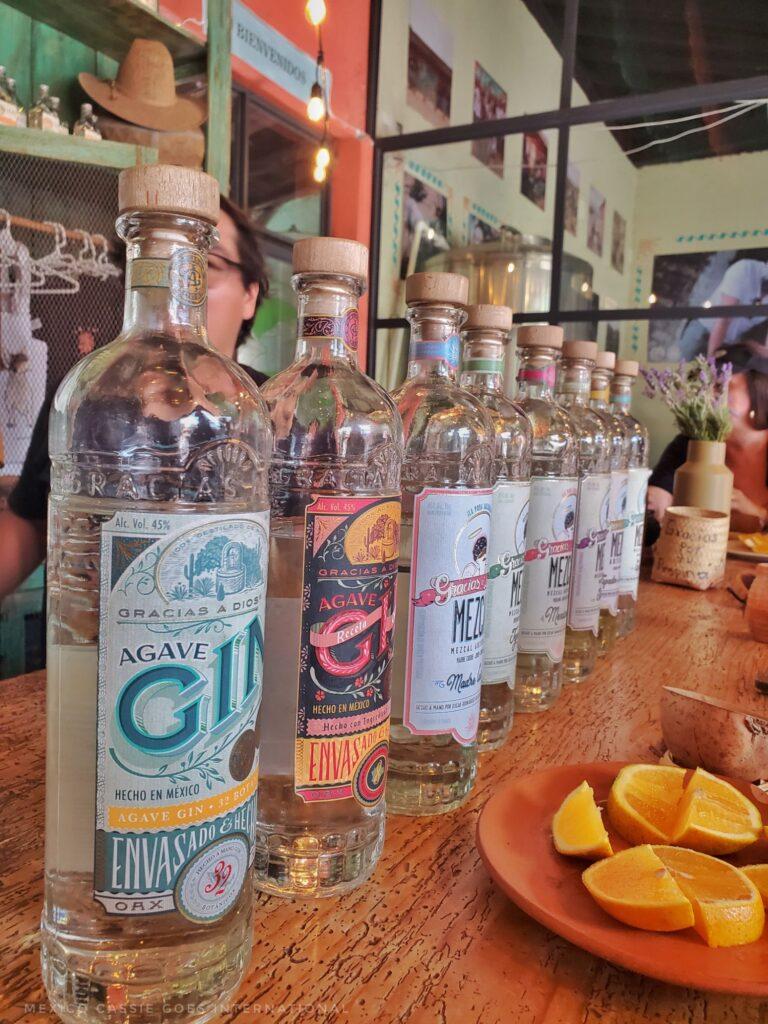
Mezcal is a more complicated drink, really, you need to think of it like wine: microclimate, soil type, plant type & ripeness, fermentation and distillation techniques all impact on the taste of the drink. There are 3 different ways of making this beautiful beverage: modern, artesanal and ancestral. People working with mezcal are passionate about what they do. They see themselves as bringing the earth to life in liquid form.
The most common mezcal is made from the Espadín agave. Other agave plants used are: Cuixe, Madrecuixe, Coyote, Tepeztate, Tobalá, Ancho and Cenizo. In restaurants and bars you’ll generally find Espadín mezcal but if you find a Cuixe or any of the others, definitely give them a try and see if you can taste the differences.
The mezcal worm
The worm you sometimes see in a bottle of mezxal isn’t actually a worm but a moth larvae and was a marketing gimmick launched in the 1950s by a mezcal maker to help differentiate his brand. Some brands maintain their “worms” but your mezcal is legit without it.
👣 If you’re in Oaxaca then the mezcal distillery tours are fascinating and a great way to learn more.
Cocktails
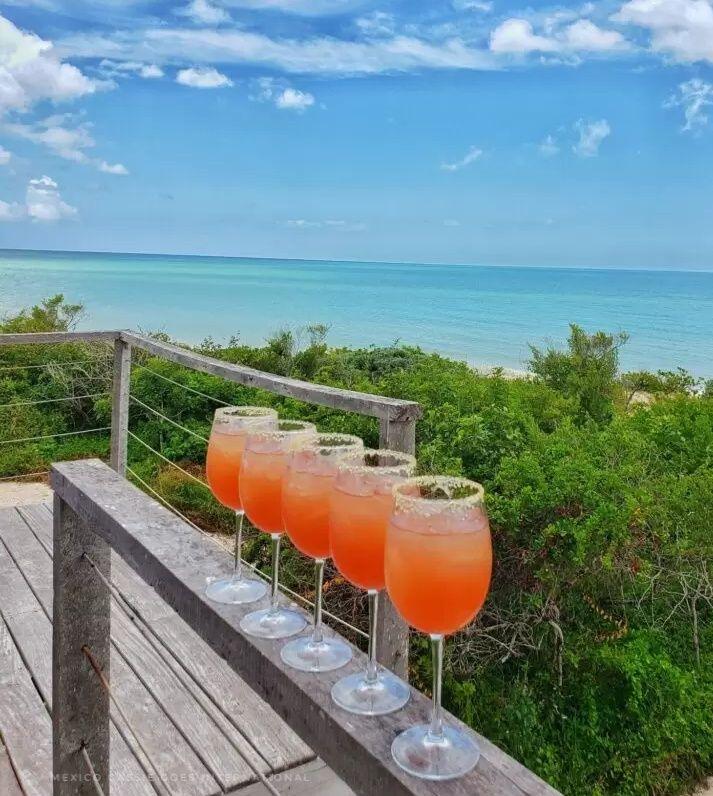
You’ve seen endless posts on social media of luscious cocktails in Mexico, right? They exist for sure. They’re delicious, fun and always expensive. There are some phenomenal mixologists in Mexico (sigh, MexicoCassie sinks into a reverie of past drinking fun…)
Most places you go will be able to make most mainstream cocktails, though you might run into a situation where a place can’t make a cosmo because they just don’t stock cranberry juice but will serve you a mean dirty martini. You’ll pretty much always be able to find a mojito or piña colada wherever you are too.
Margaritas
The truth is if you walk into a Mexican party, people are not going to be drinking margaritas. They will most likely have a bottles of whiskey and rum and soda mixers. Margaritas are like a bit like Cinco de Mayo, something foreigners think all Mexicans celebrate/consume when in fact it is more of a marketing ploy to get foreigners to consume.
That said, they are everywhere and they’re often absolutely fabulous. These will not typically be the frozen slushi found in Mexican themed restaurants abroad.
Try a maracuyá or tamarind margarita and deifnitely try a mezcalita – yup, a margarita made with mezcal.
Palomas
Be still my beating heart. Not just a beautiful name, this drink is easy to mix and drink. It is just tequila, ice, grapefruit soda, and a squeeze of lime. I make mine with fresh grapefruit juice and some fizzy water.
Carajillo
This is made with liquor 43. Basically it’s a delicious Mexican version of Irish coffee. Be warned because it is the most deliciously addictive drink for coffee lovers. Like a desert, a cocktail and a coffee all in one.
Pasita
If you’re in Puebla, be sure to try ‘pasita’ a local liquor that was developed here around 50 years ago. It’s kind of sweet & salty and MexicoCassie promises you it’s both delicious and also stops you from being sober very quickly! It is usually served with a small cube of cheese.
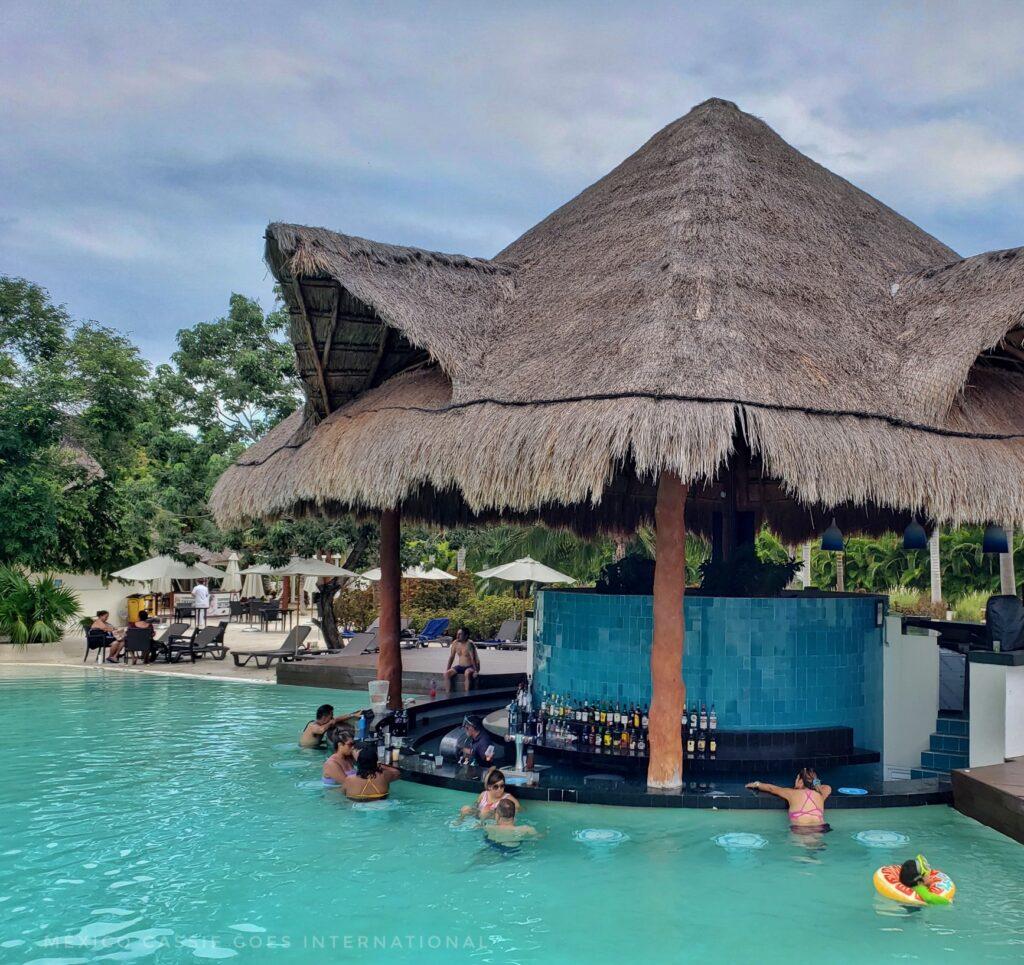
Tips for drinking in all-inclusive resorts
Typically resorts drinks are made with cheaper alcohol and can veer towards the weaker side. I find ordering drinks and specifying the brand of alcohol I want can help. Sticking to beers you like or wine is also another way around this.
If you find yourself in a resort that serves classic margaritas out of a soda dispenser, avoid them. I understand they make sense in terms of labor costs given the numbers they have to serve with an unlimited drinks policy, but they are just not very nice in our experience.
We recommend asking for your cocktail ingredients as separate items: if you want a margarita for example, ask for a double shot of tequila, a small glass of lime juice, a glass of ice and mix it yourself and then ask for a splash of cointreau and you have a classic margarita.
Pre-hispanic alcoholic drinks
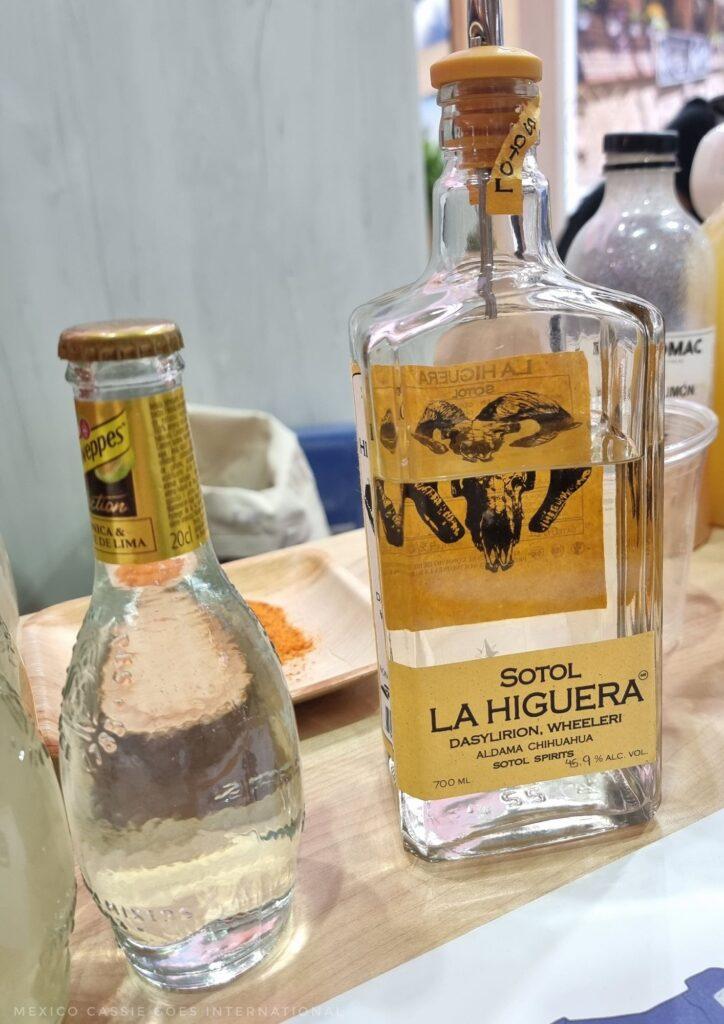
Soltol
The Mexicans I know who drink this LOVE it and MexicoCassie quite likes it too. Sotol is a fermented drink made from a plant called the Dasylirion wheeleri, that is found in the northern deserts of Mexico. It has a smokey flavour and a high alcohol content (35-55%) and is often consumed for celebrations.
Pulque
This is a traditionally a fermented drink made from the sap an agave plant called Maguey. It is often consumed “curado”, which means with added agave syrup and fruits & nuts to sweeten. I was told that there is a non alcoholic version popular for breakfast but I have yet to come across it nor meet a local who drinks it.
Tepache
This fermented drink is made from the pineapple peel and core along with water and sugar. You ferment it for a few days and should get a mildly alcoholic refreshing drink with a tangy unique flavour.
So there we have it, a comprehensive rundown on Mexican drink options, what’s your choice? 🍻
More Mexico adventures
🏔 Copper Canyon series
How to book your trip through the Copper Canyon
How to make the most of a trip to the Copper Canyon Adventure Park
Visiting Bahuichivo & Ceroachui
🚗 Mexico road trip ideas
An epic southern Mexico road trip through Campeche, Tabasco & Chiapas
Lesser known Yucatán adventures – 10 days
Yucatán road trip – 2 weeks
➕ Read the MexicoCassie guide to renting cars and driving in Yucatán
🥾 Mexico adventures – other
Everything you need to know about seeing the monarch butterflies in Mexico
How to visit the Grutas de Tolantongo in Hidalgo
San Cristóbal de las Casas as a great adventure base
Chiapa de Corzo & the incredible Sumidero Canyon
Exploring the Pueblos Mancomunados from Oaxaca
Getting deep into Queretaro’s magical Sierra Gorda region
Wine tasting in Baja California
Visiting the ghost town of Mineral de Pozos (Guanajuato)
Excellent day trips from San Miguel de Allende
What to do in and around Puebla (including visiting volcanoes)