The very best places to experience Día de Muertos in 2026!
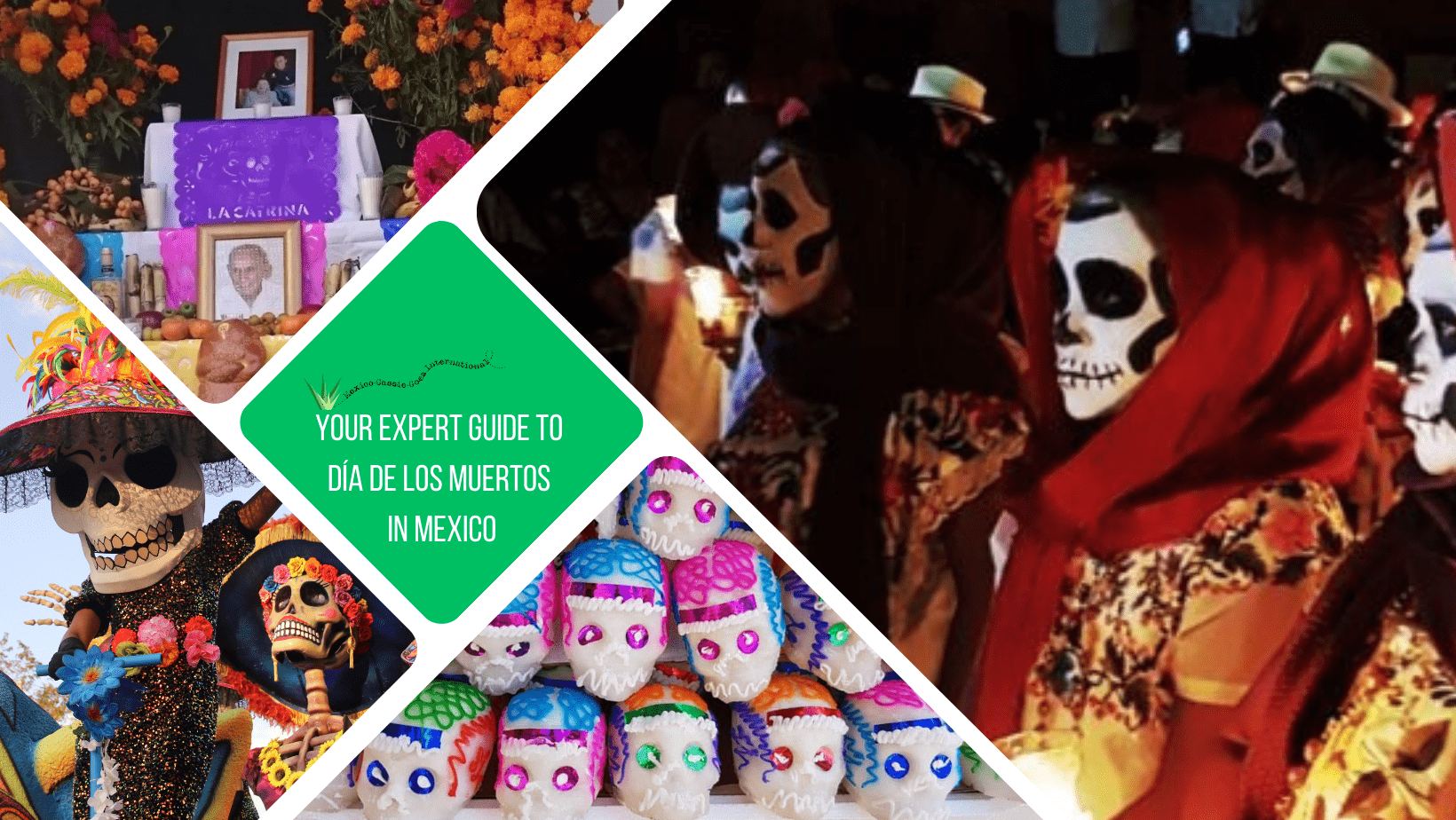
If you’ve always dreamed of visiting Mexico for the Day of the Dead celebrations, now is the very best time to make this happen. In this article you’ll find all the information you need to start planning your perfect Mexican Día de Muertos adventure.
We’ll take a look at what you can expect, how you can get involved, and then dive into the best places to experience Día de Muertos in Mexico in 2026.
My family’s love affair with Día de Muertos began in 2016 with a kindergarten comparsa (parade) in Oaxaca. We were invited to take part since the kids were enrolled in the school. We excitedly grabbed the opportunity and joined the other families dancing, singing, and flinging candies into the watching crowds. Every year from then on, Día de Muertos has been an integral part of my family’s life. When we lived in Mexico, my kids took part in Hanal Pixan activities and celebrations (Hanal Pixan is the Yucatecan equivalent of Día de Muertos) at school: building altars, writing posadas, making tamales and singing Día de Muertos songs. And even now that we no longer live in Mexico, we still build our own altar at home.
There are affiliate links in this article. If you click and make a purchase I could make a small sum at zero cost to you. Thank you!
In this article, we’ll cover:
💀 What Día de Muertos is all about | 🎒Getting involved as a visitor | 🧭 Where to go for Día de los Muertos | 🌼 Understanding the ofrenda
What is Día de Muertos?
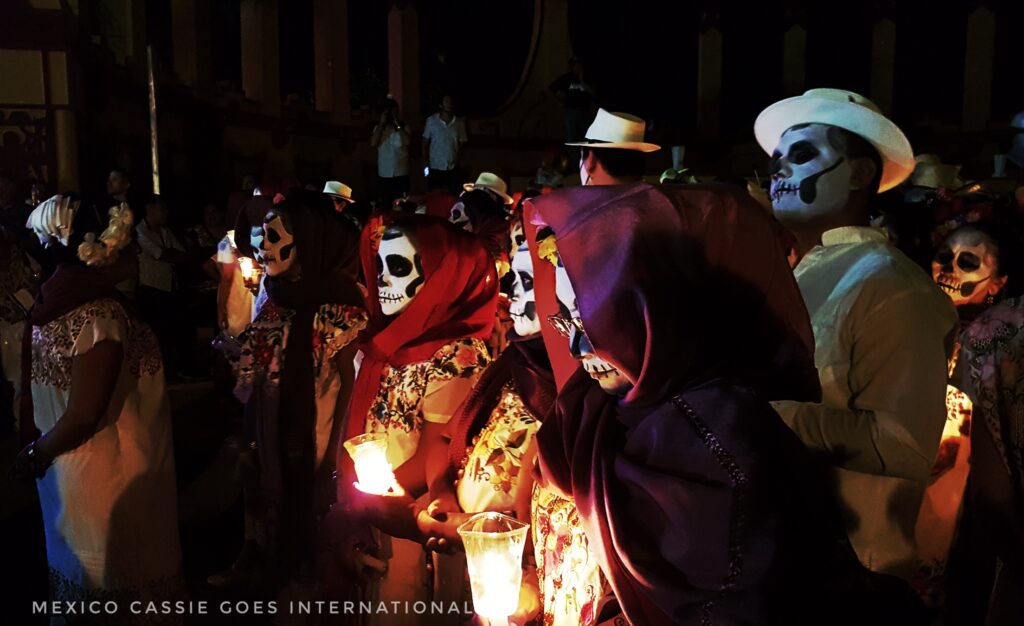
Día de Muertos is probably Mexico’s most famous export after tequila but what exactly is it? We’ll answer this with:
Fascinating facts about Día de Muertos
🔎 Día de Muertos can also be written as Día de los Muertos. Both translate as Day of the Dead.
🔎 Día de Muertos dates back to prehispanic times, in fact it has probably been celebrated for thousands of years. The festival is Aztec in origin and is linked to the worship of the goddess Michtecacihuatl, the Aztec ruler of the underworld.
🔎 Prior to the Spanish invasion of Mexico, Día de Muertos was celebrated in the summer. The Spanish moved it to coincide with the European-Christian days of All Saints’ Eve, All Saints’ Day and All Souls’ Days. This was part of the Spanish efforts to Christianise Mexico.
🔎 It might look as if Day of the Dead is a celebration of death but really it’s a celebration of life. Death in Mexico is seen as part of the cycle of life.
🔎 Day of the Dead is joyful; it includes dancing, music, humour, bright colours, family meals and street parties.
🔎 Día de Muertos is mainly celebrated in the central and southern regions of Mexico and it is celebrated differently around the country; in Yucatán for example, Día de Muertos is called Hanal Pixan and there are different traditions to observe.
🔎 During Día de Muertos it is believed that the border between the world of the living and the spirits dissolves, allowing the dead to visit their loved ones back on earth for one night.
🔎 There can be a lot of humour in the Day of the Dead celebrations – from the Catrinas (skeletons in fancy clothes) to the Posadas—silly poems about living people and how they died—you’ll find the Mexican take on death quite refreshing.
🔎 Food plays an important role in Día de Muertos. The dead are left offerings of their favourite foods and the living gobble them up once the celebrations are over.
🔎 Mexico City’s enormous Day of the Dead parade is actually not a traditional part of Día de Muertos. The James Bond movie, Spectre included a fictional parade in Mexico City and the response from visitors was overwhelming so the local government decided to incorporate it into their annual festivities.
🔎 In 2008, UNESCO named Día de Muertos as an Intangible Cultural Heritage of Humanity.
Book your trip asap to avoid disappointment. Accommodation in popular Día de Muertos cities will be snapped up fast.
Does Día de Muertos = Mexican Halloween?
❌ Día de Muertos is absolutely not Mexican Halloween despite being celebrated at the same time and seemingly sharing some components.
In some Mexican cities, you may see people dressing up in Halloween-style costumes and you may even see some trick-or-treat style candy being passed around. It probably depends on how much American influence there is in a particular city. Children may ask you, “me das mi calaverita?” – “can you give me my little skull?” They are referring to the Day of the Dead sugar skulls you’ll see at this time of year).
In Oaxaca, it’s very common to see people dressed up in what you might think of as ‘Halloween fancy dress’. In other places, less so. If you’re considering wearing a costume yourself, note that Mexicans are very kind and generous people and they’re unlikely to tell you off but you might feel out of place if you’re dressed completely differently to others. I recommend waiting until you arrive and asking people what’s acceptable rather than bringing fancy-dress with you.
👻 Halloween is actually the modern descendant of the ancient Celtic festival of Samhain. Children were disguised to protect them from malevolent spirits who were thought to return to our realm at this time of year. Día de los Muertos does not see the spirits as malevolent, rather they are family members returning home.
Exploring festivals and celebrations in Mexico is a great way to educate children about Mexico and different cultures. Homeschooling families in Mexico can pick a different location every year.
When is Día de Muertos celebrated?
🗓 Día de Muertos is officially a three-day celebration over October 31st and November 1st and November 2nd.
October 31 is sometimes known as Noche de Brujas (Witches Night). It’s more officially the Eve of Día de Muertos and is a time for people to put the finishing touches to their altars.
November 1 is Día de los Inocentes or Día de los Angelitos (Day of the Little Angels) – the day to remember children who have died. In English, this is All Souls Day.
November 2 is Día de los Muertos or Día de los Difuntos – the day for remembering adults who have died. November 2nd is the only official public holiday.
Because this is such an important festival in Mexico, if you’re visiting in October you may well find cities, businesses, and families gearing up for the Day of the Dead festivities during the entire month. Don’t worry though, nothing will be closed over the holiday, it’s very much business as normal.
Official dates for Día de los Muertos activities are released in late September/early October but it’s still absolutely worth booking your trip to Mexico as early as possible.
How can visitors get involved in Día de Muertos?
This is a good question because of course, Día de Muertos, as a family celebration of life, doesn’t necessarily sound as if it has a place for visitors or tourists. But fret not, for it is perfectly possible for visitors to enjoy Day of the Dead. In fact, there are many places and ways in which you will be able to get involved in Día de Muertos celebrations.
Please do remember that while Mexicans are incredibly welcoming and love sharing their culture, this is a festival that is intensely important to many. Families are truly celebrating the memory of their loved ones in the cemeteries and with their altars. Just because these celebrations take place in public doesn’t mean you can take photos or touch without asking first. Use your judgement, be respectful and have a wonderful time!
In 2016 in Oaxaca I stumbled across a child’s ofrenda in a quiet street. This is when, for me, it really sunk in just how real and serious this festival is. As visitors we have a responsibility to remember this and behave accordingly. We are honoured to have the opportunity to witness this ancient and beautiful festival.
As a visitor you can:
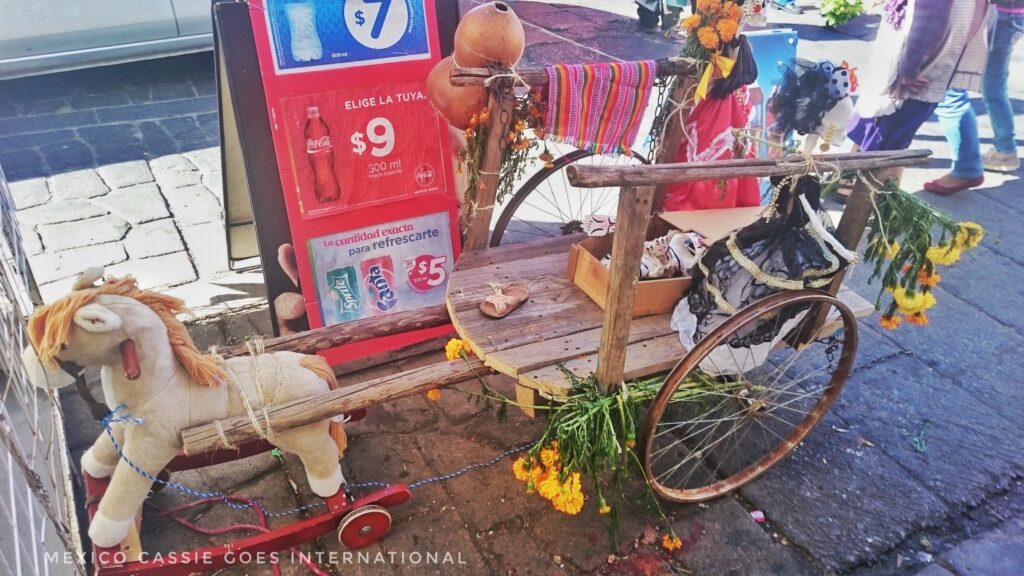
🗝 Walk around town, admiring public altars
🪦 Visit cemeteries (this is possible all year round without guides but may be more suited to guided tours during Día de Muertos)
🛍 Visit local markets to see and buy the items commonly available during Día de Muertos such as sugar skulls and papel picado
🫔 Eat traditional Día de Muertos foods such as Pan de Muerto and tamales
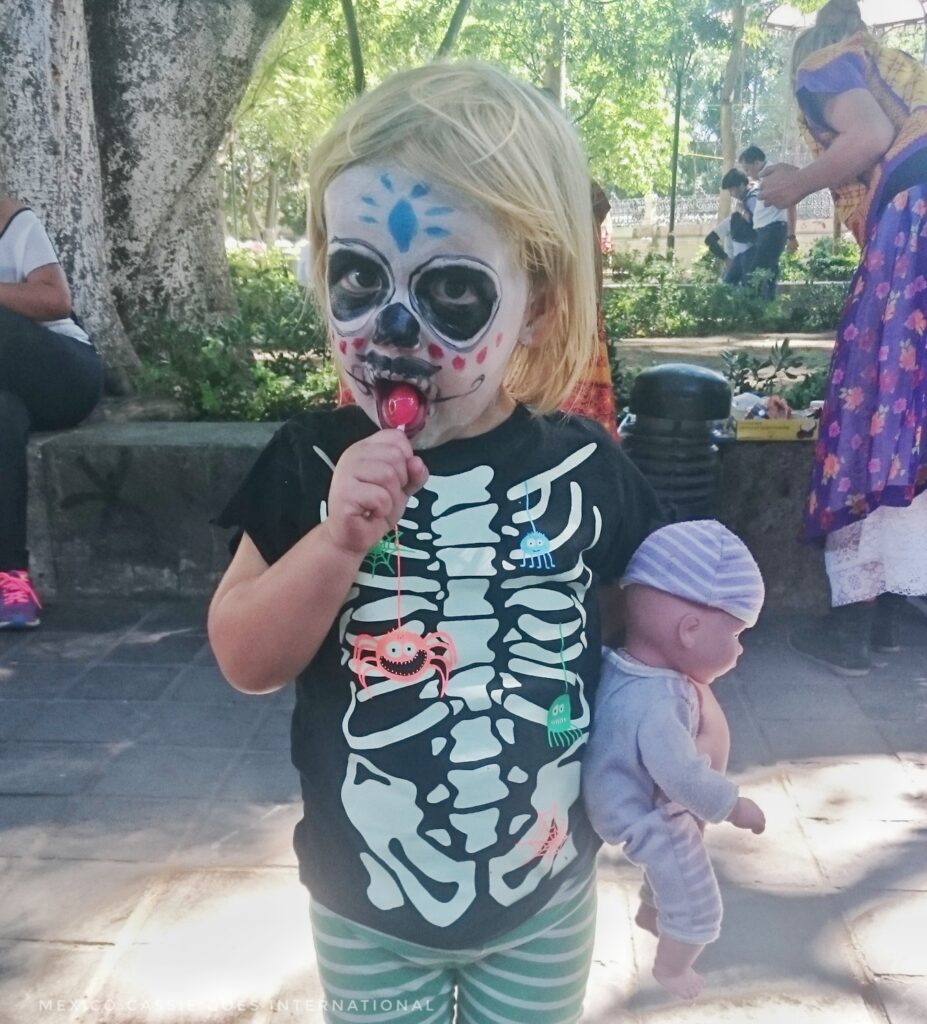
💀 Get your face painted as a calavera (this is not seen as cultural appropriation if you’re in Mexico and are respectful of local culture)
🎉 Find out from locals what/when/where the city celebrations will be and respectfully join in
🍿 Watch Coco before you travel. It’s a beautiful and sensitive animated movie about Día de los Muertos that everyone can enjoy learn from. My family and I watch it every year in the run-up to Day of the Dead.
Want MexicoCassie to take a look at your travel plans?
Of course you can plan your own trip, that’s why you’re here using my guides! But an expert pair of eyes can be extremely useful when you’re feeling overwhelmed, simply have too many ideas, or you’re not quite sure where to begin.
I offer informal & fun travel planning sessions, bespoke itinerary planning and AI itinerary checking, all based on my many years of travelling and adventuring.
Top Tip: If you want to buy artisan souvenirs then the markets and tourist shops are your best bet but if you just want Día de Muertos household items like those you might see in a Mexican home, head to a supermarket for some great deals.
Where to celebrate Día de Muertos
Remember how I mentioned that the official Day of the Dead schedules are often released pretty late? We’re talking mid-September to mid-October depending on how organised a local government is in any given location and year. If you’re worried about not finding information in time or you think you might miss out on the action, I recommend booking a tour in your chosen city.
👣 Booking a tour will give you peace of mind that you’re not going to miss out on anything. Most Day of the Dead tours are run by local operators who really know what they’re doing, when and where the best comparsas (parades) will be, which cemeteries to visit and when and even where the most ornate or beautiful ofrendas are. Your experience of Day of the Dead will be deeper, more authentic and more connected to communities if you find a really good local tour guide.
→ Read the MexicoCassie guide to the best Day of the Dead tours
As I noted above, central Mexico and southern Mexico tend to celebrate Day of the Dead more than northern Mexico.
These are the places I most recommend if you want to experience Día de los Muertos celebrations. If you already know where you’re interested in visiting, use the links below to head straight to that section, if you’re not sure, read through it all.
Oaxaca | Mexico City | Mérida | Atlixco | Tlaquepaque | Patzcuaro | Guanajuato | Caribbean Coast
Oaxaca City, Oaxaca
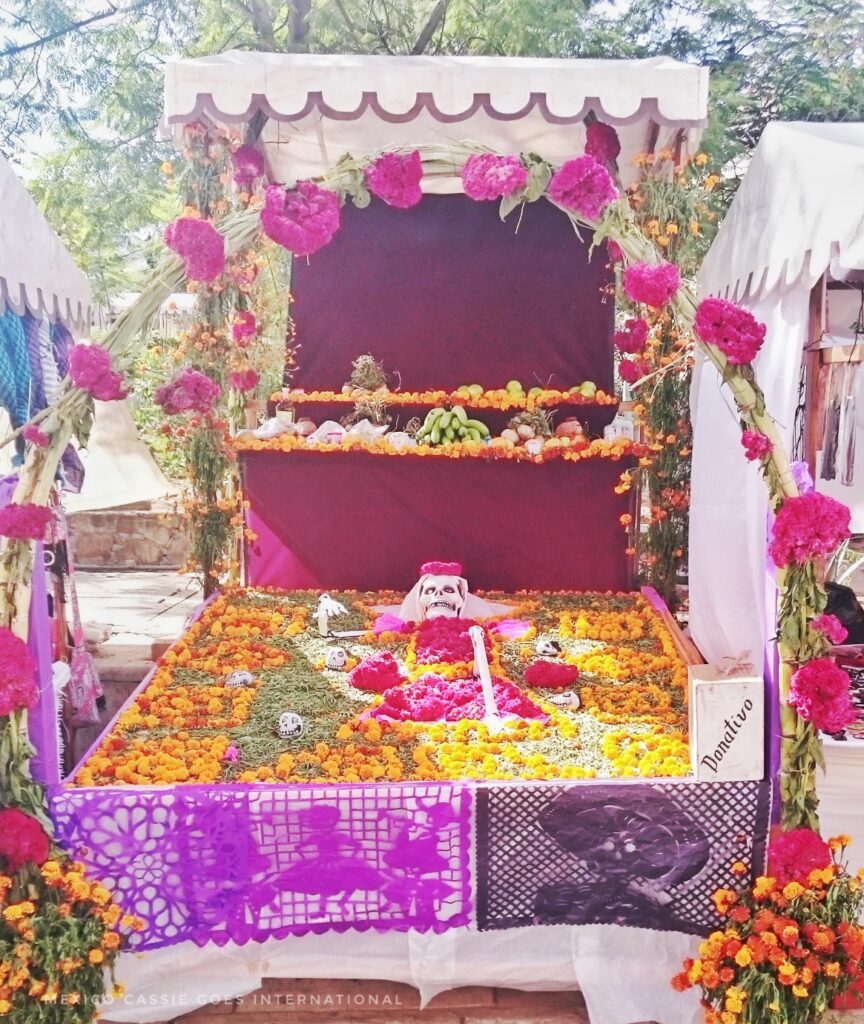
I spent my first ever Día de Muertos in Oaxaca in 2016. My kids were two and four and we had just begun our Mexico journey. Being so lucky as to experience Oaxaca during Day of the Dead set us up for many years of living happily in Mexico.
Oaxaca during Día de los Muertos
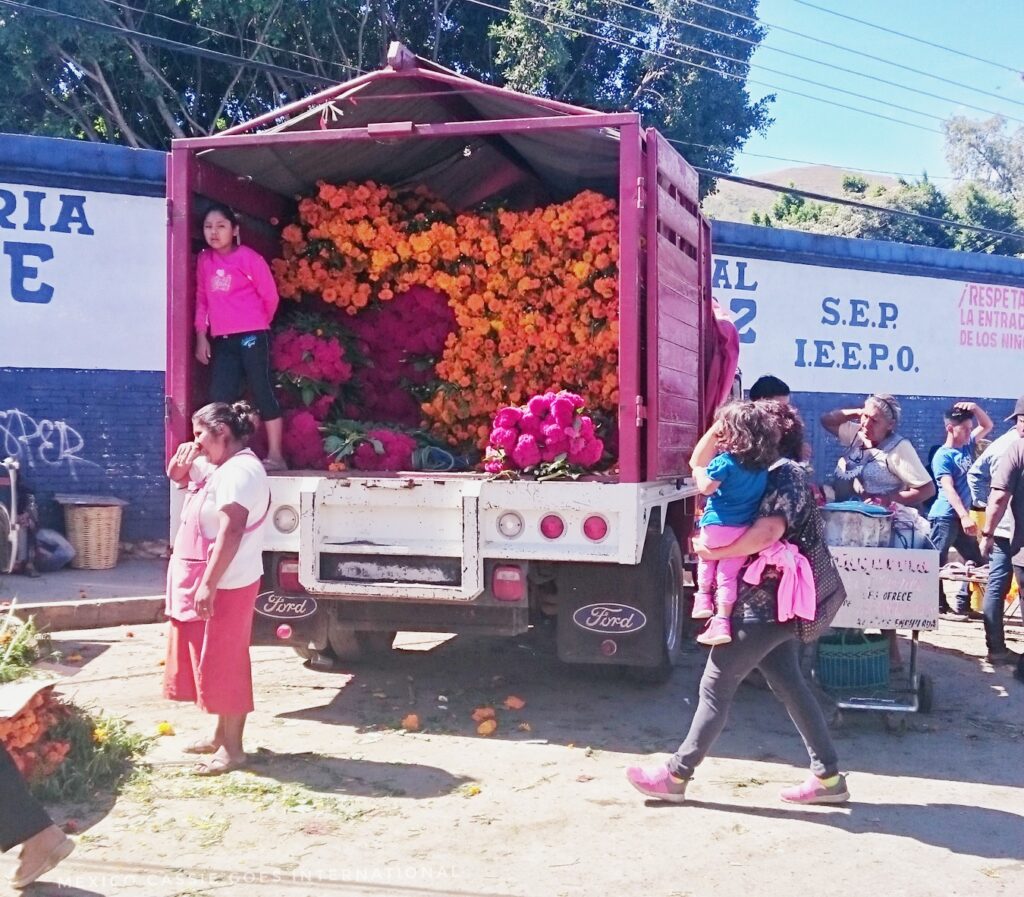
Oaxaca is often thought of as the heart of Mexico because so much of what foreigners think of as quintessentially Mexican comes from this region, including food and souvenirs. And as for Día de Muertos, there is simply nowhere like Oaxaca because while Oaxacans do take the festival seriously, they also love to party and they love for people to party with them.
What to do in Oaxaca during Día de Muertos
Oaxaca is an incredible city to visit at any time of the year but it really ramps up for Day of the Dead. From about halfway through October you’ll start to see ofrendas (altars) and catrinas (dressed-up skeletons) in shops and the local markets will start selling Day of the Dead items.
🗝 Be sure to spend time walking around the city streets, plazas and markets (including the enormous Central de Abasto Market just outside Centro) in the run-up to Day of the Dead. You won’t believe the size of this place so be sure to leave a good few hours to really and truly get lost here. It’s incredible!
🗝 Visit the cemetery in the evenings of 31 October to 2 November. You can explore the graves and tombs, seeing how they have been decorated and then join locals at the funfair outside.
🗝 Join the parties outside the Templo de Santo Domingo de Guzmán, on Zocalo and throughout the streets of Oaxaca.
🗝 Enjoy a parade. The opening parade is called the Magna Comparsa. Because Oaxaca is Oaxaca though, every school, club, and group will have its own parade so you’re sure to have something to see or join. Be warned: there will be fireworks. A lot of fireworks.
🗝 Enjoy browsing the craft markets that are set up all around Oaxaca that sell traditional Day of the Dead items as well as artesanias from around the country. Maybe pick up an alebrije or small skull to take home with you.
🗝 Visit the central Oaxaca highlands to experience a traditional comparsa (parade) with local tour guides.
Oaxaca general details
✈️ Oaxaca’s airport is called Oaxaca Xoxocotlan International Airport (OAX) and it is located just nine kilometers, or twenty minutes drive, from Oaxaca’s Centro. There are airport taxis available or you can organise a private transfer to your hotel or Airbnb.
→ Read the MexicoCassie guide to getting to/from Oaxaca’s airport
🚗 Check rental car options in Oaxaca
🚍 Oaxaca is serviced by ADO long-distance buses. There are three bus stations in Oaxaca. The main one is located on Calle 5 de Mayo in Jalatlaco neighbourhood. You can check prices and timetables on Busbud, my favourite bus booking site.
🏨 I recommend staying in Oaxaca’s Centro Historico if you can. This way you’ll be able to walk everywhere and won’t have to spend a fortune on cabs. If you stay a little longer then consider moving out into the small villages around Oaxaca like San Felipe del Agua or San Andres Huayapam (where I stayed for a while in 2017) although you’ll need a rental car out here.
→ Find & book your Oaxaca accommodation here
→ Read the MexicoCassie guide to figuring out how long to spend in Oaxaca
→ Read the MexicoCassie guide to spending 3 days in Oaxaca
Día de los Muertos Oaxaca bonus: Xoxocotlan
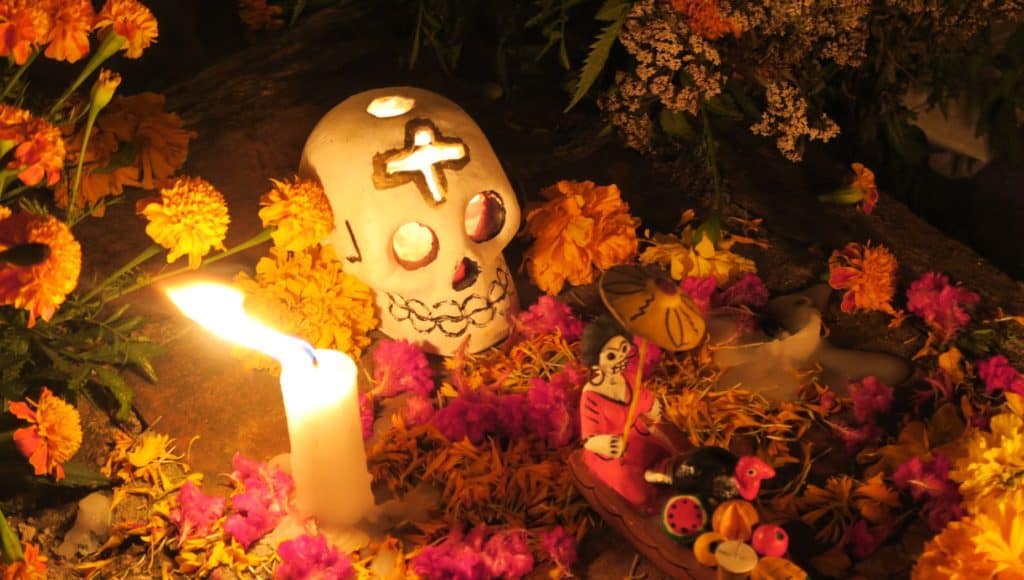
Xoxo (pronounced Ho-ho), as locals call Xoxoctlan is a pueblo just south of Oaxaca and while it isn’t generally considered to be a vacation destination, at this time of year it fills with tourists who want to see something outside of Oaxaca.
Día de los Muertos in Xoxocotlan
The main square in Xoxo will be beautifully decorated and the entire street to the main cemetery, the Panteon Mictlancihuatl, turns into a long market full of street vendors selling micheladas, snacks and painting calavera faces.
The cemetery is the heart of everything in Xoxo though as families set up altars on their family tombs. The altars include candles, foods and drinks for their ancestors and plenty of cempasuchil flowers to guide their loved ones home from the spirit world.
What to do in Xoxocotlan during Día de Muertos
🗝 Visit the plaza to see the Catrinas and the altars.
🗝 Visit the cemetery to see families in Xoxo welcome home their difuntos with decorated tombs, food, flowers and candles.
Truthfully, Xoxocotlan has become something of a tourist spot since I visited in 2016, in fact, Katrin, who lives there, told me about how she had to push through drunk tourists just to get into the cemetery. Don’t be that way. Sure, enjoy a drink in the market but don’t get drunk and ruin it for others, please.
Mexico City (CDMX)
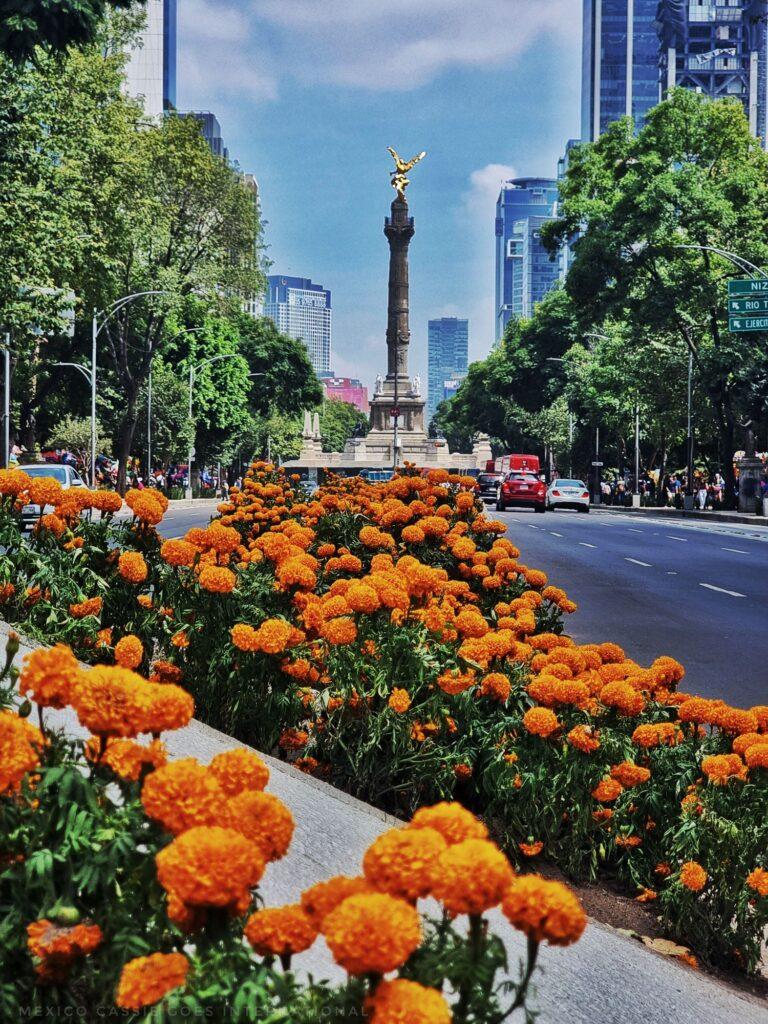
Mexico City is my favourite city in the entire world because of its incredible number of museums, art galleries and parks. I highly recommend spending time in CDMX (or DF, short for Distrito Federal, as locals like to call it) at any time of the year.
CDMX during Día de Muertos
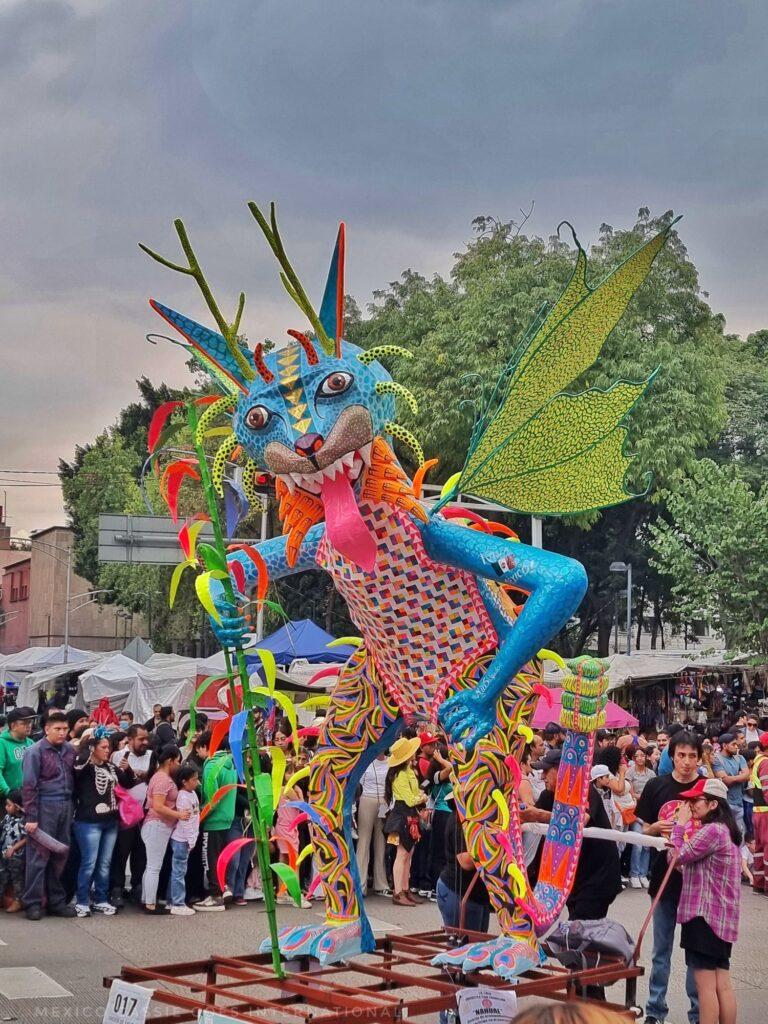
As you might expect, Día de Muertos in Mexico City is busy, hectic and it will blow your mind. Mexico City is the oldest city in the Americas, and it doesn’t disappoint for Day of the Dead. To be honest, like any trip to Mexico City, you’re going to have to plan your time and figure out what you really want to do because there’s just so much going on.
⭐️ If the idea of the main desfile (parade) and the huge crowds it attracts terrify you, why not choose a smaller area of Mexico City and explore how it celebrates Día de Muertos. Below I include two areas I love very much: Coyoacan and Xochimilco for precisely this reason. The photo above was taken at the alebrije parade by the Alameda.
Top Tip: Mexico City, more than anywhere it’s important to book your flights and accommodation early.
What to do in Mexico City during Día de los Muertos
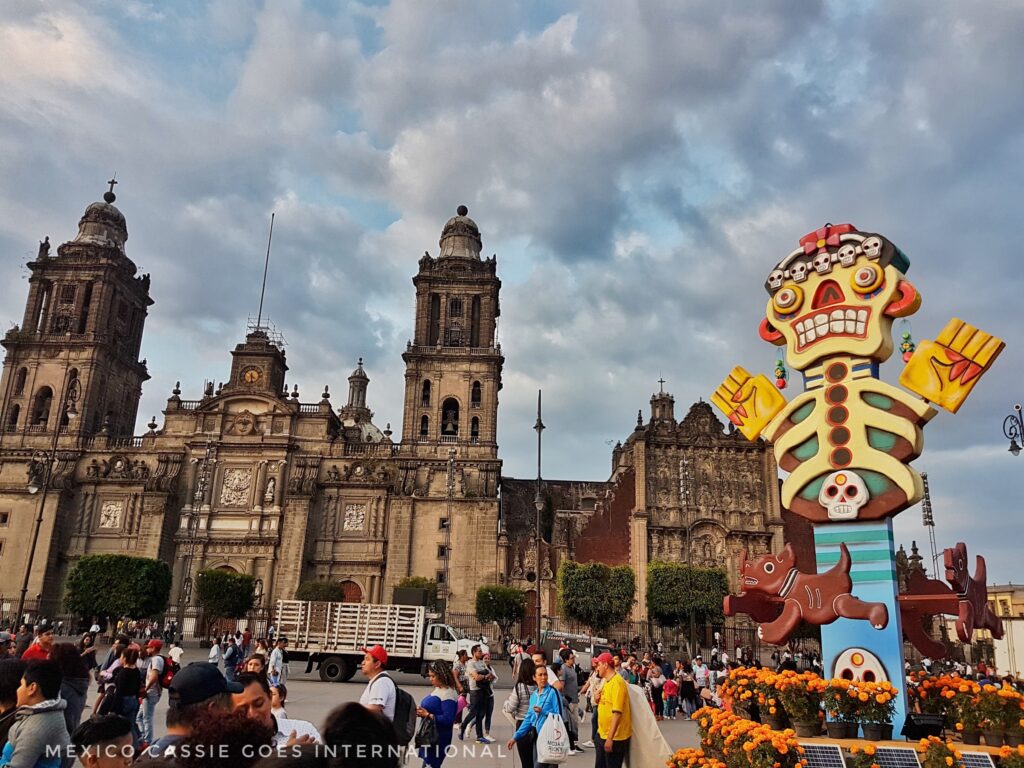
🗝 El Gran Desfile de Día de Muertos. Despite being the newest attraction, El Gran Desfile de Día de Muertos (the Great Day of the Dead Parade), shouldn’t be missed. It’s typically held on the Saturday preceding Día de Muertos but its date isn’t generally announced until early October. The desfile begins at Estela de Luz and ends in Zocalo. Be aware that around a million people are likely to attend this event so arrive early and keep a tight hold of your belongings.
🗝 Visit Zocolo in the historic centre of Mexico City to explore the ofrendas. Every year, Mexico City’s Zocalo (main plaza) is home to a new display of monumental ofrendas. These go up before Day of the Dead and remain up for most of November.
🗝 Day of the Dead in Coyoacan District: one of Mexico City’s most traditional districts, Coyoacan is also a great spot for getting into the swing of Día de los Muertos. The two main plazas are generally joyous and are colourfully decorated but at Día de los Muertos they go all out with ofrendas and decorations. There are performances to watch on these squares every year too as well as their own local Día de Muertos parade. Have your face painted with traditional calavera face paints, grab a pan de muerto and explore the ofrendas, the markets (I bought a massive stash of papel picado in the market here) and even the museums.
🗝 Check out museum ofrendas: Many museums in CDMX will have their own displays and ofrendas for Día de Muertos. The ofrendas in the museums tend to stay up until December.
For example, Museo Anahuacalli‘s incredible ofrenda is always worth seeing as is that of Casa Azul (Museo Frida Kahlo).
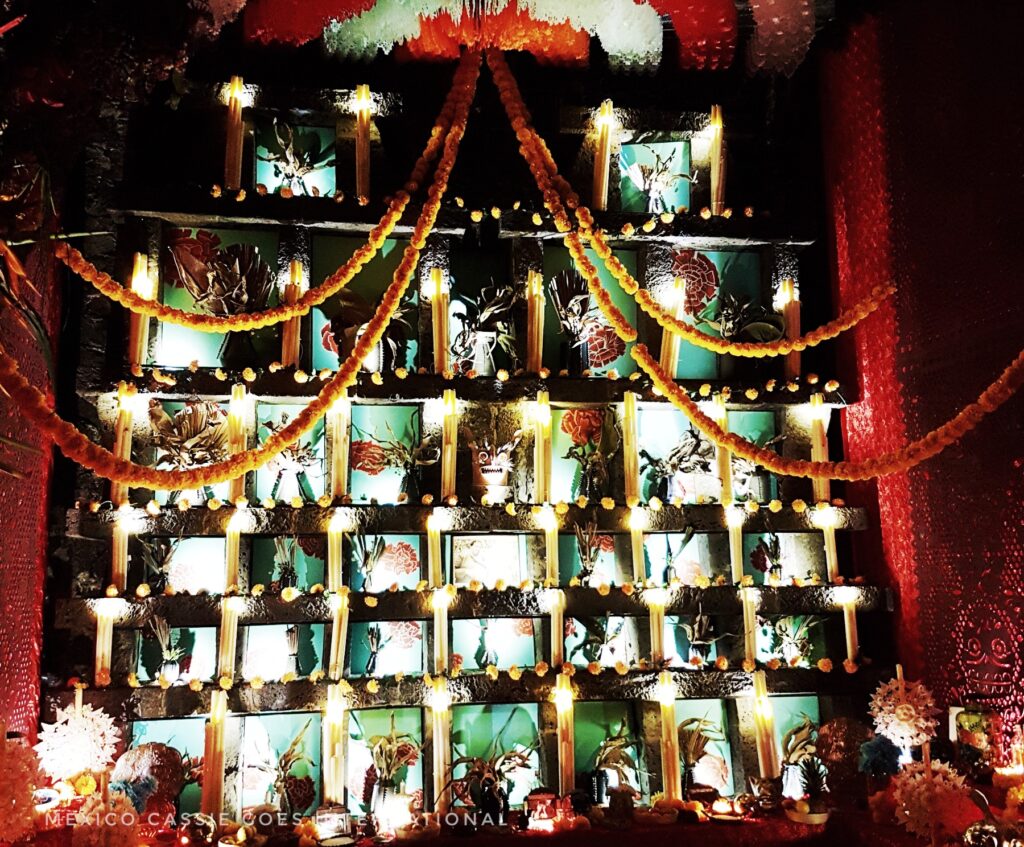
🗝 Day of the Dead in Xochimilco: In this southern neighbourhood that is best known for its UNESCO World Heritage canals there is plenty going on for Día de los Muertos. In the main plaza you will find dancing, sand tapestries, ofrendas and more. There’s also a free pulque festival nearby. Pulque, if you’re not sure, is a local fermented agave drink. While you’re here, visit the Dolores Olmedo Museum and do not miss the opportunity to take a night ride through the canals. While it’s perfectly possible to do this all year round, for over thirty years, during Día de Muertos this has been transformed into something truly extraordinary: “La Llorona en Xochimilco”, a retelling of a haunting traditional Mexican tale.
🗝 La Llorona en Xochimilco is a theatre production performed on the canals to an audience in trajineras (canal boats). The canal boats are rowed down the waterways to a meeting point where the audience is told the story of the woman condemned to spend eternity searching for the children she drowned in a fit of rage. The show culminates with a sound and light show. This show runs from the end of September to the end of November, Fri-Sun only except during the week of Día de Muertos when it shows every night. Buy tickets and pick up your boat at Embarcadero Cuemanco. Arrive early to ensure you manage to get a ticket. If you don’t want to queue for tickets and prefer to take a tour, this is also possible.
🗝 Take a tour of a cemetery in Mexico City. I recommend a tour because not all cemeteries are open for Día de Muertos and some aren’t as welcoming to visitors as others. It would be a shame to travel to a cemetery only to find it isn’t open.
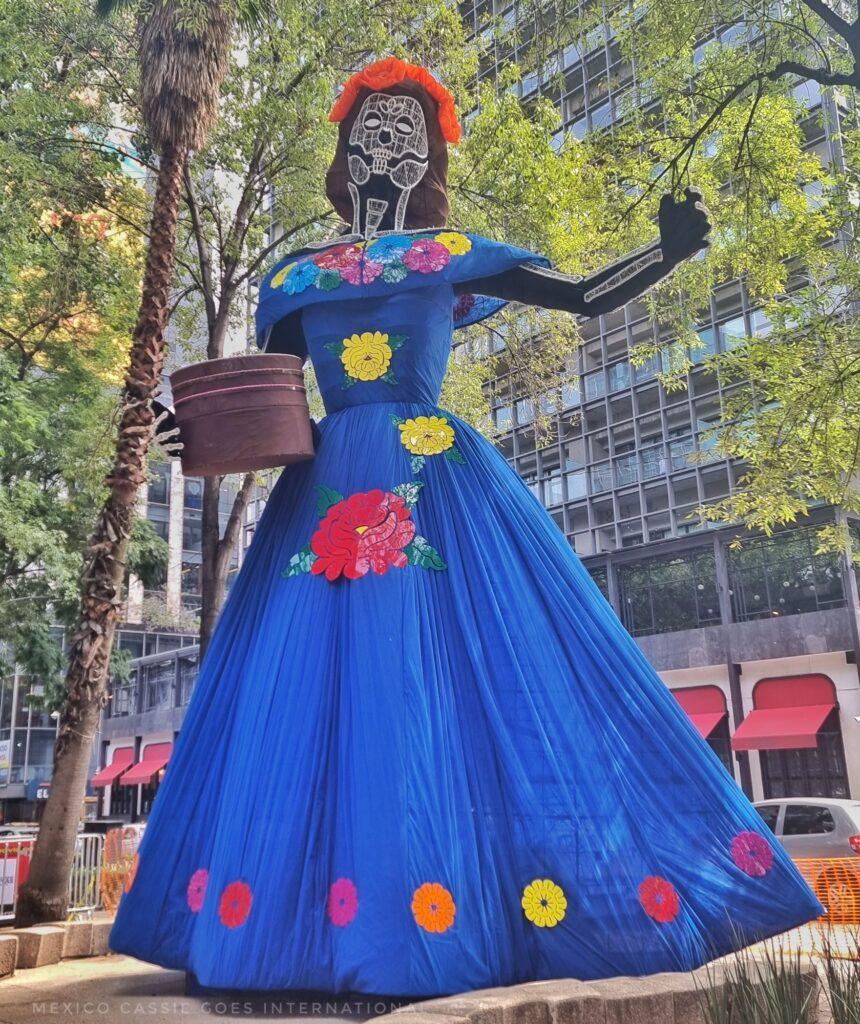
🗝 Stroll along the beautiful Avenida Paso de la Reforma to marvel at the exhibitions of giant catrinas and alebrijes, the festival of cempasuchil flowers and many other installations and markets along this gorgeous avenue that runs through Mexico City from the epic Bosque de Chapultepec. Note that the alebrijes are only displayed after they have been paraded through the city.
Mexico City general details
✈️ Mexico City has two airports, Benito Jaurez and the new Felipe Angles, which is much further away from the city. Be sure you know which one you’re arriving into when you book your flights to Mexico City There are airport taxis available or you can call Uber or organise a private transfer to your hotel or Airbnb.
🚍 Mexico City, as the capital city is well serviced by ADO long-distance buses. Tickets, timetables and prices can be checked on BusBud.
🏨 If you’re visiting Mexico City for Día de los Muertos then I recommend either staying in the Centro Historico, around Condesa or Coyoacan.
The only real answer to the question, “how long should I spend in Mexico City?” is “a lifetime and it still wouldn’t be long enough”. Use the MexicoCassie 5 day & 3 day guides to plan your trip
🚌 Visit the sun and moon pyramids at Teotihuacan and take a hot air balloon ride
👧🏽 Check the MexicoCassie Mexico City with kids guide for a comprehensive overview of exploring with kids
Mérida, Yucatán
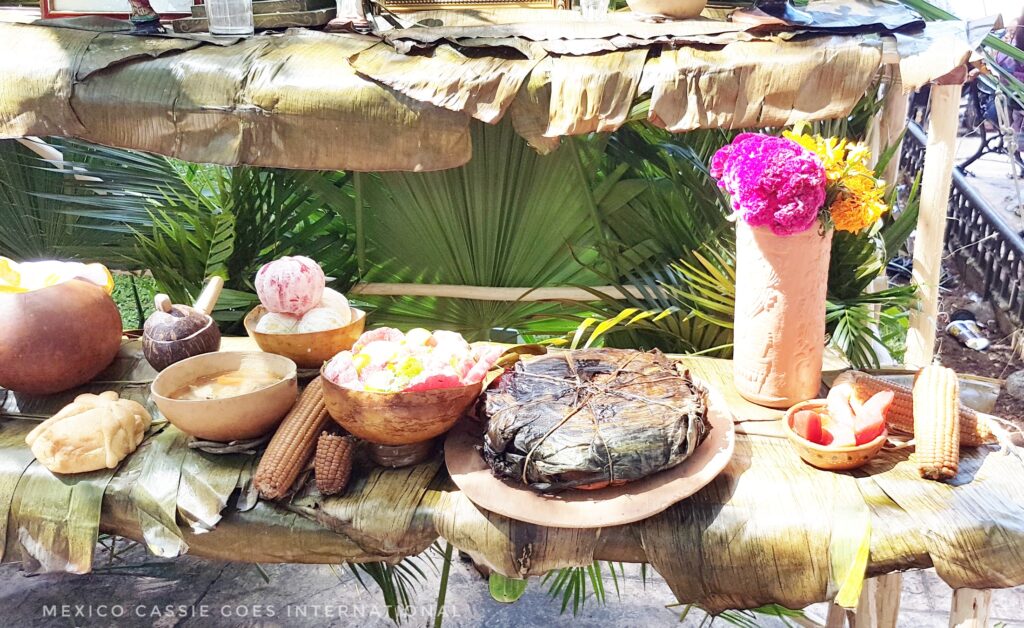
Mérida was my home for many years; it’s where my children grew up and made their formative memories. It’s the place they will always think of as home as well as the place about which I’ve written two books. In Mérida my children learned to make their own altars, to make (and eat) the traditional tamales and xec, the Hanal Pixan salad and to sing the calaverita song with their friends.
In Mérida by the way, it isn’t Día de los Muertos that is celebrated but rather, the Maya Hanal Pixan, an even older and more sombre affair than Día de Muertos.
Hanal Pixan means “food for the souls” and when you visit you’ll see why it’s called that. It really is all about welcoming family home from the spirit world with their favourite foods and enjoying eating those foods yourself, too.
Mérida during Hanal Pixan
As I said, Hanal Pixan in Mérida is somewhat more sombre than you might expect if you’ve experienced Día de los Muertos somewhere like Oaxaca but that doesn’t mean it’s not worth your time. Come with an open mind and be prepared to learn as well as party.
Even the ofrendas (altars) are different in Yucatán – here people tended to be buried in their homes so that’s where the altars are set up.
Altars require white tablecloths, jacaras (gourds to hold food and drink), candles (white for adults, coloured for children) and flowers. Typically you’ll see a green wooden cross in the centre of an altar. This represents the ceiba tree, which is very important in Maya cosmology.
You’ll see far fewer altars in shops and cafes than in somewhere like Oaxaca.
What to do for Hanal Pixan in Mérida
🗝 Explore the community ofrenda competition on the Plaza Grande to get an idea of how a Maya altar looks.
🗝 Eat pib at the pib festival. This is generally held over the weekend before Hanal Pixan in Parque San Sebastian.
🗝 Follow the Paseo de los Animas (Parade of the Souls). This is the main procession in Mérida. It leaves from the main cemetery and ends at Parque San Juan where stages are set up for performances. While visitors can’t officially join the parade, they can follow along behind and enjoy the street party that erupts behind it. As you follow the party, stop and check out the altars people have moved outside their houses, grab snacks and marvel at everyone’s traditional clothing.
🗝 Visit Mercado Lucas de Galvez to gaze at all the Hanal Pixan items on sale, including the traditional sugar skulls, and candies. While you’re there, why not pick up some good value traditional Hanal Pixan clothing (huipiles for women and guayaberas for the men) to wear to the Paseo de los Animas?
You can either buy artisan huipiles and guayaberas that are handmade or you can buy cheap factory-made versions. You get what you pay for, of course, but don’t expect to pay factory prices for true artisanal work.
🗝 La Ermita Botanical Gardens – during the Paseo de las Animas you can take a peek inside these often closed gardens on La Ermita. Local businesses set up altars here and they’re generally fascinatingly specific to their business. (this is a true insider tip by the way – non-locals rarely know about this)
🗝 Attend any of the many local government-sponsored performances in Centro. The official schedule will be available by early October.
🗝 Camino de los Flores. This is located in Parque de la Paz (just in front of the old prison – don’t tell anyone I told you but if you can sneak inside, it’s really interesting!). This flower path is visited via a raised walkway. It consists of many thousands of flowers and planets and is different every year.
Mérida general details
✈️ Aeropuerto Internacional Manuel Crescencio Rejón is a mere twenty minutes from Mérida’s Centro Historico. There are official airport cabs at the airport but Uber is firmly not permitted on federal airport grounds. If you really want to take an Uber you’ll need to walk all the way to the main road before anyone will stop for you (and many people do exactly this). Otherwise you can book a private transfer in advance or rent a car.
🚍 Mérida is well connected by ADO bus. You can use Busbud to check timetables and fares.
🏨 Book your Day of the Dead Merida accommodation now or use my helpful interactive accommodation map to find your perfect options
✅ Quick safety announcement: let me assure you that Yucatán is the safest of all the Mexican states and Mérida is actually one of the safest cities in all of the Americas.
🐾 If you’re wondering about bringing your dog with you to Mérida, while the city it absolutely pet-friendly, the actual Day of the Dead festivities would be fairly stressful with a dog.
🚗 If you’re considering driving, book your car in advance and be sure to read the MexicoCassie guide to hiring a car & driving in Yucatán
→ Use the MexicoCassie comprehensive guide to Mérida to plan your trip and adventures
👧🏽 Exploring Mérida with kids
Hanal Pixan bonus: Pomuch
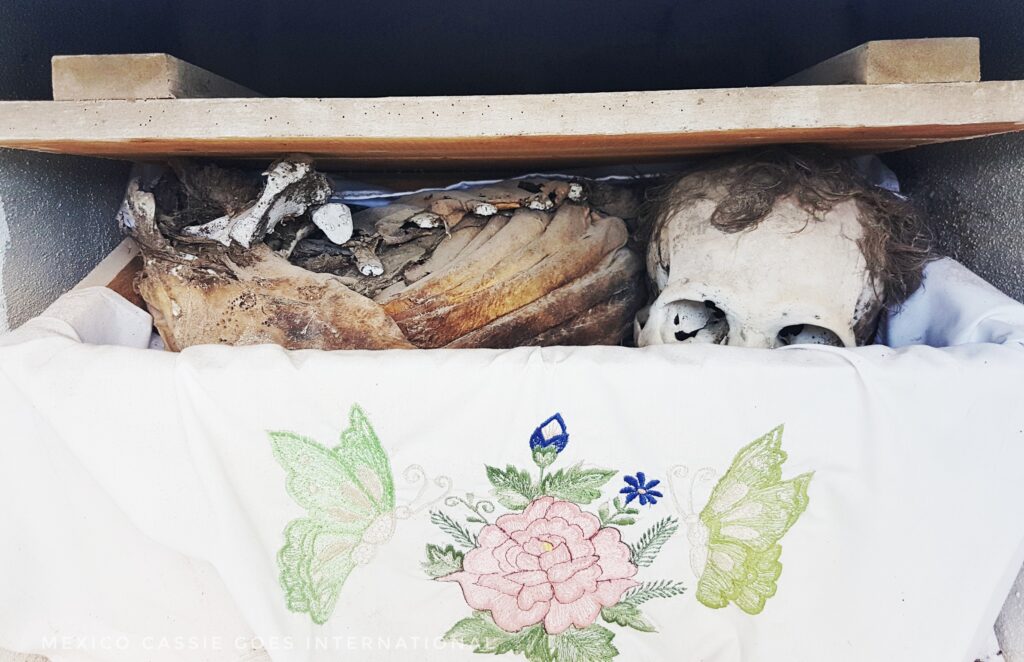
Betwen Mérida and Campeche lies the fascinating small village of Pomuch. Truthfully, there isn’t much in Pomuch and people don’t tend to stop here very often but it’s an interesting stop as long as you’re respectful.
What to expect from Hanal Pixan in Pomuch
In Pomuch, five or so years after burial, bodies are exhumed and set out to dry in the sun before being lovingly cleaned by the family members. The bones are then placed in a small wooden box that is often left open and placed on a shelf in the cemetery for all to see. Annually, just before Hanal Pixan, the bones are ceremoniously removed and cleaned. While cleaning them they talk about their dead and they tell the dead about their year.
The main reason people visit Pomuch is to visit the cemetery (any time of the year) and around Hanal Pixan to get a glimpse of the bones being cleaned.
⭐️ In order to get to Pomuch you really need a car of your own or to go with a guide.
Atlixco, Puebla
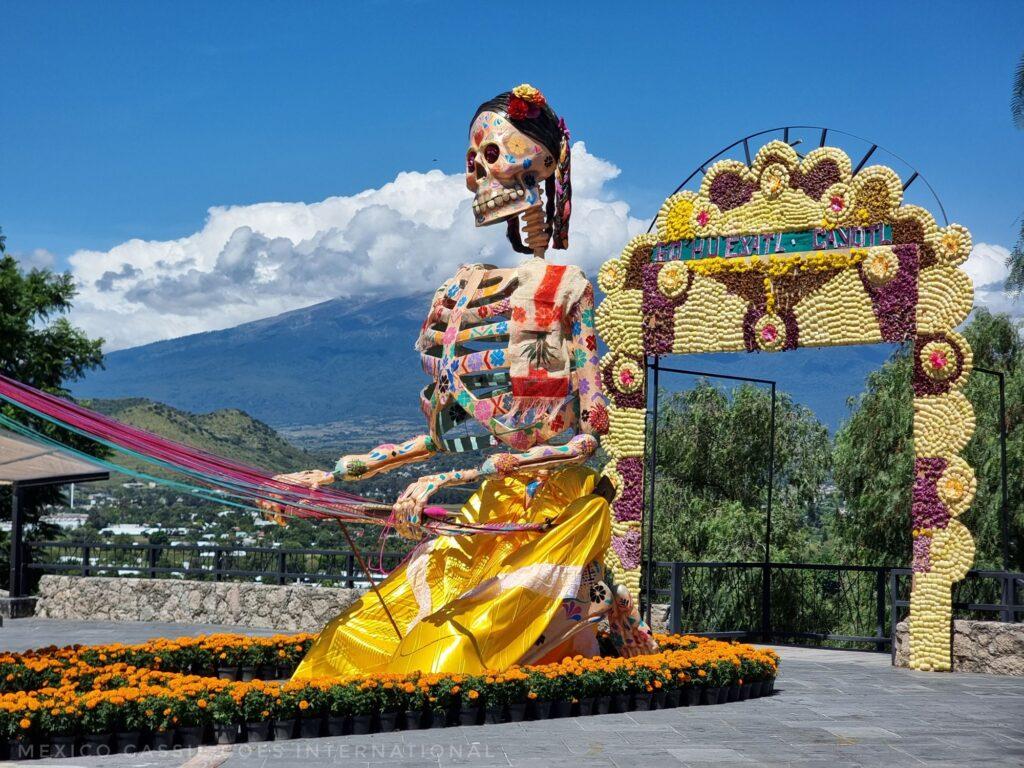
Atlixco is a beautiful pueblo magico just under an hour from Puebla City in Puebla state. It’s a great option for a day trip at any time of year but it really outdoes itself at the end of October.
Día de Muertos in Atlixco
Atlixco is sometimes called the “City of Flowers”. Just before Día de Muertos, the cempasuchil fields just outside town (walking distance if you’re a walker like I am) are a delight to see. The town itself is also covered in flowers.
What to do for Día de Muertos in Atlixco
🗝️ Valle de las Catrinas – during the month of October, Atlixco is turned into a living art gallery stocked with monumental catrinas around the town as well as an actual (ticketed and paid) event in the Convention Centre at the weekends during October (and extra nights in the final week).
🗝️ Desfile de Calaveras – Nov 2 is the culmination of the Valle de las Catrinas and Día de Muertos. There’s a whole procession through town.
🗝️ Try cempasuchil flavour ice cream (it’s delicious)
Atlixco general details
✈️ The nearest airport is CDMX, from there you can take buses to Atlixco or to Puebla. There are official airport cabs at the airport and Uber is permitted on airport grounds. You can also book a private transfer in advance if you prefer to be met at the airport.
🏨 If you’re tempted to stay in Atlixco, book your accommodation here
Atlixco itself is a small town that most people visit for a day trip from Puebla. If you’ve explored all the Día de Muertos fun, climbed up to the mirador de cristal to look out over Popocatépletl, eaten and drunk your fill then you’re good to go.
→ Use the MexicoCassie guide to Atlixco and guides to visiting nearby Puebla and Cholula to plan your trip.
Tlaquepaque, Guadalajara, Jalisco
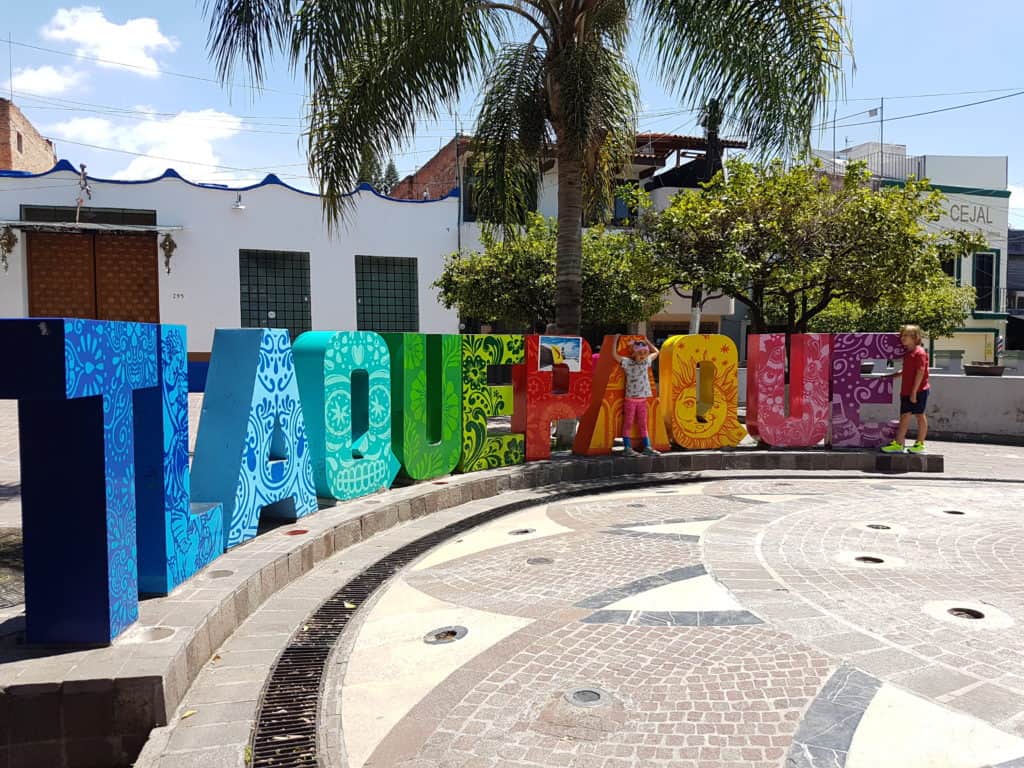
Tlaquepaque is a small “pueblo magico” within the metropolis of Guadalajara, one of the biggest cities in Mexico. Tlaquepaque, despite being hard to pronounce (tla-qu-pa-ke) is a fabulous place to visit at any time of year. Its streets are lively, there are numerous galleries and artisan shops, there’s music everywhere and the ice creams are delicious.
Día de Muertos in Tlaquepaque
In Tlaquepaque, according to locals, Día de Muertos is less about remembrance and more about partying. In 2022, it was estimated that around 20,000 people attended the (mostly free) 120 Day of the Dead events in Tlaquepaque over the three days of festivities so you can be assured that even if the schedule isn’t released in time for you booking your trip, there will be extreme fun to be had in this small town.
What to do during Día de Muertos in Tlaquepaque
🗝 Walk around the streets of Tlaquepaque enjoying the atmosphere, the catrinas, giant skulls and papel picado strung everywhere.
🗝 Watch (or even take part in the) Desfile de Novias Catrinas (Partners’ Parade) – this generally starts at 7 pm and is held on the Saturday closest to Día de los Muertos. Last year it was possible to show up early and get your photo taken with people in the parade. If you want to take part you’ll have to come dressed appropriately, with a partner and bring thirty candles with you.
🗝 Watch the traditional dress competitions, & dance and theatre performances throughout town. You will find live performances all over the place.
🗝 Check out ofrendas (altars) including interactive altars.
🗝 Visit Paseo Juárez to see the altars in this artistic neighbourhood (here you’ll find the altars from artists, make-up artists, and tattoo artists as well as gastronomic focused altars).
🗝 Walk through the Andador Independencia where you’ll find a massive installation of cempasuchil flowers.
Tlaquepaque general details
✈️ The nearest airport is Guadalajara’s Miguel Hidalgo y Costilla International Airport, which is no more than a forty minute drive from Tlaquepaque. There are official airport cabs at the airport and Uber is permitted on airport grounds. You can also book a private transfer in advance if you prefer to be met at the airport.
🏨 Book your accommodation here
Tlaquepaque itself is a relatively small town. If you’ve explored all the Día de Muertos fun, checked out the small museums, eaten and drunk your fill then you’re good to go. I spent 4-5 days staying in Tlaquepaque and was very happy with my timeframe. It gave us time to head into Guadalajara to explore the museums and to see everything in Tlaquepaque.
→ Use the MexicoCassie guide to Guadalajara with kids and guides to visiting nearby Tequila & Tapalpa to plan your trip.
Patzcuaro and Isla de Janitzio, Michoacan
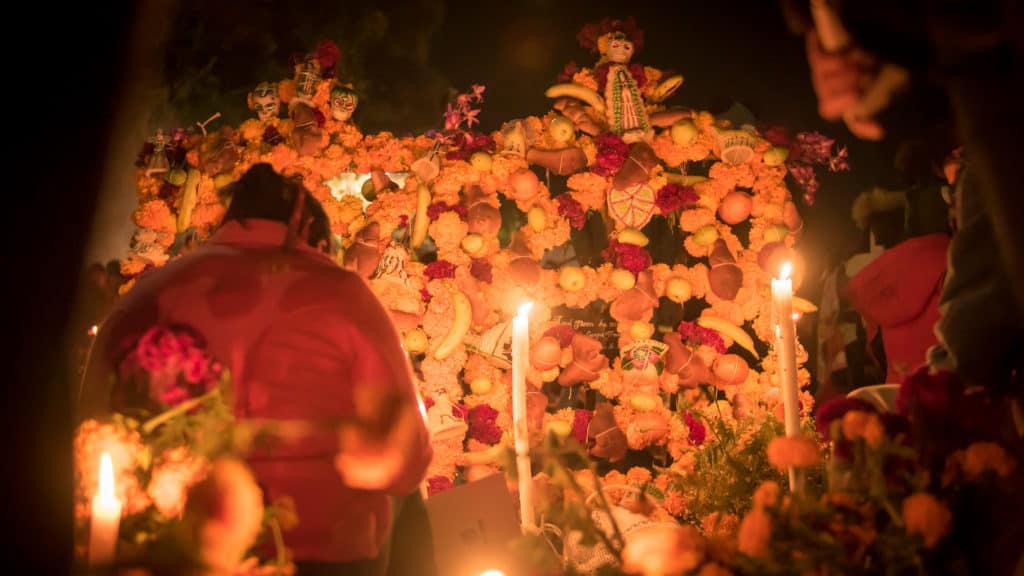
What to expect in Patzcuaro and on Isla de Janitzio
Janitzio is the place to experience Day of the Dead in the state of Michoacan. Janitzio is a small island at the centre of Lake Patzcuaro. People tend to base themselves in the lake-side pueblo magico of Patzcuaro and visit Isla de Janitzio for the Día de los Muertos festivities by boat.
🦋 Butterflies feature heavily in daily life in this part of Mexico. The monarch butterfly migration into the state of Michoacan begins around this time and also in this area the fishermen use large ‘butterfly nets’ to catch their fish. During Día de Muertos the fishermen ceremoniously fan their nets to create a breeze that will carry the souls of the dead from their watery graves in the lake and up the stairs to the cemetery on Janitzio Island.
This goes hand in hand with the local legend that says when people die, their souls fly like monarch butterflies over an enchanted lake to Lake Patzcuaro to the Island of Janitzio. As you cross the water in your boat, if you open your heart you’ll see their souls in the water of the lake.
🎬 The old woman, Coco, from the cartoon, Coco, is based on a real woman who died in Patzcuaro fairly recently.
What to do in Patzcuaro and on Isla Janitzio for Día de los Muertos
Patzcuaro
🗝 Watch the performances by the butterfly net fisherman.
🗝 Explore the altars that are erected in businesses and public buildings.
🗝 Enjoy the processions through the streets of Patzcuaro.
🗝 Visit the cemetery.
🗝 Visit one of the villages around the lake on November 1 to experience the candlelit Noche de Muertos.
🗝 From October 30 enjoy the Day of the Dead Artisan Market where you can pick up artisans from craftspeople from across Mexico.
Isla Janitzio
🗝 On Isla Janitzio as you wander the streets you’ll see people preparing favourite meals for their returning family members.
🗝 Danza de los Pescadores – enjoy this tradition where a sacred duck is hunted and cooked for the returning souls in the early hours of the 2nd November. During the night you’ll see the ‘fishermen’ heading out in boats illuminated by numerous candles to hunt this duck.
🗝 Around midnight on November 1, watch the processions from Tzirumúraro Cemetery where women and children holding torches walk in silence to meet their returning relatives.
Top Tip for visiting Janitzio: While Janitzio is considered the place to go in Michoacan, there are other, less touristy places where you can get involved with the Fiesta de los Muertos, for example, Isla de Pacanda, some fifteen minutes by boat from Ucazanaztacua Dock. There are community hotels on the island.
Jim told me that, “to the native Purepecha people, the cold air is a sign of the spirits returning to the island to spend a couple of days with their friends and family during this incredible tradition.” Whatever the reason, take a sweater.
Patzcuaro and Janitzio general details
✈️ Morelia is the nearest city with an airport. It’s 1.5 hours from the airport Patzcuaro. There are no buses available here so options are to rent a car, take a cab or book a private transfer.
🚍 It takes about an hour to get to Patzcuaro from Morlia by bus and about forty-five minutes from nearby Uruapan. There are regular buses from both towns. You can also pick up a bus to Patzcuaro in Mexico City.
🏨 Find your ideal accommodation on my helpful interactive hotel map
Guanajuato City, Guanajuato
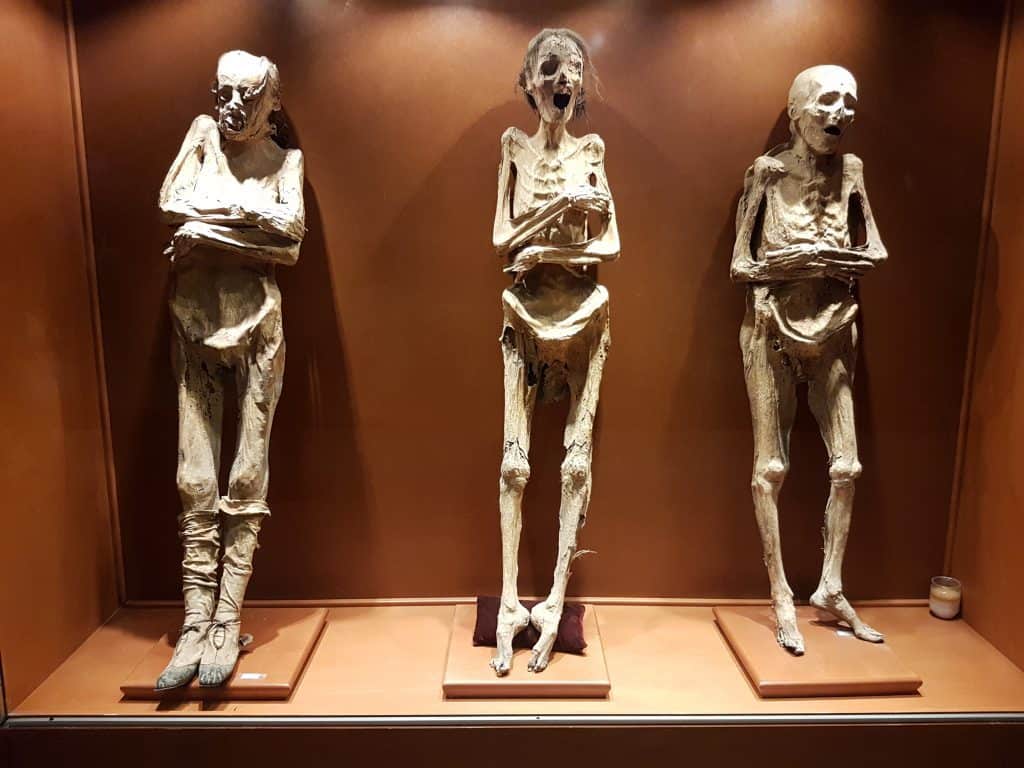
Guanajuato City, in central Mexico, is one of the most colourful cities in the world, it’s full of culture, good food and is very, very hilly. It’s located in the foothills of the Sierra Madre Oriental, making for some stunning views.
What to do in Guanajuato during Día de los Muertos
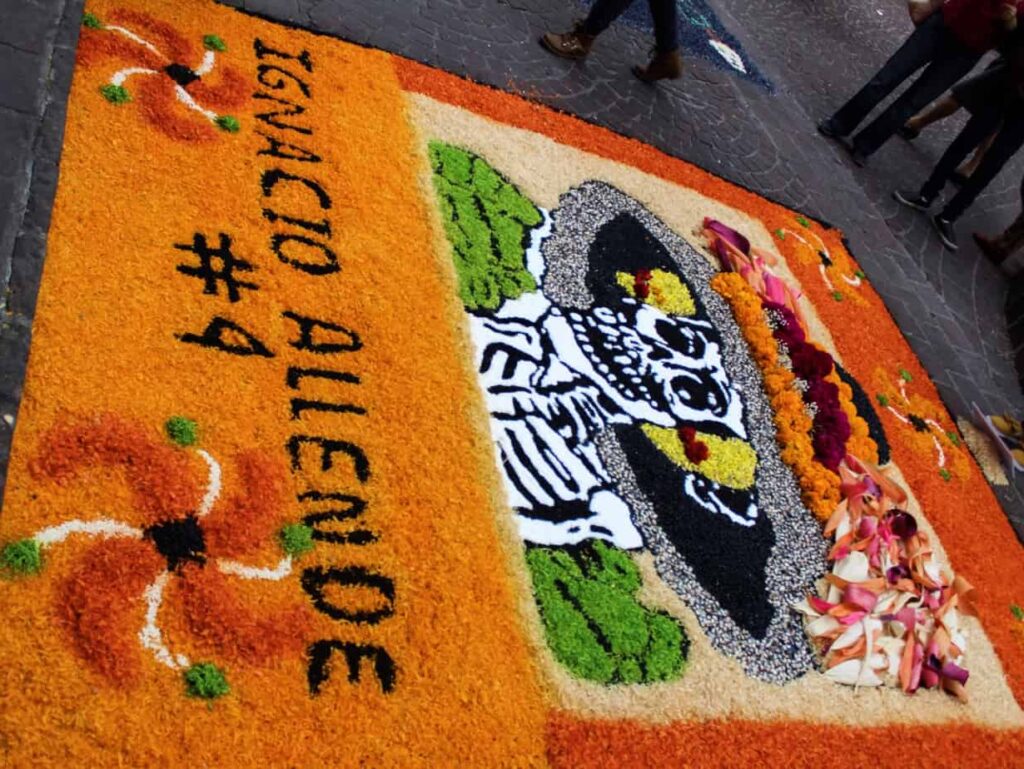
🗝 Tapetes de arena (sand paintings) – Guanajuato goes big on this traditional art form so be sure to check them all out when you’re exploring the Centro Historico. Tapetes de arena, like the mandala, represent impermanace. They are are made to honour and welcome spirits home.
🗝 Enjoy the ofrendas in shops and homes as you explore the city of Guanajuato.
🗝 Watch the Día de los Muertos Parade (evening event).
🗝 Marvel at the famous monumental altar built by university students and locals on the steps of the University of Guanajuato to commemorate academic figures from the university. It’s worth seeing by day and after dark when all the candles are lit.
🗝 Check out the large sculptures outside the Teatro Juarez (which is reputedly the second most beautiful building in Mexico after the Palacio de Bellas Artes in CDMX).
🗝 Visit the Panteón de Santa Paula, the local cemetery to wander through the decorated tombs.
🗝 Tunel de tradicion – I haven’t visited one of these during Día de los Muertos but it seems that during the celebrations, the many tunnels through this hilly city turn into party tunnels.
🗝 There are many contests spread throughout the city over this holiday. These include the ofrenda contest on Plaza los Angeles and the Pan de Muerto contest on Plazuela de San Roque.
🗝 If you speak Spanish, join a callejoneada macabre or a nighttime tour of the city. For Día de los Muertos the callejoneadas (street story tellers) turn spooky. Generally you pick up a tour outside the theatre in Centro.
Guanajuato general details
✈️ Guanjuato airport is actually closer to the city of Leon than it is to the city of Guanajuato but it’s an easy thirty minute drive into Guanajuato city. There are cabs at the airport and Uber is permitted to pick up there. If you prefer to organise a private transfer that’s always possible too.
🚍 Guanajuato’s bus station is just out of town, which makes sense once you’ve been to Guanajato and experienced the narrow tunnls that make up a big part of the road system in town. The city is serviced by ETN buses and Primer Plus buses.
🏨 There are some lovely hotels I recommend in the MexicoCassie guide to Guanajuato or you can use my interactive accommodation finder to locate your preferred option
Guanajuato is a gorgeous city to visit all year round. If you can, spend at least four days here taking in the museums, the art galleries and the incredible views. Be sure to make your way to the Pipila statue that overlooks the city because the views down into Centro are incredible. I walked up the many, many steps but there’s also a funicular for those less excited by walking than I am.
Mexico’s Caribbean Coast and the Riviera Maya
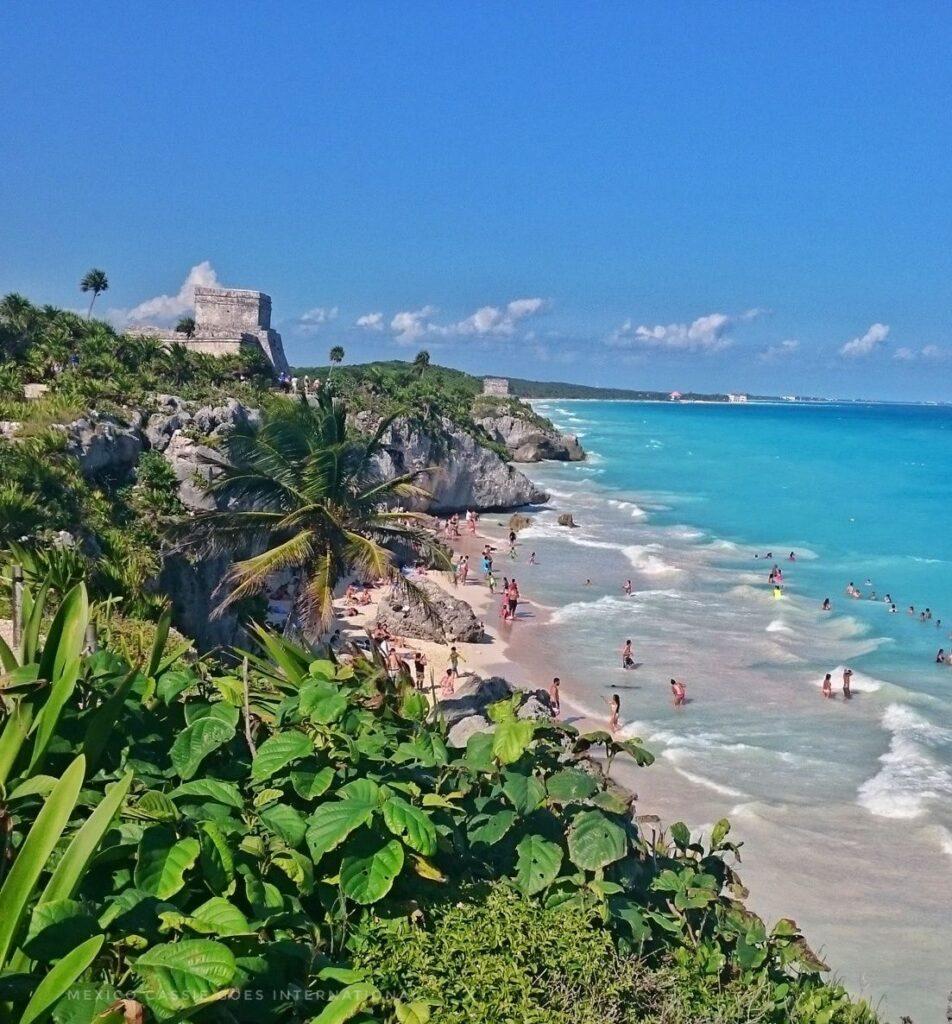
The Caribbean Coast—also known as the Riviera Maya— is located in Quintana Roo and includes three of Mexico’s biggest tourist cities: Cancun, Playa del Carmen and Tulum. Here you will find perfect beaches, incredible hotels and truly, some amazing adventure activities. Oh, and of course, parties.
What to expect from a Riviera Maya Día de Muertos
The beauty of an October/November trip to Mexico’s Riviera Maya is that it’s not peak season so there are good deals to be had. The rainy season and hurricane season have both ended too. Good weather and good prices. Sweet.
What to do on Mexico’s Caribbean Coast during Día de Muertos
🗝 Experience Día de Muertos processions, theatrical productions, music, ceremonial food and other traditions in Cancun and at Xcaret Park and other venues,
🗝 Most of the bigger hotels will have elaborate altars but the best place to see how locals are celebrating Día de los Muertos in Cancun is in Parque de las Palapas in downtown Cancun. Here there are altars, face painting, and a Day of the Dead parade ends here.
🗝 Playa del Carmen also hosts its own Hanal Pixan parade.
🗝 Check out what the Xcaret parks have planned because there’s always sure to be unmissable shows in their parks.
🗝 Find local tours that can show you how locals celebrate
Check the official Cancun Visitors Bureau for a schedule in October
Caribbean Coast details
✈️ One of Mexico’s busiest and best connected airports is Cancun Airport. If your hotel doesn’t offer a free (or cheap) shuttle service then I highly recommend making use of a private transfer because cabs from the airport are extremely expensive and Uber is not permitted. You could, of course, rent a car, if you know you’ll be exploring around the region.
🚍 ADO buses serve all the towns anion the Riviera Maya and inland. You can check timetables and prices on Busbud.
🚄 The Tren Maya is up & running serving the whole of the Yucatán Peninsula including cities along the Caribbean Coast.
🏨 Where you stay in this region, of course, depends on your budget and needs. Cancun is famous for its all-inclusive packages, and there are deals and price ranges to suit (almost) every budget. Tulum tends to have a more hipster vibe (do not, for one second, imagine hipster means cheaper). Last time I was in Tulum in early 2024, I stayed at Ikal, a glamping site on the beach and it was incredible. I’d return there in a heartbeat.
A few final Día de los Muertos facts
What goes on a Día de los Muertos altar?
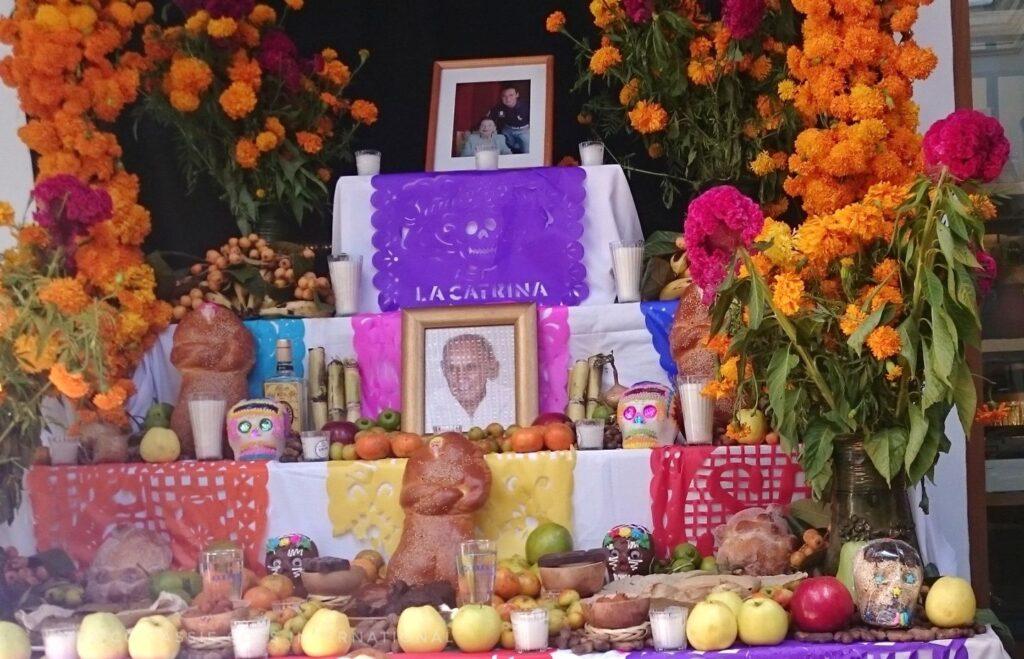
Altars, of course, vary – some are very humble while others are ornate and wildly decorated. Generally, they will contain:
☠️ Photos of the deceased
🌼 Cempasúchiles – The smell of these Aztec marigold flowers is said to help souls find their path back home
🌮 Food and drink for the returning souls – Food plays an important role in this festival. After a few hours, it is considered that the ancestors have eaten and the living can then eat the food on the altar. There may well be some water on the altar too, both for purification and to quench the thirst of the returning souls.
🕯 Candles and incense – Each candle represents one soul. There will often be an extra candle for the “forgotten soul”. The incense is in honour of Mexico’s pre-conquest history.
🪅 Decorations such as papel picado and sugar skulls – Papel picado represents the wind and the fragility of life. It is essentially a coloured paper-cut bunting. Sugar skulls are everywhere because the skull is a commonly used symbol of Día de los Muertos.
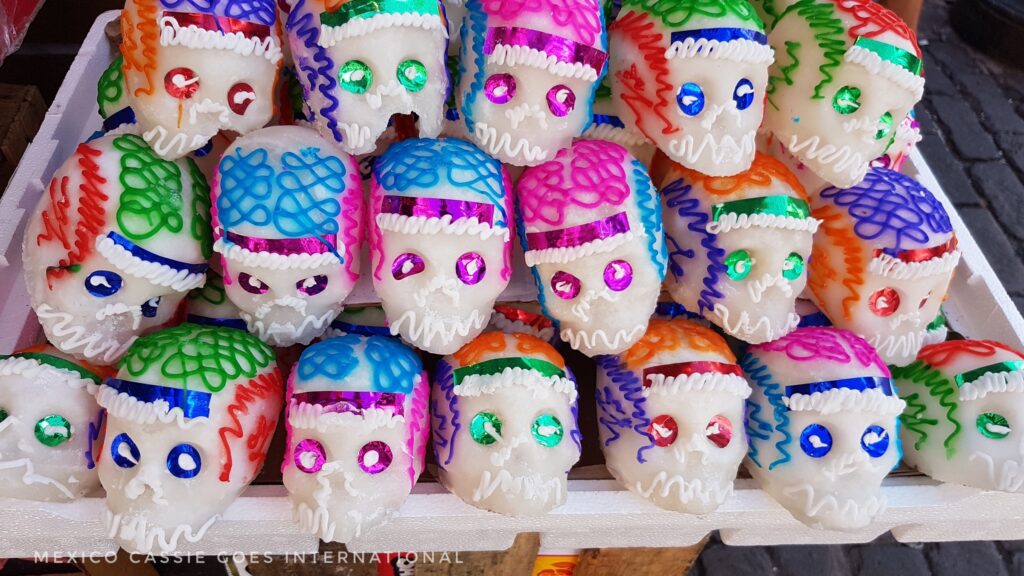
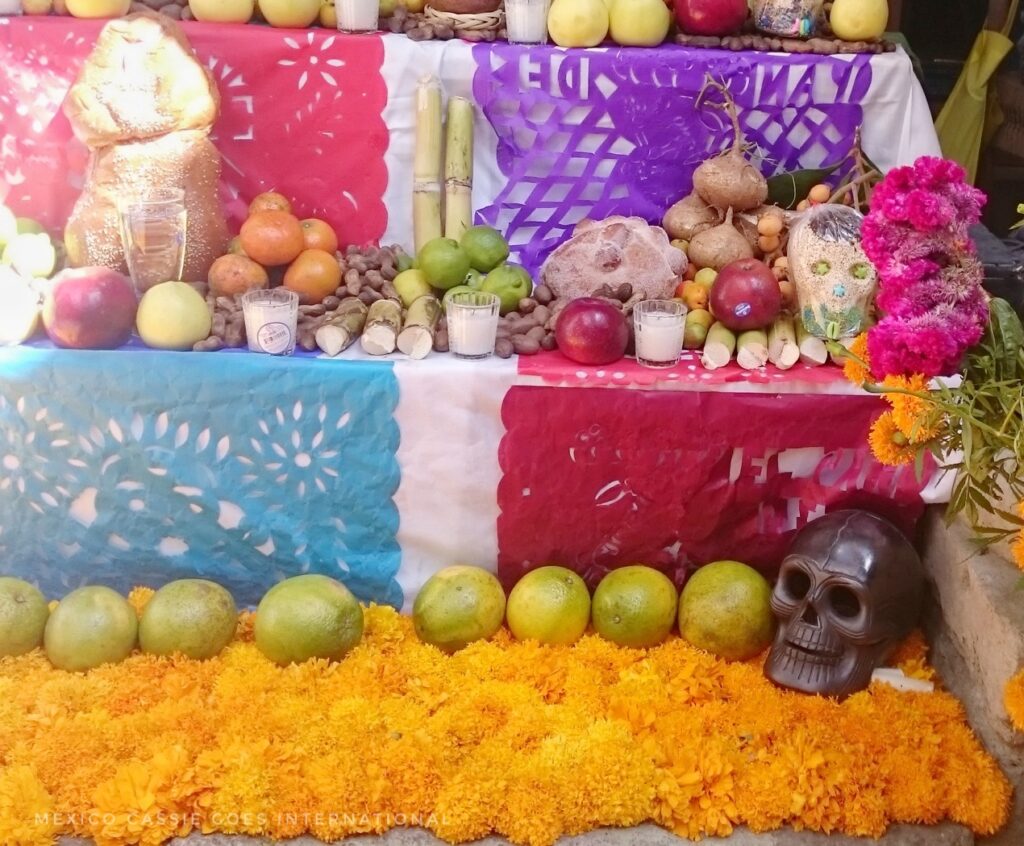
They say that during Día de Muertos, Mexico smells of cemepasúchil flowers, pan de muerto, and in Yucatán, pib.
What is La Calavera Catrina?
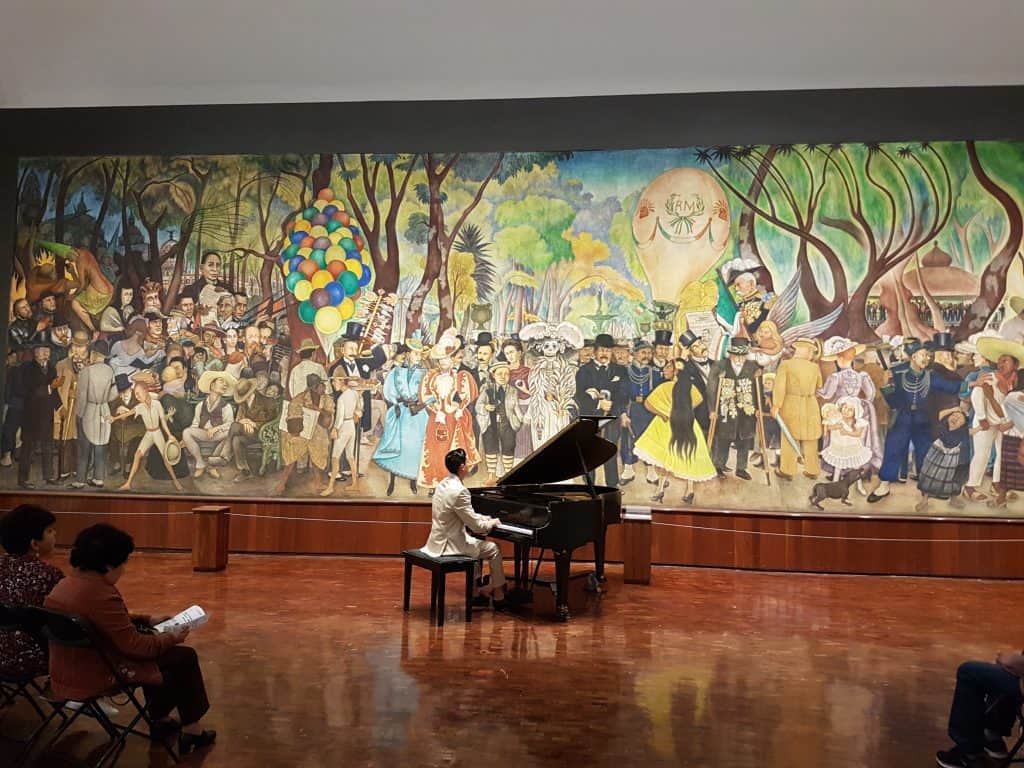
🗝 La Calavera Catrina began life as a satirical etching created by Jose Guadalupe Posada in the early twentieth century, then incorporated by Diego Rivera into his famous murals. It was designed as commentary on the Mexican upper classes. It was only later that the figure became associated with Día de Muertos imagery.
🗝 See my personal favourite depiction of a Calavra Catrin in Rivera’s mural “Sueña De Una Tarde Dominical En La Alameda” in CDMX (above).
🗝 Many of the Day of the Dead papier mache sculptures and the costumes you see on the street are based on La Calavera Catrina.
Are there special Day of the Dead foods?
Yes. And of course, I highly recommend you try as many as you can.
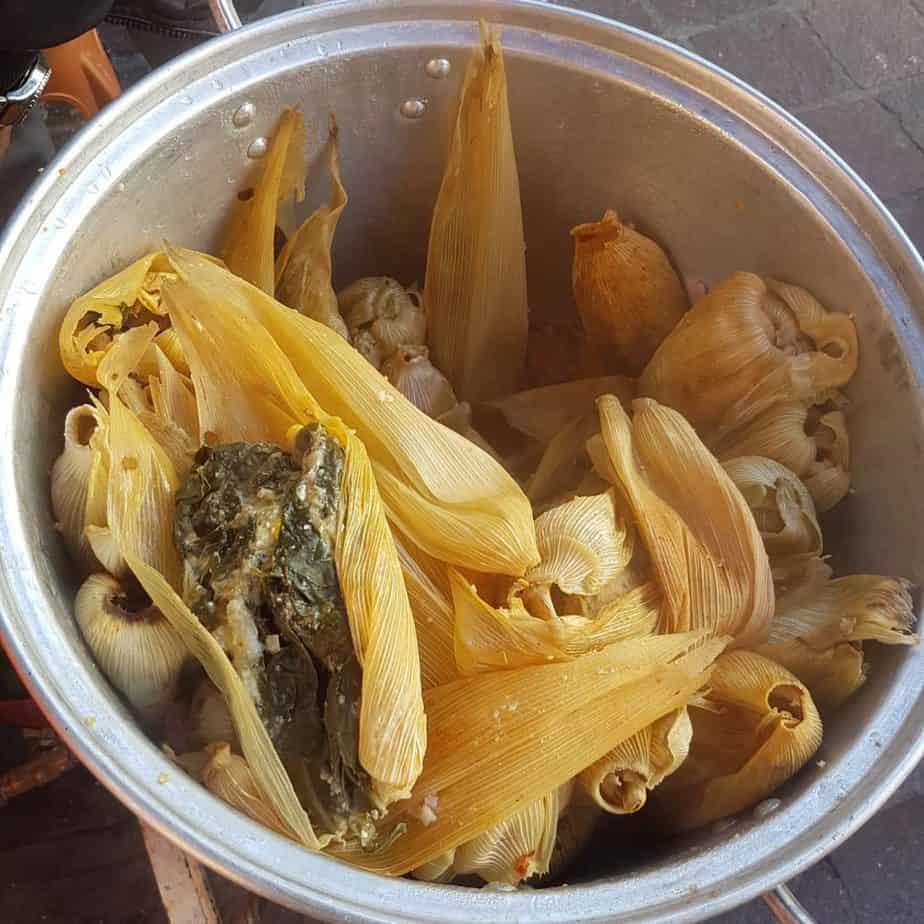
Tamales – Tamales are an incredibly popular food in Mexico any time of the year, to be honest, and Día de Muertos is just one more excuse to gobble them up. They’re placed on altars as offerings to the dead and they’re consumed by the living. A tamal is corn dough around a filling wrapped in either a corn husk or a banana leaf depending on where you are in Mexico.
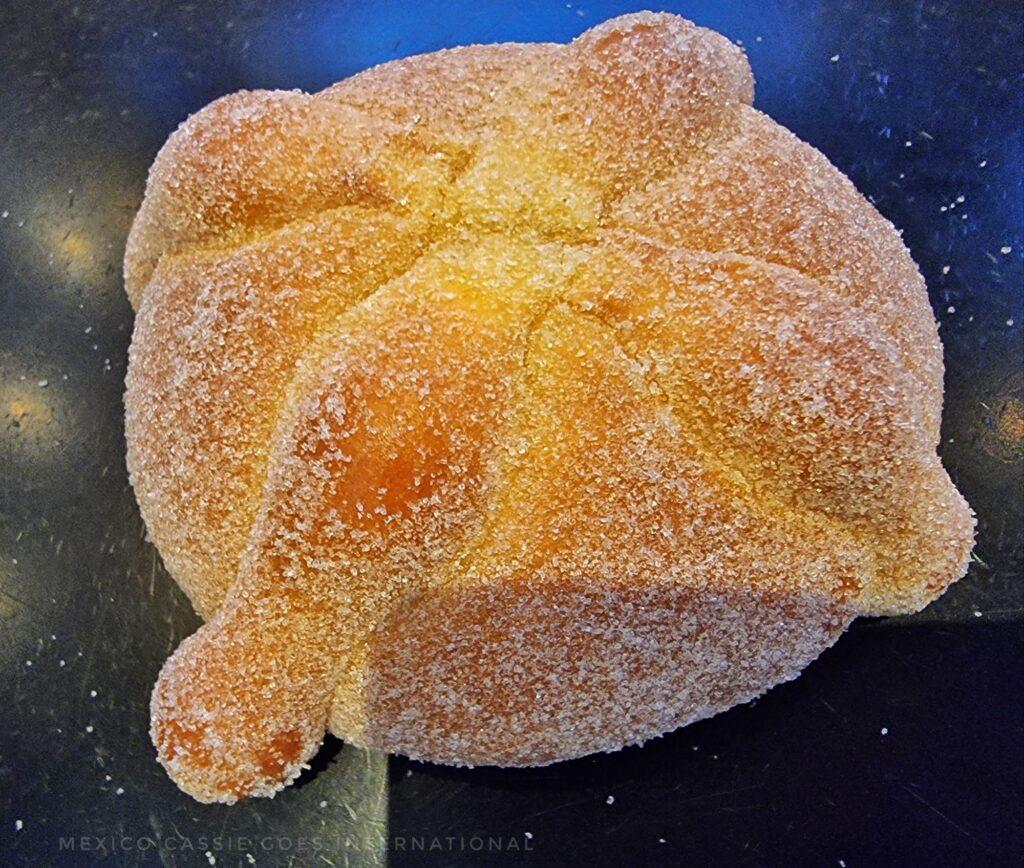
Pan de Muerto – A sweet bread with a hint of orange that is coated in sugar and decorated to look as if it has bones on the top. Every pan de muerto is different and some are even filled. It is your mission when in Mexico to try every single one you find.
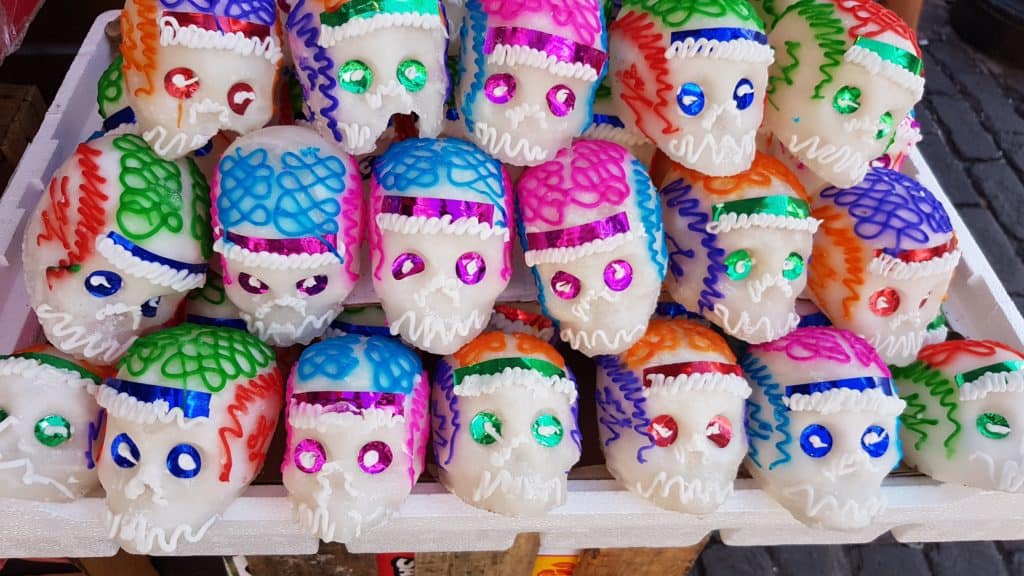
Sugar or Amaranth Skulls – These are small decorated skulls made out of either sugar or amaranth (an ancient Mexican superfood). There is sometimes a space for a name on the skull as these are regularly part of an ofrenda. Only the smaller ones are edible; please learn from my mistake.
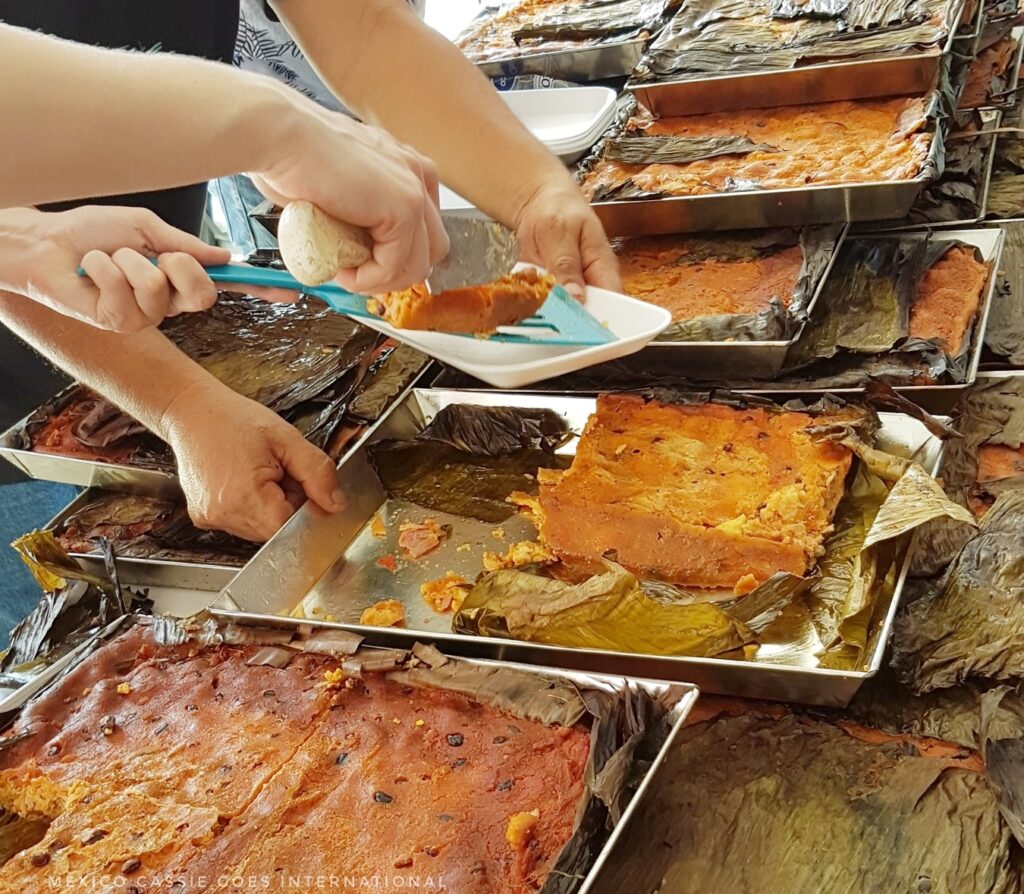
Mucbipollo – Specific to Yucatán, mucbipollo is more commonly known as ‘pib’ and it’s an extremely popular and delicious dish that is only available at this time of year. It is a square tamal that is made from meat (generally chicken), maize flour, tomato, pig fat, chiles, onion, epazote and xpelón. This mixture is wrapped in banana leaves and cooked in an oven pit in the ground (‘mukbil’ means ‘something buried’ in Mayan).
Atole – A traditional Mexican hot corn drink that is drunk (particularly in Yucatán) around this period. Young atole is particularly delicious and I highly recommend trying it.
More Mexico adventures
🏔 Copper Canyon series
How to book your trip through the Copper Canyon
How to make the most of a trip to the Copper Canyon Adventure Park
Visiting Bahuichivo & Ceroachui
🚗 Mexico road trip ideas
An epic southern Mexico road trip through Campeche, Tabasco & Chiapas
Lesser known Yucatán adventures – 10 days
Yucatán road trip – 2 weeks
➕ Read the MexicoCassie guide to renting cars and driving in Yucatán
🥾 Mexico adventures – other
Everything you need to know about seeing the monarch butterflies in Mexico
How to visit the Grutas de Tolantongo in Hidalgo
San Cristóbal de las Casas as a great adventure base
Chiapa de Corzo & the incredible Sumidero Canyon
Exploring the Pueblos Mancomunados from Oaxaca
Getting deep into Queretaro’s magical Sierra Gorda region
Wine tasting in Baja California
Visiting the ghost town of Mineral de Pozos (Guanajuato)
Excellent day trips from San Miguel de Allende
What to do in and around Puebla (including visiting volcanoes)


18 Comments
Janine · 11/01/2019 at 7:21 pm
My boyfriend is from Xalapa.Veracruz (where we live) and we were discussing the recent surge in popularity of this holiday. I was complaining because I think it is often treated like a tourist attraction — I read multiple in-flight magazines this year highlighting it as such. He pointed out that this newfound popularity is kind of nice because it seems to have reminded the people of Mexico that this is a beautiful tradition and that it shouldn’t be allowed to slip away. We certainly saw far more Dia de Muertos decorations and ofrendas around Xalapa this year than we did last year, which is neat! We also ate a lot more pan de Muerto ? This is a great post and I love how you highlighted the holiday in different locations!
Flora Baker · 11/01/2019 at 7:28 pm
Woah, this is such an informative article! I’ve always been fascinated by Dia de los Muertos but haven’t had the chance to spend it in Mexico yet (although the celebrations in Sucre, Bolivia were pretty great to see!). This has totally convinced me I need to head to Mexico sooner rather than later ?
Kate · 11/01/2019 at 7:29 pm
Angelique’s story about honoring her sister is so beautiful and moving. I would imagine it’s quite the healing process. I’ve always been so intrigued by the Dia De Muertos and am hoping to see it for myself someday, because it’s such a fascinating and powerful tradition.
Emese · 11/01/2019 at 8:54 pm
This was a great article, Cassie! I’ve been in Mexico so many times, but have never been there during Dia de Los Muertos or Hanal Pixán. Sounds like it would be an incredible experience. We have quite a large Hispanic community in Phoenix, so I am familiar with the tradition, my kids even learned about it in school in their Spanish class. Being in the middle of the celebration must be a moving experience. It is such a great way to honor the dead. Thanks for sharing these stories.
Cassie · 11/01/2019 at 10:31 pm
Thanks so much for taking the time to comment. I think it’s really hard. On the one hand, yes I agree that it’s super for people to see positives about Mexico but cultural appropriation and just seeing party opps isn’t ok either.
Cassie · 11/01/2019 at 10:32 pm
You totally do! Glad you enjoyed the article. Is Bolivia big on día de Muertos too?
Cassie · 11/01/2019 at 10:33 pm
It truly was a lovely story. I’m so honoured she was able to share it via my blog. Hope you get to Mexico soonest.
Cassie · 11/01/2019 at 10:34 pm
Thanks so much, Emese . I’m surprised to learn you haven’t been here for Dia de Muertos! I totally assumed you’d have visited then. Hope you make it soonest.
Angela · 11/01/2019 at 11:29 pm
Thanks for another great post! We actually just went to the cemetary in Merida and we thought it was very,very cool, but also sad. Sad bc of the unkempt tombs, but now I understand that the cemetary is not the showplace. The grand get together. I also now no why there were exposed bones, bc they had been washed. We are very curious, do they unearth the tomb after so many years and then put them in the metal boxes?
Cassie · 12/01/2019 at 7:41 am
Metal boxes? I’m not sure what you mean there. I guess things are unkempt because people move on and away. Also the heat and humidity here mean everything needs constant upkeep or it crumbles.
Jill · 12/01/2019 at 4:31 pm
This is such a fascinating read. I’ll admit that I’d always imagined Día de Muertos as a sort of colourful Halloween, so it was so good to learn the traditions behind it and how much it means to people. It’s definitely something I would love to experience one day, but it’s given me a new respect for the festival as well. Thanks so much for sharing.
Cassie · 12/01/2019 at 4:35 pm
Thanks Jill. Glad you found it interesting. Such a tricky balance between encouraging visitors without losing the essence of the festival.
Angelique · 12/01/2019 at 11:58 pm
Cassie, you did an outstanding job with your article. You captured both the solemnity and festivities very well! Thank you for including my sister. I know it may have seemed odd to travel to another country to celebrate her life, but I would definitely encourage anyone who is still grieving that Dia de Muertos is a very healthy medicine.
It’s like….well, have you ever been to a funeral and then remembered something funny about the person and you had to hide an unexpected and involuntary giggle? You’re supposed to be upset! Devastated! Respectful! Mexico allows that giggle. Even encourages it!
Just knowing that people are remembering the lost, you are not alone in your grief, and then to laugh in the face of Death with colorful costumes, sweets, and community is very curative. Mexico really has the right attitude! Thanks again!
P.S. The man who murdered my sister is in jail, awaiting trial, and facing Life without Parole.
Looking forward to more of your stories!
Cassie · 13/01/2019 at 7:41 am
Oh ! I’m so thrilled you like it. Thank you. I also love love love your example of being able to laugh when at a funeral you feel you shouldn’t. X
Jayashree · 08/02/2019 at 10:42 am
I just saw Coco, the animated movie. And totally got blown by your post. ?
Cassie · 08/02/2019 at 12:18 pm
It’s a beautiful movie, right? And so glad you liked the article. Hope you get to come to Mexico to see for yourself.
VITTORIO · 13/08/2019 at 5:21 am
Ciao Cassie!
First of all Very helpful for me your blog.
I’ll be in Yucatan end of October and I’m planning to visist merida, cancun and holbox.
I have 2 question for you, for los dias de los muerto in Merida:
– do you know when is the best day to join ceremony or parade? I would join only 1 day in merida and would like to stay in the “perfect” day.
– Do you know also when night parade will do? Is always on 2 of November?
My “problem” is that on 3 of november I have the flight to home, and Merdia is little bit far from cancun and need to plan my trip
I red also Merida is better than Cancun about cerimony
Thanks a lot for your support
Cassie · 13/08/2019 at 8:25 am
Thanks so much Vittorio. As yet there have been no announcements about Hanal Pixan in Mérida. I am on holiday at the moment but think it mainly falls over a weekend. The whole week leading up should be fun.
What time is your flight from Cancun? It’s a three/four hr bus journey from Merida and is very easy.
Comments are closed.