The perfect 3 day Sevilla itinerary for first time visitors
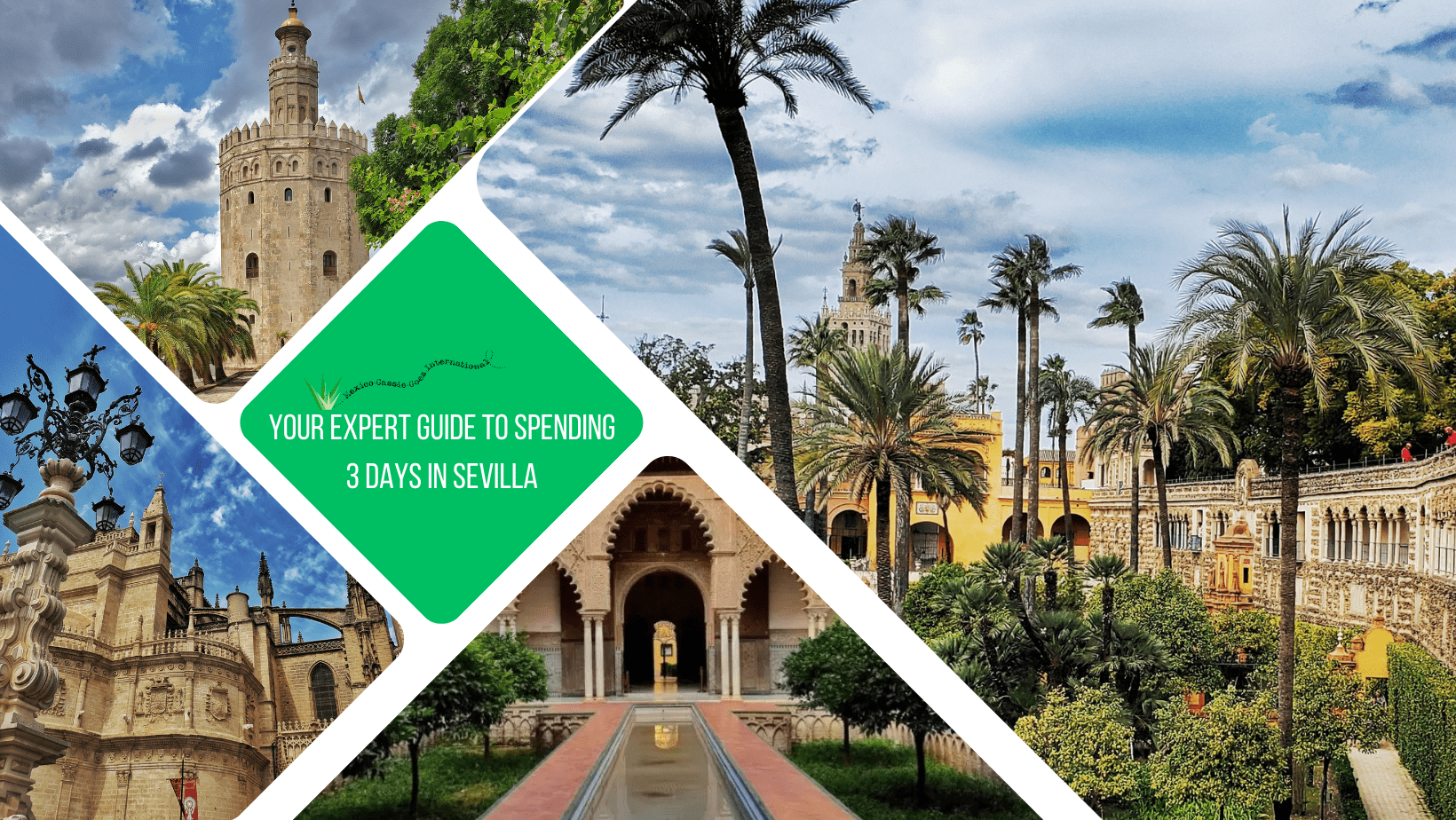
Sevilla is having a bit of a moment on the tourism stage and it’s really not that surprising.
The beauty of Sevilla lies not only in its fascinating history, and its gorgeous buildings but also in the city’s relatively small size, and its truly excellent tapas scene. Sevilla is a perfect destination for a short city break.
With 3 days in Sevilla, you’ll have a decent amount of time to explore & see the best things Seville has to offer.
⭐️ I live just outside Seville and am regularly to be found exploring its nooks, crannies, palaces and tapas bars. In this article you’ll find most of my favourite spots in the city.
There are affiliate links in this article. If you click and make a purchase I could make a small sum at zero cost to you. Thank you!
3 days in Sevilla important itinerary notes
Despite Sevilla’s popularity, many visitors show up here unprepared for the reality of life in southern Spain. I don’t want you to be one of them. These itinerary notes will help ensure you’re not taken by surprise by anything.
🔆 Sevilla’s climate and siesta culture need to be taken into account when planning your trip as they can have an impact on the opening hours for the places you will want to visit. Many places will close during the afternoon and then reopen in the evening.
🍽 Meal times: In Andalucía, the biggest meal of the day is lunch, which is taken between 2 pm – 4 pm. In Seville, you’ll always be able to find somewhere to eat something but between 4 pm – 8 pm many bars and restaurants will be closed so you’ll need to be flexible or accept that you’ll be in the more touristy spots. People start coming out again to eat around 9 pm and it’s perfectly normal to see groups eating at 11 pm. After a meal it’s perfectly normal to stay at the table chatting and enjoying a coffee/small alcoholic drink. No one will chase you away from your table. This is called the sobremesa, a delightful Spanish cultural moment.
🎟 Seville is an extremely popular destination for tourists and as such it is always recommended to book tickets to the main attractions in advance. If you don’t, you risk missing out or spending a long time waiting in line for the potential of a last minute ticket.
👧🏽 If you’re coming to Seville with kids then this article will still come in handy but I highly recommend you also read my articles dedicated to finding the fun for kids in Seville and in Andalucía as they do offer far more specific kids friendly activities. There are also some activities that will be perfect for anyone visiting with teens.
→ Read the full MexicoCassie guide to the best family friendly tours in Seville.
🏨 🚘 If you’re looking for information on where to stay in Sevilla and how to get around, you’ll find this information at the bottom of the article. Click here to jump straight there or head over to the dedicated MexicoCassie guide to hotels in Sevilla
When is the best time to visit Sevilla?
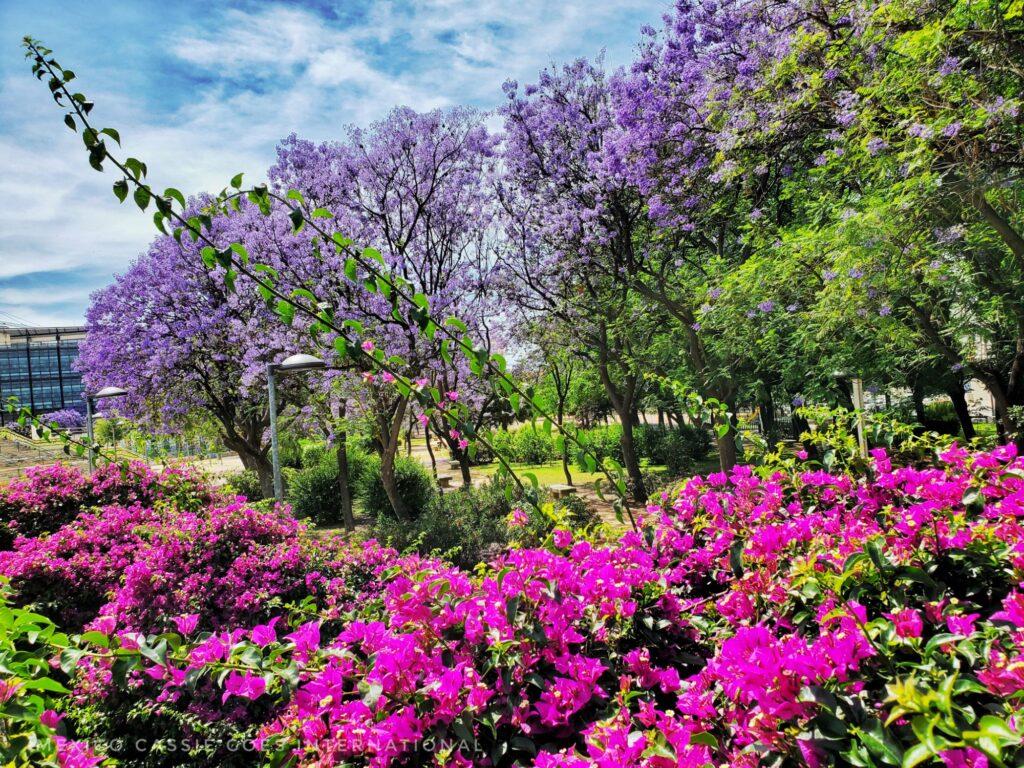
🌸 Spring – The climate is generally delightful at this time of year. The orange trees and the jacaranda trees are full of blossom. If you enjoy processions and parties then spring is also a good time to visit as you’ll be able to experience the Semana Santa (holy week) parades. Seville’s Feria is also held in spring every year. In 2026 it will be celebrated March 29 – April 5.
☀️ Summer – Truthfully, calling Seville hot is an understatement. During the summer it can feel as if you’re melting if you’re on the streets between 10 am – 10 pm. If you do come in summer, be prepared to take it slow and use my guide to Seville in the summer to help you figure out how best to explore without overheating.
🍁 Autumn – As the days cool down Seville starts to get lively again and you can have a great time exploring this beautiful city. Seville’s ‘Noche en Blanco’ is held in autumn & you’ll find plenty of free evening activities spread across the city.
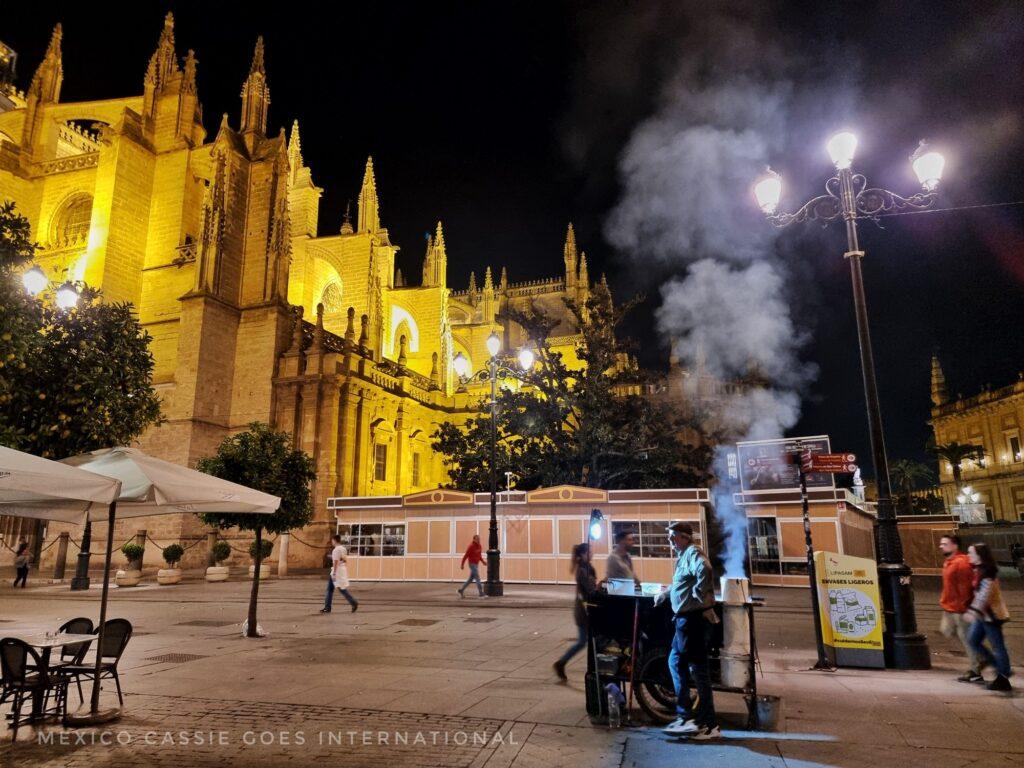
🧤 Winter – Winters in Seville can be surprisingly damp and chilly although if you’re out walking and exploring all day then this really won’t matter too much, Generally, there is very little rain and plenty of sunshine even in the winter months. The Christmas markets are not as big as in other cities but they’re still nice. Grab a bag of hot chestnuts and enjoy. The orange trees are full of fruit at this time of year.
3 days in Sevilla itinerary overview
We’ll begin with a quick overview and then below you can dive into the details. For each day, I suggest one morning activity, an afternoon activity, and an evening activity. This is enough to cover the city’s best places, and ensures you get to see pretty much everything without exhausting yourself.
Day one: Begin the day with a tour of the city. After lunch, meander through the Jewish Quarter, perhaps visiting the Hospital los Venerables or the India Archives. After lunch take a siesta and then finish with a tapas & flamenco tour.
Day two: Take my favourite tour in the city, the exclusive early morning tour of Seville’s gorgeous Alcazar before it fills up with other people. After lunch, learn about Seville’s Roman history in the Antiquarium, visit the Palacio de las Dueñas and in the evening, embrace modern Seville at Las Setas. End on the cool Plaza del Salvador for tapas and drinks.
Day three: Marvel at the grandeur of Plaza de España and take a stroll through Maria Luisa Park. After lunch visit the cathedral & then head over to the “Independent Republic of Triana”, to check out their long history as the glazed tile-making area of Sevilla. Enjoy a tapa here, a tinto de verano or an aparol spritz there.
A note on how to book tours in Sevilla
👣 I predominantly use Viator & GetYourGuide to book my own tours when I travel. I also love Devour Tours and Liv Tours while in Spain.
→ Read the full MexicoCassie guide to the best family friendly tours in Seville.
🙊 Read the MexicoCassie guide to quirky Sevilla to add fun stops to your itinerary as you explore.
➕ The main attractions of Seville are pretty much all within walking distance of each other so for anyone who is reasonably fit it’s easy enough to get around without relying on public transport (buses, trams & metro). We’ll discuss city tour options shortly.
Okay, so now let’s dive into the details
Day 1 – Acclimatise yourself
Morning: City tour
Begin your first day with a tour of the city. This way you’ll have a good feel for where you want to go and how to get around for the rest of your time in Sevilla.
Top Sevilla city tour options
👣 2 hr walking tour with a licensed guide to learn about the city’s history and culture – a great way to get yourself acquainted
🚐 Hop on Hop Off Bus – you have 48 hours to enjoy using this bus that drives around Seville taking in all the biggest attractions
📲 Self-guided audioguide tour – I’m a bit of a fan of these self-guided tours. I can listen whenever I like and at my own speed. I sometimes even listen to them on long journeys before I arrive in a new place. 😉
🚲 3 hr bike tour through the old streets of Seville with a friendly and knowledgeable English-speaking guide (Electric-bike tours are available too)
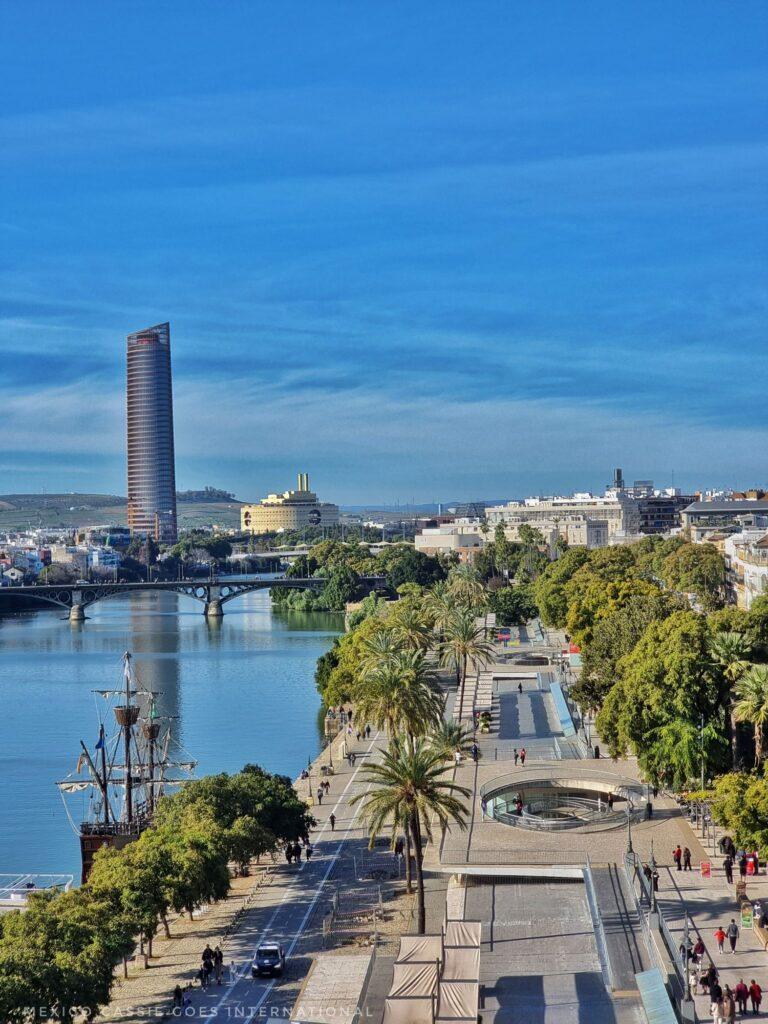
🛶 Paddle board or kayak along the Guadalquivir River with a guide
Afternoon – Exploring alone
Once you’re done with your tour, find a spot for lunch in the Jewish Quarter (also known as Barrio Santa Cruz). One of my favourite restaurants is Sal Gorda and I also very much enjoy dining on the Plaza de la Alfalfa.
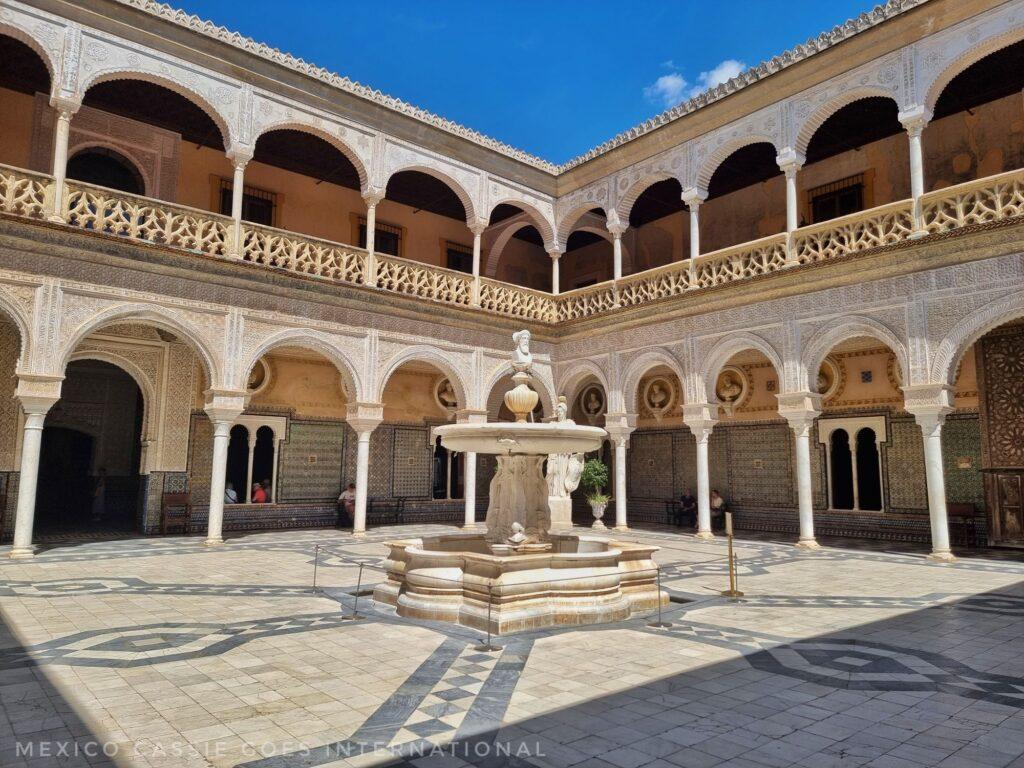
➕ Sites to notice: Hospital de los Venerables, India Archives (free to visit), Torre del Oro (great views over the river, free to visit) & the Plaza del Cabildo, Plaza del Duque & the Museo de Bellas Artes, or the absolutely magnificent Casa de Pilatos (pictured above).
Evening: Flamenco time
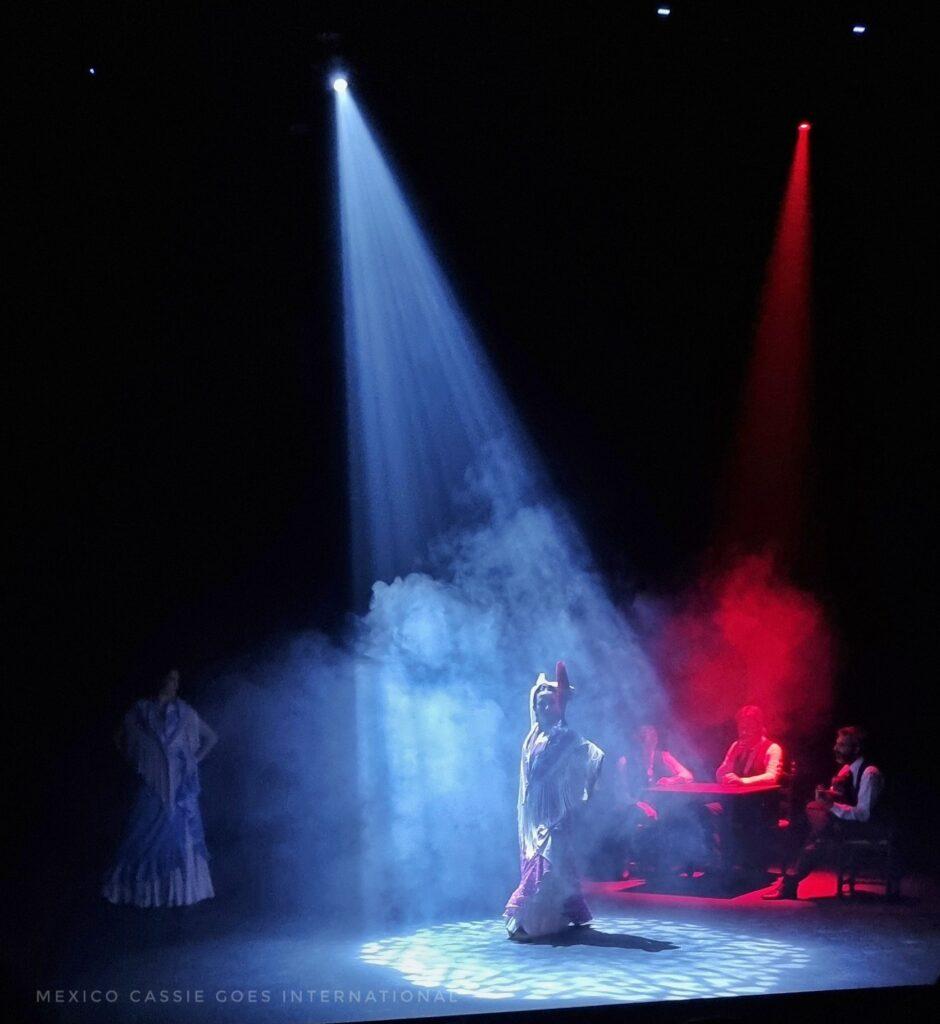
Flamenco performances generally last around an hour so it’s a perfect evening activity if you’re not into staying out late, and if you are, you can find a restaurant afterwards and join the locals in an evening meal.
There are dozens of excellent flamenco venues around Sevilla, where you end up really depends on where you’re staying, what time you want to see a performance & your comfort requirements.
If you value comfort most of all then I recommend the Teatro de Flamenco. Here you sit in comfortable theatre style seats and watch a really top quality show (photo above). For a smaller, more intimate venue, the far less flashy but still equally magnificent Museo de Baile Flamenco is a wonderful option. And if you thrive on chaos and don’t mind not being super comfortable, you could try the Peña Cultural Torres Macarena (no reservations so everyone shows up early).
→ Read the full MexicoCassie guide to flamenco venues & performances in Sevilla
⭐️ MexicoCassie flamenco tour top recommendation: Devour Tapas & Flamenco evening tour – the tour visits 2 tapas bars where you’ll try 8 different tapas plates (enough for a full meal) and drinks. You learn all about flamenco prior to watching a fabulous performance at one of the city’s top venues.
Day 2
Morning: Real Alcázar de Sevilla and gardens (Royal Palace)
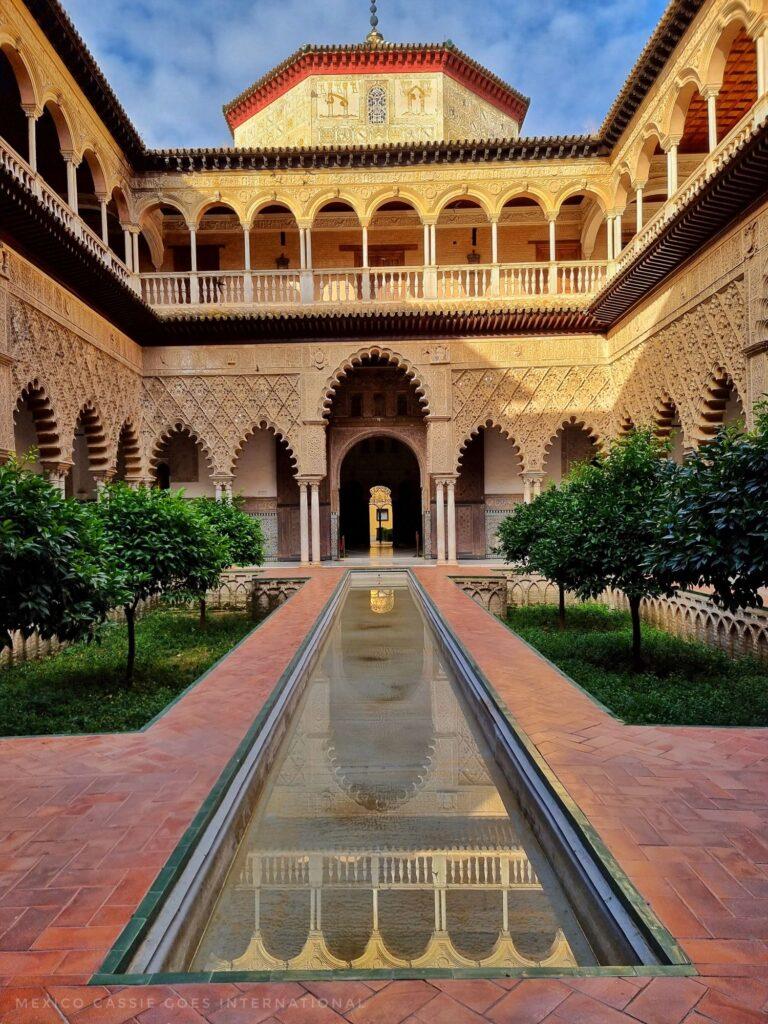
Your second day in Sevilla begins at the Alcázar because the best way to see this magnificent palace is to get there as early as possible. If you can manage an early morning start then I would highly recommend booking the exclusive Walks Early Access tour, which gets you into the Alcazar before it officially opens.
Every day the Alcázar allows just two groups of up to 20 people to enter before it opens to the general public. I have been part of the “general public”, one of the 7,000 people that visit the Alcazar every. single. day. And I have been lucky enough to be one of the “exclusive tour members”. I can tell you that there is simply nothing like exploring the Alcazar when it’s still peaceful and quiet. Just look at the photo above, it’s practically impossible to get this shot if you go during regular opening hours.
How to visit the Alcazar
⭐️ The MexicoCassie top Alcázar recommendation is to book onto the Exclusive Walks Early Access tour.
→ Read the MexicoCassie guide to visiting the Alcazar, booking tickets and timings
If you don’t want to get up early for the early access tour, I still recommend buying your tickets in advance as otherwise you run the very high risk of not seeing it at all.
→ Buy your tickets from the official site or from trusted 3rd party sites such as Tiqets if they’re sold out.
→ Buy your non-exclusive/early guided tour tickets
Or, you can risk waiting until you’re in Sevilla and buying on the day at the ticket office, which is located on Plaza del Patio de Banderas.
⎆ Once you have a ticket, head towards Plaza del Triunfo and the cathedral. Turn left and join the line for entrance into the Alcazar.
🪪 If you’re hoping for a reduced ticket based on your age you will need to bring a valid ID.
Brief history of the Alcazar
The beautiful Alcazar of Sevilla was originally built by the Moorish rulers of Spain but was adapted and modified by the Catholic Monarchs when they conquered Sevilla (1248). Today it is considered one of the best examples of Mudéjar (blended Moorish and Christian) architecture in the world. Along with the cathedral and the Archivo de Indias, the Alcazar is part of the Sevilla UNESCO World Heritage Site.
The first fortified building on this site has been dated to the early eighth century during the Caliphate of Córdoba. In 913, Abd al-Rahman III built a fort here, apparently over the remains of a Visigoth church (the Visigoths ruled over much of Spain from the decline of the Roman Empire in Spain to the time the Moors arrived).
😎 Cool Fact: The Alcazar was the setting for important historical moments such as the wedding of Carlos V (the first Holy Roman Emperor) and Isabella of Portugal. Some of the Game of Thrones scenes were filmed here too.
What to see in the Alcazar
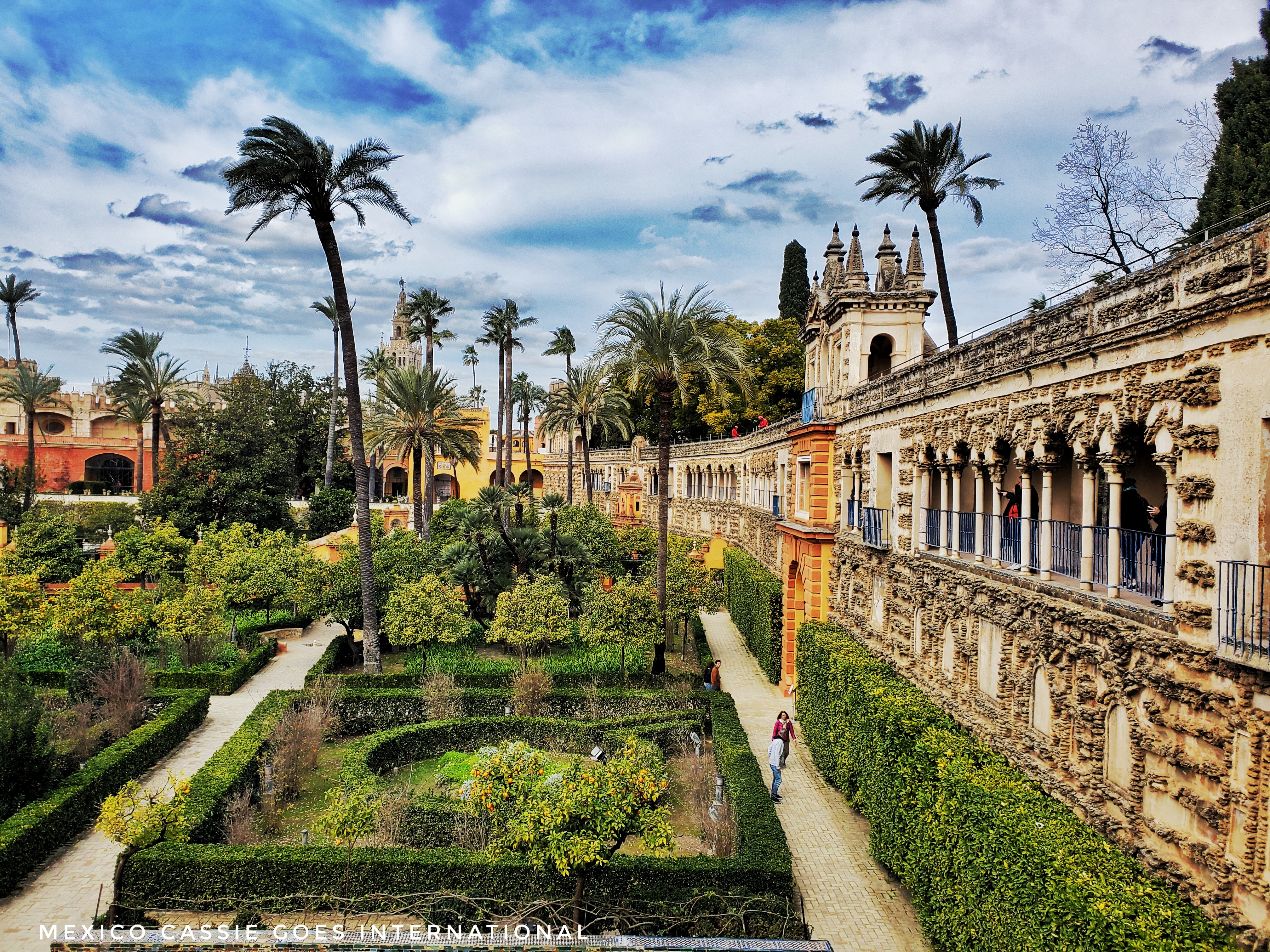
✅ As you tour the Alcazar you won’t want to miss:
- Patio de las Doncellas – The Maiden’s Courtyard. This is the main shebang in the Alcazar. Here you’ll find the main courtyard with the reflecting pool, sunken gardens and gorgeous arches. It’ll also likely be full of other people unless you book onto the early access tour.
- Patio de Leviés – fewer people find their way to this patio where there is a less grandiose pool than on the Patio de las Doncellas. I love it here.
- Patio de las Muñecas – Dolls Courtyard. A private courtyard in the palace – see if you can spot the dolls. I’ve only ever found 2.
- Salon de Embajadores (Ambassadors’ Hall or the Throne Room) – this is the biggest and most impressive room in the whole palace. Don’t forget to look up and see the half-orange dome, referred to as the Mudejar version of the Sistine Chapel.
- Salon de los Tapices – Tapestry Room
- Tile Exhibition
- Baños de Doña Maria de Padilla – a striking underground crypt filled with water
- The Gardens – leave yourself time to visit the gardens because they are beautiful. And if you can, climb the stairs up to the Galleria de Grutesco for gorgeous views over the gardens.
➕ Bonus: When walking to the Alcazar be sure to walk along Calle de Agua and Calle de la Judería, both gorgeous little streets.
Afternoon: Palacio de las Dueñas & the Antiquarium
After lunch (find somewhere near the Alcazár – I’ve really enjoyed Bodeguita Antonio Romero, or on your walk over to the Palacio find a spot to enjoy)
Palacio de las Dueñas
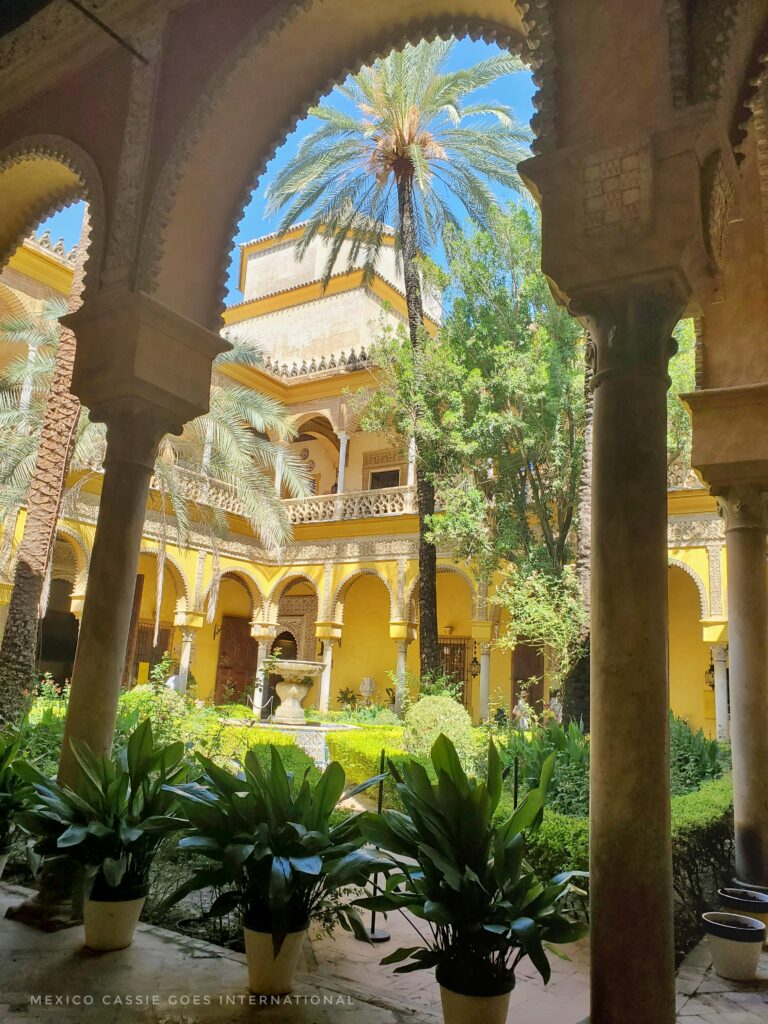
This palace was built between the fifteenth and sixteenth centuries and has been home to some big names in Spanish history. Today it is a private residence belonging to the House of Alba.
Palacio de las Dueñas is something of a quiet gem in Sevilla. For me, the most wonderful thing about this place is its gardens and courtyards. While they’re smaller and not as showy as the Alcázar gardens, I really loved the sense of complete peace I felt while walking around this place.
→ Skip the lines and buy your ticket in advance
Antiquarium
Underneath Las Setas you’ll find this small archaeological site, which I think is an absolute hidden gem of Sevilla and I highly recommend heading in if you have any interest in the region’s Roman history.
This is a modern, well-presented archaeological museum where you can follow paths through the ruins of Roman and Moorish Seville. The site was discovered when excavating for a carpark in 2003.
✅ There are eleven areas of remains including seven columned houses with mosaics, salting vats (very common in Roman ruins in this area) and streets. The best preserved is a house from the 5th century CE called Casa de la Columna.
⭐️ I actually like the Mercado de la Encarnación better than the Mercado de Triana. Triana has become very touristy and has something of a gastro-market vibe. Encarnación, while it looks more modern, is actually more traditional and local – the stalls here have been in the same families for generations and you’re more likely to find locals shopping here.
Evening: Las Setas de Sevilla
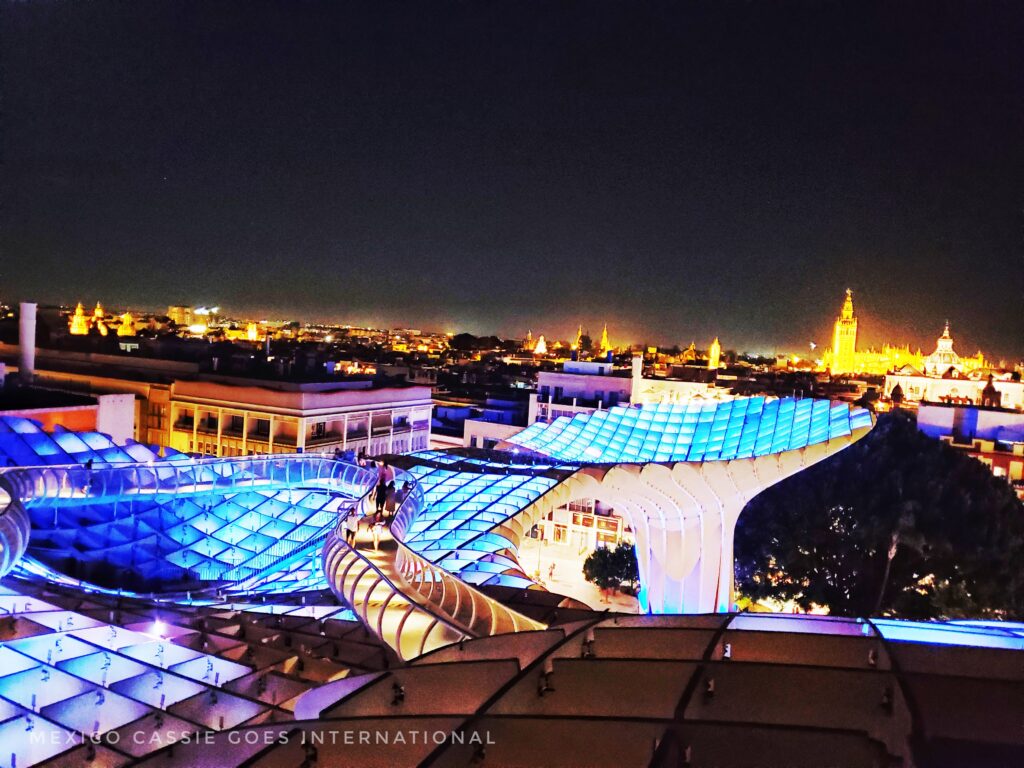
I recommend not leaving this area so you can see Las Setas after dark because this is the best time to be here. If you have a while before sunset, grab a drink or go for a stroll until it’s dark and then head up to The Levels, the walkways on the top of the Las Setas structure.
“Las Setas” (The Mushrooms) is the popular name for Metropol Parasol, a fascinating wooden structure that towers over Plaza de la Encarnacion. This plaza was the city centre of old Sevilla and it has a long history dating back to the Roman period.
→ Buy your tickets in advance, or line up on the day and hope they haven’t sold out.
🍽 Enjoy tapas on Plaza del Salvador when you’re finished.
Day 3
Morning: Plaza de España
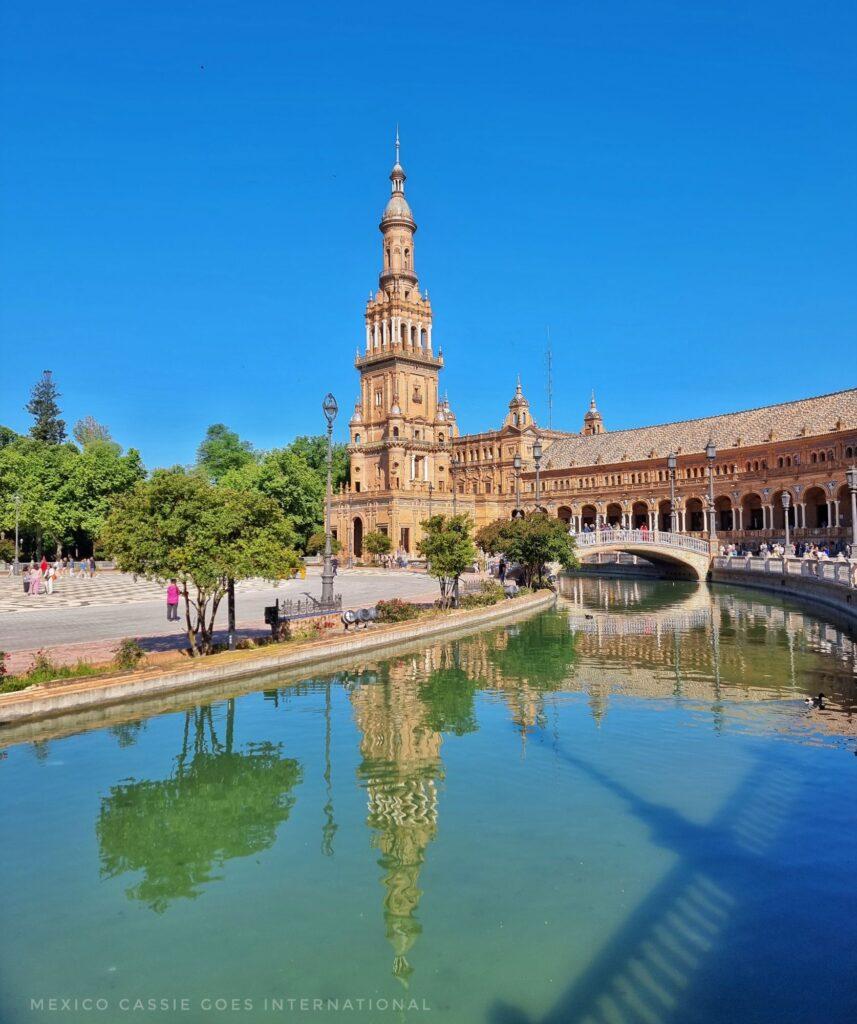
The Plaza de España is really the most famous and one of the most beautiful landmarks in all of Sevilla for both tourists and locals alike. Built in 1928 for the Ibero-American Exhibition (of 1929).
The Plaza de España has been in both Star Wars II and Lawrence of Arabia. It was also in Netflix shows, The Dictator & more recently, Kaos.
✅ All around the building are 48 tiled alcoves each representing a Spanish province (except for Seville which is featured elsewhere and one of the Canary Island provinces which didn’t exist in 1928). Each has a mural and a map of the province.
✅ You will see four bridges in the courtyard; these represent the four ancient kingdoms of Spain: Castile, Léon, Aragon, and Navarre. The bridges traverse a 500 m-long canal and it’s possible to rent small boats and row along here. Because of this canal it’s sometimes called the Venice of Seville.
✅ Many of the buildings are government offices (including where foreigners like me go to get residency paperwork sorted) but the Military History Museum is housed there too.
➕ Take a stroll through Parque Maria Luisa while you’re here and if you’re into horse-drawn carriages, this is one place to pick them up. (€50 per ride). The park has around 100 acres of paths, gardens, and patios. I love spending an hour or so just relaxing here especially when green parrots fly overhead. See if you can find Monté Gurugú.
➕ Bonus Activity: the delightful Museo de Artes y Costumbres is in the park, as is the (currently closed for refurbishments) Archaeological Museum and if you’re visiting with kids, the Seville Aquarium is nearby.
Afternoon – Cathedral & La Giralda
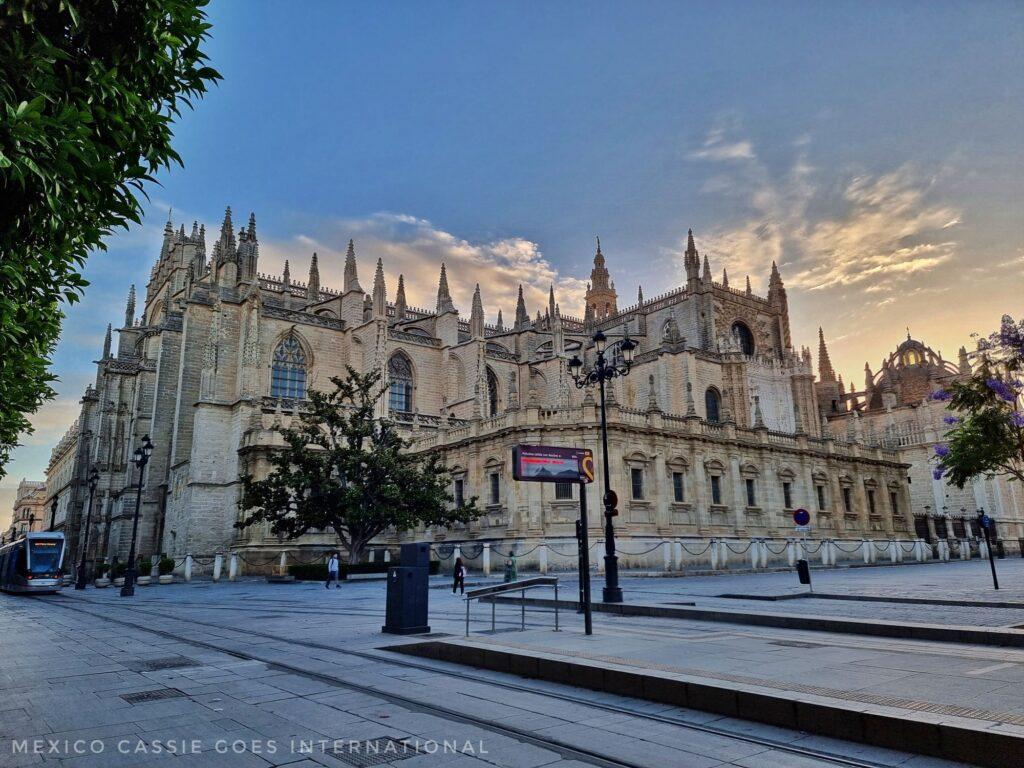
Use your final afternoon to visit Seville’s beautiful cathedral, part of the trio that makes up the Seville UNESCO World Heritage Site (along with the Alcázar and the nearby India Archives).
This is the largest Gothic cathedral in the world and well worth your time. Much like Córdoba’s famous Mezquita, this cathedral actually began life as a mosque. It was converted into a cathedral after the Christians took Seville. The cathedral we see today was completed in 1506. There are many famous artworks to be spotted while exploring the cathedral including works by Goya and Murrillo. Look out for Christopher Columbus’ extravagant resting place here too.
If you have the energy, I recommend climbing the Giralda for fabulous views over the cathedral, the Alcazar & the old city. The Giralda tower is not ascended with steps but instead with ramps. There are thirty-five ramps that are all wide enough for the Sultan to ride a horse to the top!!
📌 You can even book a virtual tour around the cathedral from the comfort of your own home!
→ Book your skip the line cathedral & Giralda tickets
Top Tip: If you haven’t booked online and don’t fancy queuing, you can head to the nearby Iglesia Colegial del Divino Salvador and buy a joint ticket for the two churches. This is also a useful tip for anyone interested in seeing churches, obviously.
Early evening: Independent Republic of Triana
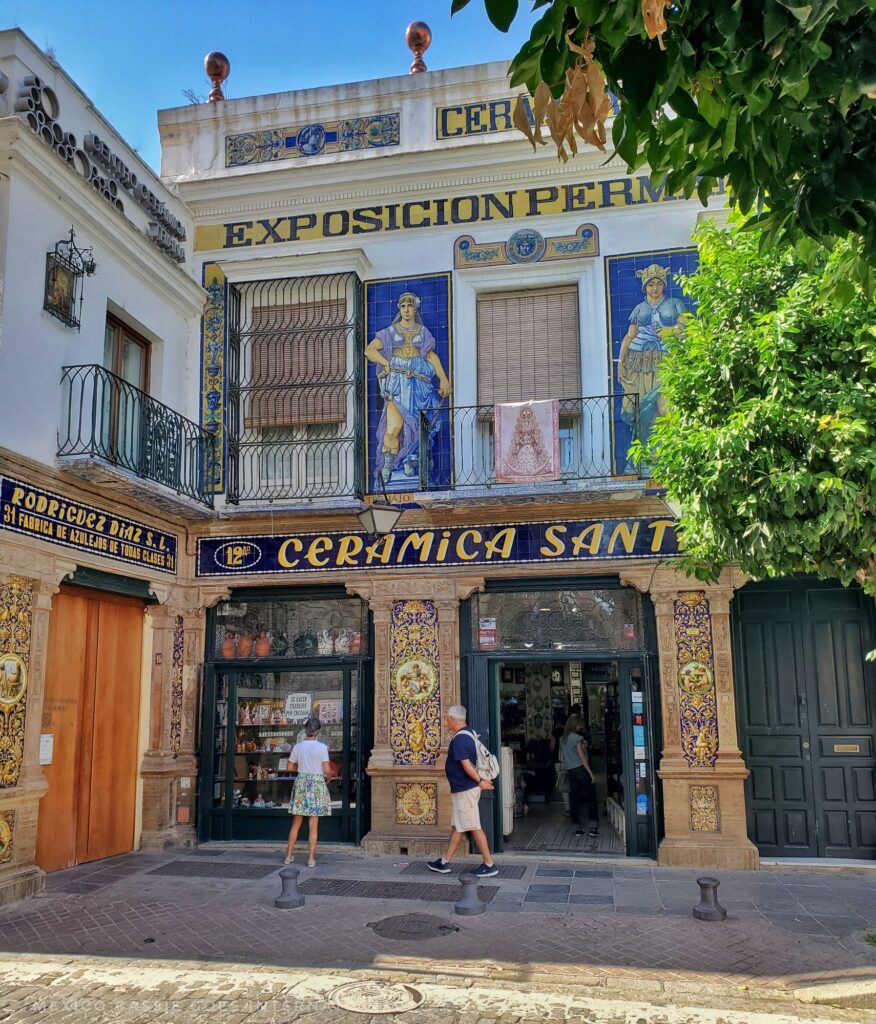
Spend the late afternoon meandering through the streets of the “Independent Republic of Triana”, on the other side of the river, to check out their long history as the glazed tile-making area. By visiting at this time of day you miss the famous market but I don’t really think that matters much (most blogs will tell you to eat a meal here but I’m not most blogs. I think there is far higher quality food and more atmosphere in the city restaurants than in the market).
Centro Ceramica Triana – just behind the market you’ll find this good and non-touristy museum. Around here you’ll also find great shops for picking up a souvenir or two. The last remaining authentic ceramics workshops in Seville are found in the Triana neighborhood.
➕ Bonus: If you’re interested, take a class while you’re in Triana. Most people choose either a Market and Tapas Class or a ceramic or tile-making class.
🆓 The museum in the Castillo de San Jorge has exhibitions as well as a small archaeological exhibition. The most interesting thing about this spot though is that this was once the headquarters of the Inquisition – sadly there’s nothing really to learn here but it’s definitely quite chilling when you stop and really think about what this means.
🏨 Where to stay in Sevilla
⭐️ The MexicoCassie top recommended hotel is: Hotel Las Casas de la Judería – this is a fabulous boutique hotel, comprising 27 traditional houses connected by gorgeous patios and winding passage ways. You’ll never have seen anything like it. Add the rooftop terrace and pool to this combination and you have your winner!
⭐️ The MexicoCassie top recommended apartment is: Feel at home San Lorenzo apartments – where you will find nicely centrally located apartments with elevator, swimming pool & free shuttle from airport
⭐️ The MexicoCassie ‘treat yourself’ recommended hotel is: Hotel Alfonso XIII – there’s simply nowhere like this in Sevilla. Located by the Alcazar, this hotel is the epitome of refined luxury, a true ‘treat yourself’ experience. If you can’t stay here, I highly recommend booking a table for Sunday brunch.
⭐️ The MexicoCassie midrange recommended hotel is: Hotel Fernando III – still well located in the Santa Cruz district, this midrange hotel offers comfortable rooms, a roof terrace with pool, a good breakfast and very helpful staff.
✅ Use the full MexicoCassie guide to hotels in Sevilla
🗺 You could also use the MexicoCassie interactive map to find your perfect accommodation or download & keep the MexicoCassie guide to hotels for all budgets in Sevilla.
How to get to, and around, Seville
✈️ Seville’s airport is 10 km from the city. There is a dedicated bus service to/from the airport and it is well serviced by cabs (including uber).
→ Read the MexicoCassie guide to travelling between the airport & Seville
🚆 Seville’s train station is called Santa Justa and like everything else in the city, it’s pretty centrally located. If you want to use the trains I recommend booking in advance as it’s cheaper & trains do often sell out
→ Check train timetables & book your tickets on RailEurope
🚌 There are 2 bus stations in Seville: Plaza de las Armas and Prado de San Sebastian. Buses cover the country and also go to Tavira, Faro and further afield in Portugal.
→ Check bus timetables & book your tickets on Busbud
🚗 If you’re just visiting Sevilla you probably don’t need a car but if you plan on exploring around the region, renting & driving is the best option.
→ Check rental options & reserve here
→ Read the MexicoCassie guide to driving around southern Spain
→ Read the full MexicoCassie guide to driving around Spain
📚 🇪🇸 Read more of MexicoCassie’s Spain guides
→ MexicoCassie guide to whether Spain is safe for tourists
→ MexicoCassie guide to driving in Spain
→ MexicoCassie guide to driving in southern Spain
☕️ MexicoCassie guide to vegetarian tapas, to breakfast and to feeding the kids
📲 MexicoCassie guide to using an eSIM in Spain
Sevilla
⭐️ What is Sevilla famous for? | ⭐️ How many days do you need in Seville? | ⭐️ Everything about the Seville airport bus
⭐️ 1 day in Seville | ⭐️ 3 days in Seville | ⭐️ 5 days in Seville | ⭐️ How to visit Seville in the summer | ⭐️ How to visit the Alcazar | ⭐️ Quirky Seville
⭐️ Best beaches from Seville | ⭐️ Day trips from Seville | ⭐️ Seville with kids | ⭐️ Seville with teenagers | ⭐️ How to see flamenco in Seville | ⭐️ Best family friendly tours in Seville
Málaga
⭐️ 3 days in Málaga | ⭐️ 1 day in Málaga | ⭐️ Day trips from Málaga | ⭐️ 1 day in Ronda | ⭐️ 1 day in Ronda with kids | ⭐️ What to do in Antequera | ⭐️ Exploring Málaga with kids
Córdoba
⭐️ What to do in Córdoba | ⭐️ Planning your Córdoba day trip from Seville | ⭐️ Day trips from Córdoba | ⭐️ Exploring Córdoba with kids | ⭐️ 1 day in Córdoba | ⭐️ Zuheros, the most beautiful village in Córdoba
Cádiz
⭐️ What to do in Cádiz province | ⭐️ How to spend 1 day in Cádiz city | ⭐️ What to do in Cádiz with kids | ⭐️ Exploring Tarifa | ⭐️ How to get to Tangier from Tarifa | ⭐️ Exploring Gibraltar | ⭐️ What to do in Jerez de la Frontera
Huelva
⭐️ Is Huelva worth visiting? (YES) | ⭐️ What to see in the gorgeous Aracena
Granada
⭐️ Planning your Granada city break | ⭐️ Granada with kids | ⭐️ 2 days in Granada | ⭐️ How to explore Guadix and its cave houses
Almería
⭐️ Things to do in Almería City | ⭐️ What to do in Almería with kids | ⭐️ Is Almería worth visiting? | ⭐️ Figuring out the Almería beaches
Community of Valencia
⭐️ 1 day in Valencia | ⭐️ 2 days in Valencia | ⭐️ Museums in Valencia ⭐️ Day trips from Valencia | ⭐️ Valencia with kids
Community of Madrid
⭐️ Why should you visit Madrid | ⭐️ Spending 5 awesome days in Madrid | ⭐️ 3-day Madrid itinerary
Castilla y León
⭐️ Segovia, a perfect day trip from Madrid | ⭐️ How to visit Medina del Campo | ⭐️ How to visit Zamora
Euskadi (Basque Country)
⭐️ What to do in the Basque Country | ⭐️ Excellent things to do in San Sebastián | ⭐️ Is San Sebastián worth visiting? | ⭐️ How many days do you need in San Sebastián? | ⭐️ Day trips from San Sebastián | ⭐️ San Sebastián with kids | ⭐️ Is Bilbao worth visiting? | Planning and taking day trips from Bilbao | Why Vitoria-Gasteiz is worth visiting?
Picos de Europa
⭐️ Road trip itinerary for the Picos de Europa | ⭐️ Planning for a trip to the Picos de Europa | ⭐️ Las Arenas de Cabrales | ⭐️ Visiting Potes
Extremadura
⭐️ Everything you need to explore Monfragüe | ⭐️ What to do in Mérida | ⭐️ What to do in Cáceres | ⭐️ How to visit Plasencia | ⭐️ Visiting Zafra (Sevilla Chica)
Cataluña
⭐️ Road trip around Girona Province | ⭐️ Spending 1 day in Girona | ⭐️ 1 day in Barcelona | ⭐️ How to visit Castellfollit de la Roca
La Gomera (Canary Island)
⭐️ Hiking on La Gomera | ⭐️ La Gomera with kids | ⭐️ Take a day trip to La Gomera