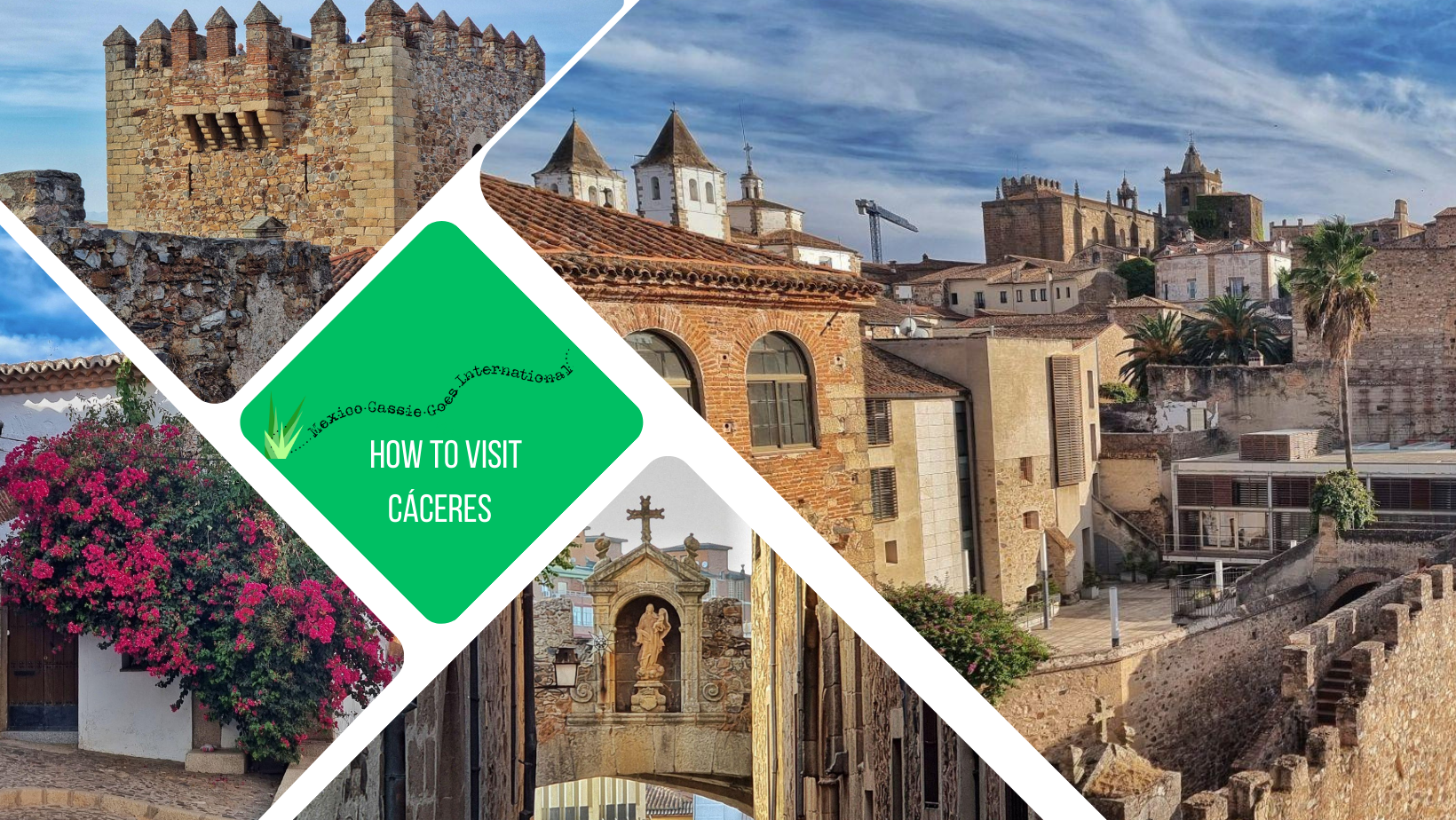
Your expert guide to visiting Cáceres (Spain)
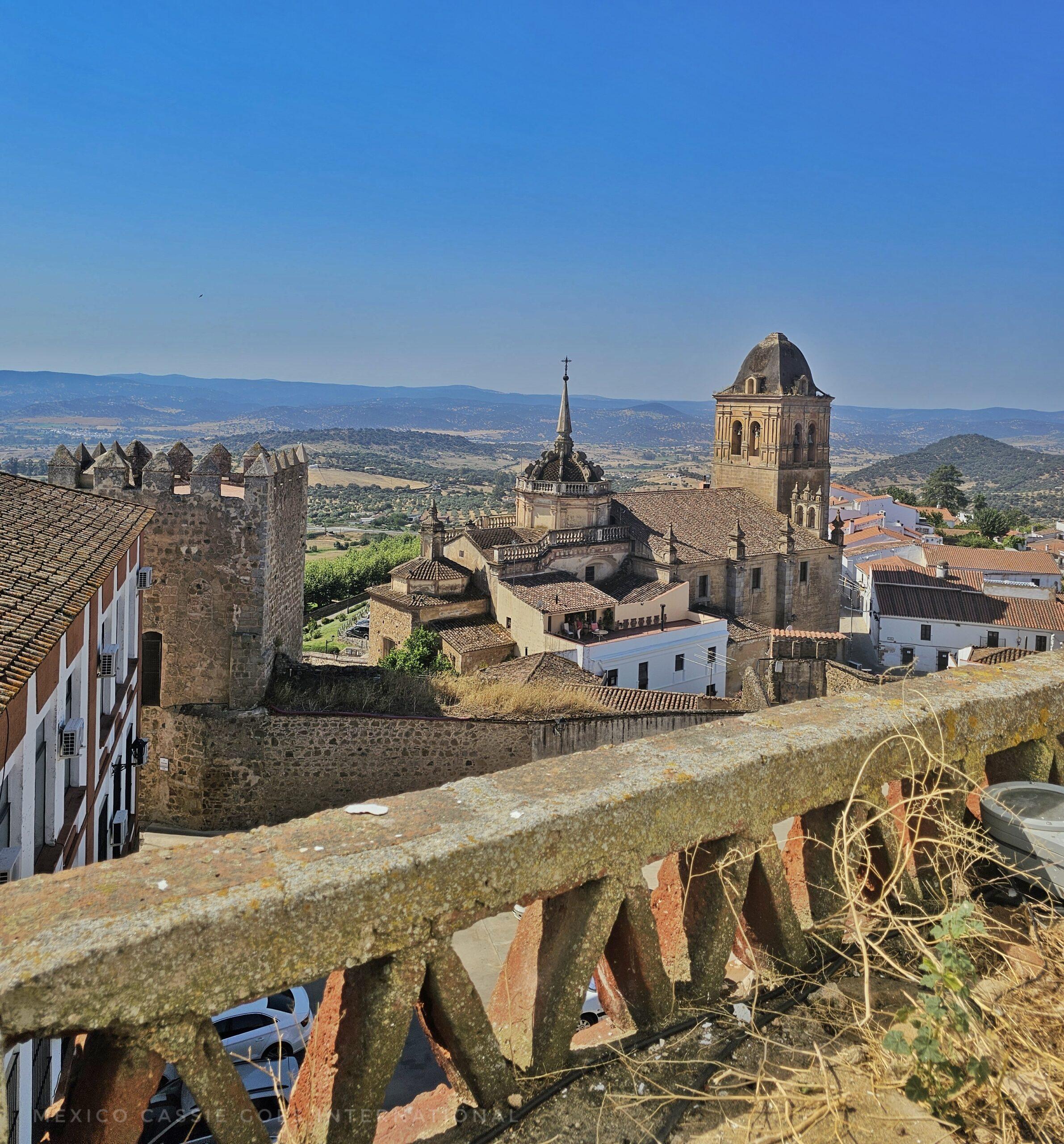
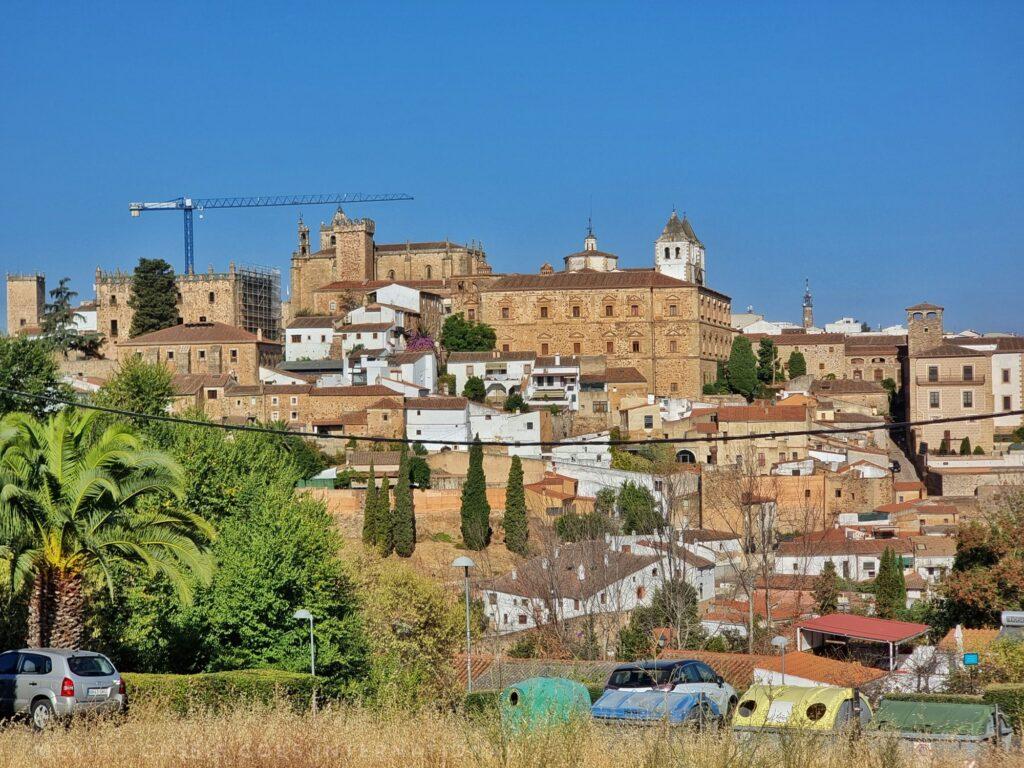
It’s rare that I use the phrase, “hidden gem” but it’s kind of perfect when we’re talking about the small medieval city of Cáceres, in Extremadura.
Here you’ll find fascinating history all around you as you wander the narrow cobbled streets, running your hand along 15th century walls, admiring ancient Moorish fortifications and Christianised arches.
I had wanted to visit Cáceres and finally, in 2025, I got there. We were driving home to Sevilla from Bilbao in Euskadi and needed somewhere to break up the journey. We stopped for two nights and had a great time exploring the medieval old town of Cáceres.
In this article, we’ll take a look at why it’s worth visiting, and what to do & see here. As you read you’ll see that I haven’t just included the main sites but also some extremely cool extra options that you won’t find in other blogs.
There are affiliate links in this article. If you click and make a purchase I could make a small sum at zero cost to you. Thank you!
Is Cáceres worth visiting?
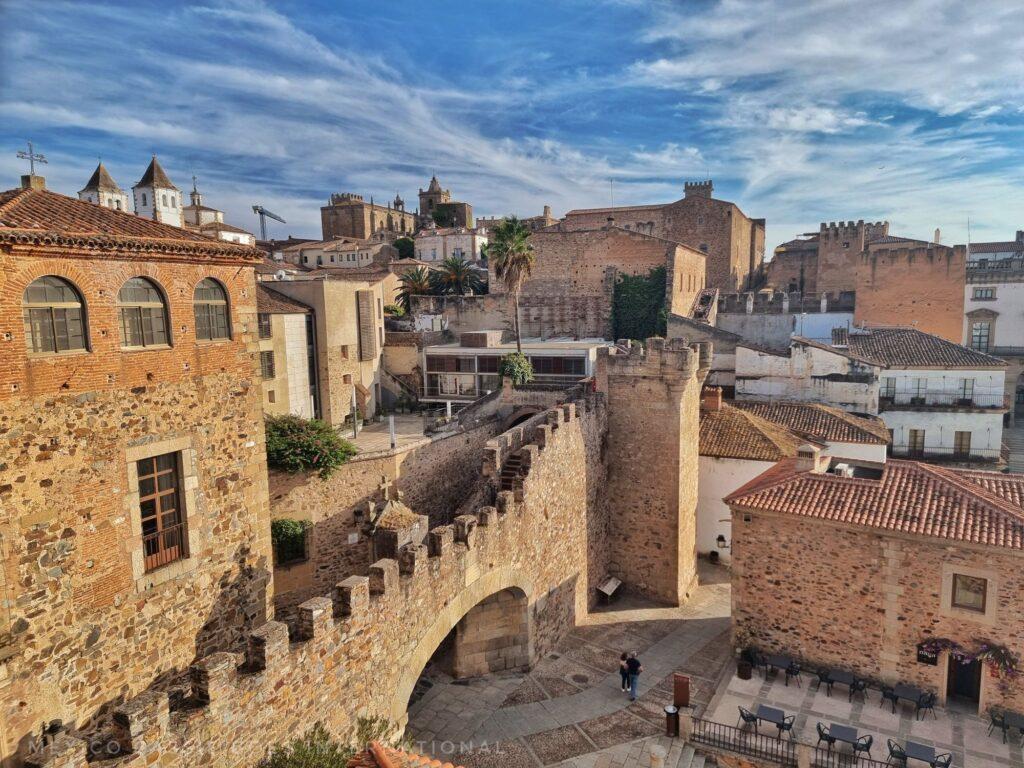
Yes, the city is absolutely worth a visit.
We’re referring specifically to the medieval walled city of Cáceres, the old town that was declared a UNESCO World Heritage site in 1986. The modern town of Cáceres really isn’t what you’re visiting for, although as you’ll see below, it does contain some sites of interest too.
Cáceres is one of those small towns that barely registers with visitors to Spain. It’s inland, and not on any major route anywhere. It’s a joy to explore because it’s just so beautiful but also, due to the absence of foreigners and the lack of over-crowding even in peak season.
If you enjoy exploring beautiful, small, old, Spanish towns that are just bursting with atmosphere and ambiance, then yes, you’re going to fall in love with Cáceres.
How long do you need in Cáceres
Really, it’s small enough that 1 – 2 days is plenty unless you want to use it as a base for seeing more of the region.
🏨 If you do want to spend a night or two here, jump now to the Cáceres MexicoCassie hotel recommendations (below).
→ Read the full MexicoCassie guide to road tripping in Extremadura
Where is Cáceres
🗺️ Cáceres is a city in the autonomous community of Extremadura (which borders Portugal, Andalucía, Castilla La Mancha, and Castilla Y León).
Nearby cities include
Mérida – 1 hour – an incredible city with more Roman ruins, including a massive Roman theatre, than you can imagine → Read the full MexicoCassie guide to exploring Roman Mérida
Zafra – 1hr30 – a tiny town on the way to Sevilla. Often referred to as “Sevilla La Chica”, this is a gorgeous place to spend an afternoon and maybe enjoy a great meal. → Read the full MexicoCassie guide to Zafra.
Badajoz – 1hr30 – a mid-sized town on the border of Portugal with an impressive alcazaba, and lovely old town → Read the full MexicoCassie guide to Badajoz
Plasencia – 1hr – another gorgeous small town that’s interesting to explore. → Read the full MexicoCassie guide to Plasencia
Sevilla – 3 hour drive – one of Spain’s most famous and popular city destinations is within easy driving distance for a day trip → Find all of MexicoCassie Sevilla guides here
➕ The astoundingly beautiful Monfragüe National Park isn’t too far away either, this park is one of the reasons I love Extremadura so much.
Public transport
🚝 There are direct trains from Sevilla, Madrid and closer, smaller cities.
→ Check train timetables & book
🚌 There are direct buses to & from Cáceres from all around Spain
→ Check bus timetables & book
🚘 And it’s, of course, easy to drive around Spain if you’re interested in renting a car
→ Check rental car options with DiscoverCars & read more in MexicoCassie’s guide to driving around Spain
→ Read the full MexicoCassie guide to road tripping in Extremadura
What to do in Cáceres
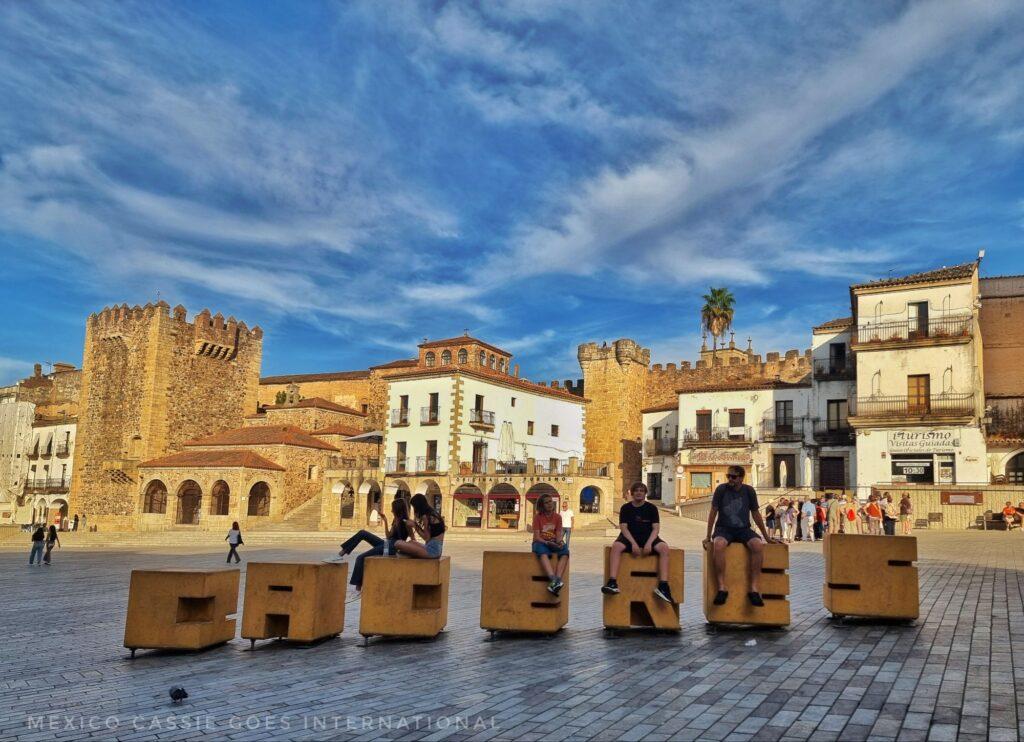
The best thing to do in the historic centre of Cáceres really is walk around and take in the ambiance of the city. There are plenty of sites to visit as you do so.
Take a walking tour of the city
I’d have liked to take a tour here but when we arrived I didn’t find anywhere open and offering one. It would have been better to have booked online, in advance (maybe this was just a summer thing, I don’t know).
👣 Take this 90 minute walking tour around the medieval city of Cáceres to learn about the city’s history and orientate yourself before you explore alone (Spanish only).
👣 It’s also possible to book an early evening tour of the city where you learn the same history but explore the city as the lights come on and the sun goes down (Spanish).
Torre de Bujaco & the Plaza Mayor
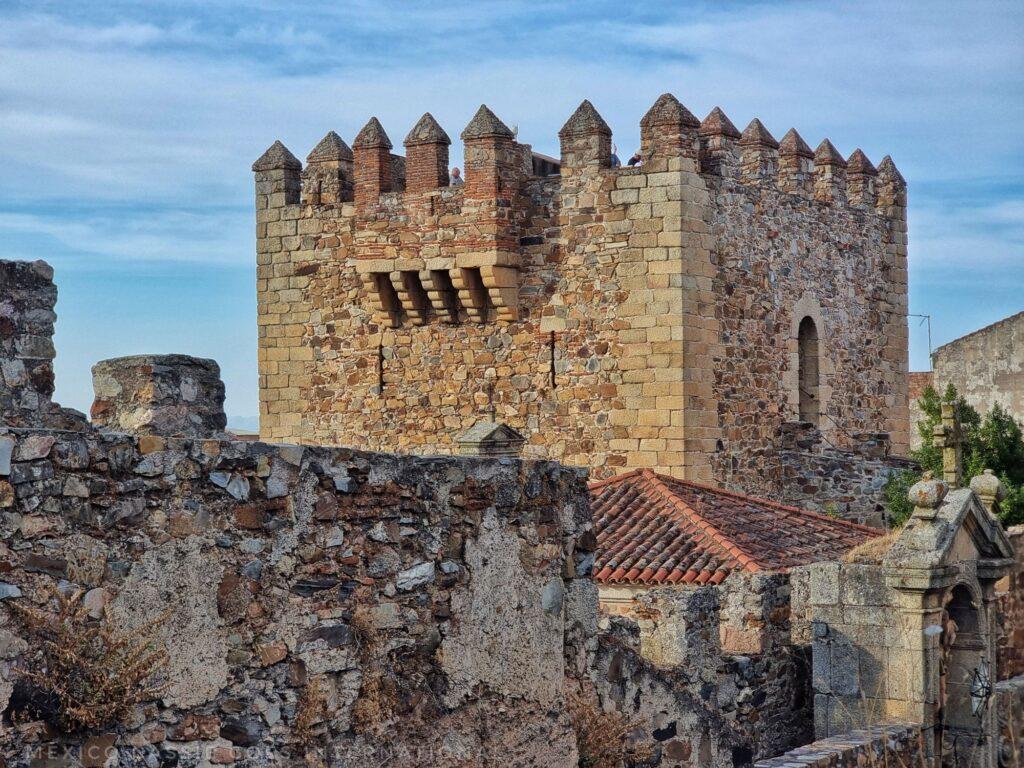
This beautiful 12th century Almohad tower is a great place to begin your time in Cáceres as it offers fabulous panoramic views over the city, the city walls, the Plaza Mayor (photo 2 above) and the neighbouring Palacio Toledo-Moctezuma.
The tower is often also known as the ‘Tower of Ceres’ and the ‘Clock Tower’. The name of ‘Bujaco’ was arrived at during the 19th century as locals made links between the statue of the goddess of Ceres that was housed in a temple at the top of the tower and a local tradition of making figures out of bullrushes that are called, ‘bujacos’. Somehow an association grew between the goddess and these figurines.
⭐️ The small sum you pay to enter gets you access to a small museum in the tower, the Ruinas Romanas del Palacio de Mayoralgo, a small section of the medieval walls, and of course, the mirador at the top of the tower. You can also get a joint ticket that give access to the Baluarte de los Pozos.
Palacio Toledo-Moctezuma / Provincial Archives
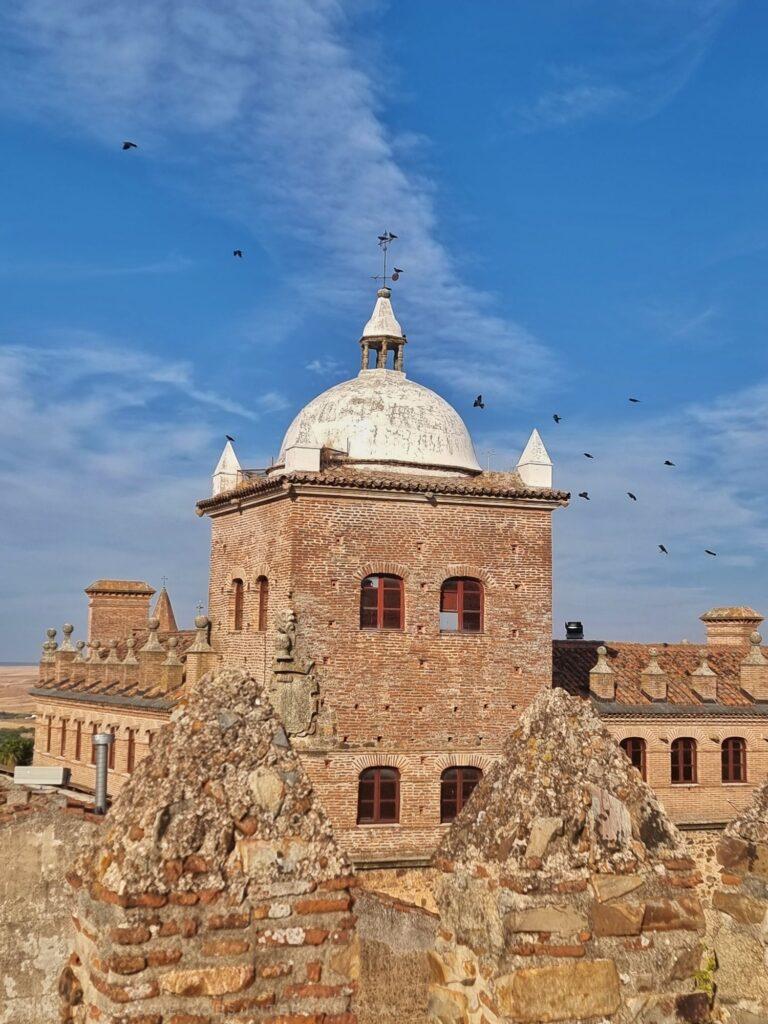
This palace was built in the 14th & 15th centuries by Juan Cano Savedra who was part of the invasion of the Americas with Cortés. There he married an Aztec princess called Tecuixpo, the daughter of Moctezuma II. She later had her name changed to Isabel de Moctezuma, hence the name of the palace.
The most interesting thing about this place is that the main rooms are decorated with frescoes representing the Roman emperors and contain busts of Mexican emperors. The provincial historical archives are stored in this building
Arco de la Estrella & exploring the historic centre of Cáceres
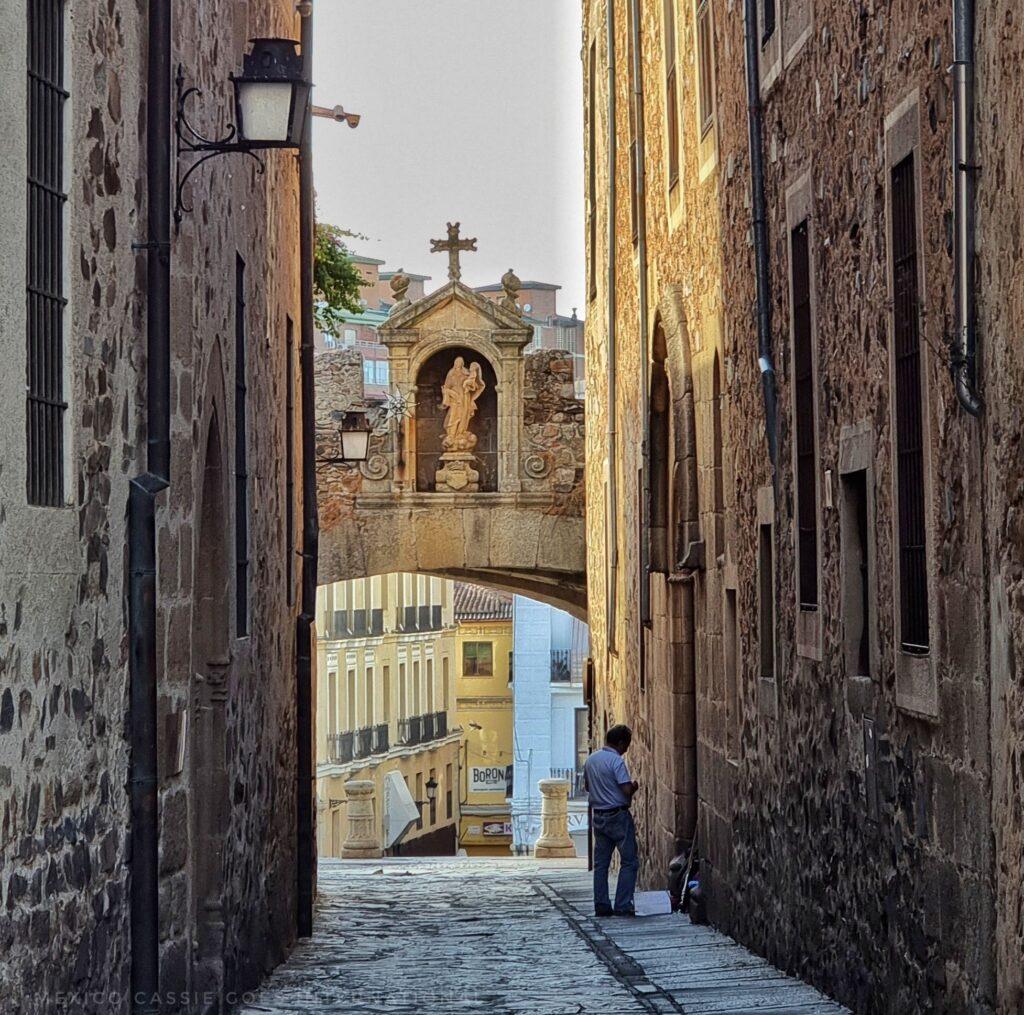
As you wander down the narrow cobbled streets around the Plaza Mayor, you’ll find the Torre de la Yerba, the Pilar de San Francisco and the Torre del Horno all alongside the ayuntamiento and the Plaza Mayor.
Here too you’ll find the Arco de la Estrella (pictured above), a medieval stone arch, which apparently featured in Game of Thrones (honestly we didn’t know this when we were in town and my kids were more interested in the large sheet of metal that made an incredible noise every time a car drove over it that was right here).
🍦 There are two ice cream shops opposite each other just off the side of the Plaza Mayor on Calle Pintores. Remo: helados italianos 100% artesanales and Helados Artesanos Agustin Mira. We opted for the former and everyone was very happy with their choices.
Baluarte de los Pozos
This is an Almohad tower from the twelfth century that was built to protect the city’s water supplies. There are great views over the city from here and the small museum is a great addition to your visit. We very much enjoyed the short interactive tour here.
Plaza de las Veletas
Up the hill in the centre of the historic town sits this lovely plaza where you’ll find the Palacio de las Veletas & the Cáceres Museum, neither of which were open when I visited in the summer, which was a little annoying as I’m a huge fan of small city history museums and I’d heard good things about this one.
Plaza de San Jorge
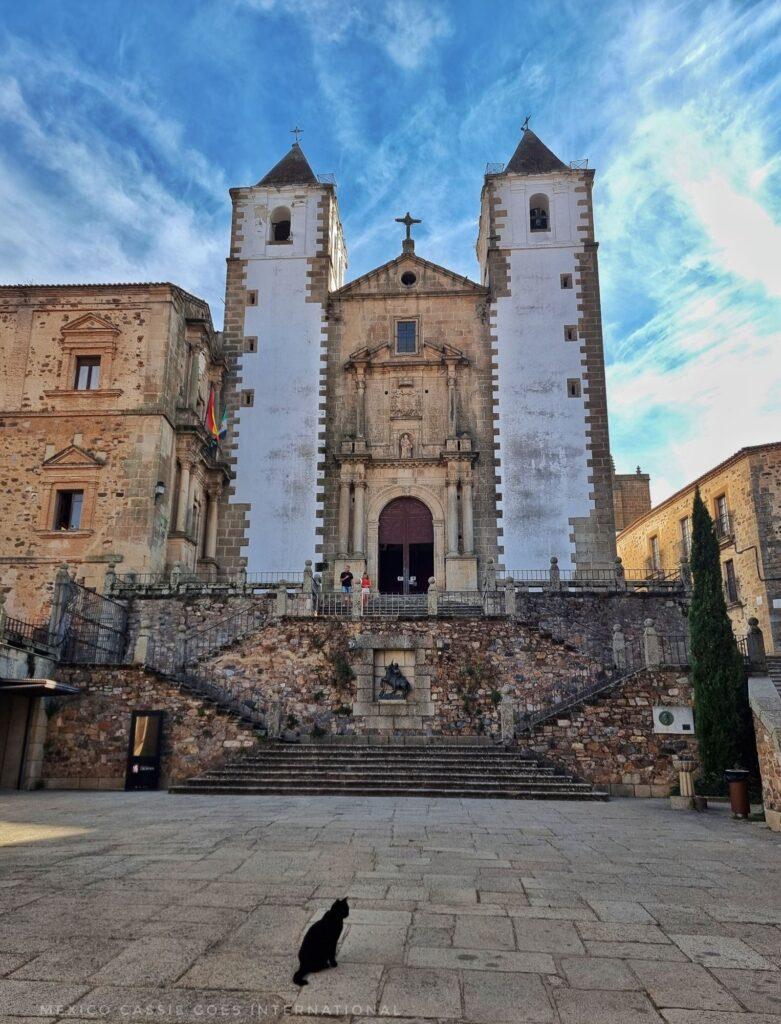
This plaza is dominated by the Iglesia de San Francisco Javier (photo above) and its small garden, Jardín de Doña Cristina de Ulloa. The restored 12th century Casa-Museo Árabe Yusuf Al-Burch is also here.
Plaza de los Golfines
This is another plaza you’ll discover as you stroll around the city. Visit the Palacio los Golfines de Abajo if you want to see a reconstructed noble home.
What else to check out while in Cáceres
Cueva de Maltravieso
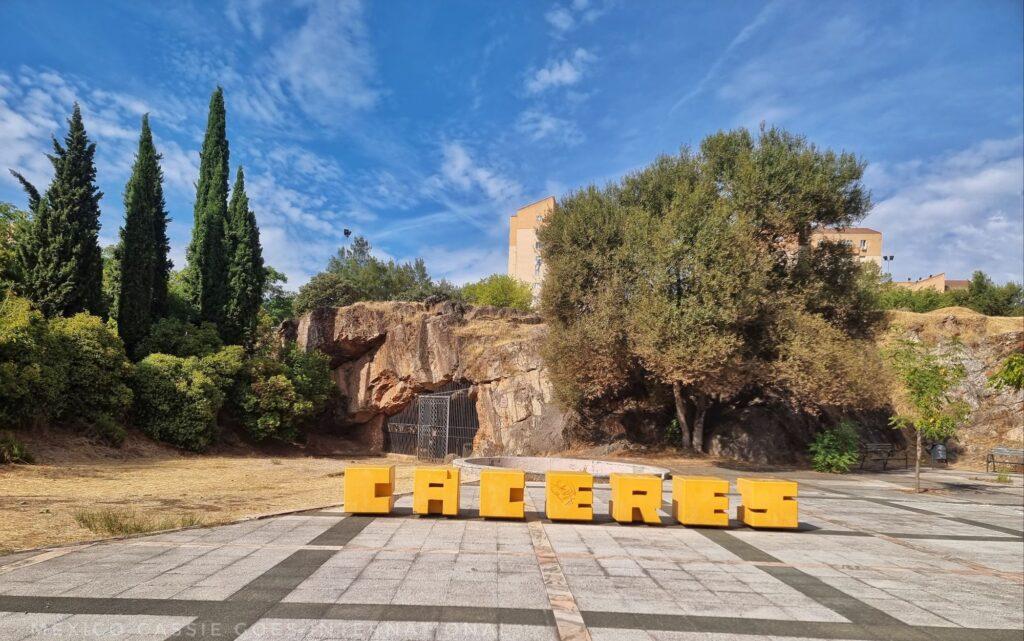
Discovered in 1951, right in the centre of modern Cáceres is the Cave of Maltravieso, a prehistoric site dating back tens of thousands of years.
Visitors cannot actually enter the cave but there’s a good museum and replica cave in the Interpretation Centre that is free to visit. The staff were a little surprised when we showed up, were relieved we speak Spanish and then kindly found a version of the presentation in English for us.
Ceramics, human and animal skulls & bones have been discovered in the cave a well as the more than 70 red pigment hand stencils on the walls of the cave. It is known that the oldest of the paintings is around 66,000 years old but archaeologists actually think the cave was used by humans over 350,000 years ago.
It is possible to sign up to visit the actual cave via a wait-list in the interpretation centre (yes, my name is on it).
→ There are plenty of incredible cave painting sites in Extremadura, including El Abrigo del Castillo in Monfragüe National Park.
Parks
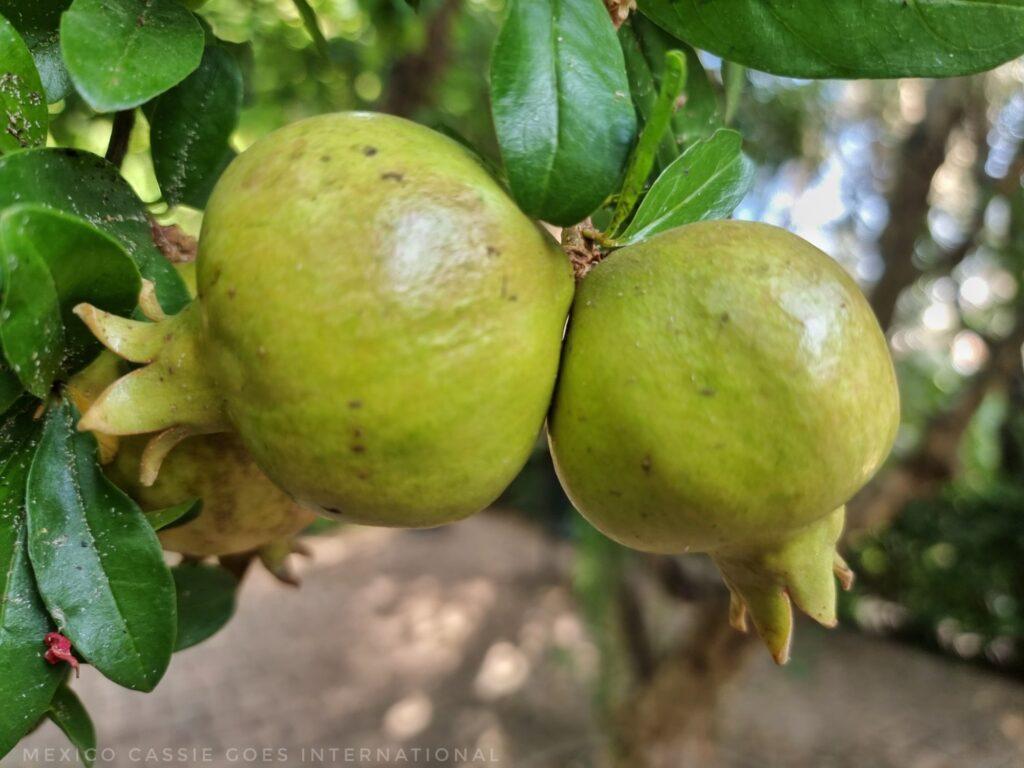
Parque El Olivar de la Judería – this small park is a lovely spot to rest and breathe amongst the pomegranate trees while you’re in the old city of Cáceres.
Parque El Rodeo – this is a much larger park in the modern city. It has a small lake, a pump track and plenty of excellent paths to enjoy (I don’t have any photos because I was bursting to pee while we were there so I marched everyone through the park super fast).
➕ Note on the Mirador El Banco Más Bonito de Cáceres – we drove to it on our way out of Cáceres, it didn’t strike me as being particularly special.
Museums
Museo de Arte Contemporáneo Helga Alvear – this is an excellent modern art gallery just outside the old city limits.
Museo de Historia y Cultura Casa Pedrilla y Museo Guayasamin – just outside the old city limits, this is an excellent history museum about cultural and artistic life in the community of Extremadura in the 19th and 20th centuries.
🎉 Every year, Cáceres is home to a three day WOMAD festival. I haven’t been to WOMAD Cáceres but I have been to the original WOMAD in the UK and it is fantastic.
Where to stay in Cáceres
🏨 Best for views – Exe Agora Cáceres: this sleek and modern hotel just outside of the old city is a great option if you are looking for gorgeous views of the medieval buildings. Private parking, breakfast included.
🏨 Best for location – Soho Boutique Casa Don Fernando: this beautifully renovated hotel is right on the Plaza Mayor, which means you’re staying in the heart of everything. Breakfast is included but parking is 100m away.
🏨 Best for luxury – Hospes Palacio de Arenales & Spa: just 3km outside of the city, this is a reasonably priced, 5⭐️ luxurious hotel. Guests stay in a restored 17th century mansion and have access to a large outdoor pool, indoor pool, gorgeous grounds, the wellness centre & spa (free access every day). Breakfast is included and there is a restaurant on site.
🗺️ Or, if none of these strike you, why not use the interactive MexicoCassie hotel finder map of Cáceres to locate something more to your liking
→ Read the MexicoCassie tips to ensuring a smooth trip to Spain
📚 🇪🇸 Read more of MexicoCassie’s Spain guides
→ MexicoCassie guide to whether Spain is safe for tourists
→ MexicoCassie guide to driving in Spain
→ MexicoCassie guide to driving in southern Spain
☕️ MexicoCassie guide to vegetarian tapas, to breakfast and to feeding the kids
📲 MexicoCassie guide to using an eSIM in Spain
⭐️ Tips to help when you visit Spain
Sevilla
⭐️ What is Sevilla famous for? | ⭐️ How many days do you need in Seville? | ⭐️ Everything about the Seville airport bus
⭐️ 1 day in Seville | ⭐️ 3 days in Seville | ⭐️ 5 days in Seville | ⭐️ How to visit Seville in the summer | ⭐️ How to visit the Alcazar | ⭐️ Quirky Seville | ⭐️ 5 alternatives to the Alcázar
⭐️ Best beaches from Seville | ⭐️ Day trips from Seville | ⭐️ Seville with kids | ⭐️ Seville with teenagers | ⭐️ How to see flamenco in Seville | ⭐️ Best family friendly tours in Seville | ⭐️ Exploring Sevilla Province
➕ Hire MexicoCassie as your amiguía for the day in Sevilla or Alcalá de Guadaíra
Málaga
⭐️ 3 days in Málaga | ⭐️ 1 day in Málaga | ⭐️ Day trips from Málaga | ⭐️ 1 day in Ronda | ⭐️ 1 day in Ronda with kids | ⭐️ What to do in Antequera | ⭐️ Exploring Málaga with kids
Córdoba
⭐️ What to do in Córdoba | ⭐️ Planning your Córdoba day trip from Seville | ⭐️ Day trips from Córdoba | ⭐️ Exploring Córdoba with kids | ⭐️ 1 day in Córdoba | ⭐️ Zuheros, the most beautiful village in Córdoba
Cádiz
⭐️ What to do in Cádiz province | ⭐️ How to spend 1 day in Cádiz city | ⭐️ What to do in Cádiz with kids | ⭐️ Day trips from Cádiz | ⭐️ Exploring Tarifa | ⭐️ How to get to Tangier from Tarifa | ⭐️ Exploring Gibraltar | ⭐️ What to do in Jerez de la Frontera
Huelva
⭐️ Is Huelva worth visiting? (YES) | ⭐️ What to see in the gorgeous Aracena
Granada
⭐️ Planning your Granada city break | ⭐️ Granada with kids | ⭐️ 2 days in Granada | ⭐️ How to explore Guadix and its cave houses
Almería
⭐️ Things to do in Almería City | ⭐️ What to do in Almería with kids | ⭐️ Is Almería worth visiting? | ⭐️ Figuring out the Almería beaches
Community of Valencia
⭐️ 1 day in Valencia | ⭐️ 2 days in Valencia | ⭐️ Museums in Valencia ⭐️ Day trips from Valencia | ⭐️ Valencia with kids
Community of Madrid
⭐️ Why should you visit Madrid | ⭐️ Spending 5 awesome days in Madrid | ⭐️ 3-day Madrid itinerary
Castilla y León
⭐️ Segovia, a perfect day trip from Madrid | ⭐️ How to visit Medina del Campo | ⭐️ How to visit Zamora
Euskadi (Basque Country)
⭐️ What to do in the Basque Country | ⭐️ Excellent things to do in San Sebastián | ⭐️ Is San Sebastián worth visiting? | ⭐️ How many days do you need in San Sebastián? | ⭐️ Day trips from San Sebastián | ⭐️ San Sebastián with kids | ⭐️ Is Bilbao worth visiting? | Planning and taking day trips from Bilbao | Why Vitoria-Gasteiz is worth visiting?
Picos de Europa
⭐️ Road trip itinerary for the Picos de Europa | ⭐️ Planning for a trip to the Picos de Europa | ⭐️ Las Arenas de Cabrales | ⭐️ Visiting Potes
Extremadura
⭐️ Everything you need to explore Monfragüe | ⭐️ What to do in Mérida | ⭐️ What to do in Cáceres | ⭐️ How to visit Plasencia | ⭐️ Visiting Zafra (Sevilla Chica) | ⭐️ What to do in Badajoz | ⭐️ How to visit Jerez de los Caballeros | ⭐️ Extremadura road trip
Galicia
⭐️ What to do in Ferrol | ⭐️ Everything you need to visit Santiago de Compostela | ⭐️ Great reasons to visit A Coruña | ⭐️ Northern Galicia road trip | ⭐️ Visiting Combarro
Cataluña
⭐️ Road trip around Girona Province | ⭐️ Spending 1 day in Girona | ⭐️ 1 day in Barcelona | ⭐️ How to visit Castellfollit de la Roca
La Gomera (Canary Island)
⭐️ Hiking on La Gomera | ⭐️ La Gomera with kids | ⭐️ Take a day trip to La Gomera