Everything you need to know about breakfast in Spain
This article will help you figure out what to eat for breakfast when you’re in Spain; I also hope that it will help you fall in love with Spanish breakfasts quicker than I did.
Today I’m absolutely obsessed with Spanish breakfasts but when I first moved here, I won’t lie, I was disappointed. Spanish breakfasts tend to be light, and I moved here from Mexico where breakfasts are big and full of flavour. It took me a while to understand the perfection in a Spanish breakfast but now that I have, I’m fully converted and I eat a Spanish style breakfast every single day, whether I’m home, or not.
This article focuses on the most common breakfast options that you’ll find in Spain.
There are affiliate links in this article. If you click and make a purchase I could make a small sum at zero cost to you. Thank you!
Spanish breakfast ‘good to knows’
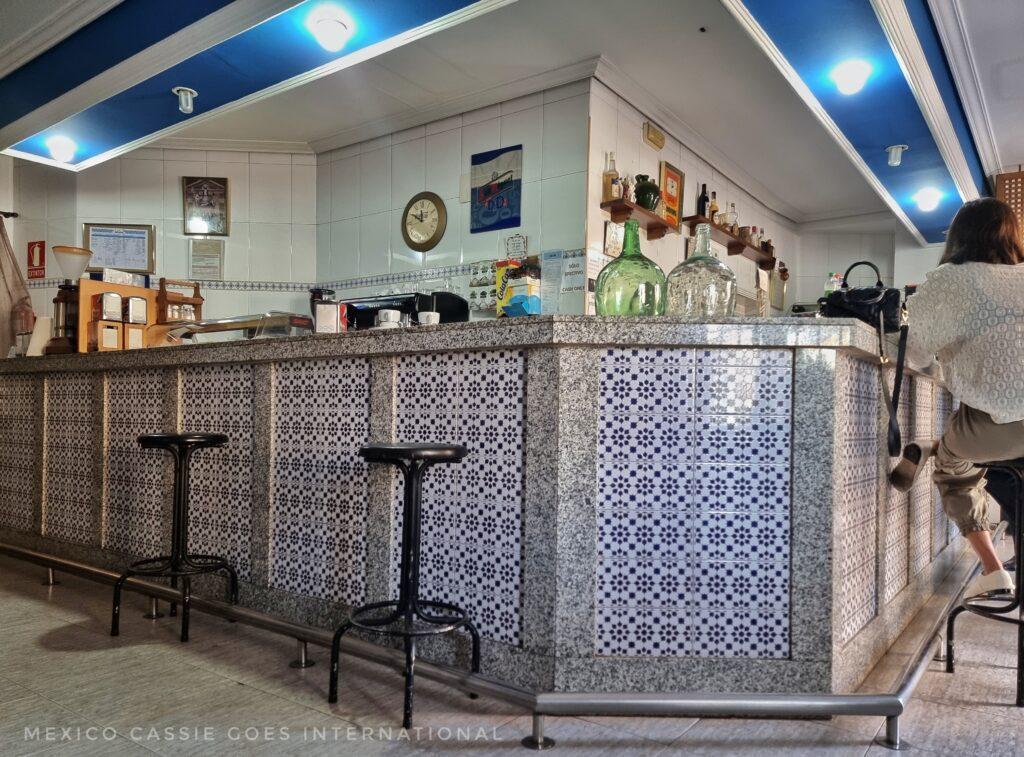
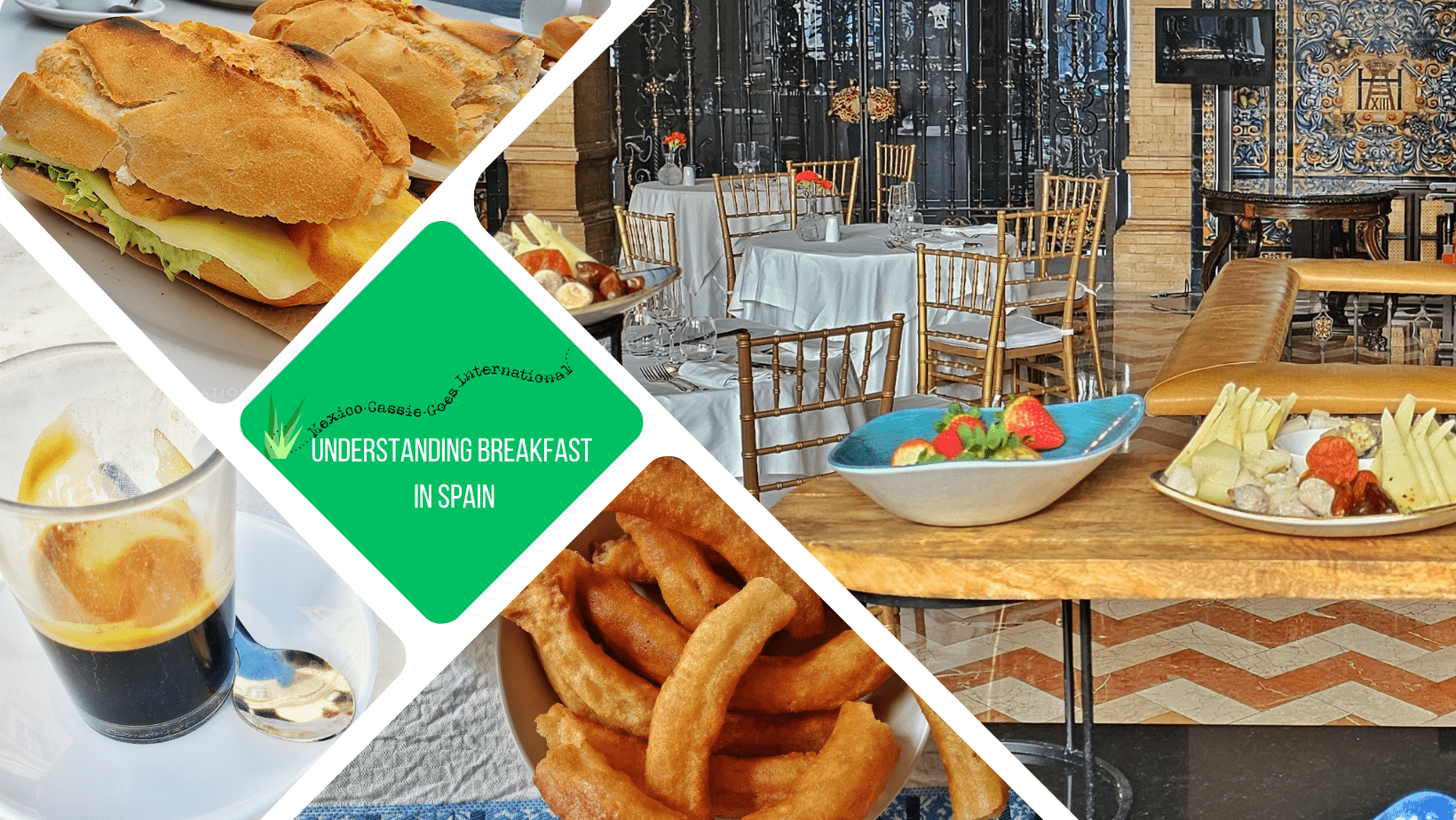
Typical Spanish bar in Córdoba⬆, exquisite brunch buffet in 5⭐️ hotel in Sevilla ➡
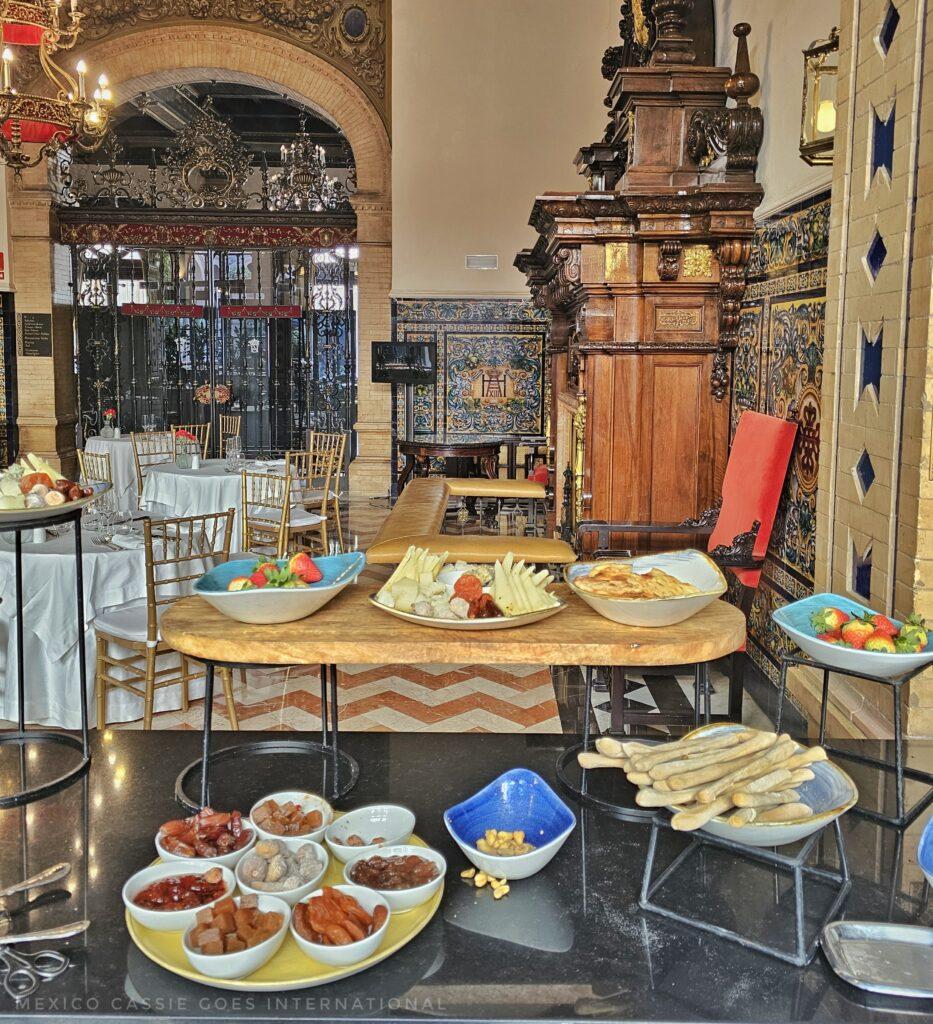
🏨 If you’re staying in a hotel that offers buffet breakfasts you’re likely to find a spread more or less like anywhere else in the world: a mix of cuisines catering to everyone’s tastes (yes, even baked beans for my fellow Brits 😉). The buffet in the photo above is in the Alfonso XIII hotel in Sevilla, which in my opinion, offers one of the best Sunday brunches I’ve ever had, anywhere in the world.
🏠 If you’re staying in an apartment then you’ll have the option to prepare breakfast for yourself, most likely by heading to the supermarket or the local panadaría and picking up something akin to what you’d eat at home.
And of course, don’t forget to book all your hotels & apartments through my links to help keep my blog free, accurate and alive – thank you!
📲 If you’re considering an eSIM, read the full MexicoCassie eSIM review and use this 10% discount code to buy yours.
🥓 In big cities, you will find brunch places serving mostly the tourist crowd. I’ll quietly add that many of them focus on Instagram aesthetics over quality and that there has been some push back from locals who aren’t excited about the traditional Spanish breakfast being erased by a globalised brunch ideal.
⭐️ So, if you’re feeling brave, I highly recommend enhancing your Spanish vacation by trying the traditional Spanish breakfast.
🍽️ Note that you’ll rarely find a menu at breakfast, you’re just expected to know more or less what there will be, which is why this article will become your best friend.
👣 You can actually take a breakfast tour if you’re in Sevilla, or in Córdoba where you can learn about the various different breakfast options.
→ Read the MexicoCassie tips to ensuring a smooth trip to Spain
🕣 Breakfast timings
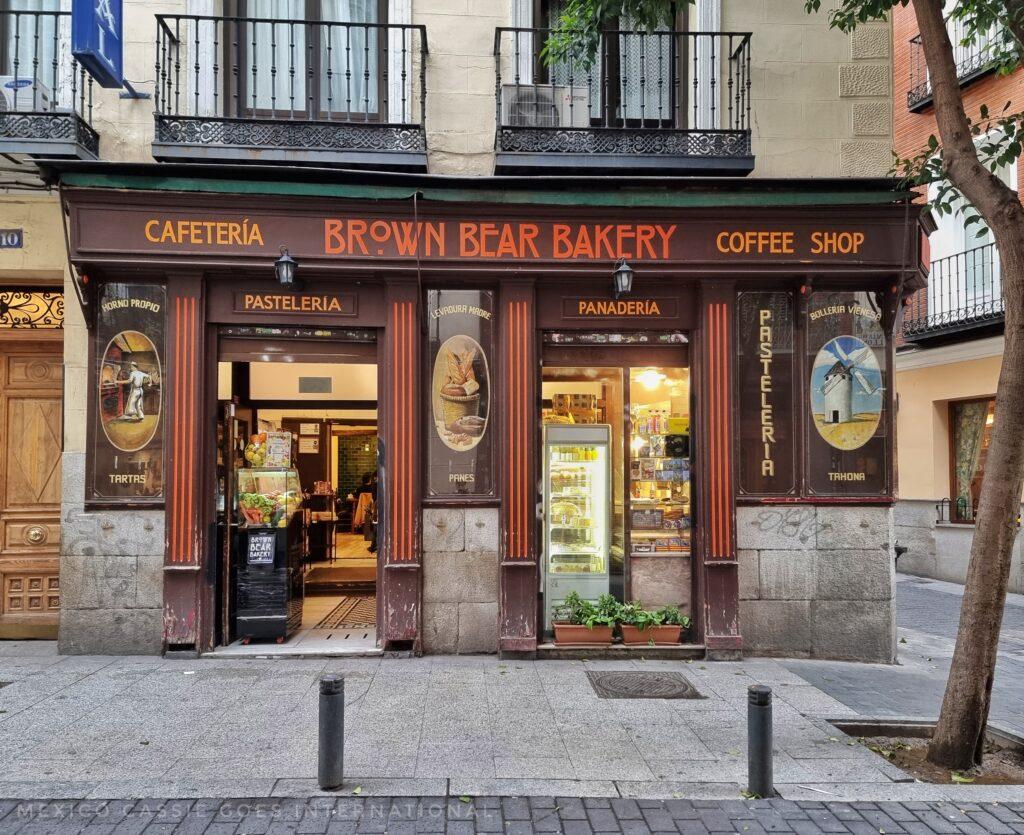
Cafes don’t always open as early as you might expect or hope, often not opening until 8 or 9am unless there is a specific local need so if you have an early start planned, I recommend knowing where you can eat in advance or having something in your room.
☕️ Your morning coffee
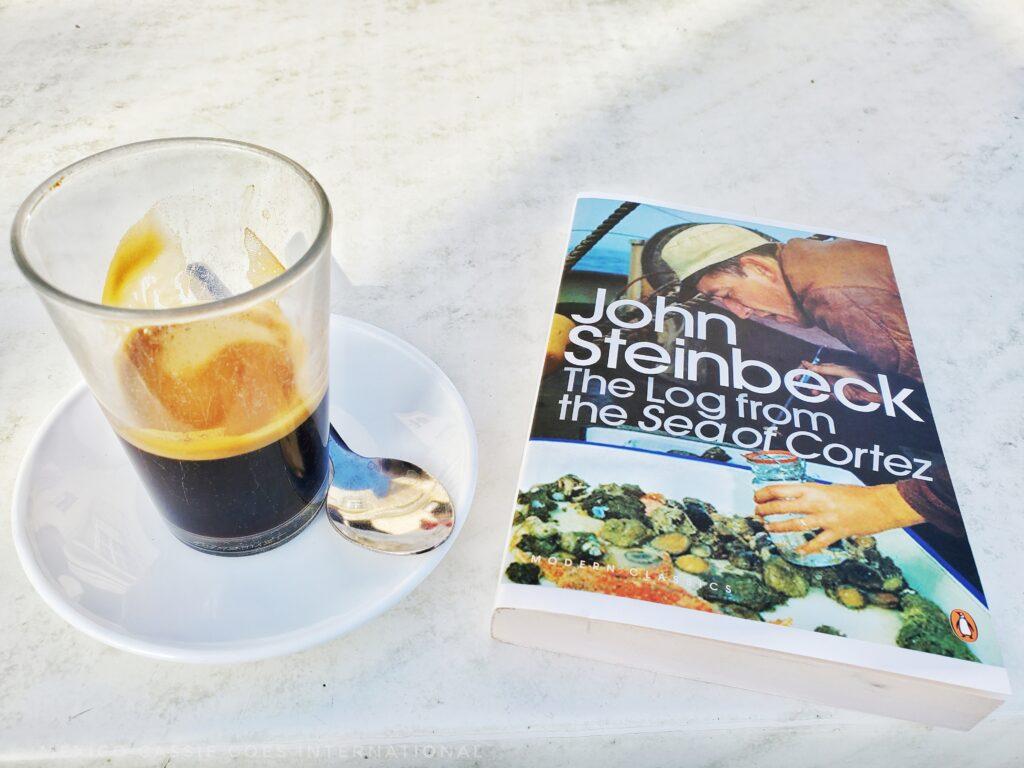
Coffee matters, so it’s important to know how to order it, if you want to start your day off right.
Coffee in Spain tends to be espresso coffee. It’s strong and it’s potent. It’s also probably going to be more bitter than you’re expecting. This is because the beans used are very often a mix of torrefacto and untreated beans.
What is torrefacto?
It’s the adding sugar to the coffee beans during roasting. The sugar burns and leave the beans darker, which helps to preserve them longer (as well as making the coffee more bitter than coffee in other countries).
The torrefacto process arrived in Spain from Mexico during the early 20th century and became popular after the Spanish Civl War when there was a severe coffee shortage. By roasting this way, the lower quality beans could be hidden. And guess what? Today, almost 100 years later, the Spanish are quite simply, used to this flavour.
You can get non-torrefacto beans in speciality coffee shops and if you’re carefully reading labels in the supermarket or buying speciality coffee. But yeah, in the regular breakfast cafes, I’m afraid you just have to get used to it.
How to order coffee in Spain
Café solo – straight up power in a small, hot glass (photo above). This is what I drink when I go out for breakfast. Sometimes I have two. And then I work hard and fast, all day long.
If you don’t think you can keep up with me, coffee-wise, you can ask for your coffee with milk or water.
Café americano – the café solo with extra water
Cortado – the café solo with a dash of milk
Manchado – the Spanish equivalent of a macchiato. More milk, less coffee (basically a coffee milkshake in my bad-ass coffee drinking opinion 😉). Manchado means ‘stained’ by the way.
Café con leche – half espresso, half milk (leche caliente – hot milk if you need)
Cappuccino – rarely good in Spain according to milky coffee drinkers. I’ve even seen people be handed a ‘cappuccino powder to add to their milk’
Carajillo – café solo with alcohol (depends on what the café chooses to put in but normally brandy)
Descafeinado – decaf, a great idea if you want to sleep (add this word to any of the above options)
Café con hielo – iced coffee but be warned that this is probably not what you’re expecting. If you ask for a café con hielo you’re most likely going to be handed a café solo and a glass of ice. You pour the coffee over the ice, accept that you’ll be making a mess as you do it and then drink (maybe adding sugar if you need).
🥛 A note on your milky needs – except in trendy places, don’t expect much in the way of milk choices. You may be offered desnatada (dairy free) or possibly leche de avena (oat milk) but if you have specific needs, it might be worth travelling with your own milk. Sorry.
🛒 You can stop in at a supermarket and buy small cartons of your milk choice to carry with you, it’s not ideal but it at least a solution of sorts.
Other breakfast drink options
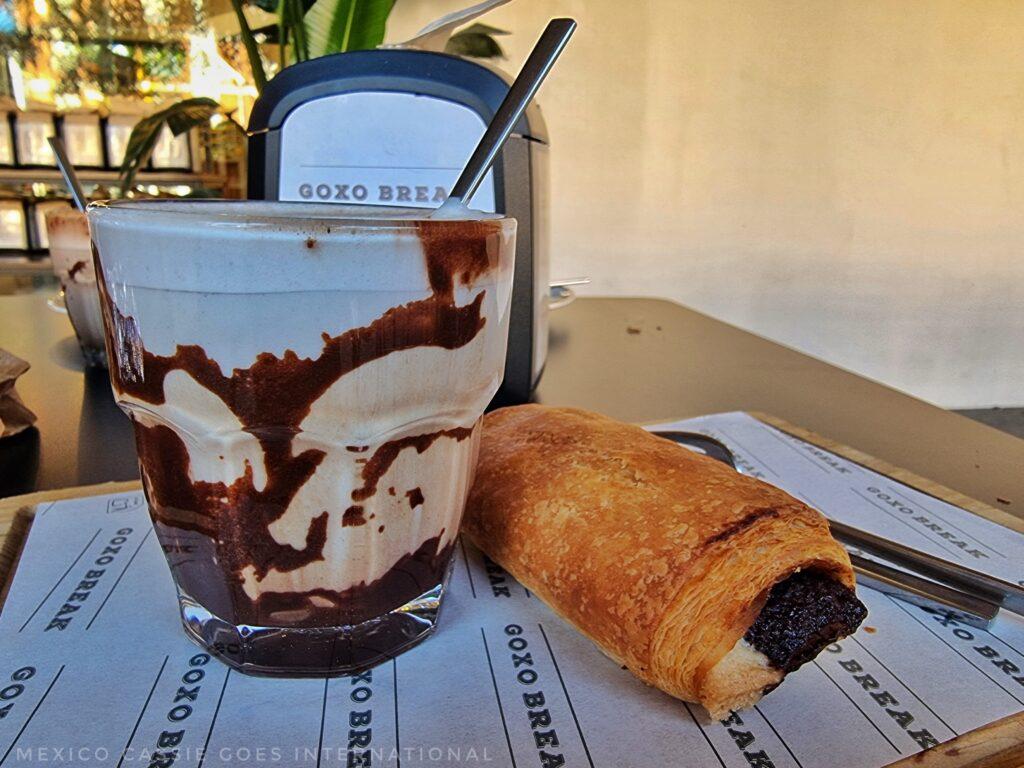
Breakfast in a small town near Bilbao, Eusakadi
And if you don’t want a cup of coffee, you can order
🍵 Té/infusion– tea/infusion. Honestly, I’ve never ordered tea in a cafe (because there’s coffee). There will pretty much always be té de menta or menta de poleo – mint tea, manzanilla – chamomile. Ask for té con leche if you want a cup of milky tea.
🍊 Zumo de naranja – fresh orange juice, usually squeezed upon request but sometimes served in bottles. You can ask if it’s ‘fresco, o de botella?’ (fresh or from a bottle?) to find out.
🍫 Cola-Cao – this is essentially Spanish Nesquik and kids go nuts for it (photo above). You receive a glass of milk and a packet of chocolate powder to mix in yourself. You’ll also see adults order it so if you are a hot chocolate fan, go for it!
🍺 Beer – you may sometimes see people drinking beer at breakfast. My assumption is that it’s non-alcoholic, but who knows. If you want to join in, ask for ‘una caña’ (with alcohol) or ‘cerveza sin alcohol’ (without).
Ok so now we’ve got your drinks sorted, let’s look at the typical Spanish breakfast options
The breakfast menu (without a menu)
Pan/pan tostado/tostadas
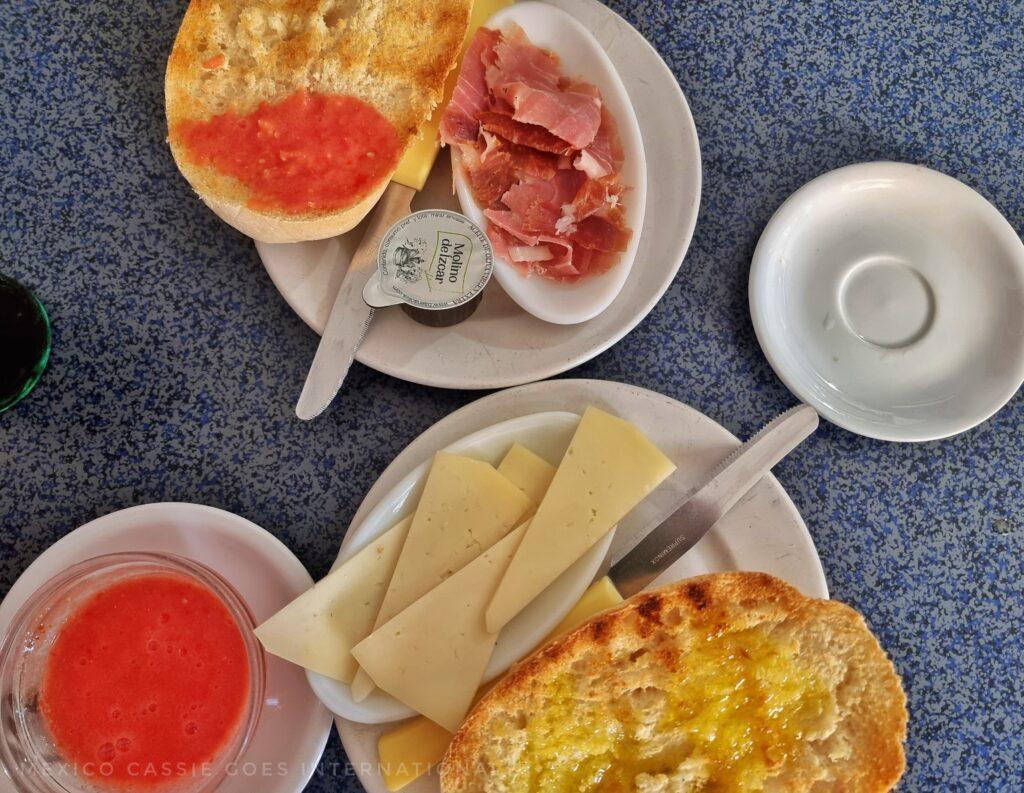
Breakfast revolves around bread or toast. Sometimes you can choose your bread, sometimes there is a display of options so you can point if you don’t know the correct words, sometimes you’ll need to tell the wait staff whether you want pan normal (regular white roll) or integral (whole wheat).
You’ll also need to decide if you want entero o medio (full portion or half portion – photo above is of two plates, each with a half portion of bread).
Some places will have their local bread on offer too, like in Antequera where they’re famous for their molletes (soft fluffy flattish rolls). My town, Alcalá de Guadaíra is a town famous for its bread, too.
⚠️ A quick bagel warning: if you love bagels you may be disappointed in Spain. I’ve yet to find a ‘bagel’ that is more than round bread. It doesn’t matter how trendy or cool the restaurant is, or what they claim, thus far I’ve not had a real bagel in Spain – if you know of anywhere, feel free to let me know 😉
So what do we put on this bread?
🍅 Tomate y aceite (tomato and olive oil)
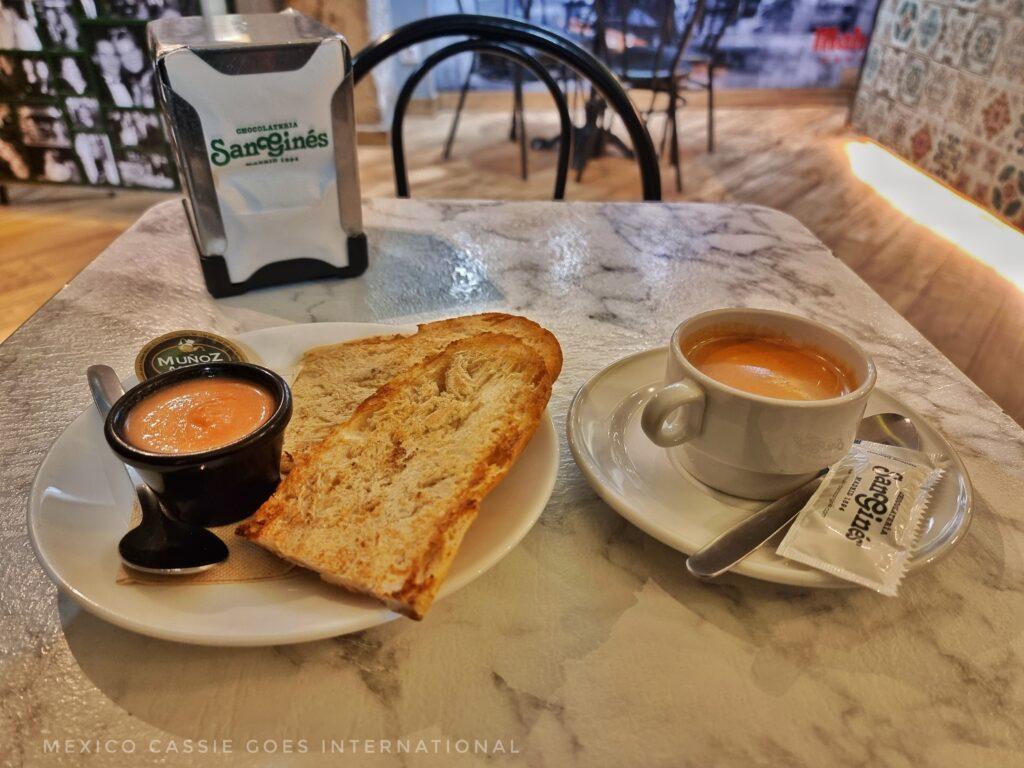
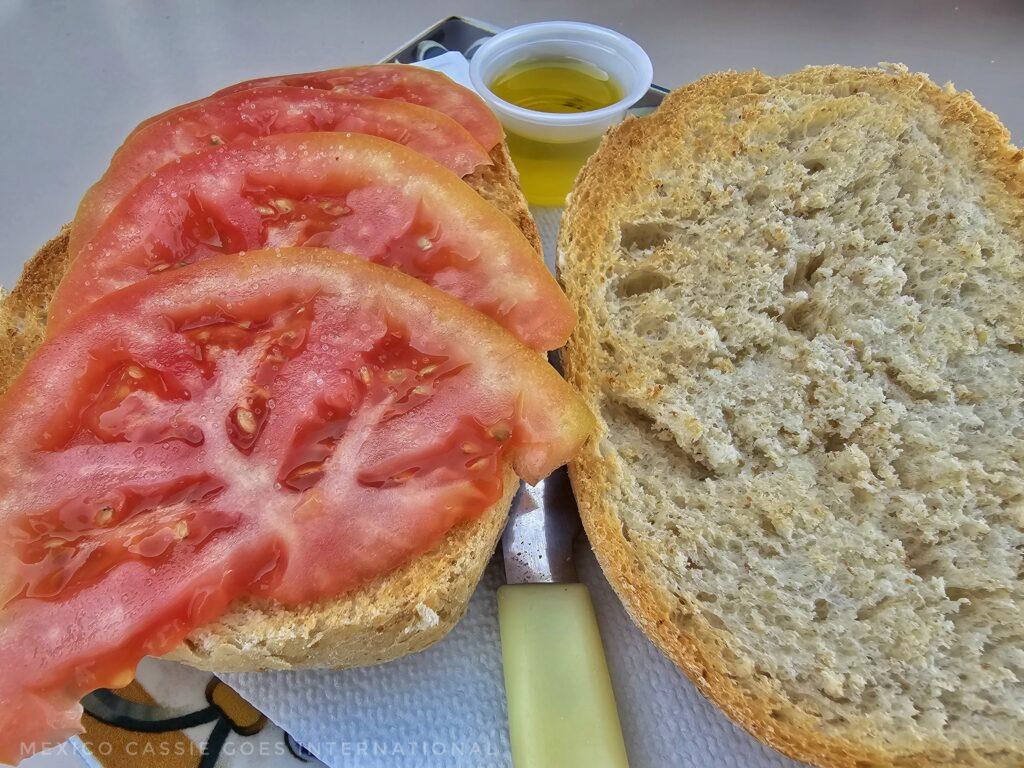
Breakfast in Madrid left, and breakfast in Sevilla, right
The most popular breakfast across Spain is the beautifully simple pan con tomate y aceite (bread with tomato and oil).
You’ll probably be asked if you want ‘rallado o triturado‘?
Rallado – sliced (right)
Triturado – grated (ends up liquidy – seen in left, photo above)
🍅 Tomatoes
Ahhhhh, Spanish tomatoes, a true obsession of mine. I love going to a frutería or the supermarket to check out the varieties of tomato available on any given week.
Tomatoes are integral to Spanish cuisine, in fact, Spain is the largest consumer, producer and exporter of tomatoes in the EU.
Quick pause here to acknowledge that tomatoes are not native to Spain, they were brought to Spain in the 16th century from Mexico – ooooh, interesting, both the coffee and tomatoes have a strong Mexican link.
The Spanish are so delightfully obsessed with tomatoes that there are two tomato festivals worth noting: the Tomatina in Buñol, Valencia (in August) where people through tomatoes (poor quality ones) at each other. And the Feria del Tomate in Cántabria (also August), a festival for heirloom tomato lovers.
If you are lucky enough to spot black tomatoes in the supermarket or the market, you have to try them. They come from Almería and are scrummy.
Tomato tours
🍅 If you’re in Barcelona in August you can take a tomatina day trip to experience the tomato-y fun of the festival
Are you finding my travel guides helpful?
Every donation helps me keep them online!
🫒 Olive Oil – an integral part of Spanish history
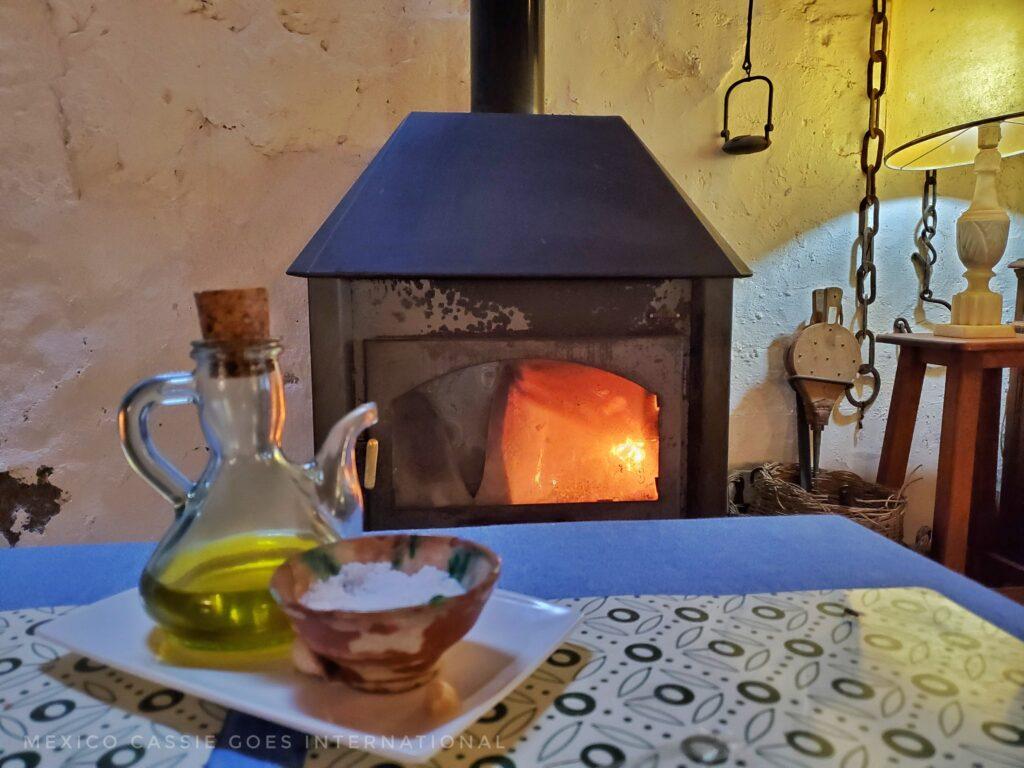
Olive oil and salt on a table in a hotel in Andalucía and olives growing in Sevilla
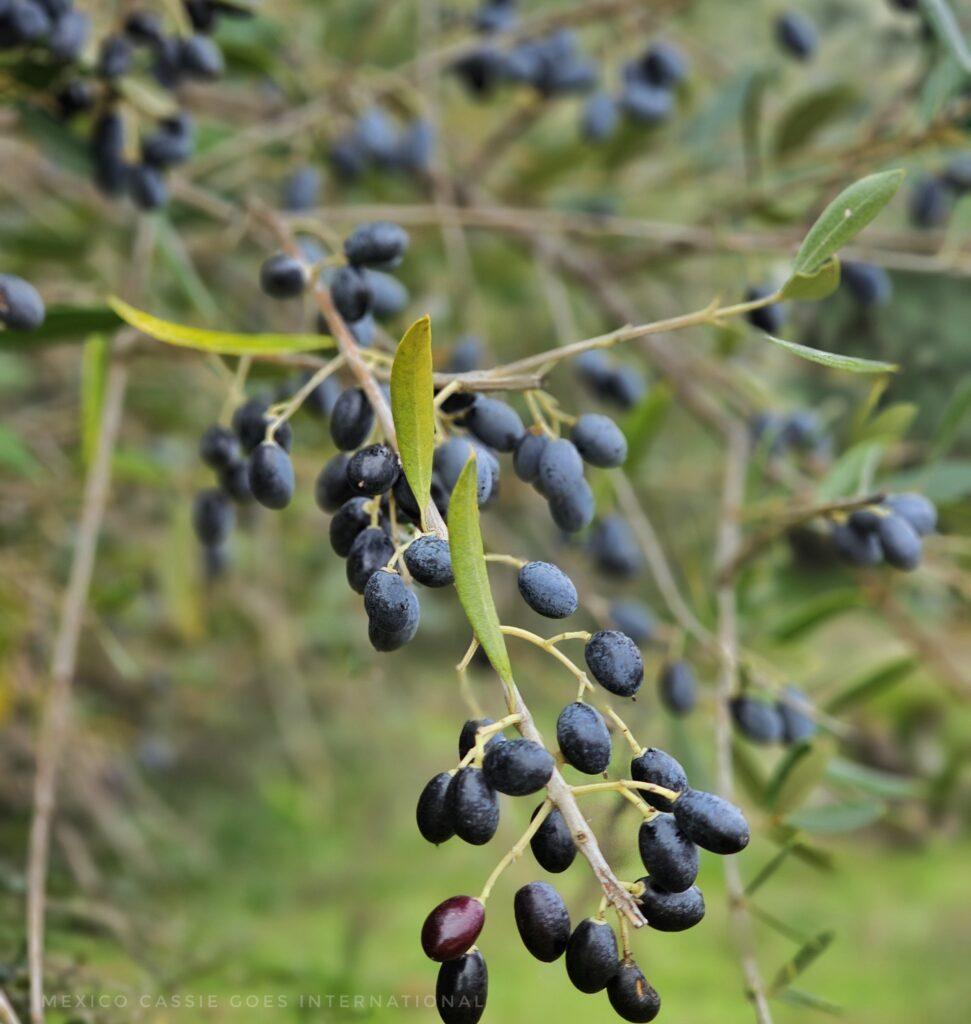
This isn’t just something you whack on your bread, oil is an important part of breakfast, and of course, of life in Spain.
Spanish people (rightly) love their olive oil and you’ll find it in every cafe you enter so don’t be afraid to taste it, enjoy it and definitely cover your morning toast in it.
Remember that olive oil is a staple of the Mediterranean diet and that it is nicely healthy, being high in monounsaturated fatty acids, vitamins and antioxidants – it can actually lower cholesterol and the risk of heart attacks and strokes.
Olives arrived in Spain with the Phoenicians around 1,000 BCE. And when those pesky Romans (yeah I’m on a big anti-Roman kick right now even if I do love visiting their ruins) occupied Spain they saw an opportunity and basically turned Spain into their olive oil hub. The Moors then arrived in the early 8th century and brought their advanced processing techniques with them, creating the beginnings of the Spanish olive oil industry we have today.
Olive oil tours
🫒 There are literally dozens of olive oil tours across Andalucía.
→ This tour from Málaga is very well regarded – it’s a 90 minute tour of an historic olive oil mill with tastings.
→ In Córdoba, this small group olive oil tasting and breakfast tour gets great reviews.
→ And from Zaragoza, this tour of a vineyard and olive orchard is a wonderful day adventure
🧄 Garlic
In Cataluña they rub garlic on the toast before adding the tomato and salt, this is called Pa amb tomàquet. At home this is what I eat every day.
🐗 Jamón (Ham)
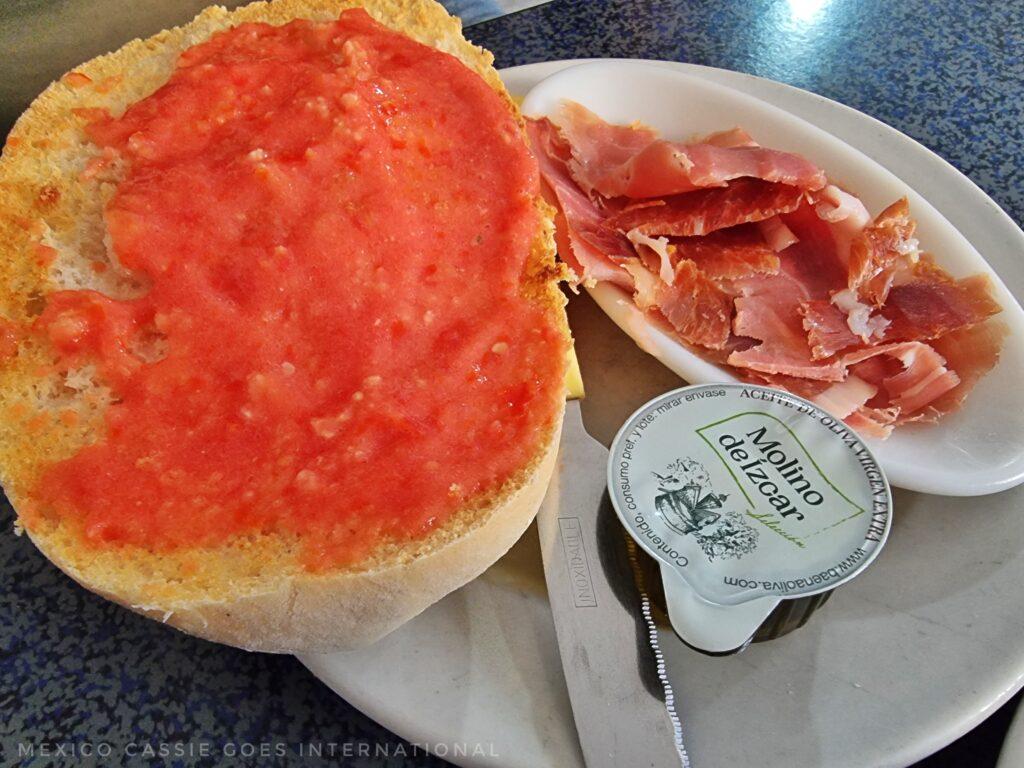
The other extremely popular ingredient to add to your breakfast toast is ham, and if you know anything about Spain, you know that they take their jamón extremely seriously. It’s on a par with football in terms of national importance.
Obviously in a country that takes its ham so seriously, there are different types and qualities of ham. The truth is that in a basic breakfast you aren’t getting the best of the best. It’ll still be good but it won’t win awards.
🥦 Of course, not everyone eats ham, if you don’t, for whatever reason, you can use the MexicoCassie guide to finding vegetarian food in Spain to help you avoid it (because ham tends to hide in many unexpected places).
Jamón Serrano o Jamón Iberico
Jamón Iberico – just 7% of ham produced in Spain is Iberico. It comes from cerdos ibericos, a dark haired pig with black hooves. This pig arrived in Spain at the same time as the first olive trees with the Phoenicians. And the very best (best means tastiest at this point) of the Ibericos are those that have a diet of acorns (bellotas).
Jamón Serrano – makes up most of the ham you find in Spain. It comes from the standard pink pig that’s actually called the cerdo blanco (because it has white hooves). These pigs are raised specifically for the mass production of pork products.
There’s plenty more to know about ham in Spain but it doesn’t need to be in an article about breakfast. 😉
I once took out a packet of extra strong mints while walking in a park with a Spanish friend and told her that was basically what all English people have in their pockets. She laughed and asked if I knew what all Spanish people keep in their pockets. I said it was probably ham. She laughed, I laughed and I never got a no. So now I firmly believe that all Spanish people walk around with pockets full of ham.
There are even a couple of ham museums in Spain, including in Aracena in Huelva (one of my favourite small towns in Andalucía) and the other in Madrid.
Ham tours
→ In Madrid you can take a ham and wine tasting tour to learn about the different types of ham, how they’re cured and where they come from.
→ From Sevilla, this Iberian ham tasting tour to Aracena is a delicious day out.
➕ you can generally also ask for:
con mantequilla y mermelada – butter & jam
queso – cheese (usually this will be a hard cheese)
queso fresco – fresh cheese, which goes extremely well with the tomato
manteca – pig lard (very traditional in Andalucía)
pringa – a mix of various slow cooked meats that are shredded. This is something kids tend to love
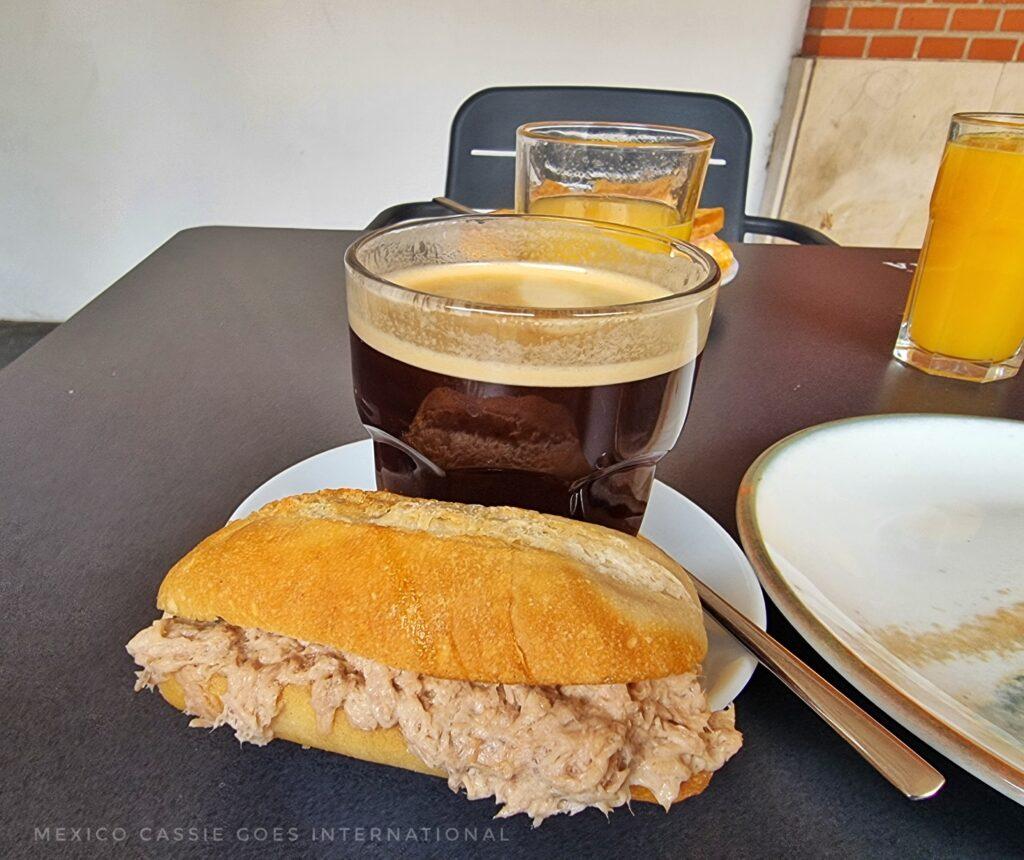
& depending on what else the bar feels like serving there may be other options too. An extremely popular traditional breakfast spot in my town offers ham and fried egg sandwiches. And in Bilbao, I ate amazing tuna sandwiches for breakfast (photo above).
Tortilla
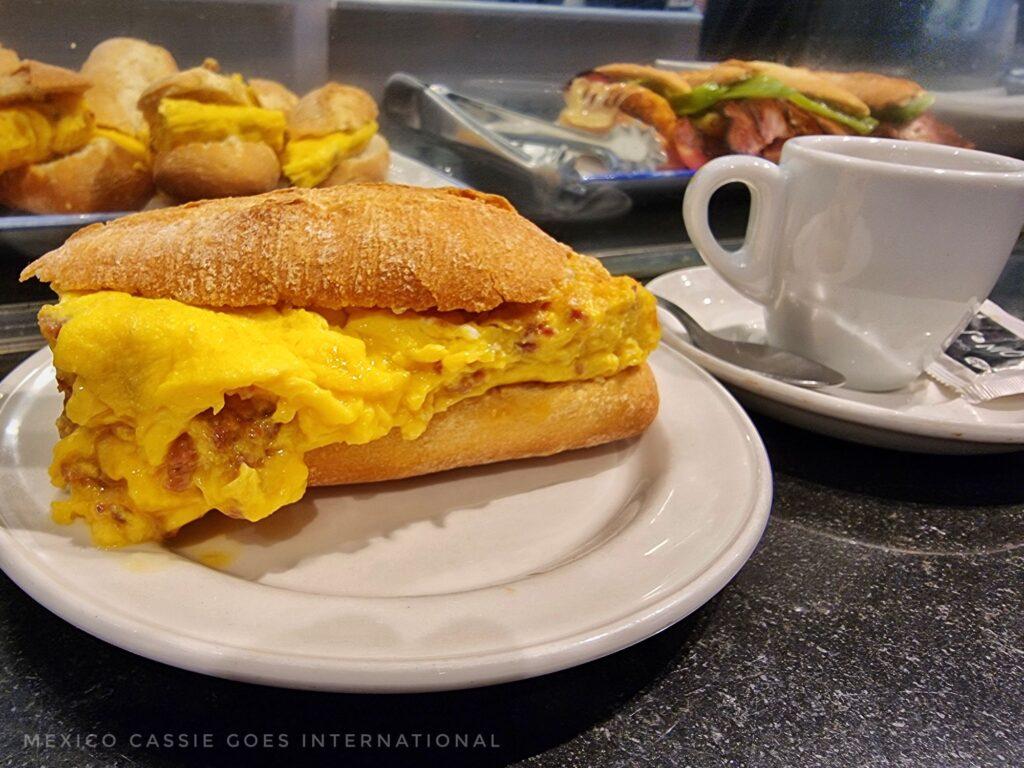
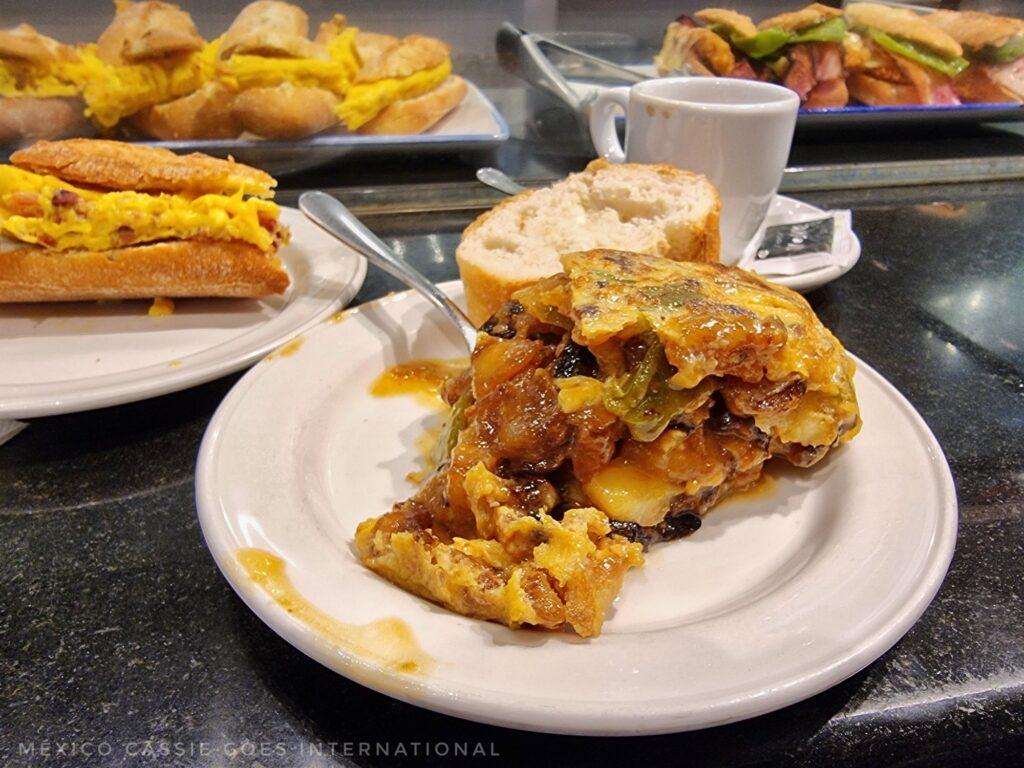
Also known as a Spanish omelette, or Spanish tortilla, this is a popular breakfast dish primarily in Euskadi, Galicia and Madrid. Sometimes it’s served as a slice on your plate, other times it comes in a sandwich (bocadillo).
Tortilla is a delicious dish made up of potatoes, egg and oil. It was apparently invented in Extremadura but is now one of the most typical Spanish dishes you’ll find anywhere in the country.
There are, of course, variations. Some people believe the dish should be only potato and egg while others believe it should include onion too (me, for example). Others add spinach, chorizo, even peppers. And some people like it dry, others gooey and perfect. I’ve never actually met a tortilla of any consistency I didn’t love.
I had the best tortilla of my life in San Sebastián-Donostia (same place, more than once, both photos above) in a tiny cafe where I knew I had to show up before the cafe opened to guarantee I’d get a slice. This tortilla is so popular and the locals all want to eat it before they go to work. I did. I got out of bed early and dragged my sleepy self half way across the city for this tortilla. And yes, yes, yes, it was worth every minute of sleep I lost. Both times I went. I still dream of this damn tortilla.
Chocolate con churros
Want MexicoCassie to take a look at your travel plans?
Of course you can plan your own trip, that’s why you’re here using my guides! But an expert pair of eyes can be extremely useful when you’re feeling overwhelmed, simply have too many ideas, or you’re not quite sure where to begin.
I offer informal & fun travel planning sessions, bespoke itinerary planning and AI itinerary checking, all based on my many years of travelling and adventuring.
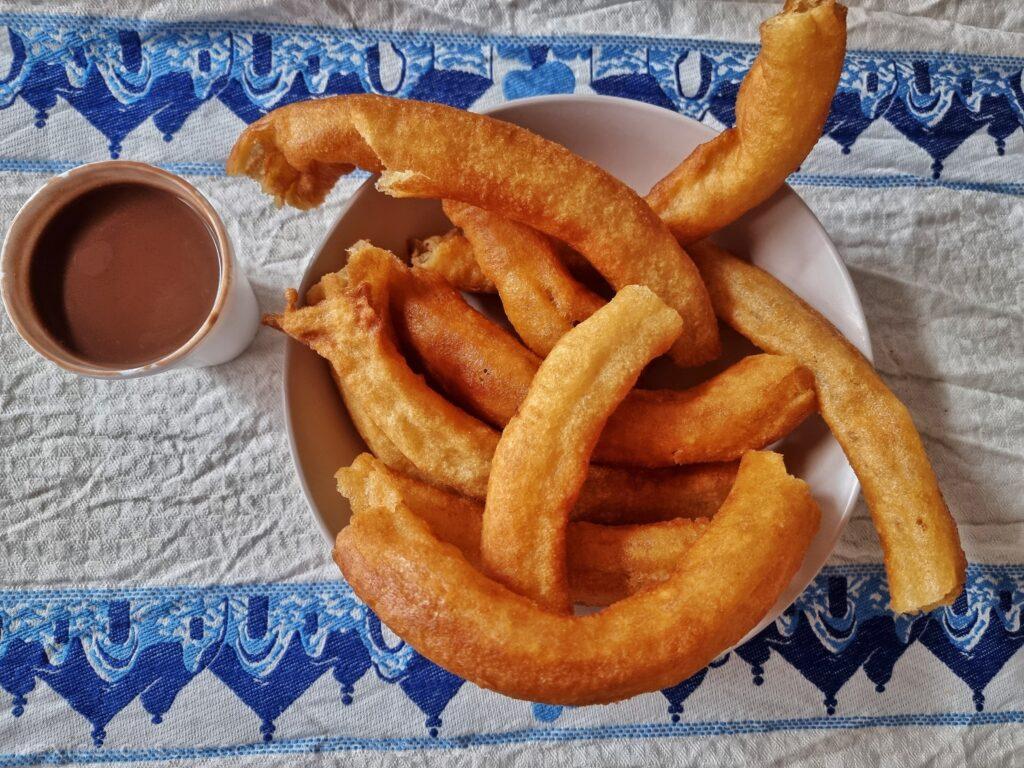
Probably this is something you’ve been waiting for me to get to. The sweet stuff. Not my favourite. I don’t love sweet breakfasts but pretty obviously, my kids do and since we have a churreria just two doors from our house, you can imagine that they beg me pretty often to get churros at the weekend.
Churros (or the slightly more doughy porras*) are a sweet fried doughy stick type snack that you dip in a cup of thick hot chocolate. The ones in the photo above come from the place next door to my house. In Andalucía, this despite being typically called a porra elsewhere, is a churro here. In the north, churros tend to be thinner, with ridges and coated in sugar.
My kids beg for them regularly but I think their favourite churros moment ever was when I surprised them with the offer of churros and hot chocolate after we completed a really wonderful snow hike down a mountain in the Sierra Nevada.
*not to be confused with porro, trust me (a joint). First the porro, then the porra)
Churros tours
→ Learn to make churros and chocolate the traditional way in Madrid
→ Take a two hour churros focused walking tour in Barcelona
→ Or, enjoy a churros, vermut and more walking tour in Sevilla
📚 🇪🇸 Read more of MexicoCassie’s Spain guides
→ MexicoCassie guide to whether Spain is safe for tourists
→ MexicoCassie guide to driving in Spain
→ MexicoCassie guide to driving in southern Spain
☕️ MexicoCassie guide to vegetarian tapas, to breakfast and to feeding the kids
📲 MexicoCassie guide to using an eSIM in Spain
⭐️ Tips to help when you visit Spain
Sevilla
⭐️ What is Sevilla famous for? | ⭐️ How many days do you need in Seville? | ⭐️ Everything about the Seville airport bus
⭐️ 1 day in Seville | ⭐️ 3 days in Seville | ⭐️ 5 days in Seville | ⭐️ How to visit Seville in the summer | ⭐️ How to visit the Alcazar | ⭐️ Quirky Seville | ⭐️ 5 alternatives to the Alcázar
⭐️ Best beaches from Seville | ⭐️ Day trips from Seville | ⭐️ Seville with kids | ⭐️ Seville with teenagers | ⭐️ How to see flamenco in Seville | ⭐️ Best family friendly tours in Seville | ⭐️ Exploring Sevilla Province
➕ Hire MexicoCassie as your amiguía for the day in Sevilla or Alcalá de Guadaíra
Málaga
⭐️ 3 days in Málaga | ⭐️ 1 day in Málaga | ⭐️ Day trips from Málaga | ⭐️ 1 day in Ronda | ⭐️ 1 day in Ronda with kids | ⭐️ What to do in Antequera | ⭐️ Exploring Málaga with kids
Córdoba
⭐️ What to do in Córdoba | ⭐️ Planning your Córdoba day trip from Seville | ⭐️ Day trips from Córdoba | ⭐️ Exploring Córdoba with kids | ⭐️ 1 day in Córdoba | ⭐️ Zuheros, the most beautiful village in Córdoba
Cádiz
⭐️ What to do in Cádiz province | ⭐️ How to spend 1 day in Cádiz city | ⭐️ What to do in Cádiz with kids | ⭐️ Day trips from Cádiz | ⭐️ Exploring Tarifa | ⭐️ How to get to Tangier from Tarifa | ⭐️ Exploring Gibraltar | ⭐️ What to do in Jerez de la Frontera
Huelva
⭐️ Is Huelva worth visiting? (YES) | ⭐️ What to see in the gorgeous Aracena
Granada
⭐️ Planning your Granada city break | ⭐️ Granada with kids | ⭐️ 2 days in Granada | ⭐️ How to explore Guadix and its cave houses
Almería
⭐️ Things to do in Almería City | ⭐️ What to do in Almería with kids | ⭐️ Is Almería worth visiting? | ⭐️ Figuring out the Almería beaches
Community of Valencia
⭐️ 1 day in Valencia | ⭐️ 2 days in Valencia | ⭐️ Museums in Valencia ⭐️ Day trips from Valencia | ⭐️ Valencia with kids
Community of Madrid
⭐️ Why should you visit Madrid | ⭐️ Spending 5 awesome days in Madrid | ⭐️ 3-day Madrid itinerary
Castilla y León
⭐️ Segovia, a perfect day trip from Madrid | ⭐️ How to visit Medina del Campo | ⭐️ How to visit Zamora
Euskadi (Basque Country)
⭐️ What to do in the Basque Country | ⭐️ Excellent things to do in San Sebastián | ⭐️ Is San Sebastián worth visiting? | ⭐️ How many days do you need in San Sebastián? | ⭐️ Day trips from San Sebastián | ⭐️ San Sebastián with kids | ⭐️ Is Bilbao worth visiting? | Planning and taking day trips from Bilbao | Why Vitoria-Gasteiz is worth visiting?
Picos de Europa
⭐️ Road trip itinerary for the Picos de Europa | ⭐️ Planning for a trip to the Picos de Europa | ⭐️ Las Arenas de Cabrales | ⭐️ Visiting Potes
Extremadura
⭐️ Everything you need to explore Monfragüe | ⭐️ What to do in Mérida | ⭐️ What to do in Cáceres | ⭐️ How to visit Plasencia | ⭐️ Visiting Zafra (Sevilla Chica) | ⭐️ What to do in Badajoz | ⭐️ How to visit Jerez de los Caballeros | ⭐️ Extremadura road trip
Galicia
⭐️ What to do in Ferrol | ⭐️ Everything you need to visit Santiago de Compostela | ⭐️ Great reasons to visit A Coruña | ⭐️ Northern Galicia road trip
Cataluña
⭐️ Road trip around Girona Province | ⭐️ Spending 1 day in Girona | ⭐️ 1 day in Barcelona | ⭐️ How to visit Castellfollit de la Roca
La Gomera (Canary Island)
⭐️ Hiking on La Gomera | ⭐️ La Gomera with kids | ⭐️ Take a day trip to La Gomera