How to visit Plasencia, Extremadura
Plasencia is a delightful small town in the north of the Autonomous Community of Extremadura.
If you have time for a trip, you won’t regret it, Plasencia is a delightful place to wander around, absorbing history and getting away from the crowds.
One of the things I really love about it is that it’s barely on any tourist route, certainly not one many foreigners are following but you may find a few Spanish tourists here and there. And this, in my opinion is what makes it a great place to visit for a gentle day or two experiencing another side of Spain.
We visited for a day when we were exploring northern Extremadura and the magnificent Parque Monfragüe. I also persuaded my parents to visit when they were driving home from visiting us in Sevilla.
Quick overview of what to expect from Plasencia
There are affiliate links in this article. If you click and make a purchase I could make a small sum at zero cost to you. Thank you!
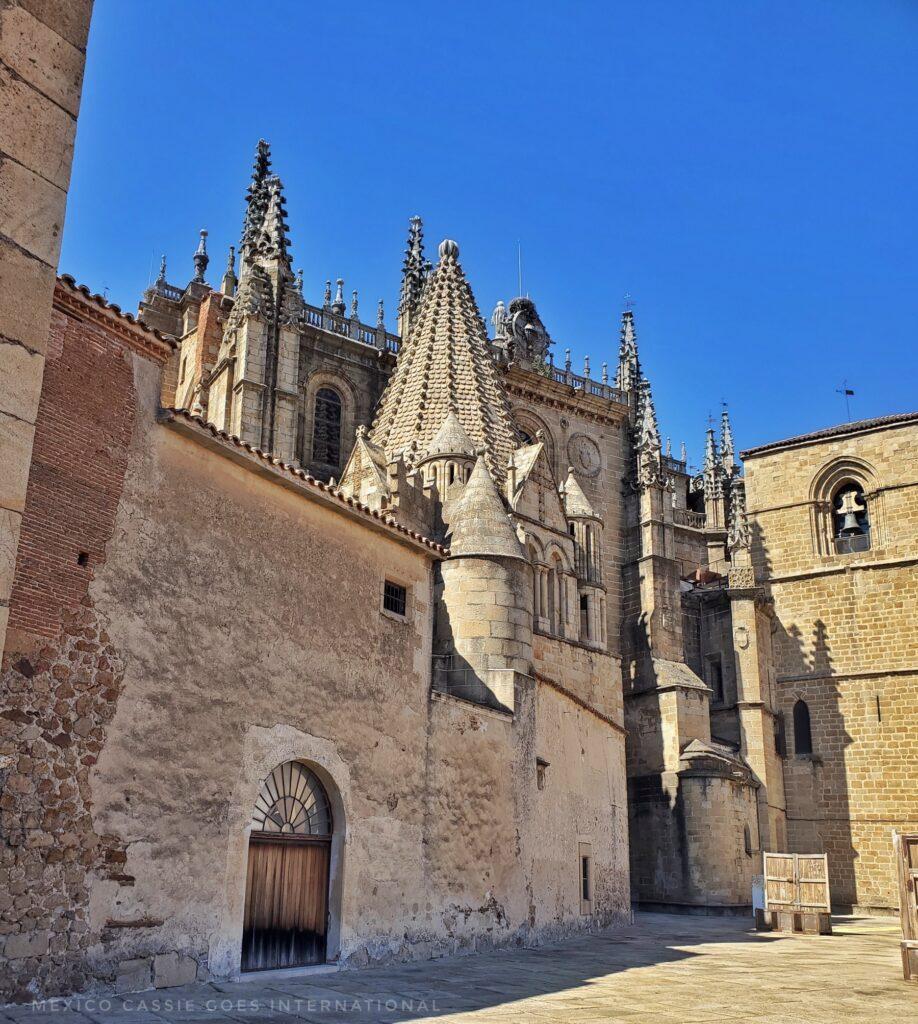
If it’s famous for anything, it’s for its ‘twofer cathedral’ but as you’ll see as you read on, there’s more to this town than its weird hybrid cathedral.
Despite being a small town with a population of around 40,000, Plasencia is one of the four main population centres in Extremadura – Badajoz, Mérida, Cáceres, and Plasencia. Its historic centre has been named a Spanish cultural heritage site.
A few interesting historical facts
→ The city of Plasencia was founded by Alfonso VIII of Castilla in 1186 as a strategic move during the Conquista (technically called the Reconquista but I don’t agree with this terminology).
→ There have been settlements on this site for far longer than there have been catholics. Remains of Arab buildings have also been found here and it is thought that there were neolithic settlements on this site too.
→ At the end of the 13th century, the Fuero de Plasencia was granted. This document supposedly focused on the importance of coexistence between Christians, Muslims and Jews and led to the formation of a large Jewish community in Plasencia, in fact, the largest in Extremadura. As you walk around the town you’ll see references to this long since expelled Jewish community.
→ During the Spanish War of Independence (1808–1814), Plasencia was occupied twelve times by the French who extorted the residents, and did significant damage to the city.
Where to stay in Plasencia
🏨 MexicoCassie top recommendation: Parador de Plasencia – a restored 15th century building with a rooftop pool, beautiful rooms, private parking and great breakfasts. This is the best place to stay in Plasencia. My parents stayed here and rate it extremely highly – they love a good restored palace or castle.
🏨 MexicoCassie (pet friendly) recommendation: Palacio Carvajal Girón – this 17th century restored palace in the centre of Plasencia offers delicious buffet breakfasts, private parking, and a dipping pool in the terrace.
🏨 MexicoCassie recommendation: Dorma Alfonso VIII – another beautiful hotel with great bedrooms and a wonderful breakfast. There is no pool at this hotel, hence the slightly cheaper price.
🗺️ Or, use the interactive MexicoCassie map to find your perfect accommodation in Plasencia.
How to get to Plasencia
Plasencia is located half way between Madrid and Lisboa. It also sits at the midpoint of many important roads running through western Spain. It’s 2hr40 by road from Madrid and 3hr10 by train. It’s a two hour drive from Badajoz.
We drove to Plasencia from Parque Monfragüe on excellent roads with truly breathtaking views.
→ Read the full MexicoCassie guide to road tripping in Extremadura
Drive
🚗 Driving between cities in Spain is a delight – the roads are excellent and there is generally not too much traffic.
→ Read the full MexicoCassie guide to driving in Spain
→ Check car rental prices and availability now
📲 If you’re coming to Spain from outside of the EU you’ll need to consider your SIM options before you arrive, especially if you are planning on driving – read the full MexicoCassie review of using an eSIM in Spain to figure out if an eSIM is a good option for you.
🅿️ I recommend, as I do with all Spanish cities, figuring out where you want to park before you set off. This is a good option in Plasencia – it’s safe, good sized spaces and not far from the old city.
Public Transport
🚌 The bus station is a 15 minute walk from the city centre and there are direct buses from many cities including Madrid, Sevilla, Santiago de Compostela and more.
→ Check bus timetables and prices now
🚆The train station is a 20 minute walk from the city centre. There are direct trains from cities such as Madrid and Sevilla.
→ Check train timetables and prices now
What is there to do in Plasencia
As is the norm with visiting Spanish towns, you’ll want to head to the casco histórico, the old city, as this is where the ‘action’ is (but remember that there is no action, this is an adorably small and quiet town).
Visit the hybrid cathedral
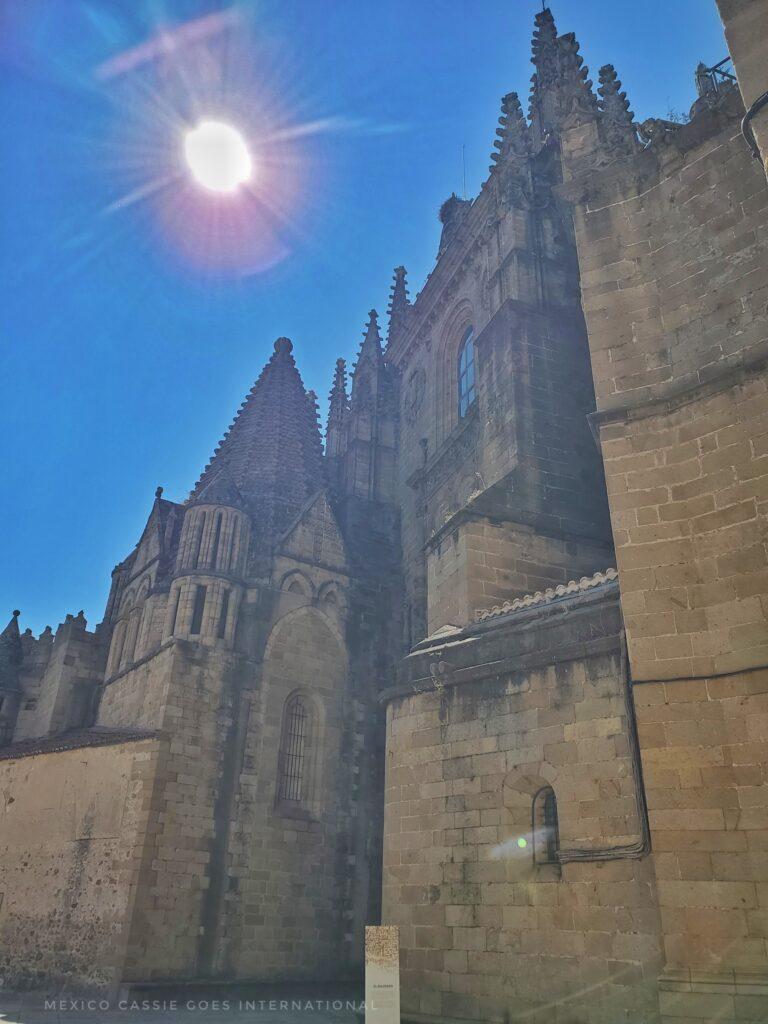
The cathedral of Plasencia is actually two cathedrals, hence the idea of a twofer or a hybrid building. Here you’ll find the catedral vieja and the catedral nueva coexisting peacefully just like they’d have you think Jews, Muslims and Christians did in the middle ages 🤣 (why can’t I ever leave the sarcasm behind?).
The old cathedral was built in between the 13th and 15th centuries in the Romanesque/Gothic style but was never finished. And at the end of the 15th century, they kind of began again, building the ‘new’ cathedral in the late gothic/renaissance style. The old cathedral is basically a museum today and the new cathedral is the active religious building.
💶 €8 p/p to enter. This is one of the few cathedrals I’ve paid to enter (along with Segovia, Jaen, Sevilla, and Málaga).
Was it worth it? I can’t answer that. 🤣 I don’t like giving money to religious institutions but it was ok.
As we wandered around here we spotted red writing daubed on the walls of the cathedral, and idly speculated what it might be and why it was there. Surprisingly (or not), my daughter was the one who knew that it was bulls’ blood and that it was a medieval tradition of university graduates to write their names on the cathedral (something you’ll see as you visit cathedrals around Spain: we recently spotted it in Sevilla too).
Plaza Mayor
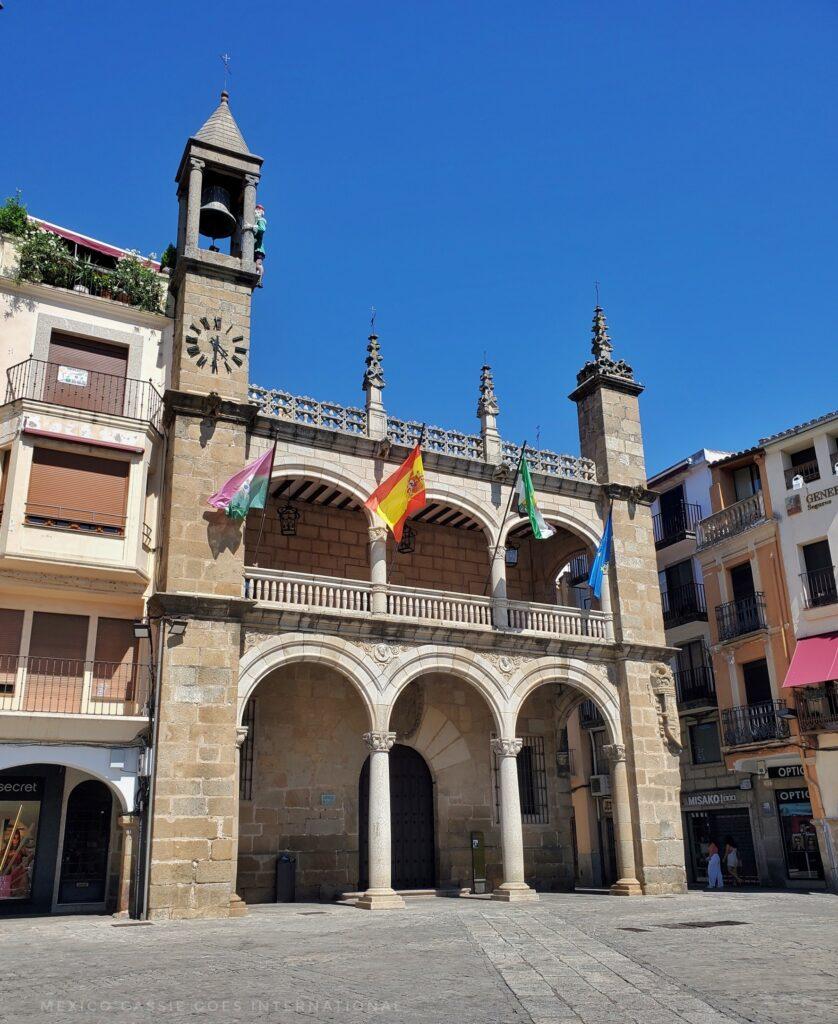
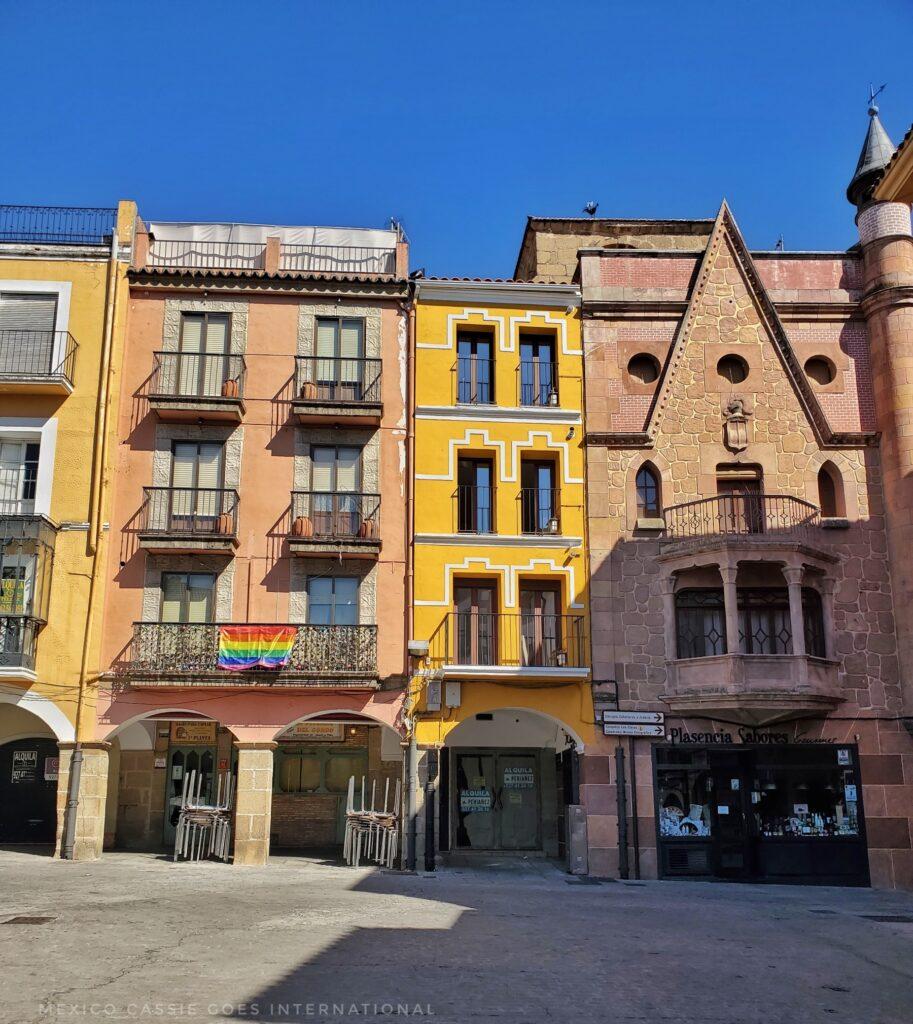
This is the hub of the old town, most roads seem to tour the plaza mayor. Here you’ll find shops (my kids made me spend way too long in the popular Valencian chain shop, Ale-Hop here). There are also cafés, bars and restaurants.
There has been a market held on this plaza every Tuesday since the 12th century.
Celebration: Martes Mayor
On the first Tuesday of August, Plasencia celebrates Martes Mayor (Big Tuesday) where you’ll find the Plaza Mayor buzzing with concerts, dances, and even free wine!
Ayuntamiento & Abuelo Mayorga
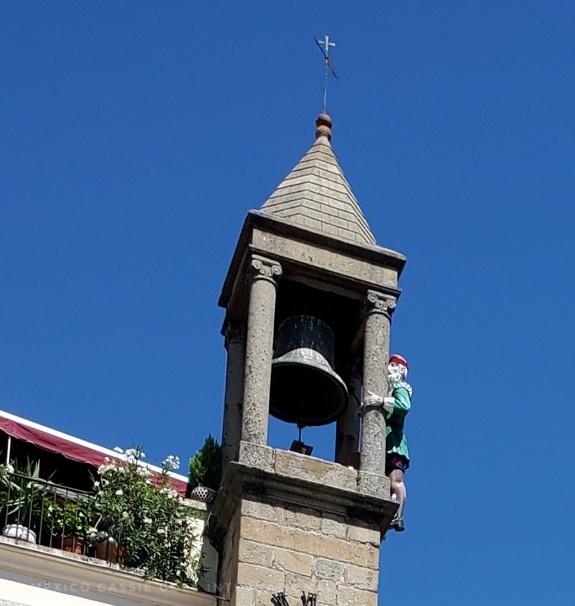
You wouldn’t normally expect me to mention a town hall in a small town as something to notice, but I do recommend that you look up and check out the dude hanging on to the tower for dear life! This is Abuelo Mayorga. He’s a weird and wonderful part of the town’s clock: his right arm moves to strike the bells on the hour.
Some say he’s been here in some form or other since the 13th century but I found specific mention only back into to the 18th century. If there was an abuelo in the 13th century, he will have been made of wood, and therefore, has not survived.
In 1743, an abuelo was installed as part of the clock and remained until it was toppled and smashed in 1811 by the French during the War of Independence.
The current abuelo was installed in the 1970s and is apparently the sixth.
Why is he called Abuelo Mayorga?
He looks old in the hat, so, abuelo/grandpa. Mayorga was the home town of the maker of the original sculpture.
Wander the old streets
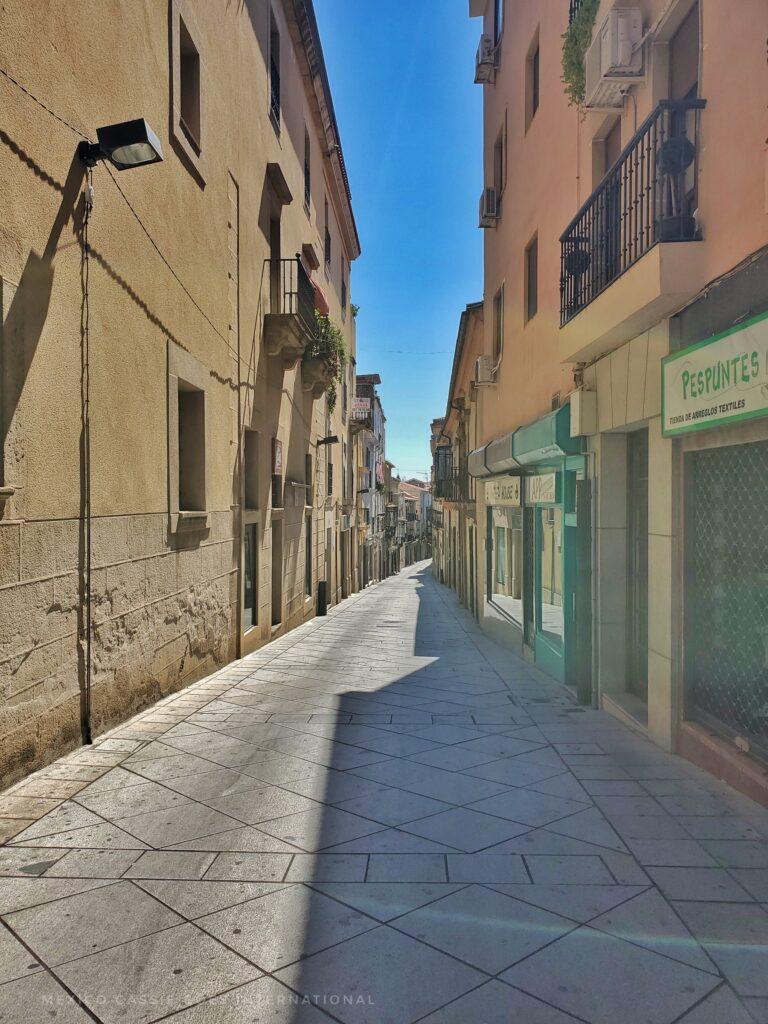
Walking the streets of the old city of Plasencia is a delight. It’s quiet, shaded and there are some truly beautiful old buildings to admire.
Rúa Zapataría & Jewish Quarter
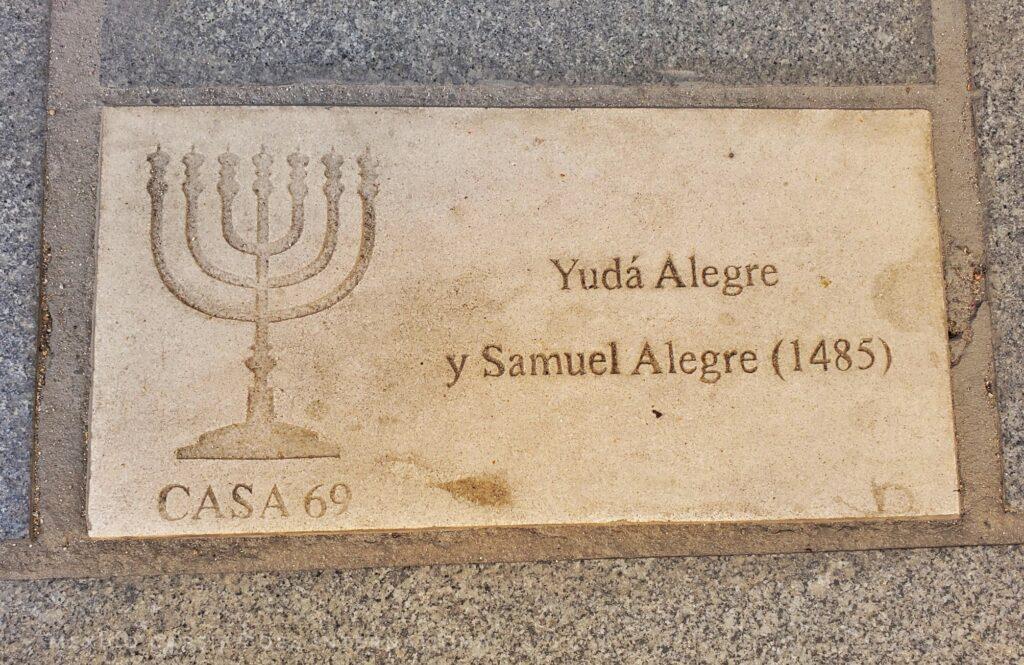
As you walk down Rúa Zapataría and other nearby roads, notice the small plaques on the floor that commemorate where Jewish families lived and worked before they were expelled from Spain during the late 15th century.
As ever, superficial history will try to tell you that Christians, Jews and Muslims all lived happily together but anyone with half a brain will know this really isn’t likely to have been the reality (there’s an excellent small museum in Córdoba that goes into detail very well and actually, I found a good website that talks about the reality of not being a Christian in medieval Plasencia.
“In Plasencia, political strategies were aimed at isolating the Jewish community within the Mota area (around the modern parador). The city’s synagogue and Jewish quarter had been located there since Alfonso VIII founded Plasencia. The ordinances of 1412 were the harshest, decreeing the segregation of Jews and Muslims in specific urban areas, thus separating the Jewish quarters from the Christian quarters. To ensure compliance, the confiscation of property was threatened against those who did not respect these regulations. Furthermore, trade with Christians was prohibited. They were only allowed to trade in a designated square or market for the purchase and sale of goods by and for Jews, and of course, within the walls of the Jewish quarter.”
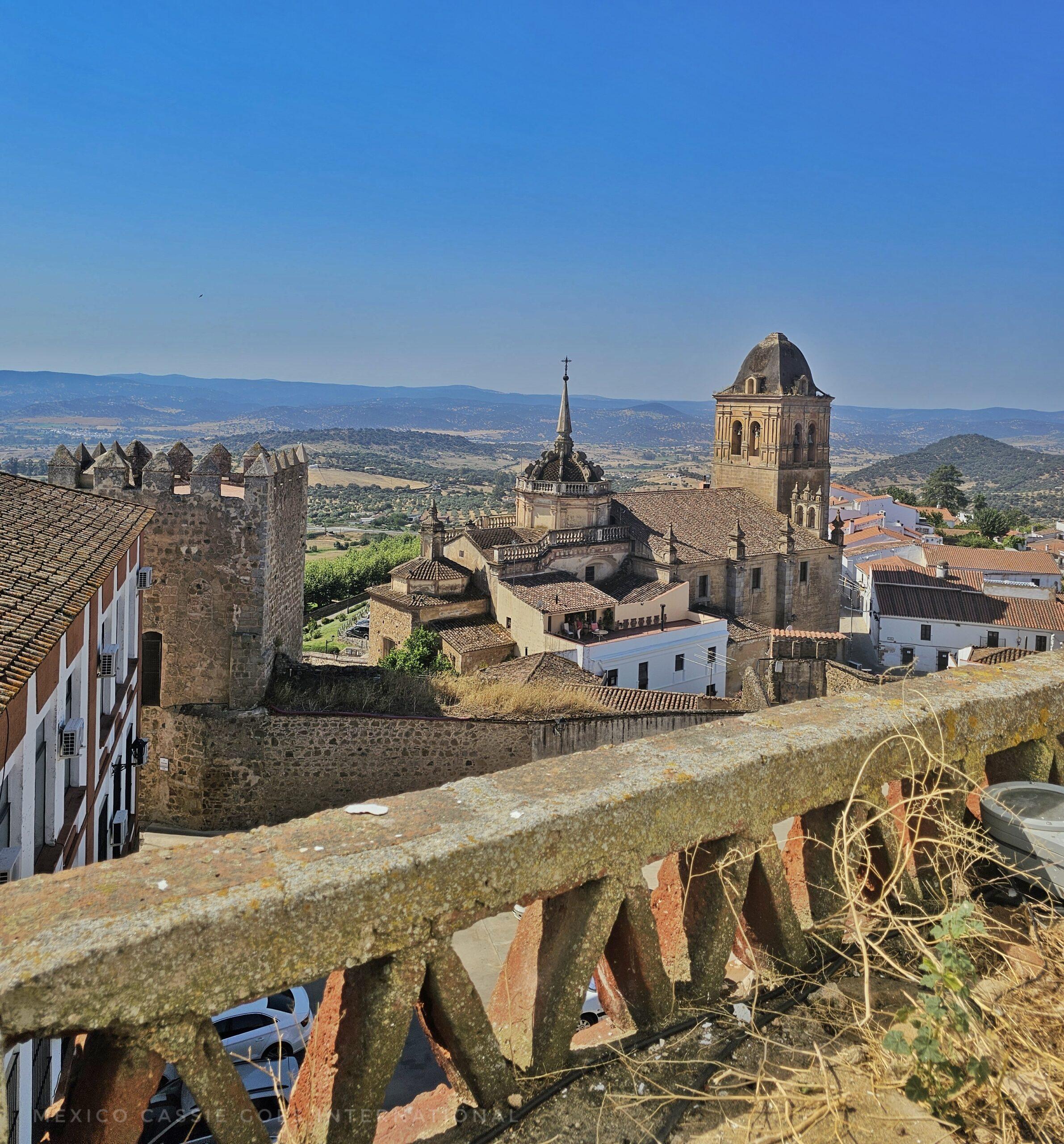
City Walls
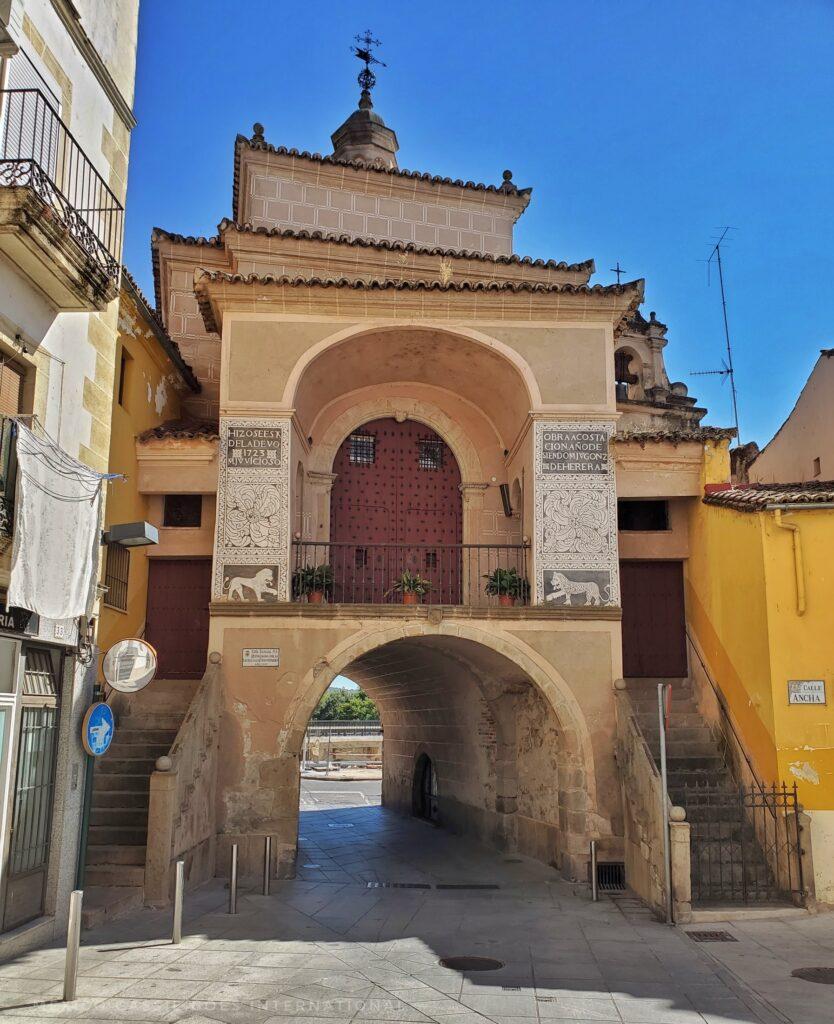
The old city is mostly enclosed within the city walls. Work began on the city walls from the moment of its founding in 1178. Originally there were four defensive towers, and six gates. Today, there are two towers and four gates to check out.
You can walk along the walls plus there is a small museum in the Torre Lucia
Torre Lucía – the walls and this tower are nicely lit at night – the centro de Interpretación medieval is located here.
The ruinas de Torre de San Miguel are still visible as you explore.
Puerta del Sol – this gateway into the town was rebuilt in 1573 and it conserves on it the Catholic Kings’ shield and inscription from 1488.
Puerta de Trujillo (also called Puerta de la Salud – photo above) also still has an inscription from 1488 visible.
Puerta de Berzocana – an inscription from 1571 is still visible here, reading “año de 1571. Seindo corregidor el dotor Zarate se reedificio esta puerta de los proprios de la ciudad“.
Puerta de Coria – this gate was rebuilt at the end of the 16th century with a bigger arch. It was closed during the Carlista Wars and then reopened again in 1848.
➕ Palacio del Marqués de Mirabel, also known as the House of the Two Towers. Next door to the parador (4⭐️ hotel). I have not visited myself (because I am not excited by stately homes generally thanks to the trauma of having parents who loved to visit them when I was a kid) but the reviews I have read are fairly negative. The building itself is an impressive 15th century palace but by all accounts it’s fairly run down and not really in a state to be shown to tourists or visitors.
Entry is €5 p/p.
➕ Museo Etnográfico Textil Pérez Enciso de Plasencia – this is a free and highly rated museum that I wish I’d visited when I was in town (we had a slight medical issue that meant we weren’t able to get here). The displays relate to not only clothing but also the life of the town, with tools and household items on display.
Parque de los Pinos & Parque de la Coronación
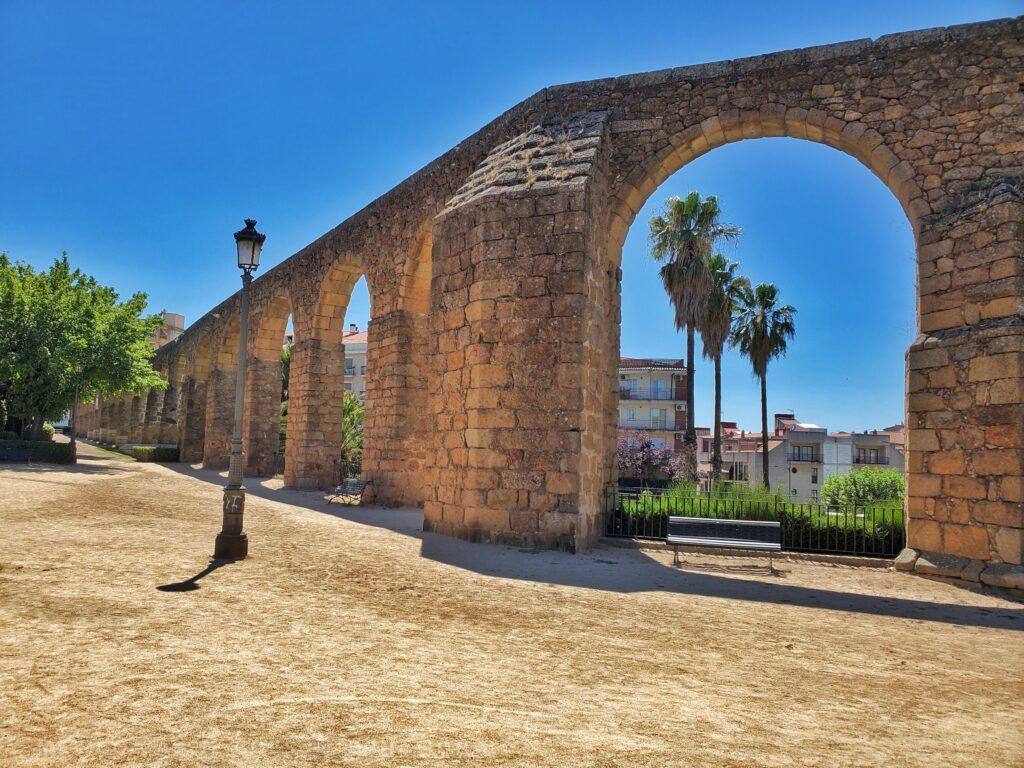
This is two co-joined parks that are a pleasant place to stroll or play (there’s a playground that my kids enjoyed).
Aqueduct – the remains of the 16th century stone aqueduct are here so even if you choose here over Segovia to avoid crowds you’ll still see some water carrying technology!
Nearby activities
→ Read the full MexicoCassie guide to driving in Spain
→ Read the full MexicoCassie guide to road tripping in Extremadura
→ Check car rental prices and availability now
📲 If you’re coming to Spain from outside of the EU you’ll need to consider your SIM options before you arrive, especially if you are planning on driving – read the full MexicoCassie review of using an eSIM in Spain.
If you have a car, I highly recommend checking out some of these adventures when you’re in the area. They’re all places I have either been or have saved on my ‘must visit list’ (it’s a long list, by the way).
Towns
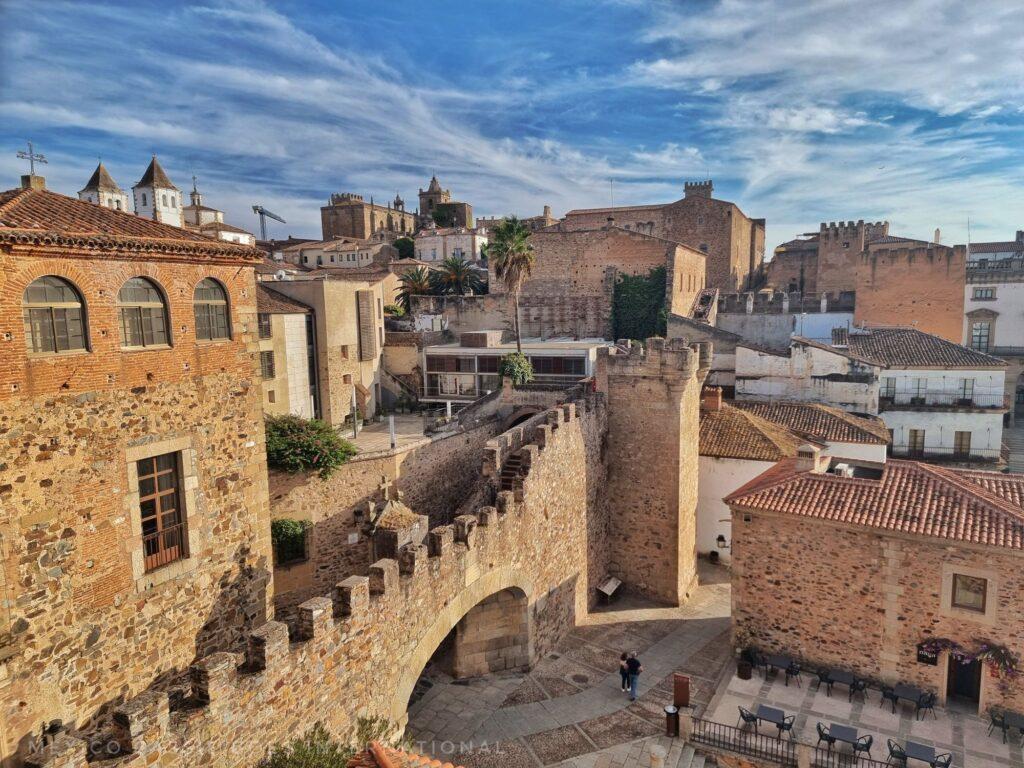
Cáceres – just an hour from Plasencia, Cáceres is a gorgeously interesting UNESCO protected medieval town to explore.
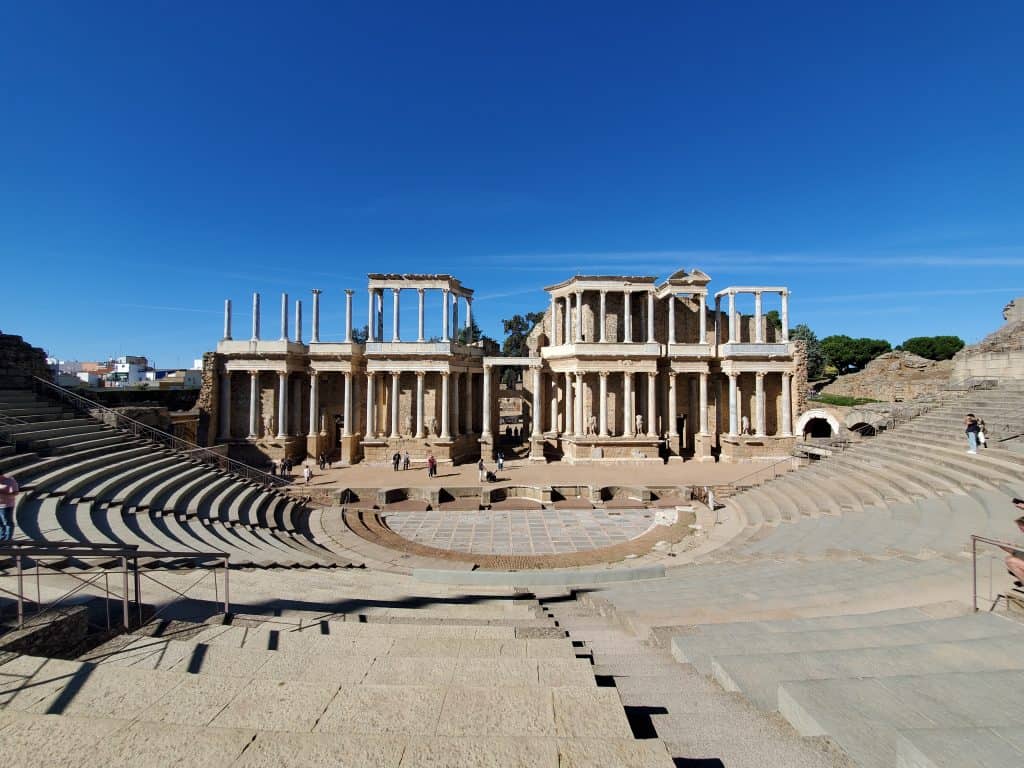
Mérida – this fascinating city is home to more Roman ruins than you can imagine and the museums here are incredible too. It also has UNESCO World Heritage Site status.
Romangordo – a tiny village just one hour away where almost every building is covered in murals. There is also a good Independence War museum
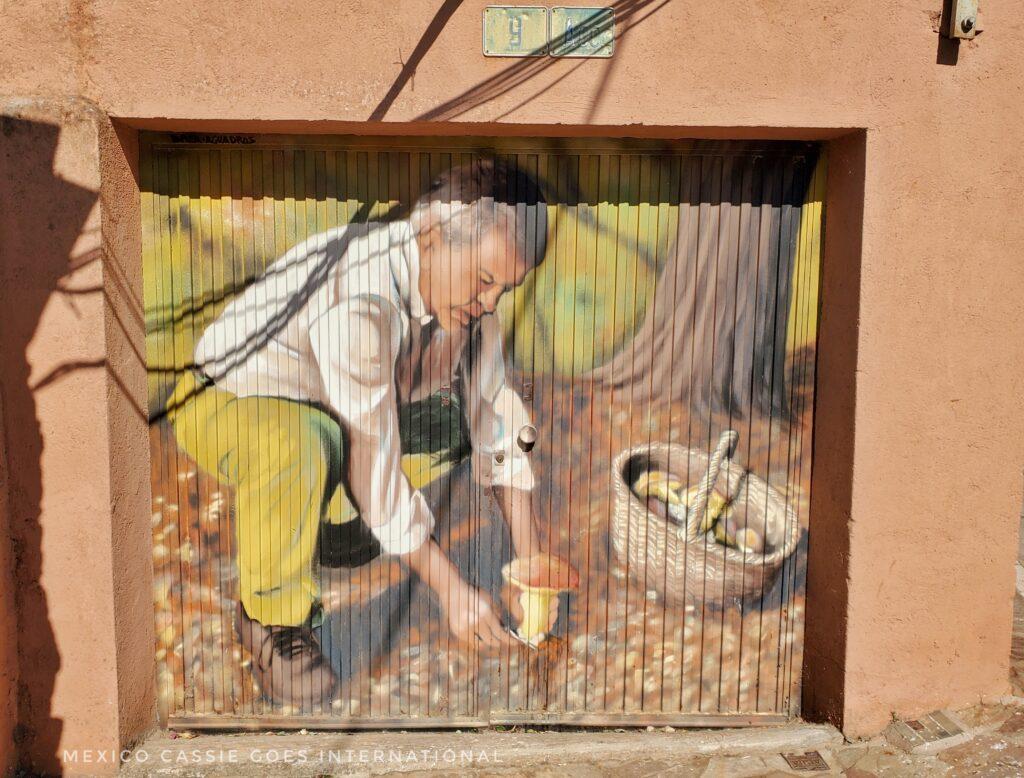
→ Read more about visiting Romangordo in the MexicoCassie guide to Monfragüe
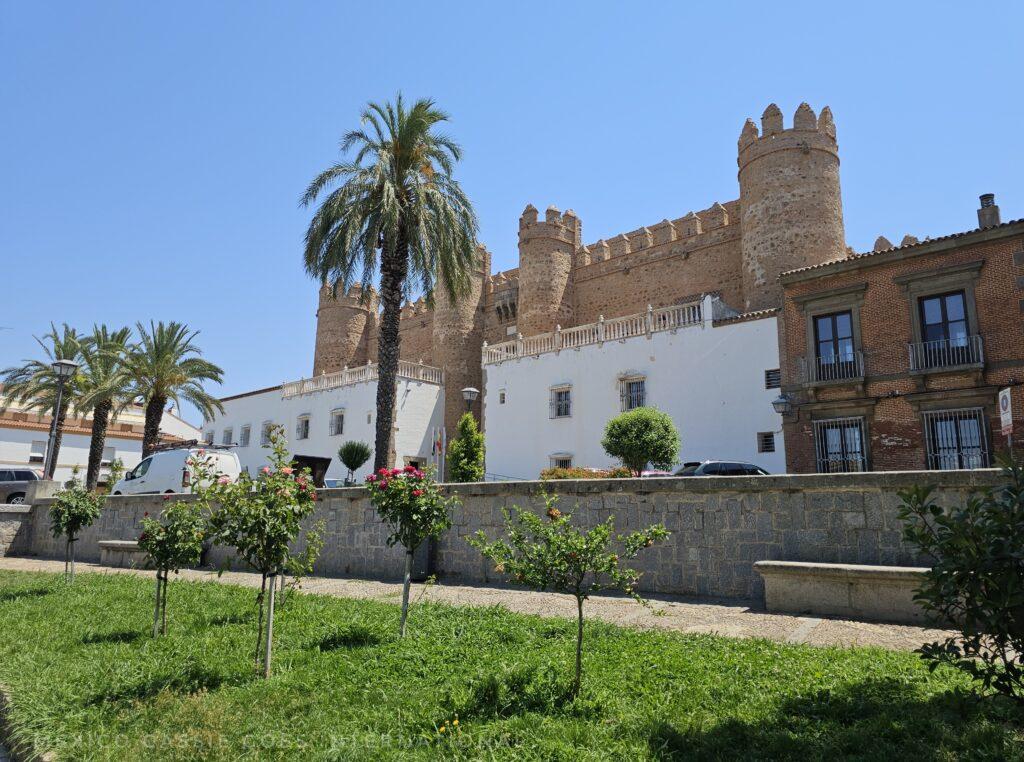
Zafra – a beautiful small town 2 hours south with a truly magnificent parador/castle, and incredible food. Often called Sevilla Chica (Little Seville) because it’s so pretty.
Nature adventures
Parque Monfragüe – this is one of my favourite places in all of Spain.
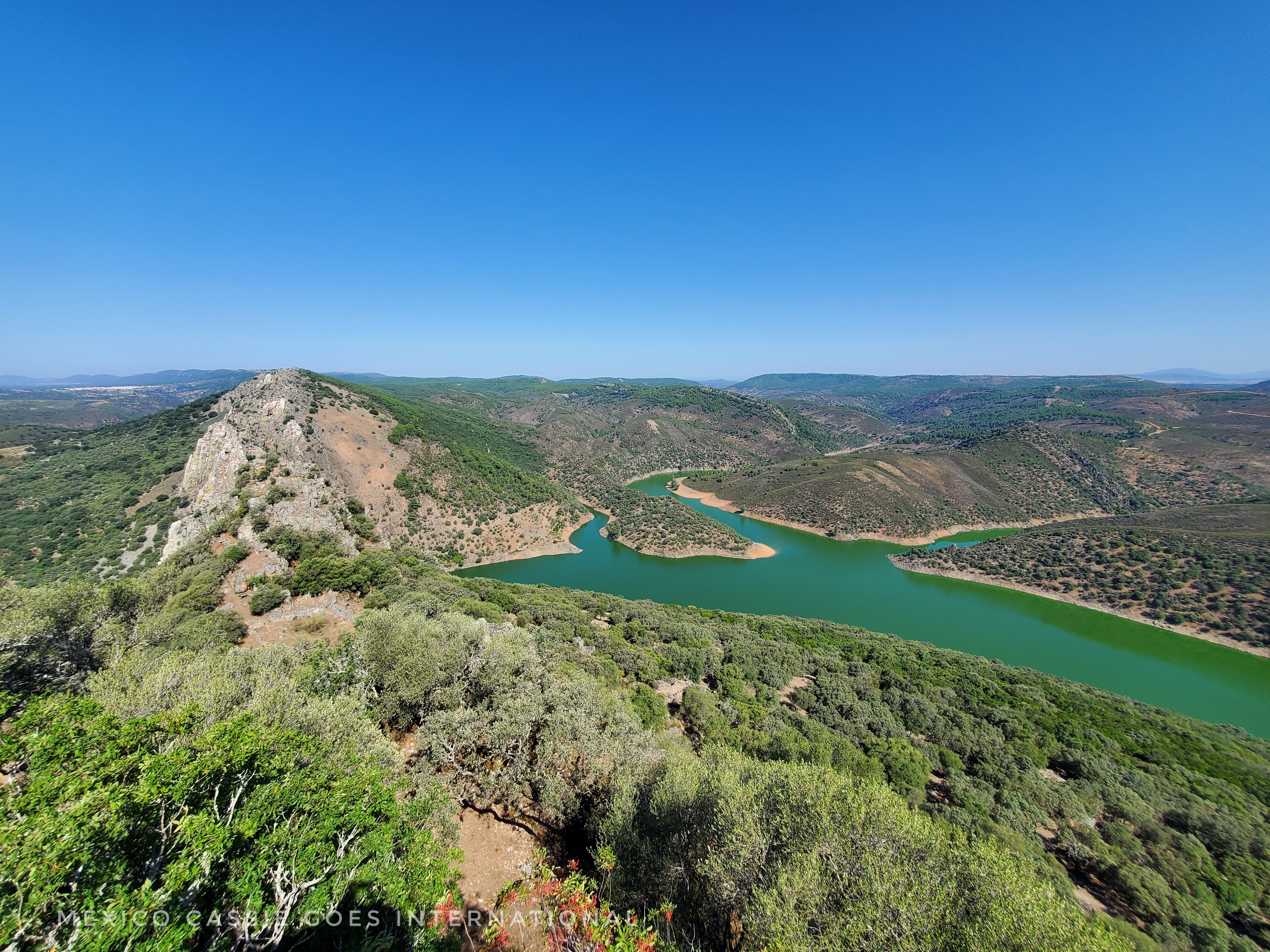
You can visit castles & see 8,500 year old cave paintings (and yes, UNESCO has awarded it a place in the Cultural Itinerary of European Prehistoric Rock Art routes). You can hike in the hills, take a boat road along the Tajo, and the bird watching is magnificent
Meandro del Melero – 1hr 15 by car, this is somewhere I’m dying to visit. It’s a natural point where the Río Alagón curves around and appears to create a small island (that’s actually in the autonomous community of Castilla y León).
Head to this mirador for the best views (and probably best not to visit in summer as it’s more beautiful when the river actually has water)
Sierra de Gata – this region is an hour from Plasencia and here you’ll find small villages, a dolmen, castles, oak forests, nature sports and magnificent views. I’m desperate to visit.
Valle del Jerte – In this spectacular valley you can hike, ride horses, go canyoning, enjoy ziplines, hot air balloon rides, visit museums and interpretation centres such as the Centro de Interpretacíon de la Reserva Garganta de los Infiernos (somewhere I really want to visit), the Cherry Museum in Cabezuela del Valle. For two weeks every March/April (ish) the whole valley is filled with cherry blossom and the Valle del Jerte celebrates its Cherry Blossom Festival. And from mid-May until August you can pick cherries.
📚 🇪🇸 Read more of MexicoCassie’s Spain guides
→ MexicoCassie guide to whether Spain is safe for tourists
→ MexicoCassie guide to driving in Spain
→ MexicoCassie guide to driving in southern Spain
☕️ MexicoCassie guide to vegetarian tapas, to breakfast and to feeding the kids
📲 MexicoCassie guide to using an eSIM in Spain
Sevilla
⭐️ What is Sevilla famous for? | ⭐️ How many days do you need in Seville? | ⭐️ Everything about the Seville airport bus
⭐️ 1 day in Seville | ⭐️ 3 days in Seville | ⭐️ 5 days in Seville | ⭐️ How to visit Seville in the summer | ⭐️ How to visit the Alcazar | ⭐️ Quirky Seville
⭐️ Best beaches from Seville | ⭐️ Day trips from Seville | ⭐️ Seville with kids | ⭐️ Seville with teenagers | ⭐️ How to see flamenco in Seville | ⭐️ Best family friendly tours in Seville
➕ Hire MexicoCassie as your amiguía for the day in Sevilla or Alcalá de Guadaíra
Málaga
⭐️ 3 days in Málaga | ⭐️ 1 day in Málaga | ⭐️ Day trips from Málaga | ⭐️ 1 day in Ronda | ⭐️ 1 day in Ronda with kids | ⭐️ What to do in Antequera | ⭐️ Exploring Málaga with kids
Córdoba
⭐️ What to do in Córdoba | ⭐️ Planning your Córdoba day trip from Seville | ⭐️ Day trips from Córdoba | ⭐️ Exploring Córdoba with kids | ⭐️ 1 day in Córdoba | ⭐️ Zuheros, the most beautiful village in Córdoba
Cádiz
⭐️ What to do in Cádiz province | ⭐️ How to spend 1 day in Cádiz city | ⭐️ What to do in Cádiz with kids | ⭐️ Exploring Tarifa | ⭐️ How to get to Tangier from Tarifa | ⭐️ Exploring Gibraltar | ⭐️ What to do in Jerez de la Frontera
Huelva
⭐️ Is Huelva worth visiting? (YES) | ⭐️ What to see in the gorgeous Aracena
Granada
⭐️ Planning your Granada city break | ⭐️ Granada with kids | ⭐️ 2 days in Granada | ⭐️ How to explore Guadix and its cave houses
Almería
⭐️ Things to do in Almería City | ⭐️ What to do in Almería with kids | ⭐️ Is Almería worth visiting? | ⭐️ Figuring out the Almería beaches
Community of Valencia
⭐️ 1 day in Valencia | ⭐️ 2 days in Valencia | ⭐️ Museums in Valencia ⭐️ Day trips from Valencia | ⭐️ Valencia with kids
Community of Madrid
⭐️ Why should you visit Madrid | ⭐️ Spending 5 awesome days in Madrid | ⭐️ 3-day Madrid itinerary
Castilla y León
⭐️ Segovia, a perfect day trip from Madrid | ⭐️ How to visit Medina del Campo | ⭐️ How to visit Zamora
Euskadi (Basque Country)
⭐️ What to do in the Basque Country | ⭐️ Excellent things to do in San Sebastián | ⭐️ Is San Sebastián worth visiting? | ⭐️ How many days do you need in San Sebastián? | ⭐️ Day trips from San Sebastián | ⭐️ San Sebastián with kids | ⭐️ Is Bilbao worth visiting? | Planning and taking day trips from Bilbao | Why Vitoria-Gasteiz is worth visiting?
Picos de Europa
⭐️ Road trip itinerary for the Picos de Europa | ⭐️ Planning for a trip to the Picos de Europa | ⭐️ Las Arenas de Cabrales | ⭐️ Visiting Potes
Extremadura
⭐️ Everything you need to explore Monfragüe | ⭐️ What to do in Mérida | ⭐️ What to do in Cáceres | ⭐️ How to visit Plasencia | ⭐️ Visiting Zafra (Sevilla Chica) | ⭐️ What to do in Badajoz | ⭐️ How to visit Jerez de los Caballeros | ⭐️ Extremadura road trip
Galicia
⭐️ What to do in Ferrol | ⭐️ Everything you need to visit Santiago de Compostela
Cataluña
⭐️ Road trip around Girona Province | ⭐️ Spending 1 day in Girona | ⭐️ 1 day in Barcelona | ⭐️ How to visit Castellfollit de la Roca
La Gomera (Canary Island)
⭐️ Hiking on La Gomera | ⭐️ La Gomera with kids | ⭐️ Take a day trip to La Gomera