Using an eSIM in Spain – a review of Sim Local from a local
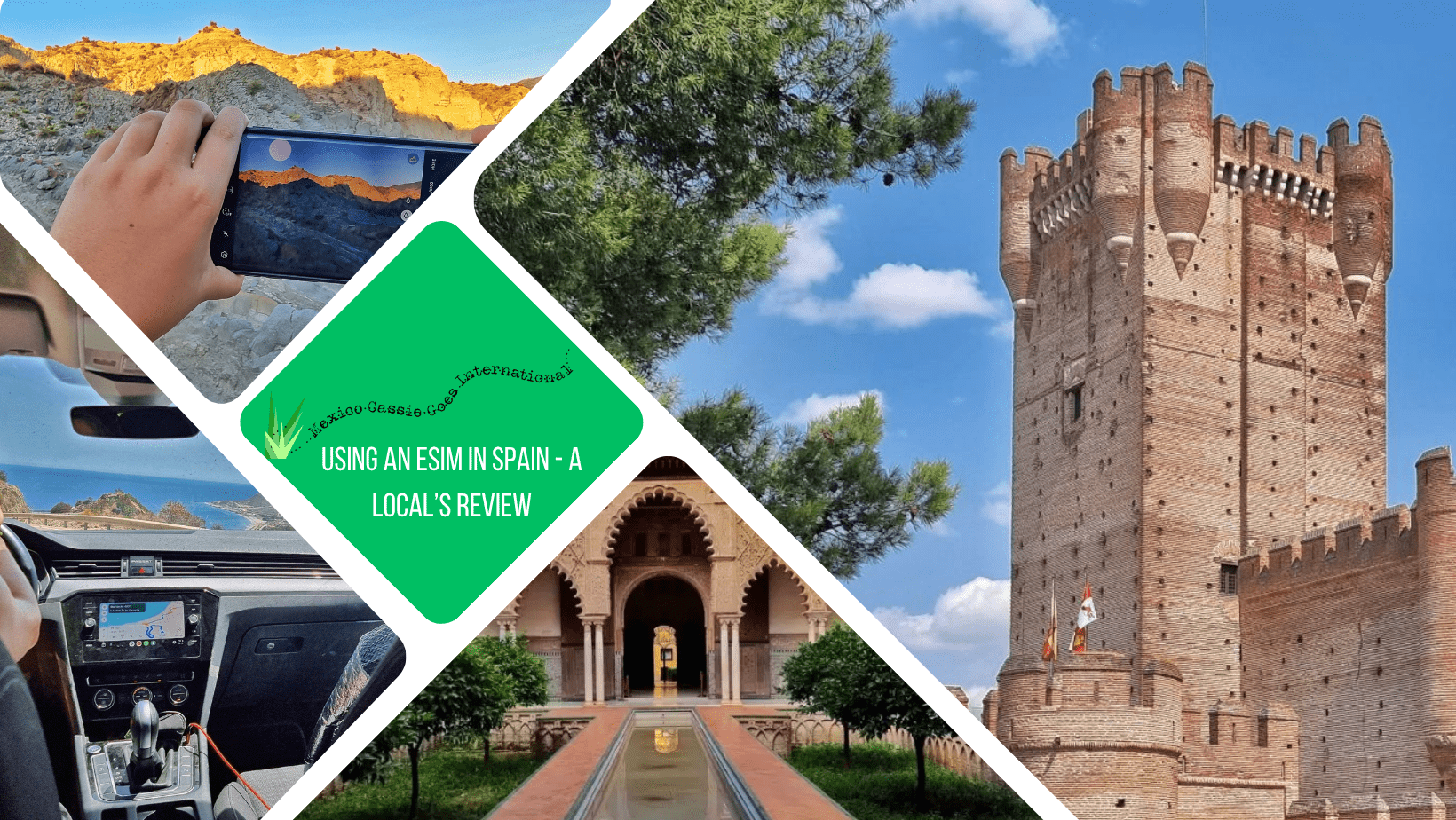
Sim Local reached out to me as a resident of Spain and a trusted Spain travel writer and asked me to try out their eSIM as a viable alternative to buying a ‘traditional’ or physical sim card in Spain.
I live in Spain, and have bought numerous sim cards here. Because I live in Spain I know what regular cell coverage is like and therefore, can provide an accurate review of how the eSIM coverage compares.
I have also used an eSIM in Mexico before but never in Spain, so I was excited at the idea of testing one out in Spain too. Obviously everything you read here is my own opinion.
There are affiliate links in this article. If you click and make a purchase I could make a small sum at zero cost to you. Thank you!
Purchase your Sim Local eSIM with the MexicoCassie discount code for a 10% discount wherever your next adventure is taking you!
You may well have seen people talking about eSIMs on social media and wondered what it is, how it works and whether it’s a good alternative. So let’s take a look now, I’ll answer all these questions and give you my personal experiences too.
How did I test the Sim Local eSIM?
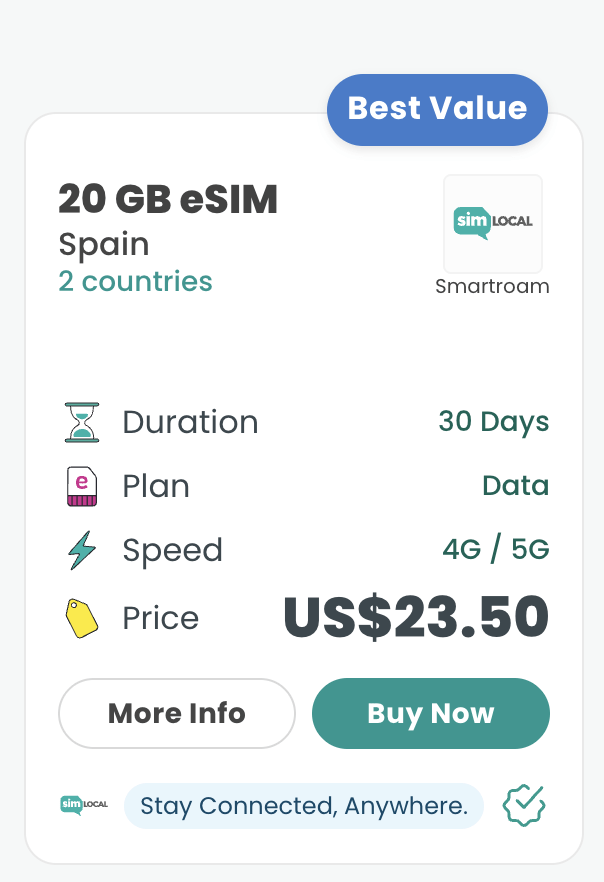
📲 I was given a 30 day 20gb eSIM that covers Spain (including the Canary Islands) and simply turned off my regular network provider and moved over to using Sim Local. I carried on with my normal life.
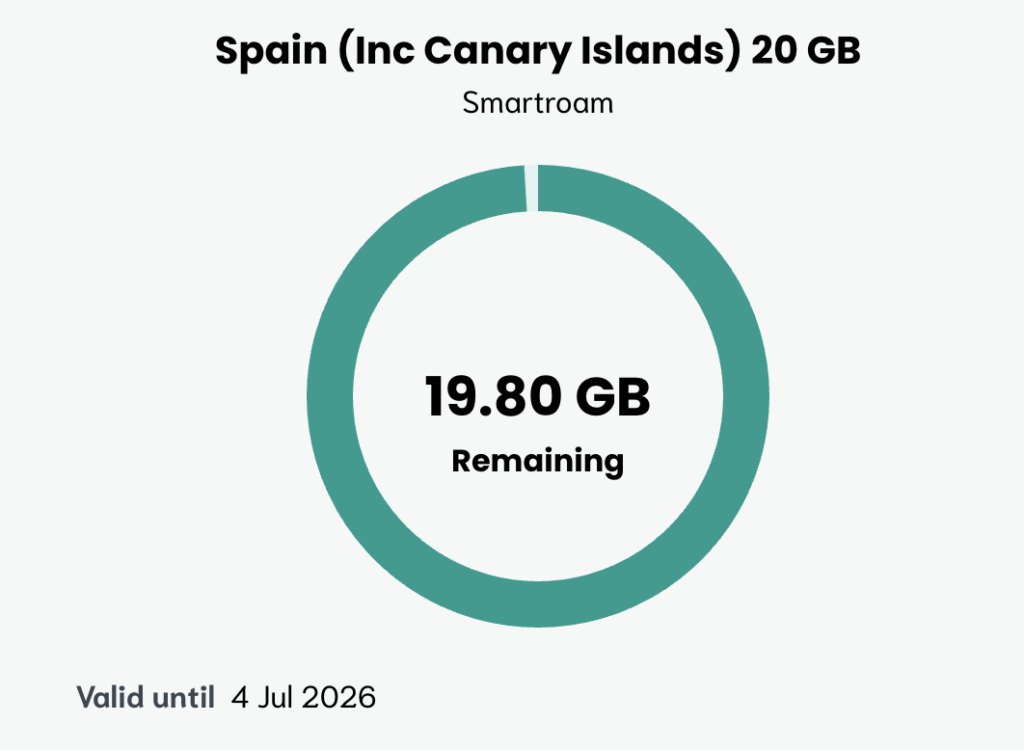
Over the first few days with the eSIM I used it for google maps while driving around Sevilla, I attended my teen’s swimming competition, I listened to music as much as I felt like and generally played around on social media as normal. I also went on a family friendly tour of Sevilla.
In these first four days of what I’d consider my fairly heavy phone use I used 0.2gb of data. I also really like that I can check my data usage easily to ensure that my obsession with music doesn’t use up too much data and leave me stranded.
What is an eSIM and how does it work?

🧚🏼 Basically, it’s magic
→ An eSIM is a digital SIM that simplifies staying connected while traveling abroad, eliminating the need to swap physical SIM cards. More importantly, it means you can avoid expensive roaming charges while in Europe.
✅ First you ensure your phone is eSIM compatible (this link is to a list of phones that are compatible) – most phones built after 2020 are compatible.
💳 You buy it before you leave home, install it and then turn it on when you arrive in Spain (or wherever you’re going, because obviously there are eSIMs for everywhere) and like magic, you have access to a Spanish network and can start texting loved ones, figuring out where to eat in town, or start your doom-scrolling on the plane. It’s that good.
→ You can find easy to follow activation instructions on the Sim Local website but essentially all you have to do is go to your phone settings and swap your sim from your physical to the eSim and turn data roaming on. That’s literally it.
📲 Sim Local provides 24/7 support via WhatsApp if you do run into any problems.
Cool extra tips to make your data last longer
→ Turn off background app refresh for heavy use apps like Instagram and Tik-Tok
📲 Set WhatsApp calls to “low data usage” mode
🗺️ Download Google Maps on wifi and use them offline if you’re heading out for long days, or into remote areas
🎉 If you’re staying longer than 30 days, you can buy two Sim Local plans and simply stack them
My first attempt with an eSIM was with a locked phone because I didn’t know that not all models are compatible. I was so upset with myself for not having checked first. Luckily for me, eSIMs only activate once your turn them on so I simply kept the access and when I got a new phone l ensured it was compatible.
This time, with Sim Local, I already knew my phone was compatible so I simply downloaded my eSIM. I was sent an email with purchase confirmation and a link to set up an account and pick up my eSIM. The email gave clear instructions on how to download the SIM, with links to video explanations, a QR code, and manual activation code, all laid out extremely clearly. I followed the instructions and 💥, there it was, happily working on my phone.
How to choose between the various options?

There are different eSIMS available. If you’re just coming to Spain, you can buy a Spain only sim. If you’ll be exploring more of Europe, then a Europe-wide eSIM is a better idea as you only have to buy once for your entire trip. The eSIMS also vary depending on how much internet access you need/want and how long you’ll be travelling for.
You can use this as a rough guide to how much you might need for a couple of weeks
5 GB light users – using maps, messaging, occasional internet search
10 GB – most travellers with average internet usage, maps, Facebook
20 GB – anyone with a slight social media addiction
30 GB+ – people who work on line, like to watch tv and upload/download a lot
➕ There are some eSIMs that are data only and don’t provide a local number and there are others that do come with a number. My personal opinion is that a phone number is not particularly necessary while you’re in Spain. Here, we do most of our ‘phone business’ via WhatsApp. You can contact most restaurants via WhatsApp and if you’re staying in an apartment, for sure your contact with the owner/manager will be via WhatsApp.
Purchase your Sim Local eSIM with the MexicoCassie discount code for a 10% discount wherever your next adventure is taking you!
What’s the connectivity quality like with Sim Local?

As I said earlier, I live in Spain and I have a local Spanish sim contract. I didn’t notice the difference between my regular Spanish network provider and the Sim Local eSIM. The Sim Local eSIM connects to the same 4G and 5G networks that Spanish networks use (such as Vodaphone or Orange). When you buy your plan it tells you which networks are used.
I’d say that’s high praise. I carried on with my normal behaviour using Google maps when driving, I listened to music via my YouTube app as much as I liked, and merrily used social media. Everything was exactly as it is with my regular service provider.
I was, of course, not in a remote village in the middle of Spain. I was in my town and in Sevilla. Sim Local is very clear that while their coverage is excellent in the cities, in more remote areas of Spain it may not be the same level.
I was recently in the Picos de Europa with my regular cell service and it didn’t get coverage in the mountains either. Esims, I think, basically meet the same levels of coverage as traditional services.
What do I like about Sim Local eSIMs?

Protection against my own failings – My absolute favourite thing about using an eSIM is that I don’t have to remove my physical sim card from my phone. I know this sounds silly but I rarely remember to carry a pin to open the teeny sim tray, and I absolutely never have anywhere safe and dust-free to store my precious home sim. I generally wind up wrapping it in a piece of paper for the duration of my adventure, and hoping I don’t lose it.
And yes, this is absolutely why I lost my original Spanish sim card in Mexico and had to go to the one shop in my town that deals with sim replacement cards (don’t ask, I don’t understand why either) three damn times. The first time I went I didn’t know I’d need every single piece of ID I’ve ever had to declare it lost. 1 hour of my time gone. The second time I went I had all the paperwork but something got filled in wrong so the sim card they gave me never got activated but I was home by the time we realised. 2 hours of my time gone. The third time, yes it worked. What a stress. An eSIM would have saved me this frustration (so would looking after my possessions better, I agree).
Stress remover – My other favourite thing is that they remove the worry about finding a physical sim card when I arrive in a new place. Instead of wasting precious vacation time searching for a shop selling sim cards, I can spend ten minutes at home before I leave and have my sim waiting for me as I arrive in the new country.
Variety of plans – There are options for everyone, depending on your data use, vacation duration, and if you’ll be sharing between devices or people.
Quality of service – Because the eSIM is literally access to a local network, it’s generally as good quality as having a regular local sim (without the stress of having to buy it).
Return policy – if you don’t use it, return it. And if it doesn’t work because of a technical error, you can get a refund too.

I think eSIMs are a great option for everyone, for families visiting with kids / teens with mobile phones, for solo travellers who might arrive late at night and not want to wait to have the safety of a working phone.
It’s also important to add that even if you’re not especially technologically savvy or comfortable, an eSIM is truly easy to use and with Sim Local, you have extremely clear instructions and 24/7 support if you need it.
I like to use one when I go to Mexico, for example, because if you land in Cancun (I often do), there’s nowhere at the airport to buy a local sim or to even top up your actual sim card when you land. Last time I landed in Cancun I had to phone my hotel to arrange to be picked up and obviously, having the eSIM meant I could do this without using expensive roaming fees from my own network.
Buying a regular sim in Spain
If you’re not yet sure if an eSIM is a good idea, let me tell you a little about buying a sim in Spain:
It can be a pain in the bum.
If you arrive in a large airport like Adolfo Suárez Madrid–Barajas Airport (MAD), it is possible to pick up a sim card before you leave the airport. (It’s actually possible to grab an eSIM from Sim Local as they have a store in terminal 4).
However, many of the options you will find are inflated tourist price sim cards. Smaller airports such as Santiago de Compostela or Sevilla don’t always offer the option to buy a sim card when you arrive.
Once you’re in your destination city, you can go to a regular phone shop (the main brands are Orange, Vodaphone, Movistar) to buy your prepaid sim. Smaller shops and kiosks may also sell sim cards but obviously it’s harder to figure out the where and how. People may not speak English, particularly outside of the main tourist hubs.
🛂 You must show a passport or valid EU ID when you buy a sim card in Spain because every card has to be registered.
Roaming charges, physical sim card or eSIM for travel in Spain?
🇪🇺 If you’re European, you don’t need to do anything when you travel to Spain as your EU sim includes roaming across all of the European Union (yay!). If you’re not, then you need to decide whether to use your home network with roaming, to buy a local sim card on arrival or whether to pick up an esim.
💸 We all know how expensive roaming can be, especially when you think about how much we use our phones: google maps is imperative for driving or exploring any city, many tourist sites have audio guide apps to download, and then there’s music to listen to, Facebook and other social media to doomscroll and blogs like mine to help you figure out what to eat for breakfast!
❌ Personally, unless your provider’s roaming service is truly excellent, I’d discount it as an option immediately unless you’re not planning on leaving your hotel and its wifi service.
So, between esim or physical sim, which would I recommend?
Definitely the eSIM. It works as well as a physical sim card, and I really like having the ability to sort it out in advance, removing one boring and stressful job when I arrive at my destination. I really like being able to just turn my phone on when I land in a new country and just start using it, letting my loved people know I’m safe immediately.
And remember, you can purchase your SimLocal eSIM with the MexicoCassie discount code for a 10% discount wherever your next adventure is taking you!
📚 🇪🇸 Read more of MexicoCassie’s Spain guides
→ MexicoCassie guide to whether Spain is safe for tourists
→ MexicoCassie guide to driving in Spain
→ MexicoCassie guide to driving in southern Spain
☕️ MexicoCassie guide to vegetarian tapas, to breakfast and to feeding the kids
📲 MexicoCassie guide to using an eSIM in Spain
⭐️ Tips to help when you visit Spain
Sevilla
⭐️ What is Sevilla famous for? | ⭐️ How many days do you need in Seville? | ⭐️ Everything about the Seville airport bus
⭐️ 1 day in Seville | ⭐️ 3 days in Seville | ⭐️ 5 days in Seville | ⭐️ How to visit Seville in the summer | ⭐️ How to visit the Alcazar | ⭐️ Quirky Seville | ⭐️ 5 alternatives to the Alcázar
⭐️ Best beaches from Seville | ⭐️ Day trips from Seville | ⭐️ Seville with kids | ⭐️ Seville with teenagers | ⭐️ How to see flamenco in Seville | ⭐️ Best family friendly tours in Seville | ⭐️ Exploring Sevilla Province
➕ Hire MexicoCassie as your amiguía for the day in Sevilla or Alcalá de Guadaíra
Málaga
⭐️ 3 days in Málaga | ⭐️ 1 day in Málaga | ⭐️ Day trips from Málaga | ⭐️ 1 day in Ronda | ⭐️ 1 day in Ronda with kids | ⭐️ What to do in Antequera | ⭐️ Exploring Málaga with kids
Córdoba
⭐️ What to do in Córdoba | ⭐️ Planning your Córdoba day trip from Seville | ⭐️ Day trips from Córdoba | ⭐️ Exploring Córdoba with kids | ⭐️ 1 day in Córdoba | ⭐️ Zuheros, the most beautiful village in Córdoba
Cádiz
⭐️ What to do in Cádiz province | ⭐️ How to spend 1 day in Cádiz city | ⭐️ What to do in Cádiz with kids | ⭐️ Day trips from Cádiz | ⭐️ Exploring Tarifa | ⭐️ How to get to Tangier from Tarifa | ⭐️ Exploring Gibraltar | ⭐️ What to do in Jerez de la Frontera
Huelva
⭐️ Is Huelva worth visiting? (YES) | ⭐️ What to see in the gorgeous Aracena
Granada
⭐️ Planning your Granada city break | ⭐️ Granada with kids | ⭐️ 2 days in Granada | ⭐️ How to explore Guadix and its cave houses
Almería
⭐️ Things to do in Almería City | ⭐️ What to do in Almería with kids | ⭐️ Is Almería worth visiting? | ⭐️ Figuring out the Almería beaches
Community of Valencia
⭐️ 1 day in Valencia | ⭐️ 2 days in Valencia | ⭐️ Museums in Valencia ⭐️ Day trips from Valencia | ⭐️ Valencia with kids
Community of Madrid
⭐️ Why should you visit Madrid | ⭐️ Spending 5 awesome days in Madrid | ⭐️ 3-day Madrid itinerary
Castilla y León
⭐️ Segovia, a perfect day trip from Madrid | ⭐️ How to visit Medina del Campo | ⭐️ How to visit Zamora
Euskadi (Basque Country)
⭐️ What to do in the Basque Country | ⭐️ Excellent things to do in San Sebastián | ⭐️ Is San Sebastián worth visiting? | ⭐️ How many days do you need in San Sebastián? | ⭐️ Day trips from San Sebastián | ⭐️ San Sebastián with kids | ⭐️ Is Bilbao worth visiting? | Planning and taking day trips from Bilbao | Why Vitoria-Gasteiz is worth visiting?
Picos de Europa
⭐️ Road trip itinerary for the Picos de Europa | ⭐️ Planning for a trip to the Picos de Europa | ⭐️ Las Arenas de Cabrales | ⭐️ Visiting Potes
Extremadura
⭐️ Everything you need to explore Monfragüe | ⭐️ What to do in Mérida | ⭐️ What to do in Cáceres | ⭐️ How to visit Plasencia | ⭐️ Visiting Zafra (Sevilla Chica) | ⭐️ What to do in Badajoz | ⭐️ How to visit Jerez de los Caballeros | ⭐️ Extremadura road trip
Galicia
⭐️ What to do in Ferrol | ⭐️ Everything you need to visit Santiago de Compostela | ⭐️ Great reasons to visit A Coruña | ⭐️ Northern Galicia road trip
Cataluña
⭐️ Road trip around Girona Province | ⭐️ Spending 1 day in Girona | ⭐️ 1 day in Barcelona | ⭐️ How to visit Castellfollit de la Roca
La Gomera (Canary Island)
⭐️ Hiking on La Gomera | ⭐️ La Gomera with kids | ⭐️ Take a day trip to La Gomera