7 days in the Picos de Europa – a detailed itinerary
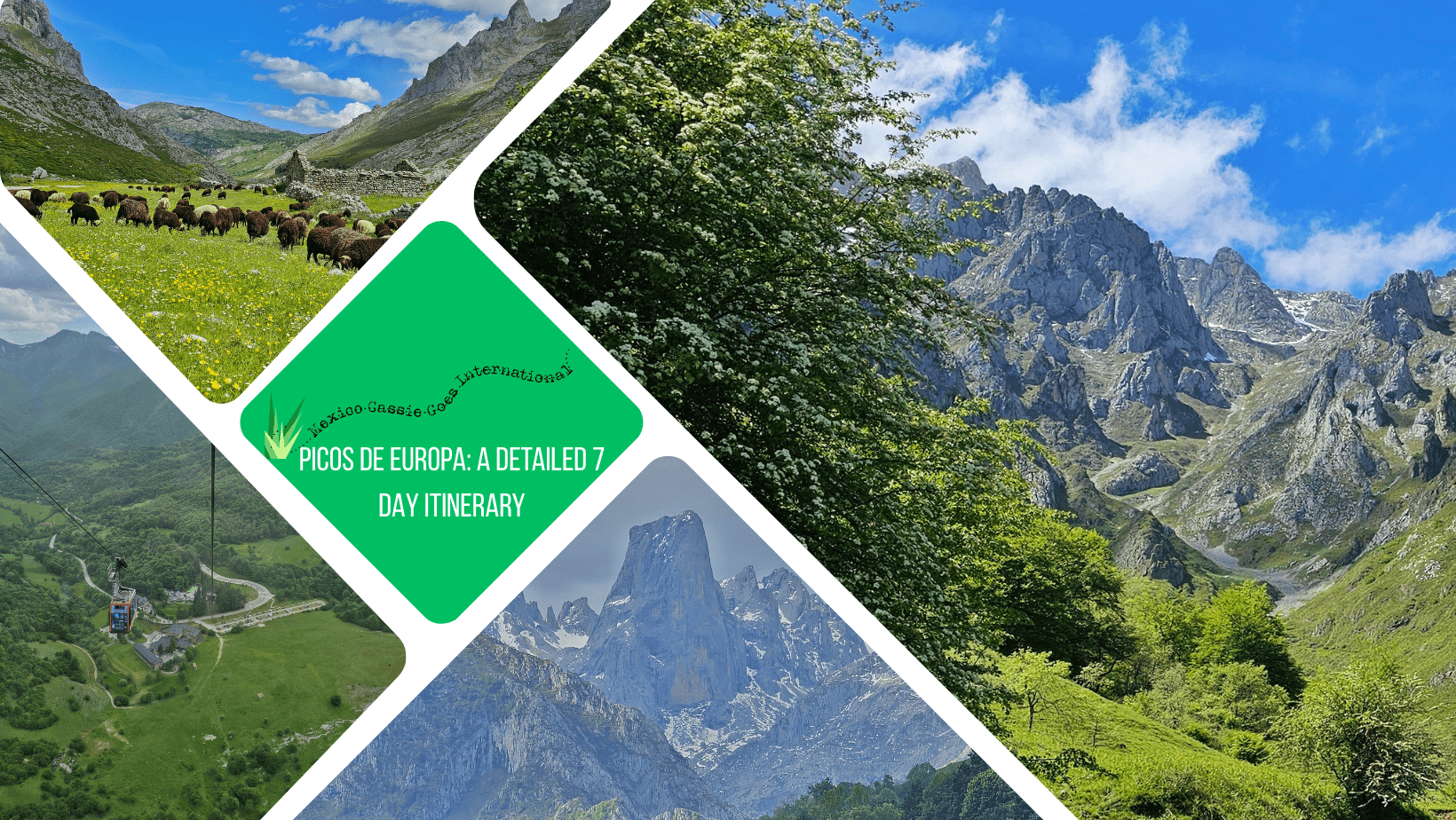
I have just returned from an absolutely epic road trip / hiking adventure in the Picos de Europa National Park and I am so excited to share my experiences and itinerary with you.
While this is more or less a personal report, it still takes you through exactly what we did, where we went, the hikes we took, the villages we explored, where we stayed, and more.
Planning the trip wasn’t easy so I’m going to share exactly what my friend and I got up to so you can use our itinerary to plan your own amazing adventure in this beautiful region.
Fitness levels recommended for this itinerary
Before we start it’s a good idea to know more about the general fitness levels of my friend and me so you can judge your own needs accordingly as you read on:
Me: mid-40s, healthy, trains twice a week, been hiking for years, pretty sure I could walk forever
Friend: mid-50s, healthy, works out most days, been hiking for years, starting to have knee concerns – used hiking poles and was very glad of them
We had originally planned to hike the Camino de Santiago together but decided that this looked more fun and more of an adventure.
There are affiliate links in this article. If you click and make a purchase I could make a small sum at zero cost to you. Thank you!
Where are the Picos de Europa?
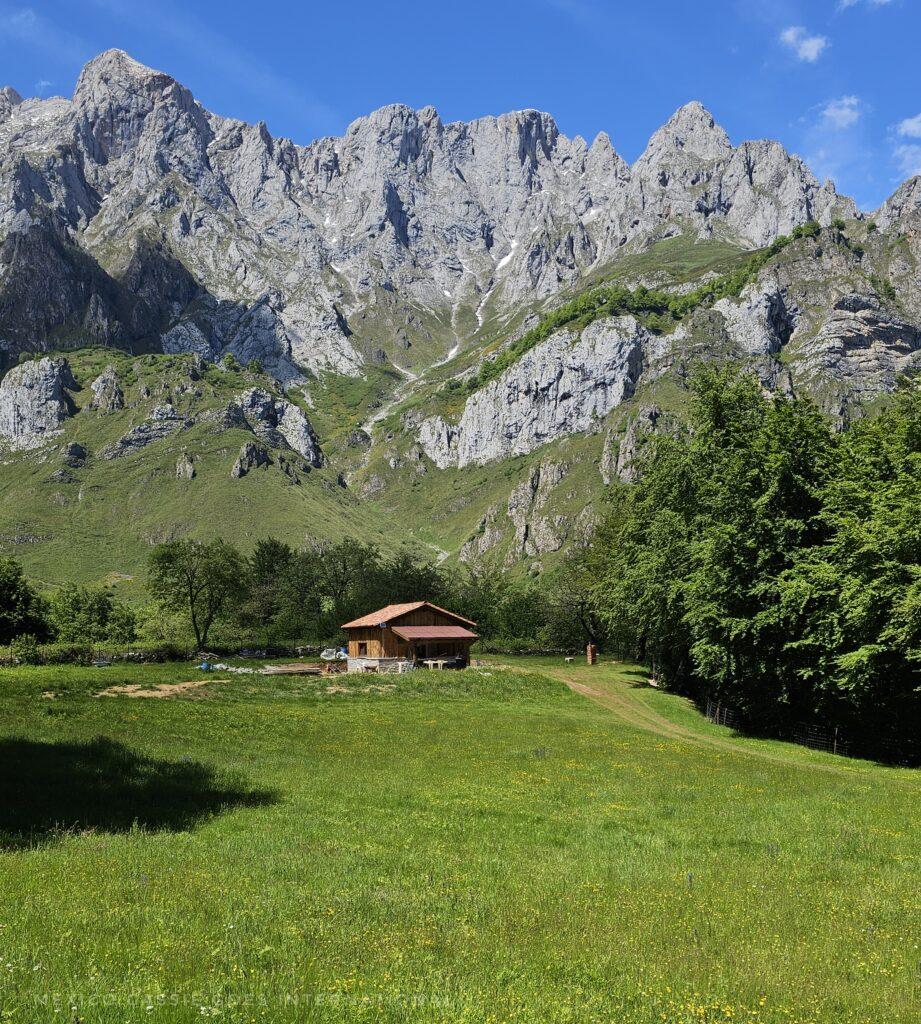
This is a smallish, rugged and extremely beautiful mountain range in the north of Spain. It spans the Principado de Asturias, the Comunidad autónoma de Cantabria, and the Comunidad autónoma de Castilla y León.
MexicoCassie guides to exploring the Picos de Europa
→ 7 day road trip / trekking itinerary for the Picos de Europa
→ Everything you need to know about Las Arenas de Cabrales
→ Everything you need to know about Potes, Cantabria
→ Everything you need to know before visiting the Picos de Europa
How do you get there?
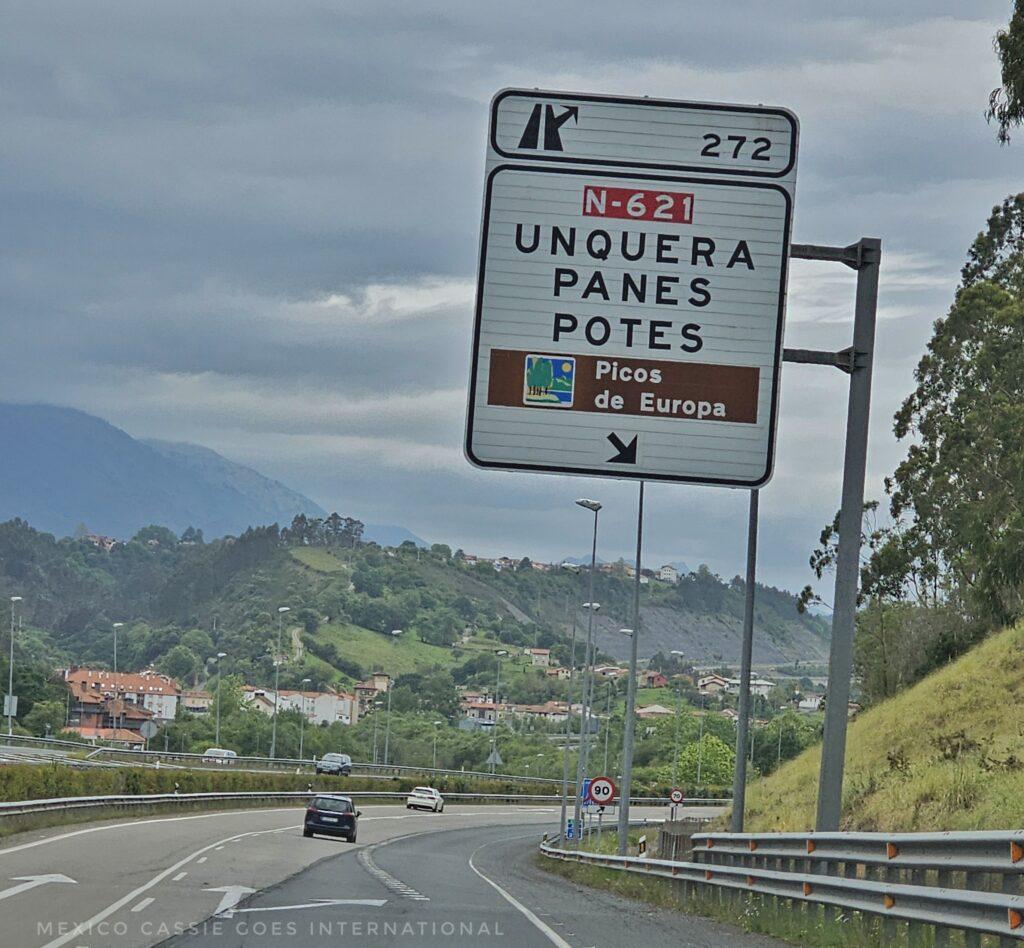
✈ We flew into Bilbao from Sevilla, where we both live. It would also have been possible to fly into Santander, or the official Asturias airport, but my friend wanted to visit Bilbao, and I love the city, so this is what we did. From here we rented a car and drove around the region (actually my friend drove the entire time, which was amazing for me 😉).
🚘 If you’re already in Spain and have rented a car, it’s perfectly possible to drive to the Picos de Europa. Even from Sevilla in the deep south it’s only a nine hour drive.
🚌 You could technically use public transport to get around the main points of interest in the Picos de Europa but I wouldn’t recommend it if you don’t have to. There’s just too much beauty to be constrained by timetables and who wants to be waiting on a bus that may or may not be delayed when they’ve just completed a long hike?
→ Read the full MexicoCassie guide to driving in Spain.
MexicoCassie Picos de Europa itinerary outline
Day 1: Arrive Bilbao – enjoy the city
Day 2: Back to airport to pick up rental car. Drive to Las Arenas, Cabrales (2hr30)
Day 3: Stay in Las Arenas – Long hike day (27km)
Day 4: Stay in Las Arenas – Shorter hike day (12.3km)
Day 5: Drive to Lon, near Potes – Shorter hike day (10.6km – very steep hike)
Day 6: Stay in Lon – Full hike day (10.6km again but even steeper)
Day 7: Stay in Lon – Full hike day (14km)
Day 8: Drive back to Bilbao and fly to Sevilla
(I’m calling this a 7 day itinerary because we could have cut either the first or last day easily – and you can obviously cut or extend too)
A few things to consider before you go
Fitness 💪🏽
It’s absolutely possible to visit this region with varying levels of fitness, you just need to be realistic so you don’t injure yourself. It wouldn’t be a good idea to attempt the 27km Ruta de Cares hike if you’ve never hiked before or have bad knees, but you could still start it and walk until you’re tired. That’s why I shared, above, that my friend and I are both extremely fit and as you’ll see below, some of these ‘moderate’ hikes were actually hard for us.
A note on kids – only one of the hikes I mention is actively not recommended for children under 12. I’ve been hiking with my kids since they were 2 and 4, and I while I know that technically, at 12 and 14, they could cope with everything I outline below, they would moan a lot 🤣. These aren’t hikes for little kids but you could definitely take them to all these places and then take it easy, doing what they can manage at their speed.
A note on blisters – if your shoes and socks are well fitting and suited to hiking, you shouldn’t get them but if you do, it’s vital to have blister plasters and/or blister wool (my preference) with you if you plan to keep walking. I also always carry extra socks with my in my day pack so that if they get damp (mmmmm sweaty 🧦) or uncomfortable I can swap them out and hopefully prevent a blister from forming.
Equipment 🥾
I’m not advocating for buying super fancy, expensive equipment but it’s a good idea to have a first-aid kit, broken-in hiking shoes, proper hiking socks, adequate trousers, a rain coat, good hiking day pack, hiking sticks if you think you’ll use them, and a good water bladder / water bottle. My preference is for a bladder and I highly recommend one that has a lid for the mouth piece like this one.
Extras: I also take a chafing stick & talc, pocket knife
→ Read more the full MexicoCassie guide to planning a trip to the Picos de Europa
Maps 🗺️
We planned our routes using a mix of a Walking in Picos de Europa guide book and talking to experts in the local tourist information centres.
Picnics 🧺
We took bread, ham & cheese with us every day. We also carried a variety of fruits (apples and satsumas), nuts, candies and fuet (traditional Spanish cured sausage). It’s also a good idea to have a trash bag per day because it’s never ok to leave rubbish in nature, & freezer bags for leftovers. A good picnic half way up a mountain is always an excellent choice.
Outdoor peeing 🧻
I think it’s worth also mentioning peeing as you hike as these are long day hikes. I love a good nature pee but I’m aware that many do not. There are not generally toilets along these routes so you need to either hold it or pee merrily. And please, please, take your paper with you.
Non-penis owners, if you’re not convinced, you could always use a sheewee & a pee cloth.
Phone service note 📲
Cell coverage in towns is fine, while hiking you may well find yourself without cell coverage, whether you have a regular physical sim card or an eSIM (basically they provide the same level of service). I highly recommend downloading any maps you think you might need before you set off on any hikes.
📲 If you’re considering an eSIM, read the full MexicoCassie eSIM review and use this 10% discount code to buy yours.
Itinerary details
Day 1 – Bilbao, Euskadi
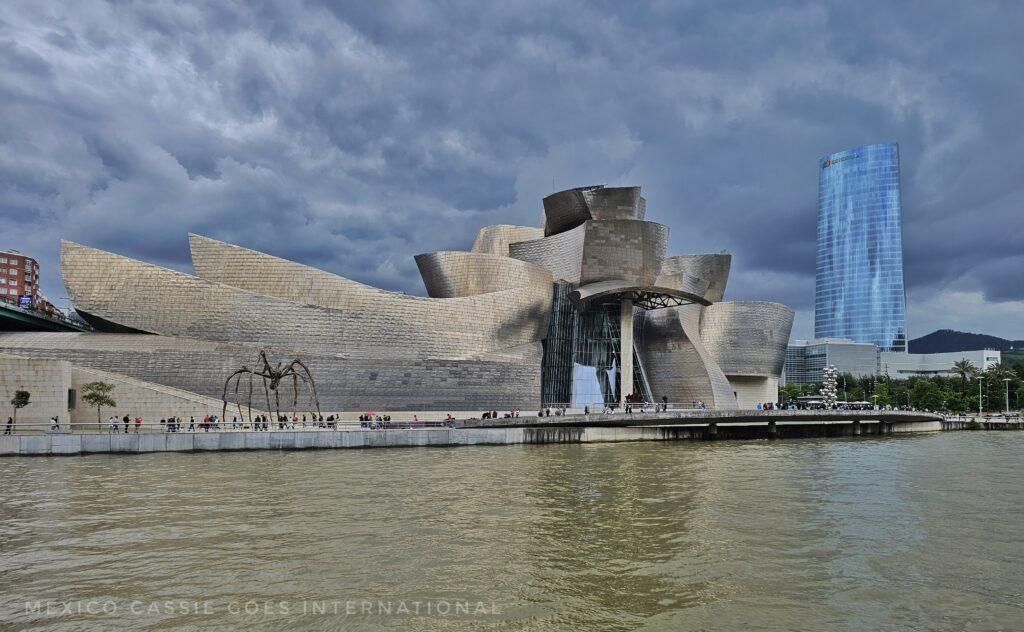
🏨 Where we stayed: Pension Boutique Caravan Cinema (great value for money, clean, central and very comfortable)
What we did: Queer Tour of Bilbao, general wandering (I’ve been multiple times), found a new to me mirador, friend went to the Guggenheim while I did some more general wandering.
Where we ate & drank: Pintxos in Gure-Toki & Sorgínzulo on Nueva Plaza in the Old Town. Bitsa makes fantastic breakfasts (and has amazing art on the walls, so good I actually bought two small pieces). La Barmacia Bilbao is a cool bar that makes excellent cocktails (cool as in my friend and Ioved the atmosphere, not necessarily cool for 20 yr olds)
→ Read the MexicoCassie guide to Bilbao for further information on exploring this awesome city
Day 2 – Drive from Bilbao to Las Arenas de Cabrales, Asturias
This 2h30 drive itself is truly something special. From the moment we left Bilbao we were gasping at the views, and marvelling as the landscape changes from rolling green hills and spectacular coastal scenery to overwhelming mountain views.
🛣️ The roads are good and well maintained the whole route (and there are no toll roads).
We had planned to stop for a picnic lunch along the way but the weather wasn’t great and we weren’t particularly hungry after a good brunch in Bilbao, so we drove straight to our hotel in Las Arenas without stopping.
→ Read the full MexicoCassie guide to driving in Spain to assuage your nerves about renting a car and driving yourself around this region.
Las Arenas de Cabrales
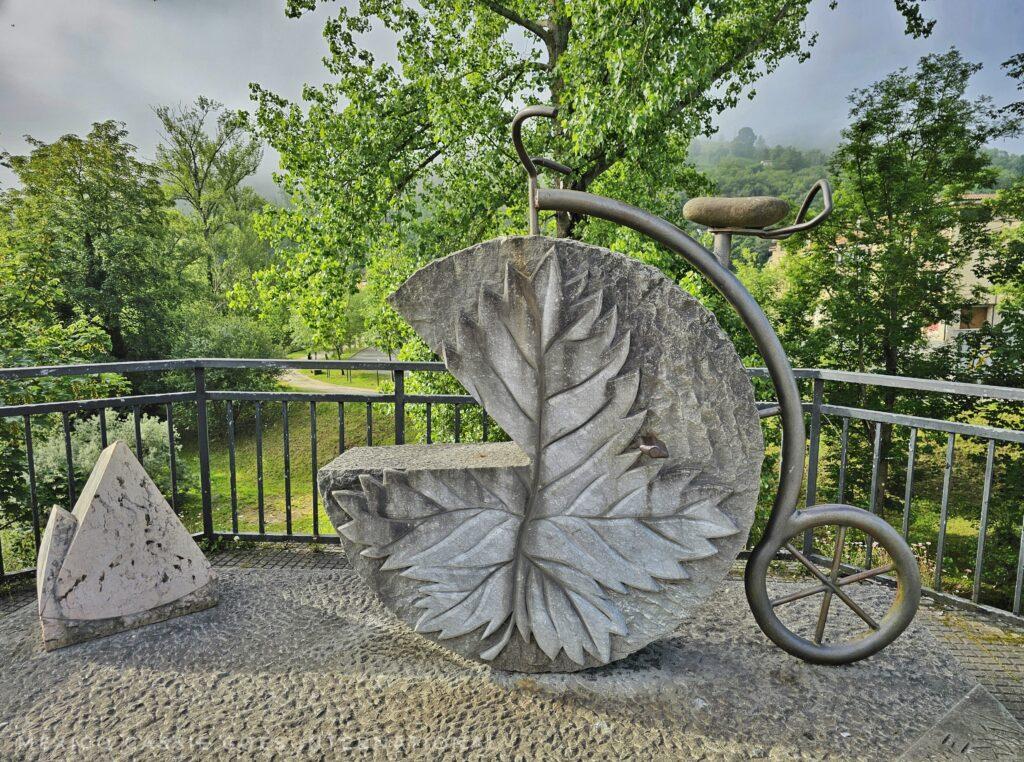
From here you can pick up tours and public buses but personally I wouldn’t rely on public transport in this area.
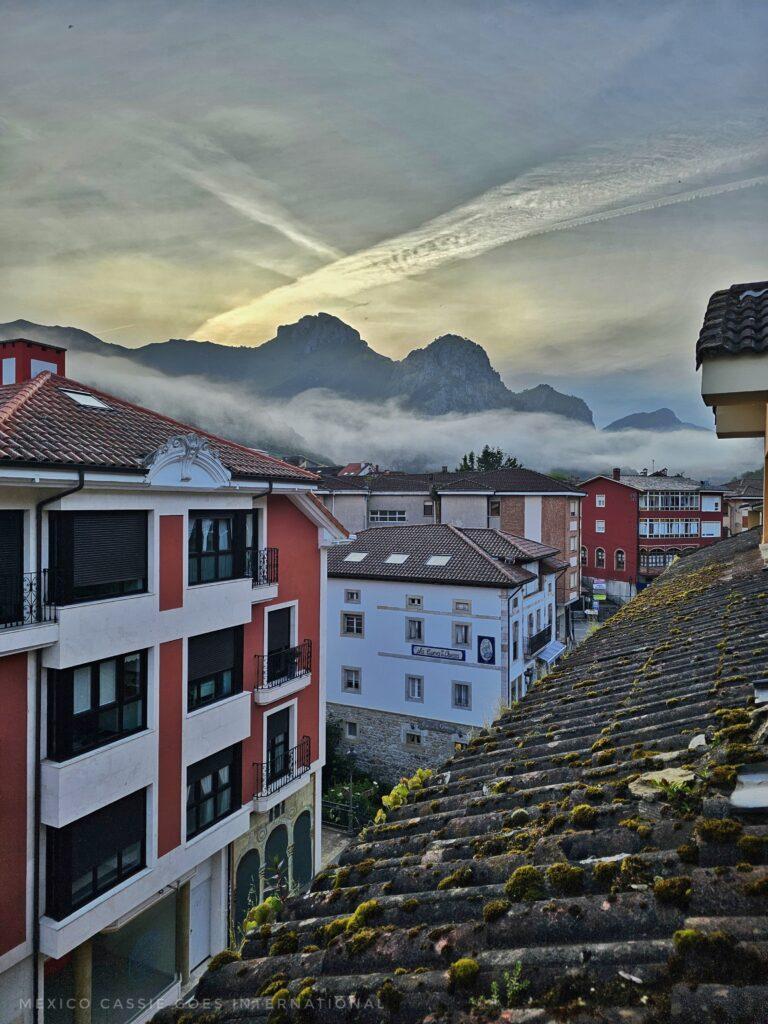
This is a really cute tiny town with a population of around 750 people. It is the main tourist base for the Picos de Europa in Asturias and here you’ll find a decent number of hotels and restaurants, a few tourist shops selling hiking gear and two small supermarkets.
→ Read the full MexicoCassie guide to Las Arenas de Cabrales
Where to stay in Las Arenas
🏨 We stayed in the Hotel Picos de Europa and it was fantastic, I highly recommend it. The rooms are perfect, large, clean, great beds, perfect showers (also a separate bath, which we made use of), and the staff are amazing and the food fabulous.
Where to eat in Las Arenas
🍽️ We ate fantastic breakfasts in our hotel, and suppers in two excellent restaurants
Sidrería La Zapica – slightly more upmarket and very popular. We didn’t reserve but I think we were lucky to get a table.
Santelmo Restaurante – more lowkey, they have a lunch time menu del día and serve food all day, which is handy when you’re exhausted at 7pm after a long hike.
Also had a drink in Restaurante el coyugu and coffees in Panadería Cafetería Cideres
→ Read the MexicoCassie tips to ensuring a smooth trip to Spain
What else to do in Las Arenas
🧀 Cueva del Queso de Cabrales
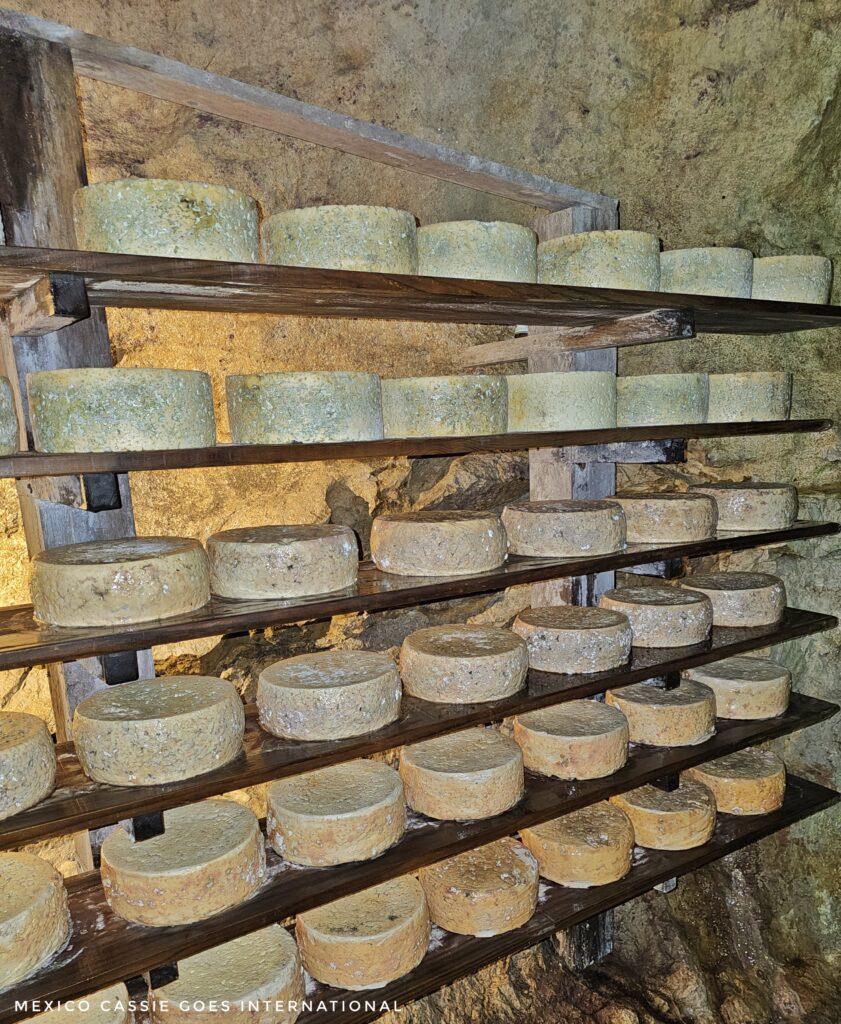
This area is extremely well known for cabrales cheese so we went to learn about how it’s made on an hour long tour. The tour is interesting (given in Spanish, non-speakers were given Ipads with a translation of the tour) and it finishes with a cheese and cider tasting.
We highly enjoyed the tour but despite loving blue cheese, neither of us is a fan of cabrales cheese (we knew this going in, and didn’t have our tastes changed).
It’s recommended to book in advance by phone but when I called no one ever picked up. We just showed up and were able to get on the next tour. I don’t know that this would work in high season.
🏞️ Stroll by the stream and enjoy the views, especially at dawn when the mist hasn’t yet cleared.
Day 3 – Hiking the Ruta del Cares
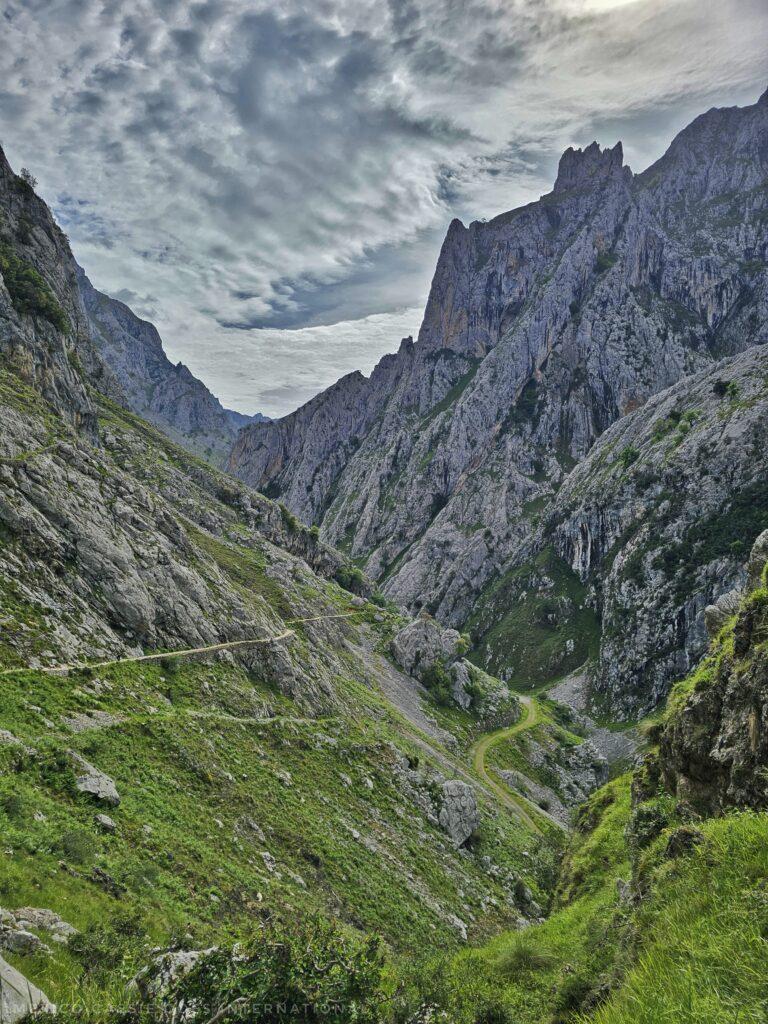
27km between Poncebos (Asturias) and Caín (Castilla Y León) & back again
🥾 Officially, this is a 12km section of a 20km hike between Posada de Valdeón and Poncebos
〰️ This is not a circular hike but many (like us), walk it in both directions. From Poncebos it begins with a steep 2km but then flattens out for much of the journey (there’s a 300m gain over the 12km). The route can obviously be hiked in either direction.
⏱️ We read that this is a three hour hike in each direction, which makes sense for 12km but it wasn’t our reality. The way there took us 4hr30 including a thirty minute picnic break. The return was quicker at around 3hr30. We are both fairly quick hikers but the views we so magnificent that we couldn’t possibly have gone any faster.
⭐️ Moderate level difficulty
🧒🏻 Apparently the route is not recommended for kids under 12. We only saw a baby on their dad’s back in a carrier, no other kids spotted.
🅿️ Park by the funicular for Bulnes – given that this is not exactly the start of the route, our pedometer recorded that we hiked 27km on this day.
🗺️ It’s actually impossible to get lost on this trail as you’re literally following a path the whole way along the gorge side (includes bridges, tunnels, caves and waterfalls).
🚕 From Caín you could order a cab to take you back to Poncebos / Las Arenas but it’s worth keeping in mind that by road this is 100km so neither quick nor cheap.
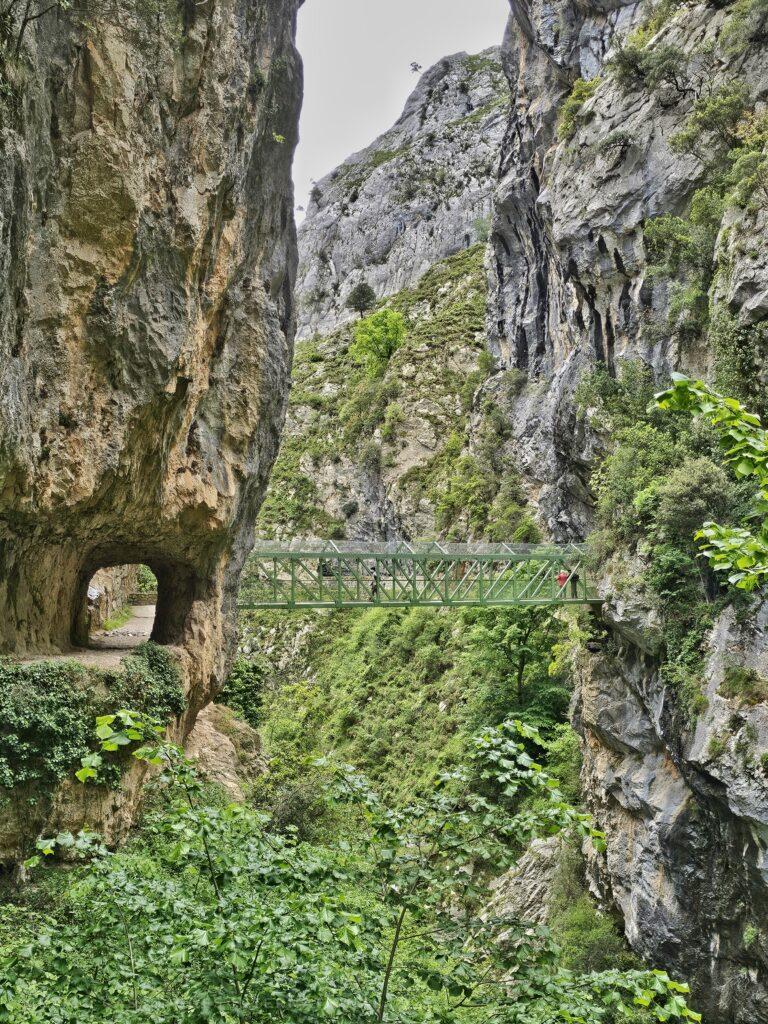
This is probably the most famous of all trails in the Picos de Europa, maybe even in Spain and it is absolutely magnificent. It follows the River Cares between Poncebos and Caín through the Garganta del Cares (Cares Gorge).
If you go during peak season you can expect it to be fairly crowded. We went in May and although it was never busy, we did see a decent number of people.
The trail is never right at the riverside but you will see or hear the river throughout most of the hike as you pass through caves, tunnels, waterfalls and incredible mountain scenery.
You’ll most likely want to stop regularly to chat with the goats, examine pretty flowers, exclaim at trees and marvel at the views. If there weather is good, you may even spot the Naranjo de Bulnes (also called the Picu Urriellu) if you’re lucky.
Just before you reach Caín there are a couple of cafés where you can stop for a drink by the river before turning around or carrying on.
Our experience and opinions
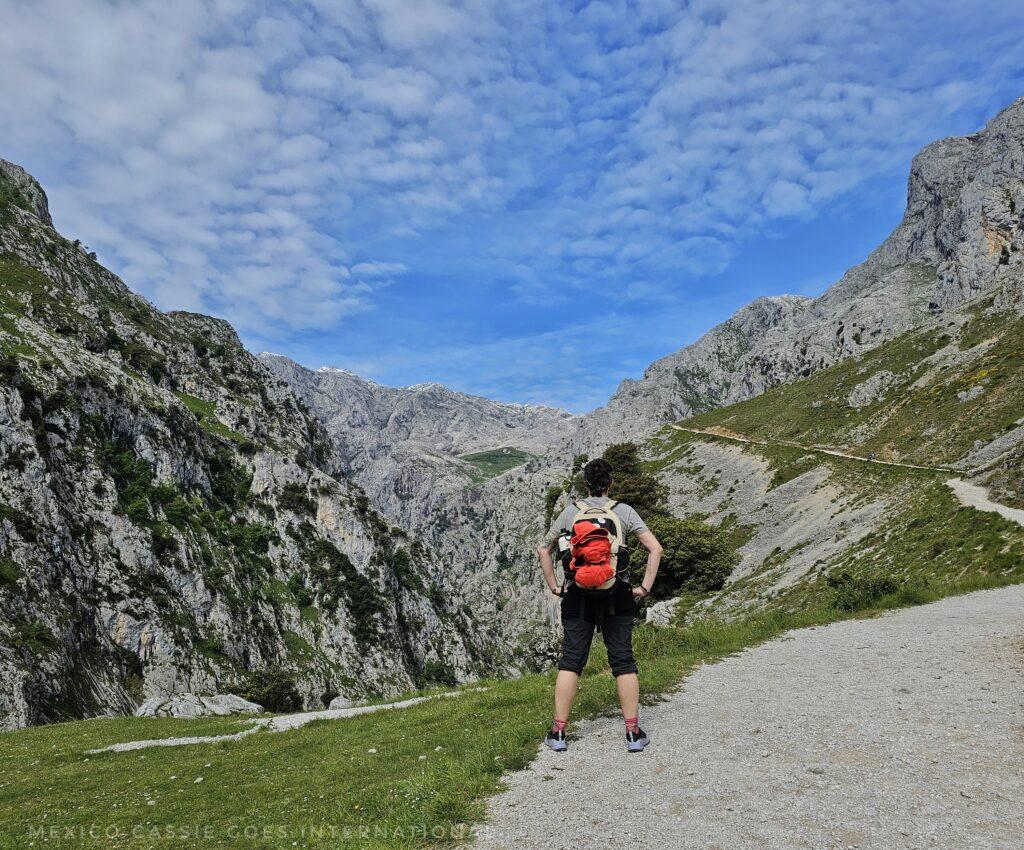
This was the longest of our hikes and it was the only time my body ached after finishing for the day, however, it certainly wasn’t the hardest hike we did. It was long, more than anything.
The views were truly spectacular. The path is always narrow but we never felt worried. I used the return journey to focus on taking photos of insects, flowers and goats and I had maybe kind of hoped to see an Iberian wolf or bear, but they didn’t make an appearance for us.
Day 4 – Poo, two villages and a hike
Mirador de Póo
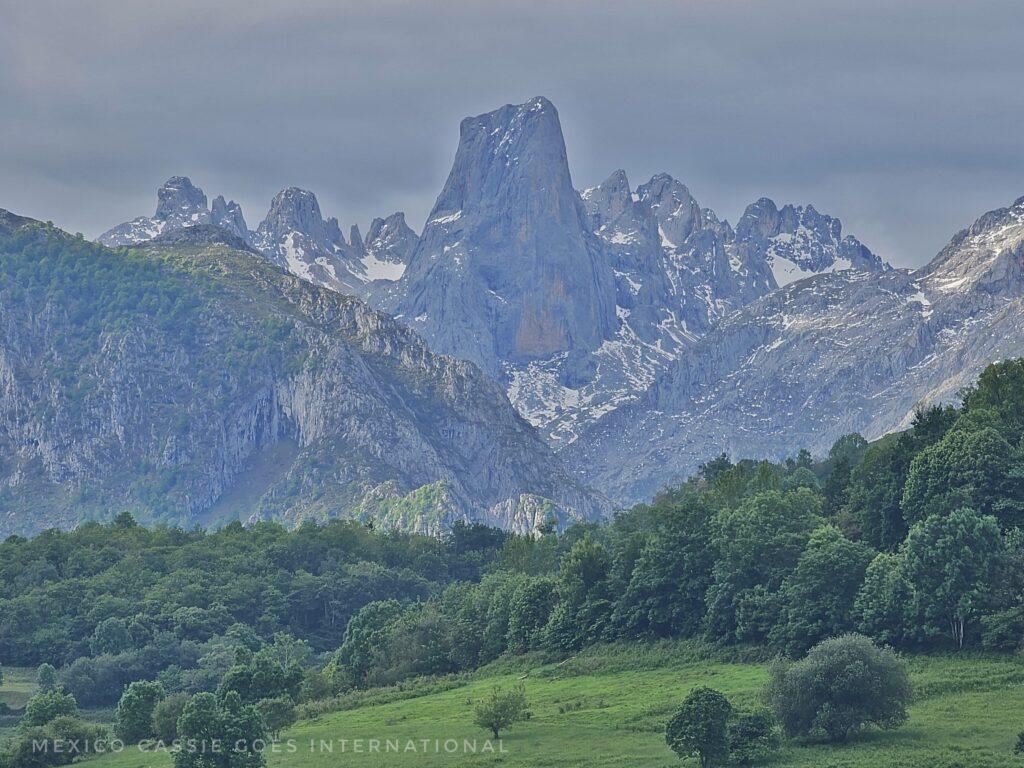
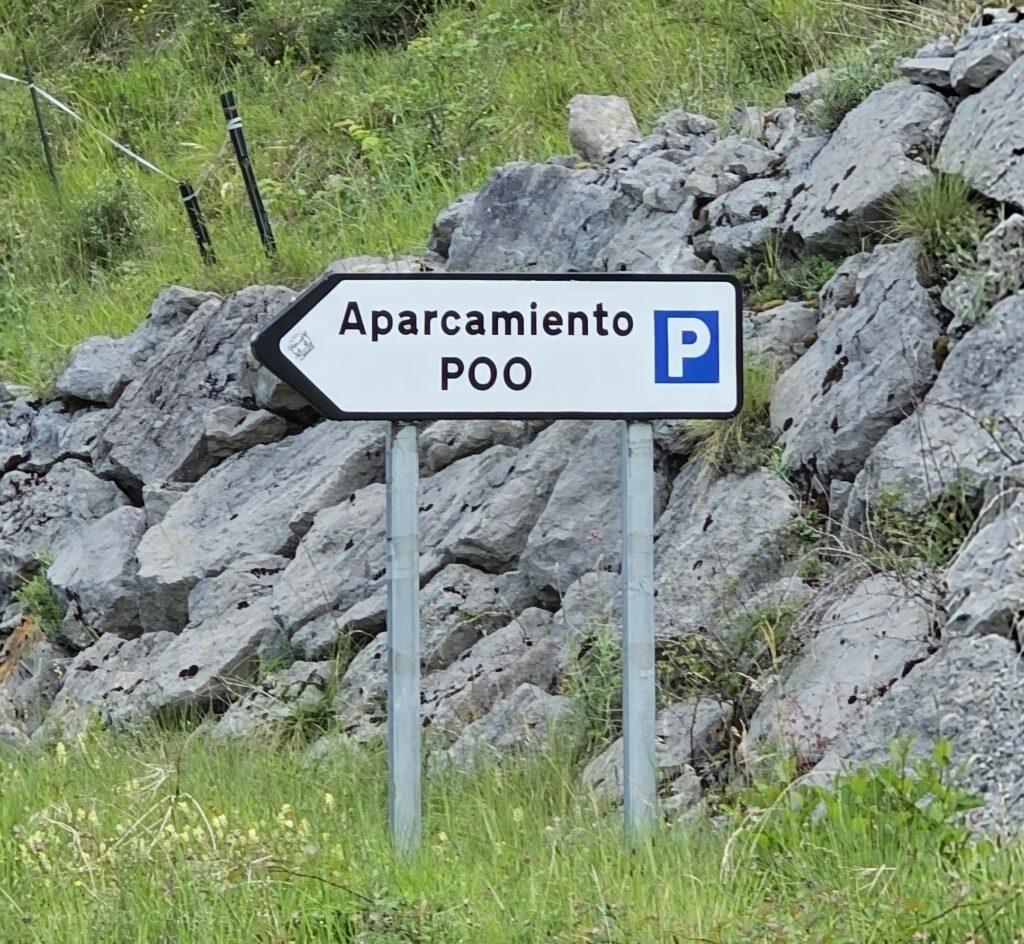
We began our day by driving a few minutes to the tiny village of Póo (just outside of Las Arenas) because there’s an incredible mirador here from where you’ll get great views of the Naranjo de Bulnes, and have the opportunity to take photos of the funny road signs if you’re as immature as my friend and I apparently are.
Sotres
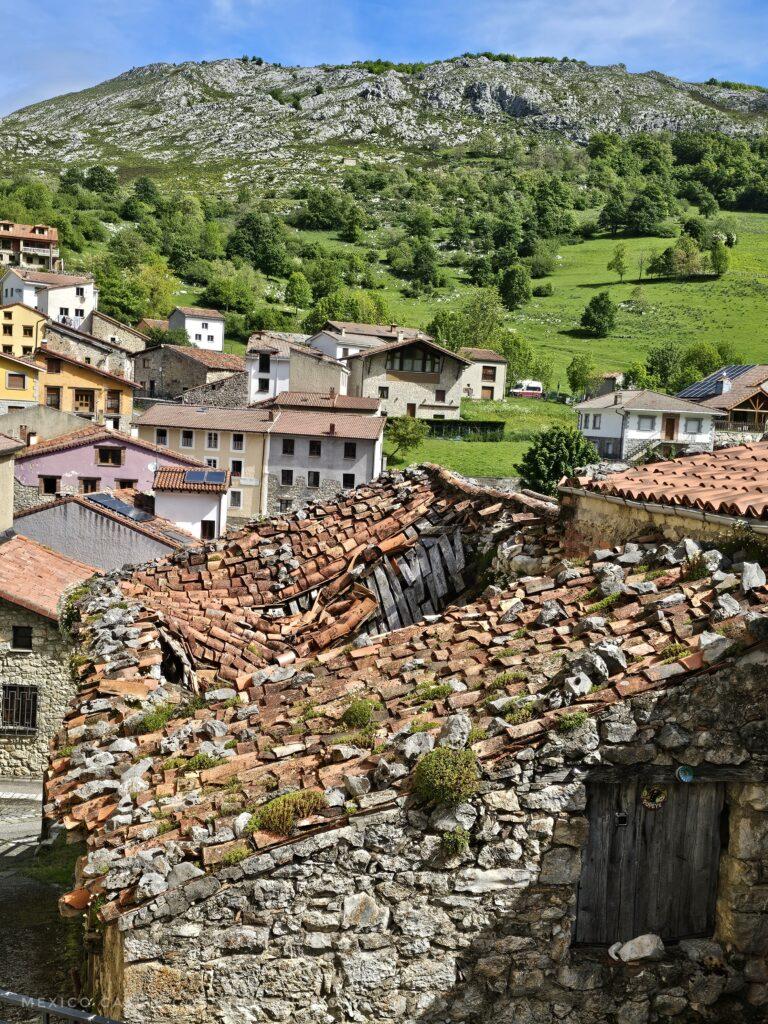
After our extremely long hiking day, we decided to take it a little easier on day 3 so we drove to Sotres, a small village 30 minutes phenomenal drive from Las Arenas.
Sotres is the highest village in the Picos de Europa at 1,050m above sea level, and like Las Arenas, it is famous for its cheese. As I’ve mentioned, we aren’t particular fans of this region’s cheese so we skipped cheese hunting, and instead we took a short walk around the village before heading down to our actual plan of walking to and from Las Vegas de Sotres.
🏨 Sotres would also be a lovely place to base yourself if you love peace and quiet → check hotel options now
Enjoying my travel guides?
Every donation helps!
Hike: Sotres – Las Vegas de Sotres & return
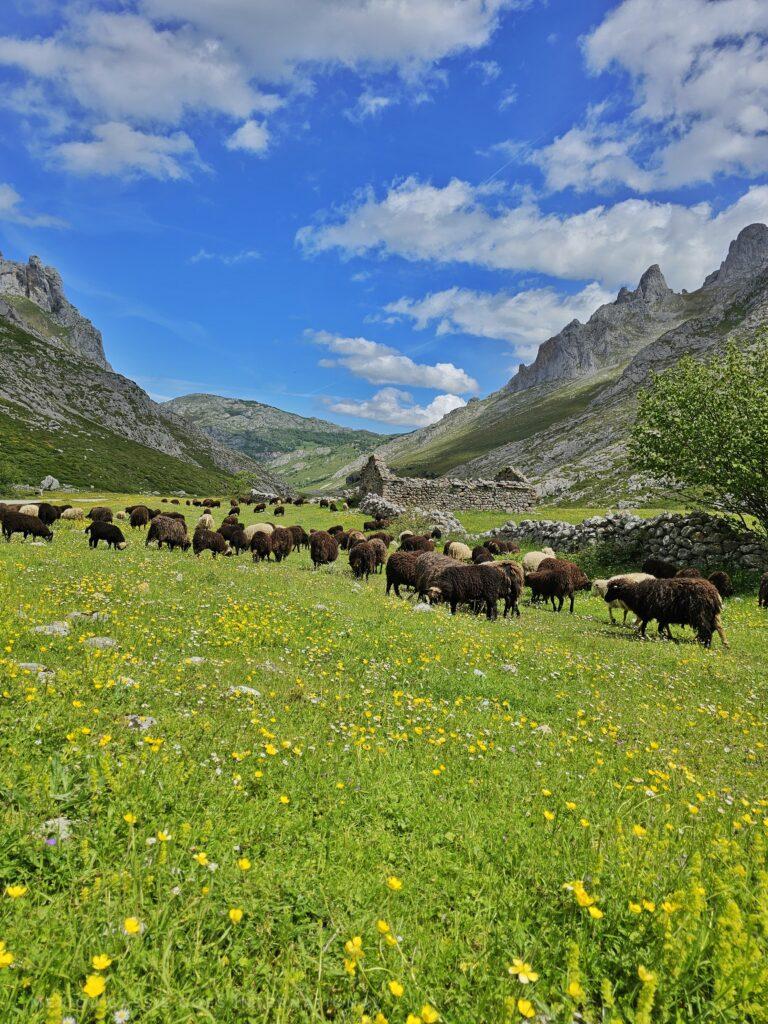
🥾 This is officially Hike GR-202 Ruta de la Reconquista (ugh, terrible name) that runs from Covadonga to Cosgaya (basically the entire length of the Picos). Given our previous day, we decided to walk only to the Vegas de Sotres and back. It was a delight of a hike along a decent path. Vegas de Sotres is a more or less empty village in the valley.
〰️ This is a one way route so we walked a section plus the return (12km in total)
⏱️ We were walking for around 3 hours plus the time we took for lunch, exploring the tiny village and playing on the rocks
⭐️ This section of the route is easy
🧒🏻 Yes, kids could manage this
🅿️ There is parking in Sotres (although this would mean a steep ascent/descent on top of the hike). There is space for a couple of cars just before the start of the route. If these are taken you can go a little way down the path and find a space (it is controlled but some areas seem to be ok).
🗺️ Impossible to get lost
A three hour walk through a green valley with spectacular mountain views all around us was exactly what we needed to aid our recovery from the previous day. There is a stream that you follow, which is great if you want to cool down and of course, there are always cliff sides and boulders to climb, if like me, you’re incapable of not doing so.
Our experience and opinions
This was an enjoyable amble for just over 12 km in total (return). We enjoyed picnicking on the grass, climbing up the rocks, hanging out with the sheep and Cass particularly enjoyed playing with the sheep skull we found.
Bulnes
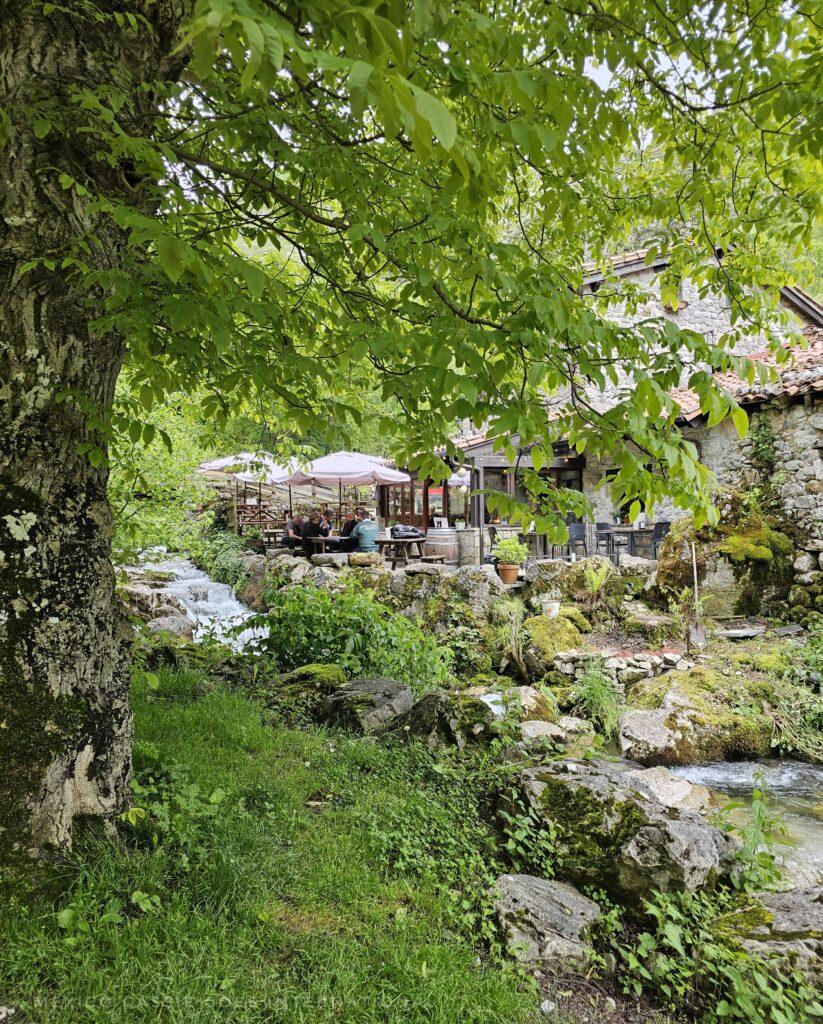
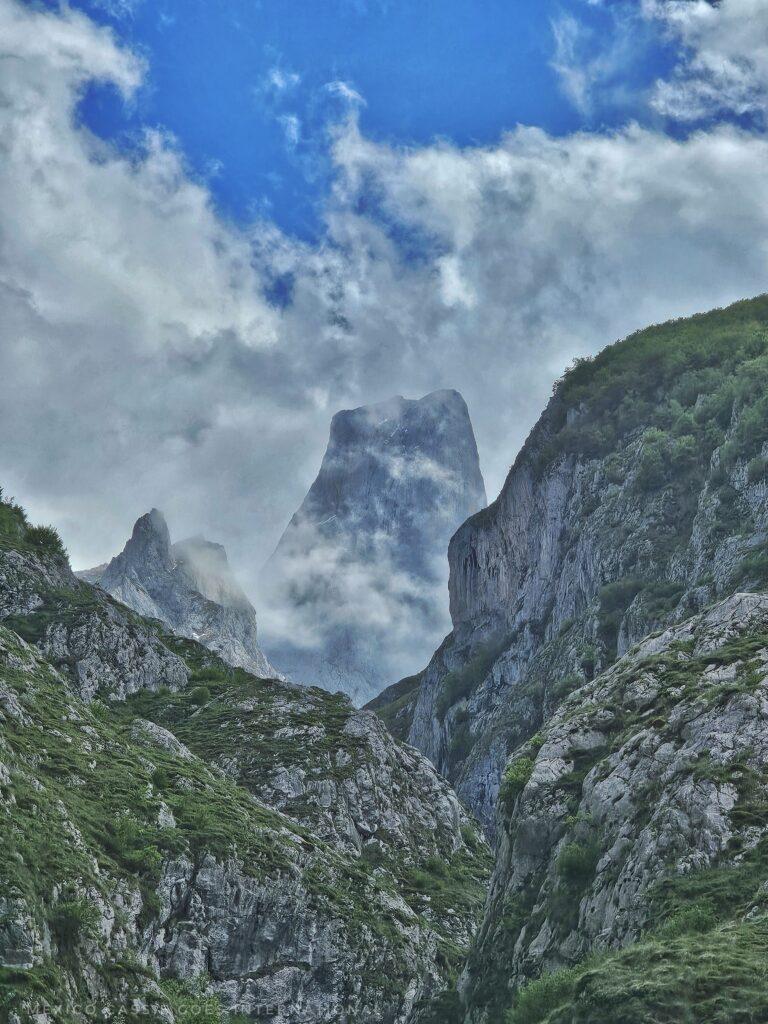
Next we decided to take the funicular up to Bulnes, a tiny village hidden up in the mountains.
It’s possible to hike up (2hr trail) but we decided not to because I love random transport options almost as much as I love hiking – sadly (and should have been obvious but wasn’t to me) the funicular runs directly through the mountain so there’s no view but it’s a fun experience non-the-less during the nine minute 402m rise.
There remains no car route up to Bulnes, you have to choose between the either a hike or the cable car (opened only in 2001).
🎟️ Funicular prices
Adults €17.61 / €22.16 (one way / return), kids €4.32 / €6.71
You can buy tickets in advance here, or in person when you arrive.
Bulnes sits 650m above sea level and is surrounded by peaks of over 1,600m. Fewer than 50 people live in the village but it does a decent trade in catering to visitors who stop in for the night for for lunch/a drink.
Bulnes is a village of two parts. The funicular drops you off close to Bules de Abajo (also known as La Villa). Once you’ve had a drink here you can walk up to Bulnes de Arriba (also known as Barrio del Castillo). If you walk from Poncebos, you’ll probably follow the path La Canal del Texu.
From Bulnes de Abajo you can take a short 10 minute uphill walk to the Naranjo de Bulnes viewpoint (photo above). It’s worth it.
🏨 If staying up here appeals, check out La Casa de Chiflón
Day 5 – Drive to Lon (Cantabria) via Potes and a hike
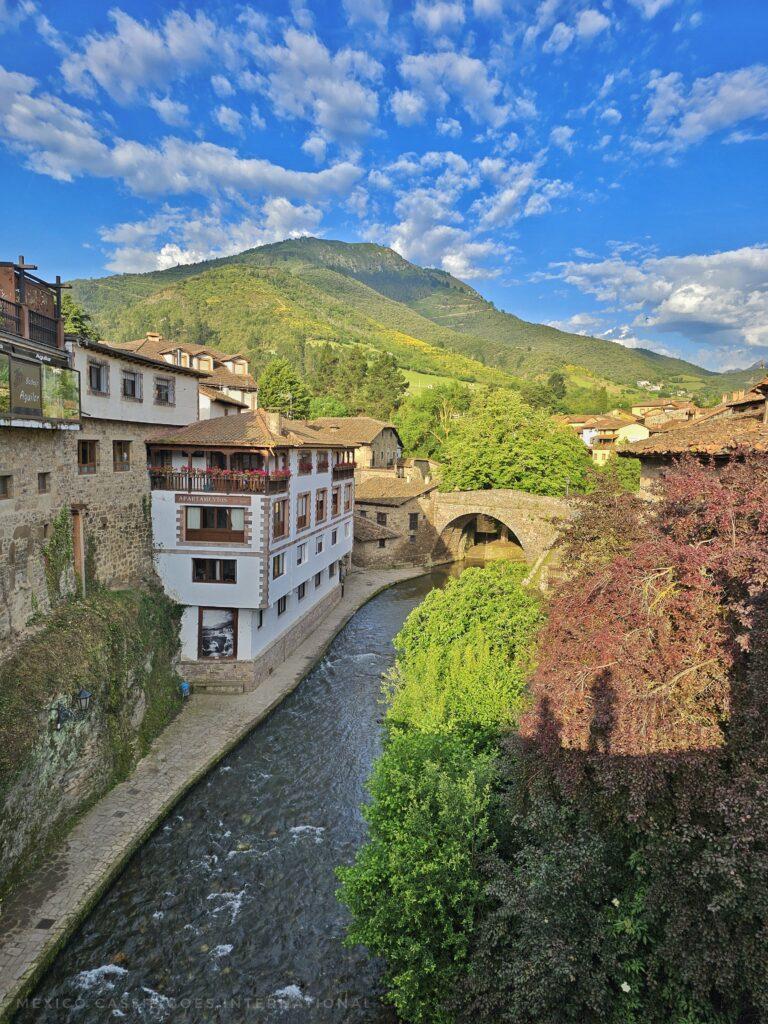
After breakfast we set off for Potes (just over an hour’s drive). We stopped at the excellent visitors’ centre, Centro de Visitantes “Sotama”, to get advice on where to hike while in Cantabria on the way.
Potes
→ Read the full MexicoCassie guide to visiting Potes
Potes is pretty much a bigger version of Las Arenas de Cabrales in that it’s the main town for visitors to the Picos de Europa in Cantabria and its population is around 1300. It’s also an incredibly beautiful town.
Located in the region of Liébana, Potes is surrounded by truly spectacular mountain vistas. Its historic area has been declared a place of cultural interest and as it’s located on the Camino Lebaniego it is also a popular pilgrim town.
🛍️ There is a Monday market as well as three supermarkets, many tourist shops, and numerous restaurants and hotels.
What to do in Potes
When you visit, be sure to take more than a moment to admire the bridges that cross the river here.
Torre del Infantado – until recently this was the Town Hall. Today it’s a cultural centre and monument you can gaze at and even enter. It was built in the 15th century and the views from the roof are fantastic.
Museo Cartográfico Juan de la Cosa (Map Museum) – sadly this was closed while I was in town as I’d have loved to visit. Juan de la Cosa was an early voyager to the Americas and he created the oldest surviving map of the American continent.
🛶 In Potes and nearby villages you will find tour options for kayaking
🪂 From Potes it’s possible to go paragliding (something we saw but did not do) over the Picos de Europa!
Where to stay in Potes
🏨 Hotel Valdecoro – modern comfort in the centre of town
🏨 Hotel Posada La Casa de Frama – 2km from Potes, this rural inn offers spectacular views, comfortable rooms and great food
🏨 Posada Peñas Arriba, Lon – 10 minutes outside Potes, this is where we stayed. It’s a good value inn in a quiet village. Hotel has a bar, decent food and powerful showers
Where to eat in Potes
There are plenty of excellent restaurants to choose from in Potes. Because my friend and I both live in Spain and had eaten only traditional Spanish food up to this point on our trip, we opted for more international cuisine in Potes.
🍔 La Scala – excellent hamburgers
☕️ Panadería Gallofa&Co – excellent coffee and breakfast pastries
❌ La Serna – one of the worst pizzas I’ve ever had. I believe their non-pizza menu is meant to be good but it certainly wasn’t a place I’d return to
🕤 Note that we’d assumed that it would be possible to eat outside of traditional Spanish meal times given that people are here to hike and therefore going to bed early. We were wrong (hence ending up eating bad pizza, it was basically the only place open at 7.30pm).
Brez Hike
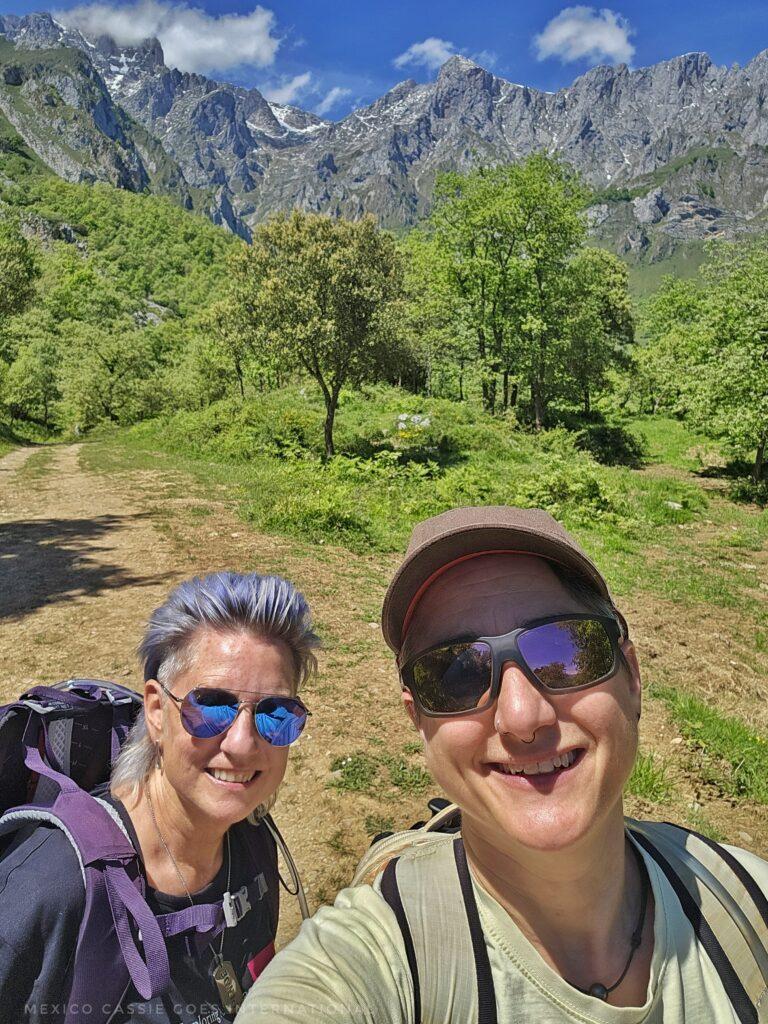
From Potes we drove to Brez to take in a “quick afternoon hike” before checking into our hotel. 🤣
FYI there are a couple of hotels around here too if this is somewhere you like the look of.
🥾 This is a 10 km circular hike.
〰️ A circular route with pretty decent signage – follow PR27.
⏱️ Approximately 3 hours
⭐️ Moderate level but be warned, it’s steep UP and then steep DOWN
🧒🏻 I would have taken my kids but they would have moaned a lot (and they’re excellent hikers) – it wouldn’t be fun with little ones at all.
🅿️ You can park at the entrance to Brez – on the right hand side there’s usually a row of cars, don’t try going past them as you can’t and then you’ll have to reverse back up.
🗺️ There are signs to follow – ensure you know that this is the PR27 circular route as near the end you can choose left or right (you want LEFT, back down to the village).
Our experience and opinions
This hike was not exactly easy and we were absolutely not mentally prepared for it. I’m not sure why but we both made the assumption that it would be easy.
My favourite section was about 2/3 through when we had finished with the steepest climbs and suddenly it looked as if we were going to walk into nothingness as we started our descent.
It was, of course, magnificently beautiful but between the climb and the frequent lack of shade, we were exhausted by the time we got back to our car.
Lon
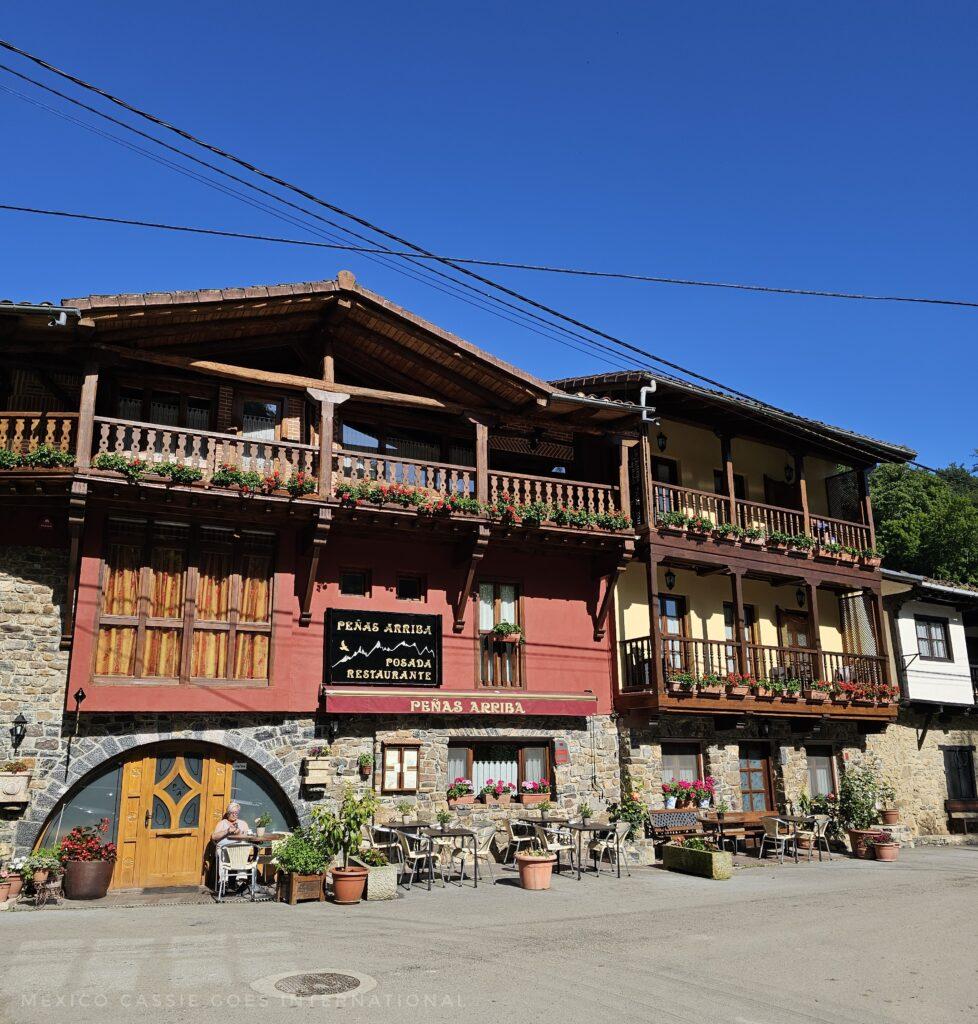
From here we headed to Lon, the village we were staying in
🏨 We stayed in the Posada Peña Arribas
There’s literally nothing else here, just a couple of posadas (inns) and a couple of places that apparently sell cheese – we went to check them out but both looked more like people’s houses than real cheese shops. One was totally shut up and one had a snoozing abuela in the garden. We opted not to disturb her.
Because we’d had a big lunch in Potes, we did not eat supper, but we may have drunk a decent amount while playing cards.
Day 6 – Mogrovejo village & hike
Mogrovejo Village
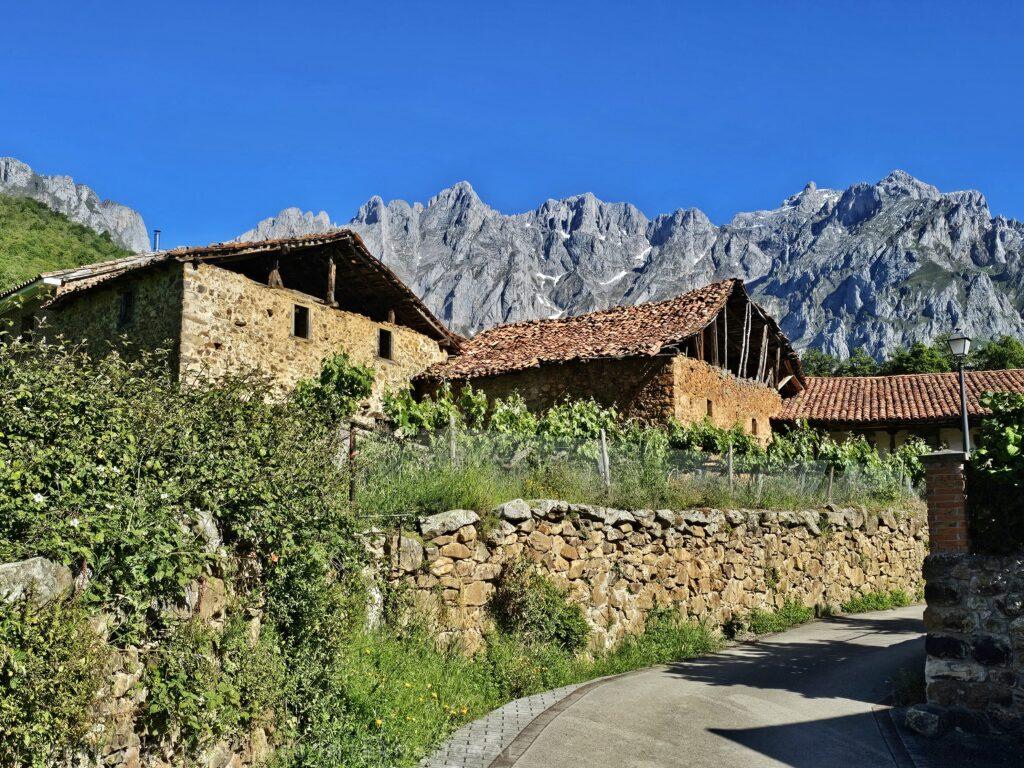
Officially named one of the most beautiful villages in both Cantabria and Spain, this is all known as the Heidi Village and you’ll see why as you explore the village and the surrounding countryside.
(Personally, I think about Heidi and her life way more than you might expect an adult to do but I really, really want to sleep on a bed of straw 🤣 after a day playing in the mountains)
I highly recommend you take a stroll around the village before you hike as once you’re done you probably won’t want to walk any more. Or, if you don’t feel like hiking today, just enjoy the village and then leave, there are plenty of other small villages around you could drive to if you feel like a rest day today.
Mogrovejo Hike
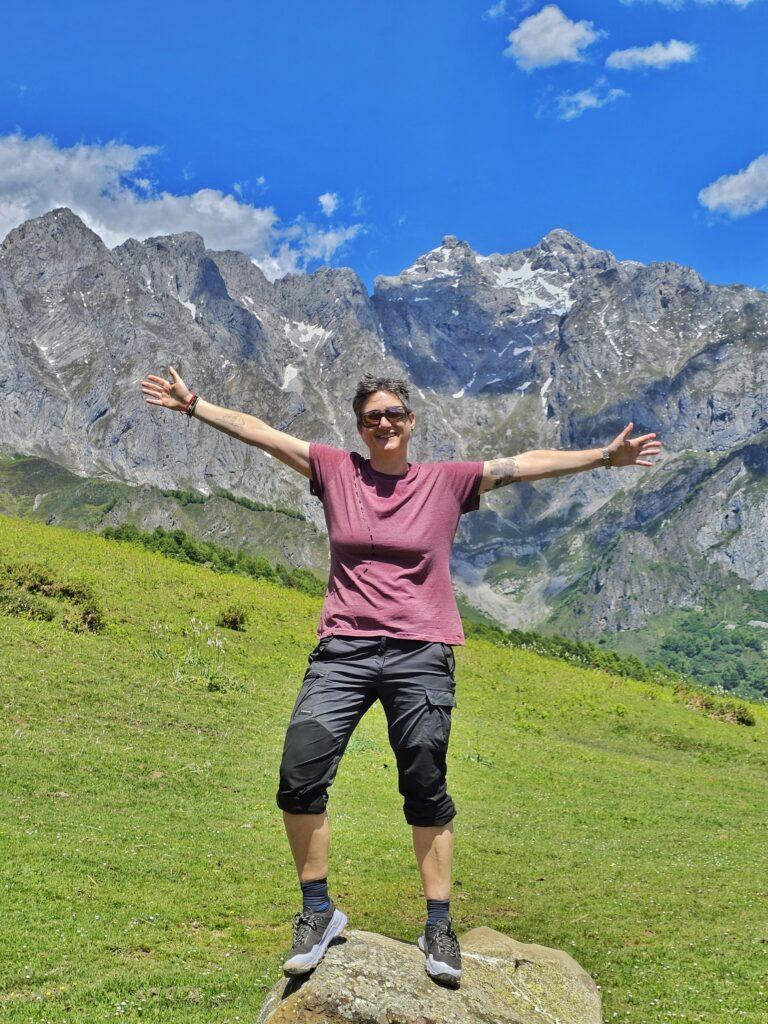
This hike should come with two warnings
🫁 one for your respiratory system – this is HARD HARD WORK
🧡 one for your emotions – the views are so incredible that you might cry
🥾 This is the PR22 Peña Oviedo route that runs from Mogrovejo village to El Cable in Fuente Dé but we were told that most people walk it to more or less Peña Oviedo, so that’s what we did too. We walked 10.8km. It’s important to note that this route has an incline of 702m
〰️ It’s a lineal route that crosses the GR202
📍The PR22 begins on the same route as the PR24 Puertes de Áliva – be sure to note which one you’re following.
⏱️ We were hiking for around 4 hours plus contemplation time and lunch
⭐️ This is a moderately difficult hike. The paths are always good but the incline is serious – at times we were stopping every three to four minutes to catch our breath
🧒🏻 I would not recommend taking kids, strong hiking teens, yes. My kids (12 and 14) could cope but I know they would hate it
🅿️ There’s clearly signed parking in Mogrovejo
🗺️ This was actually the only hike we did where we weren’t always 100% sure where to go. We had to use common sense to figure things out when signs were missing (because we had basic maps only). We didn’t get lost but we did have to pause and think a few times.
Our experiences and opinions
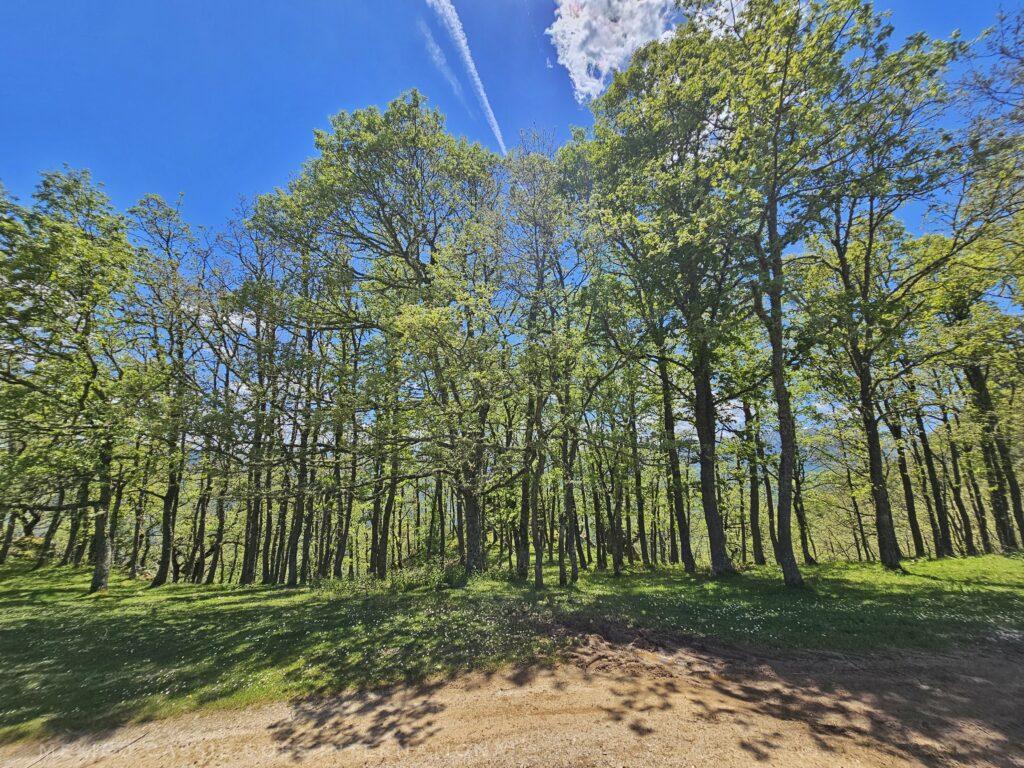
This was probably the hardest day of all the hiking days. The combination of the constant steep incline and lack of shade really wasn’t easy. On a cooler day it would have been better, I’d imagine but I wouldn’t recommend this as a summer hike or to anyone with real knee worries.
Once we reached the Peña (monolith) we collapsed for a while in its shade before making the dubious decision that we were tough enough to carry on a while longer – maybe the altitude got to us more than we thought.
The views along the way did make up for the lack of breathing and the trees here were some of the most beautiful so as well as stopping to breathe, we also stopped multiple times to simply contemplate the gorgeous alpine meadows with the incredible mountain backdrop – here, you fully understand the Heidi location.
Both the contemplation time (particularly sitting on the rock I’m standing on in the photo above) and then the picnic in the fairy grove shade of the trees (photo above) reminded me why I do what I do, and why I am so passionate about people exploring away from cities and crowds: it’s nigh on impossible to not care about the future of our planet when you spend time in nature, communing, interacting and marvelling at its beauty, and remembering our place in the ecosystem.
Day 7 – Fuente Dé cable car, snow and hike
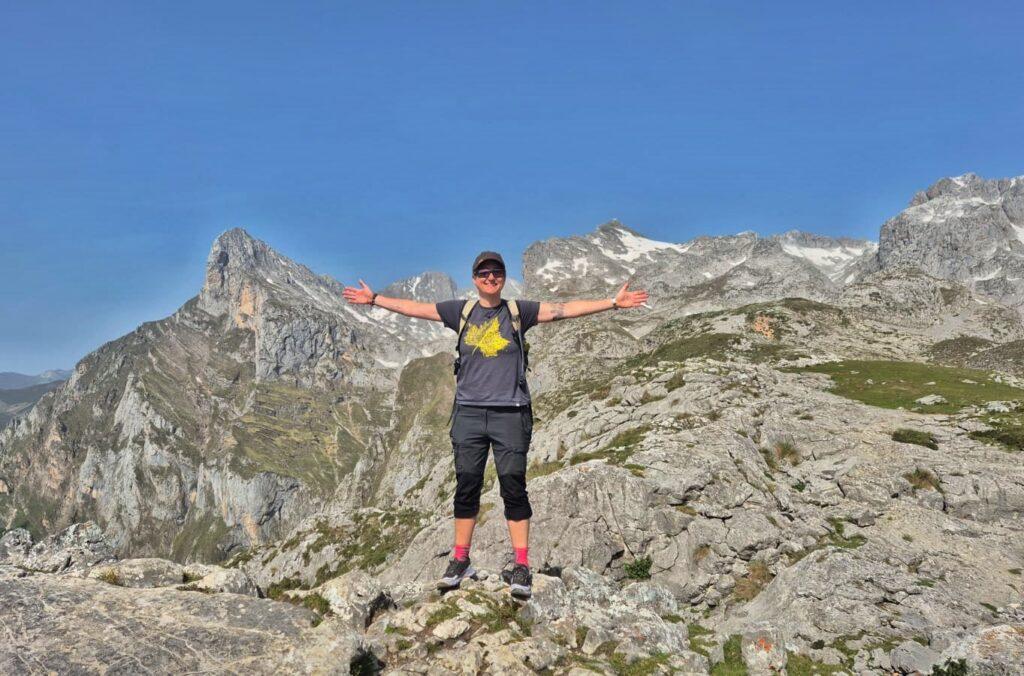
Teleférico / Cable Car
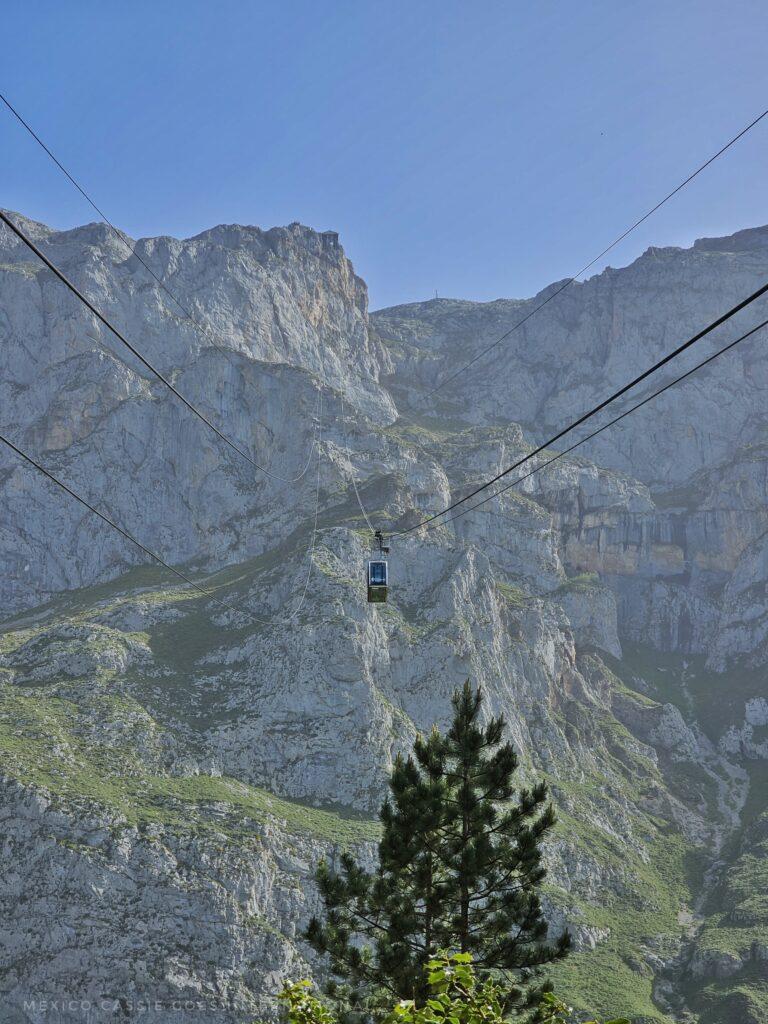
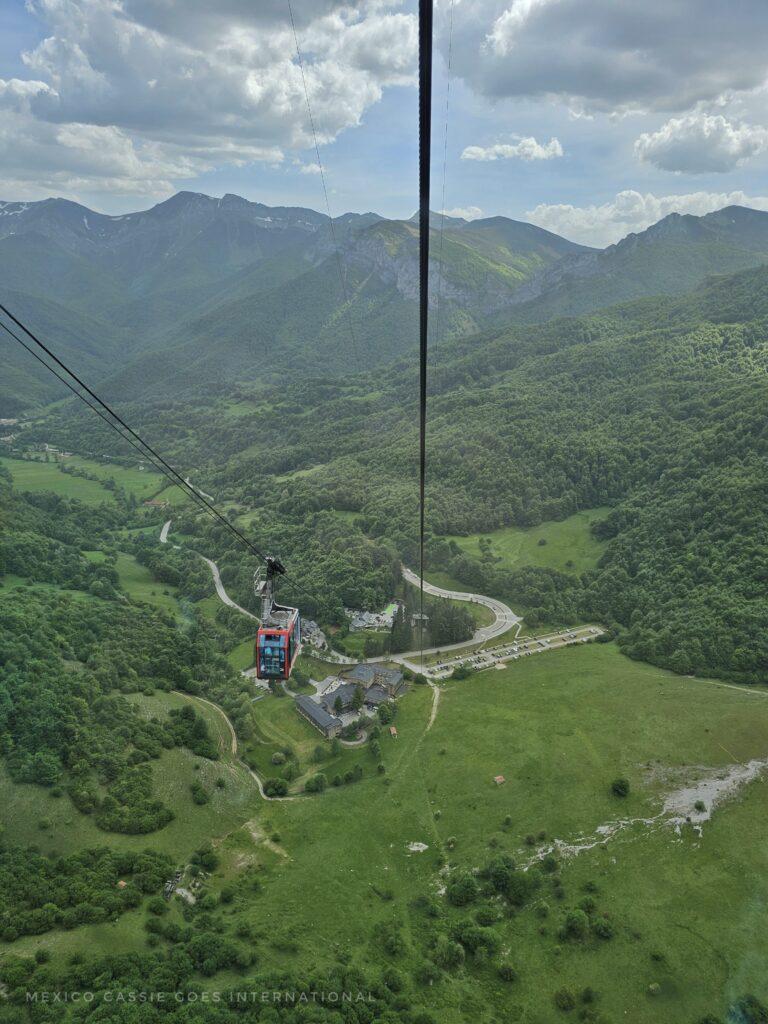
The Fuente Dé cable car runs from Fuente Dé at 1070m above sea level to El Cable at 1823m above sea level covering 753m in 3 minutes 40 seconds.
20 people are permitted in each car, which means you generally have a pretty good view.
🎟️ It is highly advisable to buy your cable car tickets in advance, particularly if you’re hoping to get up the mountain early and / or you’re there in peak season.
→ You can buy your tickets here and find prices here (in low season we paid €20 return, in high season it’s €30 return)
The first car leaves at 10am and the last one returns at 6pm. We booked the 1030am and returned at around 4.30pm
We booked a return trip as we weren’t sure which route we’d want to take (there are some that take you back down to Fuente Dé). In the end we were glad because it gave us the chance to explore more of the high mountains.
🥾 There are numerous hike options you can take up here depending on your fitness levels, and hiking desires. We began on the PR24 (links up with the GR202 Puertas de Áliva route). We walked 6.6 km of this before returning and walking along the PR23 Horcadas Rojas. In total we walked 14 km.
〰️ We opted to walk two sections that both required us to return the way we came. The PR24 is actually a 14 km trail that starts at El Cable and ends in Fuente Dé.
⏱️ We were up in the mountains between 10.30 and 4.30 but this included 30 minutes for lunch and contemplation by the lakes time
⭐️ You could take the cable car up in your dressing gown and slippers and walk 30 minutes to some very beautiful views without too much stress. Once you turn that corner after 30 minutes though, it’s a decline all the way (and I hear the end is tricky) or a decline and then hard going incline on the return. We saw some people taking it VERY slowly.
🧒🏻 There’s no reason to not take kids up here
🅿️ There is a small parking lot right at the base of the cable car and a larger one just down the road
🗺️ There are map boards just after you exit the cable car area if you haven’t already planned your route, and there are sign posts once they’re necessary – everyone goes in the same direction to begin with
Our experiences and opinions
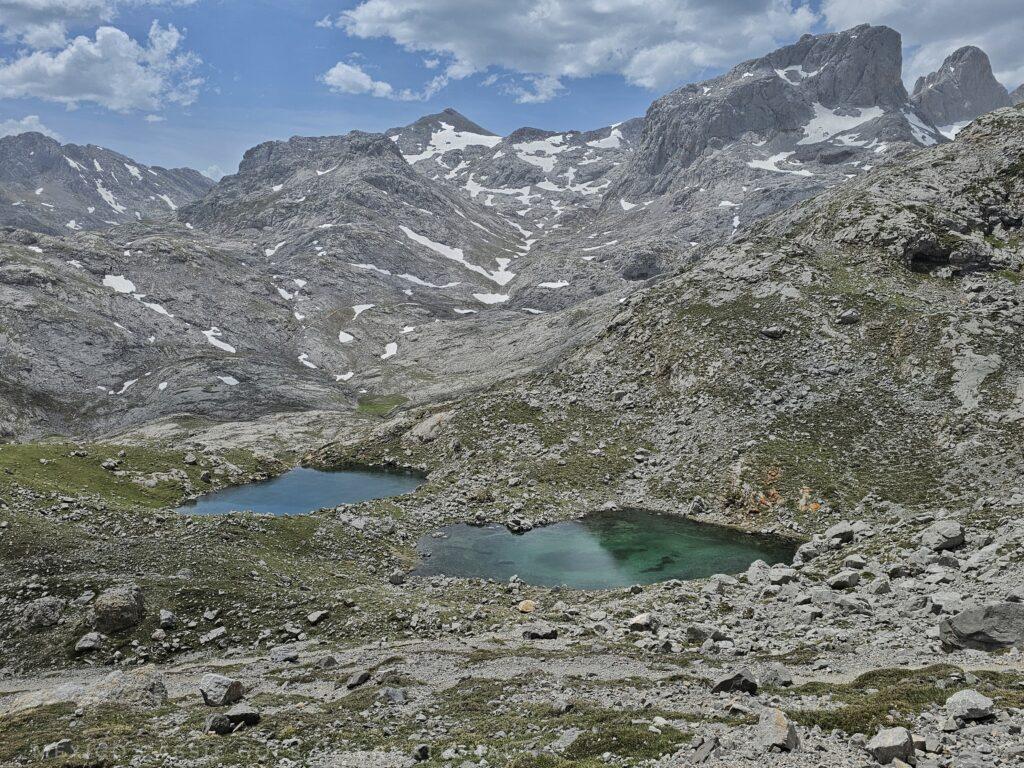
We walked a very jolly 5km down past the Refugio de Áliva (at time of writing closed for renovations but I believe a good place generally to get snacks and drinks).
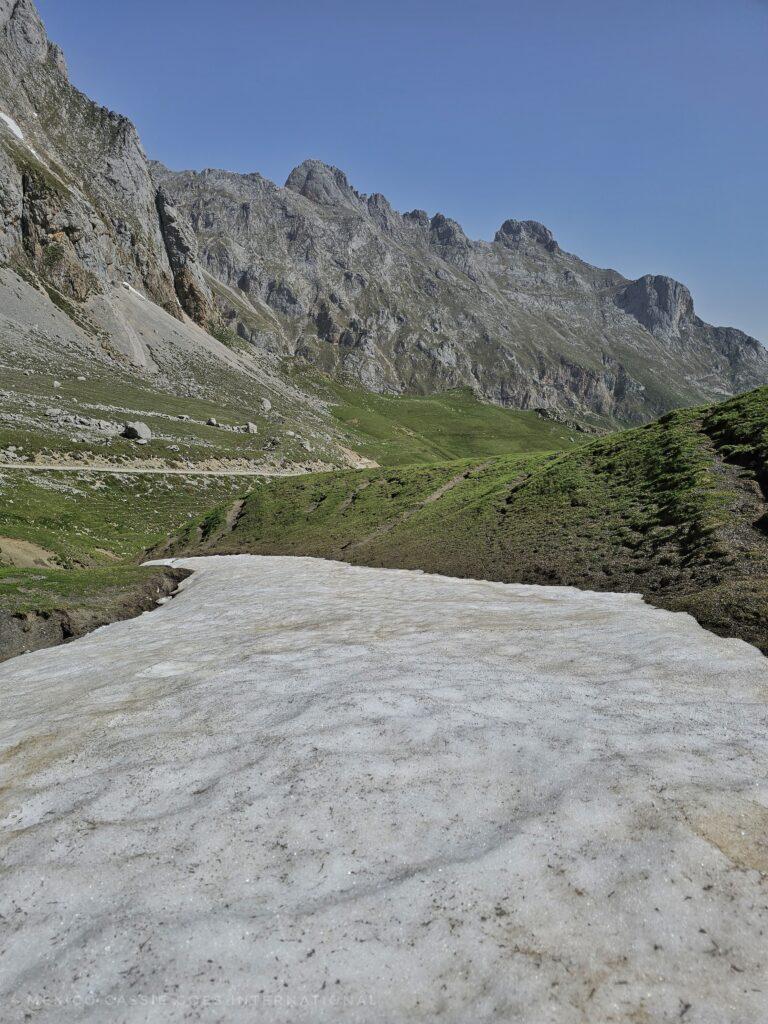
Once you pass the refugio the landscape opens up into valleys so once we’d done some sitting on a hill and contemplating our good fortune, we decided to head back up into the mountains. I won’t lie, the way back was much harder.
Our route down to the refugio also included a Cass-induced skip off piste to visit a small snow bank where we merrily threw snowballs for a few minutes.
Just before the Chalet Real, you cross the Riega de Resalao. Here there’s a fuente with delicious mountain water you can enjoy. We also saw people paddling in the water (downstream from the fuente, don’t worry).
We ate lunch opposite the majestic Peña Vieja, having scrambled up a cliff side to find some shade. We then followed the PR23 Horcados Rojos path for a while before getting entirely distracted by the Lagos de Lloroza (three small ‘lakes’ that are fun to climb down to and then explore. Our original plan had been to hike up this route as far as we could before the snow got too deep but the lakes were just too pretty to ignore, there was snow to play with, our feet needed paddling and there were pollywogs to watch.
(The lakes here, by the way, are not glacial lakes, as we wondered while we sat by them. There are two glacial lakes but they’re both over by Cangas de Onís on the other side of Asturias)
We’d planned to have a coffee (beer) in the mirador restaurant before heading down but it was incredibly loud so we opted to return and stop in the very pretty Cosgaya for a drink on the way home instead.
Day 8 – Return trip to Bilbao
That was it. We got up, packed the car, stopped for breakfast coffees in Potes and drove back to Bilbao (via a Mercadona stop for poke bowls to eat in the airport – you don’t catch me paying airport prices).
There’s so more to see in this region and you will find many itineraries that manage to squeeze in the Covadonga lakes (for example) into a week but we wanted to enjoy our views, not worry about rushing, and we know we’ll be back.
📚 🇪🇸 Read more of MexicoCassie’s Spain guides
→ MexicoCassie guide to whether Spain is safe for tourists
→ MexicoCassie guide to driving in Spain
→ MexicoCassie guide to driving in southern Spain
☕️ MexicoCassie guide to vegetarian tapas, to breakfast and to feeding the kids
📲 MexicoCassie guide to using an eSIM in Spain
⭐️ Tips to help when you visit Spain
Sevilla
⭐️ What is Sevilla famous for? | ⭐️ How many days do you need in Seville? | ⭐️ Everything about the Seville airport bus
⭐️ 1 day in Seville | ⭐️ 3 days in Seville | ⭐️ 5 days in Seville | ⭐️ How to visit Seville in the summer | ⭐️ How to visit the Alcazar | ⭐️ Quirky Seville
⭐️ Best beaches from Seville | ⭐️ Day trips from Seville | ⭐️ Seville with kids | ⭐️ Seville with teenagers | ⭐️ How to see flamenco in Seville | ⭐️ Best family friendly tours in Seville
➕ Hire MexicoCassie as your amiguía for the day in Sevilla or Alcalá de Guadaíra
Málaga
⭐️ 3 days in Málaga | ⭐️ 1 day in Málaga | ⭐️ Day trips from Málaga | ⭐️ 1 day in Ronda | ⭐️ 1 day in Ronda with kids | ⭐️ What to do in Antequera | ⭐️ Exploring Málaga with kids
Córdoba
⭐️ What to do in Córdoba | ⭐️ Planning your Córdoba day trip from Seville | ⭐️ Day trips from Córdoba | ⭐️ Exploring Córdoba with kids | ⭐️ 1 day in Córdoba | ⭐️ Zuheros, the most beautiful village in Córdoba
Cádiz
⭐️ What to do in Cádiz province | ⭐️ How to spend 1 day in Cádiz city | ⭐️ What to do in Cádiz with kids | ⭐️ Exploring Tarifa | ⭐️ How to get to Tangier from Tarifa | ⭐️ Exploring Gibraltar | ⭐️ What to do in Jerez de la Frontera
Huelva
⭐️ Is Huelva worth visiting? (YES) | ⭐️ What to see in the gorgeous Aracena
Granada
⭐️ Planning your Granada city break | ⭐️ Granada with kids | ⭐️ 2 days in Granada | ⭐️ How to explore Guadix and its cave houses
Almería
⭐️ Things to do in Almería City | ⭐️ What to do in Almería with kids | ⭐️ Is Almería worth visiting? | ⭐️ Figuring out the Almería beaches
Community of Valencia
⭐️ 1 day in Valencia | ⭐️ 2 days in Valencia | ⭐️ Museums in Valencia ⭐️ Day trips from Valencia | ⭐️ Valencia with kids
Community of Madrid
⭐️ Why should you visit Madrid | ⭐️ Spending 5 awesome days in Madrid | ⭐️ 3-day Madrid itinerary
Castilla y León
⭐️ Segovia, a perfect day trip from Madrid | ⭐️ How to visit Medina del Campo | ⭐️ How to visit Zamora
Euskadi (Basque Country)
⭐️ What to do in the Basque Country | ⭐️ Excellent things to do in San Sebastián | ⭐️ Is San Sebastián worth visiting? | ⭐️ How many days do you need in San Sebastián? | ⭐️ Day trips from San Sebastián | ⭐️ San Sebastián with kids | ⭐️ Is Bilbao worth visiting? | Planning and taking day trips from Bilbao | Why Vitoria-Gasteiz is worth visiting?
Picos de Europa
⭐️ Road trip itinerary for the Picos de Europa | ⭐️ Planning for a trip to the Picos de Europa | ⭐️ Las Arenas de Cabrales | ⭐️ Visiting Potes
Extremadura
⭐️ Everything you need to explore Monfragüe | ⭐️ What to do in Mérida | ⭐️ What to do in Cáceres | ⭐️ How to visit Plasencia | ⭐️ Visiting Zafra (Sevilla Chica) | ⭐️ What to do in Badajoz | ⭐️ How to visit Jerez de los Caballeros | ⭐️ Extremadura road trip
Galicia
⭐️ What to do in Ferrol | ⭐️ Everything you need to visit Santiago de Compostela | ⭐️ Great reasons to visit A Coruña | ⭐️ Northern Galicia road trip
Cataluña
⭐️ Road trip around Girona Province | ⭐️ Spending 1 day in Girona | ⭐️ 1 day in Barcelona | ⭐️ How to visit Castellfollit de la Roca
La Gomera (Canary Island)
⭐️ Hiking on La Gomera | ⭐️ La Gomera with kids | ⭐️ Take a day trip to La Gomera