Road tripping through Extremadura – meeting a quieter side of Spain
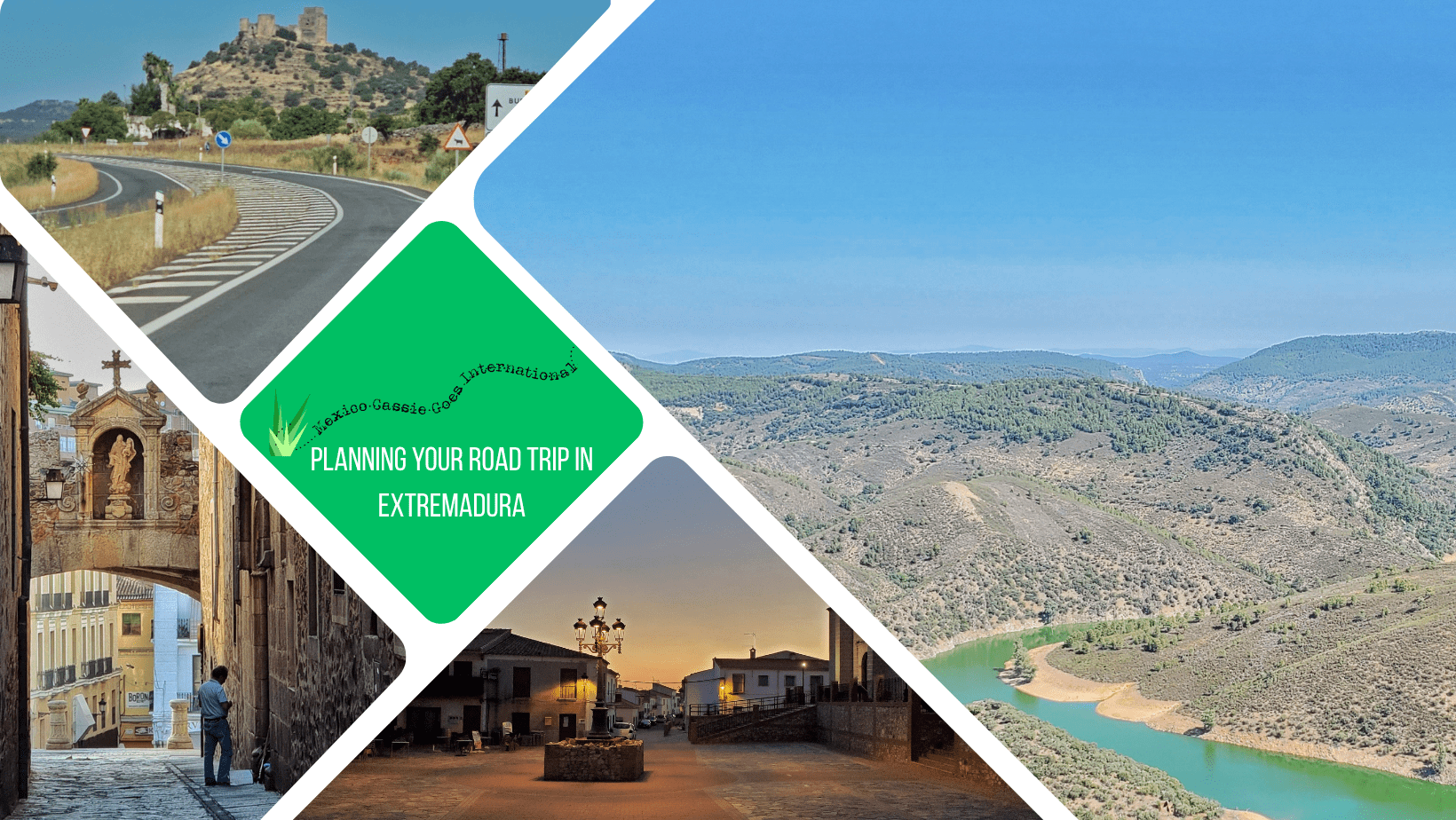
Extremadura is a region often forgotten or overlooked by visitors to Spain. To me this is a real shame as it’s a beautiful region. It’s quiet, never overcrowded and quite frankly, in my opinion, one of the last remaining hidden gems in Spain.
Extremadura is for you if you love historic towns, medieval castles, Roman ruins, incredible natural beauty, great food and wide open spaces practically free from international tourists.
It’s probably not the first trip most people would organise in Spain but a road trip through this community is a fantastic way to get to know a quieter, more peaceful side of the country.
So let’s take a look now at the best way to take an Extremadura road trip, where to go, and what you’ll want to see.
There are affiliate links in this article. If you click and make a purchase I could make a small sum at zero cost to you. Thank you!
Getting around Extremadura
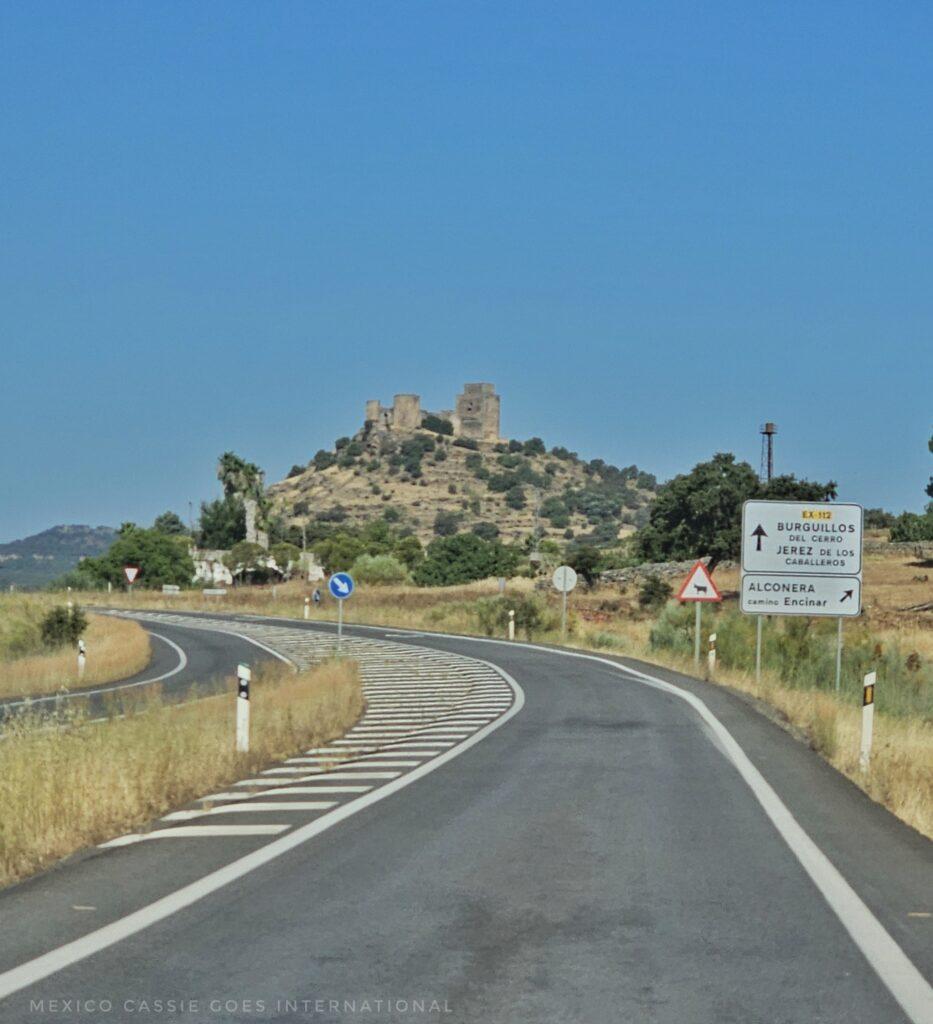
It is obviously, easiest to take a road trip around Extremadura in a car. The roads in Extremadura are excellent, well maintained and rarely busy.
Driving in Extremadura means driving on roads surrounded by olive groves, and cork oak forests, passing by medieval castles and small picturesque towns
→ Read the full MexicoCassie guide to driving in Spain to learn more
→ Check rental car prices and availability now
🅿️ I always recommend checking up on parking options before you arrive into a new town anywhere in Spain.
📲 If you’re coming to Spain from outside of the EU you’ll need to consider your SIM options before you arrive, especially if you are planning on driving – read the full MexicoCassie review of using an eSIM in Spain to figure out if an eSIM is a good option for you.
➕ You can take trains and buses between the main cities but obviously then you’re stuck with other people’s timetables.
🚌 Check train and bus routes, times and prices on The Trainline
Where to stay as your explore around Extremadura
There are hotels and apartments available in all the locations I mention. Bigger towns obviously have more options.
For every destination you’ll see I’ve included at least one hotel option that I really like.
🏨 My favourite booking site for hotels in Spain is booking.com
→ Read the MexicoCassie tips to ensuring a smooth trip to Spain
What to do in each location
For every destination mentioned, I include the highlights here and then links to my full articles.
Explore & learn
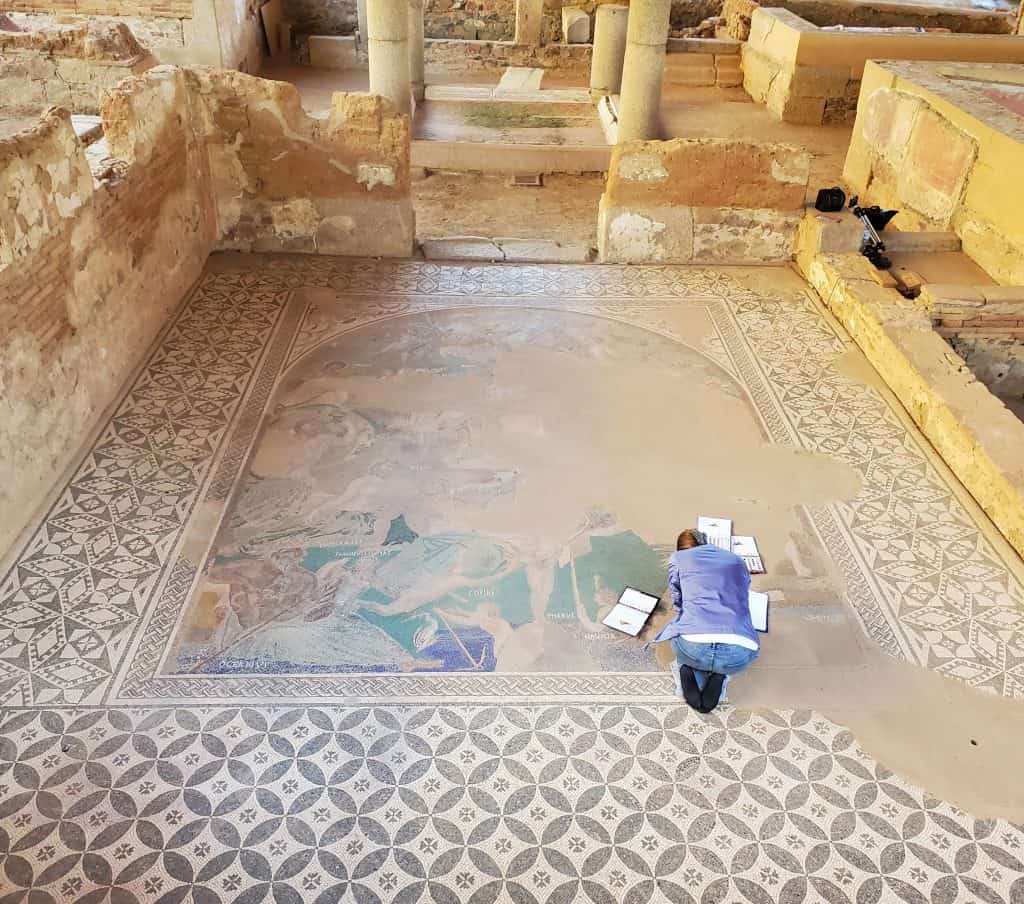
Extremadura is fascinatingly beautiful and full of history. Cities and towns are small, rarely will you need to stay anywhere for more than a few days.
The point of a road trip in Extremadura is to slow down, let Spain find you as you find it. Wander slowly though medieval city centres, soaking up the history in the streets, as well as in small museums and castles.
📲 Not all museums have English explanation panels but they do tend to have QR codes leading to English explanations.
Conquistadores and the ruta de los conquistadores, a sternly worded note.
If you know anything about me, you know I am emphatically not one to celebrate the colonial part of Spain’s history (nor that of the UK, before anyone reminds me where I’m from).
On a trip around Extremadura, you will see conquistador related statues, road names, souvenirs, restaurants, museums and hotels. It’s part of the history of this impoverished region and there is some lingering pride. During the 15th and 16th centuries, people (men) left looking for opportunity because life was hard in Extremadura and they found their ‘success’, as we know, in the Americas, at the expense of people there.
Do I judge? Honestly, yes. I know that this happened. I struggle to believe that people didn’t know any better and I certainly don’t understand how there can still be any desire to celebrate this period of history in Spain.
Eat extremely well
Take long lingering lunches in the plazas, enjoy evening tapas with a beer or a glass of local wine. Try almond soup, fabulous hams and cheeses, lamb stews, migas, and Técula Mécula, a local pastry. Look out for:
Jamón – if you like ham, you’re going to fall in love withe the jamón iberica de bellota that is produced in this region.
The dehesa of Extremadura is an ideal place to raise pigs thanks to the holm and cork oaks that abound. The acorns from these trees are the pigs’ main diet, giving the meat its distinctive flavour.
Cheese – there are four cheeses that have the DOP protection in Extremadura: torta del Casar (sheep’s milk cheese with thistle rennet) , La Serena (uses only Merino sheep milk), Ibores (an extremely flavourful goat’s cheese and Acehúche (also goat’s cheese, matured for at least 40 days).
Wine – I’m not a big wine drinker but I do like to try local wines when I travel. Indigenous grapes include Tempranillo and Garnacha Tintorera. The Ribera del Guadiana and Tierra de Barros and Tierra de Barros, are good wine zones to explore.
☀️ A note on climate
Extremadura is an inland autonomous community. It is H☀️T in the summer months. Being inland, there is no beach to escape to. Instead, there are embalses (reservoirs), rivers, and waterfalls for you to cool off in.
I’ve visited multiple times in the summer and if you’re not used to Spanish temperatures, it can be difficult.
In spring and autumn, the climate is generally mild and sunny. Winter can be chilly, especially in the places with higher elevation.
I remember that the first time we visited Mérida in November, it was far colder than we’d expected and we had to go and buy coats 🥶.
The Extremadura road trip route
This article assumes that you’ll be picking up your car in Madrid, Sevilla or Córdoba. You can then start the route from any one of the road trip destinations, obviously. For the purpose of writing, I start and finish in Madrid.
Destinations – Plasencia, Parque Nacional de Monfragüe, Caceres, Badajoz, Zafra, Mérida, Embalse de Orellana, Trujillo
Total drive time 7hr30, 500km – not including arriving/departing Extremadura
Remember that not every one of these destinations is a ‘big name’ destination – the joy of a road trip in Extremedura is visiting charming towns, getting to know Spain a little better and taking it slow.
How long do you need?
Under each destination I’ve noted how many days you might need there, depending on whether you just want to see the highlights or the location, of if you also want to spend a few days exploring around there too.
Between 10 -20 days would give you ample adventure time in this beautiful region of Spain. If you have less time, simply remove a few stops.
Plasencia (2 – 3 days)
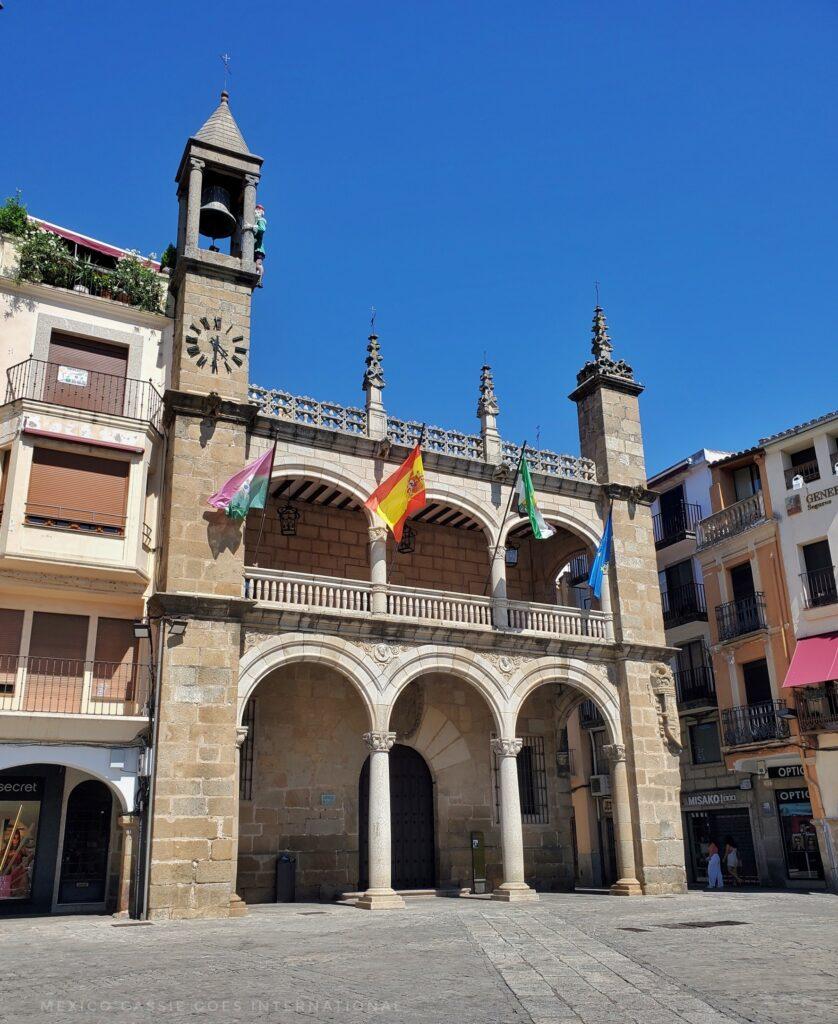
This is a beautiful medieval walled town that’s a pleasure to visit. It’s also a great place from which to visit nearby villages and natural places of interest.
Where to stay in Plasencia
🏨 MexicoCassie top recommendation: Parador de Plasencia – a restored 15th century building with a rooftop pool, beautiful rooms, private parking and great breakfasts. This is the best place to stay in Plasencia. My parents stayed here and rate it extremely highly – they love a good restored palace or castle
🗺️ Or, use the interactive MexicoCassie map to find your perfect accommodation in Plasencia.
What to do in Plasencia
Visit the cathedral, wander the old city, visit the city walls, the small museums, & the aqueduct
Good side trips from Plasencia
Meandro del Melero – 1hr 15 by car, this is somewhere I’m dying to visit. It’s a natural point where the Río Alagón curves around and appears to create a small island (that’s actually in the autonomous community of Castilla y León).
Sierra de Gata – this region is an hour from Plasencia and here you’ll find small villages, a dolmen, castles, oak forests, nature sports and magnificent views.
Valle del Jerte – In the spectacular Jerte valley you can hike, ride horses, go canyoning, enjoy ziplines, hot air balloon rides, visit museums and interpretation centres such as the Centro de Interpretacíon de la Reserva Garganta de los Infiernos, the Cherry Museum in Cabezuela del Valle.
➕ For two weeks every March/April (ish) the whole valley is filled with cherry blossom and the Valle del Jerte celebrates its Cherry Blossom Festival. And from mid-May until August you can pick cherries.
from here, drive one hour to Monfragüe National Park ⤵️
Monfragüe National Park (3 – 4 days)
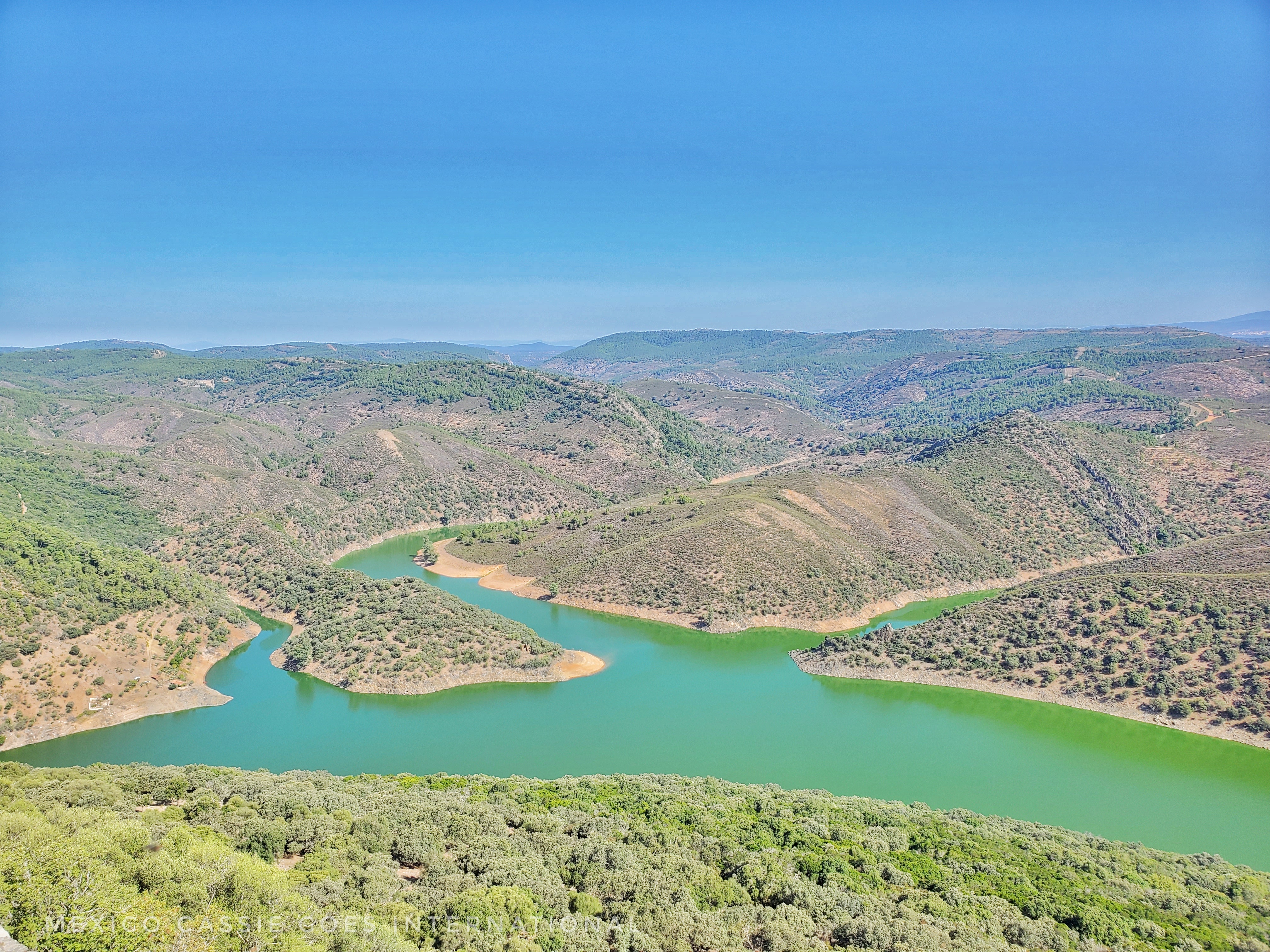
Parque Nacional Monfragüe is one of the best places you’ve never heard of. If you love hiking, nature, birding, history and magnificent views then this is the perfect place for you. Imagine being surrounded by cork oak forests, deep gorges, rivers, soaring vultures, jagged mountain peaks and very few people.
Where to stay in Monfragüe
🏨 MexicoCassie recommendation in Torrejón el Rubio: Apartamentos Monfragüe – we stayed here and I can’t recommend it more highly. The apartments are clean, well equipped, and there is a small pool to enjoy when you return from exploring. the owners were extremely friendly and helpful.
🏨 MexicoCassie recommendation in Villarreal de San Carlos – Casa Rural de Monfragüe – private rooms with a shared kitchen and on-site bar. This country house in Villarreal de San Carlos offers gorgeous mountain views and good wifi.
🗺 If these don’t work for you, use my helpful accommodation finder map to find something more suitable.
What to do in Monfragüe
Go hiking, visit the Monfragüe castle, see arte rupestre (neolithic art), marvel at the views as you move from mirador to mirador
Explore the Interpretation centres – in Torrejón el Rubio and Vilarreal de San Carlos
Visit the amazing small village of Romangordo where you’ll find small museums and great street art
Enjoy the nature – There are two rivers, the Río Tajo (in English the Tagus River) and the Río Teitar. You can take a boat ride on the Tajo, explore the forests, marvel at the animals and birds – particularly exciting for bird watchers, are the are the griffon vultures
→ Read the full MexicoCassie guide to Monfragüe National Park
From here drive one hour to Cáceres ⤵️
Cáceres (2 days)
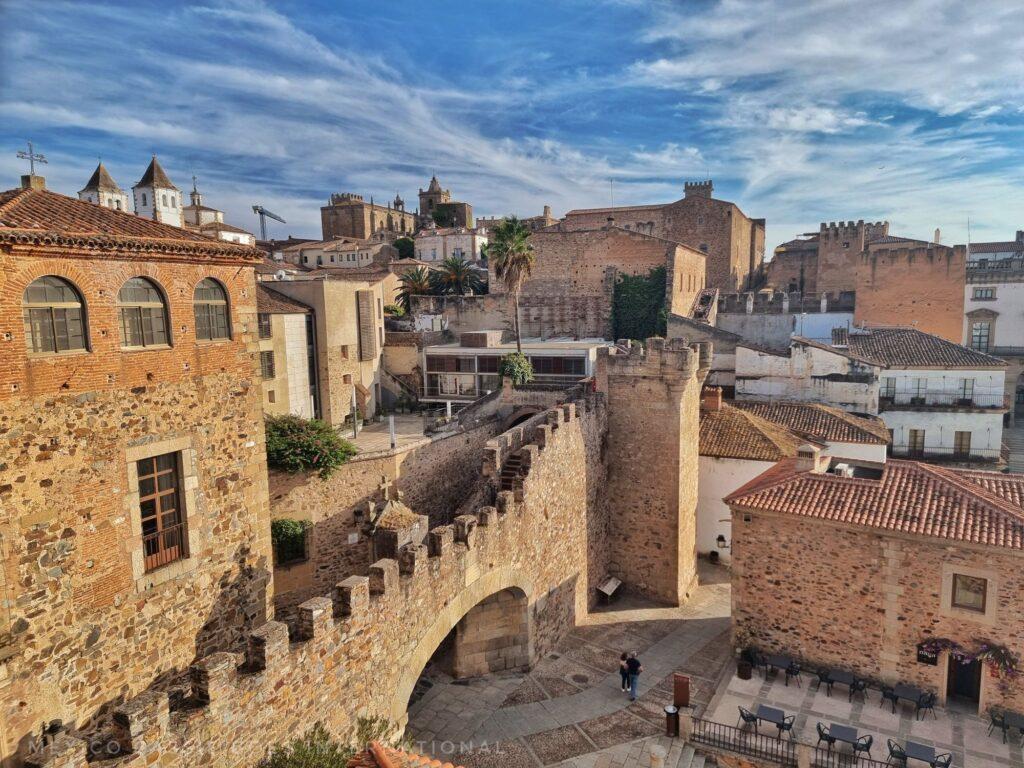
This is a small medieval city with a fascinating history, in fact, the old town of Cáceres was declared a UNESCO World Heritage site in 1986.
Cáceres is one of those small towns that barely registers with visitors to Spain. It’s a joy to explore because it’s just so beautiful but also, due to the absence of foreigners and the lack of over-crowding even in peak season.
If you enjoy exploring beautiful, small, old, Spanish towns that are just bursting with atmosphere and ambiance, then yes, you’re going to fall in love with Cáceres.
Where to stay in Cáceres
🏨 Best for views – Exe Agora Cáceres: this sleek and modern hotel just outside of the old city is a great option if you are looking for gorgeous views of the medieval buildings. Private parking, breakfast included.
🏨 Best for location – Soho Boutique Casa Don Fernando: this beautifully renovated hotel is right on the Plaza Mayor, which means you’re staying in the heart of everything. Breakfast is included but parking is 100m away.
🗺️ Or, if none of these strike you, why not use the interactive MexicoCassie hotel finder map of Cáceres to locate something more to your liking
What to do in Cáceres
Wander the city, getting lost as you explore the historic centre, visiting museums, the city walls, the main square and more. Don’t miss the Torre de Bujaco & the Plaza Mayor – 12th century tower with a small museum and great views over the city, or the Cave of Maltravieso, a prehistoric site dating back tens of thousands of years.
If you’re a Game of Thrones lover, you may well recognise many spots here from the seventh season.
👨🏽🎤 Every summer, Cáceres hosts WOMAD (World Music Festival) – a brilliant festival from the UK.
🏰 And every November there is a Medieval Festival.
What to do from Cáceres
Museo Vostell Malpartida – just outside the city is this strange art gallery
From Cáceres drive 1hr30 to Badajoz ⤵️
Badajoz (2 – 3 days)
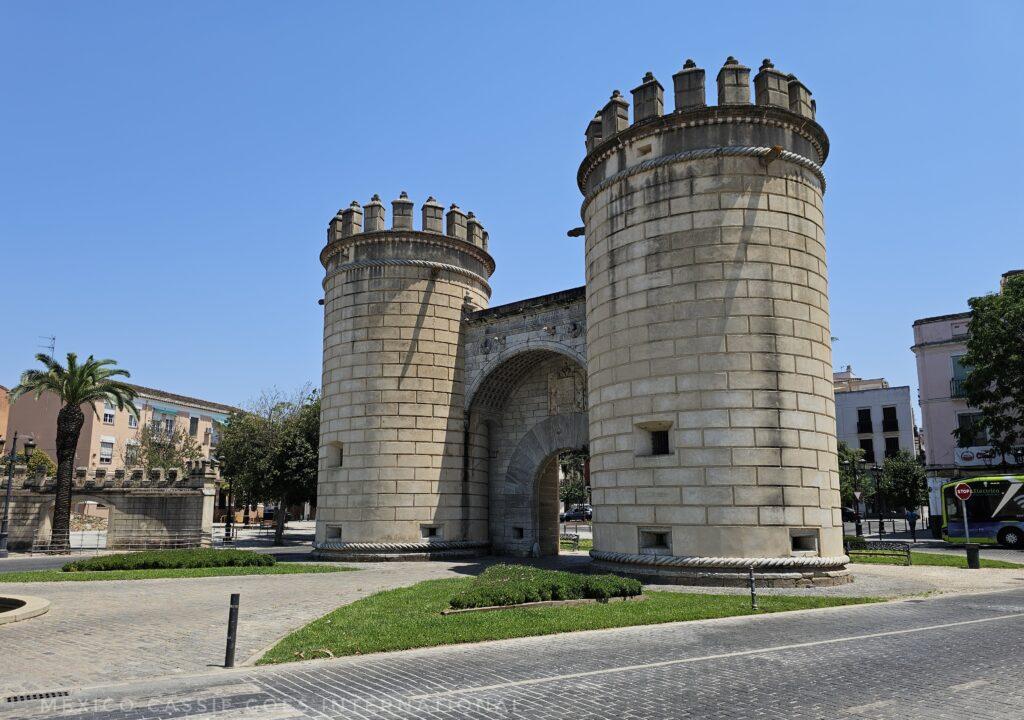
We move now to the border with Portugal and Badajoz, a delightful small city that is currently undergoing something of a revitalisation phase. Like Plasencia, Badajoz is a good place to base yourself to explore other nearby towns and villages.
Where to stay in Badajoz
🏨 Top MexicoCassie recommendation: Hotel Río Badajoz – just outside the historic centre, very close to the railway station and the river is this delightful hotel with a pool, gardens and very comfortable rooms and a great breakfast
🏨 Best location according to MexicoCassie: Sercotel Gran Hotel Zurbarán – this is a beautifully appointed modern hotel just 200m from the alcazaba.
🗺️ Alternatively, use the MexicoCassie interactive hotel finder map to choose something more suited to your tastes
What to do in Badajoz
Badajoz is a small town where, for me, the highlights are the archaeological museum, and the alcazaba. There are a few other museums, the old town is a delight to explore and on cooler days, a walk by the river is a pleasant option. MEIAC, the contemporary art museum is housed in the old prison, making it a doubly interesting spot.
What to do around Badajoz
Burguillos del Cerro – this small town is home to an incredible castle
Jerez de los Caballeros -a small town that’s a pleasant place to visit for the day. → Read the full MexicoCassie guide
Nogales and Alburqurque – are both home to incredible looking castles
Fuentes de León – book a tour of the fascinating Cuevas (caves) de León
Alange – a small town on the bank of the Embalse de Alange where you’ll find the Roman thermal baths
➕ You are so close to Portugal you can even nip in for a coffee if you feel like it (just remember there’s an hour time difference)
→ Read the full MexicoCassie guide to Badajoz
From Badajoz, drive 1 hour to Zafra ⤵️
Zafra (2 days)
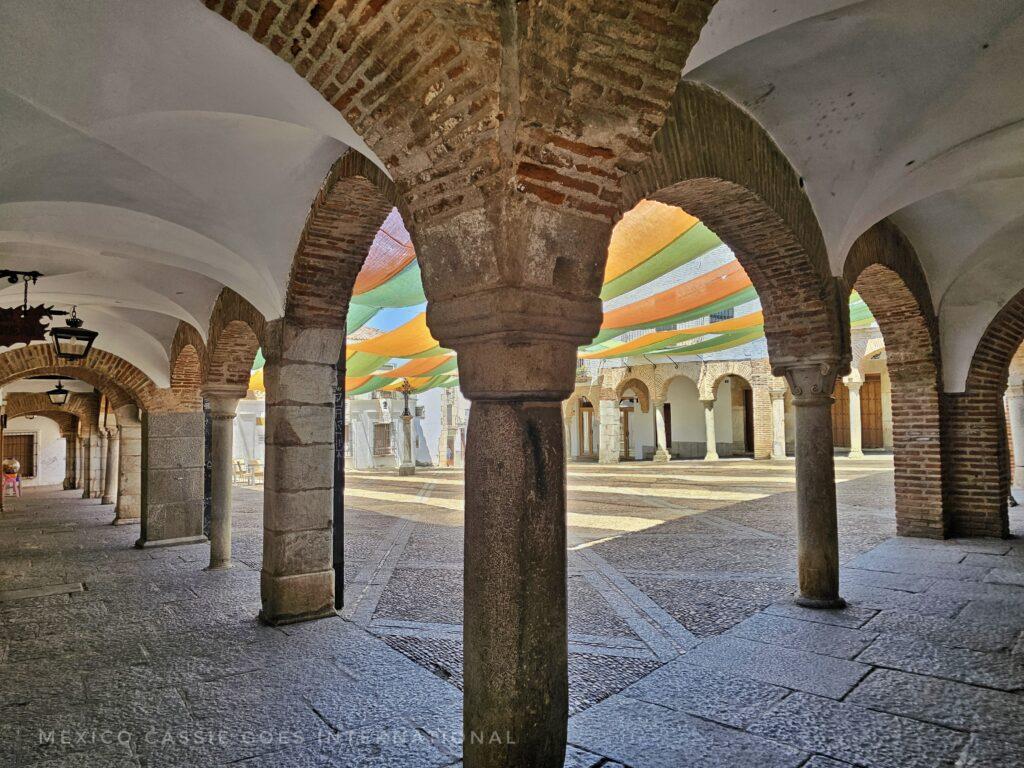
Zafra is a delightful small town that is often called Sevilla La Chica (Little Seville).
Where to stay in Zafra
🏨 Top recommendation: Parador de Zafra – (photo above) widely considered to be one of the most beautiful paradors in Spain, this is truly an exceptional building. Not only is it a beautiful building, it’s also the old 15th century palace I just mentioned above. Here, you’re literally staying in Zafra’s most important building. With a pool, great rooms and the chance to climb the defensive walls, this is my number one recommendation for Zafra.
🗺️ Or, use the MexicoCassie interactive hotel finder to choose something more to your style
What to do in Zafra
Visit the parador whether you stay there or not, explore the old town, check out the two lovely old plazas, visit the small museums, and eat one of the best meals you’ll ever have in Spain.
→ Read the full MexicoCassie guide to Zafra
From Zafra drive 1hr to Mérida ⤵️
Mérida (3 days)
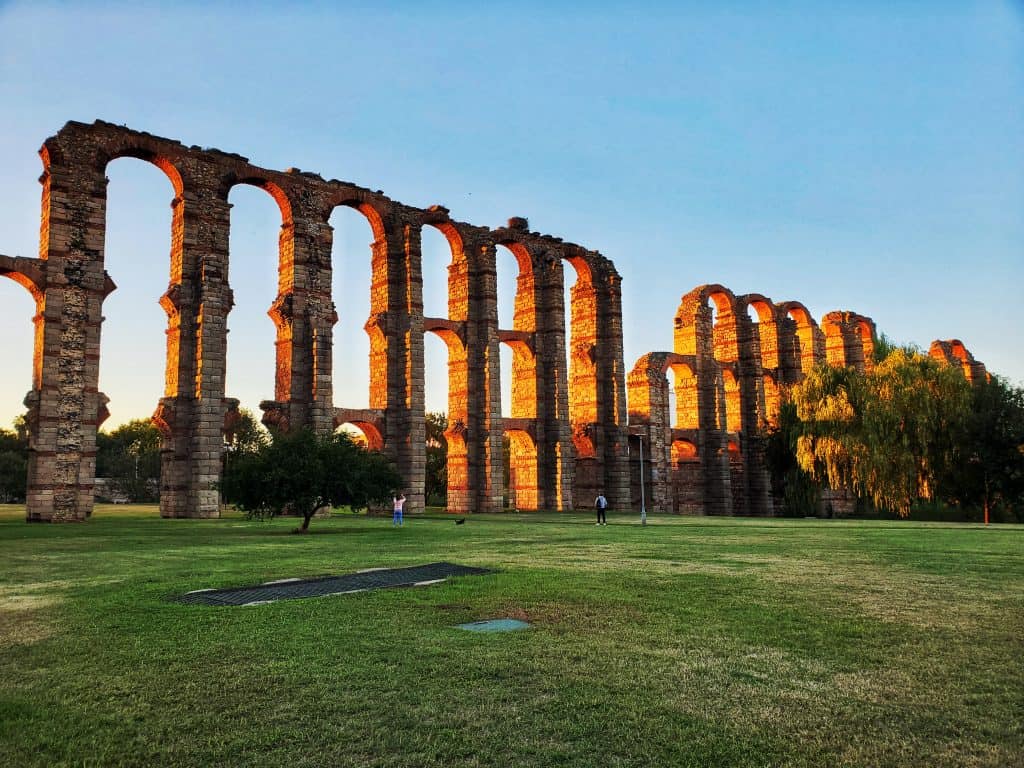
This will be the highlight for many people visiting Extremadura. Mérida is a small town but it’s the communty’s capital and it’s famous for its incredible ruins.
The archaeological ensemble of Mérida is a UNESCO World Heritage Site and one of the best preserved Roman sites in the whole of Spain. The archaeological sites here are numerous and are all beautifully restored.
Where to stay in Mérida
🏨 Parador de Mérida – located in an 18th century convent building just a short walk from Mérida’s main attractions. The hotel has a peaceful courtyard garden and outdoor pool where guests can relax after exploring the city. Perfect for anyone who enjoys traditional elegance in their hotels.
🏨 AZZ Mérida Medea Hotel – this extremely reasonably priced 4 ⭐️ hotel is well located, has modern, spacious rooms and an enormous outdoor swimming pool. While not right down town, it’s just a 20 minute walk to the centre of the city (hence the fabulous price).
🗺 Or, if none of these work for you, you can use my helpful interactive accommodation finder to choose something better suited to your need
What to do in Mérida
The highlights of this incredible city include the biggest Roman house in Europe: Casa Mitrea, the amphitheatre and the Roman theatre and the two aqueducts, the enormous Roman bridge. There are, of course, great museums here, and the Moorish alcazaba is impressive too.
🏛️ Every May, the city hosts the Emerita Ludica Festival, turning the streets Roman with markets, reenactments, market races and more.
➕ nearby is Medellín – the birth place of Hernan Cortes
From Mérida 1hr30 to the Embalse de Orellana ⤵️
Embalse de Orellana
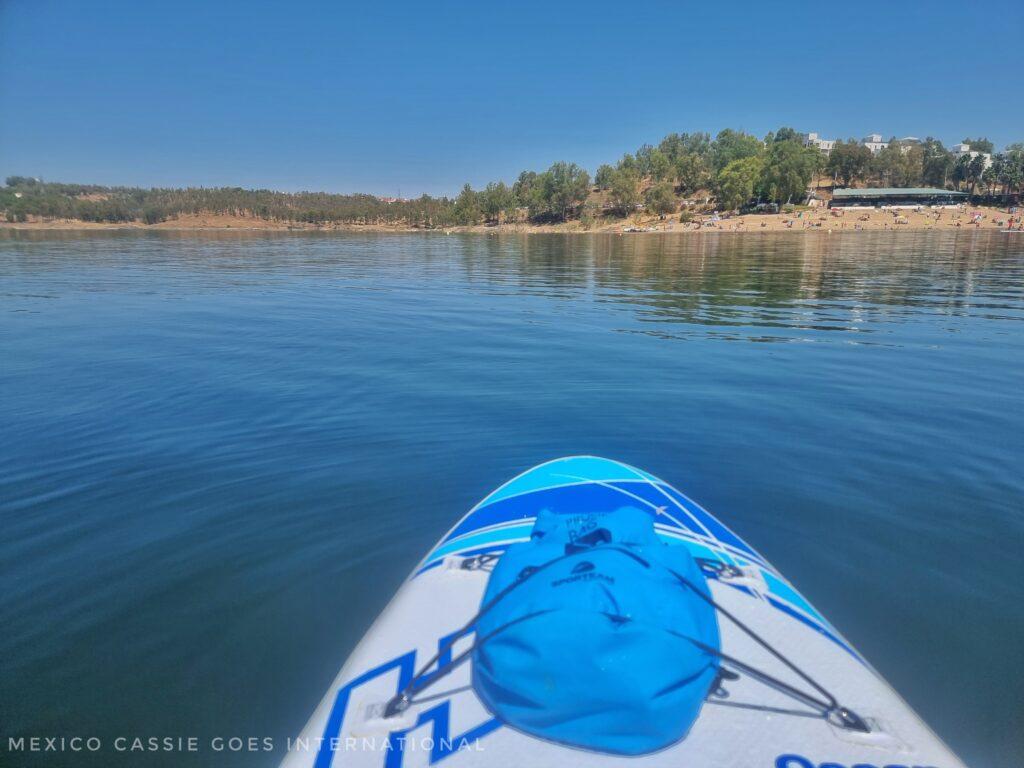
This is a stop I recommend for anyone who enjoys relaxing by the water.
An embalse is a reservoir and in the inland regions of Spain, like Extremadura, this is where locals go to cool down and play on the water. I went a while back with some friends and we had a great time here. We rented kayaks and paddleboards, ate well and had a generally fantastic two night stay.
If you’re not interested in water, you can skip the embalse.
Where to stay at the Embalse de Orellana
🏨 MexicoCassie top recommendation: Apartamentos Embalse de Orellana – these are purpose built apartments right on the lake shore. They’re comfortable, well appointed and are within easy walking distance of the restaurants and lake beach.
From Orellana drive 1 hr to Trujillo ⤵️
Trujillo (1 day)
To end your Extremadura adventure, stop off in Trujillo, a small medieval city, that like so many other places, is more about the atmosphere, the people you meet, you streets you stroll and the food you eat.
Where to stay in Trujillo
🏨 MexicoCassie top recommendation: Parador de Trujillo – there’s nowhere better to stay than here, in a tastefully restored historic convent with a wonderful swimming pool
What to do in Trujillo
You can’t avoid noticing that here you’re in the birthplace of Francisco Pizarro, the guy who conquered the Inca Empire. Personally I’d try to ignore this and focus my attention on the Castillo de Trujillo, an impressive Moorish alcazaba with eight towers.
And from here, drive onto wherever you’re heading next, you’ve completed the Extremadura road trip adventure! ⤵️
📚 🇪🇸 Read more of MexicoCassie’s Spain guides
→ MexicoCassie guide to whether Spain is safe for tourists
→ MexicoCassie guide to driving in Spain
→ MexicoCassie guide to driving in southern Spain
☕️ MexicoCassie guide to vegetarian tapas, to breakfast and to feeding the kids
📲 MexicoCassie guide to using an eSIM in Spain
⭐️ Tips to help when you visit Spain
Sevilla
⭐️ What is Sevilla famous for? | ⭐️ How many days do you need in Seville? | ⭐️ Everything about the Seville airport bus
⭐️ 1 day in Seville | ⭐️ 3 days in Seville | ⭐️ 5 days in Seville | ⭐️ How to visit Seville in the summer | ⭐️ How to visit the Alcazar | ⭐️ Quirky Seville | ⭐️ 5 alternatives to the Alcázar
⭐️ Best beaches from Seville | ⭐️ Day trips from Seville | ⭐️ Seville with kids | ⭐️ Seville with teenagers | ⭐️ How to see flamenco in Seville | ⭐️ Best family friendly tours in Seville | ⭐️ Exploring Sevilla Province
➕ Hire MexicoCassie as your amiguía for the day in Sevilla or Alcalá de Guadaíra
Málaga
⭐️ 3 days in Málaga | ⭐️ 1 day in Málaga | ⭐️ Day trips from Málaga | ⭐️ 1 day in Ronda | ⭐️ 1 day in Ronda with kids | ⭐️ What to do in Antequera | ⭐️ Exploring Málaga with kids
Córdoba
⭐️ What to do in Córdoba | ⭐️ Planning your Córdoba day trip from Seville | ⭐️ Day trips from Córdoba | ⭐️ Exploring Córdoba with kids | ⭐️ 1 day in Córdoba | ⭐️ Zuheros, the most beautiful village in Córdoba
Cádiz
⭐️ What to do in Cádiz province | ⭐️ How to spend 1 day in Cádiz city | ⭐️ What to do in Cádiz with kids | ⭐️ Day trips from Cádiz | ⭐️ Exploring Tarifa | ⭐️ How to get to Tangier from Tarifa | ⭐️ Exploring Gibraltar | ⭐️ What to do in Jerez de la Frontera
Huelva
⭐️ Is Huelva worth visiting? (YES) | ⭐️ What to see in the gorgeous Aracena
Granada
⭐️ Planning your Granada city break | ⭐️ Granada with kids | ⭐️ 2 days in Granada | ⭐️ How to explore Guadix and its cave houses
Almería
⭐️ Things to do in Almería City | ⭐️ What to do in Almería with kids | ⭐️ Is Almería worth visiting? | ⭐️ Figuring out the Almería beaches
Community of Valencia
⭐️ 1 day in Valencia | ⭐️ 2 days in Valencia | ⭐️ Museums in Valencia ⭐️ Day trips from Valencia | ⭐️ Valencia with kids
Community of Madrid
⭐️ Why should you visit Madrid | ⭐️ Spending 5 awesome days in Madrid | ⭐️ 3-day Madrid itinerary
Castilla y León
⭐️ Segovia, a perfect day trip from Madrid | ⭐️ How to visit Medina del Campo | ⭐️ How to visit Zamora
Euskadi (Basque Country)
⭐️ What to do in the Basque Country | ⭐️ Excellent things to do in San Sebastián | ⭐️ Is San Sebastián worth visiting? | ⭐️ How many days do you need in San Sebastián? | ⭐️ Day trips from San Sebastián | ⭐️ San Sebastián with kids | ⭐️ Is Bilbao worth visiting? | Planning and taking day trips from Bilbao | Why Vitoria-Gasteiz is worth visiting?
Picos de Europa
⭐️ Road trip itinerary for the Picos de Europa | ⭐️ Planning for a trip to the Picos de Europa | ⭐️ Las Arenas de Cabrales | ⭐️ Visiting Potes
Extremadura
⭐️ Everything you need to explore Monfragüe | ⭐️ What to do in Mérida | ⭐️ What to do in Cáceres | ⭐️ How to visit Plasencia | ⭐️ Visiting Zafra (Sevilla Chica) | ⭐️ What to do in Badajoz | ⭐️ How to visit Jerez de los Caballeros | ⭐️ Extremadura road trip
Galicia
⭐️ What to do in Ferrol | ⭐️ Everything you need to visit Santiago de Compostela | ⭐️ Great reasons to visit A Coruña | ⭐️ Northern Galicia road trip
Cataluña
⭐️ Road trip around Girona Province | ⭐️ Spending 1 day in Girona | ⭐️ 1 day in Barcelona | ⭐️ How to visit Castellfollit de la Roca
La Gomera (Canary Island)
⭐️ Hiking on La Gomera | ⭐️ La Gomera with kids | ⭐️ Take a day trip to La Gomera