Quirky Sevilla – 20+ interesting things to see & do
Whether you’ve been to Sevilla a dozen times and are looking to learn something new about the city, or whether you’re planning your first trip to Sevilla, this article will have something for you. In this article you’ll find cool, quirky & interesting things in Sevilla that you can look out for as you wander the streets.
And, by the way, all these ideas are based on my own experiences over my four years of living just outside Sevilla. I love hanging out in the city, strolling the streets, chatting with locals and just enjoying my adopted city. It’s also my pleasure to share my experiences with you, today.
→ Obviously if you haven’t visited before, you can’t miss the main attractions: the Real Alcázar, the Cathedral, the Plaza de España, Barrio Santa Cruz (Jewish Quarter) and Las Setas (Metropol Parasol- definitely quirky but also very well known).
💃🏻 And of course, you must see a flamenco show while you’re in town – flamenco is one of my absolute favourite things about Sevilla. I’m practically swooning just thinking about it right now.
➕ You probably won’t want to miss, Plaza Cabildo, Palacio de las Dueñas, Casa de Pilatos either – all three gorgeous.
So far, nothing new, right or outside of regular blogger itineraries? All these names are a given, everything mentioned so far is well known and on the main tourist routes.
🧚🏼 You can read all about these locations, how to visit, the best tours and all the info you need in all my other articles ⬇️. And then below, the magic happens, you’ll find the MexicoCassie guides to both “quirky-ish Sevilla” and then the “properly quirky Sevilla”.
MexicoCassie guides to Sevilla
→ Check our curated 1-day, 3-day or 5 day itineraries for Seville
🗓️ How many days should you spend in Sevilla?
🙊 Dig deeper into Sevilla with this article about ‘quirky Sevilla’
🏰 How to visit Sevilla’s Alcázar or check out these amazing 5 alternatives you’ll love
☀️ How to manage Sevilla in the summer
🧒🏻 Find all the Seville kid-friendly options and info here & teen-specific info here
👣 Best family friendly tours of Sevilla
💃🏻 Everything you need to know to enjoy flamenco in Sevilla
✈ Getting to Seville from the airport
🚘 MexicoCassie guide to driving around southern Spain
🏖️ How to get to the beach from Sevilla
⭐️ Everything you need to know about exploring Sevilla Province
🏨 Find your ideal hotel / apartment in Sevilla
(⭐️ or here’s a ready-made list of options with pools and AC)
➡️ Check rental car options & train timetables/ticket options
➡️ Check tour options with Viator, Get Your Guide, Devour Tours or Liv Tours
➡️ Pre-book tickets to the big name attractions
→ MexicoCassie answers, “Is Spain safe for visitors?”
There are affiliate links in this article. If you click and make a purchase I could make a small sum at zero cost to you. Thank you!
Quirky, different places to visit in Sevilla
It’s taken me four years of living nearby and hanging out in Sevilla to feel equipped to write this article. My information comes from chatting with locals, taking tours, reading about Sevilla, and generally wandering around on my own. My recommendations are personal, focused on stories and places I’ve found interesting. Use my ideas, take a tour, and if you feel so inclined, help support my work by using my affiliate links when booking your own adventures.
We’re going to start gently with places you might hear others talking about but they’re not really on the tourist route, and then we’ll move into the odder ideas.
You know how to make it even more quirky? Use the AmiguíaCass service – you can book me to spend the day with you in Sevilla or Alcalá de Guadaíra. You decide what we do, I ensure you have a great time – you want to go shopping, we go shopping, you want to relax in cafés or eat churros all day, that’s what we do. And if you want to walk all day, I’ll be right at your side. I’m your friend in Sevilla → details here
Different-ish in Sevilla
Archivo de Indias
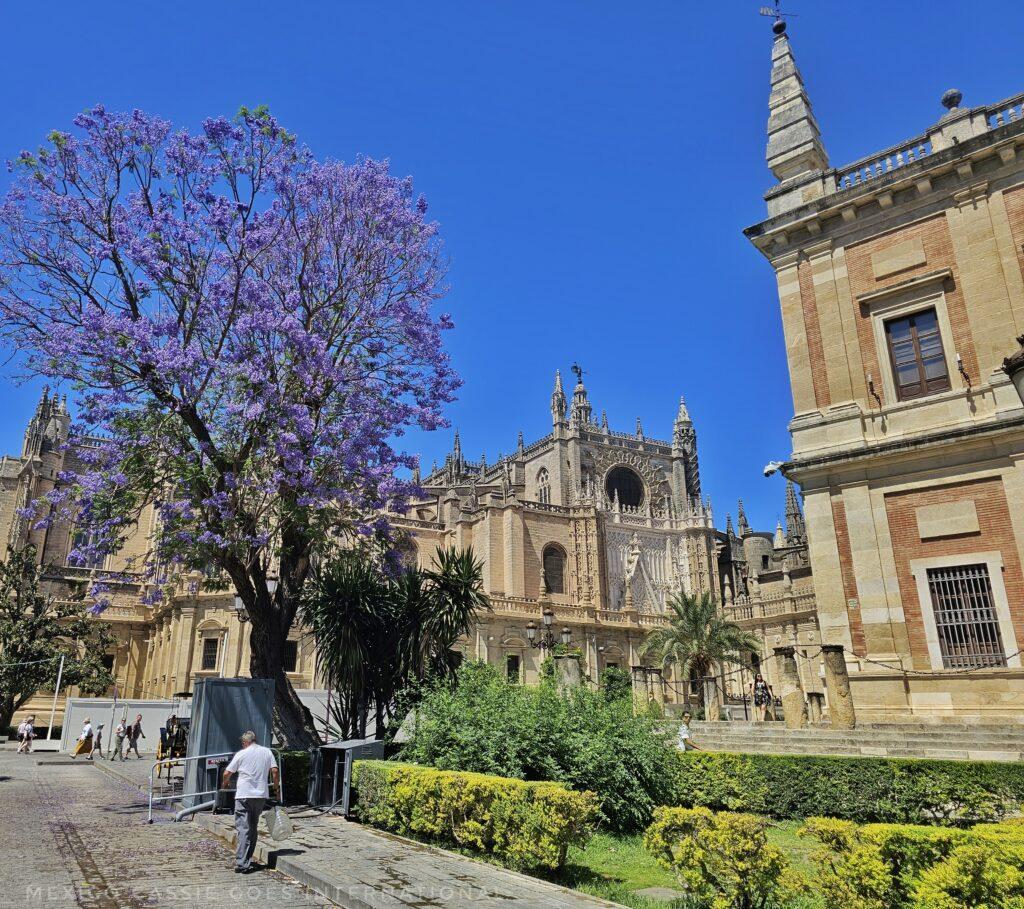
See how the Archivo de Indias is right next the cathedral but gets far fewer visitors.
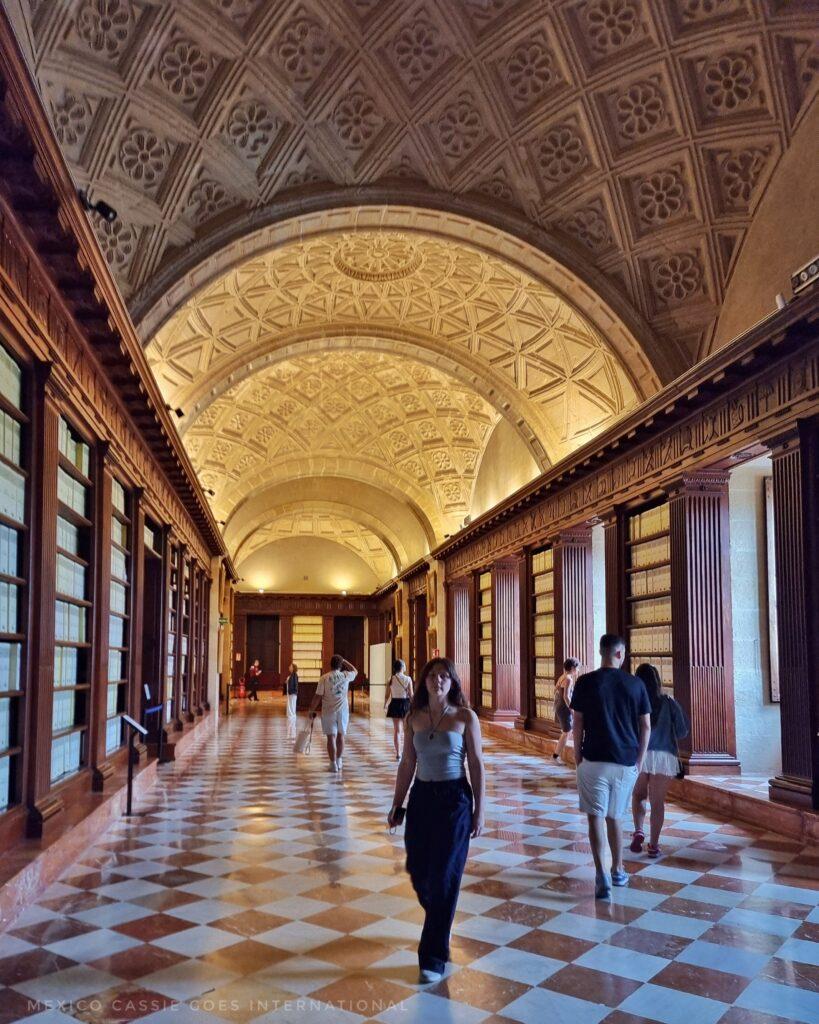
It’s also a part of a trio of buildings with these two that makes up Sevilla’s UNESCO World Heritage Site.
The archives building is free to enter and you will often find interesting exhibitions about the Spanish Empire.
I’ve visited a number of times now; once or twice there was no exhibition and once there was a fascinatingly thoughtful exhibition that I think (hard to remember) was about life in South American/Central American countries pre invasion. I remember standing and examining a map of Yucatán next to a man from Ecuador who was similarly studying a very old map of his home. We chatted a little, and honestly, it was very emotional.
Centro Andaluz de Arte Contemporáneo
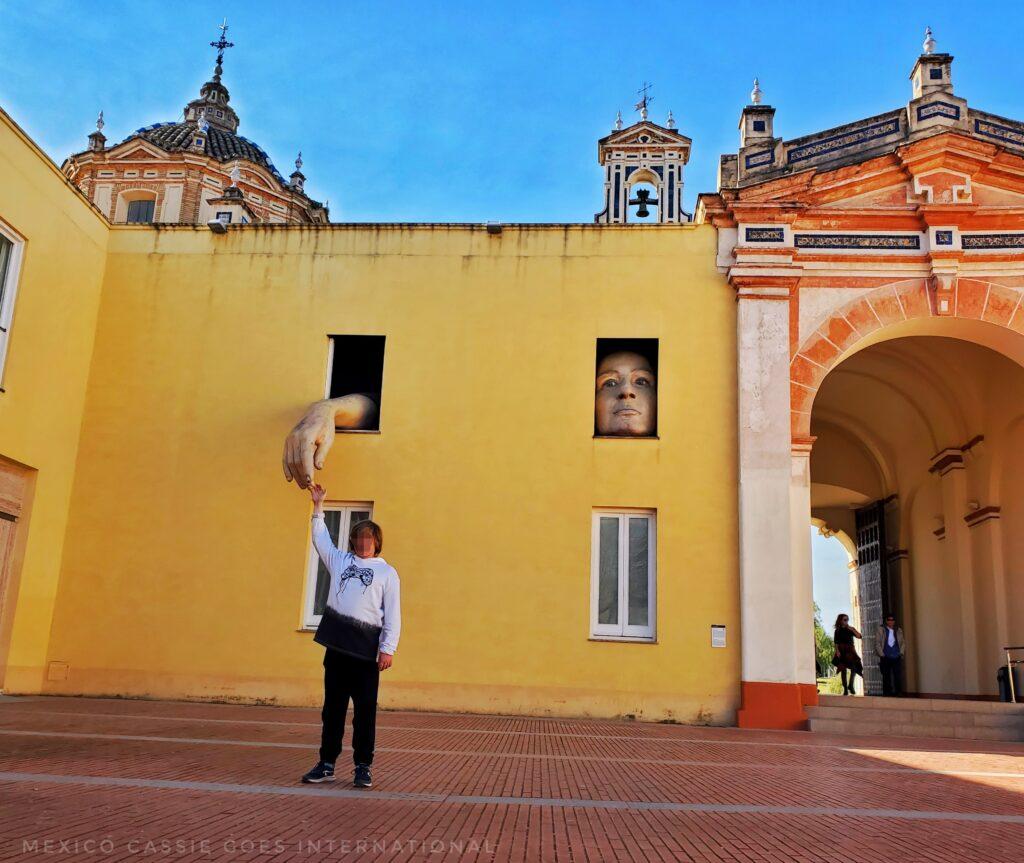
Located on the Isla de la Cartuja, this excellent art gallery located inside an 15th century monastery is well worth a visit. There are gardens, always fascinating exhibitions and the buildings are wonderful to explore.
Look out for ‘Alicia’ (photo above), the majestic chimneys (left over from when this was also a ceramic factory), the cool tiles, and, of course, the incredible art.
This is one of my favourite spots in the city, whether I’m showing guests around or simply enjoying some time in Sevilla on my own. The exhibitions here are almost always extremely thought provoking. I’d go so far as to say it’s the best gallery in the city.
Antiquarium
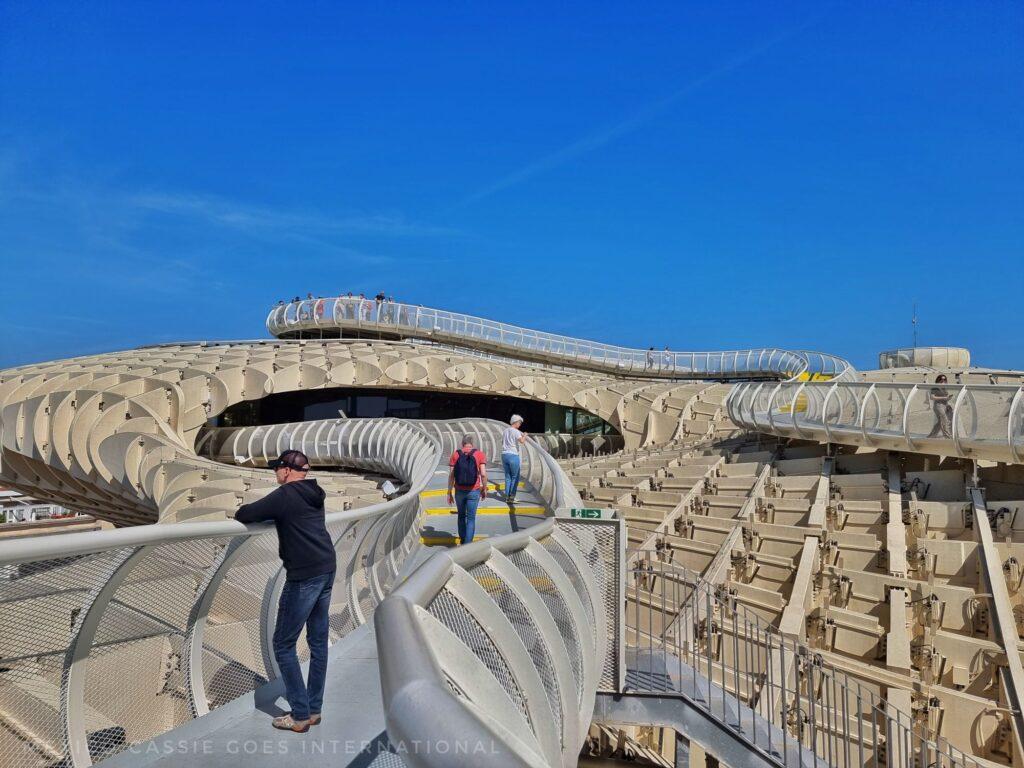
This is the reason Las Setas exists: Plaza de la Encarnación was an important, central market for Sevilla, so the authorities decided it needed an underground carpark. But when they started digging they found an entire Roman city under there.
Of course, they couldn’t continue with the car park so instead they created the world’s largest wooden structure on top (Las Setas) and took the next thirty years to fully excavate and open the Antiquarium to the public.
This small site is fascinating if you’re interested in Roman history – there are some good mosaics and it’s fun to walk through the ‘town’.
I didn’t know about the Antiquarium the first time I visited Las Setas, the second time, one of my kids needed a pee so we were searching for a bathroom and stumbled upon this Roman city – almost as if we were the ones who discovered it 😆 (and yes, it has bathrooms for guests).
Want MexicoCassie to take a look at your travel plans?
Of course you can plan your own trip, that’s why you’re here using my guides! But an expert pair of eyes can be extremely useful when you’re feeling overwhelmed, simply have too many ideas, or you’re not quite sure where to begin.
I offer informal & fun travel planning sessions, bespoke itinerary planning and AI itinerary checking, all based on my many years of travelling and adventuring.
Nao Vigia Hot air balloon
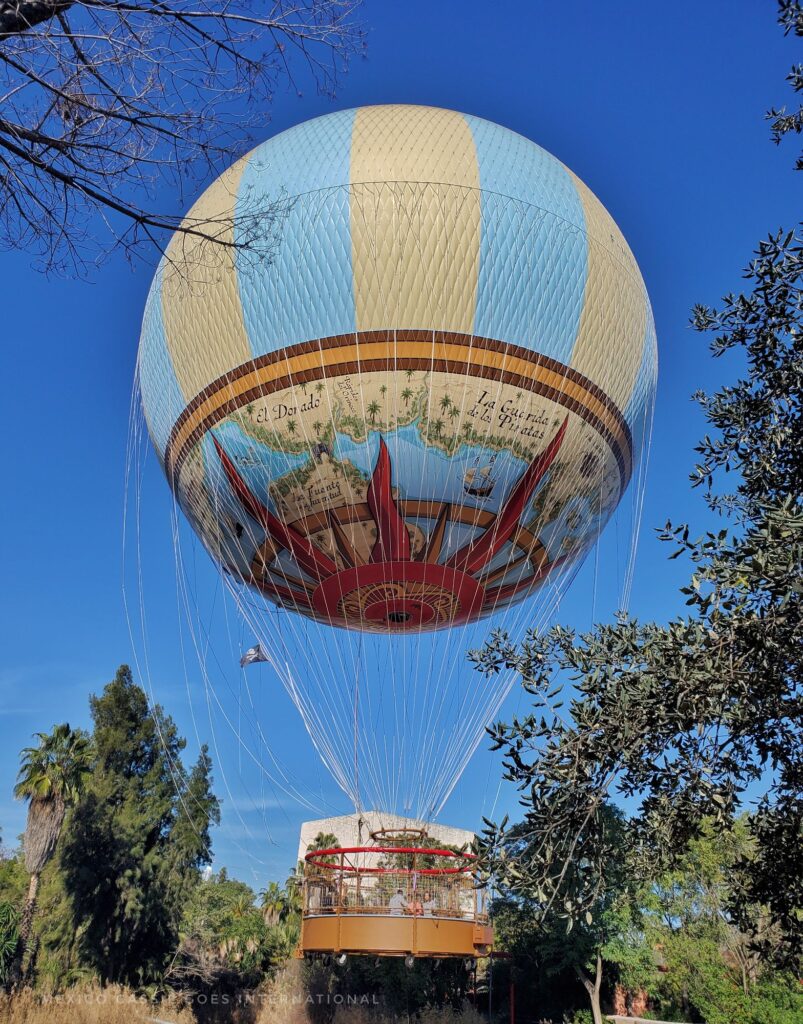
This tethered hot air ballon is a fun way to see the city. Although it’s technically within Isla Magica, handily you don’t need to buy park tickets to enjoy the ride. It’s worth noting that it is only open in good weather so take care when booking (or don’t book in advance and just show up).
The balloon ascends 150m and the views over the city are incredible. This is one of my favourite things to do in the city.
I love a hot air balloon ride and this tethered option gives great views over the city . You can walk around the basket to get truly spectacular 360° views over the city and beyond.
Expo Grounds
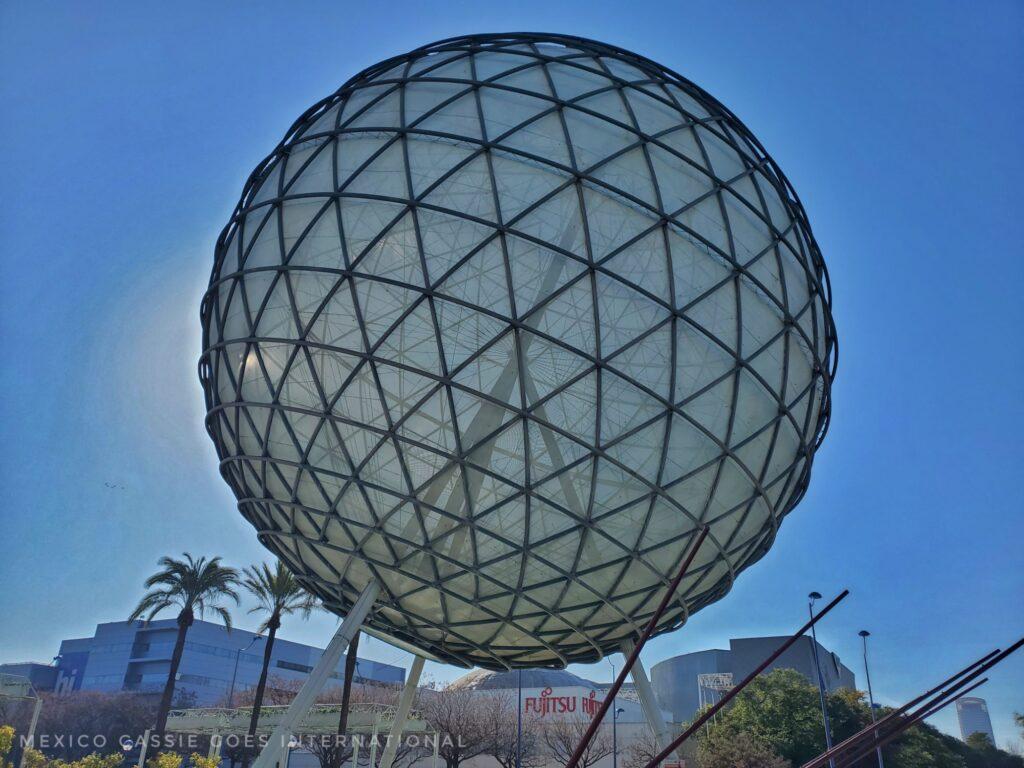
Nearby are the 1992 expo grounds, they’re good for a random explore too. Be sure to find the Hungarian Pavilion, and the rocket before you leave.
I love walking around then heading through the Jardines de Gaudalquivir and to the Jardín Americano and the Torre Sevilla, the area is a little run down and it does feel abandoned but it’s really interesting.
Torre Sevilla
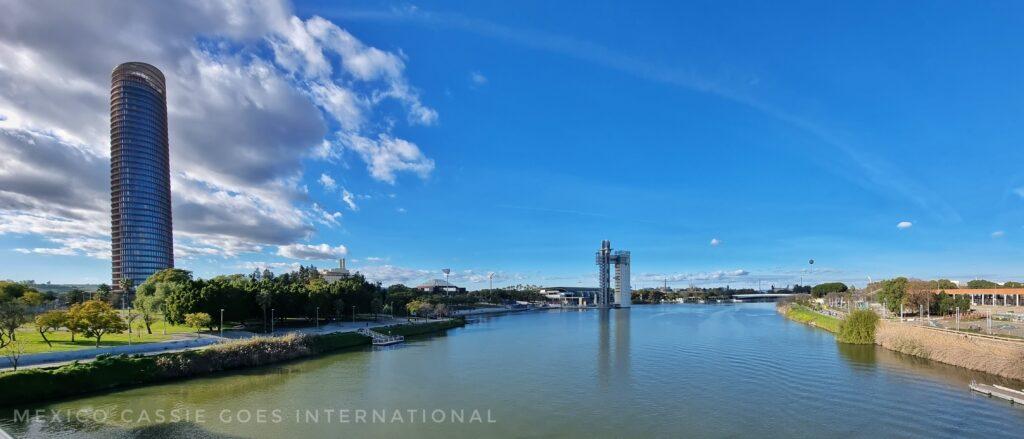
This enormous tower has a cafe and 360° viewing station at the top, also with incredible views over the city. You can also ascend the smaller (centre of photo) Torre Schindler. On the right of the photo above you can just see the hot air balloon.
Locals like to refer to this building as the “pintalabios” (lipstick).
On a hot day, this is a great spot to hang out as it has AC, the cafe serves lovely drinks and the views are fabulous.
Palacio de la Condesa de Lebrija
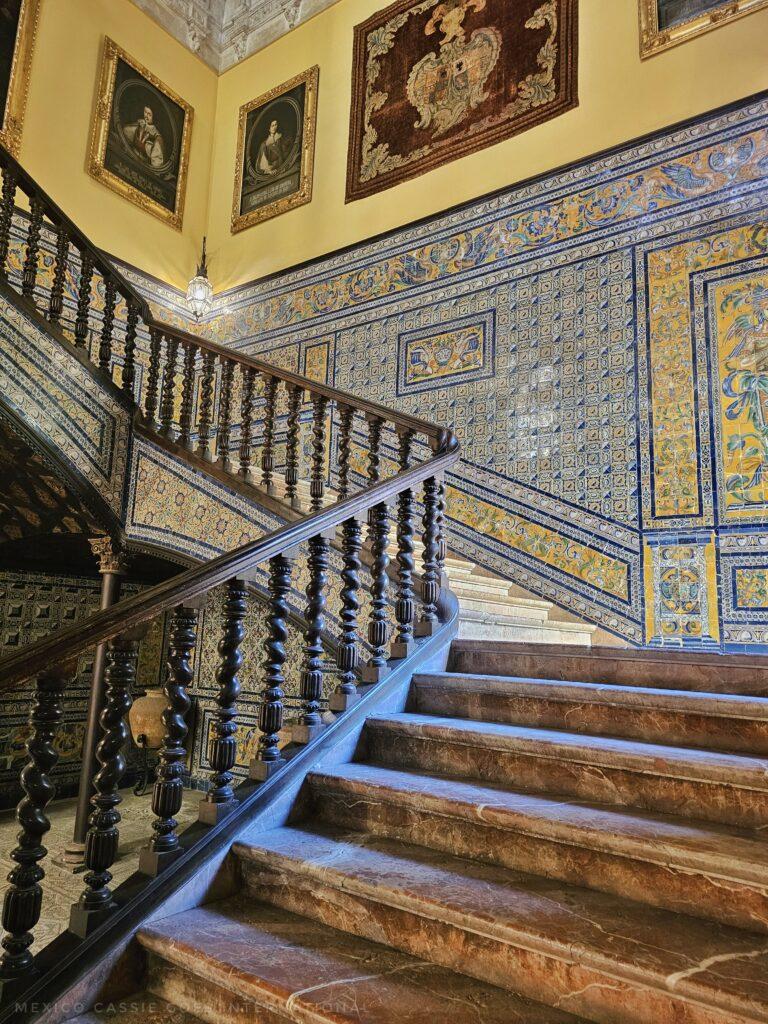
This 16th century building is covered in mosaics (apparently some of the best in Europe) and is full of archaeological findings and oddities that were the passions of the 16th century countess who owned the palace. It costa €15 per person to enter. The ground floor is visited without a guide and the first floor is with a guide (there are English and Spanish guides).
⭐️ I opted to visit with the Spanish guide and this was an absolute winner of a decision as of the 50 odd people there, only two of us did this. We had a personalised tour, which of course, meant I could ask all my questions about the history of the house and the feminist leanings of the Condesa.
⭐️ This palace is a star entry in the MexicoCassie guide to 5 alternatives to the Alcázar in Sevilla.
Quirky, cool to know about Sevilla
Mostly, these are places to check out as you wander the streets, they’re not sites with entrance fees or anywhere you need to spend hours, they’re points to look out for as you explore.
🏨 There are obviously hundreds of cool and interesting hotels in Sevilla, but in my opinion, none as cool as Las Casas de la Judería.
This hotel is made up of 27 traditional houses all joined together by 40 courtyards and patios and numerous passageways. Each room is unique, the courtyards are stunning, the roof pool is a delight and none of this is even why I love this place.
It has subterranean tunnels you can explore if you stay there – down here you’ll find the hotel spa and a Roman wall because this is Sevilla. Truly a fabulous experience (my parents like to stay here, which is why I have had the chance to explore it).
Are you finding my travel guides helpful?
Every donation helps me keep them online!
⛪︎🕌 Iglesia Colegial del Divino Salvador/Mezquita Ibn Adabbas Mosque
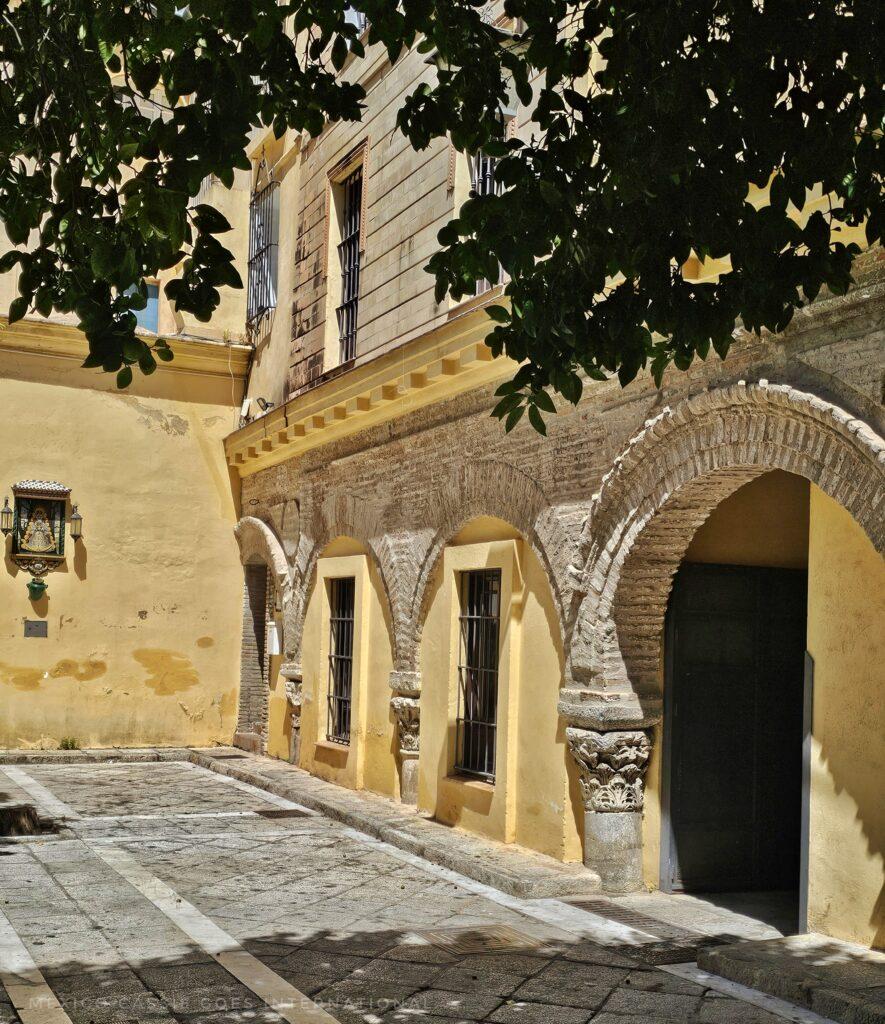
Located on one of my favourite plazas in Sevilla, Plaza del Salvador, this big and imposing church is actually the oldest mosque in Sevilla. It was built in 830 during the period of Umayyad rule in al-Andalus, and it was then transformed into a church when Sevilla was conquered by the Catholics in 1248.
The church itself isn’t interesting (to me) or a quirky find, it’s very well known, but what is today called the Patio de los Naranjos del Salvador is the original entrance to the mosque and in this courtyard you’ll find a lovely little fountain and if you look closely at the arches you’ll find Roman columns reused, and even a Vizigoth column that was recycled too.
It’s interesting to stick your head inside, and remember that before it was a Catholic city, Sevilla already had a long history with Roman, Vizigoth and Muslim rulers.
💧🏰 Calle Agua, Calle Vida & Calle Judería
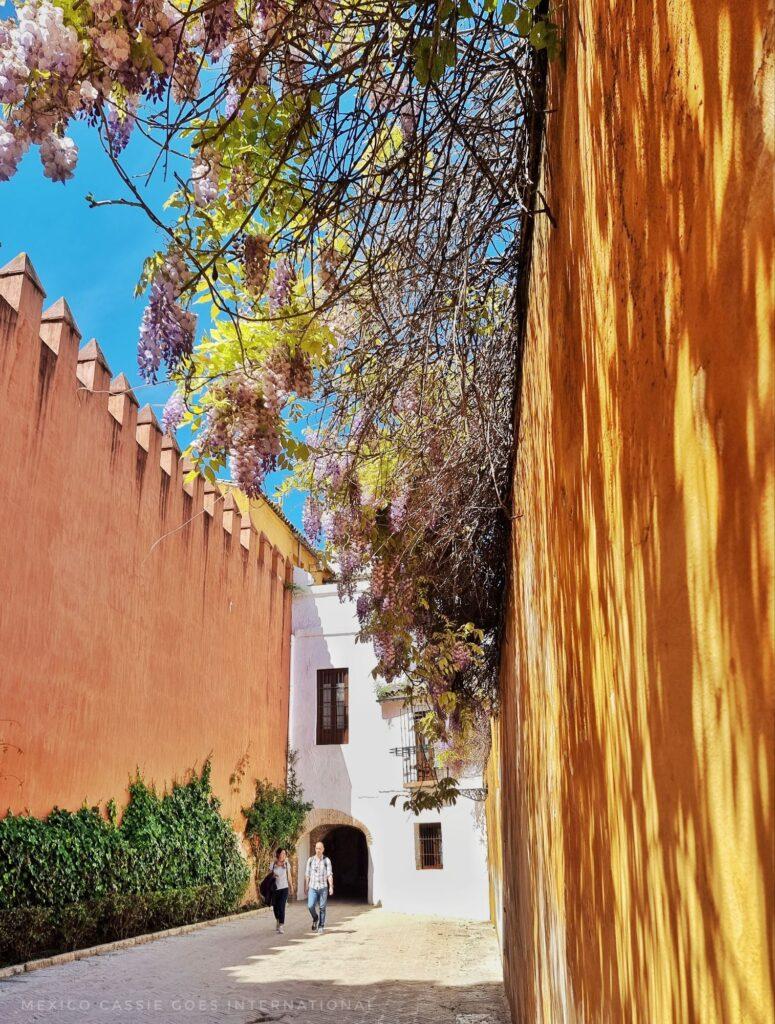
You may well walk along these tiny streets while you’re in Sevilla, so it’s good to know something about them.
Calle Agua – With the Alcázar wall on one side, this street used to carry water pipes from the Caños de Carmona (the aqueduct that was built in 65BCE to carry water to Sevilla) to the gardens of the Alcázar, hence its name.
I highly recommend you walk from Plaza Alfaro, stopping to notice the Balcón de Rosina, which apparently inspired the opera The Barber of Seville, then onto Calle Agua, where you will find a bust of Washington Irving, the famous US-ian writer, and beautiful courtyards.
Carry on onto Calle Vida and then head onto Calle Judería where you’ll find the gorgeous Fuente de la Calle Judería, and, my favourite section, the short tunnel under the buildings that leads onto the Patio de las Banderas (the exit from the Alcázar is here) with an amazing view of the cathedral as you exit.
This group of streets is not unknown, but most people (in my experience), simply walk down them on their way to the Alcázar, this is somewhere though to go slowly, take your time. Personally, I love every turn, every moment, every breath of this short walk. History here is palpable, it’s practically calling to you from the walls if you’re open to hearing it. Don’t rush, don’t live behind your camera, pause, feel the atmosphere, and best of all, walk it first or last thing when there’s no one else around.
💀 Cripta Arqueológica del Patio de Banderas del Real Alcázar
Only recently opened to local visitors, it remains almost impossible to get a ticket to this crypt (I haven’t yet managed).
Remains from 900 BCE up to 1100CE have been found here including Tartessian kilns, Roman columns, a possible temple to Isis, as well as evidence of the 3rd century CE tsunami that destroyed Sevilla, Vizigothic remains and even the first wall of the Alcázar – basically you can travel through 2000 years of Sevilla’s history in one small place. Incredible!
🤦🏻♀️ The myth of Susona
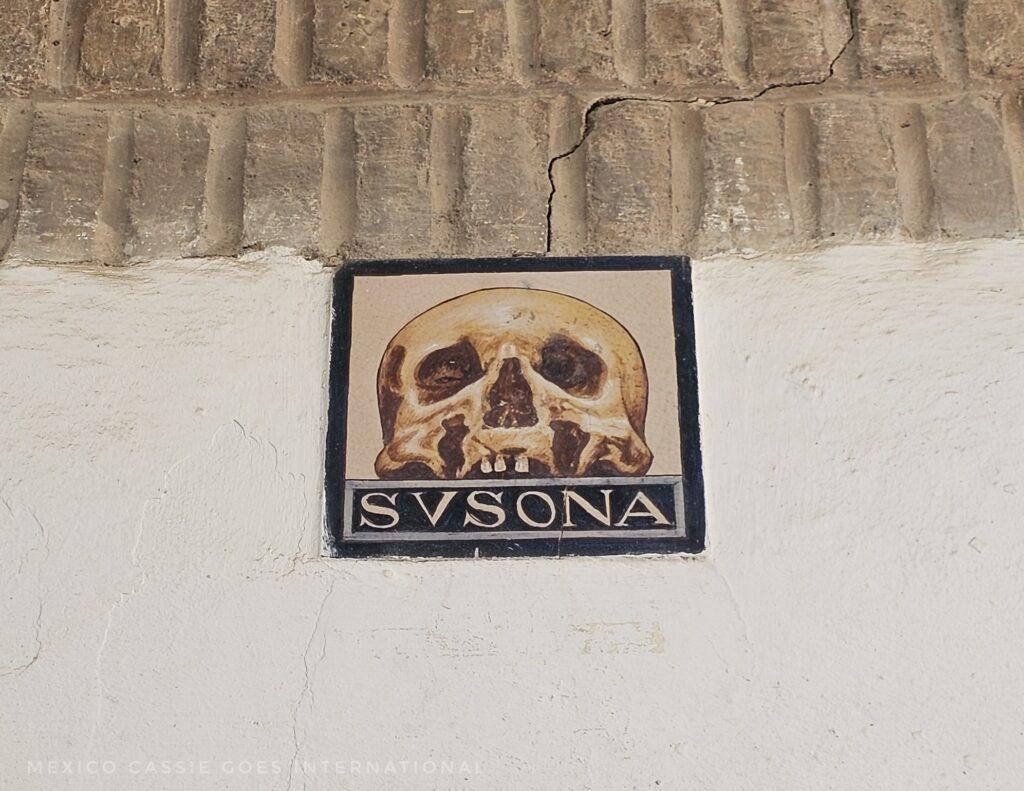
As you explore around these roads, look out for Calle Susona and the plaque in memory of Susona Ben Súson, a girl who screwed up massively during the 15th century.
She is said to have been from a converso (forced Jewish converts to Catholicism) family. According to legend she had a Christian boyfriend to whom she spilled the beans of a converso plan led by her father, to resist the Inquisition. The lover, predictably, informed the authorities, the group was arrested and executed and according to legend, Susona entered a convent for a while before leaving to live out her life in poverty.
They claim that she requested that after her death, her skull be mounted above the door of her house in Barrio Santa Cruz to remind people of her fuck up. Once her skull decomposed it was replaced by a lamp and eventually, by a tile, which is still visible today.
➕ There’s also a tile with her likeness on it in Parque Maria Luisa.
🌴 Also note in the corner of the plaza where you’ll find the tile, there’s a really cool tree pairing – an orange tree and a palm tree have fused together.
There are various morals to this story, obviously, but the one I choose to take from it is either “don’t trust a boy”, or “don’t share your plans to overthrow dictators with people you really can’t trust”.
🍆 Calle San Fernando
It is said that underneath this small road there is a passageway between the Alcázar and the Royal Tobacco Factory (today the University) that was built so that Pedro I (the Cruel), could visit his girlfriends without being seen in the street.
⛪️ Santas Cárceles
Underneath the Basilica de María Auxiliadora (a large and ornate church), there is a prison where, according to legend, two local saints, Justa and Rufina, were held for refusing to renounce Christianity. Via the church you can visit this strange place.
💦 Castellum Aquae
On the Plaza de la Pescadería (near one of my favourite restaurants, Bar Sal Gorda), you can look down at ancient watery history for here, under your feet sits an old Roman water tank.
💦 Caños de Carmona
Just sitting at the side of a bustling Calle Luís Montoto in Sevilla is this 2000 year old aqueduct. I love it because it actually transported water from my town, Alcalá de Guadaíra into Sevilla.
Calle Mariscal
This is the narrowest street in Sevilla and yes, you really have to see it to believe how narrow it is!
💀 Calle Cabeza del Rey de Don Pedro
Another story about Pedro I (the Cruel). This time the story goes that he was out and about after dark, probs on his way to meet a lover when he got into an altercation with another man and killed him. He fled the scene.
The citizens of the city demanded justice and the king agreed that the killer would have his head (because yes, it was always going to be a man) displayed above the site of the murder. Once the king realised it was he who had killed this person, he apparently put a statue of himself in a box and said it should be hung because it contained the head of the murderer but that it could only be opened after his death. I imagine that if this is true, literally no one was surprised, given that his nickname was Pedro the Cruel. The road was renamed and today you’ll see a statue of him on one corner (1st floor) of the road.
➕ This road is near my favourite restaurant in Sevilla so take advantage if you’re over here and head into Bar Sal Gorda for lunch
⛵️ Reales Atarazanas – medieval shipyard TEMPORARILY CLOSED
This 13th century royal shipyard was built under the reign of Alfonso X. It is currently undergoing refurbishment after being abandoned for years and should be reopening in 2026 as a cultural centre focusing on the history of Sevilla and the Americas
Casa Real de la Moneda
It’s just worth taking a walk through here and knowing that ‘campus’ that was built in 1532 during the rule of Felipe II, is where all the looted precious metals from the Americas (Indias) was taken to be turned into Spanish currency that could then be used to fund more violence and pillaging in the Americas.
In 1868 they stopped turning raw materials into coins here it was turned into a residential area although today, very few people actually live here as properties so in central Sevilla are extremely valuable.
See if you spot the random Roman column in the wall as you walk through.
☕️ El Comerico – churros
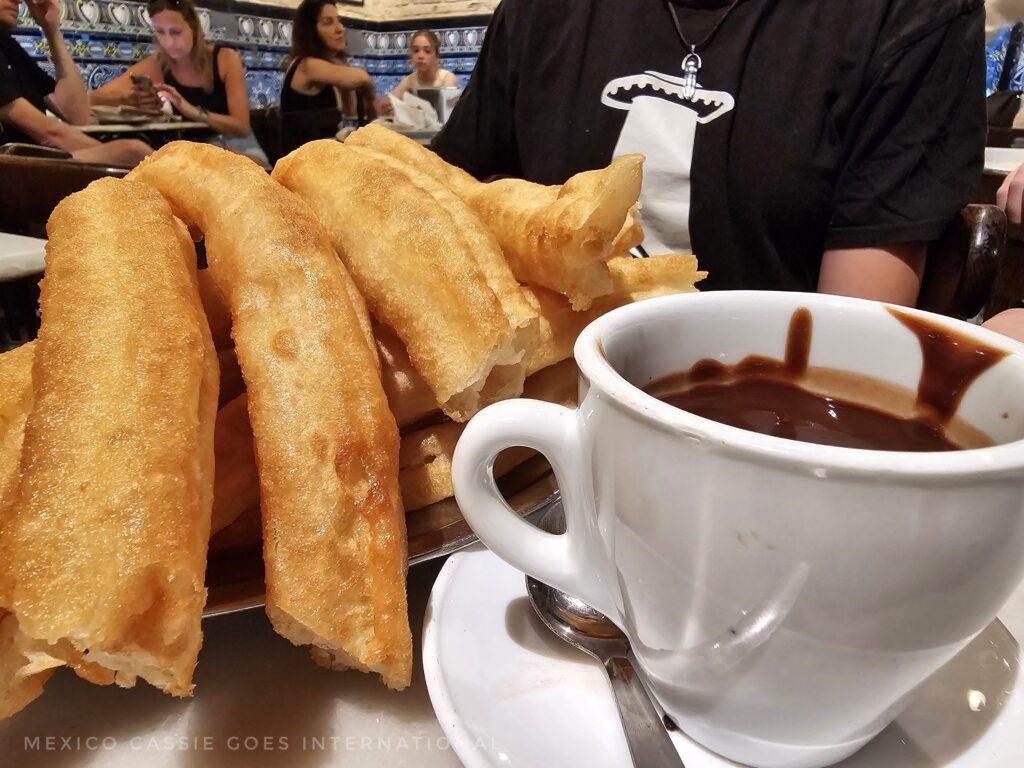
Not particularly wild to decide to have churros while in Sevilla but El Comerico is the oldest churros bar in Sevilla, having been established in 1904. And not only has the business remained in the same family all this time, their recipe also hasn’t changed in 120 years!
Yes, this place has reached instagram/tiktok fame but it’s actually genuinely worth a visit. The churros are amazing (they’re traditional style so not sugary) and the tiles in the back room are beautiful. Grab a coffee, order some churros and enjoy!
→ And use the MexicoCassie guide to Spanish breakfasts to help you order (because while, yes, you can technically eat churros whenever you like, really they’re a breakfast food).
Casa Moreno – is it a bar or is it a deli? O both?
Stepping into Casa Moreno is a bit like stepping back in time. This small delicatessen looks entirely unassuming from the outside, but inside, there’s a traditional deli area and then, further back, a small bar where you’ll find friendly locals enjoying a drink and a tapas or two.
Don’t visit expecting a great meal because truly, the tapas are very basic, but the atmosphere is an absolute delight.
Bar Garlochi – drink with Jesus?
This place is becoming pretty well known but it’s still definitely super quirky. It kind of feels like you’re drinking with Jesus (being judged by Jesus? I don’t know, I’m not religious), or maybe with a vampire or two.
The entire place is decked out like a catholic church on steroids and it’s owned by one man, Miguel. Miguel speaks no English and basically makes the same drink for everyone – Sangre de Cristo. If you’re quick and speak Spanish you might be able to order something different 😉. And note that this place is cash only.
Callejón de la Inquisición
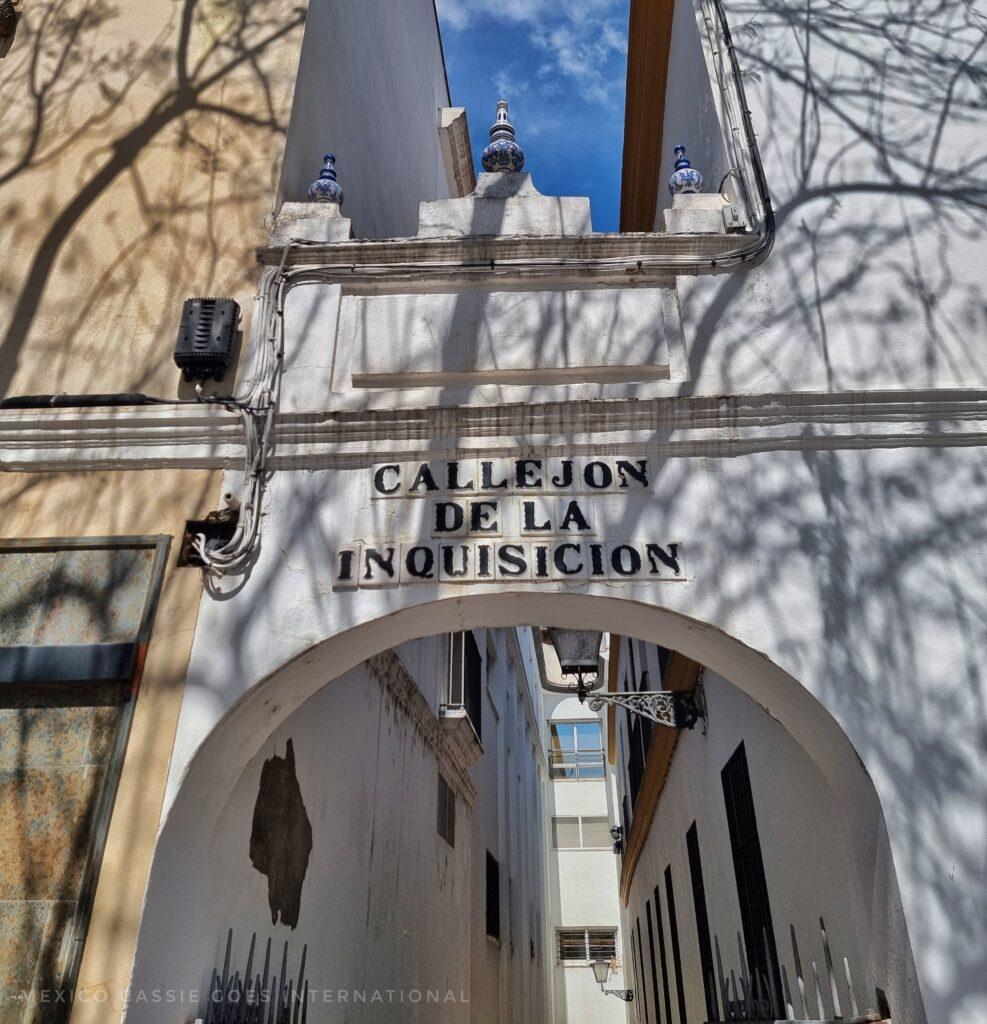
This is a tiny little street by the Puente de Triana and the Castillo de San Jorge – which was the epicentre of the Inquisition and the hundreds of years of terror it caused. People would be walked along this alleyway to the Castillo to hear their charges, and then to be brutally murdered by the state if they were deemed to be ‘guilty’ of heresy.
🐖 Did you know that during the Inquisition, Jews and Muslims in Sevilla would hang a leg of ham in their house to ‘prove’ they had converted to Catholicism?
Edge of cathedral – by the entrance
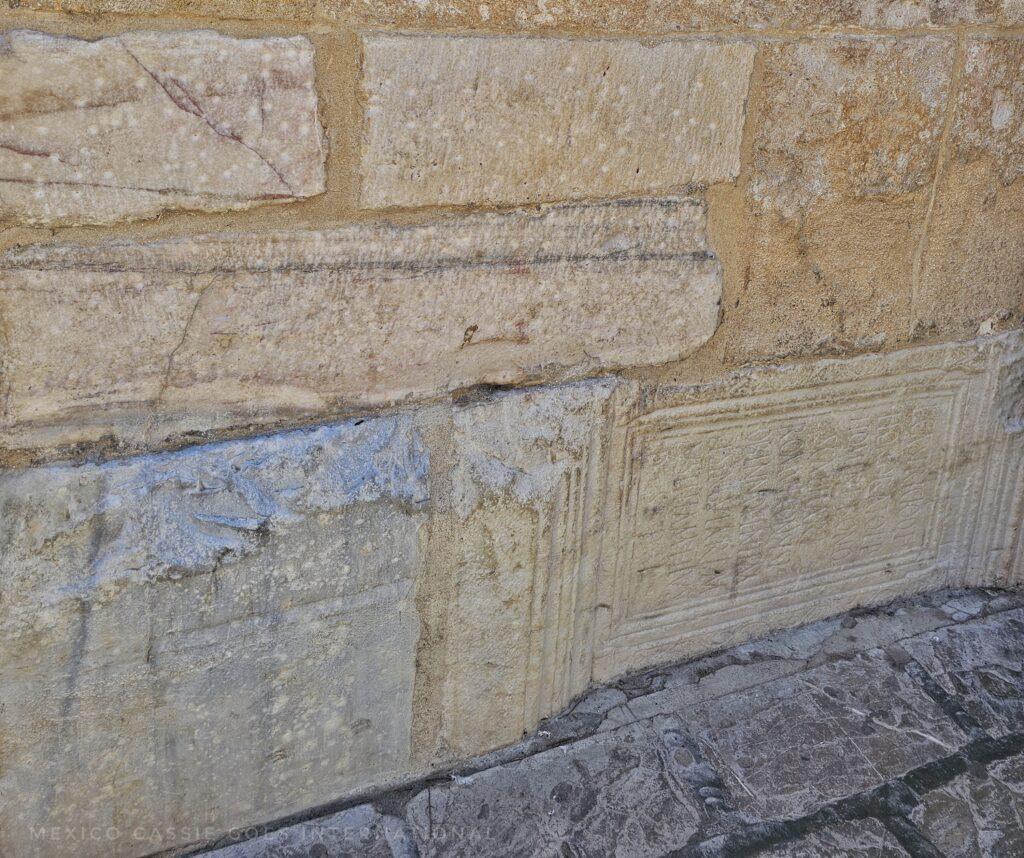
You can see Roman gravestones used in the building of this mosque that became a cathedral if you look carefully while you queue to enter the cathedral.
La Velá de Triana – a wild and wonderful festival
A less well known but equally interesting local festival is the Velá de Triana in mid/late July.
In the 13th century, King Alfonso X had a diseased eye and made a promise to build a temple to honour Santa Ana if his eye was cured. It was, he kept his promise and what began as people in Triana visiting the temple has, over the centuries, turned into a party in true Trianan style!
All along Calle Betis (the Triana side of the river), you’ll see booths that this time you’re actually able to enter to drink, dance and generally party until dawn. There are fireworks, green hazelnuts and of course, the cucañas, where people walk along 5m greasy poles over the water to try and capture a flag. General hilarity, of course, ensues.
And because you made it this far, you get the biggest gift of all…
Carmen de los Arrayanes and the mini-Alhambra adventure that no one knows about
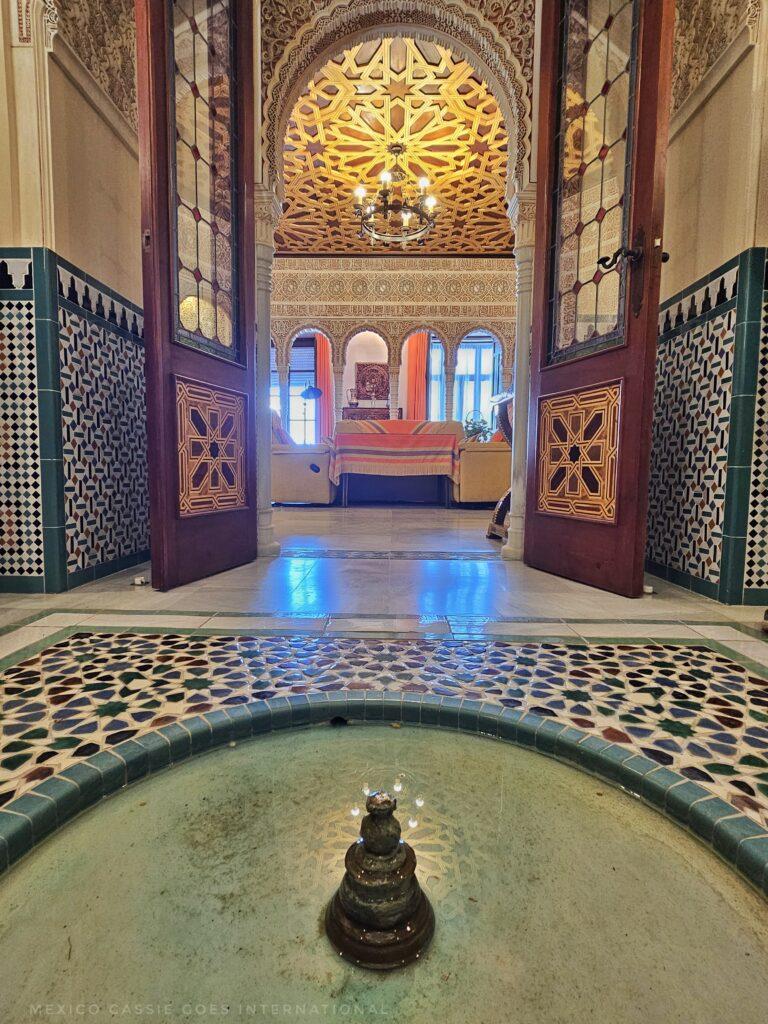
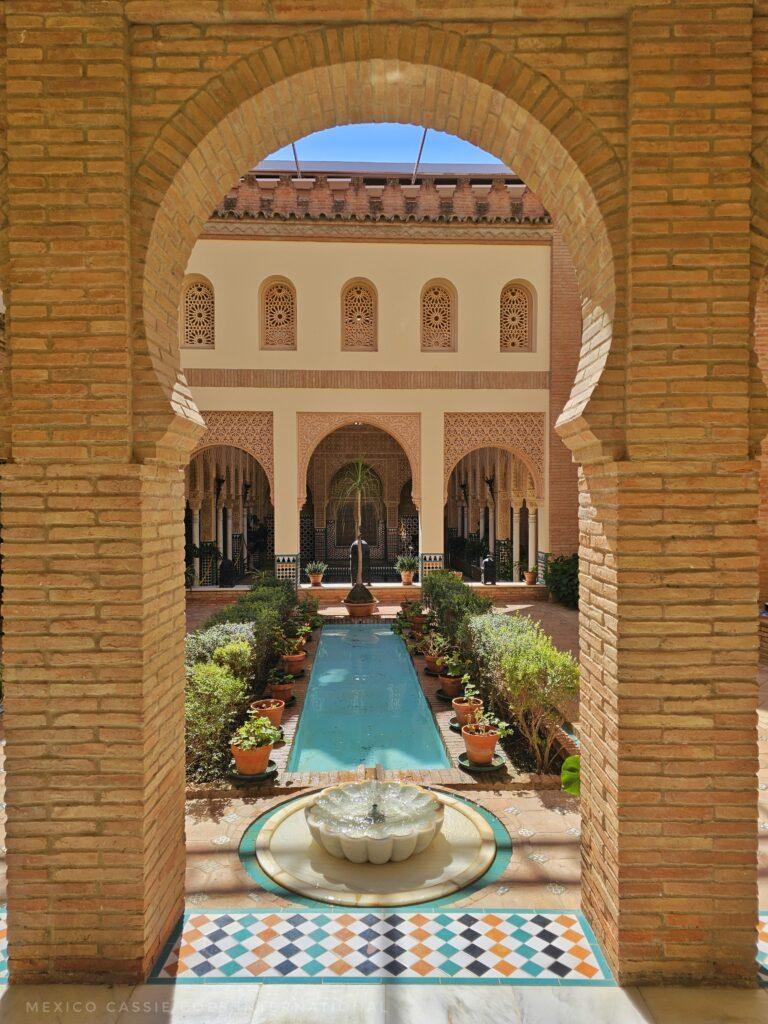
This is actually a private house in Paradas, just outside Sevilla. You need to book in advance to visit, it costs €5 p/person and is only visitable at midday on Saturdays.
The visit is only possible in Spanish at this point – call 954849056 to book your space (you pay cash after the visit) but honestly you don’t need to understand Spanish to see the place. Basically it’s a family home where the dad, in the 90s, decided to decorate his house in the style of the Alhambra and things kind of went wild from there!
If you do visit, please let me know!
OK, your turn, what wild, wonderful and quirky thing have you found in Sevilla?
📚 🇪🇸 Read more of MexicoCassie’s Spain guides
→ MexicoCassie guide to whether Spain is safe for tourists
→ MexicoCassie guide to driving in Spain
→ MexicoCassie guide to driving in southern Spain
☕️ MexicoCassie guide to vegetarian tapas, to breakfast and to feeding the kids
📲 MexicoCassie guide to using an eSIM in Spain
⭐️ Tips to help when you visit Spain
Sevilla
⭐️ What is Sevilla famous for? | ⭐️ How many days do you need in Seville? | ⭐️ Everything about the Seville airport bus
⭐️ 1 day in Seville | ⭐️ 3 days in Seville | ⭐️ 5 days in Seville | ⭐️ How to visit Seville in the summer | ⭐️ How to visit the Alcazar | ⭐️ Quirky Seville | ⭐️ 5 alternatives to the Alcázar
⭐️ Best beaches from Seville | ⭐️ Day trips from Seville | ⭐️ Seville with kids | ⭐️ Seville with teenagers | ⭐️ How to see flamenco in Seville | ⭐️ Best family friendly tours in Seville | ⭐️ Exploring Sevilla Province
➕ Hire MexicoCassie as your amiguía for the day in Sevilla or Alcalá de Guadaíra
Málaga
⭐️ 3 days in Málaga | ⭐️ 1 day in Málaga | ⭐️ Day trips from Málaga | ⭐️ 1 day in Ronda | ⭐️ 1 day in Ronda with kids | ⭐️ What to do in Antequera | ⭐️ Exploring Málaga with kids
Córdoba
⭐️ What to do in Córdoba | ⭐️ Planning your Córdoba day trip from Seville | ⭐️ Day trips from Córdoba | ⭐️ Exploring Córdoba with kids | ⭐️ 1 day in Córdoba | ⭐️ Zuheros, the most beautiful village in Córdoba
Cádiz
⭐️ What to do in Cádiz province | ⭐️ How to spend 1 day in Cádiz city | ⭐️ What to do in Cádiz with kids | ⭐️ Day trips from Cádiz | ⭐️ Exploring Tarifa | ⭐️ How to get to Tangier from Tarifa | ⭐️ Exploring Gibraltar | ⭐️ What to do in Jerez de la Frontera
Huelva
⭐️ Is Huelva worth visiting? (YES) | ⭐️ What to see in the gorgeous Aracena
Granada
⭐️ Planning your Granada city break | ⭐️ Granada with kids | ⭐️ 2 days in Granada | ⭐️ How to explore Guadix and its cave houses
Almería
⭐️ Things to do in Almería City | ⭐️ What to do in Almería with kids | ⭐️ Is Almería worth visiting? | ⭐️ Figuring out the Almería beaches
Community of Valencia
⭐️ 1 day in Valencia | ⭐️ 2 days in Valencia | ⭐️ Museums in Valencia ⭐️ Day trips from Valencia | ⭐️ Valencia with kids
Community of Madrid
⭐️ Why should you visit Madrid | ⭐️ Spending 5 awesome days in Madrid | ⭐️ 3-day Madrid itinerary
Castilla y León
⭐️ Segovia, a perfect day trip from Madrid | ⭐️ How to visit Medina del Campo | ⭐️ How to visit Zamora
Euskadi (Basque Country)
⭐️ What to do in the Basque Country | ⭐️ Excellent things to do in San Sebastián | ⭐️ Is San Sebastián worth visiting? | ⭐️ How many days do you need in San Sebastián? | ⭐️ Day trips from San Sebastián | ⭐️ San Sebastián with kids | ⭐️ Is Bilbao worth visiting? | Planning and taking day trips from Bilbao | Why Vitoria-Gasteiz is worth visiting?
Picos de Europa
⭐️ Road trip itinerary for the Picos de Europa | ⭐️ Planning for a trip to the Picos de Europa | ⭐️ Las Arenas de Cabrales | ⭐️ Visiting Potes
Extremadura
⭐️ Everything you need to explore Monfragüe | ⭐️ What to do in Mérida | ⭐️ What to do in Cáceres | ⭐️ How to visit Plasencia | ⭐️ Visiting Zafra (Sevilla Chica) | ⭐️ What to do in Badajoz | ⭐️ How to visit Jerez de los Caballeros | ⭐️ Extremadura road trip
Galicia
⭐️ What to do in Ferrol | ⭐️ Everything you need to visit Santiago de Compostela | ⭐️ Great reasons to visit A Coruña | ⭐️ Northern Galicia road trip
Cataluña
⭐️ Road trip around Girona Province | ⭐️ Spending 1 day in Girona | ⭐️ 1 day in Barcelona | ⭐️ How to visit Castellfollit de la Roca
La Gomera (Canary Island)
⭐️ Hiking on La Gomera | ⭐️ La Gomera with kids | ⭐️ Take a day trip to La Gomera