Combarro – how to visit this gorgeous Galician village
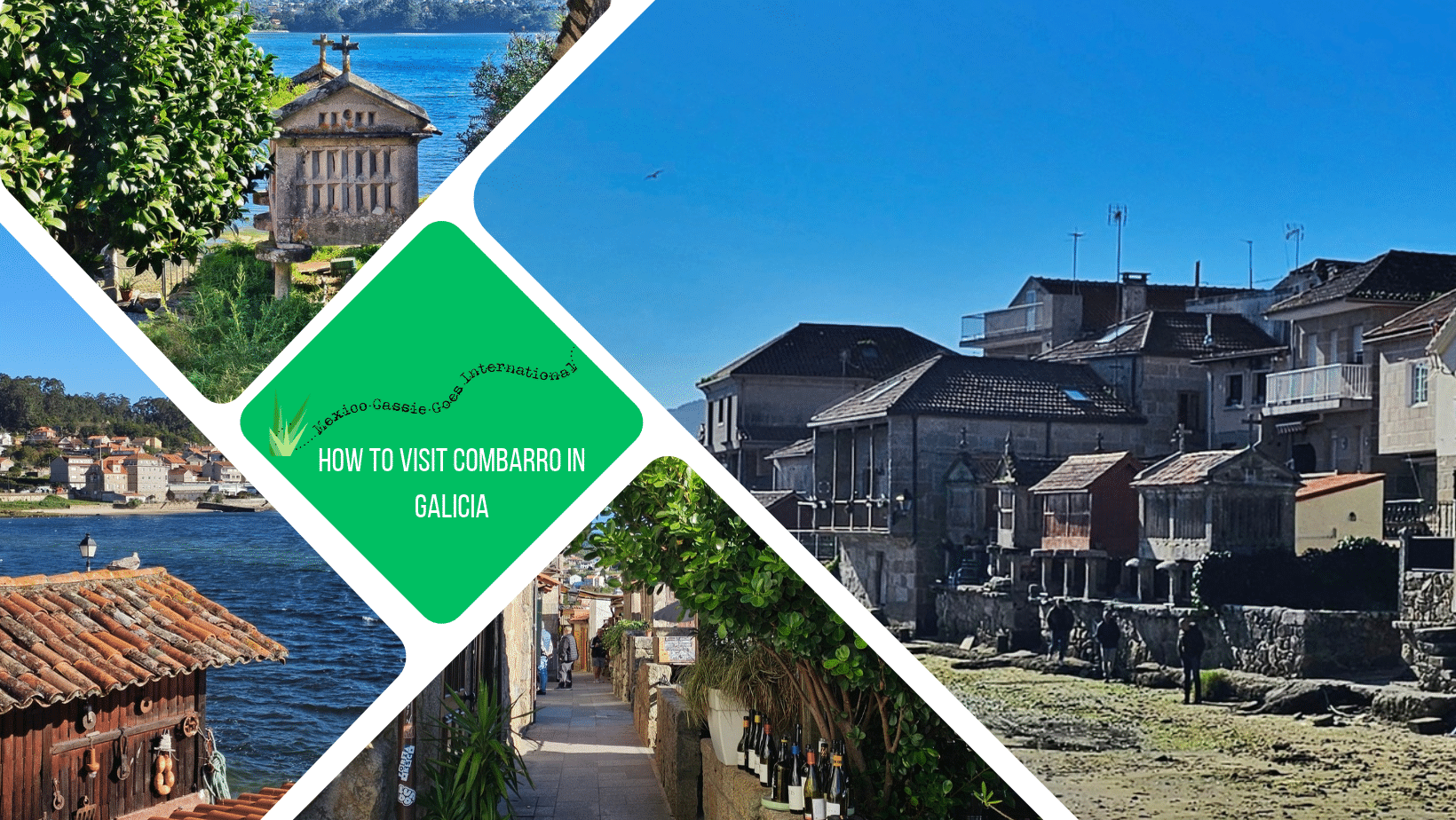
Hórreos, meigas and stunning historical beauty
Many people claim that Galicia’s beautiful village of Combarro is the most beautiful village in Galicia, if not in all of Spain.
While I’m not sure I’d agree with this statement, it is most definitely an incredibly beautiful tiny village (population around 1600) and if you’re in the region, I highly recommend you spend a few hours there.
Rather than ‘most beautiful’, I’d call it ‘extremely beautiful and incredibly interesting’, as you’ll see when you read through the rest of the guide.
So let’s look, right now, at what there is to do in this gorgeous little village.
There are affiliate links in this article. If you click and make a purchase I could make a small sum at zero cost to you. Thank you!
Why visit Combarro
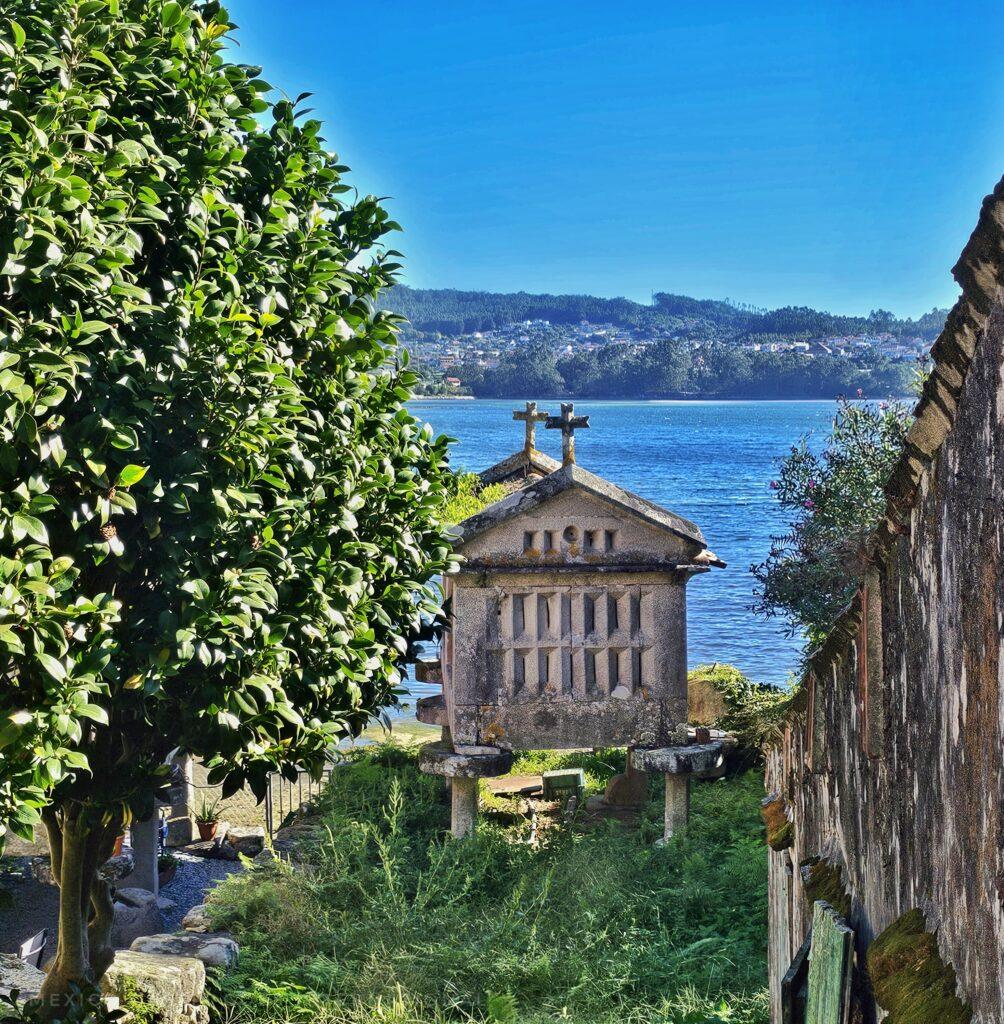
Combarro is a fascinating small seaside village in Galicia that was declared a place of cultural interest in 1972.
It is located in the region of As Rías Baixas, four estuary inlets in southern Galicia: Ría de Muros e Noia, the Ría de Arousa, the Ría de Pontevedra, and the Ría de Vigo.
People visit to see the hórreos, the cases mariñeiras, and cruceiros – in order, granaries, fishing houses and stone crosses.
Tourism notes
📍 This region is extremely popular with Spanish tourists, but less so with visitors from other countries.
📍During the summer months it can be crazy busy so my recommendation is to visit in the shoulder seasons.
📸 I visited in mid-October, and as you can see from the photos in this article, it was not super busy and we had bright blue sunny days.
How to get to Combarro
Tucked away on the Ría Pontevedra, in the Province of Pontevedra, Combarro is an easy day trip from the nearby cities of Vigo and Pontevedra as well as from the cities of Santiago de Compostela and A Coruña.
I actually stopped off here on the way to Vigo from Ferrol (a not super touristy town that I really like), which was also perfectly do-able and reasonable as a day adventure.
🚘 – It’s an easy drive into Combarro. It’s just 15 minutes or so from Pontevedra.
🅿️ As you arrive in town you’ll see directions to carparks but as always, I recommend checking them out first on the map so you arrive with a plan. There’s an ‘overflow’ carpark just out of town by the cemetery that you can use if you can’t get a space closer.
If you don’t arrive early, you won’t get a space easily, especially during tourist season. In October, we arrived at 11am and it was fine but when we left around 2pm there were people having to wait for spaces.
→ Read the full MexicoCassie guide to driving in Spain
→ Check rental car options and prices
🚌 – There are frequent buses between Pontevedra and Combarro. Buses depart from the main Pontevedra Bus Station (about 40 minutes by bus).
🥾 – Of course, Galicia is Camino de Santiago-land so if you’re thinking of undertaking a hike in this region, you could actually hike from Pontevedra to Combarro. It’s the Variante Espiritual route that leaves from Pontevedra and it’s around an 11km walk.
👣 – There are a few tour options for Combarro from Santiago de Compostela including this full day tour of the region that includes a 75 minute stop in Combarro.
What to do in Combarro
Combarro is a tiny place, it’s perfectly easy to visit in one day, or even in a few hours combined with somewhere else. If you’re taking things nice and slow, it would be perfect to stay over night here and experience the village before/after all the other tourists arrive.
Stroll along the narrow streets, admiring the hórreos, enjoy a drink or tapa overlooking the water, browse the shops.
Marvel at the hórreos
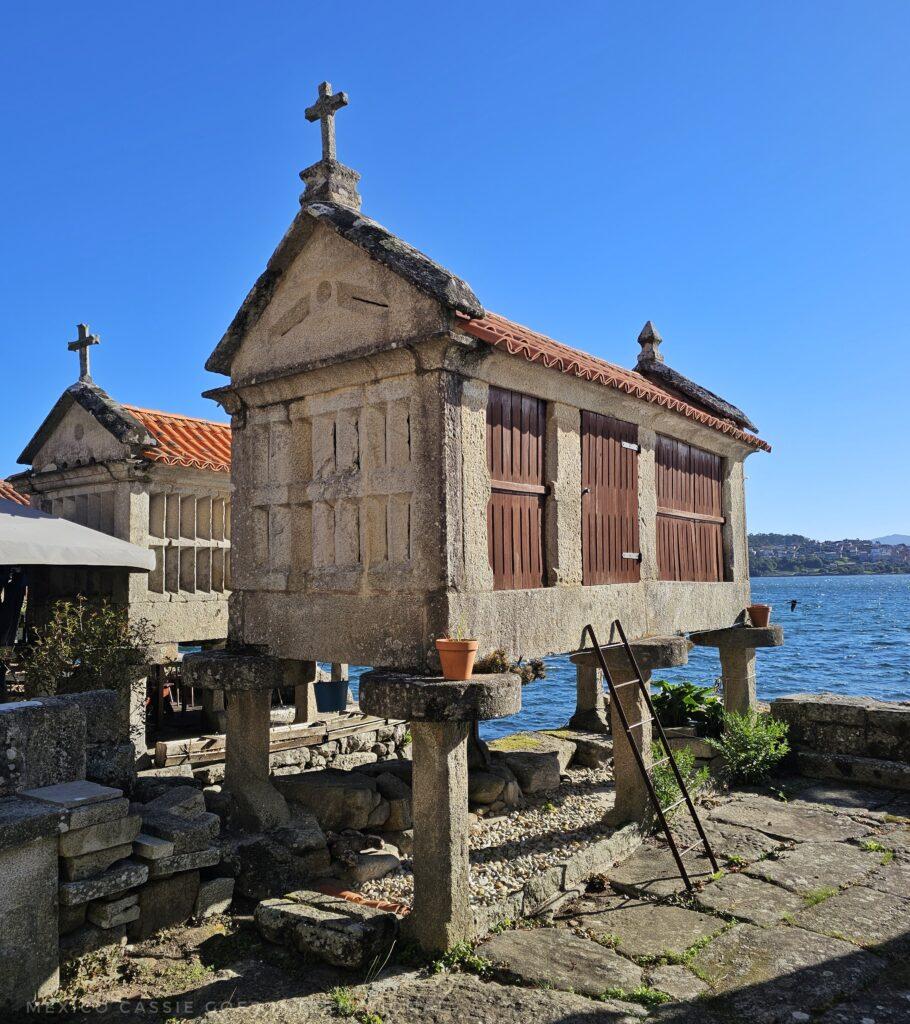
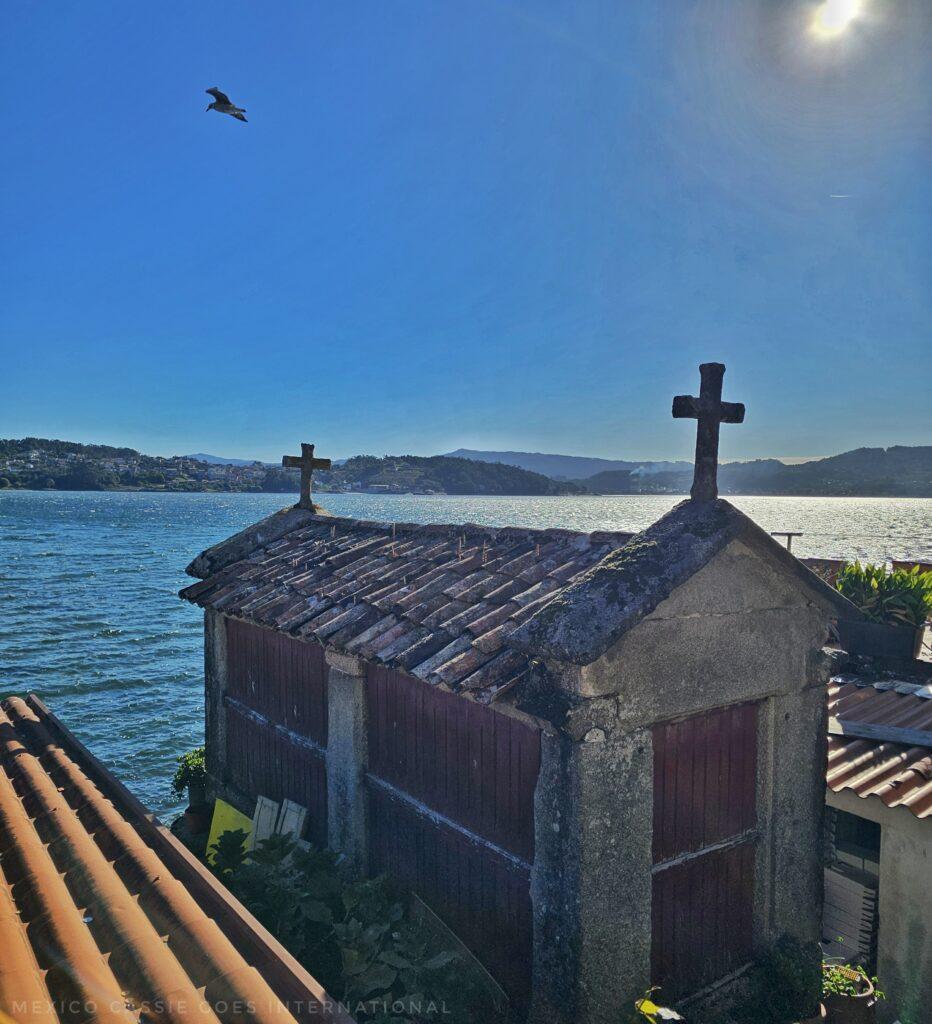
The hórreo, as noted above, is a traditional old granary found across northern Spain including Galicia. These granaries are raised off the ground on legs to keep the grain dry and free of pests.
Apparently there are more hórreos here than in any other village in Galicia, although it is said that there are over 30,000 across the entire community.
🛡️ Galician hórreros have protected status.
The biggest draw of Combarro is without a doubt its row of 30 hórreos, traditional granaries from the 18th century, that line the shore on Rúa de Mar. It’s an absolute delight to walk between them, down the narrow gaps to the water.
There are actually 60 of them around the village but of course, seeing so many in a row is really extremely impressive and makes for some great photo opportunities.
On the delightful Praza Peirao da Chousa you’ll also find a few perched along the side and apparently the important 7th century monastery of San Juan de Poio is home to the largest hórreo in all of Galicia.
It is thought that the Romans coined the word ‘hórrero’ (booooo), but the inhabitants of this region will have been using the hórreos long before these invaders ever showed up in Spain.
Want MexicoCassie to take a look at your travel plans?
Of course you can plan your own trip, that’s why you’re here using my guides! But an expert pair of eyes can be extremely useful when you’re feeling overwhelmed, simply have too many ideas, or you’re not quite sure where to begin.
I offer informal & fun travel planning sessions, bespoke itinerary planning and AI itinerary checking, all based on my many years of travelling and adventuring.
Notice the cruceiros
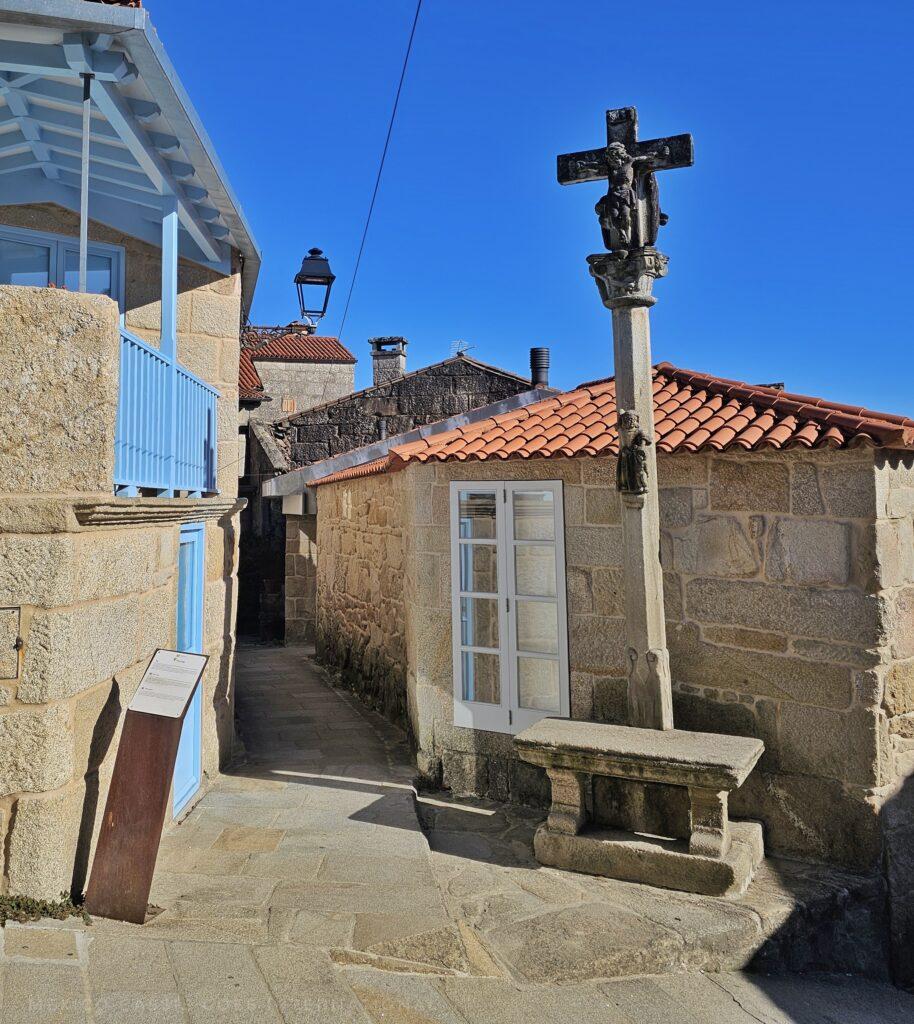
There are nine of these stone crosses to see in Combarro and although they most definitely look Christian, we must remember that Galicia has ancient pagan roots and many of these crosses were built upon ancient sacred sites to try and enforce Christianity on the Indigenous pagan population.
These cruceiros are considered to be one of the most genuine expressions of Galician architecture. Despite their seemingly Christian symbolism of Jesus and his mother, they are typically identified with noting a traditional pagan sacred symbolic and protective space. It is believed that gatherings of traditional meigas and witches took place at these locations.
Witches in Combarro and Galicia
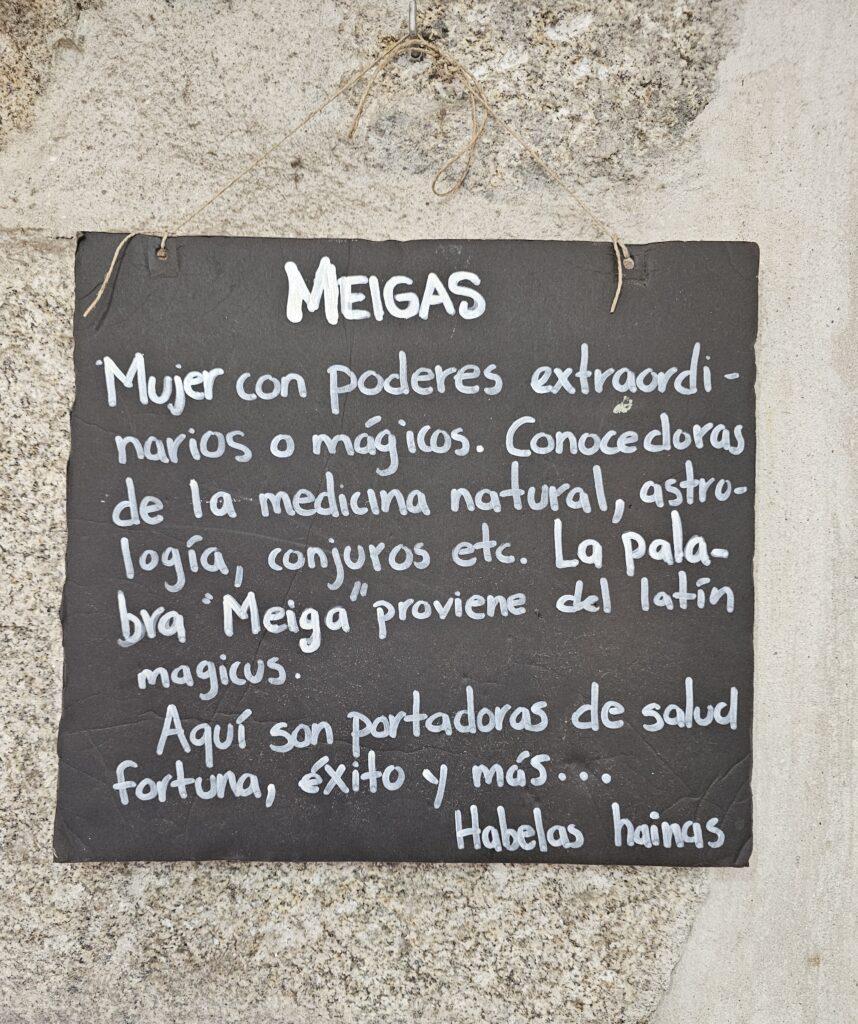
Translation: “Meigas, a woman with extraordinary magical powers. Holders of knowledge of natural medicine, astrology, spells etc. The word “meiga” comes from the Latin word magicus.
Here are the bearers of health, fortune, success and more.
Habelas hainas” (Gallego. Means “they exist”)
a sign in Combarro
Before we get into the idea of witches in Galicia, I am compelled to note that I remain angry & horrified by the treatment of women across northern Europe by men during the middle ages (and beyond, obv). Women were persecuted for being smart, loud, wealthy or educated, or even simply because men felt like punishing them. I don’t joke about this at all. It is a stain on our collective history that I don’t believe we’ve fully addressed, preferring to cloak cruel persecution and torture in jokes and stories rather than deal seriously with the consequences of this awful time.
Meigas are different. They are absolutely central to Galician folklore and are considered to be women with extraordinary powers, holders of natural medicine knowledge, and astrology. They could do both good or evil depending on intention. They are seers and unlike in much of Europe, from what I’ve read, Spain, despite being the centre of the Inquisition, was actually not obsessed with hunting ‘witches’.
There is a wonderful saying in Gallego, “eu non creo nas meigas, pero habelas hailas’ (I don’t believe in witches, but there are witches), which I think sums up really well the mixture of respect and skepticism towards the subject in Galicia. They don’t believe but they also don’t not believe in powerful women working in harmony with the natural world.
Another great quote about Galicia I found is: “Galicia produces witches as easily as turnips,” attributed to dramatist Tirso de Molina in 1610 – he wrote the Trickster of Seville, by the way.
Everywhere you go in Combarro you’ll find dolls and effigies of witches, and of owls too, offering protection as you explore.
MexicoCassie reading recommendations
📖 Sociogénesis de las brujas : el origen de la discriminación de la mujer – this is a fantastically interesting book for anyone interested in the subject of witches and women in Europe. It includes a good section on the different names given to women that men feared and named as witches in various forms throughout history.
📖 Woman’s Lore: 4,000 Years of Sirens, Serpents and Succubi – one of my favourite books about the demonic traditions that were stolen from women over 4,000 years
Stroll the streets
Are you finding my travel guides helpful?
Every tip helps me keep them online!
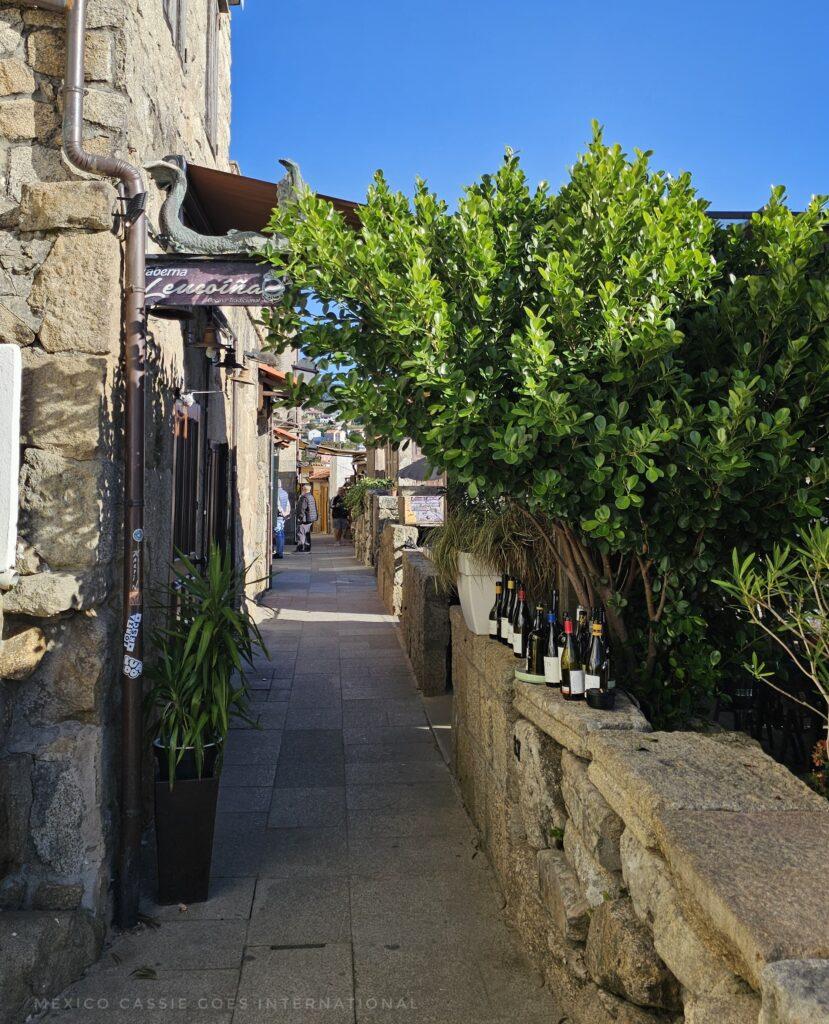
Rúa do Mar – here you’ll find the majority of the hórreos and the old fishing homes, most of which have now been converted into shops and restaurants (photo above).
This is a super narrow street, maybe two people wide at best so hold your breath if you’re visiting in the summer 😆
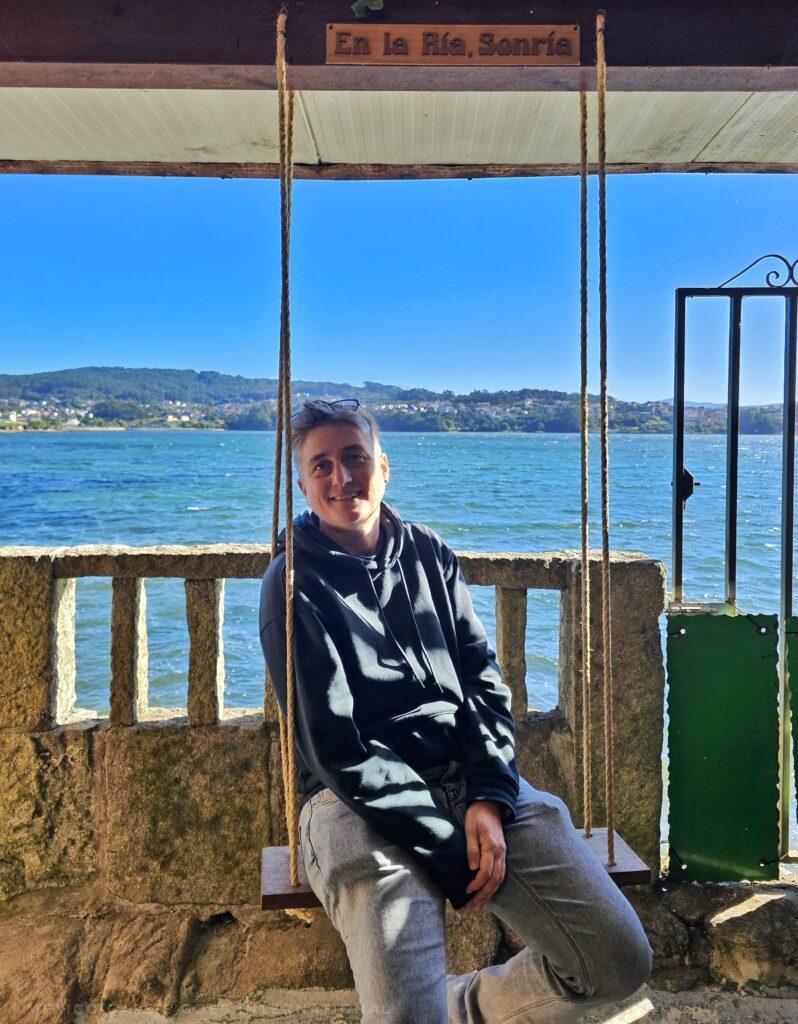
Enjoy all the fun souvenir shops along here, especially Mirador y Tienda de Souvenirs because here at this lovely shop you’ll be invited to head upstairs to the first floor balcony to admire the views.
I actually really regret not buying something here so if you do stop in, pick up a small souvenir or two to make up for my not buying anything 😢. There’s also a cute swing in their space near the water when you can take photos.
A Rúa – the houses are traditional granite fisher people’s houses from the 1700s, with covered porches, columns, balconies and cute as anything little gardens.
Leads onto Praza do Fonte (mentioned above)
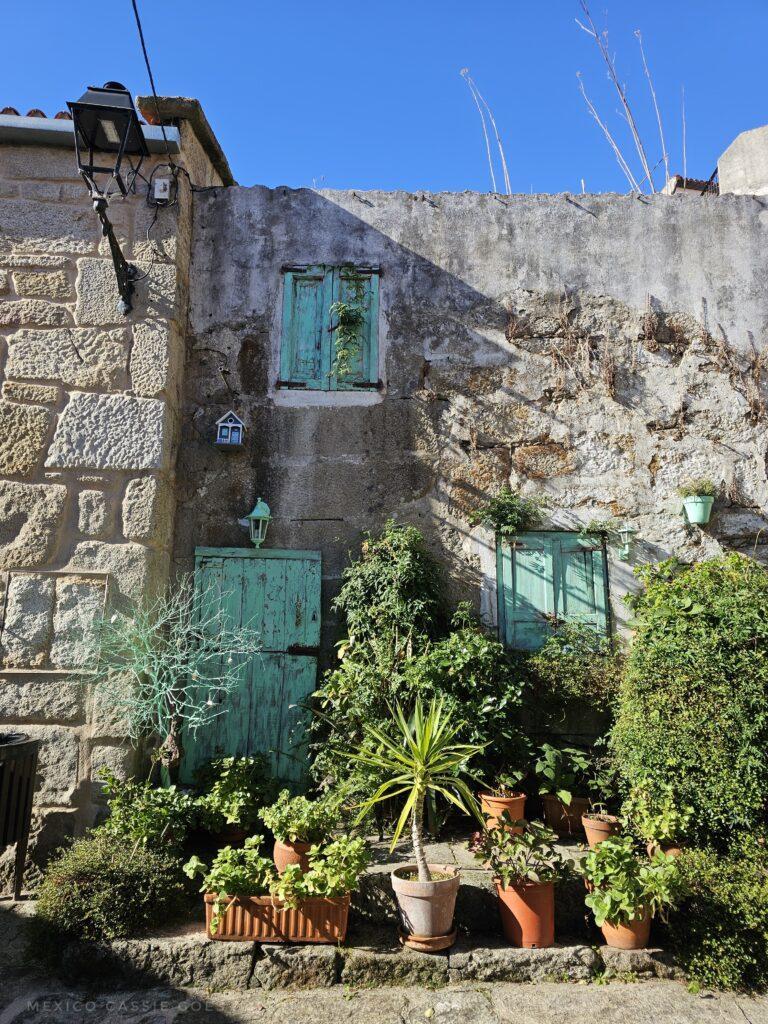
A Rúa Cega (photo above) – literally translated this means ‘blind road’, which works nicely because in Spanish, Calle Ciega means ‘dead-end street’, which this definitely is. In Gallego actually it’s more common to hear “rúa sen saída” (road without an exit) but it can be understood as a ‘dead-end’ too. And this road is the only road in all of Combarro’s casco antiguo where the houses don’t face the sea. It is thought that peasants must have lived here rather than the families of fishermen.
+ In the Old Town, people often like to visit the 18th century Iglesia Parroquial de San Roque to see the wooden roof. Apparently this church was originally dedicated to San Sebastián but after a plague swept through the region, the locals swapped allegiance to San Roque instead.
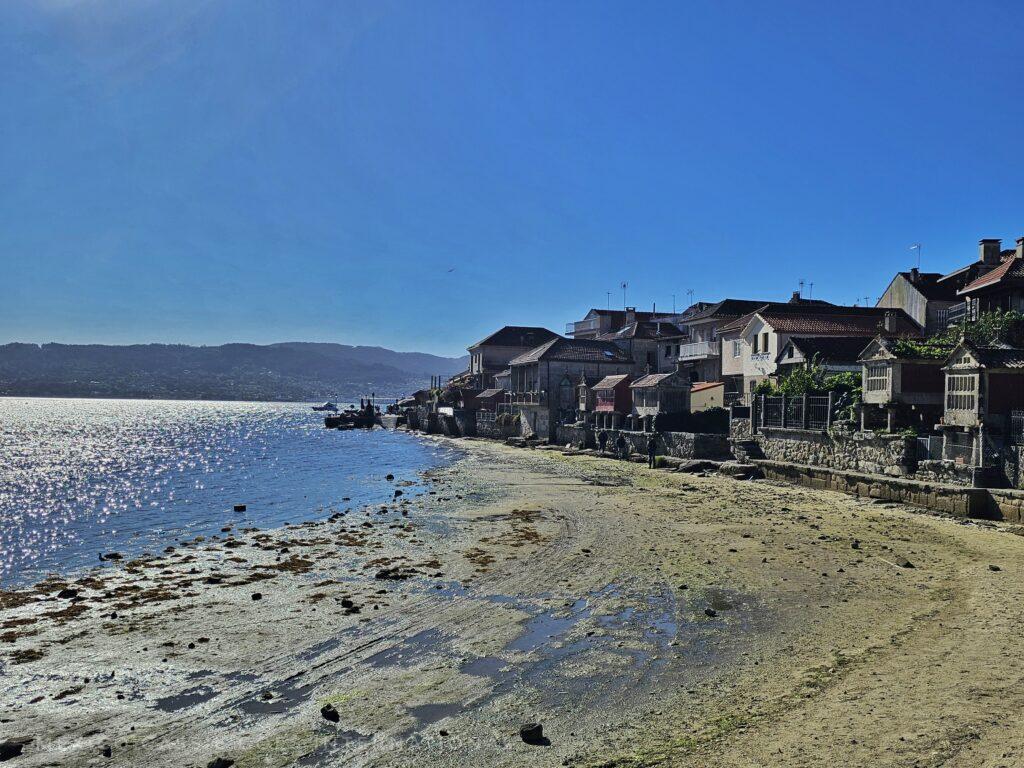
+ Playa do Padron – the town’s small beach. It’s not anything like the beautiful beaches you’ll find outside of town, for me it is more of a spot to sit and gaze at the beauty around than a beach for spending a day on.
Where to eat in Combarro
I actually can’t give any hints as I ate homemade pizza from the back of my car while I was here. Some days are picnic days, sorry.
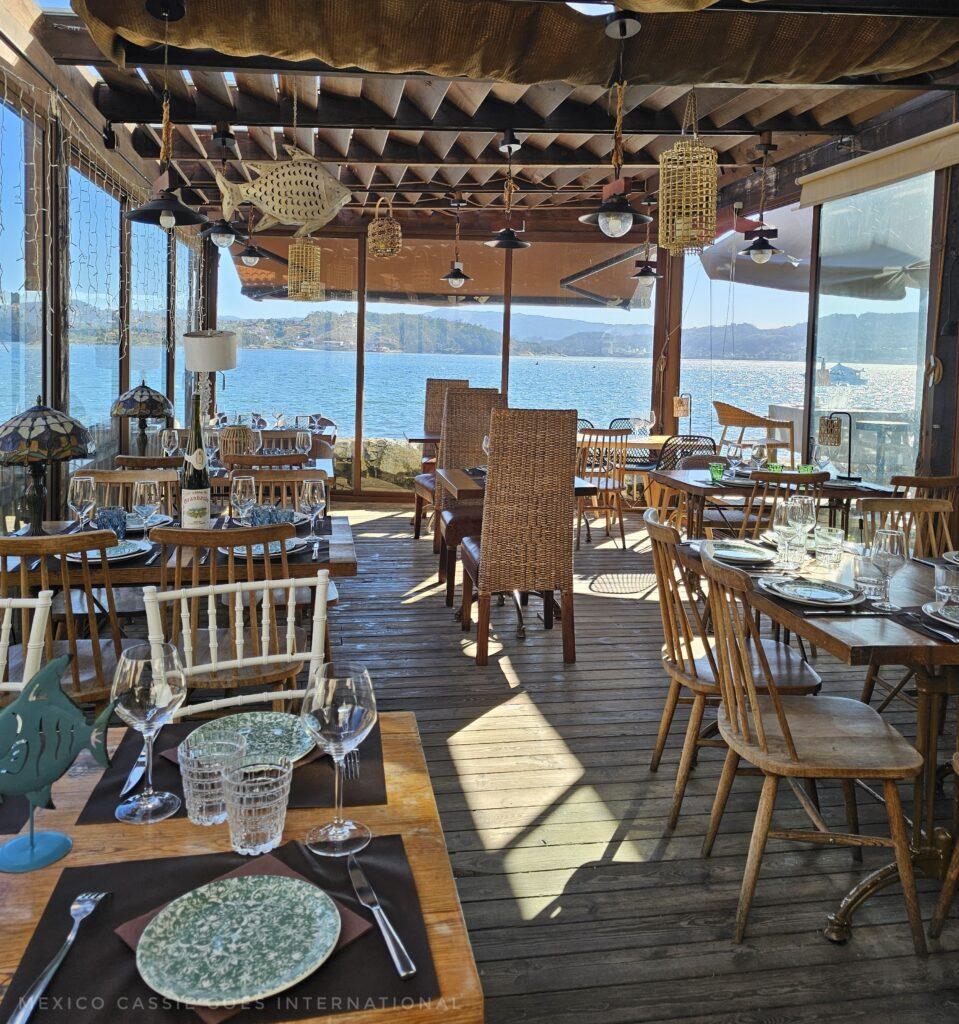
I do know that many places both in the old city and outside of it, get great reviews for their seafood.
Where to stay in Combarro
🏨 Excellent beachfront views: GALIHOST – Maraxe 45 – a delightful two bedroom house with sea views and a terrace to enjoy the water (parking is available if you request it)
🏨 Excellent beachfront views: Casa Do Pazo in Combarro – another delightful two bedroom house with sea views and a terrace and free parking.
And as a final note, where do I think is equally beautiful in Spain?
I think there are dozens, if not hundreds of gorgeous places to visit in Spain. These are a few where their beauty has actually stopped me in my tracks:
Zuheros in Córdoba, Andalucía, Castilfollit de la Roca, in Girona, Catalunya, Potes, in the Picos de Europa, Cantabria. Nijar in Almeria, Guadix in Granada, Andalucía, Almonaster La Real, Huelva
📚 🇪🇸 Read more of MexicoCassie’s Spain guides
→ MexicoCassie guide to whether Spain is safe for tourists
→ MexicoCassie guide to driving in Spain
→ MexicoCassie guide to driving in southern Spain
☕️ MexicoCassie guide to vegetarian tapas, to breakfast and to feeding the kids
📲 MexicoCassie guide to using an eSIM in Spain
⭐️ Tips to help when you visit Spain
Sevilla
⭐️ What is Sevilla famous for? | ⭐️ How many days do you need in Seville? | ⭐️ Everything about the Seville airport bus
⭐️ 1 day in Seville | ⭐️ 3 days in Seville | ⭐️ 5 days in Seville | ⭐️ How to visit Seville in the summer | ⭐️ How to visit the Alcazar | ⭐️ Quirky Seville | ⭐️ 5 alternatives to the Alcázar
⭐️ Best beaches from Seville | ⭐️ Day trips from Seville | ⭐️ Seville with kids | ⭐️ Seville with teenagers | ⭐️ How to see flamenco in Seville | ⭐️ Best family friendly tours in Seville | ⭐️ Exploring Sevilla Province
➕ Hire MexicoCassie as your amiguía for the day in Sevilla or Alcalá de Guadaíra
Málaga
⭐️ 3 days in Málaga | ⭐️ 1 day in Málaga | ⭐️ Day trips from Málaga | ⭐️ 1 day in Ronda | ⭐️ 1 day in Ronda with kids | ⭐️ What to do in Antequera | ⭐️ Exploring Málaga with kids
Córdoba
⭐️ What to do in Córdoba | ⭐️ Planning your Córdoba day trip from Seville | ⭐️ Day trips from Córdoba | ⭐️ Exploring Córdoba with kids | ⭐️ 1 day in Córdoba | ⭐️ Zuheros, the most beautiful village in Córdoba
Cádiz
⭐️ What to do in Cádiz province | ⭐️ How to spend 1 day in Cádiz city | ⭐️ What to do in Cádiz with kids | ⭐️ Day trips from Cádiz | ⭐️ Exploring Tarifa | ⭐️ How to get to Tangier from Tarifa | ⭐️ Exploring Gibraltar | ⭐️ What to do in Jerez de la Frontera
Huelva
⭐️ Is Huelva worth visiting? (YES) | ⭐️ What to see in the gorgeous Aracena
Granada
⭐️ Planning your Granada city break | ⭐️ Granada with kids | ⭐️ 2 days in Granada | ⭐️ How to explore Guadix and its cave houses
Almería
⭐️ Things to do in Almería City | ⭐️ What to do in Almería with kids | ⭐️ Is Almería worth visiting? | ⭐️ Figuring out the Almería beaches
Community of Valencia
⭐️ 1 day in Valencia | ⭐️ 2 days in Valencia | ⭐️ Museums in Valencia ⭐️ Day trips from Valencia | ⭐️ Valencia with kids
Community of Madrid
⭐️ Why should you visit Madrid | ⭐️ Spending 5 awesome days in Madrid | ⭐️ 3-day Madrid itinerary
Castilla y León
⭐️ Segovia, a perfect day trip from Madrid | ⭐️ How to visit Medina del Campo | ⭐️ How to visit Zamora
Euskadi (Basque Country)
⭐️ What to do in the Basque Country | ⭐️ Excellent things to do in San Sebastián | ⭐️ Is San Sebastián worth visiting? | ⭐️ How many days do you need in San Sebastián? | ⭐️ Day trips from San Sebastián | ⭐️ San Sebastián with kids | ⭐️ Is Bilbao worth visiting? | Planning and taking day trips from Bilbao | Why Vitoria-Gasteiz is worth visiting?
Picos de Europa
⭐️ Road trip itinerary for the Picos de Europa | ⭐️ Planning for a trip to the Picos de Europa | ⭐️ Las Arenas de Cabrales | ⭐️ Visiting Potes
Extremadura
⭐️ Everything you need to explore Monfragüe | ⭐️ What to do in Mérida | ⭐️ What to do in Cáceres | ⭐️ How to visit Plasencia | ⭐️ Visiting Zafra (Sevilla Chica) | ⭐️ What to do in Badajoz | ⭐️ How to visit Jerez de los Caballeros | ⭐️ Extremadura road trip
Galicia
⭐️ What to do in Ferrol | ⭐️ Everything you need to visit Santiago de Compostela | ⭐️ Great reasons to visit A Coruña | ⭐️ Northern Galicia road trip | ⭐️ Visiting Combarro
Cataluña
⭐️ Road trip around Girona Province | ⭐️ Spending 1 day in Girona | ⭐️ 1 day in Barcelona | ⭐️ How to visit Castellfollit de la Roca
La Gomera (Canary Island)
⭐️ Hiking on La Gomera | ⭐️ La Gomera with kids | ⭐️ Take a day trip to La Gomera