Everything you need to know plan your visit to Santiago de Compostela
Santiago de Compostela is the capital city of Galicia, and whether you’re visiting as an elated and tired peregrino (pilgrim) or as a curious visitor, the city is a delightful place to spend a few days.
Despite not being a major tourist destination, around half a million officially registered pilgrims a year end their camino here in front of the giant cathedral on the Plaza Obradoiro, and slightly more non-pilgrims also choose to spend a few days here. Data I’ve seen put Santiago de Compostela at the 21st most visited city in Spain with around 1 million visitors a year.
I’ve visited a good number of time now and am excited to share my thoughts with you.
There are affiliate links in this article. If you click and make a purchase I could make a small sum at zero cost to you. Thank you!
Highlights of Santiago de Compostela
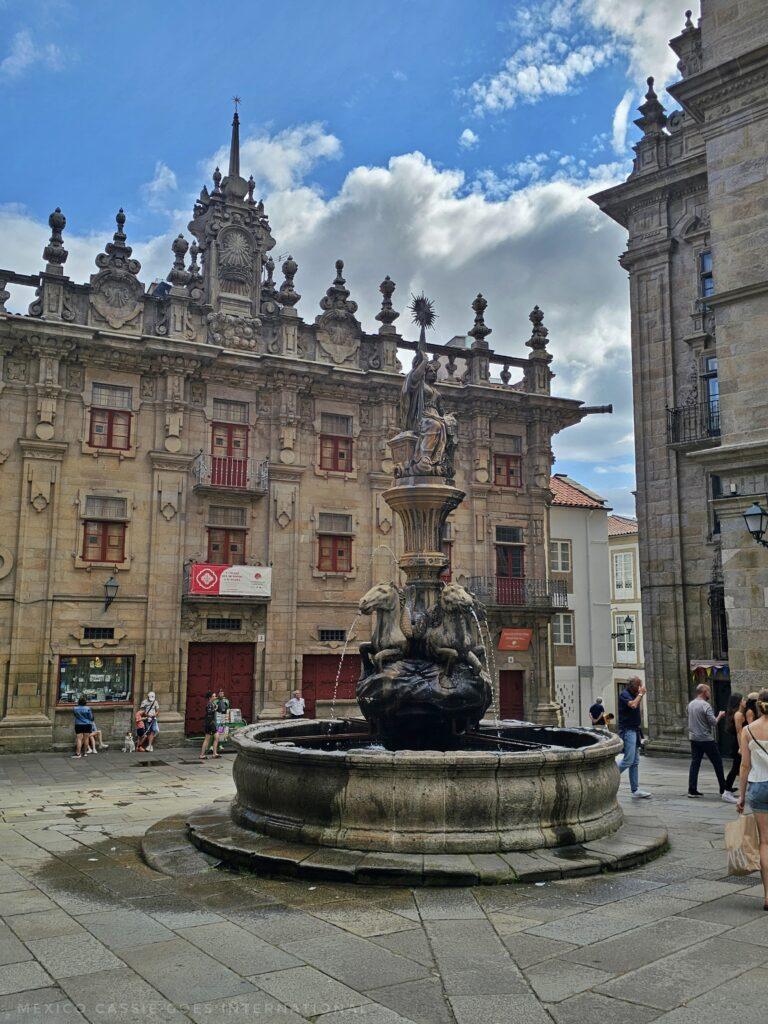
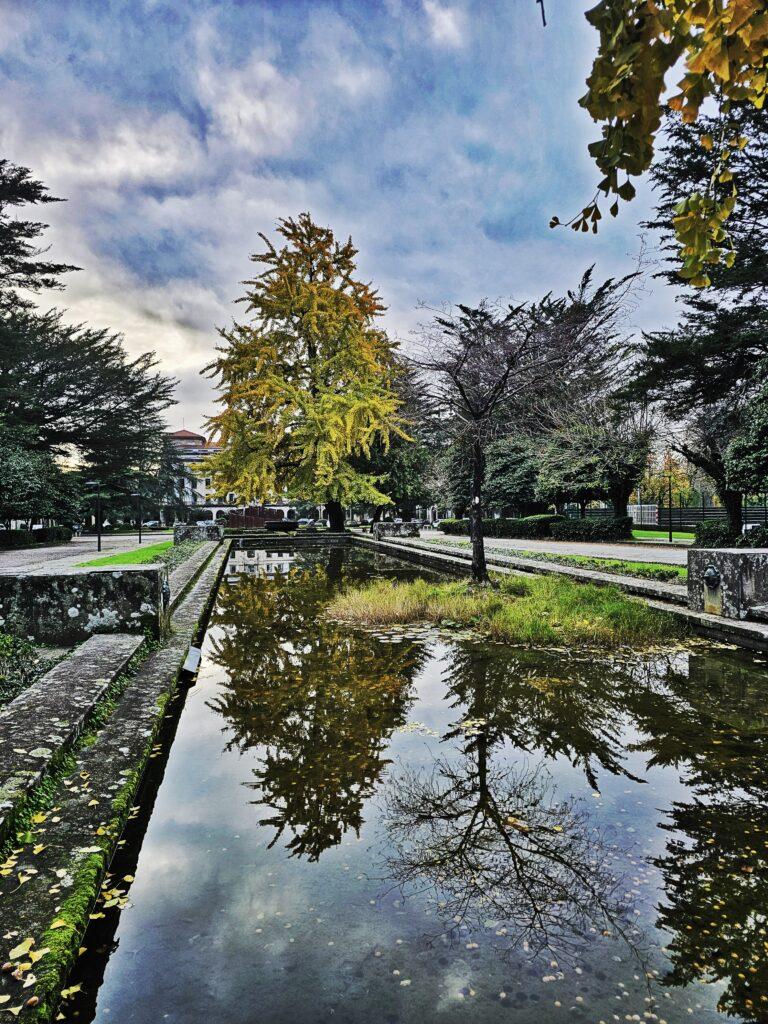
The highlights really depend on why you’re in the city. I haven’t personally walked the camino all the way to Santiago de Compostela yet (I’ve walked various sections in both the north and south of Spain including a delightfully difficult section of the Camino del norte with my brother and there is a plan in the works to walk the Camino Inglés next year) so I haven’t experienced that profound sense of relief and accomplishment people feel when they arrive in the plaza and see the cathedral for the first time.
For many visitors, the main plaza, the Praza do Obradoiro is the highlight due to its extremely impressive architecture including the absolutely wildly enormous cathedral.
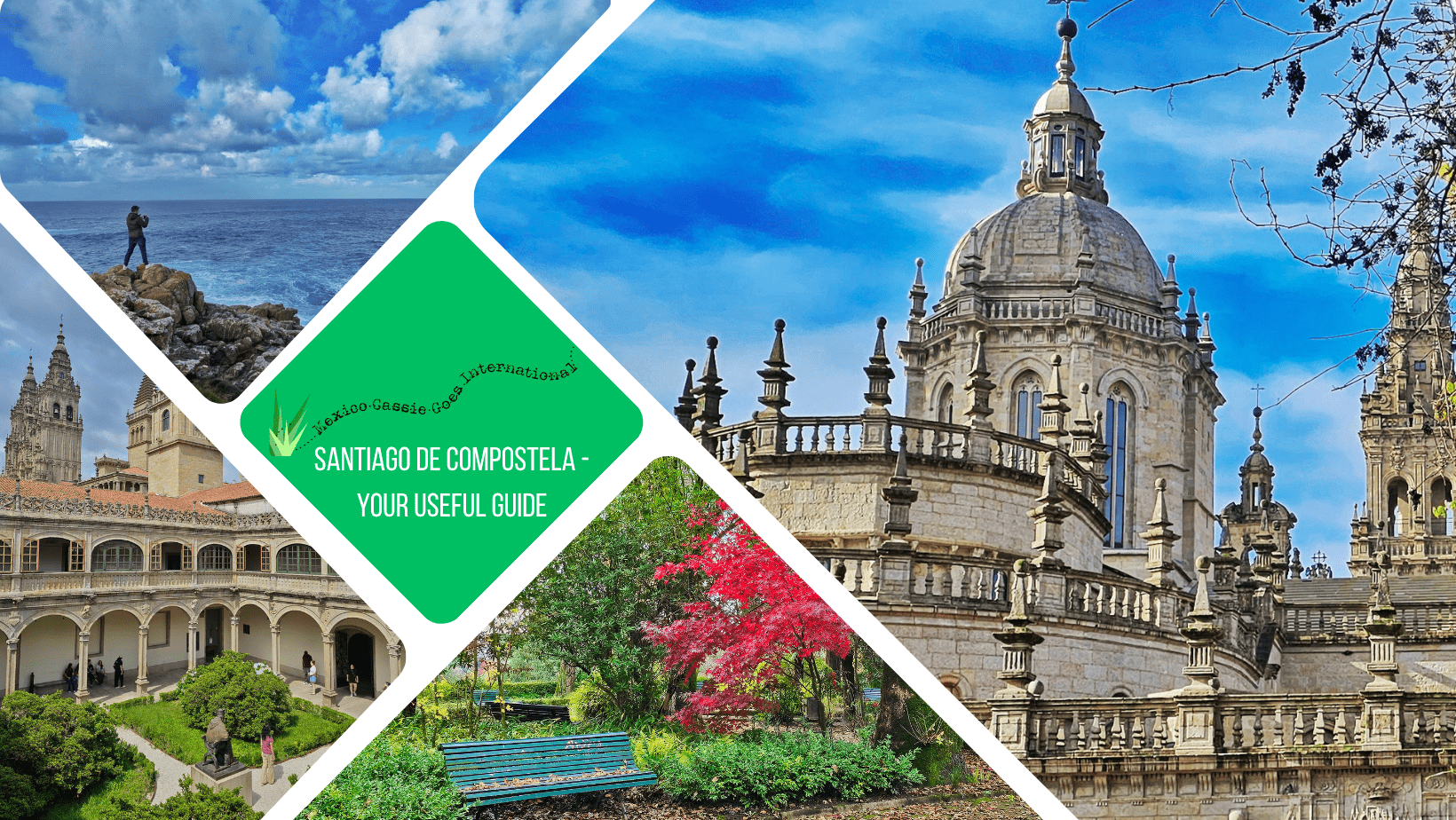
For me personally, the two highlights of the city are both a little away from this plaza, the Museo do Pobo Galego, and the Parque da Alameda (photo on right above).
The city was named a UNESCO World Heritage Site in 1985.
⭐️ It’s also a fabulous place to begin your road trip around Northern Galicia
How to get to Santiago de Compostela
If you’re not hiking then you can arrive by plane, train, bus or car. I have arrived by all means except my own personal feet (hahahah personal feet, nor via piggyback have I arrived in Santiago).
✈️ The region’s primary airport is just outside of town and is very impressive although annoyingly, RyanAir recently pulled its flights, making it harder to reach. I use Vueling now when I fly from Sevilla to Galicia.
🚆There is a decent sized train station here linking the city with the rest of Spain
🚌 There are buses arriving in / leaving Santiago de Compostela from all over the country
→ Check bus and train times and prices on The Trainline
🚙 The roads in Galicia are great and it’s perfectly safe to drive everywhere. The only annoying thing is the toll roads stretching from the Portuguese border in the south up to Ferrol in the north.
→ Read the full MexicoCassie guide to driving in Spain
→ Check rental prices and book your car with Discover Cars
A camino note
🥾 If you are walking a camino into Santiago, please be aware that Santiago de Compostela is also a living, breathing modern city where people live, sleep, work and go to school. There are complaints that the ‘peregrinos’ are arriving in big enough numbers that they can be disruptive to local life. Yes, the camino is hard, but the point of it is reflection, not being noisy when you arrive at the end. Please respect the locals and their city.
→ Read the MexicoCassie tips to ensuring a smooth trip to Spain
Where to stay in Santiago
🏨 MexicoCassie best hotel recommendation: Hotel Gaio 7 – this small hotel is centrally located and still has space for a gorgeous swimming pool in the gardens (open summer months only). With comfortable rooms and a fabulous breakfast included, this is a winner of an option in Santiago.
🏨 MexicoCassie cozy boutique recommendation: Hotel Paz de Altamira – a small boutique hotel four minutes from the centre of the city, breakfast isn’t included but it comes extremely highly recommended. This is luxury at mid-range prices.
🏨 MexicoCassie best value for money recommendation: México PR – this is a delightful hostel offers private rooms. It’s well located, rooms are clean and comfortable.
🗺️ And, if none of these options appeal, use the MexicoCassie interactive map to find something more to your taste.
What to do in Santiago de Compostela
For me, some of the best things to do in this gorgeous city include wandering around the narrow streets, checking out the very cool tourist shops, and admiring the architecture.
⭐️ MexicoCassie recommended walking tour – 2 hour walking tour in a small group (that’s why I like this tour, large groups aren’t so good when walking around a city) with great explanations and discourse on the history of Santiago de Compostela.
🚂 There’s a delightful little tourist train you can pick up on the plaza that takes you on a 45 minute tour of the city.
As I noted above, my two favourite spots in the city are the Museum of the Galician People and the Alameda Park, so let’s take a look at them first and then we’ll check out the other things to do.
🛍️ Mercado de Abastos – as you wander around, don’t miss the very popular local market. It’s great for chilling, picking up snacks and marvelling at local dishes.
Museo do Pobo Galego
This is an extremely interesting ethnographic museum about the history of the Gallego people. I spent hours in here. There’s a great video on the geography of the autonomous community of Galicia, too, which replays regularly in my head.
Next door – Contemporary Art Center of Galicia
Parque da Alameda
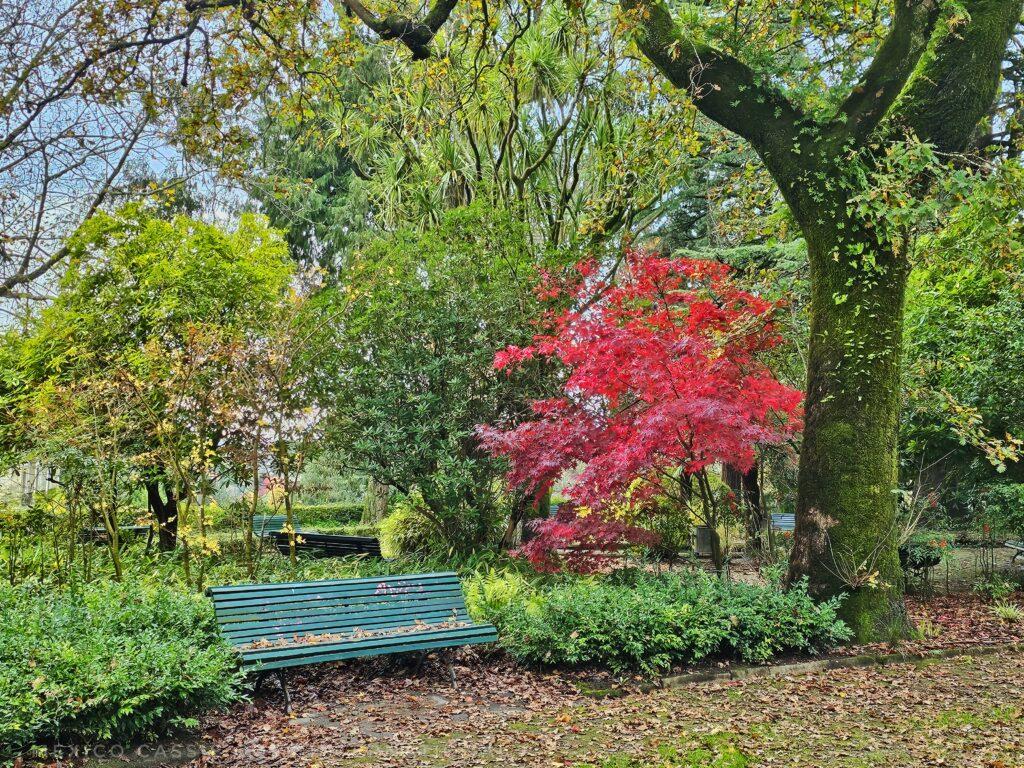
This 16th century park is extremely special to me. I just love it here in all seasons. The trees are absolutely magnificent. The Japanese maples turn a magical deep red in the winter months and there are ginko to admire too. As you enter from town, don’t miss the sculputre of As Duas Marias. And over on one side of the park is a great city mirador for the cathedral.
OK, so that’s my two favourite spots in the city. But what else is there for visitors? Let’s have a look:
Cathedral of Santiago de Compostela
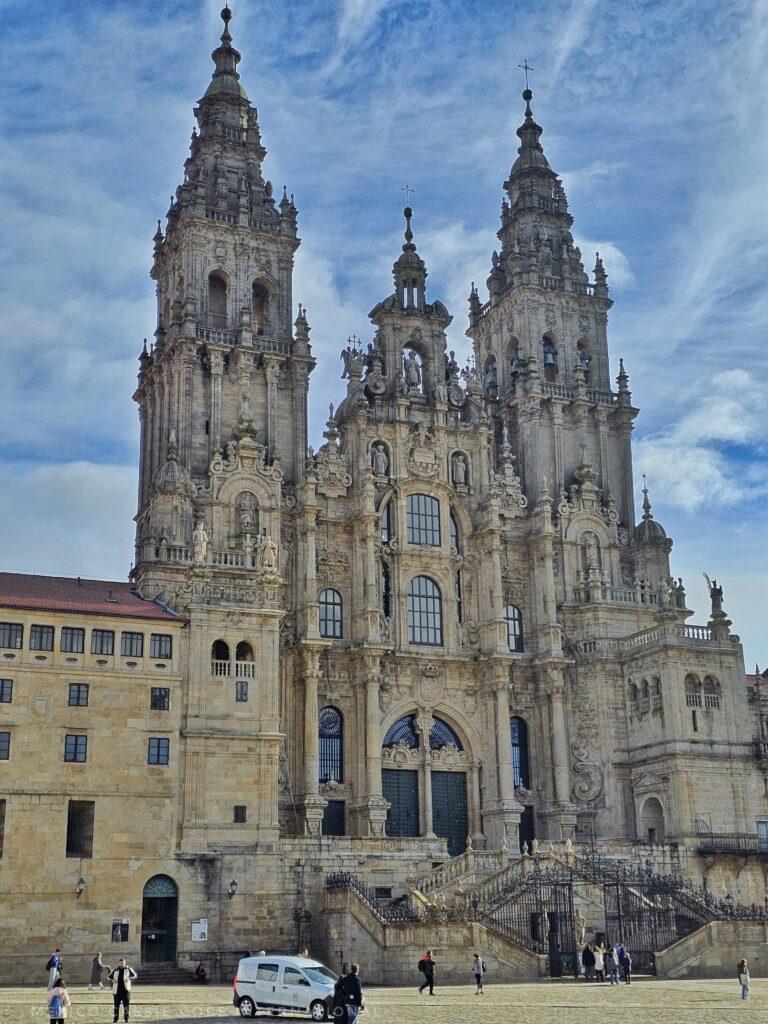
People say that this is one of the most beautiful cathedrals in all of Spain. It’s reputed to have been built over the burial place of James, one of the apostles. Building work began in 1075 and there have been additional works and changes throughout the middle ages too.
I haven’t entered the cathedral because I don’t like seeing the wealth of religious institutions in an unjust world but if you’re interested, it is free to enter.
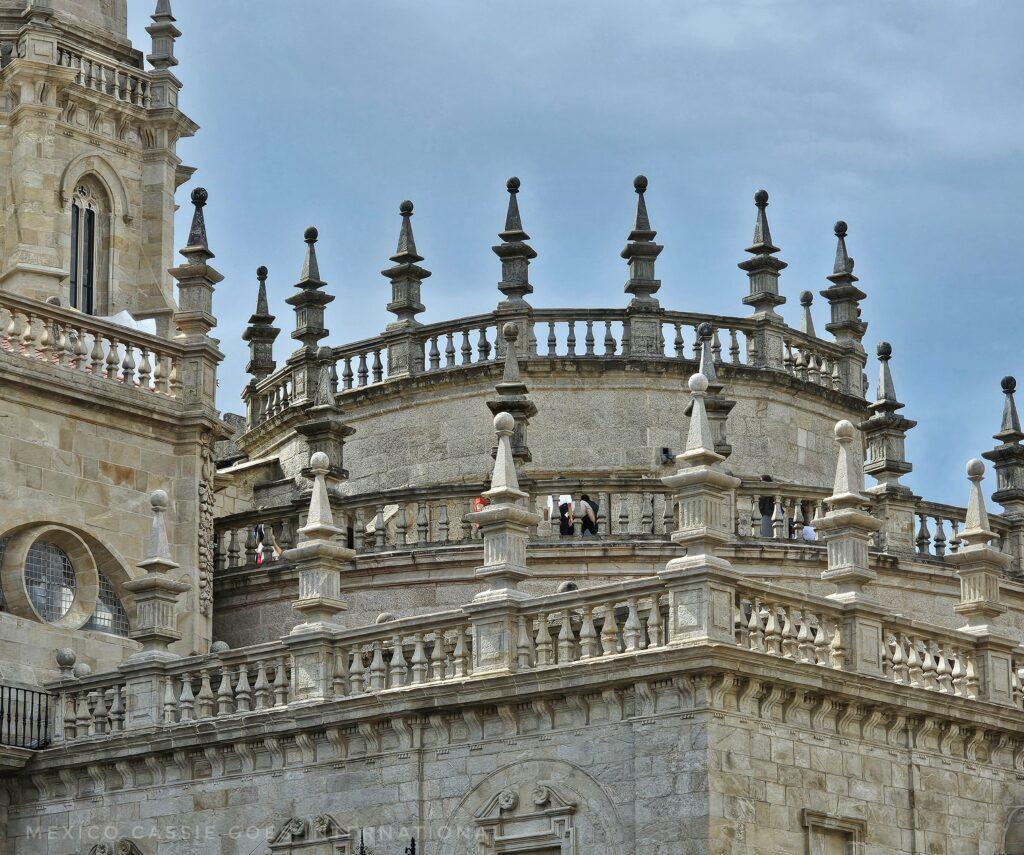
There are also multiple paid entrance options for extra sections, including the roof tour, which I have read is absolutely fabulous (photo above).
The San Martin Pinario monastery – this is a monastery with a religious art museum
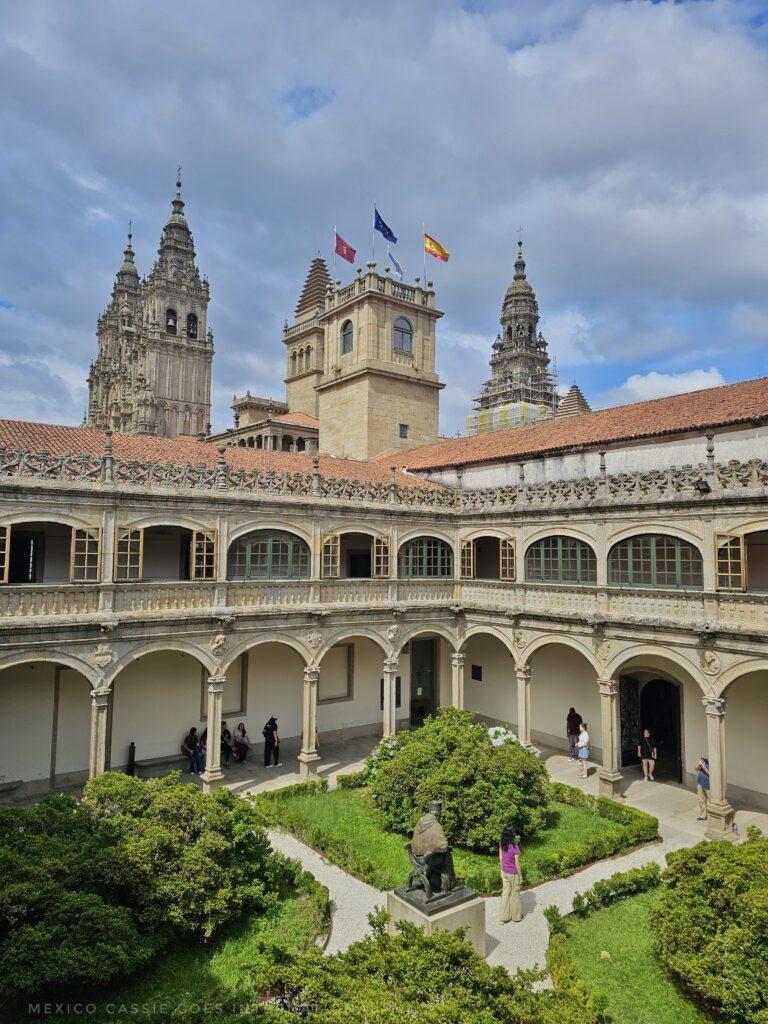
There are nice views from University of Santiago de Compostela building just around the corner →
O Peregrino Escondido – if it’s sunny, do look out for this fascinating shadow that looks like a pious pilgrim on the wall of the cathedral
Pazo de Raxoi – this is the city hall and although you’re not able to enter, definitely take a moment to admire from outside. It was finished in the late 18th century and is truly a spectacular building.
Museums in Santiago
Unsurprisingly, in a city such as this, religious museums abound. I have a list of them but I haven’t visited because I don’t like religion*. However, if you do, and you visit, do let me know how you find them. The main are: the Museo da Catedral de Santiago, the Museo das Peregrinacións e de Santiago de Compostela, Museo Arte Sacro San Paio Antealtares.
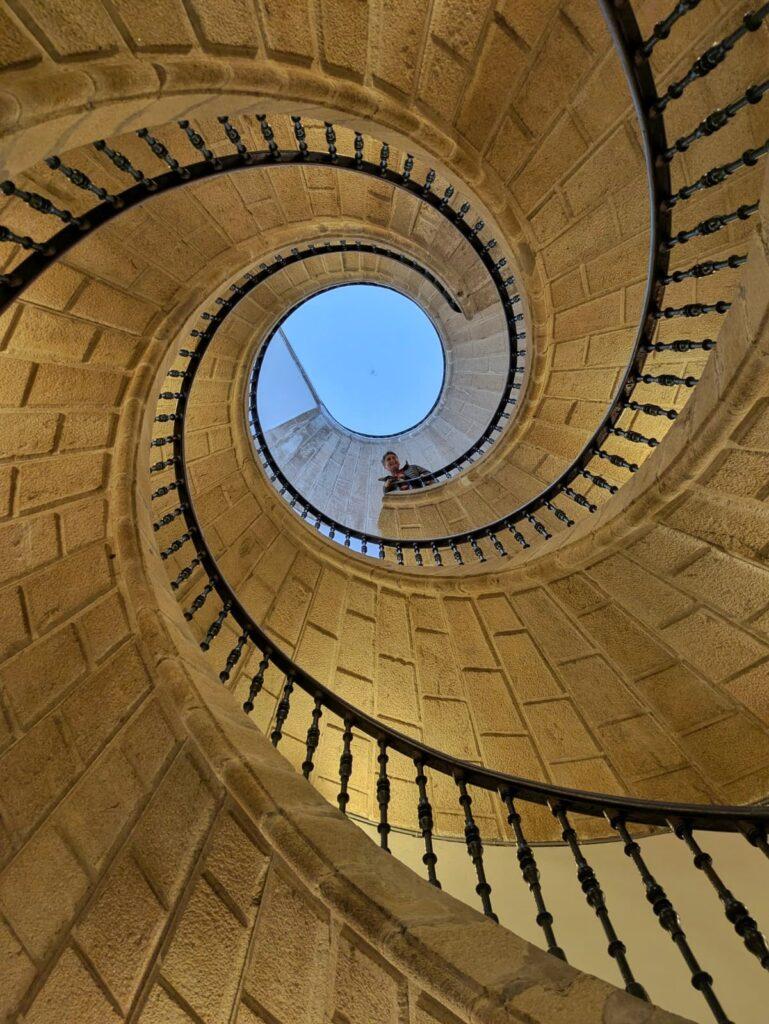
As I said above, the absolute best, and in my opinion, unmissable museum here is the Museo do Pobo Galego (photo above).
*I have recently understood that I don’t have to go to every museum or experience everything in a city, even if I’m writing for my website. I also have personal preferences 😉
Museo de Historia Natural-USC – a little way out of town this is an excellent natural history museum.
Museo da Maxia de Galicia – who wouldn’t love a break from architecture and religion in this museum of magic and illusions?
Museo da Colexiata de Sar – this is a beautiful old church containing an art museum.
Nature in Santiago de Compostela
If you’re just finishing up your camino you may not be in search of more nature spots, you may be revelling in paved streets, shops, cold beers and restaurants at every corner. But if you’re simply visiting the city, you may wish to enjoy some of the glorious green spaces in and around Santiago.
Alameda – the easiest is obviously in the beautiful Alameda as it’s right in town and walking amongst the trees here really is a delight (photo above and further above, of the ginko tree too).
Parque de San Domingos de Bonaval – if you’re up visiting the Museo do Pobo Gallego then this park is right nearby.
Paseo del río Sarela – I haven’t yet had the opportunity to walk here but it’s top of my list for activities next time I’m in the city. Walking along the river here, is a chance to breathe deep, enjoy the Galician air, and get away from any crowds.
A note on food in Santiago de Compostela
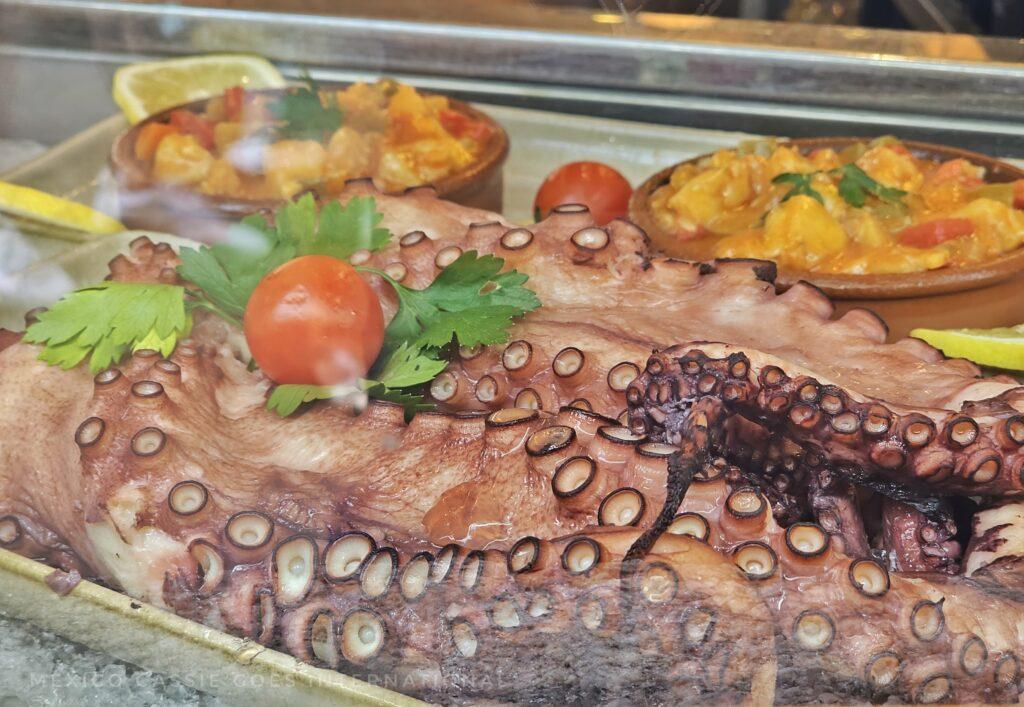
There are excellent restaurants in this city, for every taste and preference.
🐙 ❌ You may, of course be hoping to eat some of the famed Galician pulpo but I can’t offer any recommendations as I don’t eat it myself. I’ve read too many accounts and of course, have watched My Octopus Teacher, so I just can’t.
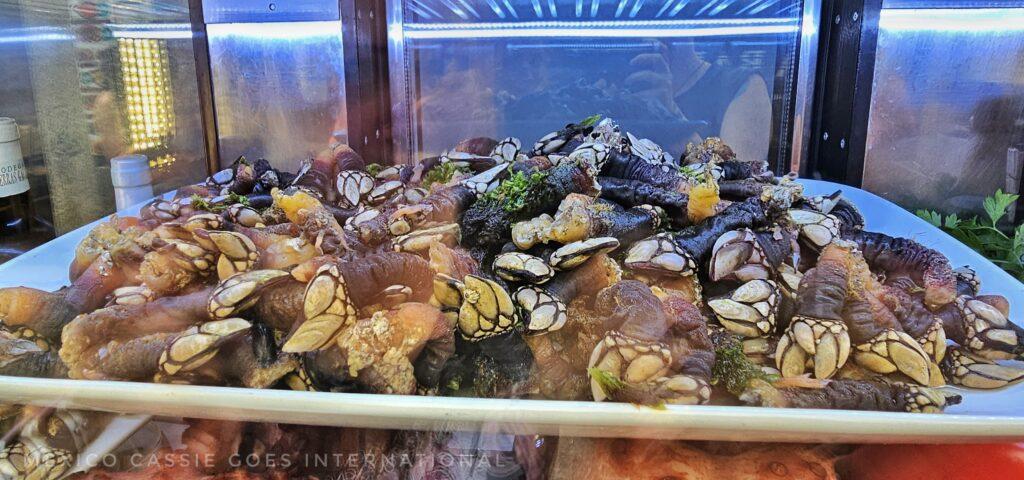
✅ There are plenty of other incredible seafood options though including my favourite, razor clams and percebes, or goose barnacles (photo above, left). They taste of pure ocean even if they look a little odd.
🫑 Pimientos de Padrón come from this region and for me, they’re something to order and simply inhale. I absolutely adore these peppers covered in salt. Do be warned that while most are not spicy in any way, every now and again, there will be one spicy one that will take you by delicious surprise. They’re a perfect snack, treat or meal. There’s a festival to these little beauties in Herbon (in the Padrón region) in early August.
🥟 Empanadas – more of a flat pastry with a savoury filling, empanadas are a delicious and easy snack
🥮 Tarta de Santiago – a traditional almond based cake.
🧀 Queixo De Tetilla Tetilla Cheese – It’s delicious and well worth trying.
☕️ Use the MexicoCassie guide to Spanish breakfasts and coffee to ensure you start your day off right
🍔 If you’re travelling with kids, use the MexicoCassie guide to feeding the kids to take the stress away
🥦 And for vegetarians, this guide to vegetarian food in Spain will help decode menus and even learn where meat sometimes hides
Day trips from Santiago de Compostela
And, of course, the possibilities if you’re going to take day trips, are nearly endless. You can rent a car, use public transport or join a guided tour.
⭐️ Read the full MexicoCassie guide to road tripping in Northern Galicia
→ Check car rental prices and options now
→ Check the bus timetables on Busbud
→ Use GetYourGuide & Viator to find day trips that appeal to you
There are more day trip adventures than you can imagine, here are just a few that I recommend to start you off:
Nearby coastal cities
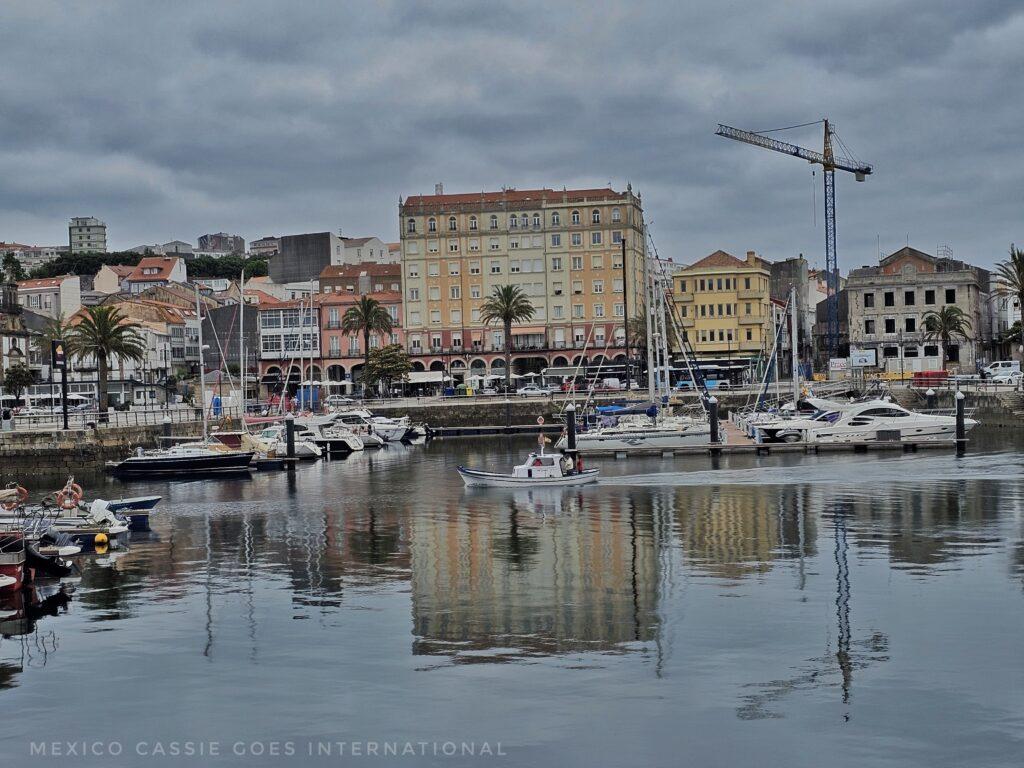
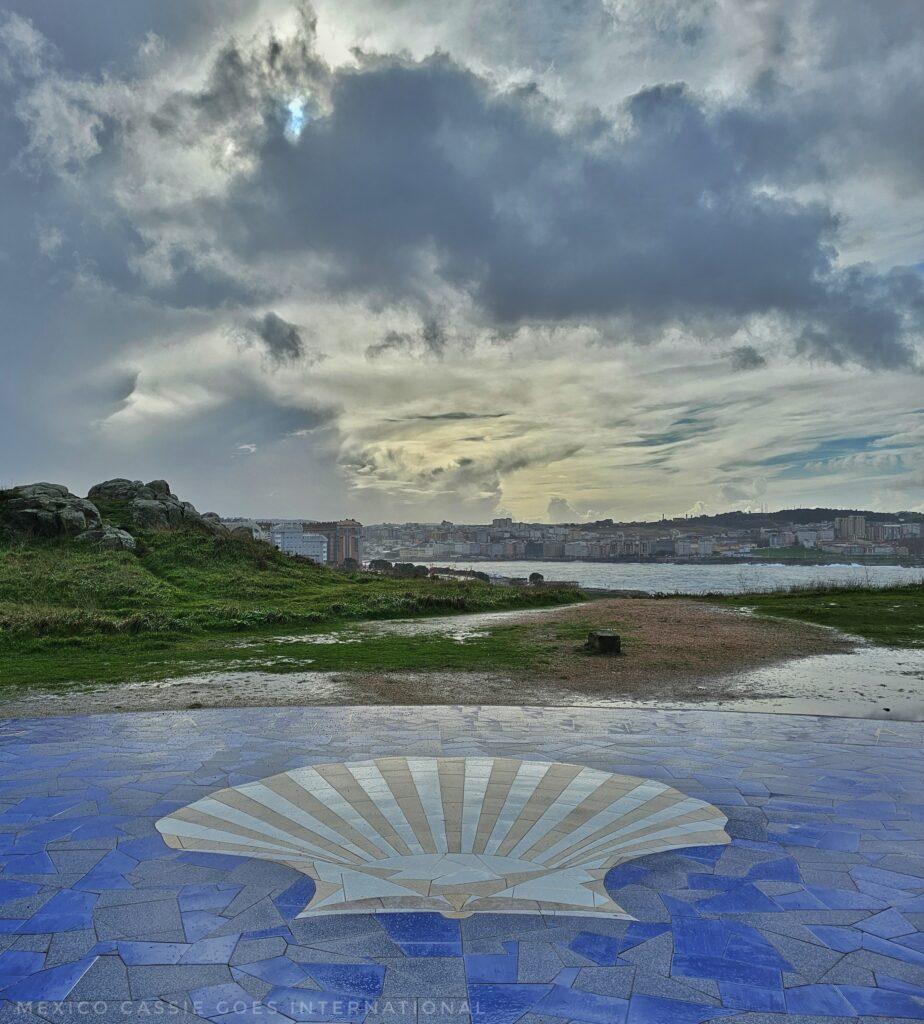
A Coruña
A beautiful city easily reached by public transport or road. Visit here to see the Tower of Hercules, the UNESCO protected ancient Roman lighthouse, the nearby Menhires pola Paz, walk the magnificent coastal promenade, the gorgeous city centre (generally delightfully tourist free, photo on right).
⭐️ MexicoCassie recommended day trip to A Coruña – includes a stop in the gorgeous small town of Betanzos, the Torre de Hercules and free time to explore Coruña. → Check details and book now
→ Read the full MexicoCassie guide to visiting A Coruña
Ferrol
An even less touristy city, here you can enjoy small town Galician life, wandering around the small port, admiring the street art and eating well (photo on left).
→ Read the full MexicoCassie guide to Ferrol
Vigo
A third coastal town, visit here to relax and explore without anything specific in mind. Like Ferrol, it’s a lot about the atmosphere.
+ Vigo is also the starting point for a visit to the Cíes Isles (→ book this tour to visit this pristine island, includes official permission, which is needed for your trip there).
Pontevedra
A medieval, pedestrianised city on the ría, this city is part of the Portuguese Way Camino and in its honour, one of its churches was built with the floor in the shape of the emblem of the camino, the scallop shell.
+ Pontevedra is considered the ‘gateway’ to the Rías Baixas region, somewhere I have not yet had the great fortune to explore.
⭐️ MexicoCassie recommended tour to the Rías Baixas for a day exploring the south coast of Galicia (includes winery visit) → read more and book your place now
Porto
Yes, even Porto is visitable if you’re really excited to get into Portugal. It’s a 2.5 hour drive via Vigo.
Rugged Atlantic coast
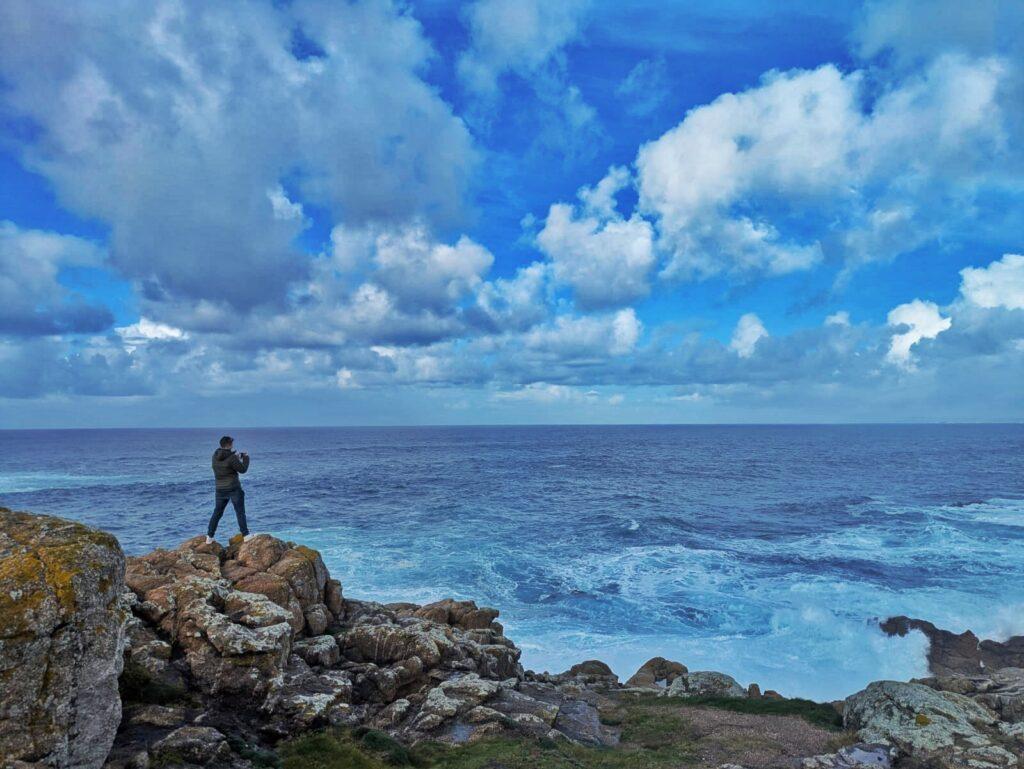
Galicia actually has more kms of beach than Andalucía and there’s plenty of this coast that’s visitable from Santiago, whether you want unforgettable views of the Atlantic or awesome beach days (just remember that this is a vast and chilly ocean!)
A note on the Costa da Morte (Death Coast)
This is a stunning section of the Atlantic Galician coast. It is generally said to run between Fisterra (Finesterre) and Malpica but some claim it stretches further, between Muros and A Coruña.
⭐️ MexicoCassie recommended tour of the Costa da Morte – a full day tour of the coast including the famous Fisterra lighthouse, a gorgeous waterfall, traditional granary and a medieval town. → Read more and book now
Lighthouses
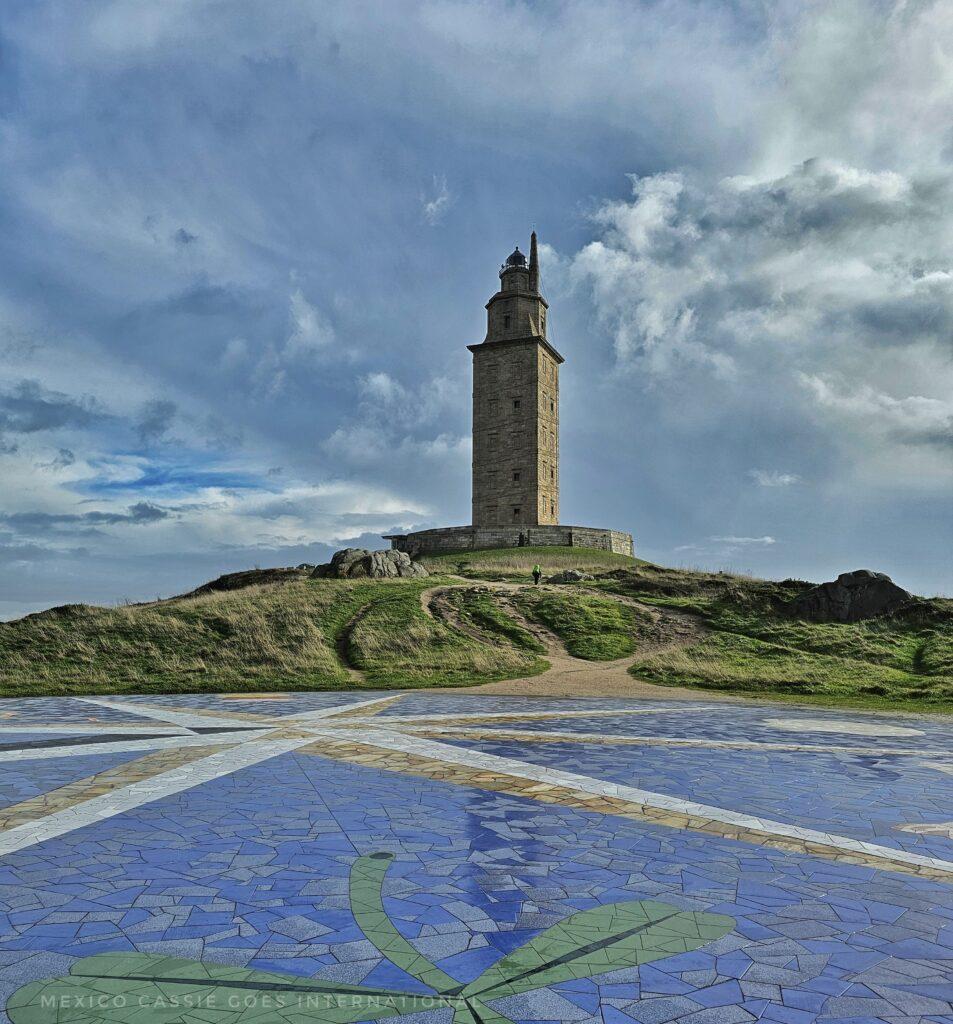
Unsurprisingly for a region with such a fabulous coast, there are lighthouses everywhere.
Fisterra – the end of the world. The lighthouse here is a 19th century building but it is said that the ancient peoples of this region considered this to be the ‘end of the world’. The views are spectacular.
Faro Touriñán – incredible views from the westernmost point of Spain (Galicia is also home to the northernmost point in Spain, the Estaca de Bares)
Faro de Muxia – lighthouse, beautiful views, small town, incredible location
Torre de Hercules – in A Coruña, the famous Roman lighthouse
Inland and the Ribeira Sacra
I haven’t yet made it to this gorgeous region and yes, I’m mad about this. I shall be rectifying this asap.
The Ribeira Sacra (Sacred Shores) is found within the rivers Miño, Sil, Cabe and Bibei across the south of the province of Lugo and the north of Ourense.
Sil Canyon is the place that has been calling to me for a while now – this spot here, in particular. I’ve seen similar in the north of Galicia and in Japan but this Canyon is also seducing me.
⭐️ MexicoCassie recommended tour – take a day trip to the Sil Canyon from miradores (viewpoints) and while sailing along it learning about heroic viticulture. Includes stop in the gorgeous village of Allariz → Check details and book now
Viticulture – I don’t actually like wine very much but I do love visiting vineyards and seeing grapes grow. They claim that the Romans brought wine to this region and that the monks of the Middle Ages then revitalised the practice.
The wines produced in Ribeira Sacra were granted a Protected Designation of Origin (PDO) in 1996 and are extremely well thought of. Interestingly, many of the vineyards in this region are on extremely steep slopes along the banks of the rivers. The slopes and the traditional methods of harvesting is referred to as “Heroic viticulture”, something that only happens in 5% of the world’s vineyards.
📚 🇪🇸 Read more of MexicoCassie’s Spain guides
→ MexicoCassie guide to whether Spain is safe for tourists
→ MexicoCassie guide to driving in Spain
→ MexicoCassie guide to driving in southern Spain
☕️ MexicoCassie guide to vegetarian tapas, to breakfast and to feeding the kids
📲 MexicoCassie guide to using an eSIM in Spain
⭐️ Tips to help when you visit Spain
Sevilla
⭐️ What is Sevilla famous for? | ⭐️ How many days do you need in Seville? | ⭐️ Everything about the Seville airport bus
⭐️ 1 day in Seville | ⭐️ 3 days in Seville | ⭐️ 5 days in Seville | ⭐️ How to visit Seville in the summer | ⭐️ How to visit the Alcazar | ⭐️ Quirky Seville | ⭐️ 5 alternatives to the Alcázar
⭐️ Best beaches from Seville | ⭐️ Day trips from Seville | ⭐️ Seville with kids | ⭐️ Seville with teenagers | ⭐️ How to see flamenco in Seville | ⭐️ Best family friendly tours in Seville | ⭐️ Exploring Sevilla Province
➕ Hire MexicoCassie as your amiguía for the day in Sevilla or Alcalá de Guadaíra
Málaga
⭐️ 3 days in Málaga | ⭐️ 1 day in Málaga | ⭐️ Day trips from Málaga | ⭐️ 1 day in Ronda | ⭐️ 1 day in Ronda with kids | ⭐️ What to do in Antequera | ⭐️ Exploring Málaga with kids
Córdoba
⭐️ What to do in Córdoba | ⭐️ Planning your Córdoba day trip from Seville | ⭐️ Day trips from Córdoba | ⭐️ Exploring Córdoba with kids | ⭐️ 1 day in Córdoba | ⭐️ Zuheros, the most beautiful village in Córdoba
Cádiz
⭐️ What to do in Cádiz province | ⭐️ How to spend 1 day in Cádiz city | ⭐️ What to do in Cádiz with kids | ⭐️ Exploring Tarifa | ⭐️ How to get to Tangier from Tarifa | ⭐️ Exploring Gibraltar | ⭐️ What to do in Jerez de la Frontera
Huelva
⭐️ Is Huelva worth visiting? (YES) | ⭐️ What to see in the gorgeous Aracena
Granada
⭐️ Planning your Granada city break | ⭐️ Granada with kids | ⭐️ 2 days in Granada | ⭐️ How to explore Guadix and its cave houses
Almería
⭐️ Things to do in Almería City | ⭐️ What to do in Almería with kids | ⭐️ Is Almería worth visiting? | ⭐️ Figuring out the Almería beaches
Community of Valencia
⭐️ 1 day in Valencia | ⭐️ 2 days in Valencia | ⭐️ Museums in Valencia ⭐️ Day trips from Valencia | ⭐️ Valencia with kids
Community of Madrid
⭐️ Why should you visit Madrid | ⭐️ Spending 5 awesome days in Madrid | ⭐️ 3-day Madrid itinerary
Castilla y León
⭐️ Segovia, a perfect day trip from Madrid | ⭐️ How to visit Medina del Campo | ⭐️ How to visit Zamora
Euskadi (Basque Country)
⭐️ What to do in the Basque Country | ⭐️ Excellent things to do in San Sebastián | ⭐️ Is San Sebastián worth visiting? | ⭐️ How many days do you need in San Sebastián? | ⭐️ Day trips from San Sebastián | ⭐️ San Sebastián with kids | ⭐️ Is Bilbao worth visiting? | Planning and taking day trips from Bilbao | Why Vitoria-Gasteiz is worth visiting?
Picos de Europa
⭐️ Road trip itinerary for the Picos de Europa | ⭐️ Planning for a trip to the Picos de Europa | ⭐️ Las Arenas de Cabrales | ⭐️ Visiting Potes
Extremadura
⭐️ Everything you need to explore Monfragüe | ⭐️ What to do in Mérida | ⭐️ What to do in Cáceres | ⭐️ How to visit Plasencia | ⭐️ Visiting Zafra (Sevilla Chica) | ⭐️ What to do in Badajoz | ⭐️ How to visit Jerez de los Caballeros | ⭐️ Extremadura road trip
Galicia
⭐️ What to do in Ferrol | ⭐️ Everything you need to visit Santiago de Compostela | ⭐️ Great reasons to visit A Coruña | ⭐️ Northern Galicia road trip
Cataluña
⭐️ Road trip around Girona Province | ⭐️ Spending 1 day in Girona | ⭐️ 1 day in Barcelona | ⭐️ How to visit Castellfollit de la Roca
La Gomera (Canary Island)
⭐️ Hiking on La Gomera | ⭐️ La Gomera with kids | ⭐️ Take a day trip to La Gomera