A visit to A Coruña – where the city meets the sea
The gorgeous coastal city of A Coruña, in Galicia, really isn’t a typical tourist destination in Spain and this, in my opinion, is the first of many great reasons to plan a trip here.
If you know me already, you’ll know that I love Spain but I love it best away from the crowds and honestly, away from the major tourist cities.
In this article we’ll take a look at why Coruña is a great destination, and what there is to do here.
→ From ancient lighthouses to famous Spanish painters, from gorgeous architecture to beaches via historically fascinating strong feminist women, A Coruña has something for everyone.
Coruña, A Coruña or La Coruña?
No one really knows where the name Coruña comes from. Some think it might have Celtic origins, or maybe it comes from the Latin word columna, or perhaps Corona, crown. The A is a Gallego article – it translates to La in Castellano and the in English.
There are affiliate links in this article. If you click and make a purchase I could make a small sum at zero cost to you. Thank you!
Who visits A Coruña?
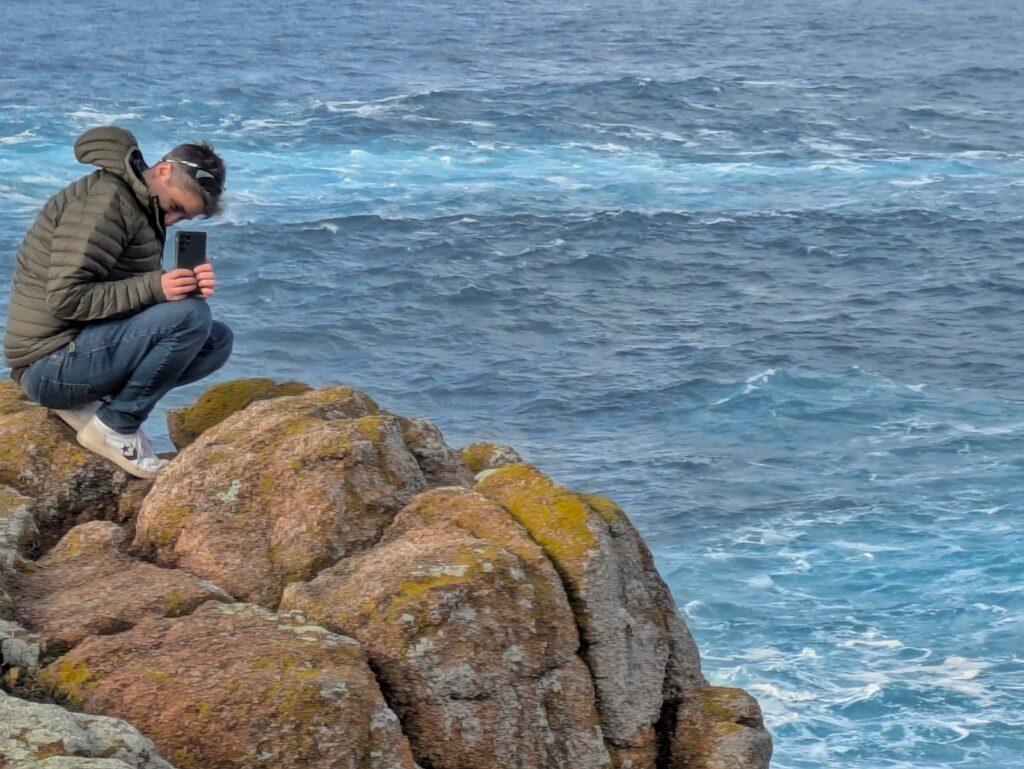
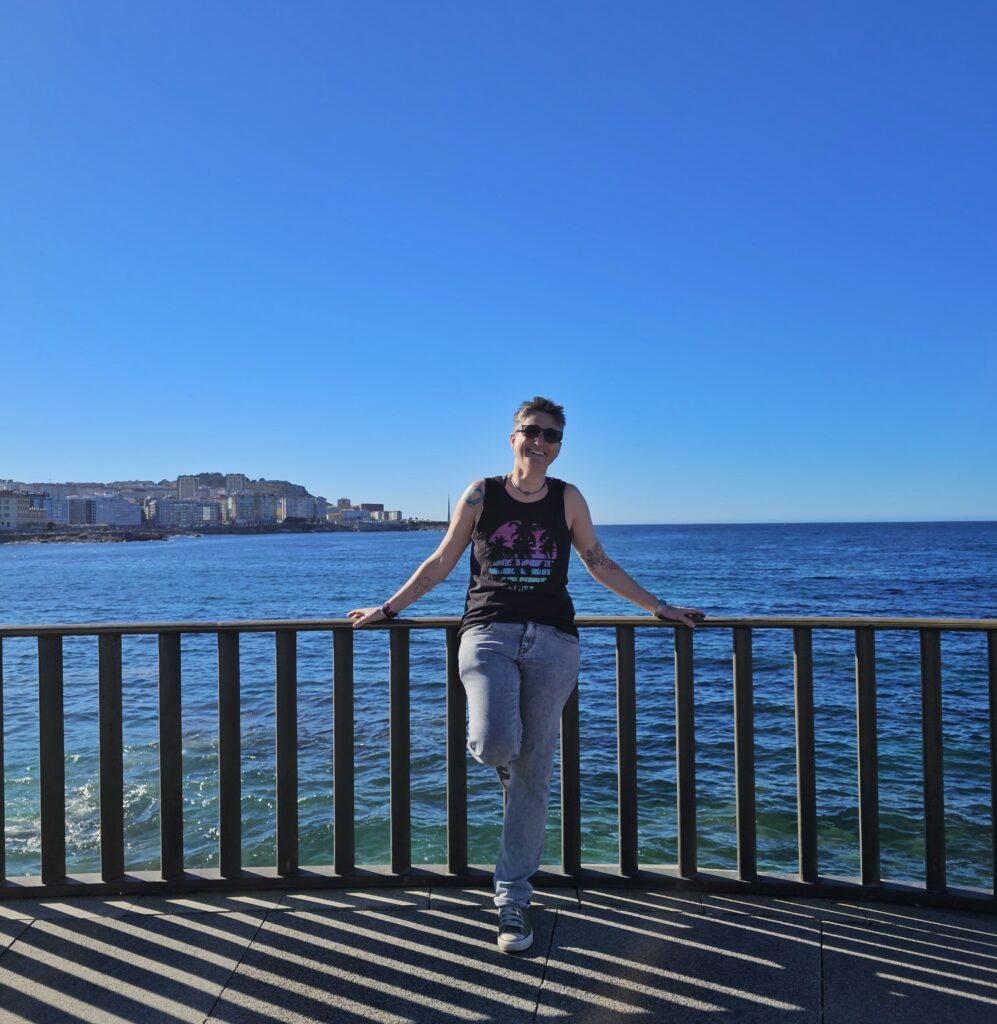
Mostly Spanish people as far as I can find out, and me, definitely me, as you can see in the photos above. I love this city.
🚢 Cruise ships touring around Europe often stop here for a day so international tourists get a little taste of how delightful this city really is.
If A Coruña is so great, why haven’t we heard of it?
I dunno, to be honest 🤣. This isn’t ‘typical Spain’, that’s for sure.
It’s a really lovely place. I think Galicia just hasn’t made it into people’s Spanish vacation plans.
You won’t find flamenco or people sitting out on the street with a beer at 2am throughout the year.
🥾 ⛪️ And when Santiago de Compostela is just an hour down the road, I suppose it gets overlooked.
Hint: don’t overlook it. It’s truly a delight of a city.
⭐️ Be sure to check my important guide to everything you need to know before visiting Spain
A weather note
☀️☔️ A Coruña is, of course, in Galicia, which is famously, ‘weathery’. Like my home country, the UK, this part of Spain can experience all four seasons in one day, sometimes more than once. You’ll need to go with the acceptance that it could be less than perfect weather.
The same goes for nearby Santiago de Compostela and Ferrol.
Where to stay in A Coruña
🏨 MexicoCassie hotel recommendation: Alda Alborán Rooms – a delightful low key hotel with good beds, great location, breakfast options and very friendly staff.
🏨 MexicoCassie hotel recommendation: for location and comfort, you can’t beat Alda Orzán.
🗺️ If this doesn’t work for you, use the MexicoCassie interactive hotel finder map to choose something better
What is there to do in A Coruña?
Marvel at the light
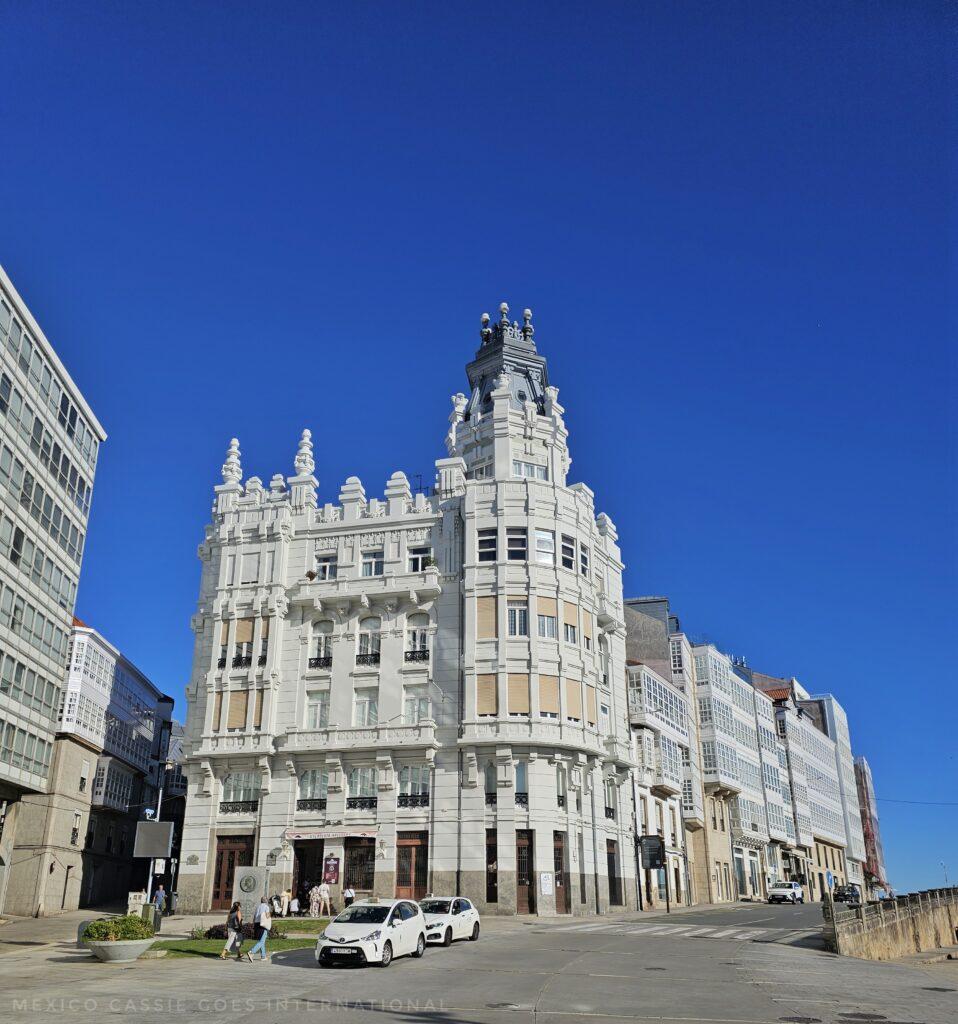
Maybe it’s a bit odd to begin with the idea of light, but for me, it’s a real winner of a reason to visit. At the Galician coast you’re standing right at the edge of continental Europe, the light is special, the sun shines differently.
☀️ On sunny days, the whole city of A Coruña glistens and even on rainy days it can sparkle.
🌧️ And when rains in Galicia, the misty, cloudy, moody light in A Coruña is still special. Bring an umbrella and a jacket and embrace it.
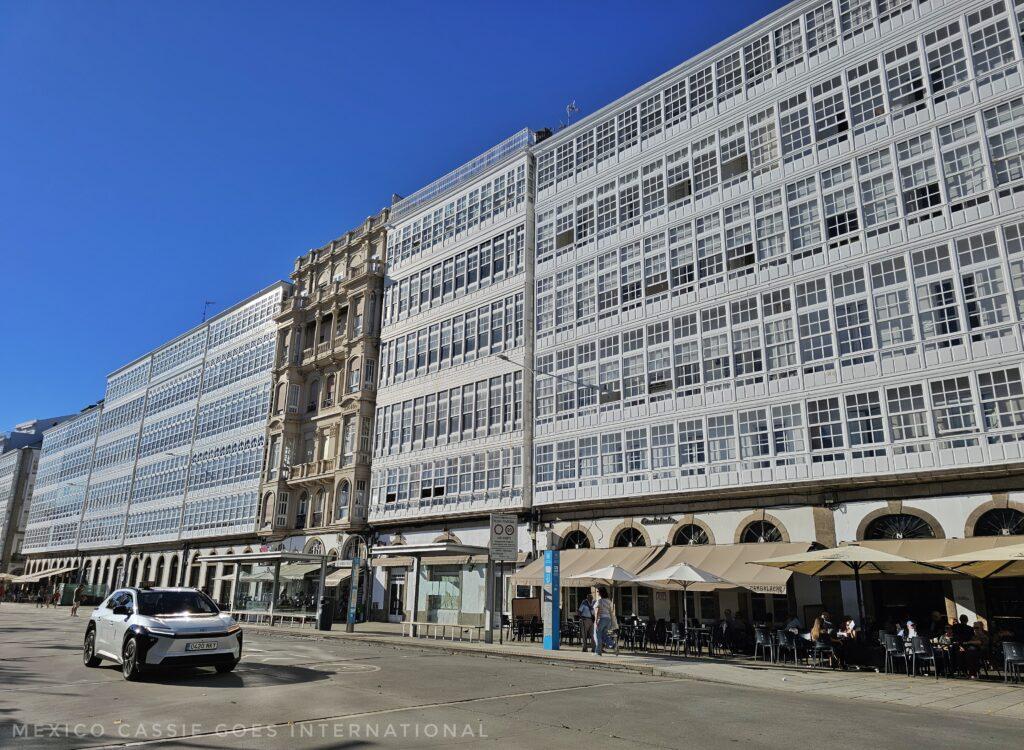
And if you walk along the Avenida de la Marina and see the gorgeous and imposing buildings with their enclosed glass balconies, you’ll see exactly why A Coruña is also known as the City of Glass, “A Cidade de Cristal“, these buildings adding to the gorgeous light situation.
The atmosphere here, on a sunny day, with people out strolling, kids playing, people laughing, is something special to witness.
🔄 If I had to compare it to anywhere else (and I don’t, I know), I’d say it’s a little like Cádiz – another beautiful beach city with plenty of ancient history, amazing food and incredible light.
🧒🏻 For the kids along the Avenida de la Marina you have Parque de Mariña, a traditional carousel and a couple of ice cream shops.
Enjoy the coast
Urban beaches
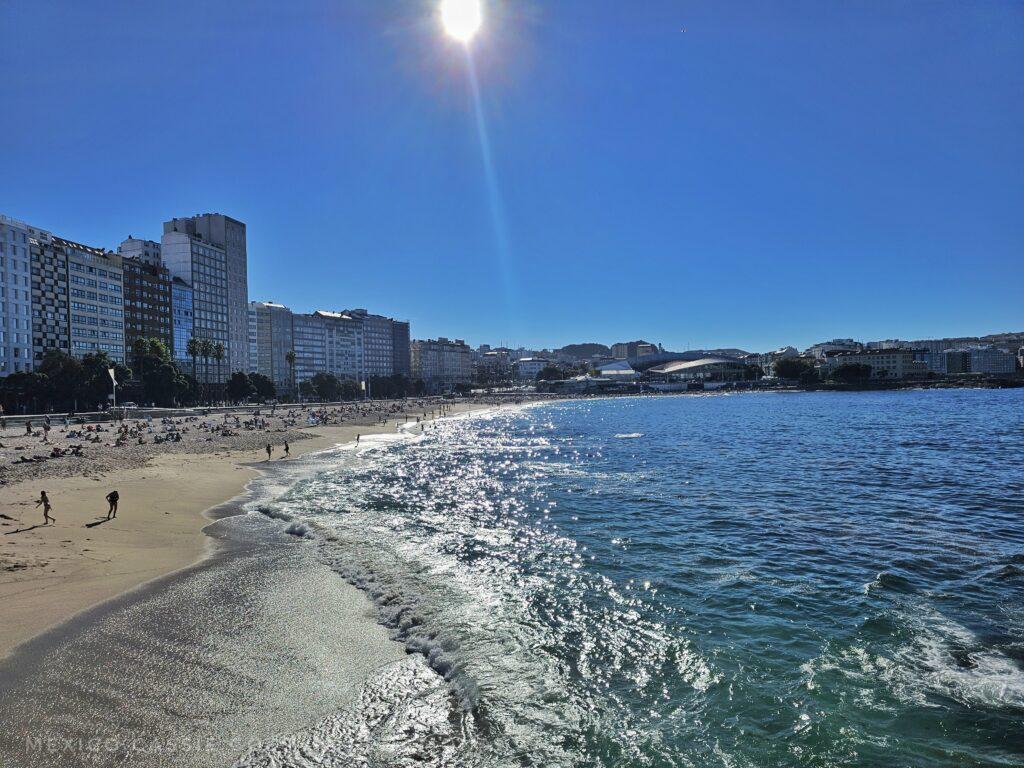
This city has an incredible SIX urban beaches. Yes, you can literally walk out of your city hotel and onto a gorgeously clean sandy beach.
Three of these are right in the city centre, making up a gorgeous bay: Riazor, Orzán & Matadero – Orzán is even a popular spot for surfers. Matadero is a tiny little section of the larger beach, past the cool surfer statue. It’s more protected than the other two beaches so it’s perfect for families looking for calmer water.
The other three, are not quite as central: As Lapas is a tiny little secluded beach right near the Torre de Hercules, San Amaro & Oza are slightly further out still, but remain within the city limits – these are technically Ría de Coruña beaches.
And by the Monte de San Juan you’ll find some great miradores out over the Atlantic Ocean.
🏖️ All the city beaches are blue flag beaches and all have lifeguards and amenities.
Admire the world’s oldest working Roman lighthouse
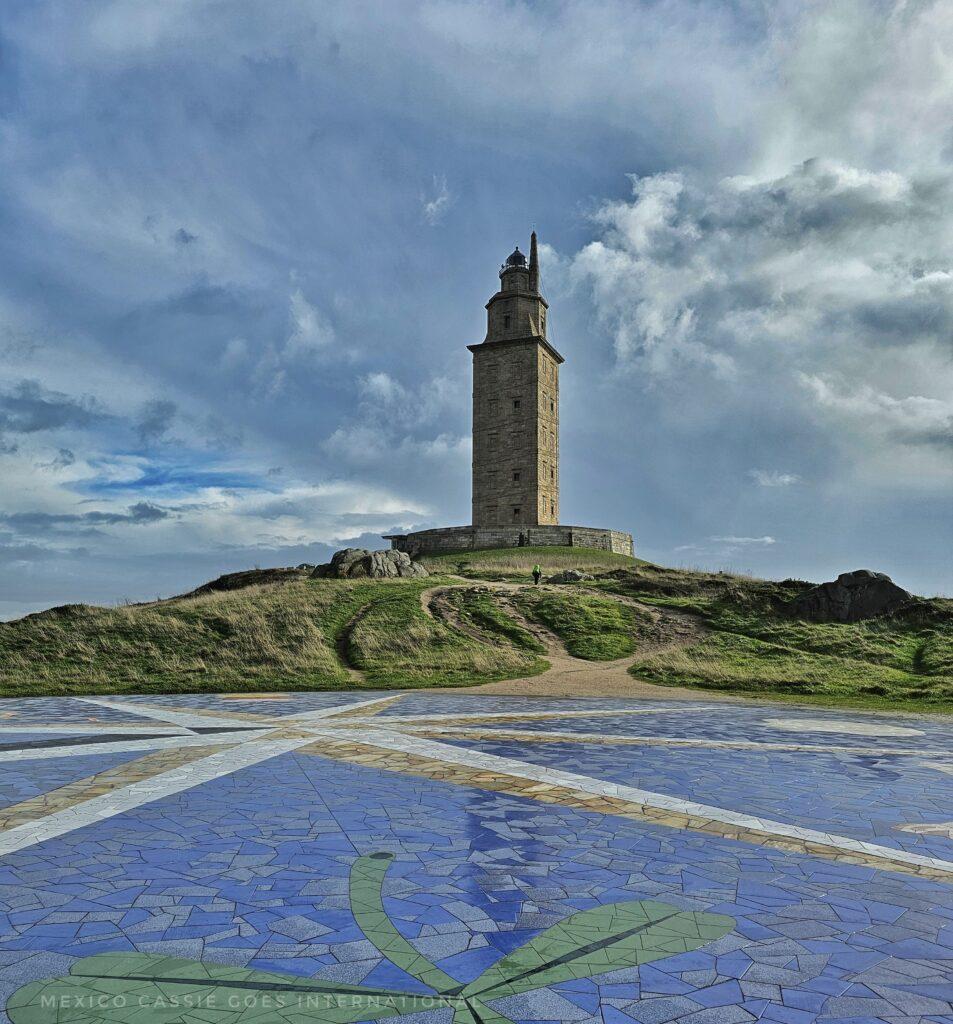
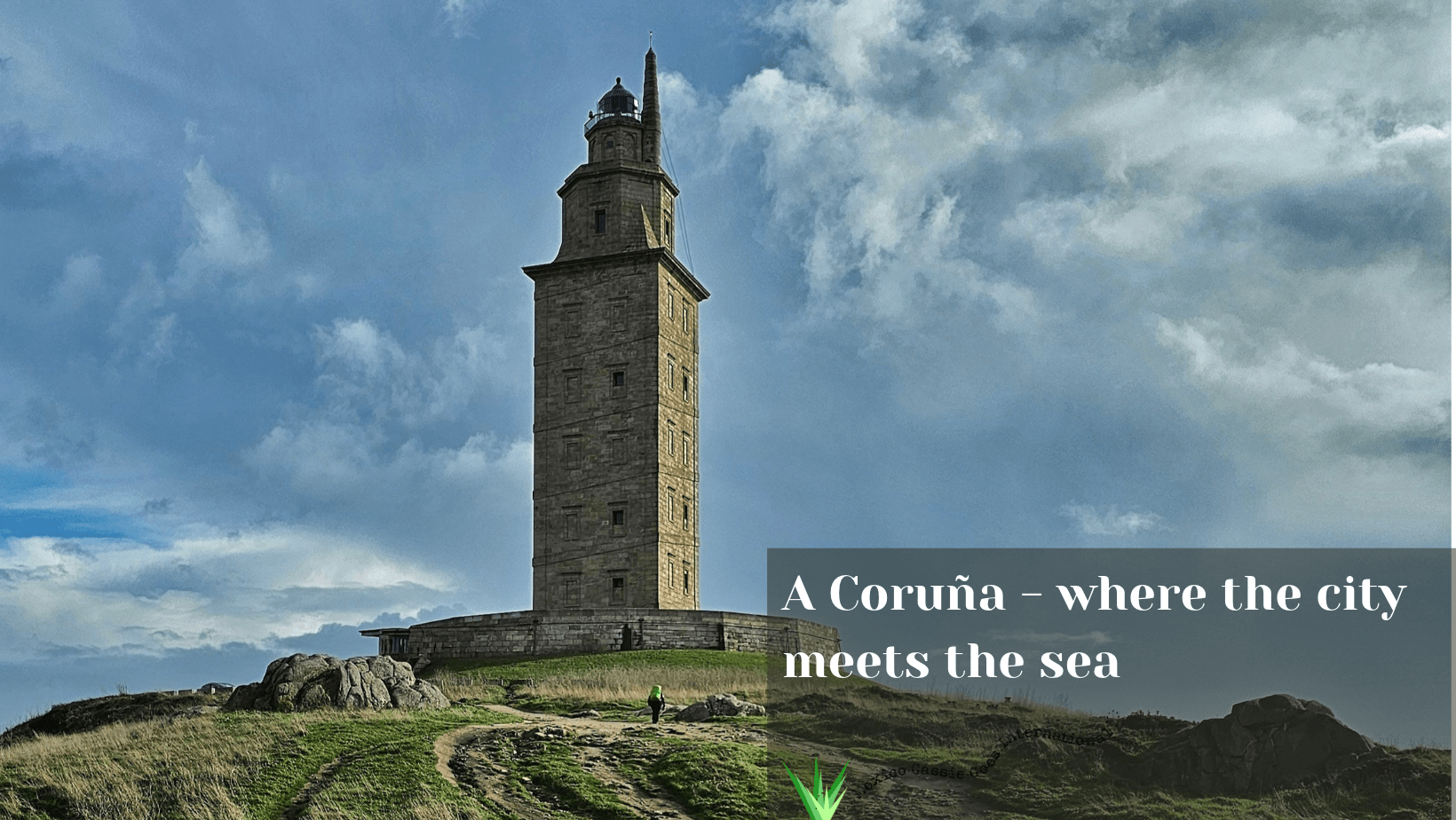
The Torre de Hércules is the most famous site of all in A Coruña. It is a 2000 year old lighthouse that, since 2009, has been a protected UNESCO building.
It sits proudly on the coast and is well worth a visit, whether you choose to climb it or not. And if you stay in the city, you’ll see it shining out over the ocean at night, just as it always has.
➕ Nearby are the Menhirs de Paz and the Parque Escultórico da Torre de Hércules, which are both also worth visiting.
➕ In the photo above you can see a section of the compass rose, representing the original inhabitants of this region, the Celt
🚾 There are also free (and clean) public toilets at the base of the lighthouse
Stroll the Paseo Maritimo
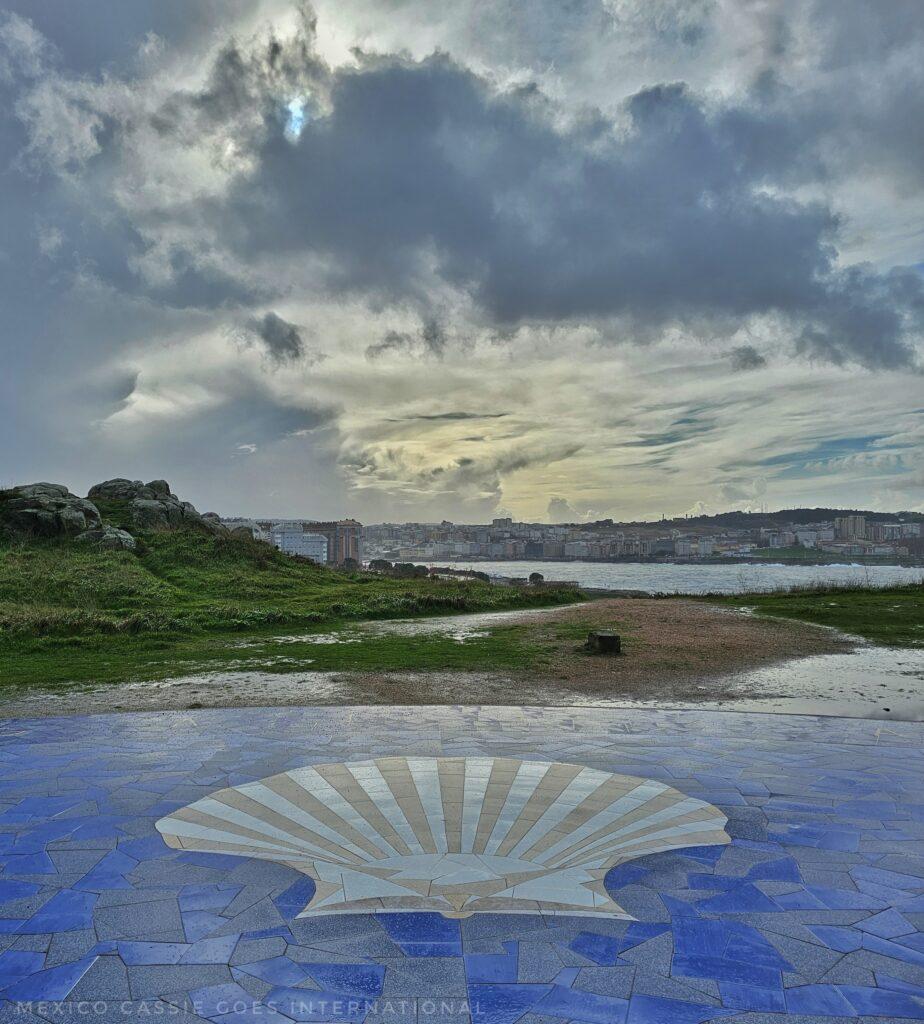
🏆 A Coruña is home to the longest beachside promenade in Europe, the Paseo Maritimo. This is a 13km stretch along the entire isthmus of A Coruña that’s a delight to walk, run, bike or skate (there are dedicated running and biking lanes).
➕ If you’re visiting in June, don’t miss the Bonfires of San Xoán on 23-24 June. Head to Riazor beach and watch / join in as people jump over bonfires to frighten away evil spirits.
Explore the city
👣 Take a walking tour to acquaint yourself with the city centre
🛺 Take a tuk-tuk tour to see the length of this surprisingly long city, from the Torre de Hercules and the Castillo de San Anton all the way to the famous pulpo sculpture
Don’t miss, of course, the Avenida Marina (noted above) with its beautiful old glass fronted buildings, the parks along here and the beautiful marina.
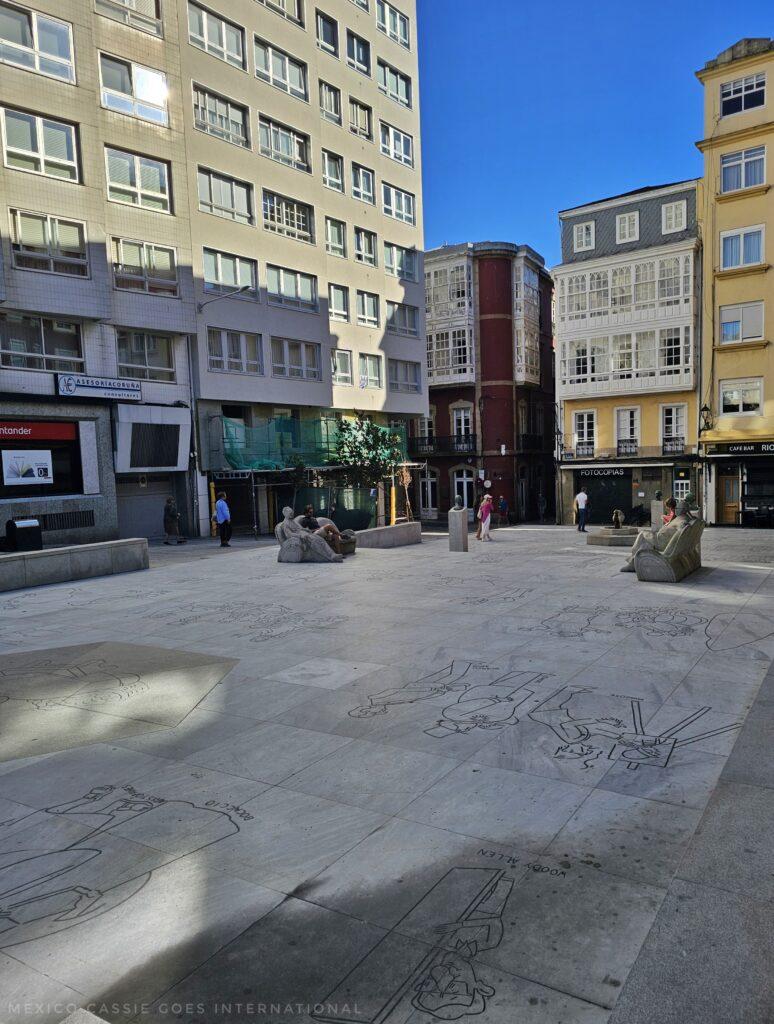
Plaza do Humor – this is a small plaza that I enjoyed. It was fun to see who I recognised in their outlined drawings on the floor.
Did you know that Fred and Barney are called Pedro and Pablo in Spanish?
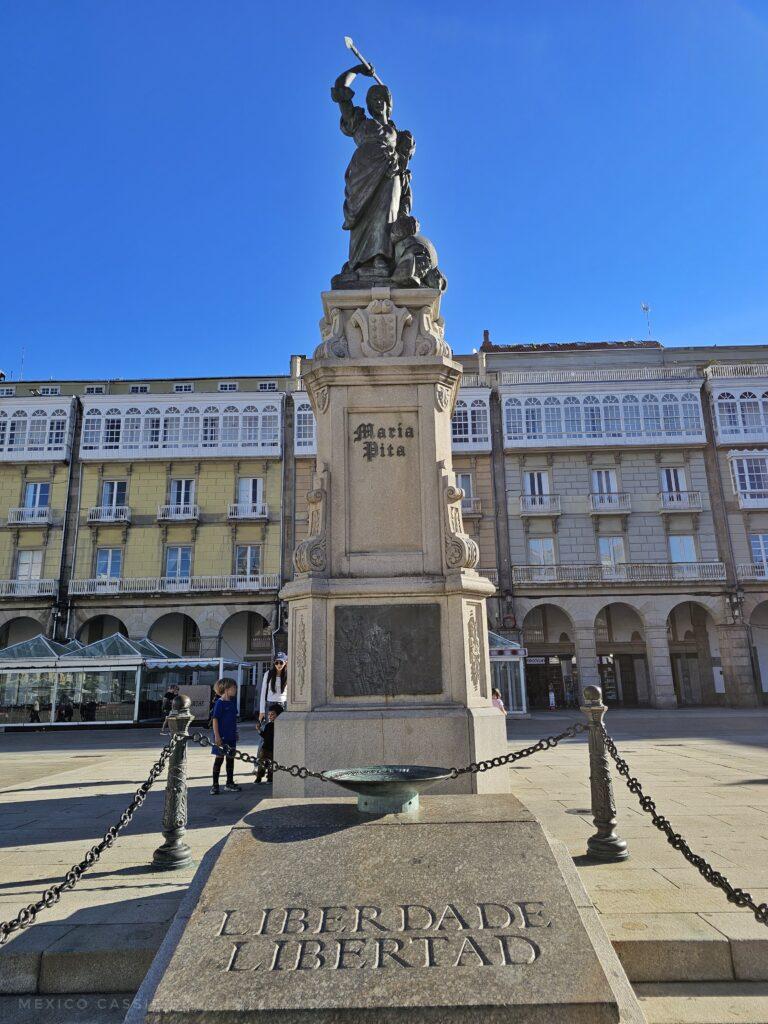
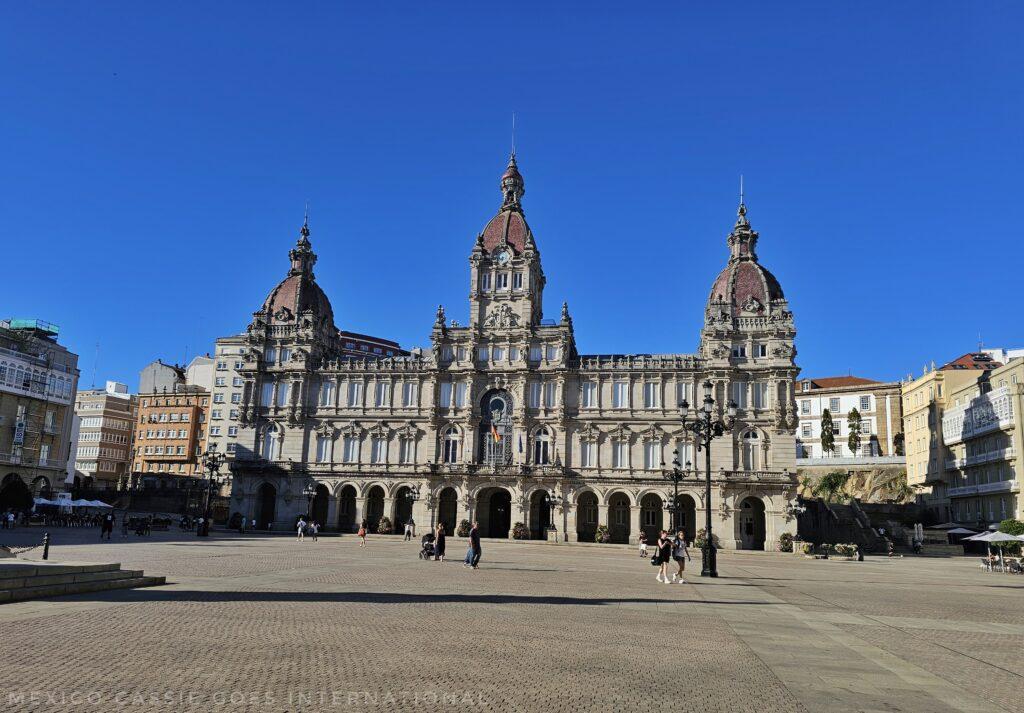
Plaza de María Pita – the city’s main plaza, home to the city council building (above), and plenty of bars. There’s also a statue to honour María Pita (more on her below)
As a Brit I learned multiple times about the Spanish Armada and how ‘we’ won in 1588. I even remember going to celebrate the 400 year anniversary of this hugely important victory as a small child (shut up, we’re not talking about my age).
I never learned, however, that this wasn’t the end. I never learned that Drake sailed to Spain in 1589 and was beaten.
History is so fascinating but also so boringly controlled as a narrative unless you actively go looking. Humans can be so disappointing.
Rua Riego de Agua – considered to be the emblematic street of the city, this pedestrian street is a delight and although it’s kind of unmissable, do make sure you don’t accidentally do so!
Museums – there are actually a surprising number of museums here in town including Mega, the world of Estrella, a popular Aquarium, the Fine Arts Museum, the Casa das Ciencias, La Domus and more. There’s also the Casa de Picasso – I had no idea he’d lived in A Coruña as a child before visiting.
Parks – Along the harbour front you’ll find the Jardines de Méndez Núñez, Parque de Santa Margarita, and the enormous Parque de Bens are also gorgeously worth your time if you enjoy green spaces.
His and her-story
🏰 Visit the Castillo de San Anton (a 16th century fortress) and the Monte do San Pedro if you’re interested in the city’s history further than the 2000 year old Roman lighthouse.
A quick note about “man history” – Julius Caesar apparently visited A Coruña in 62 BCE
Women’s history
There are three historically interesting women particularly linked with A Coruña
María Pita – in 1589, the English Sir Francis Drake tried to storm the Ciudad Vieja. According to legend, this brave woman, killed an English commander, grabbed his lance and shouted “Quen teña honra, que me siga” (“whoever has honour, follow me!), leading the defence of the city, and forcing the enemy to retreat. You’ll find a statue in her honour in the plaza that’s also named for her.
⭐️ You can visit the María Pita House Museum to learn more about her.
Emilia Pardo Bazán – this 19th century journalist was a prominent figure in Spanish literature. She wrote over 500 works and is considered to have been one of the first feminists in Spain.
⭐️ You can visit the Emilia Pardo Bazán House Museum to learn about her life.
Rosalía de Castro – this great woman was the author of the first great work of contemporary Galician literature, Cantares Gallegos. You can find two of her poems on plaques in the small Xan Carlos gardens and a plaque on her home, although there is no museum to her.
Food
The city’s food scene is reputedly excellent. Honestly, I haven’t eaten enough here to have an opinion but it’s famous, like all of Galicia, for its seafood and its empanadas.
On my most recent A Coruña adventure I actually ate empanadas, crisps and croquetas from the boot of my car – I love a good car picnic but it doesn’t give me much to talk about here, sorry.
If you’re visiting with kids, be sure to use my guide to eating with kids in Spain
Vegetarians will find this guide to vegetarian food useful (includes a section on where meat sometimes hides in Spain)
And anyone wanting breakfast or coffee will enjoy this guide to deciphering your morning meal
Amazing day trip possibilities
There are so many delightful possibilities for day trips if you’re going to take day trips. You can rent a car, use public transport or join a guided tour.
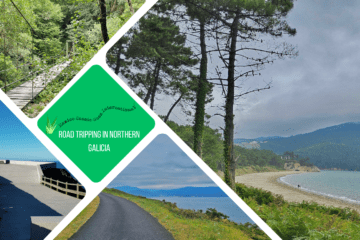
⭐️ Read the full MexicoCassie guide to road tripping in Northern Galicia
→ Check car rental prices and options now
→ Check the bus timetables on Busbud
→ Use GetYourGuide & Viator to find day trips that appeal to you
Nearby cities
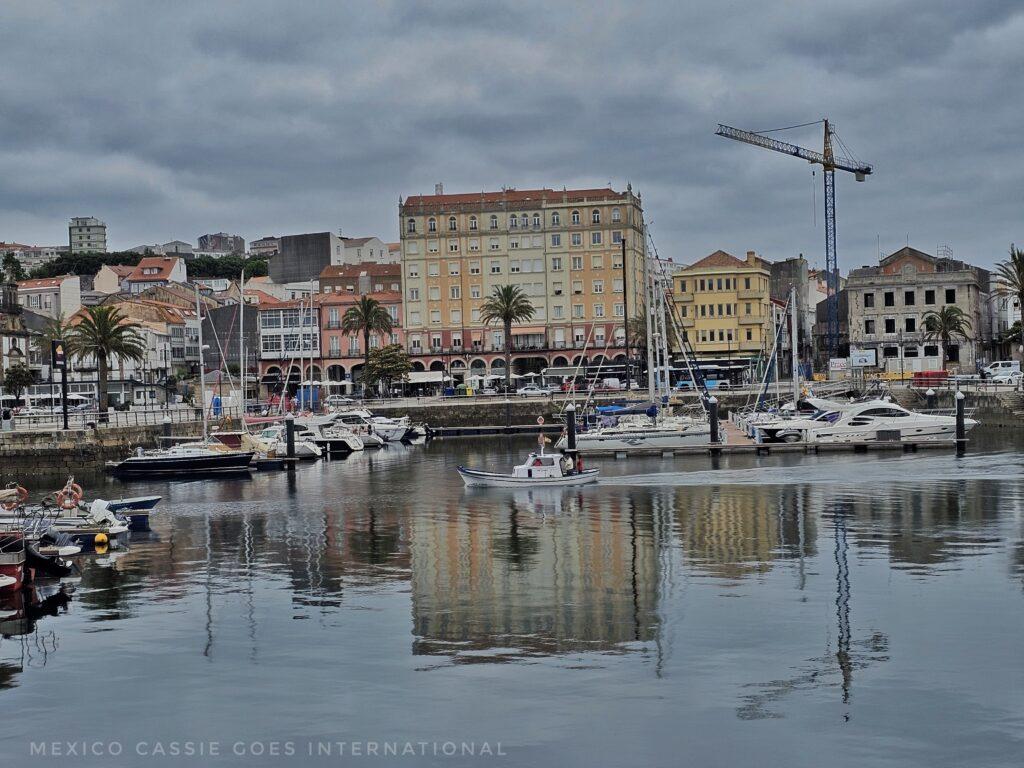
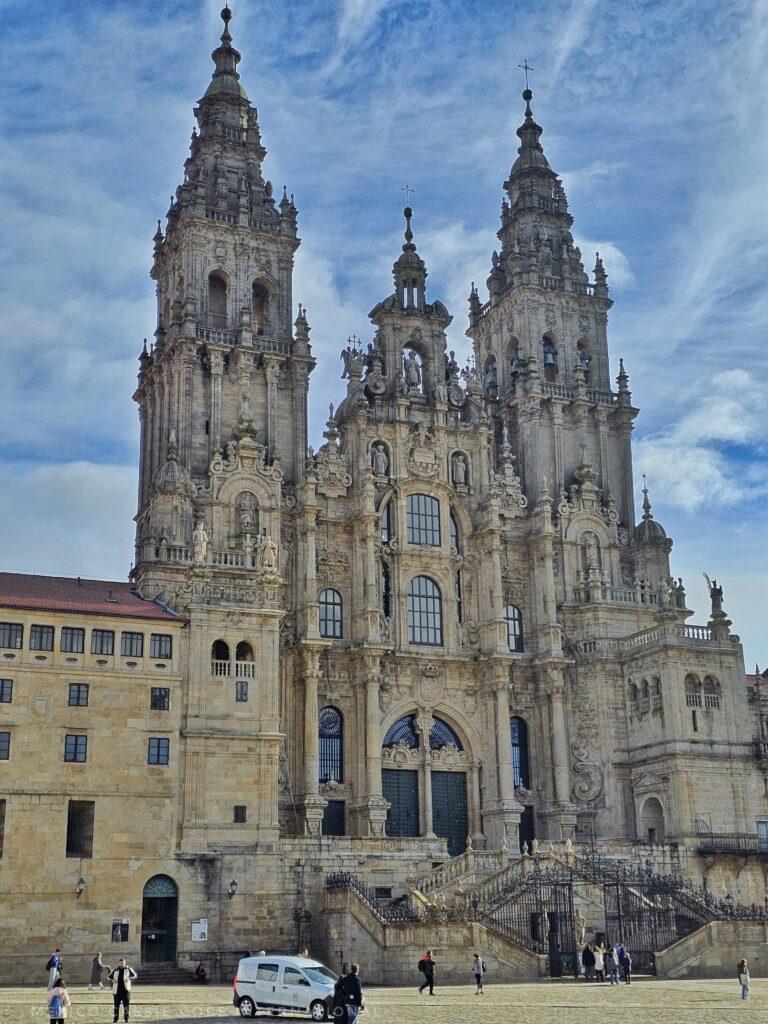
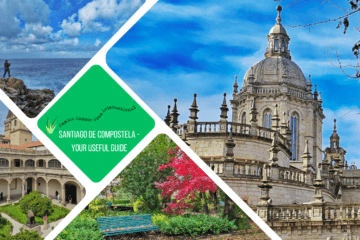
Santiago de Compostela – easily reached by foot (think camino, not quick walk), car, bus or train, Santiago is a beautiful place to spend a day exploring (photo above, right)
→ Read the full MexicoCassie guide to Santiago de Compostela
Ferrol – an even less touristy city, here you can enjoy small town Galician life, wandering around the small port, admiring the street art and eating well (photo on left)
→ Read the full MexicoCassie guide to Ferrol
Betanzos – a beautifully preserved medieval village (also on the camino)
Vigo – visit here to relax and explore without anything specific in mind.
+ Vigo is also the starting point for a visit to the Cíes Isles (→ book this tour to visit this pristine island, includes official permission, which is needed for your trip there).
Pontevedra – a medieval, pedestrianised city on the ría, this city is part of the Portuguese Way Camino and in its honour, one of its churches was built with the floor in the shape of the emblem of the camino, the scallop shell.
+ Pontevedra is considered the ‘gateway’ to the Rías Baixas region, somewhere I have not yet had the great fortune to explore.
⭐️ MexicoCassie recommended tour to the Rías Baixas for a day exploring the south coast of Galicia (includes winery visit) → read more and book your place now
Coastal adventures
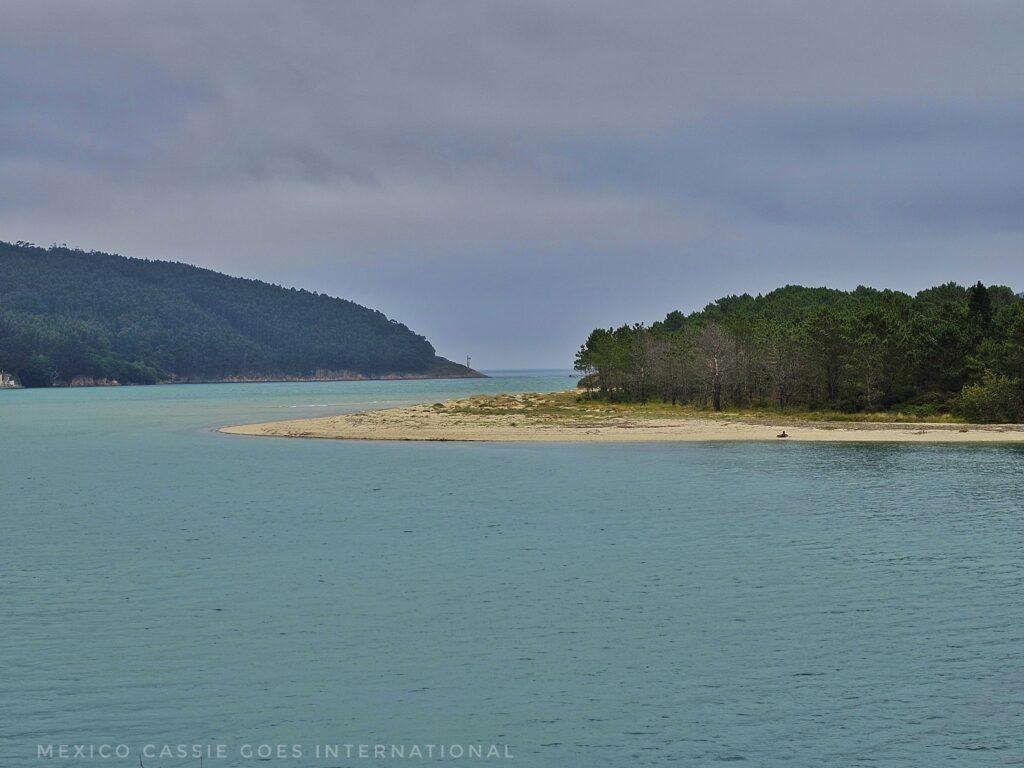
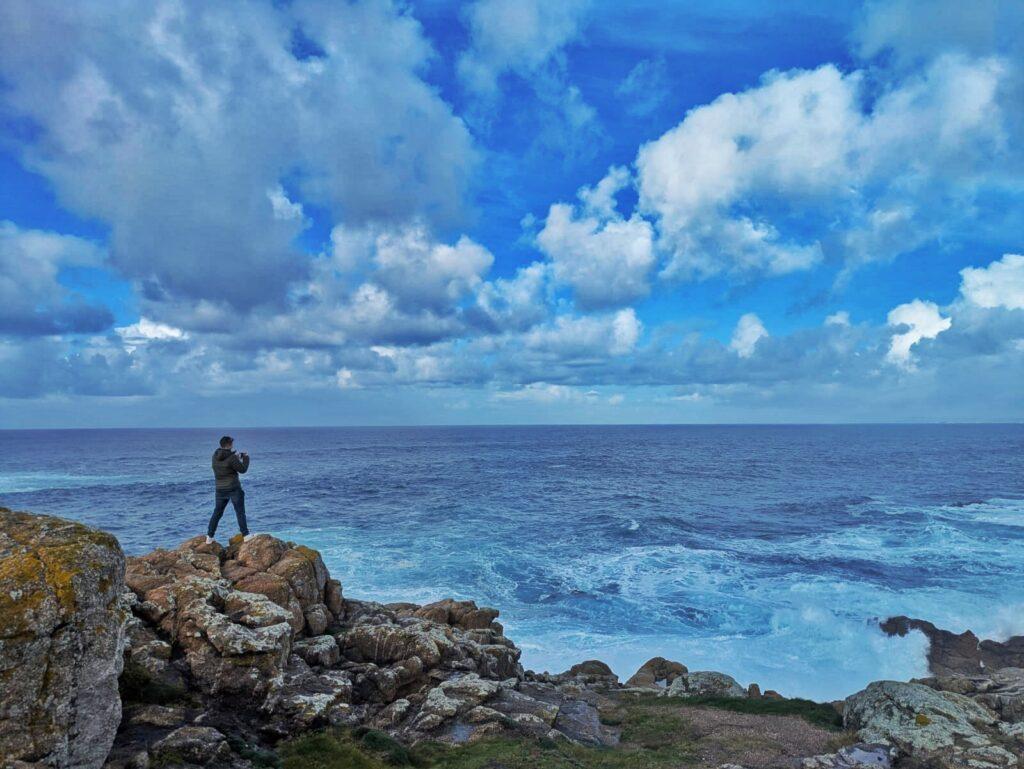
Galicia actually has more kms of beach than Andalucía and there’s plenty of this coast that’s visitable from A Coruña, whether you want unforgettable views of the Atlantic or awesome beach days (just remember that this is a vast and chilly ocean!)
Costa do Morta – this is a stunning section of the Atlantic Galician coast. It is generally said to run between Fisterra (Finesterre) and Malpica but some claim it stretches further, between Muros and A Coruña.
⭐️ MexicoCassie recommended tour of the Costa da Morte – a full day tour of the coast including the famous Fisterra lighthouse, the gorgeous Ézaro waterfall, and more → book now
Estaca de Bares (Punto máis septentrional da Península Ibérica) – the northernmost point of all of Spain is just 1hr45 from A Coruña and it’s a really beautiful spot for a walk and then day at the beach
⭐️ 90 minutes from A Coruña is Ézaro, a spectacular waterfall that plunges 30m into the ocean (best seen in winter)
Lighthouses
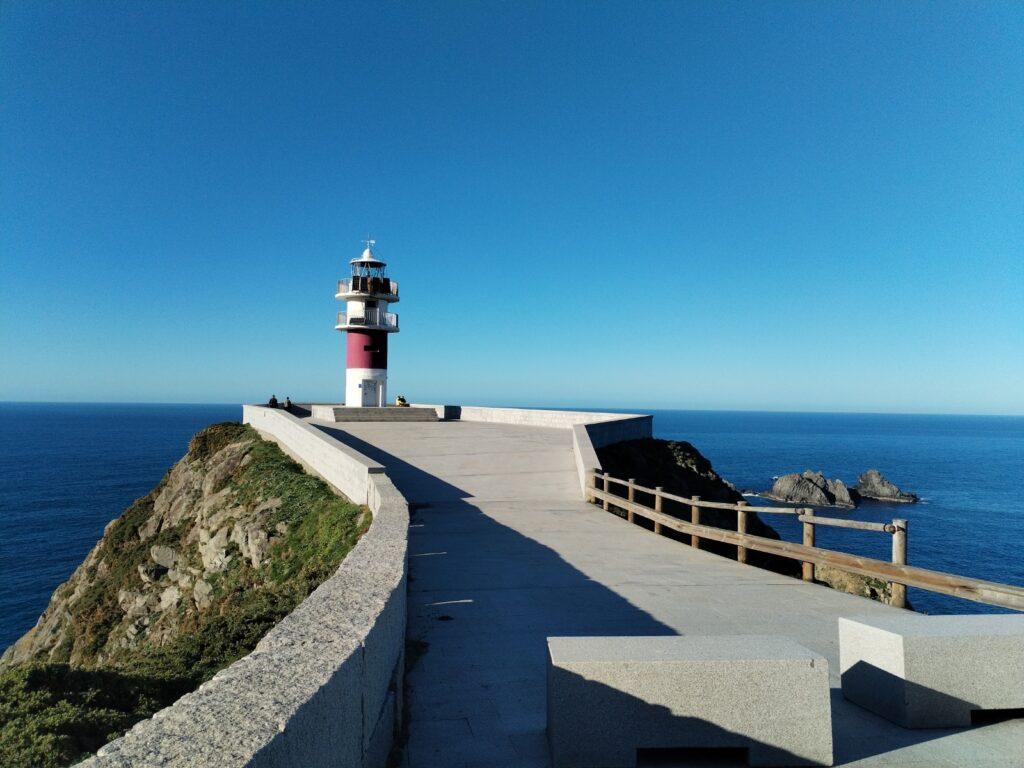
Unsurprisingly for a region with such a fabulous coast, there are lighthouses everywhere. Maybe the Torre de Hércules is enough for you, maybe it isn’t, in which case… try one of these
Fisterra – the end of the world. The lighthouse here is a 19th century building but it is said that the ancient peoples of this region considered this to be the ‘end of the world’. The views are spectacular.
Faro Touriñán – incredible views from the westernmost point of Spain (Galicia is also home to the northernmost point in Spain, the Estaca de Bares)
Faro de Muxia – lighthouse, beautiful views, small town, incredible location
Cabo Ortegal – lighthouse in photo above, in the far north of Galicia
Inland and the Ribeira Sacra
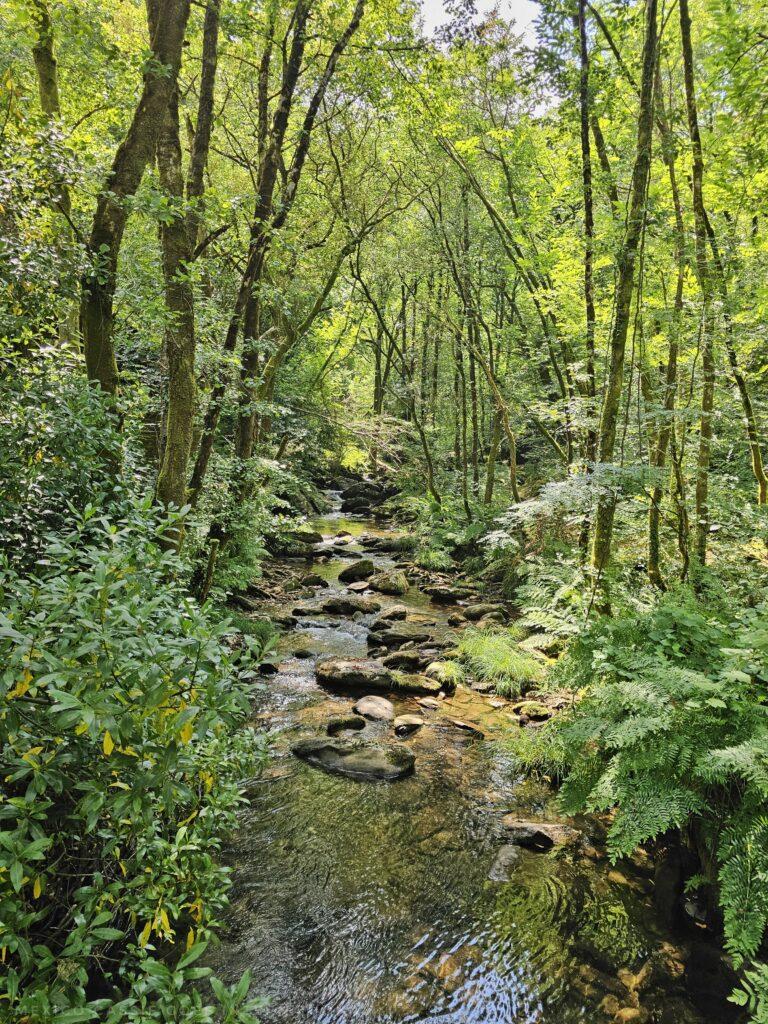
Fragas do Eume – one of my favourite places in all of Spain, this forest is immense and beautiful and you could spend years having fun with hiking here amongst the oak and birch trees (photo above)
The Ribeira Sacra (Sacred Shores) is found within the rivers Miño, Sil, Cabe and Bibei across the south of the province of Lugo and the north of Ourense.
Sil Canyon is the place that has been calling to me for a while now – this spot here, in particular. I’ve seen similar in the north of Galicia and in Japan but this Canyon is also seducing me.
⭐️ MexicoCassie recommended tour – take a day trip to the Sil Canyon that includes stopping at great miradores (viewpoints) and while sailing along it learning about heroic viticulture. Includes stop in the gorgeous village of Allariz → Check details and book now (leaves from Santiago)
Viticulture – I don’t actually like wine very much but I do love visiting vineyards and seeing grapes grow. They claim that the Romans brought wine to this region and that the monks of the Middle Ages then revitalised the practice.
The wines produced in Ribeira Sacra were granted a Protected Designation of Origin (PDO) in 1996 and are extremely well thought of. Interestingly, many of the vineyards in this region are on extremely steep slopes along the banks of the rivers. The slopes and the traditional methods of harvesting is referred to as “Heroic viticulture”, something that only happens in 5% of the world’s vineyards.
📚 🇪🇸 Read more of MexicoCassie’s Spain guides
→ MexicoCassie guide to whether Spain is safe for tourists
→ MexicoCassie guide to driving in Spain
→ MexicoCassie guide to driving in southern Spain
☕️ MexicoCassie guide to vegetarian tapas, to breakfast and to feeding the kids
📲 MexicoCassie guide to using an eSIM in Spain
⭐️ Tips to help when you visit Spain
Sevilla
⭐️ What is Sevilla famous for? | ⭐️ How many days do you need in Seville? | ⭐️ Everything about the Seville airport bus
⭐️ 1 day in Seville | ⭐️ 3 days in Seville | ⭐️ 5 days in Seville | ⭐️ How to visit Seville in the summer | ⭐️ How to visit the Alcazar | ⭐️ Quirky Seville | ⭐️ 5 alternatives to the Alcázar
⭐️ Best beaches from Seville | ⭐️ Day trips from Seville | ⭐️ Seville with kids | ⭐️ Seville with teenagers | ⭐️ How to see flamenco in Seville | ⭐️ Best family friendly tours in Seville | ⭐️ Exploring Sevilla Province
➕ Hire MexicoCassie as your amiguía for the day in Sevilla or Alcalá de Guadaíra
Málaga
⭐️ 3 days in Málaga | ⭐️ 1 day in Málaga | ⭐️ Day trips from Málaga | ⭐️ 1 day in Ronda | ⭐️ 1 day in Ronda with kids | ⭐️ What to do in Antequera | ⭐️ Exploring Málaga with kids
Córdoba
⭐️ What to do in Córdoba | ⭐️ Planning your Córdoba day trip from Seville | ⭐️ Day trips from Córdoba | ⭐️ Exploring Córdoba with kids | ⭐️ 1 day in Córdoba | ⭐️ Zuheros, the most beautiful village in Córdoba
Cádiz
⭐️ What to do in Cádiz province | ⭐️ How to spend 1 day in Cádiz city | ⭐️ What to do in Cádiz with kids | ⭐️ Exploring Tarifa | ⭐️ How to get to Tangier from Tarifa | ⭐️ Exploring Gibraltar | ⭐️ What to do in Jerez de la Frontera
Huelva
⭐️ Is Huelva worth visiting? (YES) | ⭐️ What to see in the gorgeous Aracena
Granada
⭐️ Planning your Granada city break | ⭐️ Granada with kids | ⭐️ 2 days in Granada | ⭐️ How to explore Guadix and its cave houses
Almería
⭐️ Things to do in Almería City | ⭐️ What to do in Almería with kids | ⭐️ Is Almería worth visiting? | ⭐️ Figuring out the Almería beaches
Community of Valencia
⭐️ 1 day in Valencia | ⭐️ 2 days in Valencia | ⭐️ Museums in Valencia ⭐️ Day trips from Valencia | ⭐️ Valencia with kids
Community of Madrid
⭐️ Why should you visit Madrid | ⭐️ Spending 5 awesome days in Madrid | ⭐️ 3-day Madrid itinerary
Castilla y León
⭐️ Segovia, a perfect day trip from Madrid | ⭐️ How to visit Medina del Campo | ⭐️ How to visit Zamora
Euskadi (Basque Country)
⭐️ What to do in the Basque Country | ⭐️ Excellent things to do in San Sebastián | ⭐️ Is San Sebastián worth visiting? | ⭐️ How many days do you need in San Sebastián? | ⭐️ Day trips from San Sebastián | ⭐️ San Sebastián with kids | ⭐️ Is Bilbao worth visiting? | Planning and taking day trips from Bilbao | Why Vitoria-Gasteiz is worth visiting?
Picos de Europa
⭐️ Road trip itinerary for the Picos de Europa | ⭐️ Planning for a trip to the Picos de Europa | ⭐️ Las Arenas de Cabrales | ⭐️ Visiting Potes
Extremadura
⭐️ Everything you need to explore Monfragüe | ⭐️ What to do in Mérida | ⭐️ What to do in Cáceres | ⭐️ How to visit Plasencia | ⭐️ Visiting Zafra (Sevilla Chica) | ⭐️ What to do in Badajoz | ⭐️ How to visit Jerez de los Caballeros | ⭐️ Extremadura road trip
Galicia
⭐️ What to do in Ferrol | ⭐️ Everything you need to visit Santiago de Compostela | ⭐️ Great reasons to visit A Coruña | ⭐️ Northern Galicia road trip
Cataluña
⭐️ Road trip around Girona Province | ⭐️ Spending 1 day in Girona | ⭐️ 1 day in Barcelona | ⭐️ How to visit Castellfollit de la Roca
La Gomera (Canary Island)
⭐️ Hiking on La Gomera | ⭐️ La Gomera with kids | ⭐️ Take a day trip to La Gomera