What is Seville famous for, or/ what makes this city so special?
If you’re asking, “what is Seville famous for?” as a pre-cursor to booking a trip, or even after having booked your flights, then you’ve landed in the right place. I live just outside Sevilla and am regularly to be found hanging out, exploring, adventuring and enjoying the city. I also love sharing all I know with my blog followers.
TLDR/ The quick and dirty answer to this question is that Seville, the capital city of Andalucía in southern Spain, is famous for its history, its magnificent buildings, its culture and, above all, its way of life. All these added together mean it is an excellent location for a vacation.
Seville is often considered to be the quintessential Spanish city – here at almost any time of year, you’ll see people sipping wine and enjoying tapas, you’ll hear music everywhere, and even see people dancing flamenco on the street. The city also has a rich history, much of which is vividly on display to visitors as they explore.
In this article we will take a look at just why Seville is so special and so famous under the following headings:
🏰 History & architecture
💃🏻 Culture
🌴 Nature
🍷 Cuisine
There are affiliate links in this article. If you click and make a purchase I could make a small sum at zero cost to you. Thank you!
MexicoCassie guides to Sevilla
→ Check our curated 1-day, 3-day or 5 day itineraries for Seville
🗓️ How many days should you spend in Sevilla?
🙊 Dig deeper into Sevilla with this article about ‘quirky Sevilla’
🏰 How to visit Sevilla’s Alcázar or check out these amazing 5 alternatives you’ll love
☀️ How to manage Sevilla in the summer
🧒🏻 Find all the Seville kid-friendly options and info here & teen-specific info here
👣 Best family friendly tours of Sevilla
💃🏻 Everything you need to know to enjoy flamenco in Sevilla
✈ Getting to Seville from the airport
🚘 MexicoCassie guide to driving around southern Spain
🏖️ How to get to the beach from Sevilla
⭐️ Everything you need to know about exploring Sevilla Province
🏨 Find your ideal hotel / apartment in Sevilla
(⭐️ or here’s a ready-made list of options with pools and AC)
➡️ Check rental car options & train timetables/ticket options
➡️ Check tour options with Viator, Get Your Guide, Devour Tours or Liv Tours
➡️ Pre-book tickets to the big name attractions
→ MexicoCassie answers, “Is Spain safe for visitors?”
What is Seville famous for?
🏰 History & architecture
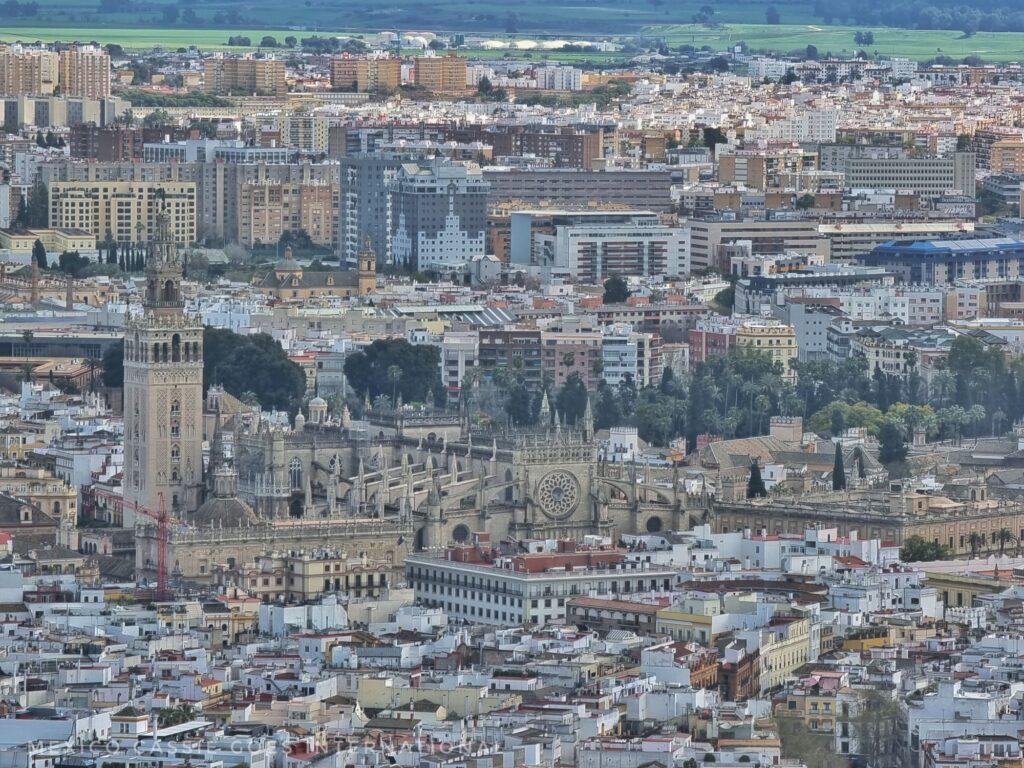
Brief history of Seville & its architecture
In Seville’s city centre you can hardly turn around without bumping into a historic building. Why? Because:
🏛 The city was founded by the Romans as Hispalis.
🕌 It was conquered by the Muslims in 711, who called it Ishbiliyah. In the 11th century it became the capital an independent Muslim kingdom called the Taifa of Seville, which stretched across the south of the Iberian Peninsula.
⛪️ It was then ruled by the Almoravids and the Almohad kingdoms until it was conquered by the Catholic Kings in 1248.
⚱️ By the 16th century, Seville was one of the biggest and most important cities in Europe due to its role as the gateway to the Spanish Empire in the Americas. This pre-eminence eventually declined as the trade base was moved south to Cádiz.
🎪 The Ibero-American Show was held in Seville in 1929, and in 1992, the city was home to Expo ’92 – the grounds for both – the former being the magnificent Plaza de España.
📽 Many historical locations in and around Seville have been used in movies, including Game of Thrones and Star Wars.
Visiting the most famous buildings in Seville
Remember, it is nigh on imperative that you book in advance if you plan on visiting the Alcazar and the Cathedral while in Seville. Not doing so may mean not getting to see these incredible buildings.
When considering my options for tour adventures in and around Sevilla I always use:
Tiquets – quick ticket purchases
Devour Tours – excellent foodie tours
Walks – exclusive tours of the Alcázar and my top recommendation when you’re in Sevilla
Liv Tours – my daughter and I took an awesome kid friendly Alcázar tour
Viator – skip the line tickets and a huge range of tours & day trip options
Get Your Guide – skip the line tickets and a huge range of tours & day trip options
AmiguíaCass – you can book me to spend the day with you in Sevilla or Alcalá de Guadaíra. You decide what we do, I ensure you have a great time – you want to go shopping, we go shopping, you want to relax in cafés or eat churros all day, that’s what we do. And if you want to walk all day, I’ll be right at your side. I’m your friend in Sevilla → details here
Real Alcazar
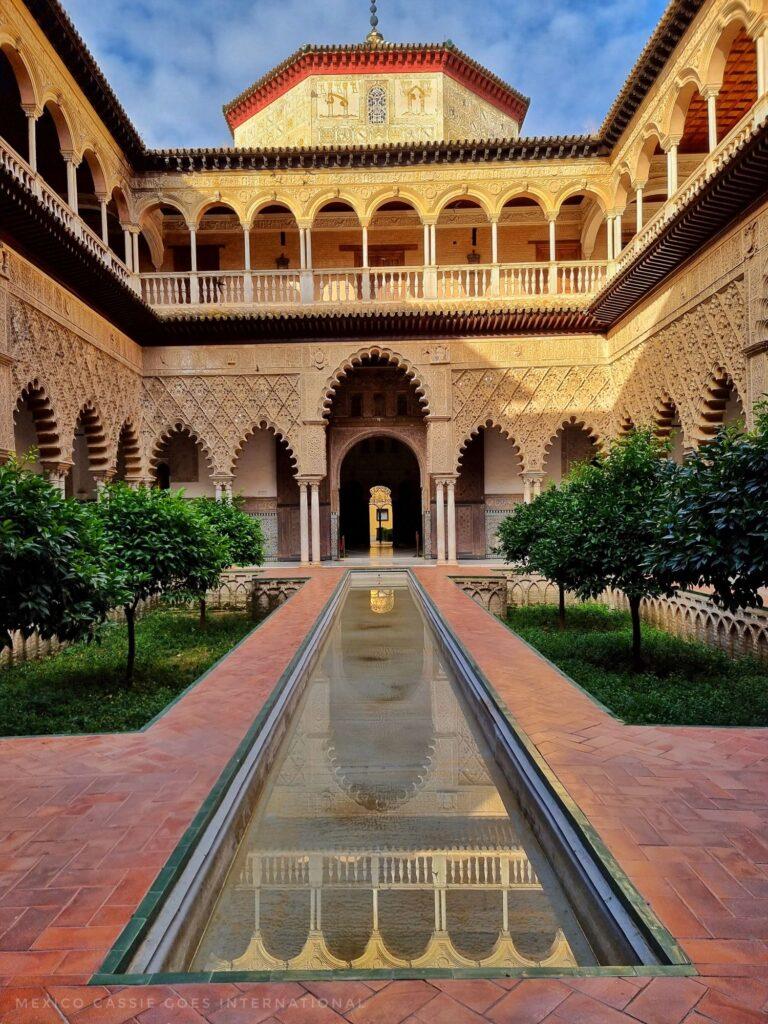
Undoubtedly the most famous and beautiful of all Seville’s buildings is the Alcazar of Seville. Originally built by the Moorish rulers of Spain, it was adapted and modified by the Catholic Monarchs when they conquered Seville. Today it is considered one of the best examples of Mudéjar (blended Moorish and Christian) architecture in the world.
Along with the cathedral and the Archivo de Indias, the Alcazar is part of the Seville UNESCO World Heritage Site.
The first fortified building on this site has been dated to the early eighth century during the Caliphate of Córdoba. In 913, Abd al-Rahman III built a fort here, apparently over the remains of a Visigoth church (the Visigoths ruled over much of Spain from the decline of the Roman Empire in Spain to the time the Moors arrived).
Parts of it look strikingly similar to the gorgeous Alhambra in Granada, this is by design. Pedro I actively invited the architects of the Alhambra to design sections.
How to visit the Alcazar
⭐️ My recommendation is to book onto the Exclusive Walks Early Access tour. Every day the Alcazar allows just two groups of up to 20 people to enter before it opens to the general public.
🧒🏻 And if you want your kids to care, the Liv Tours, family friendly tour is your best option. My 12 year old had a blast with our guide. The information shared was all pitched at her level, anecdotes were shared and history made fun.
I have been part of the “general public”, one of the 7000 people that visit the Alcazar every. single. day. And I have been one of the “exclusive tour members”. I can tell you that there is simply nothing like exploring the Alcazar when it’s still peaceful and quiet.
As you tour the Alcazar you won’t want to miss:
- Patio de las Doncellas – The Maidens’ Courtyard. This is the main shebang in the Alcazar. Here you’ll find the main courtyard with the reflecting pool, sunken gardens and gorgeous arches. It’ll also likely be full of other people unless you book onto the early access tour.
- Patio de Leviés – fewer people find their way to this patio where there is a less grandiose pool than on the Patio de las Doncellas.
- Patio de las Muñecas – Dolls Courtyard. A private courtyard in the palace – see if you can spot the dolls. I’ve only ever found 2.
- Salon de Embajadores (Ambassadors’ Hall or the Throne Room) – this is the biggest and most impressive room in the whole palace. Don’t forget to look up and see the half-orange dome, referred to as the Mudejar version of the Sistine Chapel.
- Salon de los Tapices – Tapestry Room
- Baños de Doña Maria de Padilla – a striking underground crypt filled with water
- The gorgeous gardens
Alcazar ticket information & options
→ Book your MexicoCassie recommended Exclusive & early access tour
→ Book your family friendly tour
→ Pre-book entrance only in advance
→ Book a guided tour in advance
or
➡️ you can risk waiting until you’re in Sevilla and buying on the day at the ticket office, which is located on Plaza del Patio de Banderas.
⎆ Once you have a ticket, head towards Plaza del Triunfo and the cathedral. Turn left and join the line for entrance into the Alcazar.
🪪 If you’re hoping for a reduced ticket based on your age you will need to bring a valid ID.
→ Read the full MexicoCassie guide to visiting the Alcazar, buying tickets and choosing between tours
Seville Cathedral & la Giralda
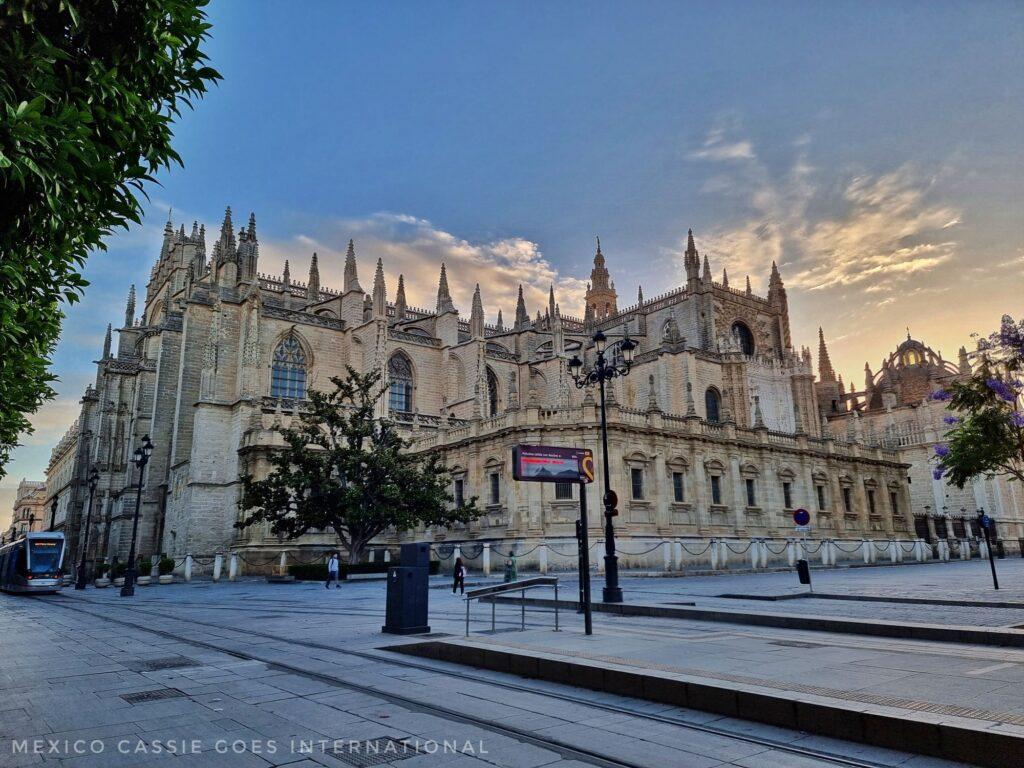
Seville’s impressive cathedral is the world’s largest Gothic cathedral and it’s truly something special, from both the outside and inside even if, like me, you’re not super interested in churches. This cathedral was designated a UNESCO World Heritage Site in 1987.
Much like Córdoba’s famous Mezquita, this cathedral began life as a mosque. It was converted into a cathedral after the Christians took Seville from its Muslim rulers. The cathedral we see today was completed in 1506. There are many famous artworks to be spotted while exploring the cathedral including works by Goya and Murrillo. Look out for the impressive tomb of Christopher Columbus here too.
➕ Do not miss climbing the magnificent bell tower for wonderful views over the city. The bell tower, is almost entirely ramps, there are only steps to climb at the very last level.
Cathedral ticket information & options
→ Buy your entrance only ticket (including the bell tower)
→ Sign up for a guided tour (different languages available)
→ Buy your Cathedral roof ticket (Las Cubiertas in Spanish)
👚 There are signs everywhere reminding visitors to dress appropriately but as far as I can tell, they’re unlikely to turn anyone away for being in shorts or a sleeveless t-shirt. Personally, I went in jeans and a t-shirt because I didn’t want to risk a refusal.
⎆ If you buy your ticket online, head straight for the entrance. If you’re planning on buying your ticket on the door, note that the queue for tickets is not at the entrance. I also believe that the roof tour entrance is a different place too. Check your ticket carefully as the entrance details are included there.
India Archives
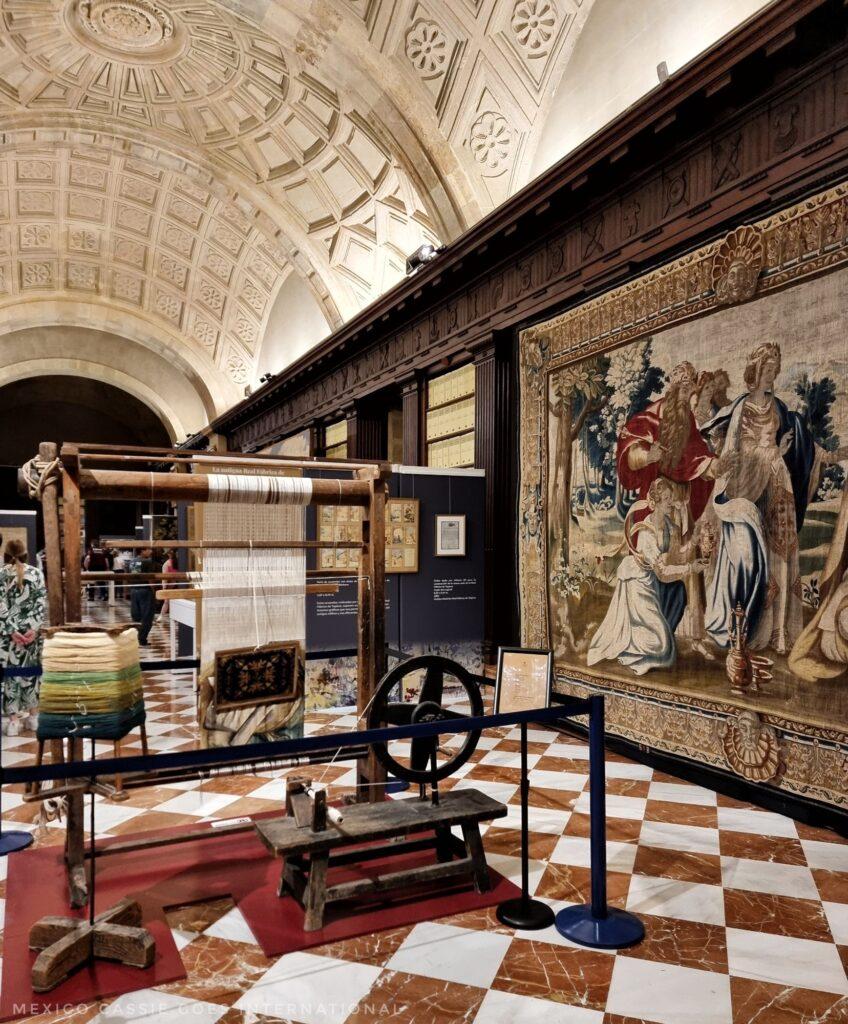
Far less visited than the other two sites that make up the UNESCO World Heritage site, the Archivo de Indias (Ámerica)—India Archives—make for a quiet and interesting half hour tour of a cool (temperature-wise) building. It’s also free to visit, which is nice.
🙊 Find out more about quieter, less well known spots, in the MexicoCassie guide to quirky Sevilla
Plaza de España
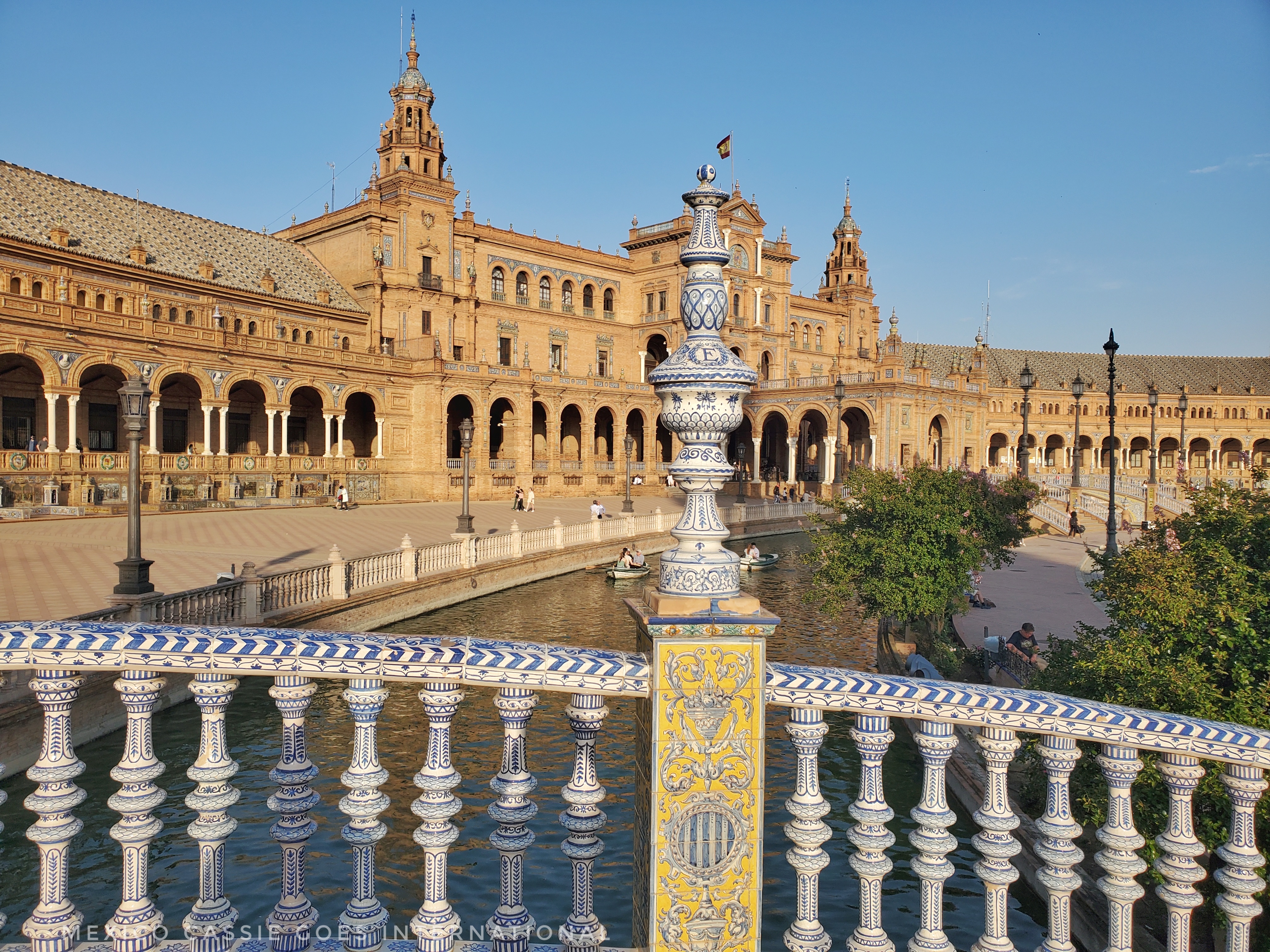
The Plaza de España is really the most famous and one of the most beautiful landmarks in all of Seville for both tourists and locals alike. Built in 1928 for the Ibero-American Exhibition (of 1929), this astounding semi-circular building has two high towers from which you can see much of Seville.
📌 Cool Fact: Plaza de España was featured in both Star Wars II and Lawrence of Arabia. It was also in the Netflix show, The Dictator.
➕️ Look out for scenes filmed in the Plaza de España in the Netflix series, Kaos.
What to expect at Plaza de España
All around the building are 48 tiled alcoves each representing a Spanish province (except for Seville which is featured elsewhere and one of the Canary Island provinces which didn’t exist in 1928). Each has a mural and a map of the province.
You will see four bridges in the courtyard; these represent the four ancient kingdoms of Spain: Castile, Léon, Aragon, and Navarre. The bridges traverse a 500 m-long canal and it’s possible to rent small boats and row along here. Because of this canal it’s sometimes called the Venice of Seville.
Many of the buildings are government offices (including where foreigners like me go to get residency paperwork sorted) but the Military History Museum is housed there too.
What to do around Plaza de España
📌 Enjoy strolling around, checking out the gorgeous murals and tiles. You might even happen upon an impromptu flamenco show
📌 If you’re so inclined, hire a boat and row around the canal
📌 Climb the stairs and enjoy the views
⭐️ If you’re visiting in the summer months be aware that there are many concerts here, which can mean closures or it being open but covered in stages etc. Of course, you could always book tickets and join the locals for a concert too!
Torre del Oro
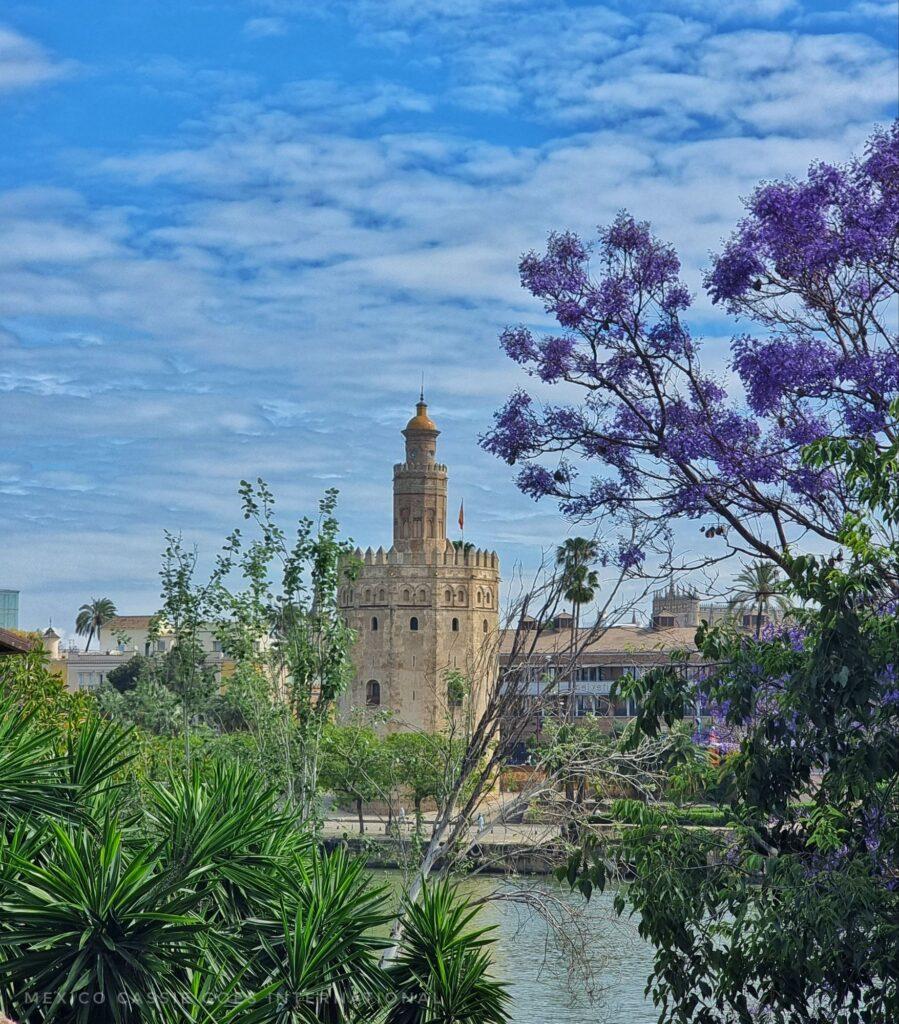
This is a thirty-six metre high, dodecagonal (twelve-sided) military tower built during the Almohad Caliphate to control the Guadalquivir River during the 13th century. It was later used as a prison and today it houses the maritime museum. If you visit be sure to head up to the roof for gorgeous views along the river.
Want MexicoCassie to take a look at your travel plans?
Of course you can plan your own trip, that’s why you’re here using my guides! But an expert pair of eyes can be extremely useful when you’re feeling overwhelmed, simply have too many ideas, or you’re not quite sure where to begin.
I offer informal & fun travel planning sessions, bespoke itinerary planning and AI itinerary checking, all based on my many years of travelling and adventuring.
Barrio Santa Cruz
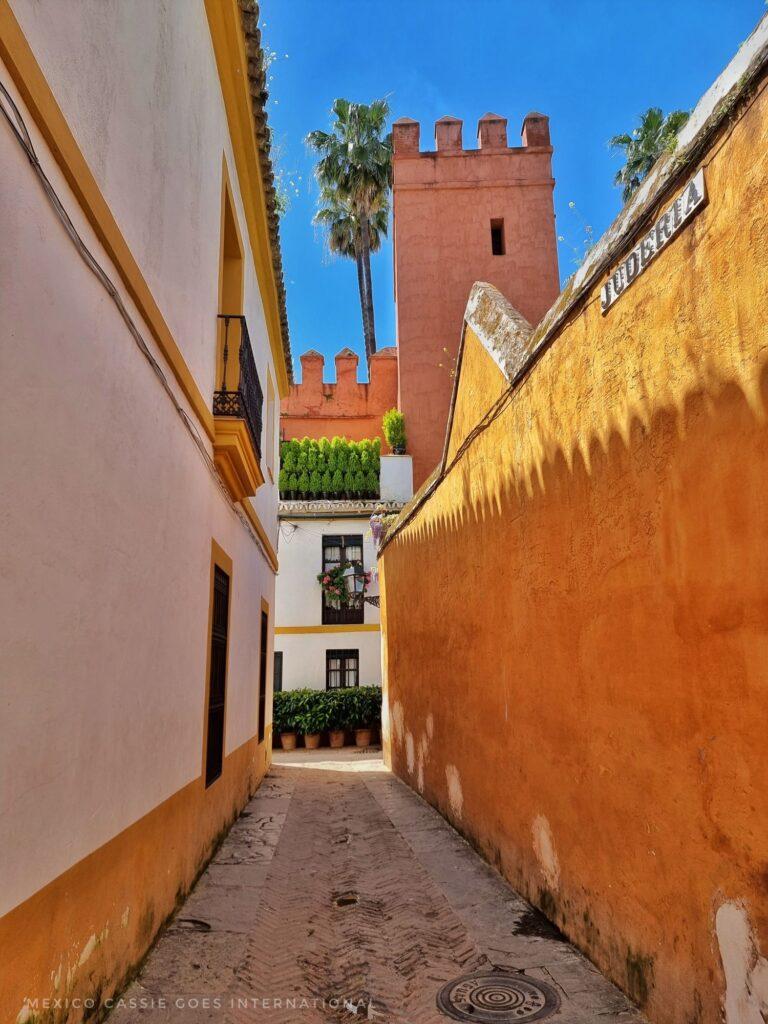
This is the Jewish quarter in the old town of Seville. Exploring the narrow streets is akin to taking a walk back in history. Here you’ll find many tapas bars, souvenir shops and gorgeous buildings to admire.
Are you finding my travel guides helpful?
Every tip helps me keep them online!
Las Setas
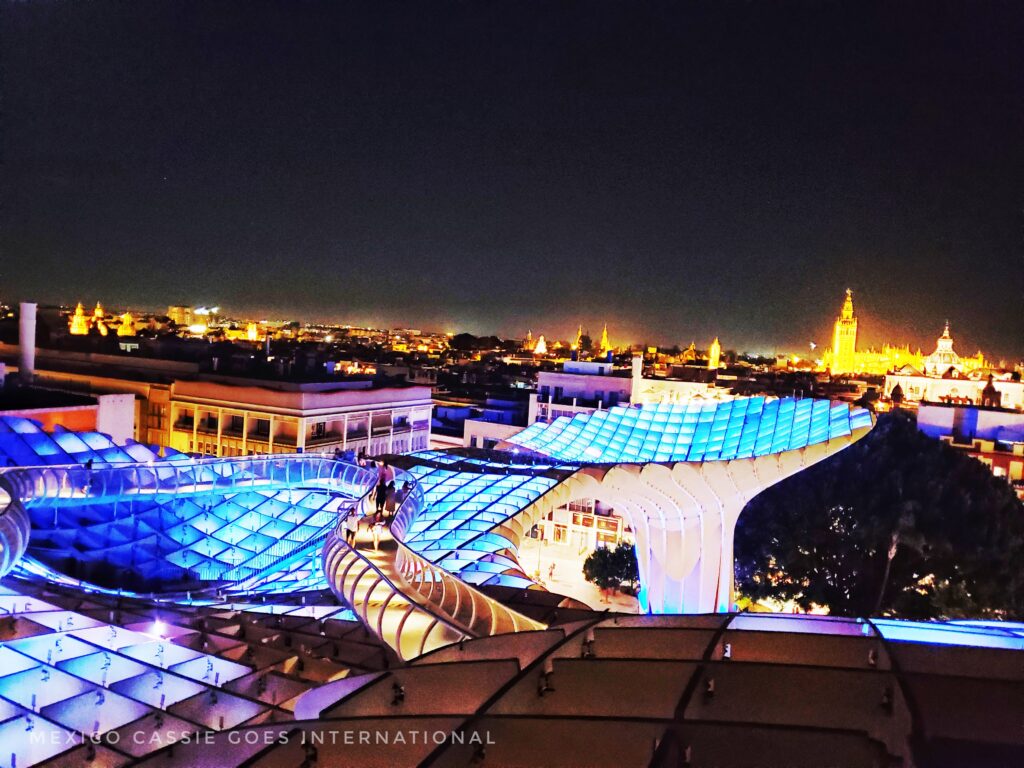
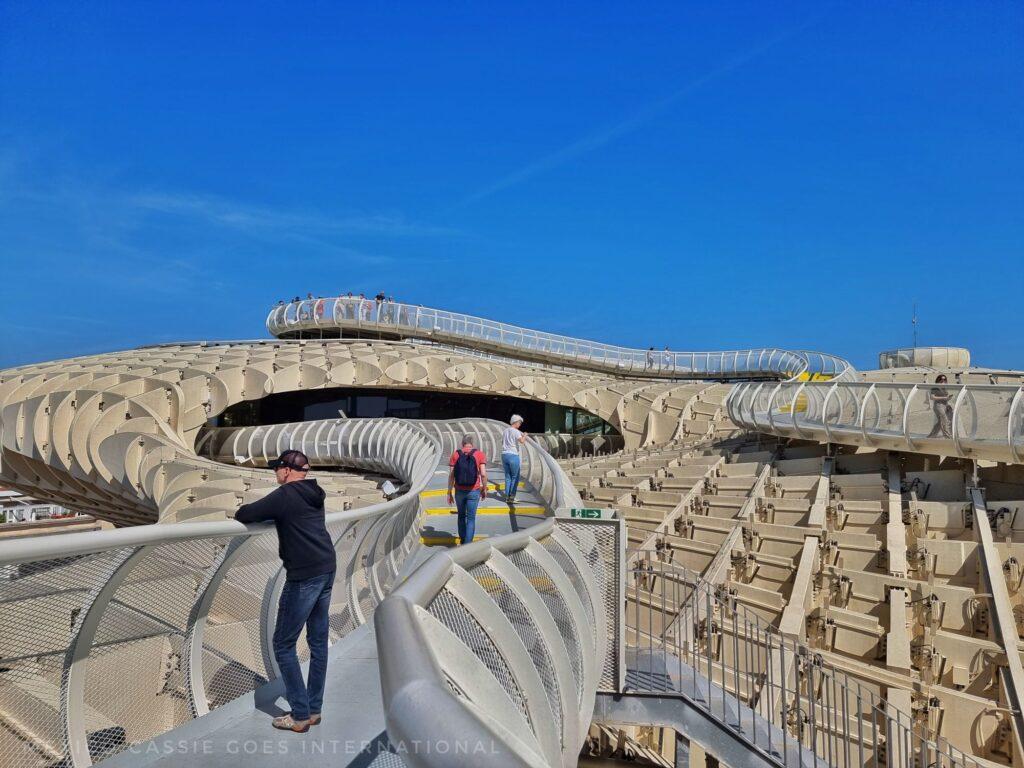
“Las Setas” (The Mushrooms) is the popular name for Metropol Parasol, this fascinating wooden structure that towers over Plaza de la Encarnación. This plaza was the city centre of old Sevilla and it has a long history dating back to Roman times.
It was only in the early twenty-first century when the city of Seville decided to build a new plaza with underground parking here that the ancient history of this area was rediscovered. While excavating for the garage they found important ancient remains and plans for a parking lot were abandoned. Instead, the archaeological museum was created and after a design competition Las Setas was built – apparently, this is the world’s largest wooden structure.
The views are gorgeous during the day but many do think the best time to climb Las Setas is at night.
→ Buy your entrance and virtual experience tickets
→ Buy general entrance tickets
Casa de Pilatos, Palacio de los Dueños or Palacio de la Condesa de Lebrija
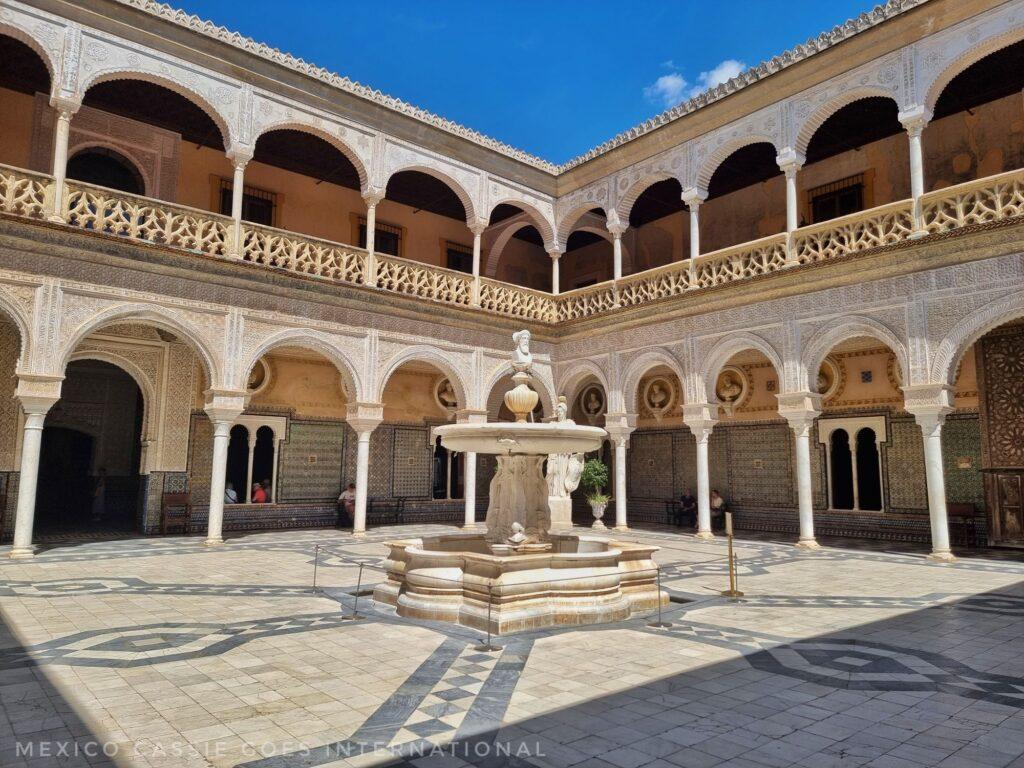
Three absolutely beautiful stately homes you can visit in Seville to get a feel for the grandeur of the place. I love all three but would say if you’re more interested in gardens and quirky decoration, head to the Palacio de los Dueños, whereas if you’d like a mini Alcazar type experience, then the Casa de Pilatos (photo above) may be more your style. And if you’re interested in mosaics and strong women, Palacio de la Condesa de Lebrija might be more your style.
→ Read the full MexicoCassie guide to these three palaces
Plaza de Toros
You might want to visit this place but I’m not recommending it since I, along with a large proportion of Spanish society, find bull fighting to be abhorrent.
Royal tobacco factory of Seville
Today this neoclassical building is part of the University of Seville and is generally only viewed from the outside.
Triana
Sometimes half-jokingly called the “Independent Republic of Triana” this is actually just a neighbourhood of the city that likes to think of itself as being a little separate. It was in this barrio that the famous ceramic tiles used to be made. It’s a fun area to explore on foot these days.
💃🏻 Culture
If you are interested in learning about Spanish culture, Seville is the perfect place to base yourself. Not only is the city of Seville absolutely bursting with history, it’s also home to many of the most quintessential parts of Spanish culture.
Visiting Seville means embracing the southern Spanish lifestyle of siestas: eating your main meal in the middle of the day, taking a nap and then venturing out and staying out late to beat the heat.
The siesta

The siesta is the traditional afternoon pause or nap that take place after lunch in much of Andalucía.
🍽 Lunch is the main meal in Spain and it’s generally taken between 2 – 4 pm. It’s then followed by the siesta before people return to work and shops re-open at around 6 pm.
While 21st century Seville does not fully shut down, it’s worth considering why the siesta persists:
🥵 For much of the year it’s really extremely hot in this region of the world, and in summer it’s too hot for many to be outside before the sun goes down. The siesta is a response to the local climate.
→ Read the full MexicoCassie guide to visiting Seville in the summer
What does that mean for visitors to Seville?
Well, some restaurants and shops may well be shut during the siesta. In my small town, pretty much everything except supermarkets close for siesta. Even some tourist sites close for a few hours every day. It’s worth checking the opening hours of everywhere you plan on visiting to ensure you’re not caught out by this.
You could become really Andaluz and retire to your hotel room / apartment for a break after lunch. This way you also miss the worst of the heat (if you’re visiting in summer) and align yourself with the flow of the city.
Flamenco music

🎶 Flamenco originates in Andalucía. Although it is pretty much synonymous with Spain and Spanish culture it’s actually a dance/musical form that originated with the Roma, influenced by Moorish tradition in Andalucía. There are over fifty different palos (styles) of flamenco dance.
During the period of the Inquisition when Jews and Muslims were forced to convert or face expulsion or death, life was obviously extremely hard. It was here at this point in time that the musical cultures of Muslims, Jews and the Roma began to form the basics of flamenco. Many flamenco songs still reflect the spirit of desperation, struggle and pride of the people of this era.
In 2010, UNESCO declared flamenco one of the Masterpieces of the Oral and Intangible Heritage of Humanity.
→ Read the full MexicoCassie guide to understanding flamenco in Sevilla
Flamenco show options
⭐️ If you’re looking for the perfect flamenco experience, then a Devour Tapas & Flamenco evening tour could be exactly what you’re looking for. The tour visits 2 tapas bars where you’ll get to try 8 different tapas plates (enough for a full meal) and drinks. You learn all about flamenco prior to watching a fabulous performance. They also offer private tours in case you want to learn about flamenco and local cuisine without too much interaction with strangers 😉.
I was invited by Devour Tours to check out their group Seville tapas and flamenco tour. I can confirm that an early evening tapas & flamenco show tour is an excellent experience. The tour I recommend includes pre-dinner tapas and sherry, a gorgeous, intimate flamenco show and a meal after the show. The guide, as with all Devour guides, was extremely knowledgeable and friendly and we learned so much about the history of flamenco, the region and its cuisine on this 4 hr tour.
🔆 This is a perfect activity all year round – I took the tour in the middle of August and it’s super well curated to ensure you’re never in the blazing sun.
💃🏻 You can read about my experience and the other great flamenco options in Seville here
→ Book your tapas and flamenco tour now
⭐️ Museo del Baile Flamenco – museum only ticket or dance show only ticket or bundle ticket
⭐️ Hope to catch a free show at the Plaza de España
Feria de Sevilla (Seville’s fair)
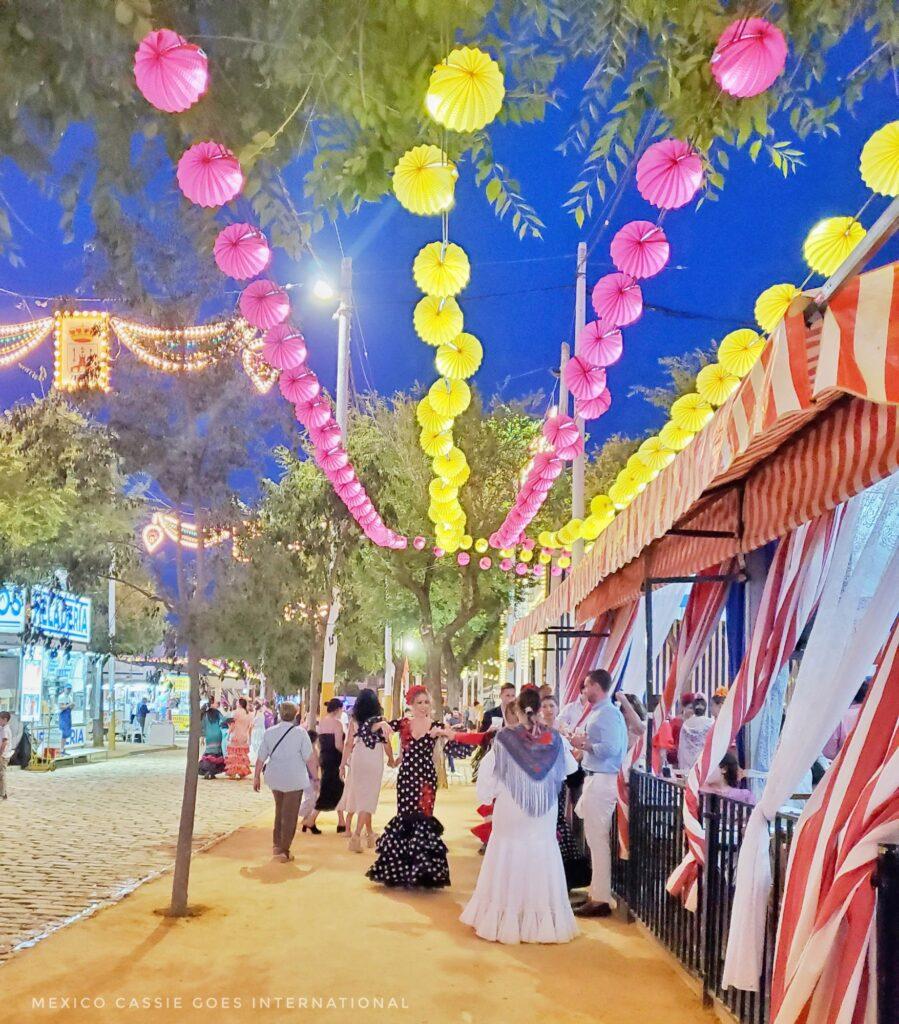
🎪 While feria may not be an ancient tradition (it began in 1846), it is absolutely an itegral part of Seville’s cultural calendar for locals and visitors. The first fairs were, as in so many other locations, livestock fairs but after only a year or so it had become more festive and by the 1920s it had merged into the joyful festivities we see in Seville today.
What to expect at feria
Crowds, mainly.
🎪 Feria is a week of fun that begins generally on the Saturday night two weeks after easter. Each day there is a parade of carriages packed with smartly dressed Sevillanos.
🎪 The feria ground is packed with casetas. Most of these are small private tents where groups of people meet to eat, drink and be seen. There are also some public tents, usually run by local government or political parties where anyone can go for a drink and a bite to eat.
🎡 There is also always a modern fair – think rides, noise and prizes and utter joy for the kids.
🐟 Noche del Pescaíto (Night of the fish) – it is tradition to eat fish on the first night of feria. People go to the portada (the entrance way to the feria ground) to see the alumbrao – the switching on of the feria lights and then go to the casetas to eat and drink all night long.
🗓️ 2027 feria dates: 13-18 April
Semana Santa (Holy week)
🐣 Semana Santa, or holy week, is the week leading up to Easter Sunday and it’s a serious business in Seville. If you visit Seville during this period expect to see processions of floats (pasos) depicting religious scenes.
The processions are organised by up to 70 hermandades and cofradías (religious brotherhoods & their churches) and the members of these groups precede the pasos dressed in long robes and tall pointed hoods / face coverings called capirotes.
To many visitors, this robe and & hat ensemble immediately brings to mind an awful racist group from the deep south of the USA but it’s important to keep in mind that the outfit was worn in Spain during Semana Santa for generations before the existence of this nasty group.
The processions follow a set route from their churches to the cathedral and back again
Top tip: if you’re planning a trip to Seville over Semana Santa or Feria, book your accommodation well in advance as these are extremely popular times of year to visit.
La Velá de Triana
A less well known but equally interesting local festival is the Velá de Triana in mid/late July.
In the 13th century, King Alfonso X had a diseased eye and made a promise to build a temple to honour Santa Ana if his eye was cured. It was, he kept his promise and what began as people in Triana visiting the temple has, over the centuries, turned into a party in true Trianan style!
All along Calle Betis (the Triana side of the river), you’ll see booths that this time you’re actually able to enter to drink, dance and generally party until dawn. There are fireworks, green hazelnuts and of course, the cucañas, where people walk along 5m greasy poles over the water to try and capture a flag. General hilarity, of course, ensues.
🌴 Nature
You might be wondering about this section since we’re talking about Seville here, and it’s a decent sized city, but it really does have its natural points of beauty.
It’s also within decent range of numerous phenomenal day trip options that we’ll discuss later.
🌴 Walking through Seville, you’ll always notice the trees. Whether you’re spotting orange trees, palm trees, jacaranda, ficus or bougainvillaea, you’re sure to be wowed.
🍊 The numerous plazas and courtyards are a joy to behold for much of the year thanks to the trees and plants there.
🍊 In May, the scent of orange blossom fills the city before being replaced with the gorgeous purple jacaranda.
Please remember, thought, that the famous Seville oranges, although beautiful, are bitter oranges, and not for eating. You can make marmalade and dressings with them but I really don’t recommend eating them.
Where can you experience a bit of ‘nature’ in Seville?
Parque María Luisa
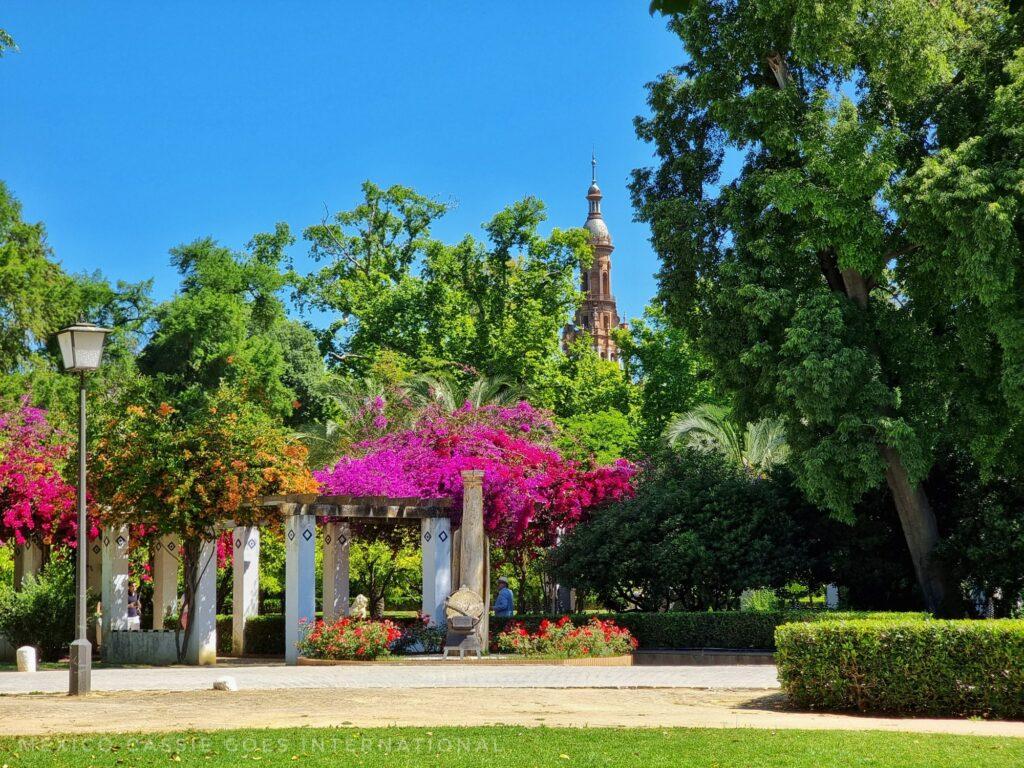
🌴 Wander amongst the trees in this most beautiful of parks and don’t forget to look out for the famous green parakeets.
Guadalquivir River
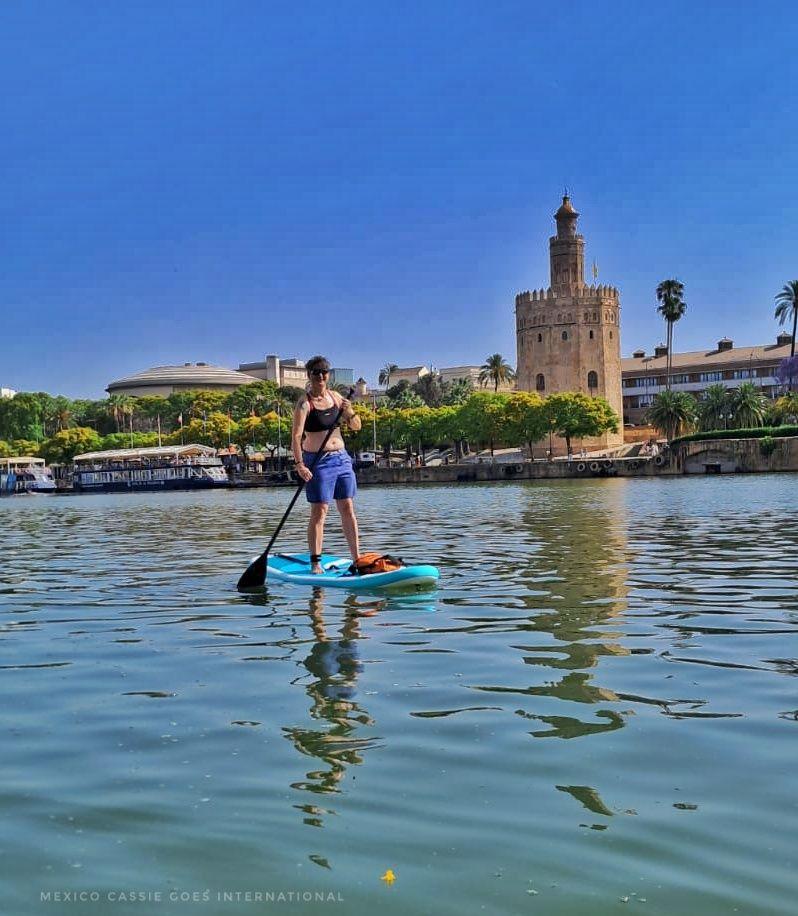
💦 Take a boat trip on the river, walk over the bridges, go paddle boarding, enjoy a drink or two in a river side bar.
Parque del Alamillo, the Jardines del Guadalquivir & Jardin Americano
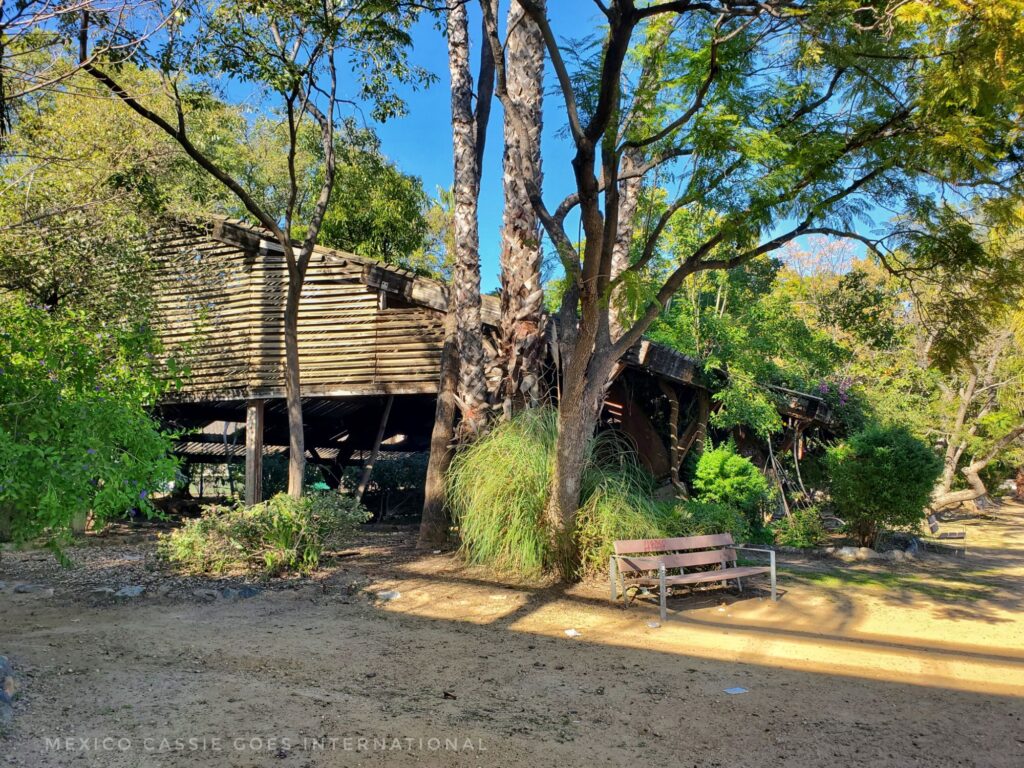
Explore these parks that stretch along the bank of the river – walk along avenues shaded by palm trees, explore the old Expo ’92 grounds, watch people paddle boarding and more.
🍷 Cuisine

Seville is also famous for its cuisine, and of course, its tapas culture and outdoor lifestyle. There’s really nothing like enjoying a caña (small beer), vino tinto (red wine) or tinto de verano (a very refreshing drink of wine & a fizzy lemon) and a tapa or two as the sun sets over the plazas and tapas bars of Seville.
What must you try?
Jamón Ibérico – Iberian ham
Salmorejo – local gazpacho, a cold tomato soup
Solomillo al whiskey / queso azul – pork in whiskey or blue cheese sauce
Bocadillo de pringa or piripiri – 2 different sandwich options, both delicious, both meaty
Boquerones – anchovies
Vegetarian tapas options
Espinacas con garbanzo – local speciality of spinach and chickpeas
berenjena con miel – aubergine in honey
pimiento padron – grilled green peppers
➡️ MexicoCassie recommends Devour food tours for people who want to learn about Seville’s culinary scene.
🍅 If you’re interested in fresh produce then try the local markets in Seville but always go early in the morning as they tend to have closed up by 11 am.
🍷 In Spain, the local wines are delightfully delicious and cheap. Head into any supermarket and pick up a bottle for as little as €2.50 – I don’t recommend paying less because it’s hit and miss on quality but above €2.50 it’s generally very good.
🍷 Vermut (vermouth) and sherry are also, of course, good options if you’re drinking in Seville.
🍔 And if you’re travelling with kids and are worried about finding food they’ll actually eat, use my guide to kid-friendly tapas to feed them.
🍅 The MexicoCassie guide to vegetarian tapas will help non-meat eaters navigate the famously meat heavy cuisine.
Want MexicoCassie to take a look at your travel plans?
Of course you can plan your own trip, that’s why you’re here using my guides! But an expert pair of eyes can be extremely useful when you’re feeling overwhelmed, simply have too many ideas, or you’re not quite sure where to begin.
I offer informal & fun travel planning sessions, bespoke itinerary planning and AI itinerary checking, all based on my many years of travelling and adventuring.
Day trip options from Seville
Seville is an excellent vacation base for anyone wanting to explore southern Spain, whether you’re interested in history, culture, nature or simply relaxing at the beach.
Why not use the MexicoCassie guide to Seville Province to help you get to know the region better
➡️ Antequera – explore the old city, visit the ancient dolmens, walk in the fabulous Torcal de Antequera
➡️ Aracena – explore the old city, the enormous caves and the countryside around the town
➡️ Granada – wander around the amazing Alhambra
➡️ Ronda – marvel at the three bridges spanning the enormous Tajo Gorge that splits the city in two
➡️ Cordoba – visit the Mezquita, wander the old city, check out the patios full of flowers
➡️ Walks in forests and national parks all around the region including Doñana National Park in Huelva
➡️ Vist the beaches that are close enough to Sevilla to visit for a day such as Trafalgar or Punta Umbria
➡️ Gibraltar – visit the slice of the UK sitting on the edge of Spain
➡️ Cádiz – this ancient and gorgeous city sits on the coast and calls out to day trippers.
Of course, this is just a small selection of the fabulous day trip options available to people visiting Seville.
When to visit Seville to make the most of the city
🌸 Spring is a wonderful time to visit: you have the choice of two of the primary celebrations in the city: fería (the Seville fair) and Semana Santa. The heat is not yet too much to handle. The beautiful trees are in bloom but the crowds can be bad.
☀️ If you do decide to visit in summer, know that it is likely to be extremely hot. Be sure to book a hotel with a pool and A.C. The city will be quieter than other times of year as locals leave for the beach.
🍂 Autumn is delightful in Seville although you run the risk of some rain.
🧣 In winter it’s not really truly cold in Seville, which makes it a good time to visit.
How to get around Seville
Handily, Seville is actually quite a small city so you can visit the most beautiful places without a car.
🚂 there are high speed trains arriving and departing Seville from the Santa Justa train station.
✈️ Seville has an international airport that is just 20 minutes from the city. There are good links between the two.
🚌 Seville is well served by buses, tram and metro.
🚴🏾♂️ You can rent bikes, electric bikes and electric scooters to explore around the city
🚘 If you plan on taking day trips then renting a car is a much easier option than train or bus
👣 There are excellent tour options for people who prefer not to drive. I use Devour Tours, Walks, Viator, and Get Your Guide when considering my options for adventures in and around Sevilla.
Are you finding my travel guides helpful?
Every tip helps me keep them online!
📚 🇪🇸 Read more of MexicoCassie’s Spain guides
→ MexicoCassie guide to whether Spain is safe for tourists
→ MexicoCassie guide to driving in Spain
→ MexicoCassie guide to driving in southern Spain
☕️ MexicoCassie guide to vegetarian tapas, to breakfast and to feeding the kids
📲 MexicoCassie guide to using an eSIM in Spain
⭐️ Tips to help when you visit Spain
Sevilla
⭐️ What is Sevilla famous for? | ⭐️ How many days do you need in Seville? | ⭐️ Everything about the Seville airport bus
⭐️ 1 day in Seville | ⭐️ 3 days in Seville | ⭐️ 5 days in Seville | ⭐️ How to visit Seville in the summer | ⭐️ How to visit the Alcazar | ⭐️ Quirky Seville | ⭐️ 5 alternatives to the Alcázar
⭐️ Best beaches from Seville | ⭐️ Day trips from Seville | ⭐️ Seville with kids | ⭐️ Seville with teenagers | ⭐️ How to see flamenco in Seville | ⭐️ Best family friendly tours in Seville | ⭐️ Exploring Sevilla Province
➕ Hire MexicoCassie as your amiguía for the day in Sevilla or Alcalá de Guadaíra
Málaga
⭐️ 3 days in Málaga | ⭐️ 1 day in Málaga | ⭐️ Day trips from Málaga | ⭐️ 1 day in Ronda | ⭐️ 1 day in Ronda with kids | ⭐️ What to do in Antequera | ⭐️ Exploring Málaga with kids
Córdoba
⭐️ What to do in Córdoba | ⭐️ Planning your Córdoba day trip from Seville | ⭐️ Day trips from Córdoba | ⭐️ Exploring Córdoba with kids | ⭐️ 1 day in Córdoba | ⭐️ Zuheros, the most beautiful village in Córdoba
Cádiz
⭐️ What to do in Cádiz province | ⭐️ How to spend 1 day in Cádiz city | ⭐️ What to do in Cádiz with kids | ⭐️ Day trips from Cádiz | ⭐️ Exploring Tarifa | ⭐️ How to get to Tangier from Tarifa | ⭐️ Exploring Gibraltar | ⭐️ What to do in Jerez de la Frontera
Huelva
⭐️ Is Huelva worth visiting? (YES) | ⭐️ What to see in the gorgeous Aracena
Granada
⭐️ Planning your Granada city break | ⭐️ Granada with kids | ⭐️ 2 days in Granada | ⭐️ How to explore Guadix and its cave houses
Almería
⭐️ Things to do in Almería City | ⭐️ What to do in Almería with kids | ⭐️ Is Almería worth visiting? | ⭐️ Figuring out the Almería beaches
Community of Valencia
⭐️ 1 day in Valencia | ⭐️ 2 days in Valencia | ⭐️ Museums in Valencia ⭐️ Day trips from Valencia | ⭐️ Valencia with kids
Community of Madrid
⭐️ Why should you visit Madrid | ⭐️ Spending 5 awesome days in Madrid | ⭐️ 3-day Madrid itinerary
Castilla y León
⭐️ Segovia, a perfect day trip from Madrid | ⭐️ How to visit Medina del Campo | ⭐️ How to visit Zamora
Euskadi (Basque Country)
⭐️ What to do in the Basque Country | ⭐️ Excellent things to do in San Sebastián | ⭐️ Is San Sebastián worth visiting? | ⭐️ How many days do you need in San Sebastián? | ⭐️ Day trips from San Sebastián | ⭐️ San Sebastián with kids | ⭐️ Is Bilbao worth visiting? | Planning and taking day trips from Bilbao | Why Vitoria-Gasteiz is worth visiting?
Picos de Europa
⭐️ Road trip itinerary for the Picos de Europa | ⭐️ Planning for a trip to the Picos de Europa | ⭐️ Las Arenas de Cabrales | ⭐️ Visiting Potes
Extremadura
⭐️ Everything you need to explore Monfragüe | ⭐️ What to do in Mérida | ⭐️ What to do in Cáceres | ⭐️ How to visit Plasencia | ⭐️ Visiting Zafra (Sevilla Chica) | ⭐️ What to do in Badajoz | ⭐️ How to visit Jerez de los Caballeros | ⭐️ Extremadura road trip
Galicia
⭐️ What to do in Ferrol | ⭐️ Everything you need to visit Santiago de Compostela | ⭐️ Great reasons to visit A Coruña | ⭐️ Northern Galicia road trip | ⭐️ Visiting Combarro
Cataluña
⭐️ Road trip around Girona Province | ⭐️ Spending 1 day in Girona | ⭐️ 1 day in Barcelona | ⭐️ How to visit Castellfollit de la Roca
La Gomera (Canary Island)
⭐️ Hiking on La Gomera | ⭐️ La Gomera with kids | ⭐️ Take a day trip to La Gomera


1 Comment
Hilary · 09/01/2025 at 7:29 pm
Hi Cassie, would you recommend the tapas/flamenco tour for a solo traveller? Will be my first time in the city and looking for fun things to do solo. Thanks!
Comments are closed.