Everything you need to know before you visit Spain
Tips and hints to make your trip to Spain smooth and easy
Spain is incredible, it’s beautiful, it’s diverse and it’s very, very Spain, so it doesn’t always make sense to visitors immediately. I want to help you feel comfortable, quickly, so you can make the most of your vacation without too much confusion.
I love Spain. I’ve lived here for over four years, my kids consider themselves Spanish and this article is written based on my own findings and experiences during this time living in modern, vibrant, yet still traditional Spain.
Every country is different, everywhere has its own idiosyncrasies and sometimes, having someone explain them to you can help. So let’s do this! We’ll talk about food, timings, and driving as they’re probably the most important for people coming to visit on holiday.
And, if you have questions or comments, feel free to email me. I have comments turned off because, quite frankly, the level of spam blogs receive is ridiculous and I got bored deleting links to fishing shops and xxx sites.
There are affiliate links in this article. If you click and make a purchase I could make a small sum at zero cost to you. Thank you!
Food, restaurants and meal times
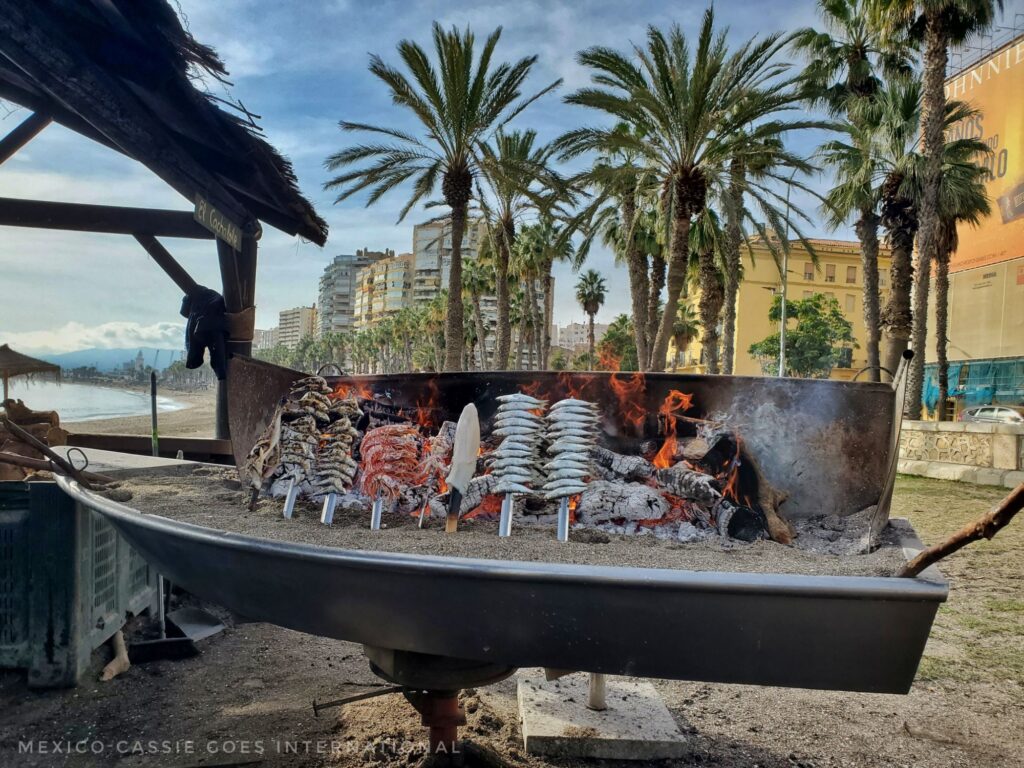
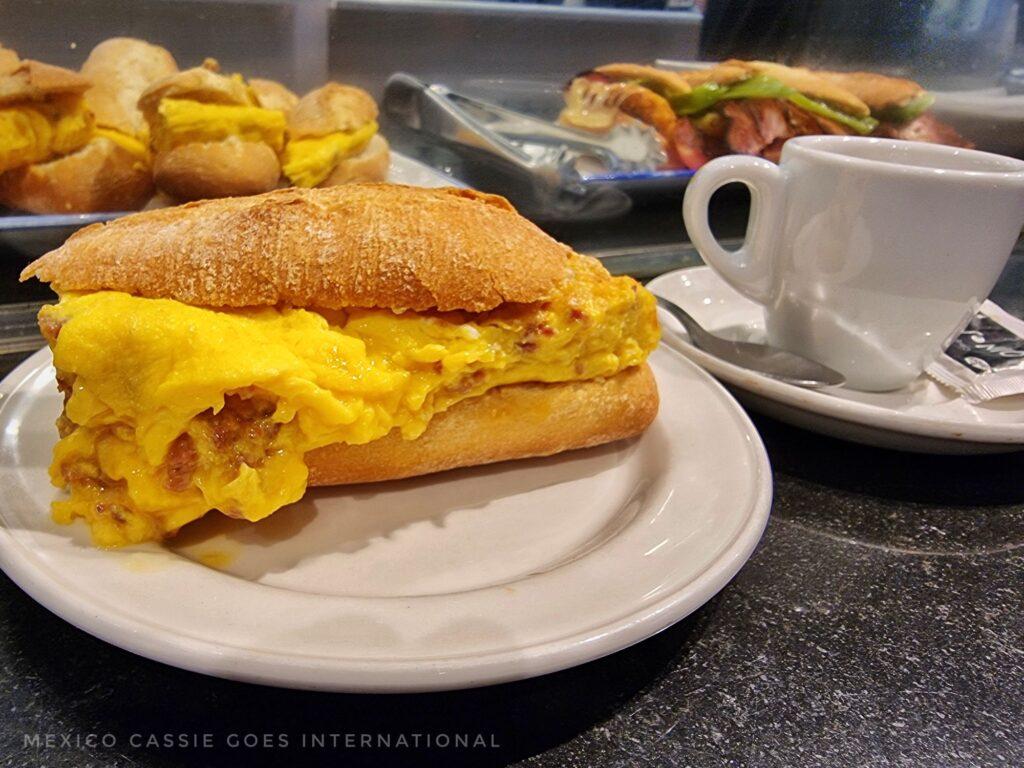
Traditional seafood on the beach in Málaga for lunch & tortilla sandwich for breakfast in San Sebastián
Should be simple, isn’t always.
Spain does things the Spanish way. Meal times are pretty set in stone and outside of really touristy areas, you won’t find much open if you want to eat at your own rhythms.
There are five food times in Spain, more or less.
Breakfast – early at home for a coffee and then later in a bar or café. You may find that bars and cafés don’t actually open until 9am, so if you have an early start, take this into account and eat in your hotel restaurant, or have a banana handy 🍌
Mid-morning snack – 10 – 11.30ish. Now it’s time to settle in for another coffee and your pan tostadas or churros ☕️
Lunch 2 – 4 pm. The big meal of the day, the long, leisurely lunch. Maybe you’ll find a traditional menu del día, maybe you won’t but the food will most likely be great 🥘
Merienda 6 pm. An early evening snack to stave off hunger until supper 🍪
Supper 9 – 10 pm. Yes it’s late, no not everyone will eat this late every night but if you want to go out for an evening meal, realistically even if you’re able to book a table for 8.30, the kitchen won’t be serving much before 9pm 🍲
MexicoCassie guides to eating / drinking in Spain
🥦 Finding vegetarian food in Spain (also includes where meat hides in Spain, very important)
🍕 What / how to feed the kids in Spain (also works for cautious eaters)
☕️ How to order breakfast and coffee in Spain
👣 The very best food tours across Spain are without a doubt, provided by Devour Tours
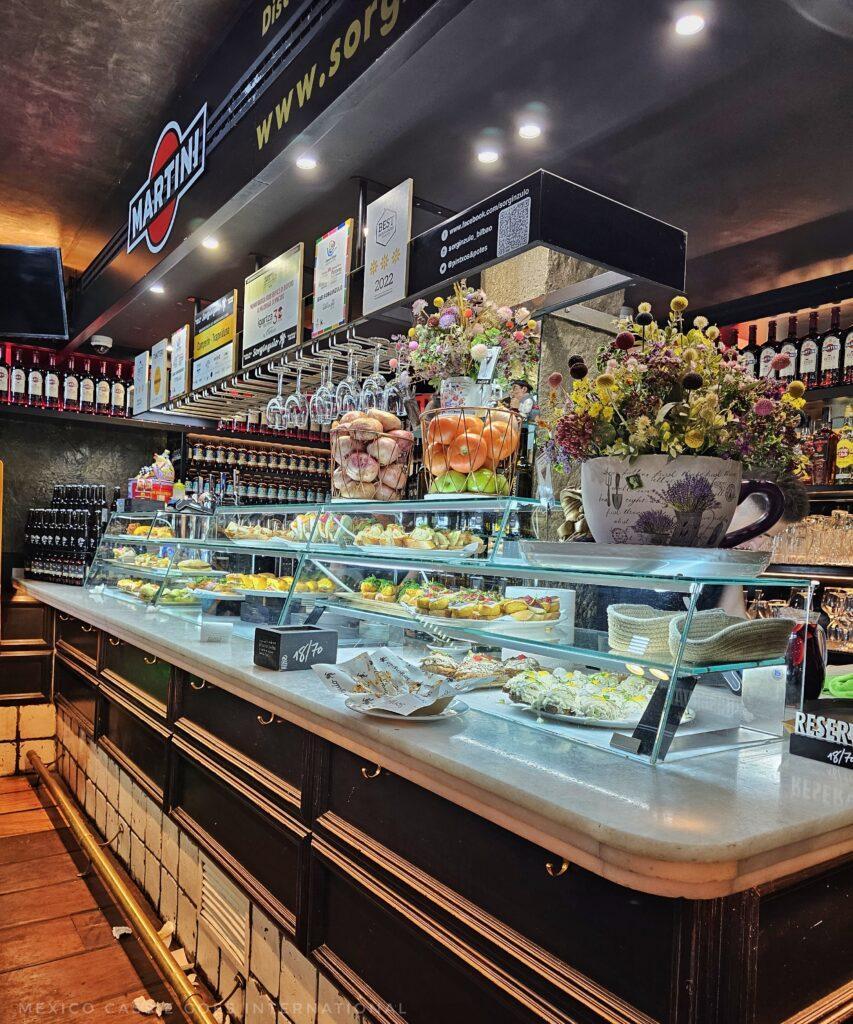
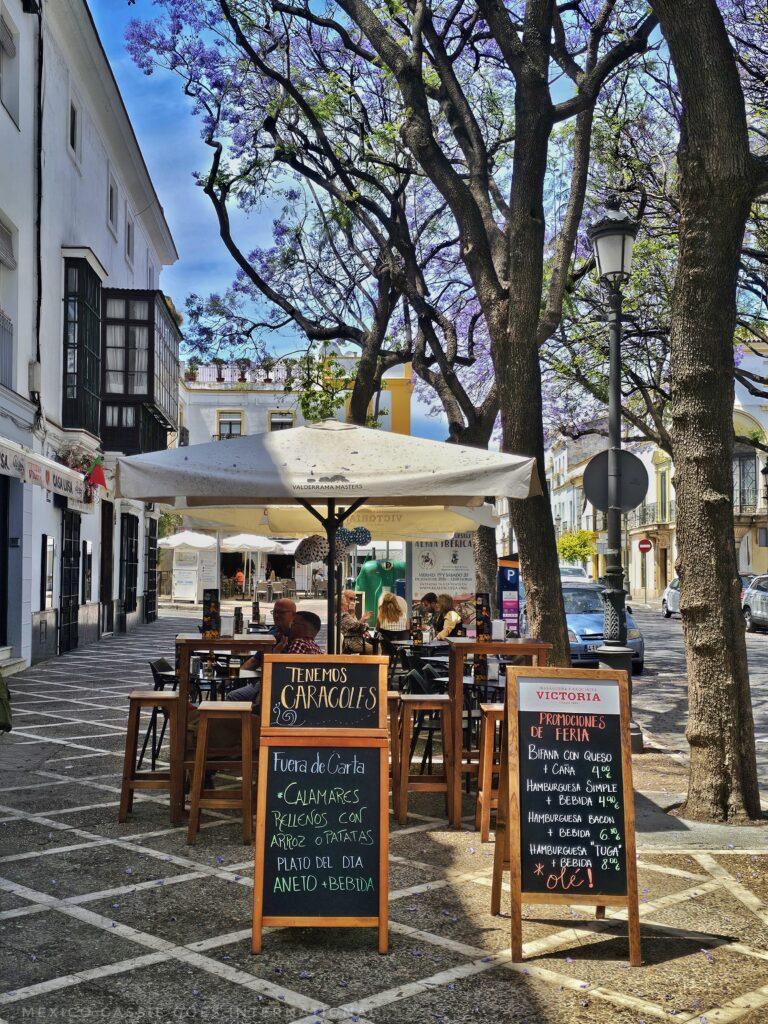
In big cities or popular tourist destinations, I definitely recommend making a reservation if you want a sit down meal. Many places only serve food for a few hours around official feeding times and they’re not telling anyone to leave to squeeze in a second seating.
I am in many fb travel groups and I read a lot of Google restaurant reviews. Two things pop up more than anything in the reviews left by non-Spanish people: “the waiter didn’t pay attention to me”, and “no one brought me the bill”. Let’s take a look at why this is:
🕥 It’s simple. It’s literally because the table is yours for as long as you want it. Meal times aren’t for rushing, they’re for relaxing, enjoying the food and the company. So if you’re in a hurry, you’ll need to warn the staff.
🍻 Often, in Spain, you walk into a restaurant and even before you’ve sat down, a waiter will ask what you’d like to drink. If you already know, order quick, because you might not see them again for a while. If you do need a few minutes to figure stuff out, that’s ok, but be aware you’ll be doing some eye-gymnastics trying to get them to notice you when you are ready to order.
🍽️ You may also need to catch someone’s eye to get them to return to take your food order.
The point is, no one is rushing, lunch is a slow affair so why rush to serve you?
Sobremesa
The sobremesa is all. There’s no rushing away after the meal. You chat, order coffee, maybe the waiters off you a chupito (after lunch shot), maybe they don’t. Whatever happens, you don’t have to leave until you’re ready. No one will bring you the bill until you ask for it.
Menus
You won’t always find English menus, in fact, my view is that if there is an English (or French or German) menu, you probably don’t want to eat there as it’s most likely to be a tourist restaurant. No pictures, just words, in Spanish (or Catalan, or Euskera, Gallego o Valenciano)
⭐️ Sometimes, the menu might be a hand written piece of paper or on a chalk board, or even a waiter rattling off options at a gazillion kms an hour. Or, it might be a QR code too, you simply never know.
⭐️ It’s always worth doing research into the regional dishes before you travel (or booking a food tour). While there will always be similarities, the regional plates can be well worth it.
Food notes
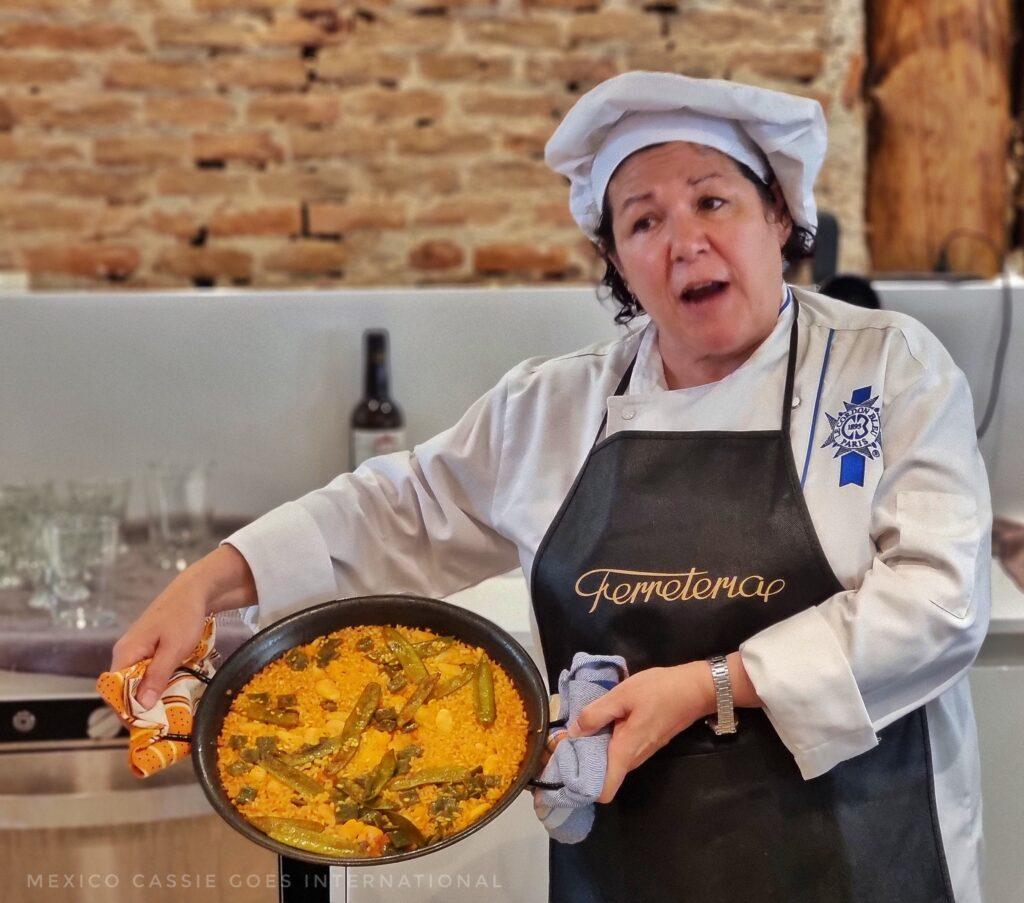
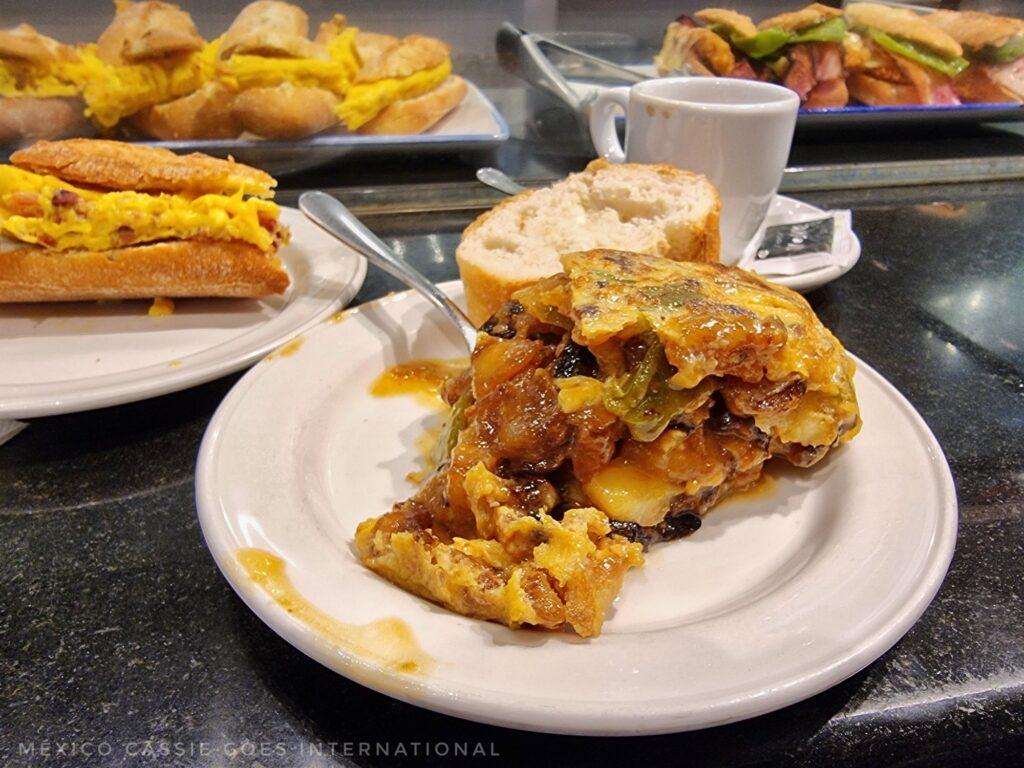
Learning to make paella with experts and the best tortilla I have ever eaten, in San Sebastián
🦎 Yes, you’re expected to know that lagarto is not a plate of lizard meat, it’s a cut of pork. You may well need to ask your waiter or use a dictionary to translate some plates. It’s not always obvious
🥘 Paella is for lunch because it’s a heavy dish. It’s not normally served at night. And you’ll often find that it is not served in single portions, it’s more of a share with at least one other person, better with more, kind of meal. But the price is per person, not for the whole dish. And while yes, you’ll find paella all over Spain, it’s best in Valencia, where it comes from
🥚 Tortilla, everyone in Spain has an opinion (including me) about this potato-eggy goodness. Do you like it with onion added? What about other ingredients? Wet or dry? I like it wet and with onion best, by the way. My favourite ever tortilla is in San Sebastian (photo above, right)
🐊 Croquetas are a serious business – a good restaurant will make their own from scratch, a tourist tapas bar will whip out some still frozen ones. I love rabo de toro croquetas best of all, or vegetarian ones with mushrooms
🍞 Bread is vital to life in Spain. It’s served with basically every meal
🍅 You’ll have the best tomatoes of your life here in Spain. Many people wonder why it’s so hard to get vegetables in restaurants in Spain – it’s because people don’t go out to eat veg, they eat those at home. Restaurants are for things you can’t eat at home. But definitely try the starter that’s just a tomato with olive oil and salt, because you’ll remember it forever
🍹 Sangría is a touristy drink, try tinto de verano instead. Tinto de verano is house red wine with a lemon soda, usually Casera or Gaseosa, both fairly sweet. It’s utterly delicious but a bit sweet for me. I like to nicely and see if I can have it made with agua con gas instead to remove the sweetness. Note that not everyone will oblige
Tapas
Very few places these days actually give free tapas with drinks. And if they do, the tapa is of the bar’s choice, not yours. You may be brought altramuces (a type of bean in vinegar, I don’t like them much), nuts or crisps, or a small salad dish.
I think that once or twice in four years I’ve been told I could choose a tapa to go with my alcoholic drink (nothing free with soft drinks). Once in Almería and once in Antequera.
Tapas ⍯ pintxos – pintxos is traditionally a Basque bread based snack with a stick through it. Tapas are claimed to come from Cádiz and are small plates of food you can cover (tapar) your drink with.
The tip
💶 You don’t have to! Usually there’s a small cover charge for bread and olives but there’s no expectation to tip. You can if you like. If you pay for your coffee or breakfast with cash, leave your change. For a full meal, you could leave a few euros on the table, 10% if it’s exceptional but there’s no expectation.
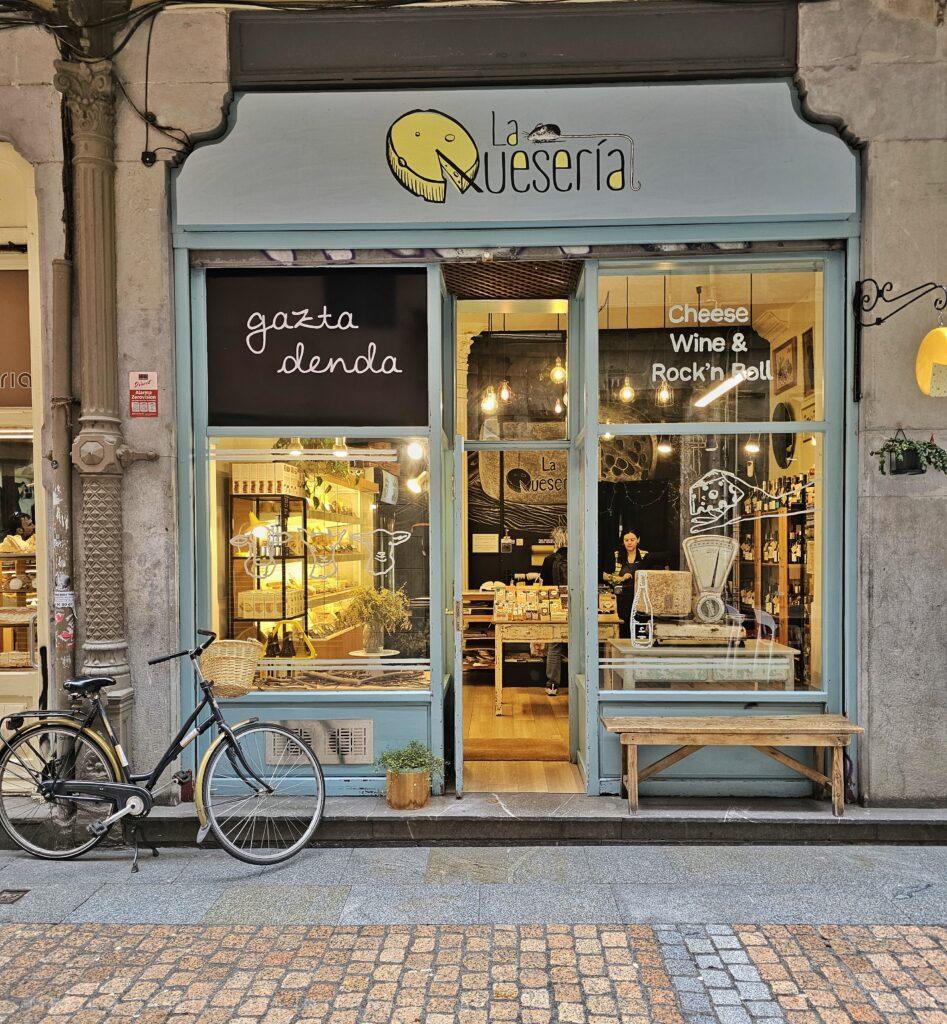
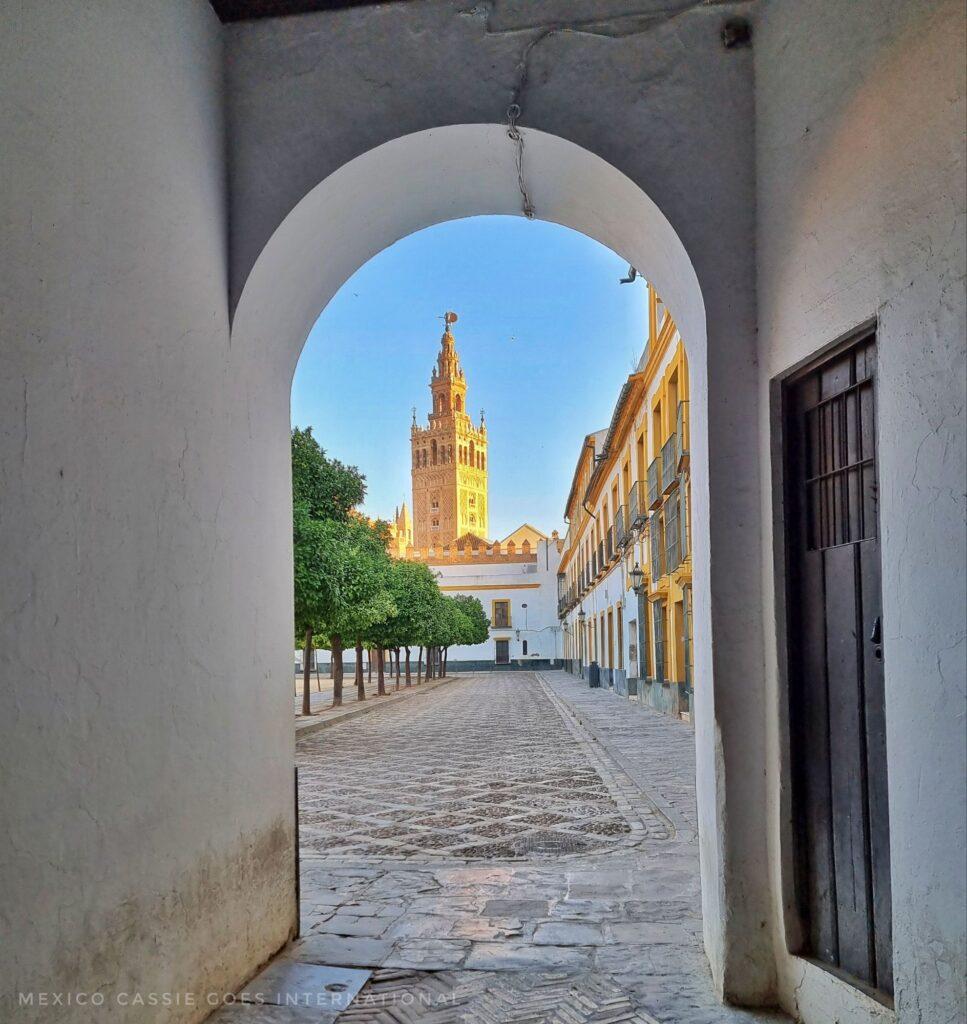
The siesta is important but not everywhere and not always. It depends. In small towns, yes, probably everything closes. Bigger cities, depends on the shop. Supermarkets like Lidl and Mercadona, don’t take naps. Malls don’t either.
Your local pharmacy probably does take a siesta.
Basically, don’t expect much to be open between 2.30 and 5pm, certainly don’t build your day around the expectation of things being open unless you’re in a big city.
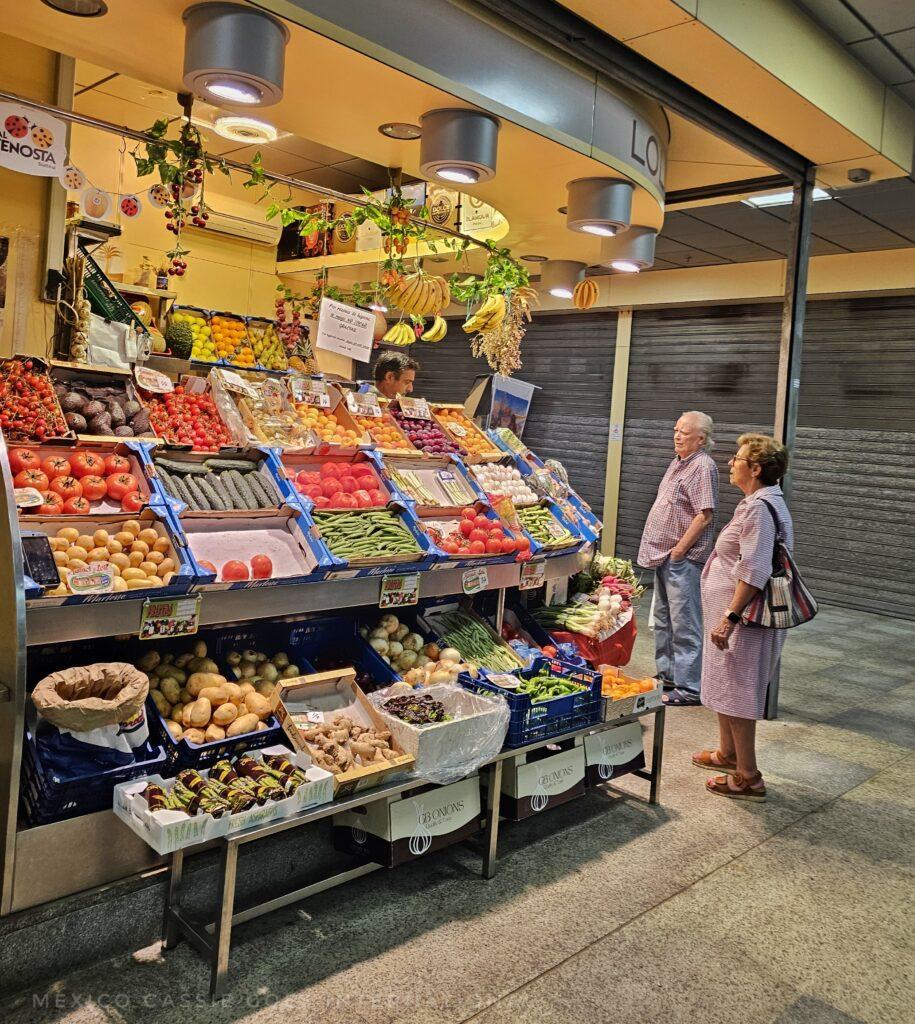
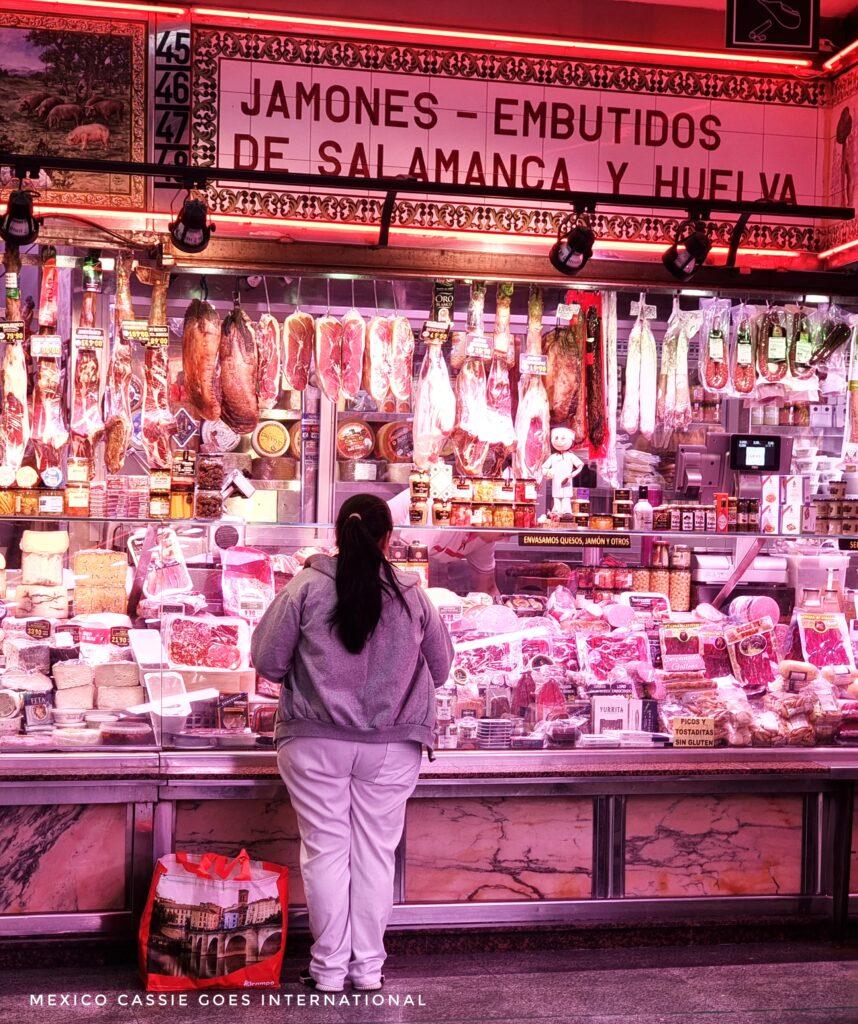
You don’t need to know much to make the supermarket and market visits easy but here are a few tips:
🧃 Yes you really can open the plastic packaging and take one bottle of water or three cans of beer
🕣 The best time to go to a big store is lunch time or siesta time when everyone else is eating or snoozing. Markets are fully open in the mornings. By lunch time many stalls will have closed down
😀 Always say hello when you enter a small shop
🥱 No rushing here, if the person in front of you is chatting with the cashier, accept you’ll be there a little longer. That’s life
🍞 Shops and markets are shut on Sundays, except for the few that aren’t. You can pretty much always find somewhere to buy bread and there’s always a pharmacy open somewhere
❌ In markets DON’T touch the produce
⭐️ Queues don’t exist in the market, you ask “quién es el último?” (“who is last?”), and you follow that person. In the supermarket, queues operate like you’d expect, except at the produce counters. In smaller supermarkets, you may have to ask for help for your fruit and veg, as well as meat, cheese and fish
🌽 If you don’t like supermarkets, try the speciality food shops that are abundant in every town
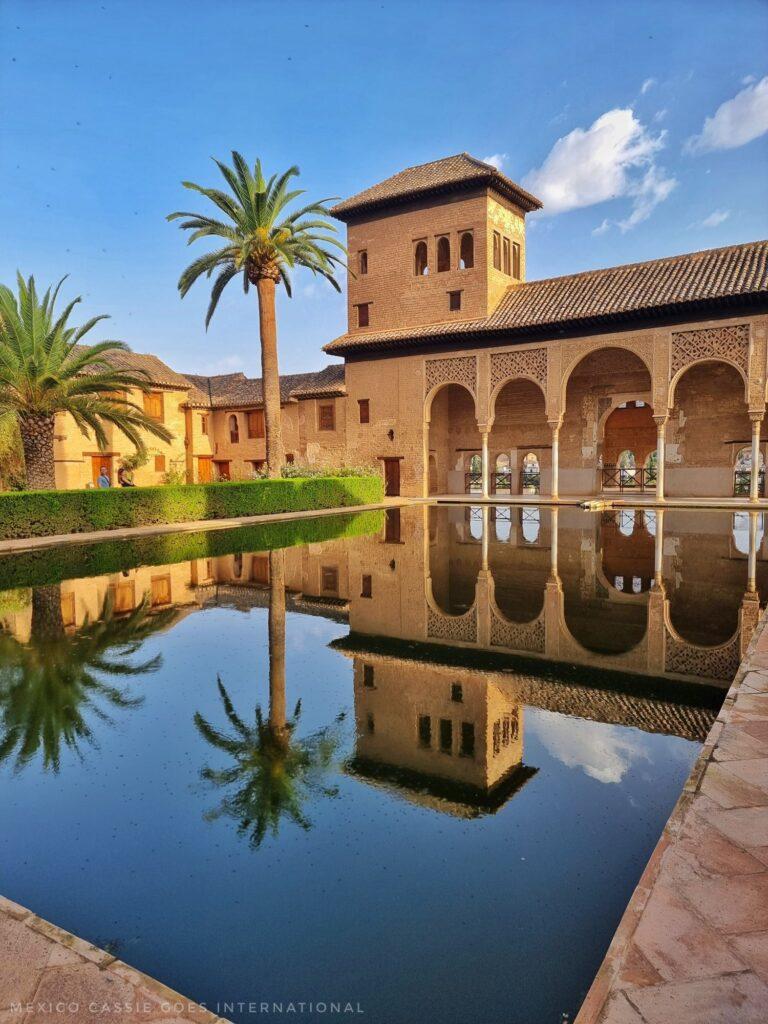
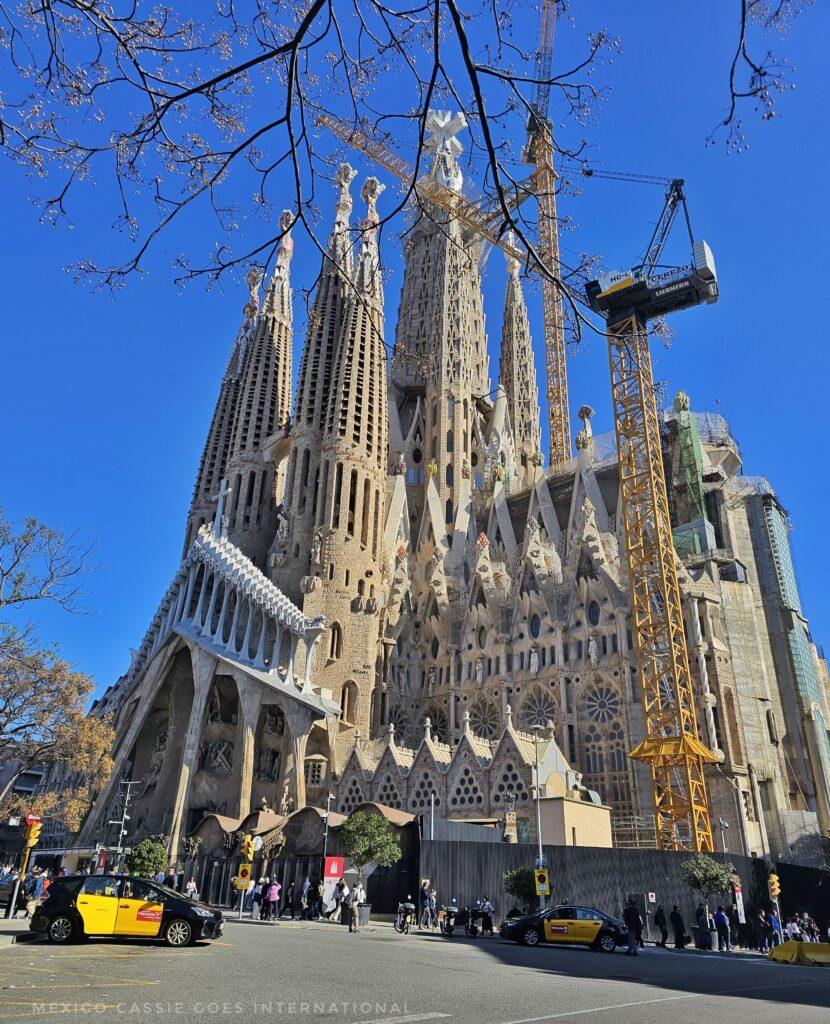
You’re coming to Spain, you’re going to want to see something touristy and popular so keep in mind:
🎟️ Many places require booking in advance, the bigger the attraction the more likely you’ll need to book. You’ll need to be careful as sadly there are some scam sites so book through the official site or through GetYourGuide, Viator, or Take Walks
🎟️ Some places of natural beauty, such as Gaztelugatxe in Euskadi & the incredible As Catedrais beach in northern Galicia also require tickets during peak season at summer and during samana santa – tickets are free but necessary
🕣 Many sites and museums shut on Mondays and may shut for a siesta
😎 Sites may change their hours during the summer
🛜 And google may or may not have been updated to reflect this
🛂 If a site says you need a passport to enter (looking at you Alcazar and Alhambra), you need a passport to enter, don’t forget it
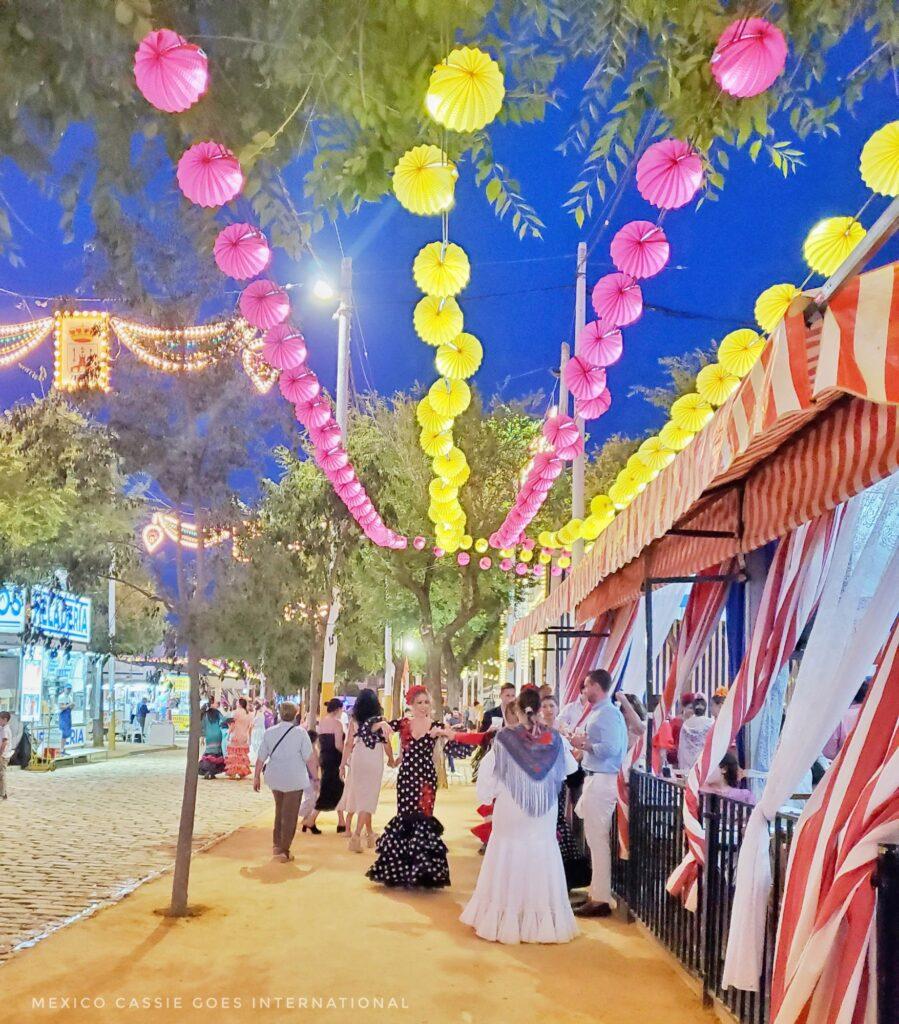
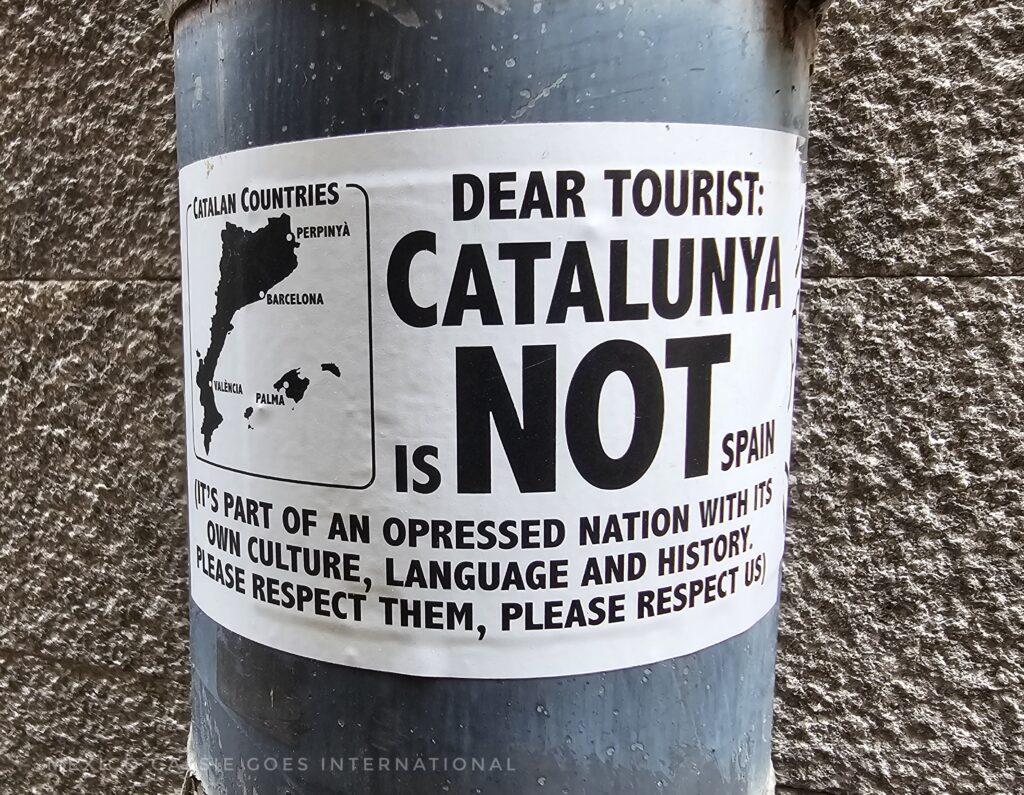
The Spanish are noisy! They’re not angry or rude, just loud. Life may feel more hectic and loud than at home (depending on where you’re coming from)
💬 Multiple languages are spoken in Spain. This is important. Depending on where you’re visiting, you may not only hear or read Spanish. It’s polite to learn a few words to help smooth your adventure whether it’s Castellano (Spanish is called Castellano in much of Spain), Euskera, Galego, Catalan or Valencià
🎉 Late night fiestas, every town and pueblo pretty much has their own and they will be joyful and noisy. Some are famous such as Valencia‘s Las Fallas and Sevilla’s feria. Others are barely known outside of the town that celebrates them such as Cascamorras in Guadix or the Celtic music festival in Ortigueira. Heard of either of these? Didn’t think so but check out my articles to learn more!!
🧒🏻 Kids are everywhere, they’re welcome everywhere and they are everywhere. And they’re everywhere late at night too. I have numerous articles about travelling around Spain with the kids that will ease your way
MexicoCassie guides to exploring Spain with kids
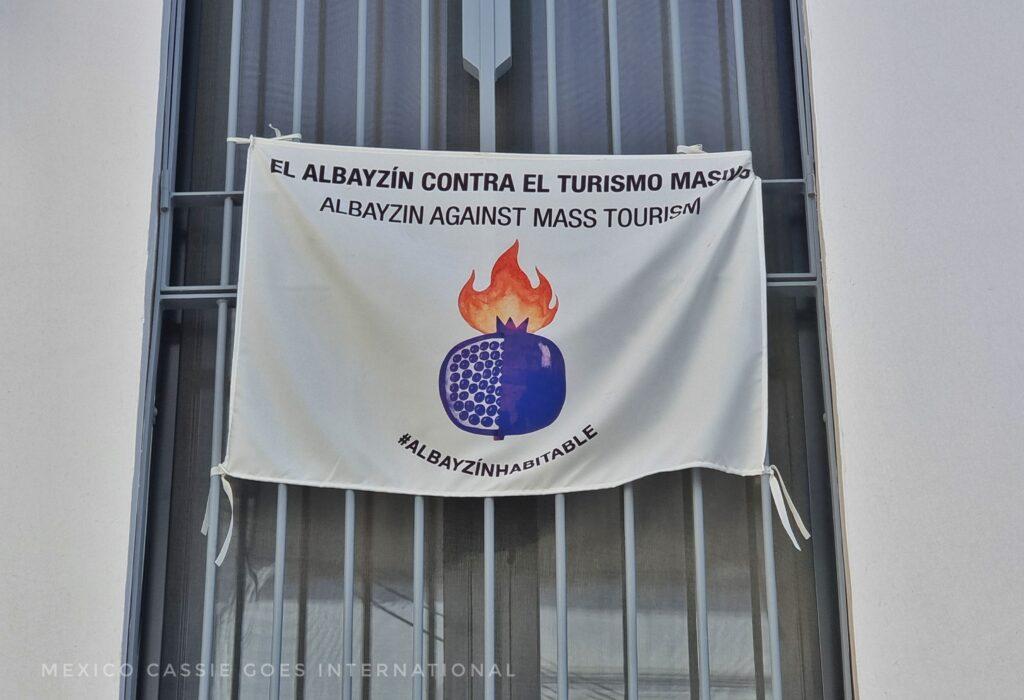
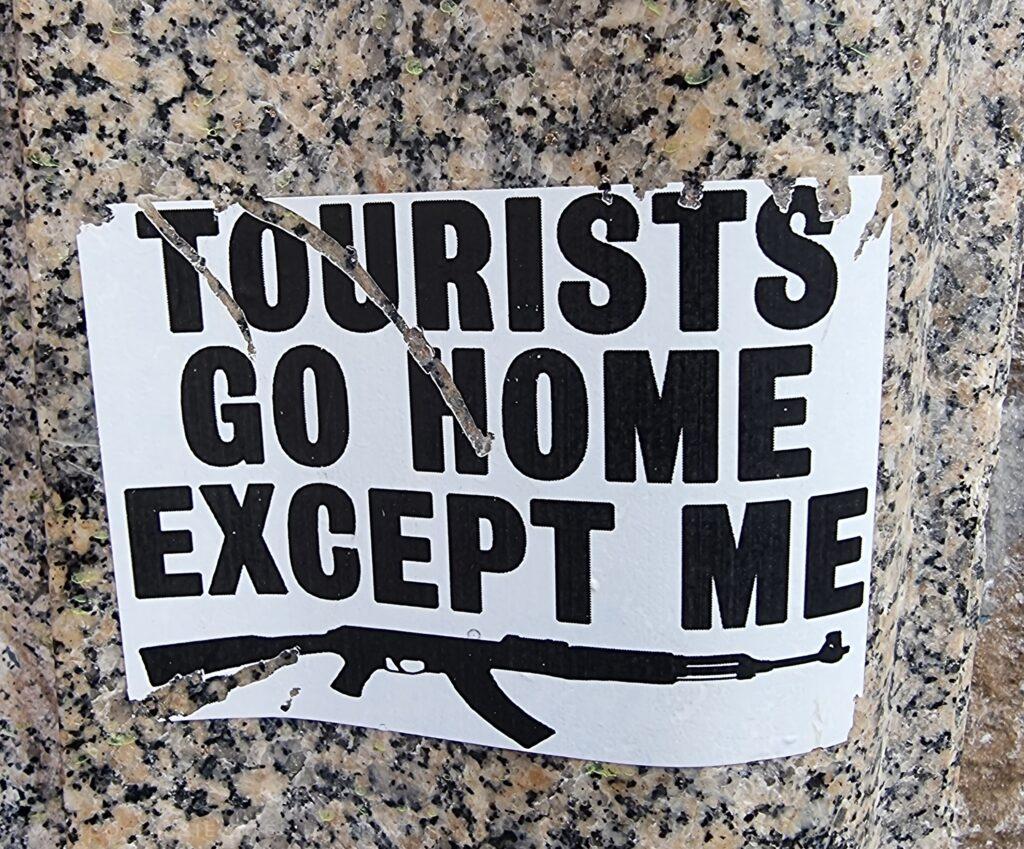
🔫 They exist, yes. People get fed up, particularly in the summer months, with all the tourists seemingly heading to the same places (Barcelona, Málaga, Granada, Sevilla). If you do go to these locations, you may find yourself being water pistolled, or you might see a graffiti asking you to go home!
It is a serious issue and some cities such as Barcelona and Málaga are working out how to deal with the consequence of over-tourism and locals being pushed out of their homes
So how to avoid this/not be a part of the problem?
🏨 Book hotels, not apartments. I try to always recommend hotels over apartments although I know when you’re travelling with kids, it can be hard → use booking.com to find hotels
⭐️ Stay in smaller towns with fewer visitors, you’ll have an amazing time, find cheaper accommodation and see more of Spain – consider places like Zafra and Cáceres in Extremadura, Aracena in Huelva, Zamora in Castilla Y León, Vitoria-Gazteiz in Euskadi, Ferrol in Galicia, or La Gomera if you visit the Canary Islands
🥾 If you’re walking the Camino de Santiago, try to remember that while, for you, arriving in Santiago de Compostela is absolutely an accomplishment, for people who live in the city, crowds of people lounging on the floor in the plazas isn’t pleasant
👣 Hire me! I have some awesomely useful services including the possibility to chat with me about all things Spain to help you figure out where you might want to go in this fabulous and diverse country. You can also hire me to be your amiguíacass in Sevilla and Alcalá de Guadaíra.
Driving in Spain
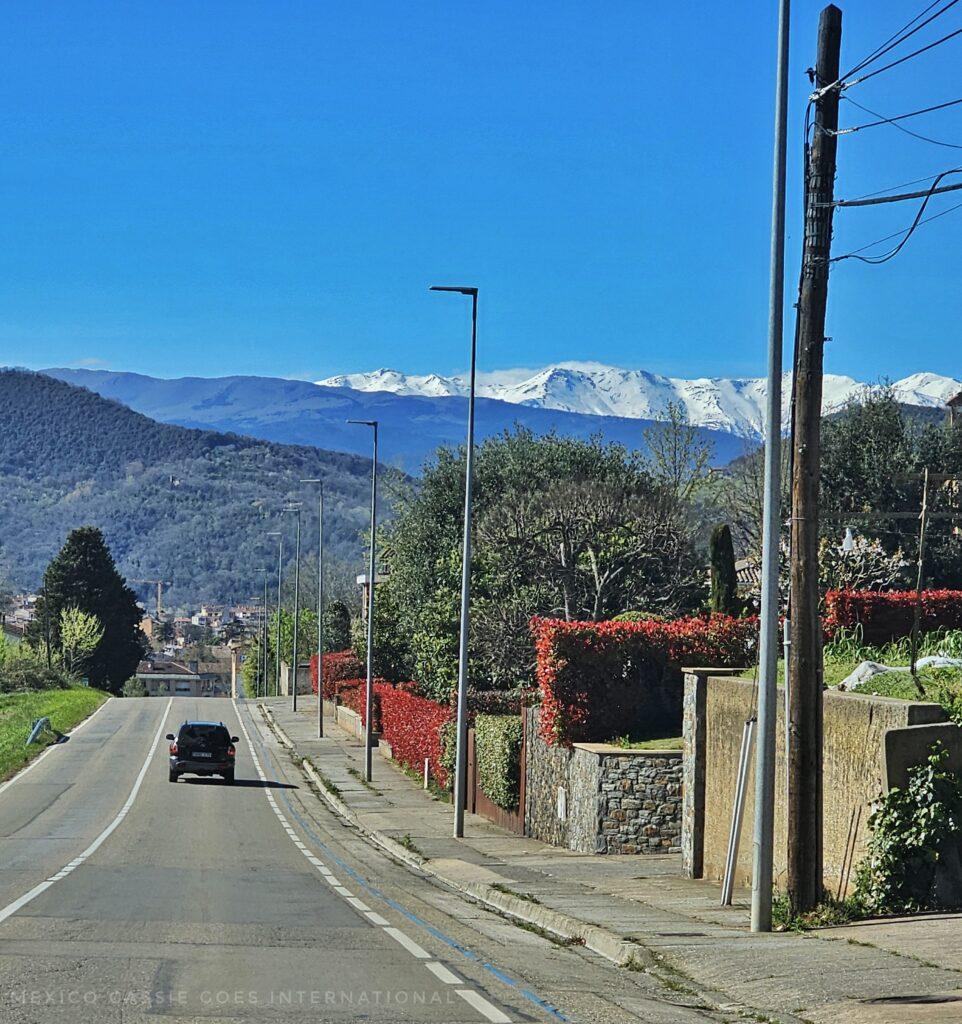
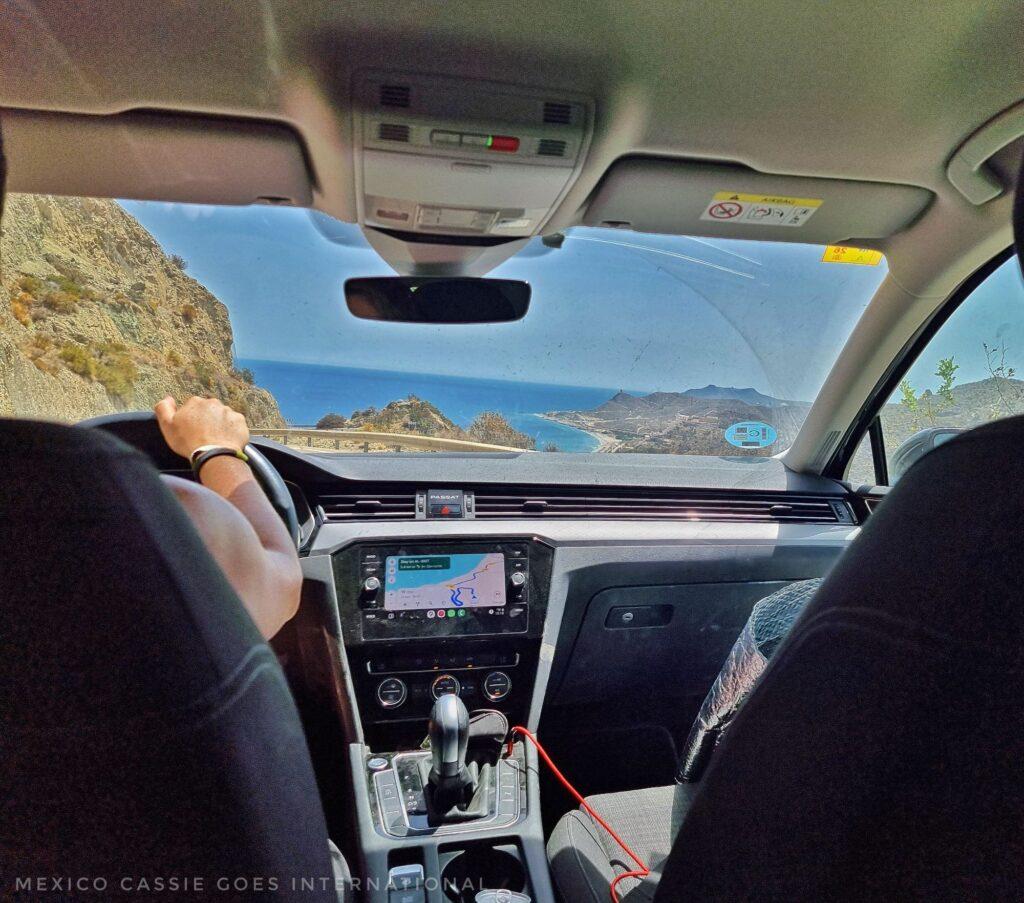
I’ve written two full articles about driving in Spain but here are the top things to look out for –
🚥 People seem to full believe that the hazard warning lights make them invisible when they park where they shouldn’t (including on roundabouts or double parking near their favourite café)
🚨 Almost everyone thinks that you have to go around a roundabout in the outside lane – because in the event of a problem, the fault in Spain is always assigned to the person on the inside
🅿️ Parking – carparks are almost always waaaay too small with spaces barely wide enough for the average car
In old city centres, the streets are also often extremely narrow. Always figure out where you’re going to park before you arrive
Despite these quirks, my preference is always to drive in Spain. It’s actually very easy because the roads between cities and towns are excellent, except in a few areas, there are very few tolls and it’s a great way to get away from people and see more of Spain
→ Check your rental car options in Spain
And just because we’re here, I’ll add that no one cares what you wear, they really don’t. I see so many people worrying about what to wear to blend in. You don’t need to.
Word in the tourist groups is that no one ever wears shorts – not true. I see Spaniards in town in shorts all the time. Maybe they don’t go out to ‘nice’ restaurants like that but they truly aren’t checking your clothes.
👙 🩴 Except, be warned that it’s not acceptable to leave the beach and wander into town or a restaurant in your swim suit or topless. You could be fined for that.
Be you, be comfortable and don’t worry because no one is checking out your outfit and judging you.
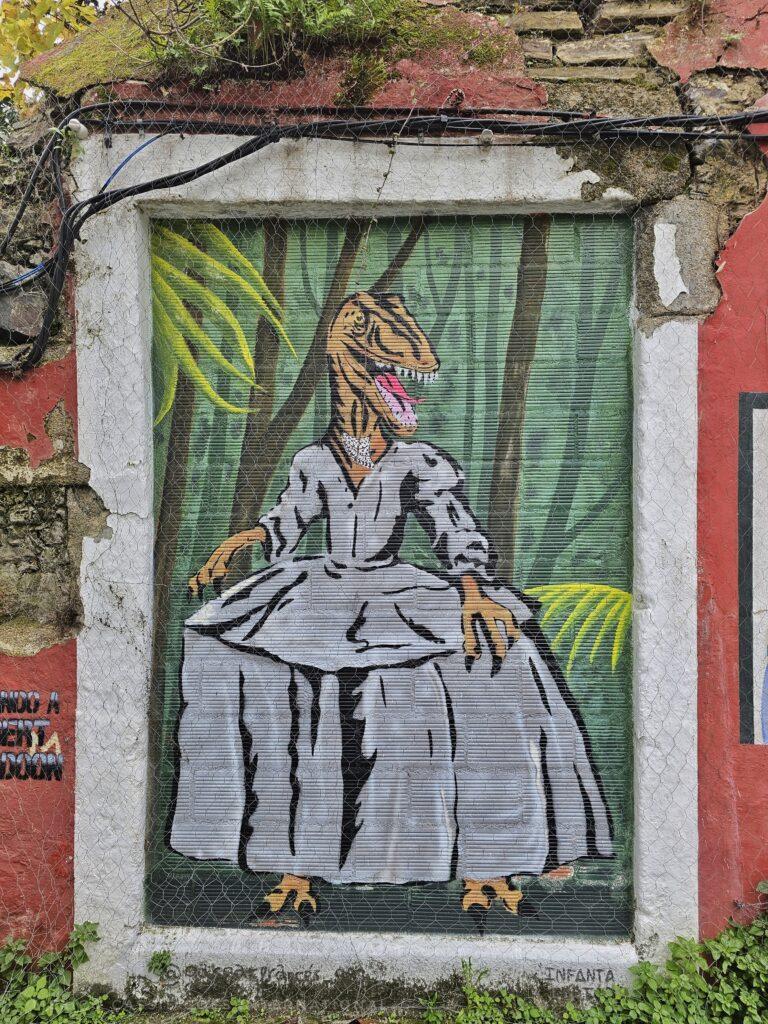
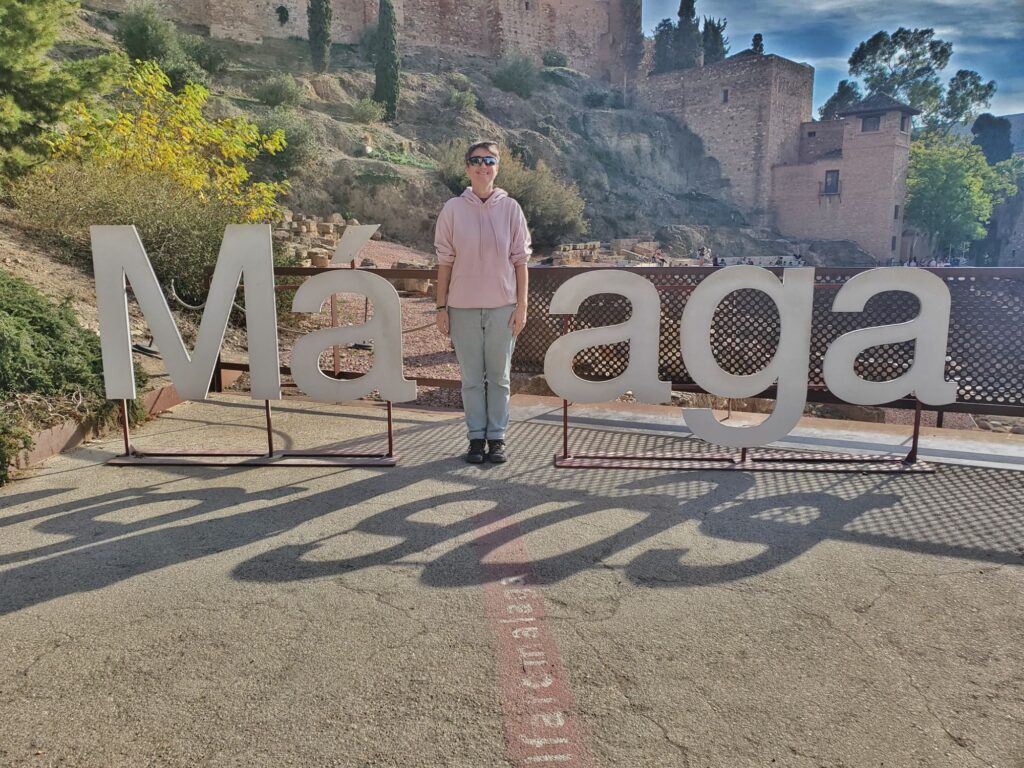
Parade as a dinosaur in a dress, or the L from Málaga, no one cares (unless you’re visiting a church, when you probably do need to cover your shoulders because they seem to care about that)
📚 🇪🇸 Read more of MexicoCassie’s Spain guides
→ MexicoCassie guide to whether Spain is safe for tourists
→ MexicoCassie guide to driving in Spain
→ MexicoCassie guide to driving in southern Spain
☕️ MexicoCassie guide to vegetarian tapas, to breakfast and to feeding the kids
📲 MexicoCassie guide to using an eSIM in Spain
⭐️ Tips to help when you visit Spain
Sevilla
⭐️ What is Sevilla famous for? | ⭐️ How many days do you need in Seville? | ⭐️ Everything about the Seville airport bus
⭐️ 1 day in Seville | ⭐️ 3 days in Seville | ⭐️ 5 days in Seville | ⭐️ How to visit Seville in the summer | ⭐️ How to visit the Alcazar | ⭐️ Quirky Seville
⭐️ Best beaches from Seville | ⭐️ Day trips from Seville | ⭐️ Seville with kids | ⭐️ Seville with teenagers | ⭐️ How to see flamenco in Seville | ⭐️ Best family friendly tours in Seville
➕ Hire MexicoCassie as your amiguía for the day in Sevilla or Alcalá de Guadaíra
Málaga
⭐️ 3 days in Málaga | ⭐️ 1 day in Málaga | ⭐️ Day trips from Málaga | ⭐️ 1 day in Ronda | ⭐️ 1 day in Ronda with kids | ⭐️ What to do in Antequera | ⭐️ Exploring Málaga with kids
Córdoba
⭐️ What to do in Córdoba | ⭐️ Planning your Córdoba day trip from Seville | ⭐️ Day trips from Córdoba | ⭐️ Exploring Córdoba with kids | ⭐️ 1 day in Córdoba | ⭐️ Zuheros, the most beautiful village in Córdoba
Cádiz
⭐️ What to do in Cádiz province | ⭐️ How to spend 1 day in Cádiz city | ⭐️ What to do in Cádiz with kids | ⭐️ Exploring Tarifa | ⭐️ How to get to Tangier from Tarifa | ⭐️ Exploring Gibraltar | ⭐️ What to do in Jerez de la Frontera
Huelva
⭐️ Is Huelva worth visiting? (YES) | ⭐️ What to see in the gorgeous Aracena
Granada
⭐️ Planning your Granada city break | ⭐️ Granada with kids | ⭐️ 2 days in Granada | ⭐️ How to explore Guadix and its cave houses
Almería
⭐️ Things to do in Almería City | ⭐️ What to do in Almería with kids | ⭐️ Is Almería worth visiting? | ⭐️ Figuring out the Almería beaches
Community of Valencia
⭐️ 1 day in Valencia | ⭐️ 2 days in Valencia | ⭐️ Museums in Valencia ⭐️ Day trips from Valencia | ⭐️ Valencia with kids
Community of Madrid
⭐️ Why should you visit Madrid | ⭐️ Spending 5 awesome days in Madrid | ⭐️ 3-day Madrid itinerary
Castilla y León
⭐️ Segovia, a perfect day trip from Madrid | ⭐️ How to visit Medina del Campo | ⭐️ How to visit Zamora
Euskadi (Basque Country)
⭐️ What to do in the Basque Country | ⭐️ Excellent things to do in San Sebastián | ⭐️ Is San Sebastián worth visiting? | ⭐️ How many days do you need in San Sebastián? | ⭐️ Day trips from San Sebastián | ⭐️ San Sebastián with kids | ⭐️ Is Bilbao worth visiting? | Planning and taking day trips from Bilbao | Why Vitoria-Gasteiz is worth visiting?
Picos de Europa
⭐️ Road trip itinerary for the Picos de Europa | ⭐️ Planning for a trip to the Picos de Europa | ⭐️ Las Arenas de Cabrales | ⭐️ Visiting Potes
Extremadura
⭐️ Everything you need to explore Monfragüe | ⭐️ What to do in Mérida | ⭐️ What to do in Cáceres | ⭐️ How to visit Plasencia | ⭐️ Visiting Zafra (Sevilla Chica) | ⭐️ What to do in Badajoz | ⭐️ How to visit Jerez de los Caballeros | ⭐️ Extremadura road trip
Galicia
⭐️ What to do in Ferrol | ⭐️ Everything you need to visit Santiago de Compostela | ⭐️ Northern Galicia road trip
Cataluña
⭐️ Road trip around Girona Province | ⭐️ Spending 1 day in Girona | ⭐️ 1 day in Barcelona | ⭐️ How to visit Castellfollit de la Roca
La Gomera (Canary Island)
⭐️ Hiking on La Gomera | ⭐️ La Gomera with kids | ⭐️ Take a day trip to La Gomera